Making a simple pie crust is quick and straightforward, perfect for anyone looking to bake a delicious pie without fuss. In just a few steps, you can create a flaky, buttery crust that serves as the ideal base for any filling. This guide will walk you through the essential ingredients, techniques, and tips to master your pie crust, ensuring a delightful baking experience every time.
Essential Ingredients for Pie Crust

To achieve a perfect pie crust, understanding the essential ingredients is crucial. Here’s a breakdown of what you’ll need:
– All-purpose flour: This forms the backbone of your crust, providing structure and stability. It’s important to use a good quality all-purpose flour to ensure the best results.
– Fat: Typically, unsalted butter is the preferred choice for its rich flavor and ability to create a flaky texture. However, shortening can also be used if you prefer a crust that’s tender and less flavorful. Some bakers even use a combination of both for the best of both worlds.
– Water: Using cold water is essential as it binds the ingredients without melting the fat, which is crucial for achieving that desired flaky texture.
Additionally, a pinch of salt is often included to enhance the flavor of the crust.
Step-by-Step Instructions
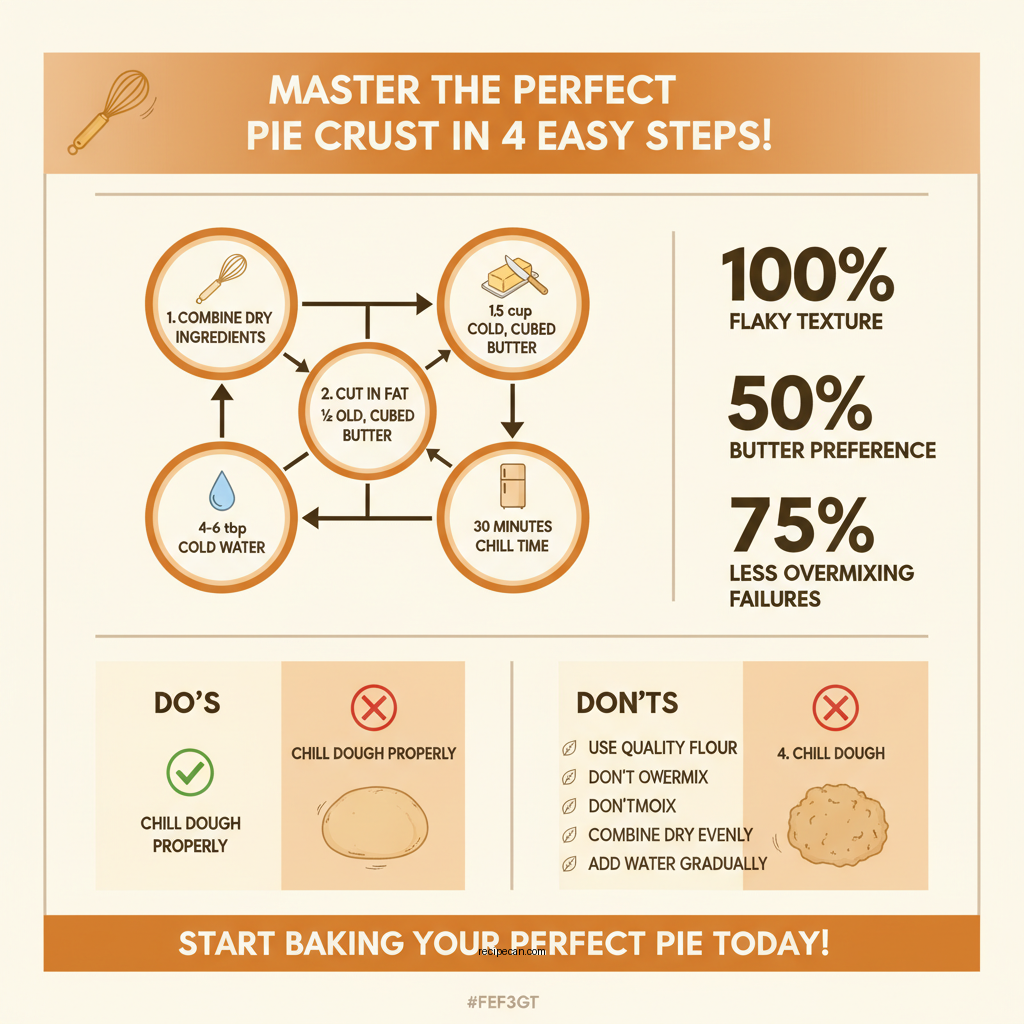

Creating a pie crust may seem daunting, but it can be broken down into simple steps:
1. Combine dry ingredients: In a mixing bowl, whisk together 1 ½ cups of all-purpose flour and ½ teaspoon of salt. This step ensures the salt is evenly distributed throughout the flour.
2. Cut in fat: Add ½ cup of cold, cubed unsalted butter (or shortening) to the flour mixture. Use a pastry cutter, fork, or your fingers to work the fat into the flour until it resembles coarse crumbs. This process is essential for creating that beloved flaky texture.
3. Add water: Gradually mix in 4 to 6 tablespoons of cold water, one tablespoon at a time. Stir gently until the dough begins to come together. Be cautious not to overmix, as this can lead to a tough crust.
4. Form and chill the dough: Gather the dough into a ball, flatten it into a disk, wrap it in plastic wrap, and refrigerate for at least 30 minutes. Chilling the dough helps to relax the gluten, preventing shrinkage during baking.
Tips for Perfecting Your Crust

Achieving the perfect pie crust involves a few additional tips:
– Chill the dough: This is one of the most important steps. Not only does chilling help prevent shrinkage, but it also makes the dough easier to roll out.
– Roll evenly: When rolling out the dough, use a rolling pin with even pressure to achieve a uniform thickness. This ensures that the crust bakes evenly.
– Avoid overworking: Handle the dough as little as possible. Overworking can develop gluten, resulting in a tough crust rather than a tender one.
Different Variations of Pie Crust
Once you’ve mastered the basic pie crust, you can explore various delicious alternatives:
– Shortcrust: A classic variation that’s particularly versatile, shortcrust is made with a similar method but can include different fats or flavorings, such as sugar for sweet pies.
– Graham cracker: This no-bake option is perfect for cheesecakes and cream pies. Simply crush graham crackers, mix with melted butter and sugar, then press into the pie dish.
– Gluten-free: For those with dietary restrictions, substituting all-purpose flour with a gluten-free blend can yield a similar texture and flavor. Be sure to use a blend designed for baking to achieve the best results.
Baking Your Pie Crust
Baking your pie crust correctly is vital for the outcome of your pie:
– Pre-baking: If you’re making custard or cream pies, blind baking the crust (baking it without filling) is essential to prevent sogginess. Use pie weights or dried beans to keep the crust from puffing up.
– Temperature: Bake your pie crust at 375°F (190°C) until it’s golden brown. The baking time will vary based on the type of pie, but generally, you should aim for about 20-30 minutes for a pre-baked crust.
– Filling tips: Allow the crust to cool slightly before adding fillings to prevent curdling or sogginess in cream fillings.
Top 7 Types of Pie Crusts for Home Bakers
| # | Crust Type | Difficulty Level | Baking Time | Best For |
|---|---|---|---|---|
| 1 | Classic Pie Crust | Easy | 30-40 mins | Fruit Pies |
| 2 | Graham Cracker Crust | Very Easy | No Bake | Cheesecakes |
| 3 | Shortcrust | Easy | 20-30 mins | Tarts |
| 4 | Almond Flour Crust | Medium | 30-40 mins | Gluten-Free Pies |
| 5 | Chocolate Crust | Medium | 30-35 mins | Cream Pies |
| 6 | Phyllo Dough Crust | Hard | 20-25 mins | Savory Pies |
| 7 | Cornmeal Crust | Medium | 30-35 mins | Quiches |
Troubleshooting Common Issues
Even the best bakers encounter challenges. Here are some common issues and how to resolve them:
– Crust shrinking: If your crust shrinks during baking, ensure that you’ve chilled the dough adequately before rolling it out. Also, avoid stretching the dough when placing it in the pie pan.
– Tough texture: A tough crust often results from overworking the dough. To avoid this, mix only until the dough comes together and use cold ingredients throughout the process.
– Cracks in dough: If your dough cracks, it may be too dry. Add small amounts of cold water as needed and knead gently to bind.
With these tips and troubleshooting techniques, you’ll be well-equipped to create the perfect pie crust every time.
Pie Crust Shrinking Issues (Resolved)
Wrap up your pie crust journey with these tips and tricks to ensure your baking experience is enjoyable and rewarding. Now that you have the knowledge, it’s time to gather your ingredients and start baking your perfect pie crust! With practice and patience, you’ll soon be on your way to creating impressive pies that will delight family and friends. Enjoy the process, and happy baking!
Frequently Asked Questions
What ingredients do I need for a simple pie crust recipe?
To make a simple pie crust, you will need all-purpose flour, unsalted butter, salt, and cold water. Typically, the ratio is about 2 1/2 cups of flour, 1 cup of butter cut into small pieces, and a pinch of salt to enhance the flavor. Cold water is added gradually until the dough comes together.
How do I make a flaky pie crust using a simple recipe?
To achieve a flaky texture in your pie crust, ensure your butter is very cold and cut into small cubes before mixing it into the flour. Use a pastry cutter or your fingers to blend the butter until the mixture resembles coarse crumbs, then add cold water slowly. Avoid overworking the dough, as this can lead to a tough crust.
Why is my simple pie crust tough instead of flaky?
A tough pie crust often results from overworking the dough or using warm butter. To prevent this, handle the dough as little as possible and keep your ingredients cold. Additionally, be cautious not to add too much water, as excess moisture can also lead to a dense crust.
What is the best way to roll out a simple pie crust?
The best way to roll out a simple pie crust is to first chill the dough for about 30 minutes to firm it up, making it easier to handle. When rolling, use a lightly floured surface and a rolling pin, applying even pressure to achieve a uniform thickness, about 1/8 inch. Remember to rotate the dough frequently to prevent sticking.
Which type of pie filling works best with a simple pie crust?
A simple pie crust pairs wonderfully with both sweet and savory fillings, but classic options include fruit fillings like apple or cherry, as well as creamy fillings like pumpkin or custard. The versatility of this crust allows it to complement a variety of flavors, making it an excellent choice for any pie recipe.
References
- Shortcrust pastry
https://en.wikipedia.org/wiki/Pie_crust - https://www.brown.edu/academics/science/food-science/pie-crust-recipe
https://www.brown.edu/academics/science/food-science/pie-crust-recipe - https://www.cooking.nytimes.com/recipes/1019297-simple-pie-crust
https://www.cooking.nytimes.com/recipes/1019297-simple-pie-crust - https://www.theguardian.com/food/2020/nov/07/how-to-make-the-perfect-pie-crust
https://www.theguardian.com/food/2020/nov/07/how-to-make-the-perfect-pie-crust - https://www.sciencedirect.com/topics/food-science/pie-crust
https://www.sciencedirect.com/topics/food-science/pie-crust - Google Scholar Google Scholar
https://scholar.google.com/scholar?q=simple+pie+crust+recipe - Google Scholar Google Scholar
https://scholar.google.com/scholar?q=pie+crust+techniques - Google Scholar Google Scholar
https://scholar.google.com/scholar?q=homemade+pie+crust+recipe - Pastry | Definition, Ingredients, & Uses | Britannica
https://www.britannica.com/topic/pastry - simple pie crust recipe – Search results
https://en.wikipedia.org/wiki/Special:Search?search=simple+pie+crust+recipe