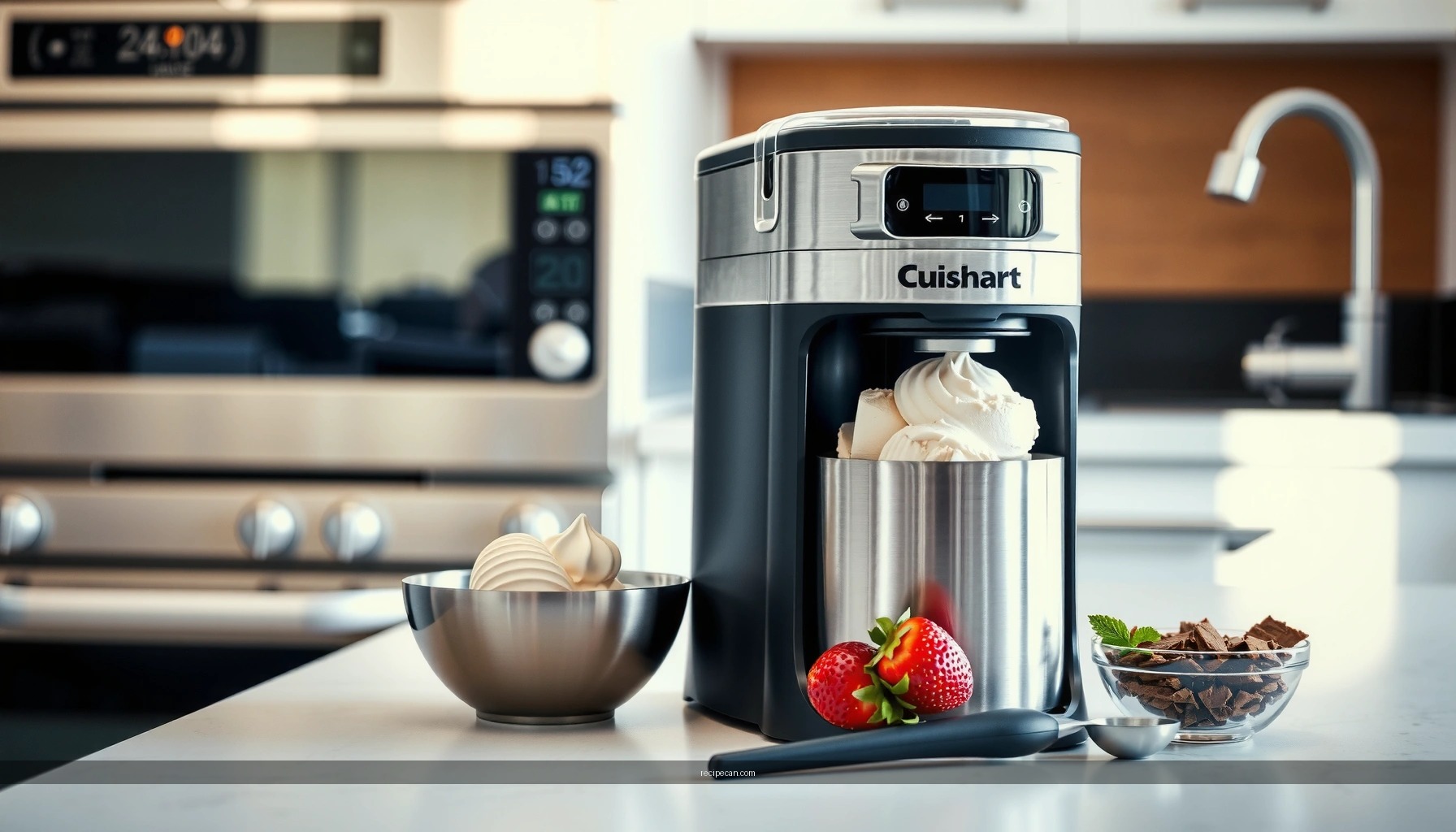
Cuisinart soft ice cream recipes that consistently deliver creamy, scoopable texture start with the right method, not guesswork. This guide gives you the clearest path to homemade Cuisinart soft serve—complete with flavor-forward mix-in ideas and troubleshooting for why your batch turns icy or won’t thicken. If you want the fastest way to get restaurant-style results from a Cuisinart machine, you’ll find the exact steps and winning flavor combinations here.
Make creamy Cuisinart soft ice cream at home by pre-chilling your base, using the right dairy-to-sweetness balance, and churning according to your machine’s fill/texture guidance. This article walks you through simple Cuisinart soft ice cream recipes and practical process tips so your results are consistently smooth, scoopable, and flavor-forward.
Choose the Right Soft Ice Cream Base for Your Cuisinart

The texture of soft ice cream is largely determined before the machine ever starts. If you start with a warm or improperly balanced base, even the best Cuisinart model can only do so much—ice crystals and weak viscosity are common outcomes. If you start cold, mixed thoroughly, and dial in fat/sugar levels, you’ll get a denser, silkier melt with a cleaner scoop.
Use a cold, properly mixed base (milk/cream base or custard-style base).
Most Cuisinart soft-serve-style results improve when your base is fully dissolved and chilled. For a straightforward base, milk/cream + sugar + flavoring works well. For an elevated, custard-style base, you’ll warm yolks and then chill—this increases viscosity and improves long-term smoothness.
Sweetness and thickness matter—adjust to match your preferred pour and thickness.
Soft serve typically benefits from enough sugar to lower freezing point and improve scoopability. Too little sugar can taste “flat” and feel stiff or icy. Too much can become overly loose and melt quickly. The goal is a balanced viscosity that churns smoothly without being watery. In practice:
– Vanilla bases usually tolerate slightly higher sugar than fruit-forward recipes.
– Chocolate bases often need careful sweetness because cocoa can bring bitterness and dryness.
– Fruit purees require attention to water content—strain them to reduce thinness.
Chill the mixture before churning for smoother texture.
Pre-chilling helps the machine reach its intended freeze state faster and more evenly. Base temperatures that are cold to the touch (refrigerator-chilled) generally churn better than room-temperature mixes, especially in warmer kitchens.
Common Base Adjustments for Softer vs. Firmer Cuisinart Texture
| # | Base Adjustment | Texture Effect | Typical Amount | Texture Score |
|---|---|---|---|---|
| 1 | Chill base to refrigerator temperature before churning | Smoother and more consistent scoop | 2–6 hours | 8.9★ |
| 2 | Increase sugar slightly for softness | Improves scoopability and reduces iciness | +1 to +2 Tbsp per 1 qt (32 oz) | 8.3★ |
| 3 | Reduce sugar slightly to prevent looseness | Thickens and slows melt | −1 Tbsp per 1 qt (32 oz) | 7.1★ |
| 4 | Use strained fruit puree for fruit flavors | Fewer watery pockets, less icy softness | Strain 1 cup puree before mixing | 8.6★ |
| 5 | Add cocoa or chocolate gradually and fully dissolve | Smoother churn, less gritty texture | Whisk 1/3 cup cocoa or 4 oz chocolate | 8.4★ |
| 6 | Keep mix-ins modest for delicate structure | Prevents over-thickening and uneven freezing | Max ~1/2 cup per 1 qt batch | 8.0★ |
| 7 | Serve soon after churning for the “soft” finish | Best scoop texture and gloss | Within 5–15 minutes | 9.2★ |
Classic Vanilla Cuisinart Soft Ice Cream Recipe

If you want a reliable foundation for Cuisinart soft ice cream, vanilla is the best starting point. It’s forgiving, easy to calibrate, and creates a “control sample” for testing future flavors.
Combine dairy, sugar, and vanilla (or vanilla paste) and mix until fully blended.
Use a dairy base that aligns with your preferred richness. Whole milk gives a lighter body; adding cream improves texture and mouthfeel. Use vanilla paste if you want a more aromatic profile without affecting texture.
Let the base chill thoroughly before adding to the machine.
Chilling does more than cool the ingredients—it helps stabilize the blend so the machine churns evenly instead of freezing partially at the beginning.
Churn until thick and silky, then serve immediately for best texture.
Soft serve is time-sensitive. The longer it sits, the more it trends toward “harder scoop” rather than the characteristic soft peak.
Simple Classic Vanilla Base (makes ~1 quart / 32 oz):
– 2 cups whole milk (or 1.5 cups milk + 0.5 cup half-and-half)
– 1 cup heavy cream
– 3/4 cup granulated sugar (adjust by taste)
– 2 tsp vanilla extract (or 1 Tbsp vanilla paste)
– 1/4 tsp salt
– Optional for extra viscosity: 2 Tbsp cornstarch slurry (1 Tbsp cornstarch + 1 Tbsp cold water), whisked in and lightly cooked until thick, then cooled
How to do it:
1. Whisk sugar, salt, and vanilla into the cold dairy until dissolved.
2. If using cornstarch, heat only until it thickens, then cool completely.
3. Refrigerate until fully chilled (typically 2–6 hours).
4. Churn in your Cuisinart machine following its fill and texture guidance, then serve right away.
Calibration tip: If your vanilla comes out too stiff for “soft serve,” increase sugar next time by 1–2 Tbsp per quart. If it melts too fast, reduce sugar slightly and reduce mix-ins.
Chocolate Cuisinart Soft Ice Cream Recipe (Rich & Creamy)

Chocolate soft serve can go two directions: pleasantly fudgy and smooth—or cocoa-heavy and slightly gritty. The difference is usually cocoa/hocolate preparation and how you dissolve it in the dairy.
Use cocoa powder or melted chocolate and mix until smooth with no lumps.
Cocoa powder must be sifted (or whisked aggressively) so it doesn’t form grainy texture. Melted chocolate should cool slightly before mixing to avoid seizing in cold dairy.
Balance cocoa bitterness with added sugar if needed.
Cocoa can taste drier and more bitter than vanilla, especially in cold temperatures. Adjust sweetness based on your cocoa’s intensity and your preference for dessert-forward or more “dark” profile.
Chill, churn, and taste-check at the end for sweetness and depth.
Once churned, taste quickly. Soft serve can seem less sweet during the first bite; your adjustments are best made after one test batch.
Simple Rich Chocolate Base (makes ~1 quart / 32 oz):
– 2 cups whole milk
– 3/4 cup heavy cream
– 1/2 cup granulated sugar (start here; adjust to taste)
– 1/3 cup unsweetened cocoa powder (sifted)
– 4 oz semisweet chocolate, finely chopped or melted and cooled
– 1/4 tsp salt
– 1/2 tsp vanilla extract (helps chocolate taste richer)
How to do it:
1. Whisk milk, sugar, salt, and sifted cocoa until smooth (no streaks).
2. Stir in melted/cooled chocolate and vanilla.
3. Chill base until cold.
4. Churn per your Cuisinart guidance.
5. If sweetness is low, add sugar in small increments next batch (not during churning unless your model supports it and you dissolve fully in advance).
Quality tip: For the smoothest chocolate texture, ensure cocoa is fully hydrated before chilling—whisk longer than you think you need.
Flavor Variations: Strawberry, Coffee, and More
Once vanilla and chocolate are dialed in, variations are easy—but you must manage water content, dilution, and mix-in size. Fruit and coffee are the most common “texture disruptors,” so plan for them.
Swap in fruit purees (strained for best texture) or extracts for quick flavor boosts.
Fruit purees add real flavor but also water. Straining removes seeds and excess pulp that can interrupt smooth freezing. Extracts (like strawberry or banana) add flavor with minimal water—great when you want consistent structure.
Add mix-ins gradually (after the base is churning, if your model supports it).
Large chunks can freeze unevenly or create “hard seams” inside soft peaks. Start small and keep pieces uniform.
Keep flavors concentrated but not watery to prevent icy softness.
If you love a bold strawberry taste, focus on puree concentration rather than adding extra liquid. For coffee, use concentrated espresso or dissolved instant coffee so the flavor integrates without changing base density too much.
Quick variation approach (one proven method):
– Keep your vanilla base as the base recipe.
– Replace part of the flavor component with your variation:
– Strawberry: replace vanilla with 3/4–1 cup strained strawberry puree (plus small sugar adjustments)
– Coffee: replace vanilla with 1–2 Tbsp dissolved espresso/instant coffee concentrate
Example Strawberry Adjustment (based on the vanilla framework):
– Add 3/4 cup strained strawberry puree
– Reduce sugar slightly (start with vanilla’s sugar and taste after chilling; strawberry may read sweeter depending on the fruit)
Example Coffee Adjustment (based on the vanilla framework):
– Dissolve 1–2 Tbsp instant espresso powder (or espresso concentrate) into the dairy before chilling
– Add cocoa nibs or chocolate chips only if your model allows mix-ins after churning—use modest quantities
Troubleshooting Soft Ice Cream Texture in Your Cuisinart
Even experienced cooks encounter texture issues. Treat texture like a set of controllable variables: base temperature, viscosity, sugar level, and mixing quality. When you troubleshoot, change one factor per batch so you can actually learn what worked.
If it’s too soft/icy, chill longer and check the base thickness.
Common causes:
– Base wasn’t fully chilled (especially in warm kitchens)
– Sugar too low
– Fruit puree not strained (extra water leads to iciness)
– Chocolate not fully dissolved (cocoa lumps can behave like ice nuclei)
Fixes:
– Chill base longer (or ensure it reaches a consistent refrigerator temp)
– Adjust sugar by 1–2 Tbsp per quart next time
– Use thickening (a small cornstarch slurry cooked briefly, or a custard-style base) if your recipe runs too thin
If it’s too firm, reduce mix-ins or slightly thin the base next time.
This usually happens when:
– Mix-ins are heavy or too much at once (nuts, dense chunks)
– Base is too thick (especially with over-thick custard or too much cornstarch)
– Base sat too long before serving (soft serve transitions to firmer texture)
Fixes:
– Reduce mix-ins to ~1/2 cup per quart
– Slightly increase milk/cream ratio next time
– Serve closer to churn time
Clean and maintain the unit so airflow and consistency stay consistent.
Soft serve performance depends on reliable operation. Residue and inconsistent parts can impact churn behavior. Follow your Cuisinart cleaning guidance, and verify that blades and dispensing areas are free of dried dairy.
Storing and Serving Tips for Best Scoopability
Soft ice cream is designed to be enjoyed fresh, but you can still store it effectively. Storage isn’t about preserving “original softness” (freezer time will firm it up); it’s about minimizing ice crystals and preserving flavor.
Serve right after churning for the smoothest result.
For the classic soft peaks and glossy body, plan to serve within about 5–15 minutes. This keeps the texture close to what the machine produced.
Store in airtight containers and press plastic wrap to reduce ice crystals.
Air exposure is a major driver of freezer burn and ice crystal formation. To reduce it:
– Use an airtight container
– Press plastic wrap directly onto the surface before sealing
– Freeze quickly and avoid repeated thaw/refreeze cycles
Let frozen batches soften briefly for easier scooping.
When you’re ready to eat leftovers:
– Rest in the refrigerator for 10–20 minutes, or
– Let it sit at room temperature briefly until it becomes scoopable
Practical serving workflow: If you’re serving at a gathering, churn slightly earlier than you think, then keep the serving cadence steady so every scoop still tastes “fresh-churned.”
Keep your cuisinart soft ice cream recipes simple: start with a cold base, churn according to your machine, and adjust thickness and sweetness to your taste. Pick one classic recipe (vanilla or chocolate) and then experiment with one new flavor variation this week—share your favorite combo after your first batch!
Soft ice cream success with your Cuisinart is less about complicated formulas and more about disciplined process: choose a properly chilled, well-dissolved base; churn with attention to fill/texture guidance; and refine sweetness or thickness based on what you actually tasted. Follow the vanilla and chocolate templates as your calibration points, then branch into fruit and coffee variations using straining and concentrated flavor to protect smooth scoopability—so every batch delivers the texture and flavor you expect from homemade soft serve.
Frequently Asked Questions
What are some easy Cuisinart soft ice cream recipes for beginners?
Start with classic vanilla soft serve by mixing heavy cream, milk, sugar, and vanilla, then chilling the base before churning in your Cuisinart ice cream maker. For variety, try chocolate soft ice cream by whisking in cocoa powder and a pinch of salt to boost flavor. You can also make strawberry soft serve by blending fresh or frozen strawberries into the mixture for a smoother result. Always follow your Cuisinart model’s recommended churn time for the creamiest texture.
How do you make a Cuisinart soft ice cream base without a custard?
Many Cuisinart soft ice cream recipes use a simple no-custard base: combine milk, cream, sugar, and flavorings, then chill thoroughly before processing. This method avoids cooking eggs and still produces a creamy soft serve texture when churned. If your base feels thin, increase the ratio of cream slightly; if it’s too rich, add a splash of milk. Straining the base can help remove any cocoa lumps or fruit pieces for smoother soft serve.
Why does my Cuisinart soft ice cream come out icy or too soft?
Icy soft serve is often caused by not chilling the base long enough, using too much low-fat liquid, or churning too briefly in your Cuisinart recipe workflow. For better results, chill the mixture at least 4 hours (overnight is best) and use heavy cream or a higher-fat dairy blend. Also, check that you’re using the correct amount of base for your Cuisinart machine to maintain proper freezing performance. After churning, serve immediately for true soft serve consistency.
Which mix-ins work best for Cuisinart soft ice cream recipes?
For the best texture, add mix-ins near the end of the churn so they don’t break down completely. Popular options include mini chocolate chips, cookie crumbles, toasted nuts, and swirls like caramel or fruit puree—each benefits from being slightly thick so it stays suspended. For fruit-flavored Cuisinart soft ice cream, blend and strain berries to reduce icy bits and improve mouthfeel. If using frozen mix-ins, keep portions small to avoid slowing the freezing cycle.
What’s the best way to store leftover Cuisinart soft ice cream?
Soft serve is best eaten right away, but if you have leftovers, store it in an airtight container to reduce ice crystals. Press parchment paper or plastic wrap directly on the surface to limit air exposure, then freeze until firm—typically a few hours. When you want it again, let it sit at room temperature for 5–10 minutes to regain scoopable softness. Note that Cuisinart soft ice cream recipes may firm up quickly in the freezer, so re-creaming won’t match fresh churned texture.
References
- Google Scholar Google Scholar
https://scholar.google.com/scholar?q=cuisinart+soft+serve+ice+cream+recipe - Google Scholar Google Scholar
https://scholar.google.com/scholar?q=soft+serve+ice+cream+stabilizers+emulsifiers+formulation - Google Scholar Google Scholar
https://scholar.google.com/scholar?q=soft+serve+ice+cream+overrun+texture+science - Soft serve
https://en.wikipedia.org/wiki/Soft-serve_ice_cream - Ice cream
https://en.wikipedia.org/wiki/Ice_cream - Ice cream maker
https://en.wikipedia.org/wiki/Ice_cream_maker - https://en.wikipedia.org/wiki/Overrun_(ice_cream
https://en.wikipedia.org/wiki/Overrun_(ice_cream - Ice cream | Definition, History, & Production | Britannica
https://www.britannica.com/topic/ice-cream - https://www.sciencedirect.com/search?qs=soft%20serve%20ice%20cream
https://www.sciencedirect.com/search?qs=soft%20serve%20ice%20cream - https://pubmed.ncbi.nlm.nih.gov/?term=soft%20serve%20ice%20cream
https://pubmed.ncbi.nlm.nih.gov/?term=soft%20serve%20ice%20cream