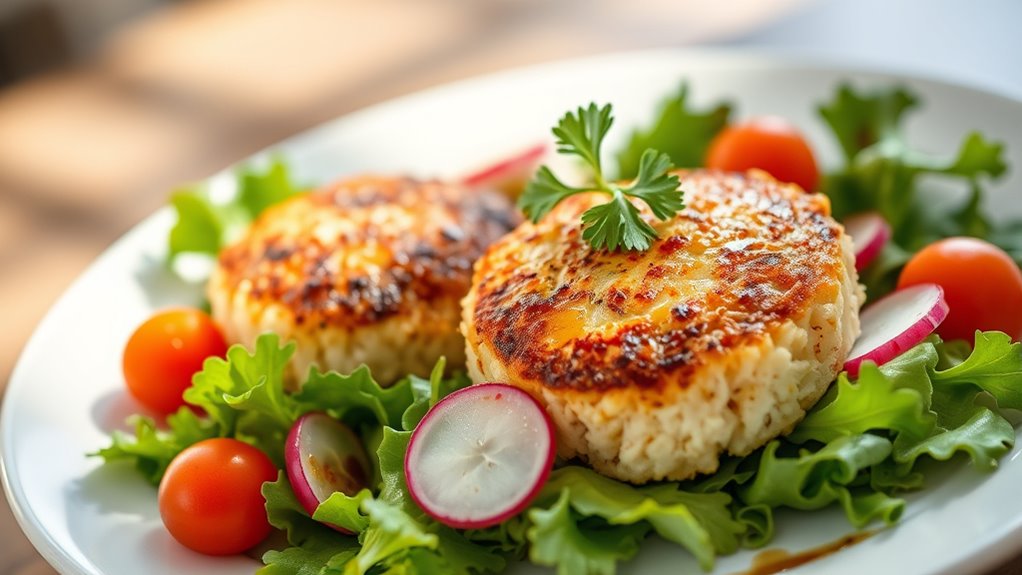
Crumble into a coastal plate where lump crab cakes golden up in a 12-inch skillet, each cake 3/4 inch thick, bound with 1/2 cup breadcrumbs, 2 tablespoons mayo, and 1 egg, folded with 1 teaspoon Dijon, 1 teaspoon Worcestershire, and a kiss of Old Bay. Plate beside a bright salad tossed with citrus vinaigrette, parsley-flecked greens, and a lemon squeeze. A perfect bite—crisp crust, tender meat, and tangy freshness—and there’s more to explore behind this pairing.
Ingredients and Quantity
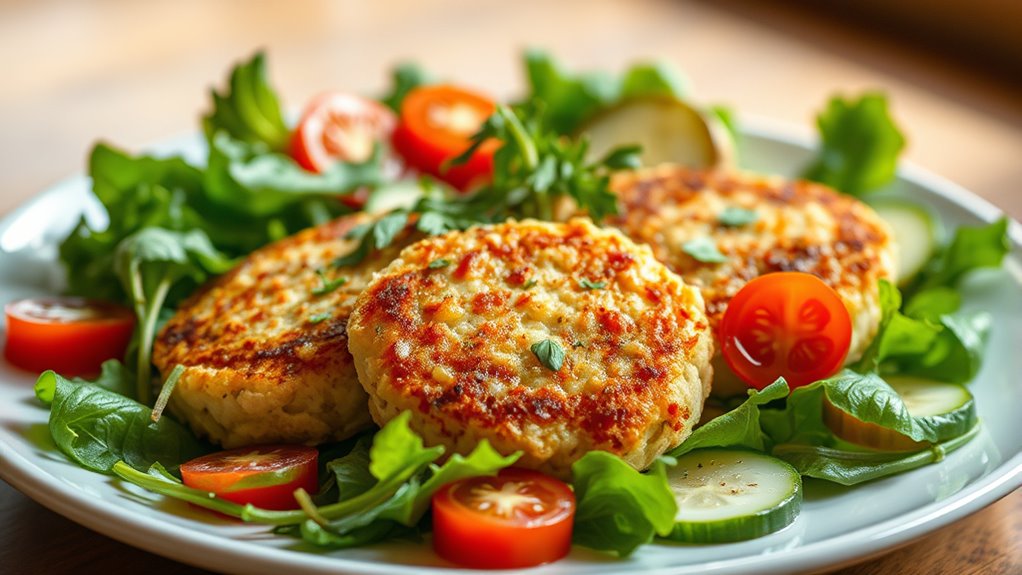
Gather all the basics: 1 pound lump crab meat, 1/2 cup breadcrumbs, 2 tablespoons mayonnaise, 1 large egg, 1 teaspoon Dijon mustard, 1 teaspoon Worcestershire sauce, 1 tablespoon chopped fresh parsley, 1 teaspoon Old Bay seasoning, a pinch of salt, and a squeeze of lemon juice to brighten.
Crab freshness drives every bite, and you’ll feel it in each delicate fold of this mixture. You’ll notice how the texture becomes cohesive, not paste, with precise quantities guiding your hands. For variety, consider salad variations that honor the crab’s sweetness without overpowering it.
| Ingredient | Purpose |
|---|---|
| Crab meat | Main star |
| Breadcrumbs | Binder |
| Mayo, egg | Binder and moisture |
Preparations
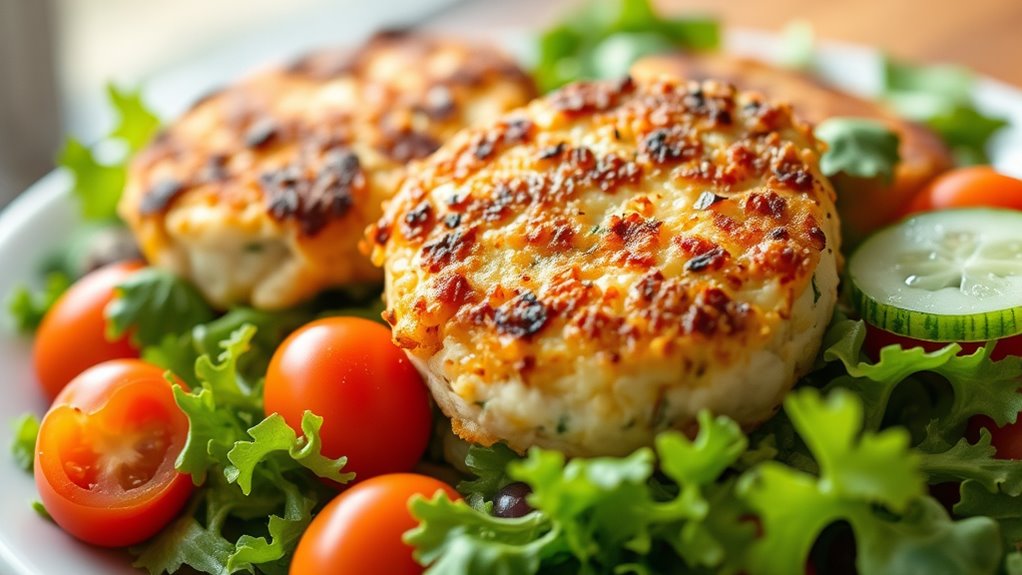
Crab cakes come together when you handle the mixture just enough to keep the crab’s delicate flake intact: softly fold the lump crab with the breadcrumbs, mayo, egg, and spices until the texture looks cohesive, not paste.
- Measure 1 cup crab, 1/2 cup breadcrumbs, 2 tablespoons mayo, 1 egg for structure
- Add 1 teaspoon Dijon, 1/2 teaspoon Old Bay, pinch of salt, a splash of lemon
- Chill 15 minutes to sharpen flavors and ease handling
- Form 8 evenly sized cakes, 3/4 inch thick, for even browning and flavor balance
Preparation techniques guide your grip and timing, flavor enhancement follows your intuition, yielding golden crusts and juicy centers.
Kitchen tools or Kitchenware Required
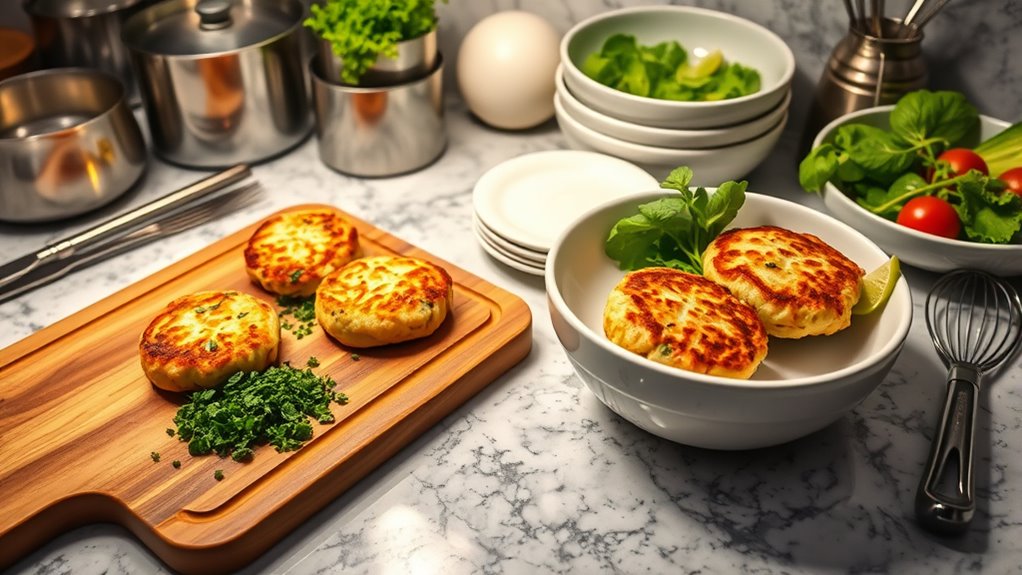
You’ll need a modest set of kitchen tools that don’t get in the way but keep everything precise: a 12-inch skillet for a golden crust, a nonstick option or well-seasoned pan, and a roomy bowl for gentle mixing. Your Measuring cups and Mixing bowls are the quiet rhythm of this recipe, guiding portioning without drama. A wooden spoon for light folding and a spatula for lifting keep textures intact, while a colander handles greens with ease. Now, a tidy two-column table below helps you visualize.
| Tool | Purpose |
|---|---|
| Measuring cups | Exact portions |
| Mixing bowls | Gentle combining |
How to Cook
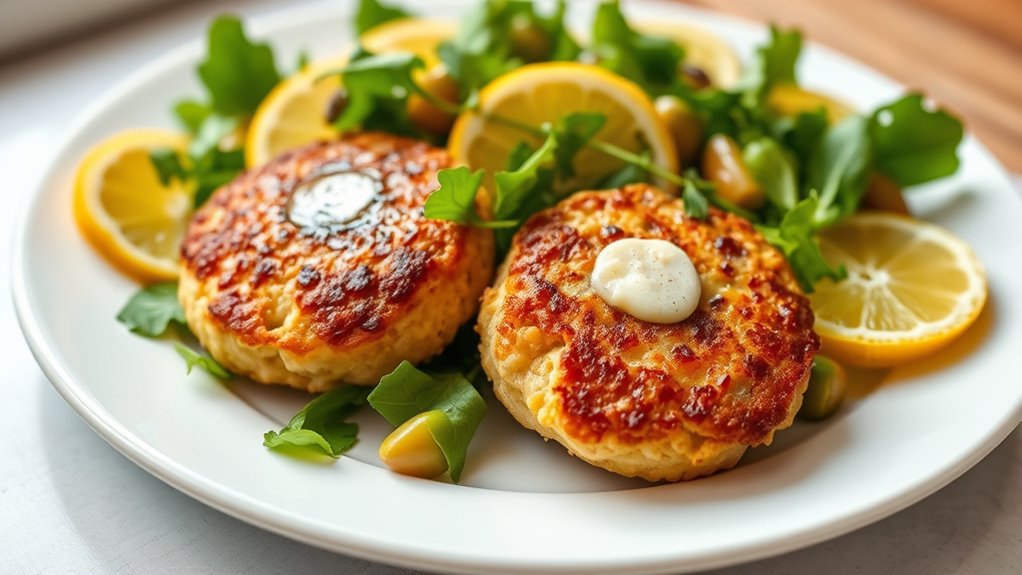
- Heat a skillet over medium heat.
- Melt about 2 tablespoons of butter until it shimmers.
- Slide in the crab cakes carefully.
- Let them sizzle until the edges bronze and the centers stay tender, about 3 to 4 minutes per side.
- Maintain steady pan temperature to preserve moisture and flavor.
- Flip gently to develop a caramelized crust with a tender interior.
- Rest the crab cakes briefly to settle flavors and enhance aroma.
- Enjoy the clean seafood taste, bright citrus notes, and subtle herbs for a balanced flavor profile.
How to Serve
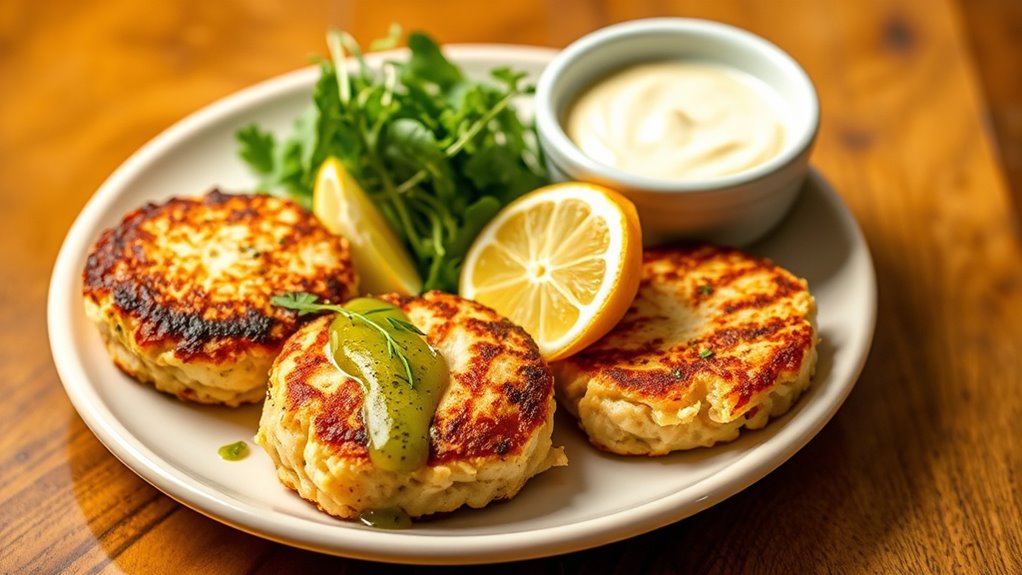
To serve, arrange the crab cakes on warmed plates and kiss each with a light drizzle of tart lemon aioli or a bright herb vinaigrette, then tuck a crisp citrus wedge beside them for a zesty lift. You’ll present two ways: a clean, linear layout for formal moments, or a rustic cluster for impromptu feasts. In either case, choose two small bowls: one for extra sauce, one for microgreens. For plating techniques, place cakes slightly apart, then shimmer a bead of vinaigrette along the edge for sheen. Add a dusting of flaky salt and a whisper of cracked pepper. For presentation ideas, consider a diagonal stack atop a pea purée or a simple lemon zest trail to guide the eye. Serve immediately, savoring the balance of crust and brightness.
Tips
Craft a quick prep habit: stock two key sauces and a bright garnish so plating never slows you down. You’ll move with confidence as flavors marry, not clash, and every forkful feels like a decision you made. Embrace cooking techniques that respect texture: crisp edges, tender centers, and a timely finish so nothing lags.
- Prepare a lemon-chive mayo and a tangy remoulade, both whisked to silk.
- Keep a cottage-cheese crumb crust ready for extra bite and moisture.
- Have a citrus vinaigrette brightener for greens and plate contrast.
- Use ingredient substitutions like lump crab for sweeter bites or finely chopped heck of scallions for bite and color.
You control the rhythm: adjust temperatures, swap breadcrumbs for crushed crackers, and trust your palate.
Food Value and Benefit
Crab cakes offer a nutritious and flavorful meal option, providing a balanced mix of protein, healthy fats, and essential vitamins and minerals. Each crab cake contains approximately 14–16 grams of protein, supporting muscle maintenance and overall energy levels. The fat content, around 6–8 grams, primarily comes from mayonnaise and olive oil, contributing to a moist texture and supplying heart-healthy monounsaturated fats. Breadcrumbs add structure without excessive calories, while scallions, lemon, and mustard enhance flavor and contribute antioxidants.
- High-quality protein supports muscle repair and satiety.
- Omega-3 fatty acids promote heart health and cognitive function.
- Selenium acts as an antioxidant, aiding immune defense.
- Phosphorus supports bone strength and energy metabolism.
- Vitamin B12 from crab meat supports nerve function and red blood cell formation.
- Vitamin C from lemon and scallions boosts immune health and enhances iron absorption.
Health Advantages:
- Balanced macronutrients help maintain steady energy without heaviness.
- Controlled portion size encourages mindful eating.
- Pairing with greens, tomatoes, or a yogurt-herb dressing adds fiber, vitamins, and probiotics for digestive health.
- Ingredients chosen to promote longevity and overall wellness.
Frequently Asked Questions
Can I Substitute Crab With Canned Tuna in This Recipe?
Yes, you can swap tuna; just loosen the texture and adjust binding. Tuna texture changes, so add an extra egg and a tablespoon mayo. Expect flavor differences, so season boldly to taste, about 1 teaspoon Dijon for balance.
How Long Do I Chill the Crab Cake Mixture?
Chilling time for crab cake mixture is 30 to 60 minutes; you’ll see it firm and hold its shape. This texture improvement lets flavors meld, while you savor savory stories of freedom and precise, mouthwatering measurements.
Can I Bake the Cakes Instead of Frying Them?
Yes, you can bake them; preheat to 400°F, brush with oil, bake 12–15 minutes, flip, bake 5 more. Baking benefits include crisper edges, while Texture differences stay juicy inside. You’ll taste freedom in every bite.
Is Mayonnaise Strictly Necessary for Binding?
No, mayonnaise isn’t strictly necessary for binding; you can rely on egg alternatives and other binding agents. Use 1/2 cup breadcrumbs plus 1 beaten egg substitute, or 2 tablespoon chia gel, for sturdy, savory, free-spirited cakes.
Can I Add Dairy-Free Dressing to the Salad?
Dairy-free dressing works great; you can mix olive oil, lemon, Dijon, and herbs for crisp salad dressings. You’ll discover dairy free options that vibe with bold flavors, letting you season, taste, and celebrate freedom in every bite.
References
- https://en.wikipedia.org/wiki/Crab_cake
- https://www.abc.net.au/food/recipes/crab-cakes/BBT-2016-09-09
- https://www.foodsafety.gov/food-safety-charts/cooking-seafood
- https://www.nutrition.gov/topics/food-safety/food-safety-seafood
- https://www.jamesbeard.org/recipes/crab-cakes
- https://www.sciencedirect.com/topics/agricultural-and-biological-sciences/crab-cakes