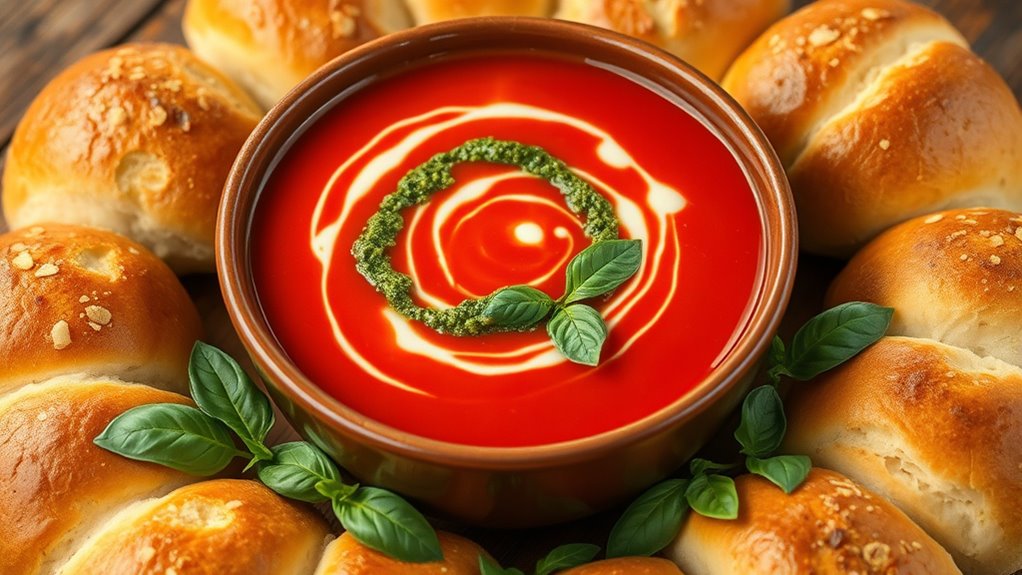
You’ll start by warming olive oil, onions, and garlic until they glow, then bloom tomato paste for a kiss of caramel depth. Add ripe tomatoes, broth, and a pinch of sugar to balance acidity, simmering until the velvet soup whispers its sweetness. A quick pass through a sieve smooths the texture, and a final swirl of cream or olive oil crowns the bowl. If you keep exploring, you’ll uncover more about this comforting, corner-bakery style goodness.
Ingredients and Quantity

Gather all the essentials: tomatoes, onions, garlic, olive oil, broth, and a pinch of salt and sugar. You’ll feel the ingredients hum in your palm, ready to sing. Fresh tomatoes stand tall, their brightness guiding decision, while onions whisper sweetness to balance bite. Garlic adds heat without shouting, olive oil laces the base with velvet depth. Broth becomes your canvas, yet you can use water if you crave purity. Seasoning options spark choice: a kiss of black pepper, a pinch of paprika, or a herb spritz. Salt aligns flavors, sugar softens acidity. Measure with care to taste, not doctrine. Fresh tomatoes center the pot; the rest supports, so you stay free to improvise as aroma rises.
Preparations
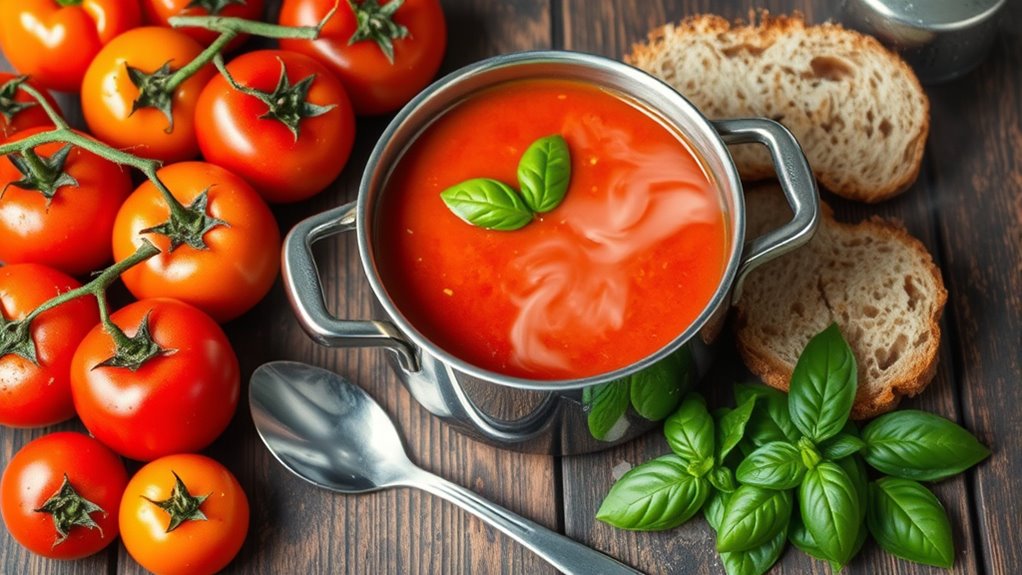
Now that you’ve gathered the basics, you’re ready to prep with intention. You approach the pan with calm focus, letting the aromas build as you scan textures and temperatures. Preparation techniques unfold in small, deliberate steps: heat, bloom, simmer, and taste. You’ll sweat onions and garlic until they glow, then coax sweetness from tomato paste with patient stirring. degreasing and balancing comes next, a gentle hand guiding salt, pepper, and a kiss of sugar if needed. You’ll stir in stock to create a velvet base, watching bubbles ride the spoon’s curl. Taste as you go, refining until the flavors align. This is flavor enhancement in motion, a quiet ceremony that honors freedom, clarity, and the joy of a well-made bowl.
Kitchen tools or Kitchenware Required
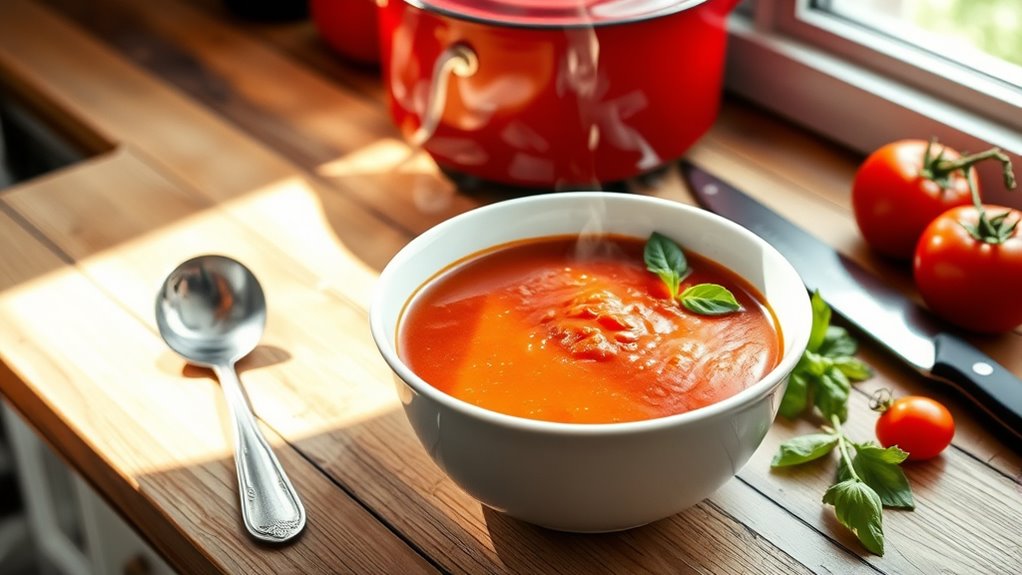
You don’t need fancy gear to coax tomatoes into a velvet soup—just a few dependable tools that feel like extensions of your hands: a sturdy chef’s knife, a wide saucepan or Dutch oven, a wooden spoon or heatproof spatula, and a fine-mesh strainer or sieve for a smooth finish. Your setup respects restraint, yet it invites versatility: blender types offer speed, texture control, and batch precision; saucepan options vary from lazy-susceptible simmerers to heavy, heat-retaining workhorses. A three-column, five-row rhythm below keeps momentum steady as you move from chop to simmer to strain.
| Tool | Purpose | Benefit |
|---|---|---|
| Knife | Prep tomatoes | Clean, even cuts |
| Saucepan | Simmer base | Even heat distribution |
| Wooden spoon | Stir | Gentle contact |
| Strainer | Smooth finish | Velvet texture |
| Blender | Finish texture | Custom consistency |
How to Cook

- Heat a slick pool of olive oil in a wide saucepan until it shivers.
- Sauté onions and garlic until their sweetness blooms.
- Add tomato paste and cook to deepen the base.
- Add tomatoes, stock, and a pinch of sugar to balance heat and acidity.
- Let the mixture simmer patiently to merge flavors and develop depth.
- Finish by stirring in a splash of cream, fresh herbs, and a whisper of sea salt.
- Taste and adjust seasonings as needed, using scent to guide your decisions.
How to Serve

When serving tomato soup, ladle it into warm bowls and crown with a swirl of cream or a drizzle of olive oil to catch the light. You’ll savor the scent of simmered tomatoes lifting with basil and garlic as you present each portion. Keep the temperature steady, so steam curls up in a quiet halo and invites your senses to linger. For serving suggestions, offer rustic bread, a crisp crostini, or a tiny grilled cheese triangle that echoes the soup’s comfort. Garnish ideas invite play: a light dusting of smoked paprika, a whisper of chopped chives, or a few torn basil leaves for bright, emerald pops. Simple, honest, and generous, your plate invites conversation and warmth.
Tips
Tomato soup rewards a few smart tweaks that pay off in flavor and texture. You’ll taste how small shifts reveal depth, balance, and a more forgiving, silky finish.
Tomato soup rewards small tweaks that reveal depth, balance, and a silky finish.
- Embrace soup variations: roast the tomatoes, add a touch of smoked paprika, finish with a swirl of basil oil for brightness.
- Seek flavor enhancements: sauté aromatics slowly, bloom spices in fat, and finish with a splash of good olive oil to carry every note.
- Practice restraint: season in layers, not all at once; let acidity and sweetness meet gently, so the soup feels alive yet controlled.
You’re guiding your palate toward freedom, crafting a bowl that mirrors your appetite for clear, honest flavor.
Food Value and Benefit
The food value of this tomato soup lies in its simple, comforting nature that provides steady nourishment and energy. Slow-simmered with fresh tomatoes, onion, garlic, and a touch of olive oil, this recipe offers a clean, flavorful profile that supports overall health without heaviness.
Benefits of eating this soup include:
- Supports immune system health with vitamin C from tomatoes
- Provides vitamin A, which promotes good vision and skin health
- Supplies essential minerals such as potassium for heart function and magnesium for muscle and nerve health
- Contains dietary fiber that aids digestion and promotes a healthy gut
- Low in sodium and free from artificial additives, helping to maintain balanced blood pressure
- Offers antioxidants that help reduce inflammation and protect cells
Frequently Asked Questions
Can I Substitute Fresh Tomatoes for Canned in This Soup?
Yes—you can, and you’ll notice fresh vs canned taste differences, with brighter sweetness and cleaner acidity. Since 75% of home cooks report bolder flavors from fresh tomatoes, you’ll want to adjust simmer time and seasoning accordingly.
How Long Does It Take to Chill Leftovers Safely?
You’ll chill leftovers safely within two hours; use shallow containers, then refrigerate. Leftover storage should feel deliberate, not hurried, as you listen to the fridge sigh. Safe cooling becomes your ritual, crisp, cool, and reassuring.
Can I Freeze the Soup Without Destroying Flavor?
Sure, you can freeze it without wrecking flavor, if you cool promptly and store properly. You’ll protect soup storage and flavor preservation by freezing in shallow, airtight containers, leaving room to expand, then thawing slowly for best texture.
Is This Suitable for Dairy-Free or Vegan Diets?
Yes, it can be dairy-free and vegan with dairy alternatives like coconut or almond milk and a splash of olive oil; try vegan modifications—nutritional yeast for savoriness, cashew cream for richness—so you taste freedom, not compromise.
What’s the Best Way to Reheat a Large Batch?
To reheat a large batch, you’ll love a microwave method for quick warm-ups, then switch to a stovetop technique to finish bubbling evenly, stirring often until aromatic and silky, letting freedom flavor every spoonful.
References
- https://en.wikipedia.org/wiki/Tomato_soup
- https://www.foodreference.com/html/arttomatosouprecipes.html
- https://www.healthline.com/nutrition/tomato-soup-benefits
- https://www.nutritionvalue.org/Tomato_soup%2C_canned_nutritional_value.html
- https://www.cdc.gov/nutrition/food-safety.html
