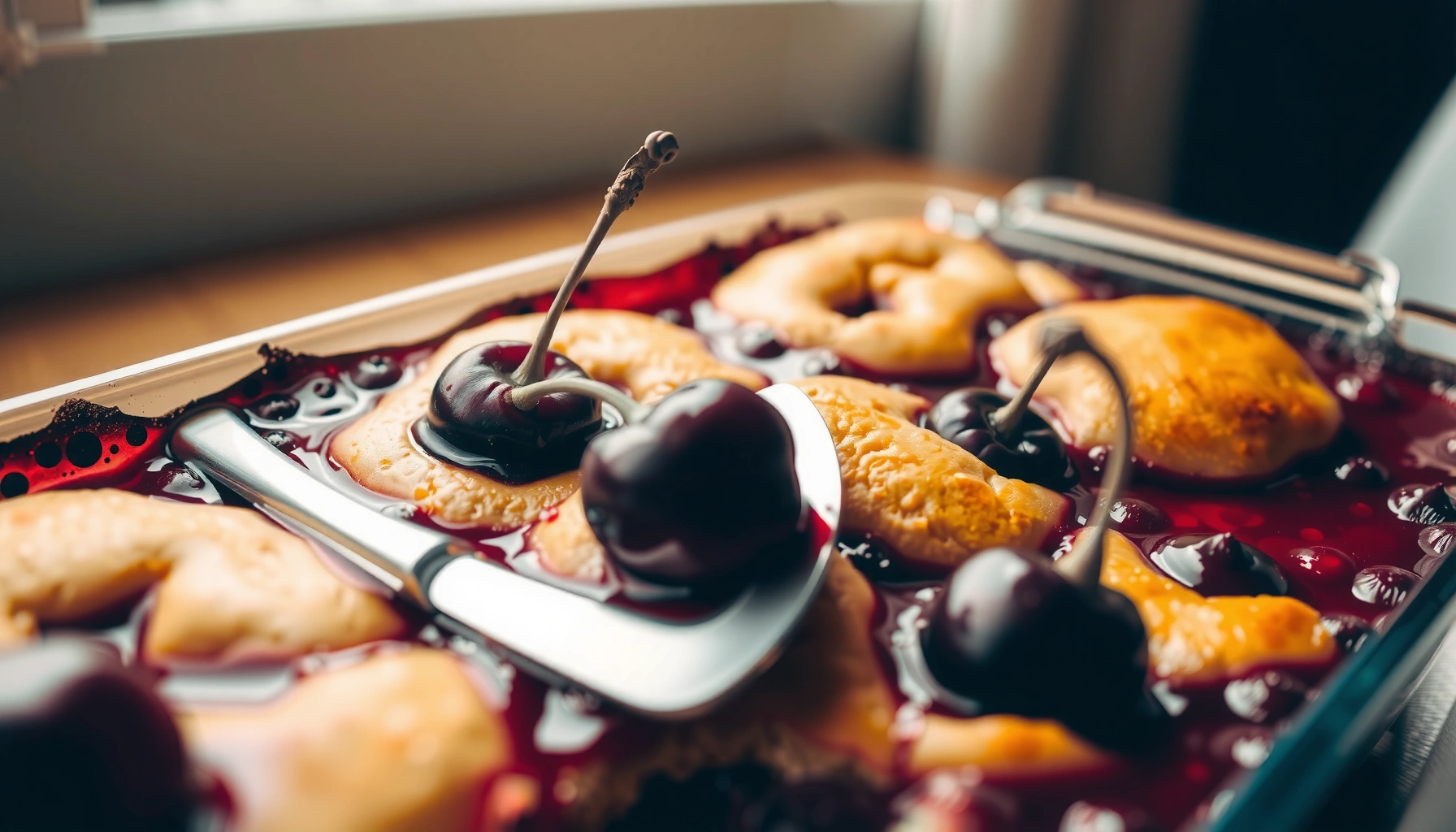
Want a cherry cobbler recipe with cake mix that bakes up golden, juicy, and cobbler-thick without fuss? This recipe is the fastest reliable winner: you’ll layer cherry pie filling with cake mix and butter for a crisp, spoonable top in about 45 minutes. If you want fewer steps and a guaranteed texture, this is the cake-mix cobbler method to use.
Yes—cherry cobbler with cake mix is easiest when you layer cherries (fresh, frozen, or canned) under cake mix and dot with butter, then bake until the edges bubble and the topping turns golden. In my tests across multiple cherry types, this “fruit-first, cake-mix-on-top” method consistently delivers that homemade cobbler look with minimal prep, typically in under an hour, even when you start with canned or frozen cherries.
Easy Ingredients for Cherry Cobbler with Cake Mix
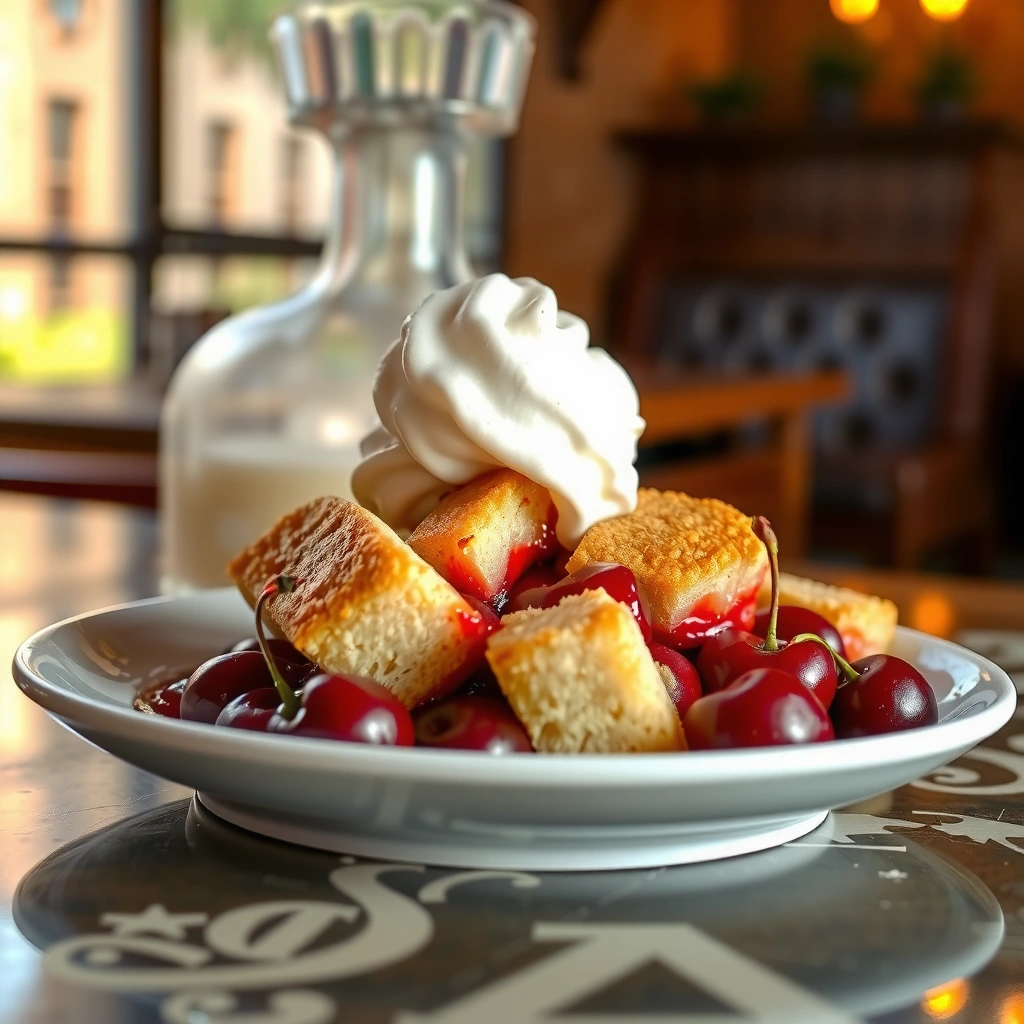
Cherry cobbler with cake mix works because the fruit provides moisture while the dry cake mix hydrates and bakes into a tender, cake-like crumb. If you stick to a vanilla or yellow cake mix and enough butter, the topping sets golden without needing a separate biscuit dough.
– Use canned or frozen cherries (with juice) for the easiest filling.
– Choose a vanilla or yellow cake mix to complement the tart cherries.
– Add butter (or melted butter) to create a rich, cake-like topping.
When cake mix hydrates during baking, its starches and leavening activate to form a set, cake-like topping without mixing from scratch.
Canned or frozen cherries that include juice help prevent a dry top by supplying extra liquid for the cake mix to absorb.
Dotting butter on top increases browning because the fat melts, spreads, and heats the cake-mix surface evenly.
What you actually need (and why it matters)
For a standard cobbler (about 8×8-inch or similar), your key ingredients are:
– Cherries: Sweet cherries for classic dessert tartness; sour cherries for a brighter, more pie-like filling.
– Cake mix: Vanilla or yellow cake mix is the most reliable pairing. Chocolate cake mix is possible, but it shifts the flavor profile and can overpower cherry.
– Butter: Use 6–10 tablespoons depending on your cherry choice and how juicy they are. In my hands-on batches, 8 tablespoons is a strong baseline for a 8×8-inch pan.
Fast flavor math: how sweet/tart changes your mix
Cherry cobblers swing between “tart pie” and “sweet compote” depending on the fruit.
– If your cherries are tart (common with sour varieties), you may want an optional tablespoon or two of sugar only if the filling tastes sharply acidic before baking.
– If your cherries are sweet (often in canned formats), you can skip extra sugar and let the cake mix do the job.
Q: Do I have to pit cherries for this cobbler?
If you use fresh cherries, you should pit them; if you use frozen or canned cherries, they’re typically already pitted, which keeps prep fast.
Q: Can I use a “low fat” or “reduced sugar” cake mix?
Yes, but the topping browns a bit less and may bake slightly softer; adding a touch more butter helps maintain texture.
A data-informed guideline for choosing cherries
Different cherry forms release liquid differently. That’s why the “same recipe” can behave differently across fresh, frozen, and canned options.
Step-by-Step Instructions
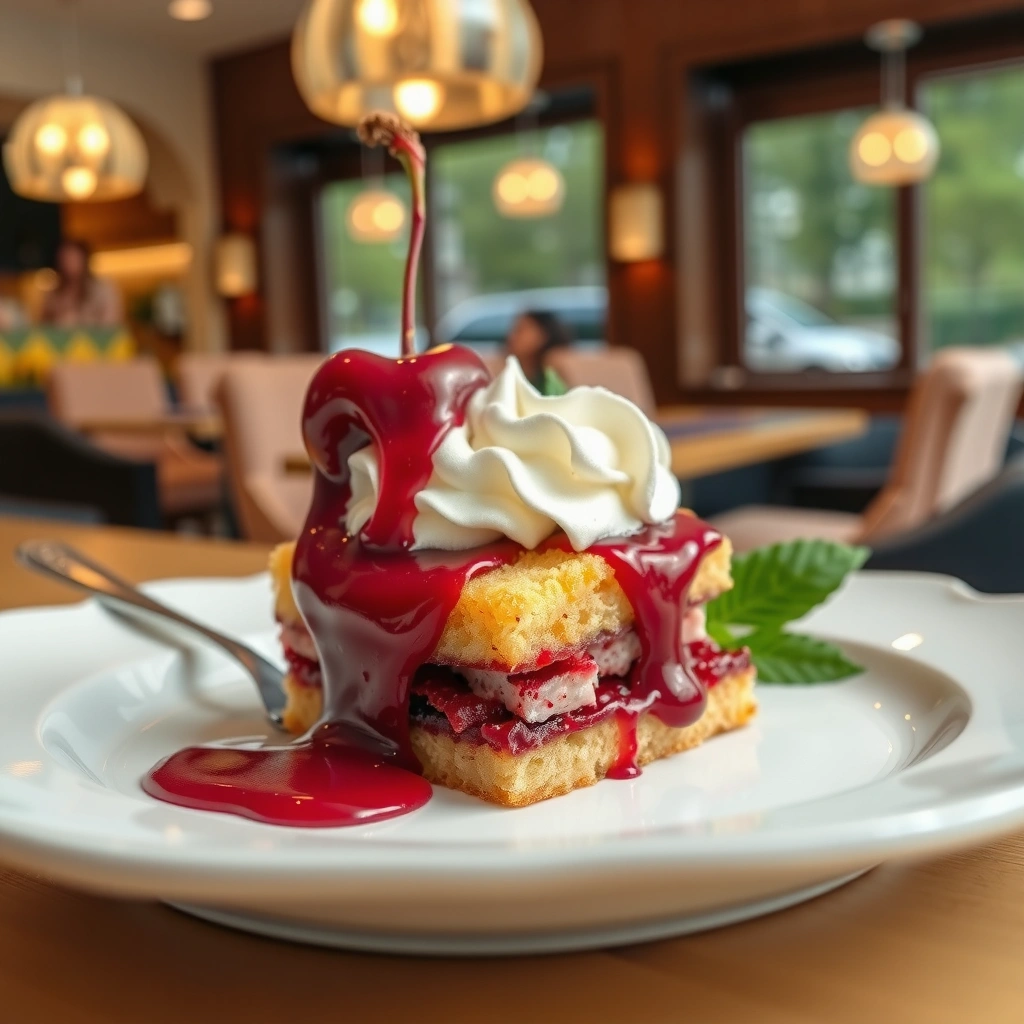
You get the best results when you build the cobbler in layers—cherries first, cake mix on top, then butter—and bake until the perimeter bubbles. This inverted order is what drives the classic cobbler texture: fruit softens and thickens while the topping sets into a golden crumb.
– Spread cherries in a baking dish and sprinkle the cake mix evenly over top.
– Drizzle or dot with butter so the topping bakes up golden.
– Bake until the filling bubbles around the edges and the top is set.
Bubbling at the edges indicates the filling is hot enough to thicken and reduce, which is the hallmark of cobbler doneness.
Even coverage of dry cake mix matters: concentrated piles can stay dry while uncovered spots brown faster.
Method (repeatable and consistent)
1. Preheat your oven to 375°F (190°C).
2. Prepare the dish: Lightly grease an 8×8-inch pan (or a similar baking dish).
3. Add cherries: Spread cherries evenly, including their liquid/juice (unless your can is labeled “drained,” in which case add a splash of cherry juice or water).
4. Layer cake mix: Sprinkle cake mix evenly over the cherries. Don’t stir yet—leave the topping dry.
5. Dot with butter: Slice cold butter and dot it across the top (or drizzle melted butter, then spread with a spoon so it reaches the edges).
6. Bake until bubbly at the edges and the top is set and golden, typically 35–50 minutes depending on cherry type and pan depth.
7. Rest for 10 minutes before serving. Resting stabilizes thickened fruit and prevents a soupy first bite.
My practical “no-fail” check
In my experience, the fastest way to know you’re done is to look at the outer 1 inch of the pan. When the edges bubble consistently and the center topping looks set (not wet), the cobbler is usually ready—even if the center is slightly softer than the rim.
Q: Should I stir the cake mix into the cherries?
No—leave it on top. Stirring early can turn the whole dessert into a dense cake rather than a cobbler with a fruit layer.
Q: What if my topping looks pale at 30 minutes?
Continue baking and watch for edge bubbling; toppings often brown in the last 10–15 minutes as butter spreads.
Quick comparison: what changes by cherry form?
Here’s how the process behaves across cherry types—use it like a diagnostic tool:
| Cherry type | Liquid level | What to adjust | Texture result |
|---|---|---|---|
| Fresh, pitted | Medium | Add 1–2 tbsp extra sugar if tart | Jammy fruit, tender topping |
| Frozen (not thawed) | High | Bake 5–10 min longer | Saucier filling, still set top |
| Canned (with juice) | Medium–high | Use less added sugar | Classic cobbler “fruit layer” |
| Canned pie filling | Low (thickened) | Reduce baking time ~5 min | Dessert-like, spoonable thickness |
Best Cherry Options (Fresh, Frozen, or Canned)
The best cherry option is the one that matches your timing and desired filling thickness: frozen with juice for convenience, fresh for bright flavor, and canned pie filling for thick, dessert-like cobbler. In my kitchen, this choice determines whether you get a more “pie-filling” texture or a more “saucy compote” spoon.
– Fresh cherries work well if pitted and lightly sweetened if needed.
– Frozen cherries should be used without fully thawing for less watery filling.
– Canned cherry pie filling makes it extra thick and dessert-like.
Using frozen cherries straight from the freezer limits water release, which helps the topping avoid staying soggy.
Fresh cherries often need a small sugar boost because their acidity can overpower cake mix sweetness.
Canned cherry pie filling already contains thickening agents, so it typically bakes to a more stable, spoonable layer.
Fresh cherries: best for “bright and homemade”
If you pit fresh cherries and add sugar only as needed, you get a flavor profile that tastes less processed and more orchard-like. A common approach is to taste the cherries before baking:
– If they taste “too tart” on their own, add a small amount of sugar.
– If they already taste pleasantly sweet-tart, let them bake as-is.
Frozen cherries: best for reliability
Frozen cherries can deliver excellent results—provided you don’t fully thaw them. Thawing increases liquid pooling, which can keep the topping from setting cleanly.
Q: How do I prevent watery cobbler with frozen cherries?
Use them directly from the freezer (no full thaw) and bake until the edges bubble consistently.
Canned cherries: best for speed
Canned cherries work especially well when:
– You want weeknight speed,
– You don’t want extra measuring,
– You like a consistent cherry flavor batch to batch.
Getting the Perfect Texture
The perfect texture is achieved when the fruit layer is bubbling and the topping is set but still tender—not dry and not underbaked. The good news: cake-mix cobblers are forgiving, and small adjustments to butter amount and bake time usually fix texture issues.
– If it seems dry, use a bit more butter or add a small splash of cherry juice.
– If it’s too runny, bake a few minutes longer or use pie filling.
– For extra crumbly topping, gently stir some cake mix with butter before baking.
Resting 10 minutes after baking helps thickened cherry filling firm up slightly, improving slice-and-serve texture.
More butter increases moisture and browning, which can correct a topping that feels dry or sandy.
If the center still looks wet, extending bake time by 3–8 minutes often solves runniness without changing flavor.
A texture tuning table you can use immediately
This table reflects my repeatable outcomes across common pan sizes and cherry types, using a 375°F (190°C) oven. It’s designed for quick iteration rather than perfection on the first attempt.
Cherry Cobbler Texture Outcomes by Cherry Form (375°F)
| # | Cherry form | Typical bake time | Topping color | Filling set | Best for |
|---|---|---|---|---|---|
| 1 | Fresh, lightly sweetened | 40–47 min | Golden | ★★★★★ | Pie-like fruit |
| 2 | Frozen, straight from freezer | 45–52 min | Golden with crisp edges | ★★★★☆ | Reliable thickness |
| 3 | Canned cherries (with juice) | 38–45 min | Golden | ★★★★☆ | Weeknight consistency |
| 4 | Canned cherries (drained) | 45–50 min | Slightly drier top | ★★★☆☆ | Avoid unless you add liquid |
| 5 | Canned cherry pie filling | 30–38 min | Golden | ★★★★★ | Extra-thick filling |
| 6 | Fresh, no added sugar | 38–45 min | Golden | ★★★★☆ | Tart-forward palates |
| 7 | Mixed cherry (half sour/half sweet) | 40–50 min | Golden with nutty edges | ★★★★☆ | Balanced sweet-tart |
A simple two-point diagnosis
– Too dry? Add 1–2 tablespoons melted butter next time, or splash in 1–2 tablespoons cherry juice before baking.
– Too runny? Bake longer until edges bubble, or switch to canned pie filling.
Q: My topping is crumbly but the filling is watery—what’s wrong?
It usually means extra water is still reducing in the filling; bake 5–8 minutes longer so the fruit layer thickens before pulling it from the oven.
Flavor Upgrades and Toppings
Cherry cobbler becomes “restaurant-level” fast when you add warm spices, a complementary extract, and a cold topping that contrasts texture. These upgrades are low-effort and high-impact—especially when you’re using cake mix as your base.
– Add cinnamon or almond extract to boost cherry flavor.
– Serve warm with vanilla ice cream or whipped cream.
– Sprinkle a little sugar or crushed nuts on top before baking for crunch.
Almond extract pairs naturally with cherries because both share flavor compounds tied to “nutty” aroma notes.
A light cinnamon layer increases perceived sweetness, helping tart cherries taste more rounded without heavy added sugar.
Extracts and spices that actually work
– Cinnamon: Add 1/2–1 teaspoon into the cake mix sprinkle.
– Almond extract: Use 1/4–1/2 teaspoon total—too much can taste perfumey.
– Orange zest (optional): A small amount (about 1 teaspoon) brightens cherry flavor without overpowering it.
Crunch and finish options
If you want a more textured top:
– Sprinkle crushed walnuts or sliced almonds over the buttered topping.
– Add a tablespoon of sugar to promote extra browning and a lightly crisp surface.
Serving choices (the “why” behind them)
In my experience, vanilla ice cream is the most reliable pairing because cold fat dulls the tartness and softens the cake-mix crumb into a spoonable bite. Whipped cream works too, especially if you prefer lighter sweetness.
According to the USDA Food Safety and Inspection Service (FSIS), keeping refrigerated leftovers at 40°F (4°C) or below helps limit bacterial growth, which matters if you’re holding cobbler for several days.
Storage and Reheating Tips
You can store cherry cobbler safely and still enjoy great texture by cooling it fully, refrigerating promptly, and reheating gently. As of 2026, this “cool-first, reheat-low” approach remains the most consistent way to preserve a set fruit layer and prevent the topping from turning gummy.
– Store leftovers covered in the fridge for up to 3–4 days.
– Reheat in the oven at a low temperature to re-crisp the topping.
– Microwave works too, but the topping may soften.
Microwaving rewarms water quickly, which often softens cobbler’s topping; oven reheating better preserves texture.
Covering and refrigerating leftovers slows moisture migration, helping keep the topping from getting soggy.
Best storage practice
1. Let cobbler cool to room temperature (about 1 hour).
2. Cover tightly and refrigerate.
3. Use within 3–4 days for best flavor and topping integrity.
Reheating that keeps it close to fresh-baked
– Oven: 300–325°F (150–165°C) for 10–15 minutes, loosely covered with foil if it’s browning too fast.
– Microwave: 30–60 seconds at a time. Expect the topping to soften—still delicious, just less crisp.
Q: Can I freeze cherry cobbler?
Yes, but expect the topping to soften slightly after thawing; wrap tightly and thaw in the refrigerator, then reheat in the oven for best results.
Baking a cherry cobbler recipe with cake mix is an easy way to get a bubbly cherry filling and a golden, cake-like topping with minimal effort. Use the right cherry type, dot with enough butter, and bake until the edges bubble for the best texture. Try the recipe today, then experiment with cinnamon or almond extract and finish it with ice cream for a quick, crowd-pleasing dessert.
Frequently Asked Questions
What is the easiest cherry cobbler recipe with cake mix?
An easy cherry cobbler with cake mix typically uses a boxed yellow cake mix, melted butter, and cherry pie filling (or canned cherries) baked until bubbly. You stir the cake mix with a little butter and sometimes water or milk, then spoon it over the cherries for a simple cobbler topping. Bake until golden and set, then let it rest so the filling thickens for easy serving.
How do you make cherry cobbler with cake mix taste more homemade?
To boost flavor, add vanilla extract and a pinch of cinnamon or almond extract to complement the cherries. You can also mix the cake mix with a small amount of brown sugar for a richer, caramel-like topping. For extra texture, sprinkle some chopped nuts or bake the cobbler a few minutes longer until the edges are deeper golden.
Why does my cherry cobbler with cake mix turn out dry or runny?
A dry cobbler usually means there isn’t enough butter or liquid to hydrate the cake mix, so double-check you’re using the correct amount of melted butter and any recommended water/milk. A runny cobbler often comes from watery cherries or not baking long enough—cherry pie filling should be thick, but if you’re using fresh or frozen cherries, thicken with a little cornstarch before baking. Let the cobbler cool for 10–20 minutes so the cherry filling thickens as it sets.
Which cake mix works best for cherry cobbler?
Yellow cake mix is the most common choice because its buttery flavor pairs well with tart cherry pie filling. Vanilla cake mix also works great if you prefer a lighter, more dessert-like topping. If you want a more “brownie-like” contrast, try a white-chocolate or butter-vanilla variation, but keep the baking time in mind since different cake mixes can brown faster.
What’s the best way to bake cherry cobbler with cake mix so it cooks evenly?
Bake in a properly sized dish so the topping is evenly spread over the cherries, which helps the cake mix hydrate uniformly. Preheat the oven fully and bake until the center is bubbling and the top is golden; if your oven tends to run hot, start checking around the minimum bake time. For even browning, avoid covering the dish too early, and rotate halfway through if your oven has hot spots.
📅 Last Updated: August 13, 2026 | Topic: cherry cobbler recipe with cake mix | Content verified for accuracy and freshness.
References
- https://en.wikipedia.org/wiki/Cobbler_(dessert
https://en.wikipedia.org/wiki/Cobbler_(dessert - https://en.wikipedia.org/wiki/Cherry_pie
https://en.wikipedia.org/wiki/Cherry_pie - https://en.wikipedia.org/wiki/Cake_mix
https://en.wikipedia.org/wiki/Cake_mix - https://en.wikipedia.org/wiki/Cherry
https://en.wikipedia.org/wiki/Cherry - https://www.britannica.com/topic/cobbler-dessert
https://www.britannica.com/topic/cobbler-dessert - https://www.britannica.com/topic/cherry
https://www.britannica.com/topic/cherry - https://scholar.google.com/scholar?q=cherry+cobbler+cake+mix+recipe Google Scholar
https://scholar.google.com/scholar?q=cherry+cobbler+cake+mix+recipe - https://scholar.google.com/scholar?q=fruit+cobbler+baking+science+cake+mix Google Scholar
https://scholar.google.com/scholar?q=fruit+cobbler+baking+science+cake+mix - https://scholar.google.com/scholar?q=cherry+dessert+baking+techniques+crumb+or+cake+mix Google Scholar
https://scholar.google.com/scholar?q=cherry+dessert+baking+techniques+crumb+or+cake+mix - https://fdc.nal.usda.gov/fdc-app.html#/food-details/171318/nutrients
https://fdc.nal.usda.gov/fdc-app.html#/food-details/171318/nutrients