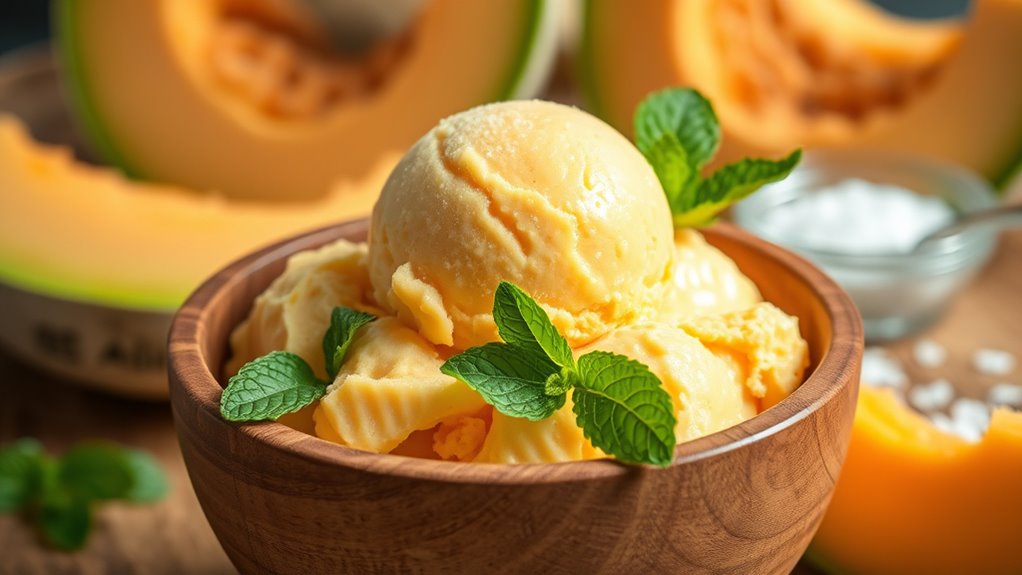
This cantaloupe ice cream lets you savor summer in a bowl. You’ll blend ripe melon with cream, a touch of sugar, yolks, and vanilla, then heat gently until the custard coats the spoon. Strain for silk, temper the yolks, and chill before churning to airy, velvety sweetness. Fold in bright peachy melon aroma as it freezes. Serve with citrus zest or mint for contrast, and discover more tips if you keep reading.
Ingredients and Quantity
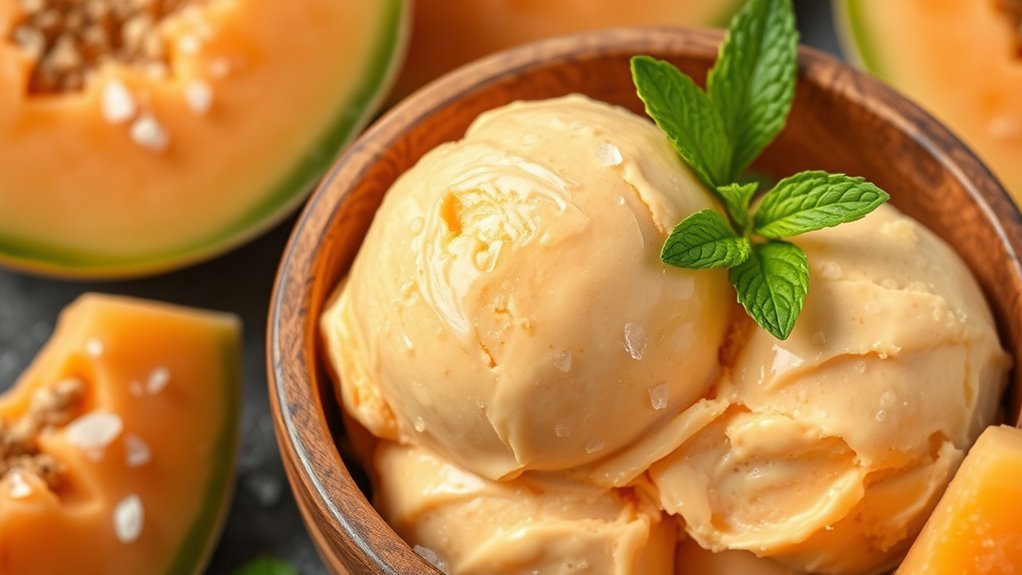
For this cantaloupe ice cream, gather ripe cantaloupe, whole milk, cream, sugar, egg yolks, a pinch of salt, and a splash of vanilla. You’ll feel the heat of summer in scent, the fruit’s sweetness lining your palate, the dairy’s velvet texture ready to carry. Focus on cantaloupe selection: sun-warmed aroma, honeyed flesh, even sweetness. Ice cream varieties whisper freedom as you measure, balance, and temper. Precision matters, but you keep it tactile and real, tasting as you go. This mix sets the stage for a silky, bright base—clean, uncomplicated, honest.
| Item | Purpose |
|---|---|
| Cantaloupe | Flavor, aroma |
| Milk & Cream | Creaminess, body |
| Sugar, Yolks, Vanilla | Texture, sweetness |
Preparations
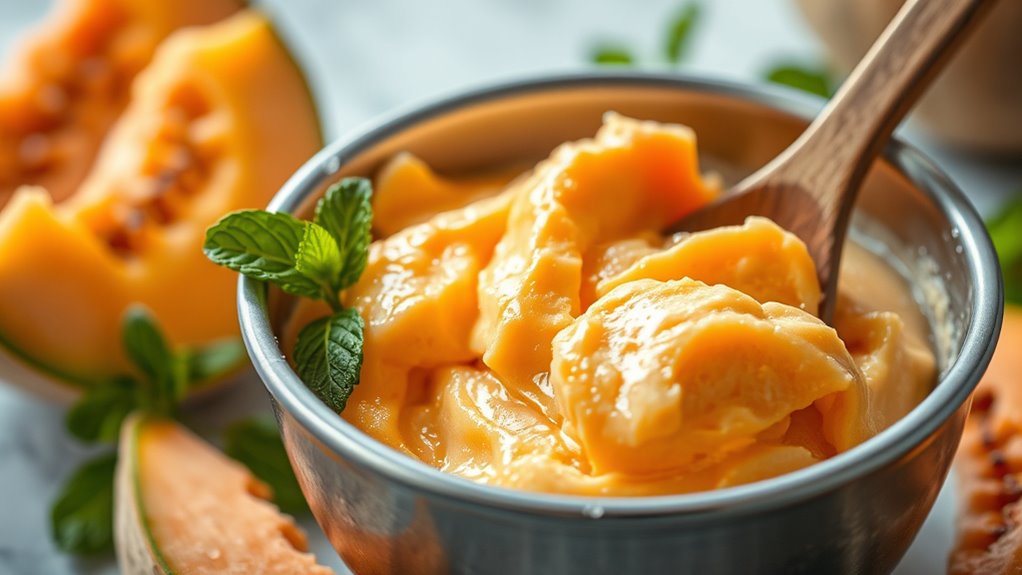
You’ve got the ingredients lined up; now it’s time to prep them so the cantaloupe ice cream comes together smoothly. You’ll rinse and pat dry, then slice the fruit, removing seeds and rind with deliberate ease. You want even chunks that chill quickly, so your texture stays punchy rather than soft. For cantaloupe selection, seek fragrance, vibrant color, and a firm resistance to gentle pressure. Scoop cleanly, weigh portions if you’re precise, and reserve a few pieces for garnish. Ice cream equipment should be ready: a chilled bowl or compressor, a spatula, and a churn. Keep surfaces clean, lids on, and air out any aroma obstructions. Your hands stay confident, every cut deliberate, every move shaping the forthcoming, velvet-smooth sweetness.
How to Cook
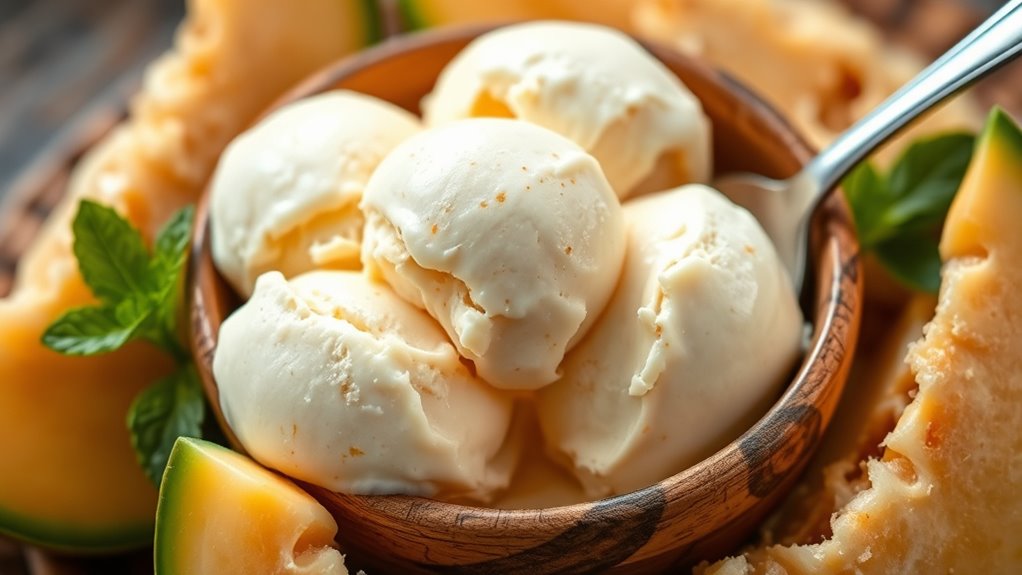
- Thaw the cantaloupe if needed.
- Heat a gentle custard over low heat until it coats the back of a spoon, whisking steadily to achieve a silky texture without scalding.
- Use low heat, slow simmer, and gentle agitation to maintain control.
- Strain the custard to remove any stray curds.
- Temper the yolks by slowly adding a ribbon of warm custard to prevent curdling.
- Return the mixture to the stove and cook just until it thickens.
- Cool the custard mixture.
- Churn the cooled mixture until airy and pale.
- Fold in the cantaloupe fruit to balance texture and flavor.
- Use appropriate kitchen tools such as a sturdy whisk and a reliable ice cream maker to perfect the process.
How to Serve
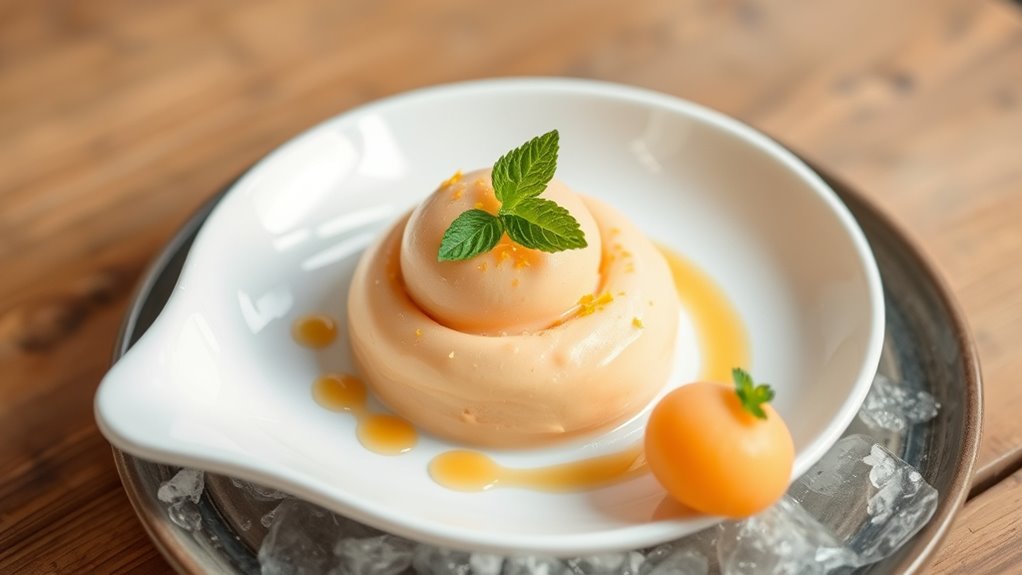
A scoop of cantaloupe ice cream waits best with a simple, bright finish. You serve it with intention, letting the fruit’s perfume lead your plate and palette.
- Serving suggestions: pair with citrus zest, a mint leaf, and a light drizzle of honey for contrast without overpowering the melon.
- Presentation ideas: spoon onto a chilled white dish, create a small quenelle, and finish with a tiny melon ball for visual balance.
- Texture notes: keep portions modest to highlight velvety cream against crisp garnishes.
- Context: serve as a palate cleanser between courses or as a bright finale to a summer menu, inviting curiosity and freedom in taste.
Tips
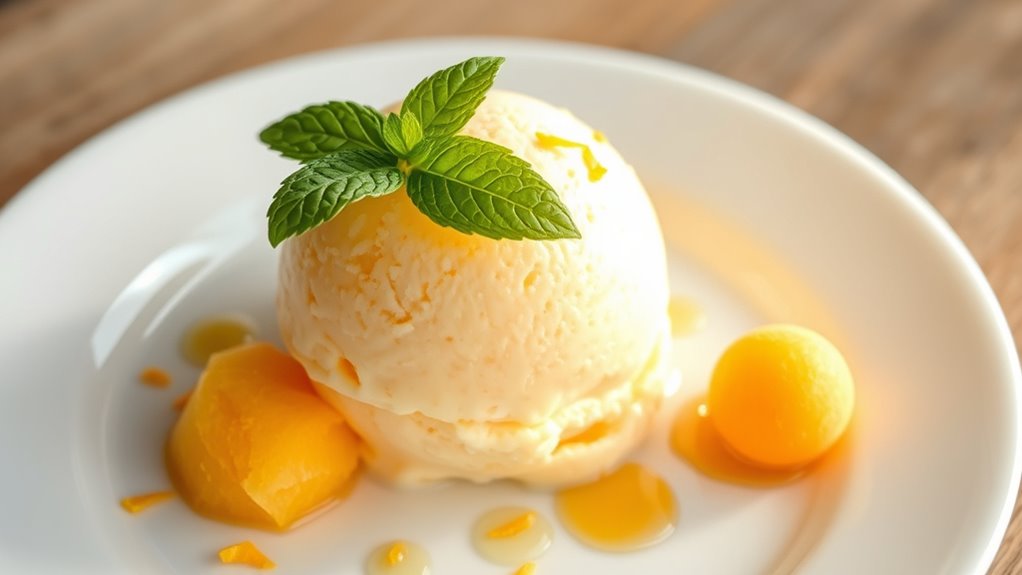
To keep cantaloupe ice cream vibrant and scoopable, start with ripe fruit and balance sweetness with a pinch of salt. You’ll notice the fruit’s perfume guiding every bite, so maintain that brightness by not overprocessing. Chill your base thoroughly; cold enters evenly, keeping the texture smooth rather than icy. When you finish, fold in a touch of cream or milk to tame sweetness without dulling the melon’s edge. For ice cream texture, aim for a gentle, airy body that melts quickly on the tongue. Flavor enhancement comes from letting the melon sing: a hint of vanilla or a whisper of citrus resonates without crowding the cantaloupe. Taste seriously, adjust decisively, and service will feel liberating.
Food Value and Benefit
Cantaloupe offers a refreshing and hydrating flavor that’s both delicious and nourishing. Its natural sweetness and subtle tang make it a delightful addition to your diet, while its vitamins and minerals provide essential health benefits with every bite.
Benefits of eating cantaloupe:
- High water content promotes hydration and supports mental clarity.
- Rich in Vitamin A and Vitamin C, which contribute to healthy skin, immune function, and overall vitality.
- Contains potassium, aiding in nerve function, muscle balance, and cardiovascular health.
- Provides dietary fiber that supports digestion, enhances satiety, and maintains steady energy levels.
This recipe is a nutrient-rich choice that supports hydration, skin health, immune defense, and digestive wellness.
Frequently Asked Questions
Can I Use Canned Melon for This Recipe?
Yes, but you’ll miss fresh sweetness—canned melon can work with extra sugar balance. You’ll taste canned melon benefits in a richer, syrupy note; consider fresh melon alternatives next time for brightness and texture.
Can I Freeze the Mixture Before Churning?
Yes, you can freeze the mixture before churning. Freeze in a shallow, airtight container, stirring every 30 minutes to break ice crystals. This teaches patience; use freezing tips and churning techniques to savor freedom in every bite.
How Long Can I Store the Ice Cream?
You can store it for up to two to three months, but for best ice cream texture, aim within one month. Keep it airtight, freeze fast, and savor the creamy, fragrant bite that hints at summer’s freedom.
What Equipment Do I Need Besides a Freezer?
You’ll need an ice cream maker and a blender, plus a sturdy bowl and spatula. Picture a gleaming churn humming softly as you pulse cantaloupe into smooth pieces, savoring freedom in every scoop you craft, right here, right now.
Can I Make a Vegan Version of This Recipe?
Yes, you can. For vegan substitutes, use coconut cream or almond milk, and bananas for creaminess. Embrace plant based options—add vanilla, a touch of coconut sugar, and pigment with cantaloupe. You’ll savor a fearless, dairy-free twist.
References
- https://en.wikipedia.org/wiki/Cantaloupe
- https://www.fs.usda.gov/food-nutrition/recipes/cantaloupe-ice-cream
- https://www.ncbi.nlm.nih.gov/pmc/articles/PMC5014439/
- https://www.journalofethnobiology.org/index.php/jeb/article/view/1932
- https://www.abc.net.au/food/recipes/cantaloupe-ice-cream/12179884
- https://www.health.harvard.edu/staying-healthy/health-benefits-of-melons
- https://www.cdc.gov/nutrition/food-safety/food-safety-tips.html
- https://www.nutrition.gov/topics/whats-food/cantaloupe