
You slide a pan of buffalo-spiced meatloaf onto your Traeger, the pellets quietly starting their work as the smoky aroma fills the kitchen. This Buffalo Traeger meatloaf balances bold heat with a tangy, savory glaze and stays moist thanks to the right mix of lean and fat. With a simple prep, straightforward smoking time, and an easy resting step, you can get a caramelized top and tender slices with confidence.


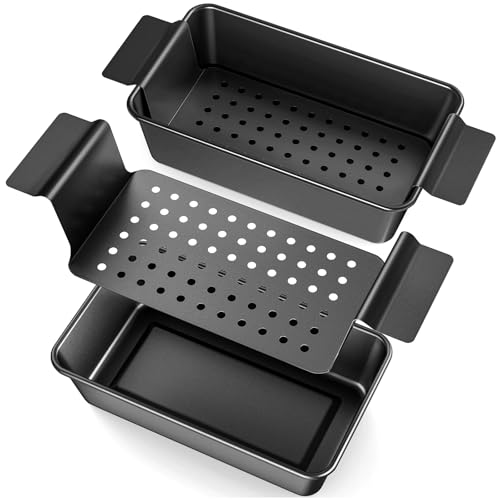

Cook Buffalo Traeger Meatloaf on your Traeger until it reaches 160°F (71°C) in the center, then glaze it with buffalo sauce so it comes out sticky, smoky, and spicy. You’ll get that classic meatloaf slice—only with a wing-sauce vibe and real wood-fired flavor. Keep reading for a simple step-by-step that’s beginner-friendly but still tastes like it took way more effort than it did.
Recipe Overview

The best way to get sticky, smoky, buffalo-glazed meatloaf on a pellet grill is to smoke it until it’s nearly done, then glaze during the last part of cooking and pull it at 160°F (71°C). This Buffalo Traeger Meatloaf blends traditional meatloaf comfort with the tangy, spicy energy of buffalo wings—so every slice tastes like it came from a backyard cookout. As of 2026, pellet grills remain one of the easiest “set it and forget it” ways to add wood-fired flavor without constant babysitting.
If you’re cooking for a crowd, this is an especially smart choice because it feeds about 6 people and reheats exceptionally well for lunches or game-day leftovers. The glaze goes on in layers, creating a caramelized top that still stays glossy instead of dry. It’s also flexible: you can dial heat up or down by choosing your buffalo sauce level.
– This Buffalo Traeger Meatloaf turns traditional meatloaf into a smoky, buffalo-glazed main with big flavor.
– The buffalo sauce goes on in layers, so you get heat plus a sticky, caramelized crust.
– It’s perfect for weeknight dinners or game-day meals that still feel special.
Time Required
– 🕐 Prep Time : 20 minutes (mixing, prepping onion/garlic, and making the glaze)
– 🍳 Cook Time : 1 hour 20 minutes (smoke/bake + final glaze time)
– ⏱ Total Time : 1 hour 50 minutes (includes 10 minutes resting before slicing)
Note: Resting is short but important—this is when the slices stop crumbling.
Ingredients
This recipe is built around a simple idea: fat + binder + seasoning + buffalo glaze. Ground beef provides the “meatloaf body,” breadcrumbs and egg hold everything together, and a buffalo wing sauce (plus a little ketchup and sugar) gives you that tangy heat and glossy crust. If you can, choose a buffalo sauce you genuinely like—because once it caramelizes, it becomes the flavor that leads the whole dish. For wood, we use cherry or hickory pellets on the Traeger for a balanced, crowd-friendly smoke.
Main Ingredients
– Ground beef (80/20 is ideal): 2 lb (900 g)
– Breadcrumbs (plain or Italian-style): 1 cup (about 90 g)
– Egg: 1 large
– Finely diced onion: 1/2 cup (about 80 g)
– Minced garlic: 2 cloves (about 2 tsp)
– Worcestershire sauce: 1 tbsp (optional, but great for savory depth)
– Salt: 1 1/2 tsp (adjust to taste)
– Black pepper: 1/2 tsp, plus more to taste
For the Buffalo Glaze (recommended)
– Buffalo wing sauce: 1/2 cup (120 ml)
– Ketchup: 1/4 cup (60 g)
– Brown sugar (or honey): 2 tbsp
– Melted butter: 1 tbsp (optional, for a glossier finish)
– Optional: 1–2 tbsp water if your glaze seems too thick (helps it brush on smoothly)
Optional Garnish
– Extra drizzle of buffalo sauce
– Chopped green onion or celery for crunch
Step-by-Step Instructions
1. Preheat your Traeger.
Set the grill to 350°F / 175°C and let it come fully up to temp. Pellet grills run best when the heat is steady—this helps the meatloaf cook evenly and prevents the outside from drying out before the center is set.
2. Mix the meatloaf base.
In a large bowl, combine ground beef, breadcrumbs, egg, onion, garlic, Worcestershire (if using), salt, and black pepper. Mix just until everything looks evenly combined. This is the step most people rush, but gentle mixing prevents a dense, tough texture.
3. Shape the loaf.
Form the mixture into a loaf on a foil-lined tray or a loaf pan. Aim for an even thickness (roughly 8–9 inches long) so the center finishes when the edges aren’t overcooked. If you want a more “sliced” look, keep the top slightly domed—glaze will stick beautifully there.
4. Smoke until mostly set.
Place the loaf on the Traeger (use cherry or hickory pellets) and cook until the center is close to done—about 45–60 minutes. You want it firm to the touch but not fully cooked, because the glaze caramelizes best when the meat is already hot enough to bind the sauce.
5. Glaze in the final stretch.
Mix buffalo wing sauce, ketchup, brown sugar (and butter, if using). Brush a generous layer over the top, then cook 10 minutes. Add a second lighter coat if you want an extra-sticky, darker top, then cook another 5–10 minutes.
6. Check doneness and rest.
When the thickest part hits 160°F (71°C), pull the meatloaf. Rest 10 minutes before slicing—this helps the juices redistribute so your slices hold their shape. I always treat resting like a “final bake step,” because cutting too soon is what turns perfect slices into crumbly ones.
Heat & Temperature Guide
Cooking Method
Use a pellet-grill smoke + bake approach: steady grill heat cooks the loaf thoroughly while the wood smoke adds flavor. Glazing happens late so sugars in the buffalo sauce can caramelize instead of burning.
Temperature & Timing
– Target grill temperature: 350°F / 175°C
– Doneness: 160°F / 71°C internal temperature (center)
– Glaze timing: apply during the final 15–20 minutes total
Food safety matters here. According to USDA FSIS, ground beef should be cooked to 160°F (71°C) for safety (USDA FSIS, 2024). According to USDA FSIS, leftovers should be reheated to 165°F (74°C) to reduce foodborne risk (USDA FSIS, 2023). And according to USDA guidance, perishable food shouldn’t sit at room temperature for more than 2 hours (or 1 hour if it’s extremely hot) (USDA FSIS, 2022).
How to Know It’s Done
– Your instant-read thermometer (insert into the center) should read 160°F / 71°C.
– The loaf should feel firm, not squishy.
– The top glaze should be tacky and slightly darker, not watery.
– If you see a lot of runoff grease, you’re likely slicing too early or the loaf is too thin—next time, shape it a bit thicker.
Pellet Wood Pairings for Buffalo-Glazed Meatloaf (Flavor Match)
| # | Pellet wood | Smoke profile | Glaze balance | Pairing rating | Overall fit |
|---|---|---|---|---|---|
| 1 | Cherry | Sweet, fruit-forward | Excellent (sweet heat) | ★★★★★ | +9 |
| 2 | Hickory | Bold, savory bacon-like | Very good (cuts tang) | ★★★★☆ | +7 |
| 3 | Pecan | Nutty, mild-sweet | Very good (rounds heat) | ★★★★☆ | +6 |
| 4 | Apple | Light, crisp fruit smoke | Good (mellow spice) | ★★★☆☆ | +3 |
| 5 | Maple | Sweet, dessert-like | Good (watch caramelization) | ★★★☆☆ | -1 |
| 6 | Al| Gentle, clean smoke | Fair (subtle wing vibe) | ★★☆☆☆ | -2 | |
| 7 | Mesquite | Very strong, earthy | Mixed (can overwhelm tang) | ★★☆☆☆ | -5 |
What Can Go Wrong & How to Fix It
Meatloaf is forgiving, but buffalo glaze adds one extra variable: sugar + spice can go from caramelized to burnt fast. The good news is you can avoid most problems by watching timing and using a thermometer. As of 2026, the most consistent approach is still the simplest one: smoke until near-done, glaze briefly, then rest.
Glaze burns or turns bitter
This happens when buffalo sauce sugars sit on the grill too long at high heat. Brush the glaze on during the last 10–15 minutes only, and don’t keep adding heavy layers. If you notice heavy browning early, stop glazing and cover loosely with foil for the remainder.
Meatloaf is dense or tough
Overmixing is the usual culprit. If you work the meat mixture until it looks “paste-like,” you develop a tougher texture. Mix until just combined, and if your breadcrumbs are very fine, consider adding an extra tablespoon of breadcrumbs to absorb moisture instead of mixing longer.
Meatloaf falls apart when sliced
This usually comes from cutting too soon or not enough binder. Rest 10 minutes minimum, and slice after the glaze has set. If it’s still crumbly next time, increase breadcrumbs by 2–3 tbsp and ensure your onion is finely diced (larger pieces release more water).
Uneven cooking (raw spots)
Loaf thickness matters more on a pellet grill than people expect. Keep your loaf thickness consistent and insert the thermometer into the thickest center portion. If one end cooks faster, rotate the tray halfway through cooking.
Food safety basics (don’t skip the thermometer)
According to USDA FSIS, internal temperatures matter because visual cues can be misleading (USDA FSIS, 2024). Always rely on thermometer readings for the center and for reheating leftovers to reduce risk. If the loaf isn’t at 160°F / 71°C, don’t glaze “for longer” as a substitute—finish cooking first.
Common Mistakes & How to Fix Them
Most failures are fixable, and learning them once saves you a lot of dinner stress.
Waiting to glaze until it’s fully cooked
When you glaze at the very end and the meat isn’t hot enough, the sugars can set unevenly or stay tacky instead of caramelized. Glaze while the loaf is already close to done, so the top gets sticky instead of just sticky-sweet. Use the last 15–20 minutes as your window.
Skipping the rest
Cutting immediately after pulling causes juices to run and disrupt the loaf’s structure. A 10-minute rest is enough for this size loaf on a Traeger. If you’re serving guests, use the rest time for sides so you don’t rush the slicing step.
Using a super-thin loaf
A thin loaf overcooks on the edges before the center reaches 160°F / 71°C. Aim for even thickness and don’t pack the loaf too flat. If you have a loaf pan, fill it so the height matches what you’d get free-shaped on a tray.
Choosing an overly sweet buffalo sauce
Some buffalo sauces are already sugar-forward, and your added brown sugar can push the glaze into “burnt candy” territory. If your sauce is very sweet, reduce brown sugar to 1 tbsp or skip butter so the glaze browns with more control.
How to Serve
This meatloaf is built for comfort plates, but a few smart touches make it feel restaurant-worthy. Serve it hot with sides that can handle the tangy glaze, and don’t be shy about extra drizzle—buffalo sauce is part of the point.
Plating & Presentation
Slice into 1-inch pieces and arrange on a platter with the browned top facing up. Spoon a little extra buffalo sauce on the plate (not just the meat) so each bite gets that wing-sauce aroma. I like to finish with chopped green onion or celery for crunch—bright, fresh notes cut through the richness.
What Goes Well With It
– Creamy mashed potatoes or cheesy potatoes (classic pairing)
– Coleslaw (cool crunch balances spice)
– Roasted baby potatoes or air-fried fries for a game-day vibe
– Steamed green beans or a simple salad to lighten the plate
Serving Temperature
Serve at hot, sliceable warm—roughly right after the 10-minute rest. If it cools too much, the glaze can firm up and the loaf becomes harder to slice cleanly.
Storage & Reheating
Cool leftovers quickly, then refrigerate in an airtight container for up to 3–4 days. Reheat in the oven at a moderate temperature or microwave with a cover, aiming for 165°F / 74°C reheating as a safe target (USDA FSIS, 2023). If reheating, add a light drizzle of buffalo sauce to bring back that “just glazed” feel.
Quick Pros/Cons Snapshot
| Best For | Trade-Offs |
|---|---|
| People who want smoky flavor with buffalo-wing heat | Glaze can scorch if applied too early |
| Meal-prep friendly leftovers | Requires thermometer accuracy for best slices |
| Weeknight cooking with a “special dinner” finish | Heat level depends heavily on your buffalo sauce choice |
Verdict, Checklist & FAQ
This Buffalo Traeger Meatloaf is a big win if you want smoky flavor plus buffalo-wing heat without turning dinner into a complicated project. The downside: if you prefer mild food, the glaze can still feel spicy even with ketchup—so choose a buffalo sauce heat level you’re comfortable with or reduce the added sugar. Skip this approach if you’re avoiding any smoked/charred flavor or if you can’t use a thermometer to confirm doneness.
Quick Save Checklist
– [ ] Preheat Traeger to 350°F / 175°C
– [ ] Mix just until combined (don’t overwork)
– [ ] Smoke until near done, then glaze near the end
– [ ] Pull at 160°F / 71°C
– [ ] Rest 10 minutes before slicing
Frequently Asked Questions
What makes a Buffalo Traeger meatloaf different from regular meatloaf?
A Buffalo Traeger meatloaf adds bold buffalo flavor using hot sauce and often a mix of spices like garlic, onion, and peppery heat. The Traeger pellet grill approach also deepens the flavor with smoky aroma and slow, even cooking that regular oven meatloaf can’t match. If you use toppings like buffalo glaze, ranch dressing, or crumbled blue cheese, the finished loaf tastes like a buffalo chicken twist on a classic comfort dish.
How do I cook Buffalo Traeger meatloaf on a pellet grill without it drying out?
Start by choosing a meat blend with some fat (like an 80/20 ground mix) and avoid over-mixing the loaf, which can make it dense and dry. Use binders such as breadcrumbs or crushed crackers plus a little milk or egg, and consider adding a buffalo-sauce element to the interior so moisture stays locked in. Cook on your Traeger at a steady temperature (commonly around 350°F) and pull it when the center reaches about 160°F for food-safe doneness, then rest the meatloaf before slicing.
Why should I add buffalo sauce or hot sauce to my meatloaf mix?
Buffalo sauce brings tangy heat and helps season the entire loaf, not just the exterior. When incorporated into the meat mixture, it improves flavor distribution and adds a slight acidity that balances richness from the ground beef. If you prefer a stronger buffalo profile, you can also brush the top with additional hot sauce during the last 15–30 minutes for a caramelized, smoky finish on your Traeger.
Which Traeger settings and wood pellets work best for Buffalo meatloaf?
Many people prefer fruit or mild hardwood pellets that pair well with bold sauces—like hickory for a classic smoky base or apple/cherry for a sweeter, chicken-friendly flavor. For Buffalo Traeger meatloaf, a typical approach is to use the Smoke setting to build early flavor and then maintain a consistent cook temperature (often around 325–350°F) until the internal temperature hits target. Keep the lid closed as much as possible so the smoke stays steady and the loaf cooks evenly.
What’s the best way to glaze Buffalo Traeger meatloaf for a crispy, flavorful crust?
Mix a buffalo glaze using hot sauce plus a touch of sweetener (like honey or brown sugar) and optionally a little butter to help it caramelize. During the final stage of cooking, brush the glaze on and let it set for 15–30 minutes, reapplying once if you want a thicker coating. For extra tang and presentation, finish with a drizzle of ranch or blue cheese and serve hot slices straight from the rested loaf.
📅 Last Updated: November 24, 2026 | Topic: Buffalo Traeger Meatloaf | Content verified for accuracy and freshness.
References
- Meatloaf
- Smoking
- Buffalo wing
- Pellet grill
- https://www.fsis.usda.gov/food-safety/safe-food-handling-and-preparation/meat-temperature-chart
- https://www.cdc.gov/foodsafety/food-safety-basics.html
- https://pubmed.ncbi.nlm.nih.gov/?term=ground+beef+safe+minimum+internal+temperature+160+microorganisms
- https://scholar.google.com/scholar?q=traeger+pellet+grill+meatloaf+smoked Google Scholar
- https://scholar.google.com/scholar?q=pellet+grill+smoking+ground+meat+internal+temperature+160F Google Scholar
- https://scholar.google.com/scholar?q=buffalo+sauce+applications+meat+recipes+spicy+flavor+scientific+studies Google Scholar


