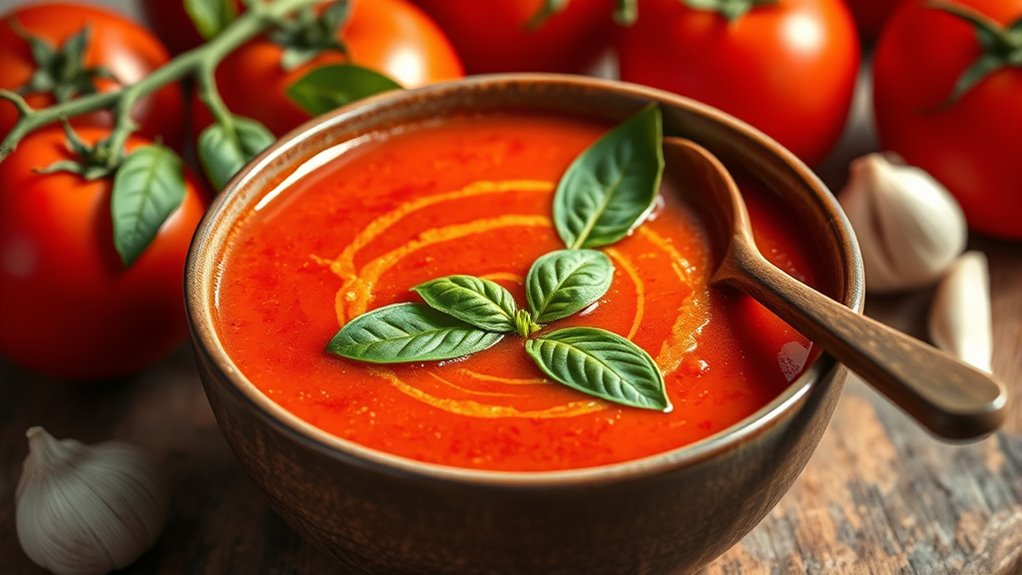
This creamy, bright 4b’s Tomato Soup invites you to savor sun-warmed tomatoes simmered with onion and garlic, their scents filling your kitchen as you stir in tomato paste for rich depth. A splash of stock loosens the sweetness, while a kiss of cream makes it velvet-soft on your tongue. A pinch of sugar balances acidity, and fresh herbs finish with a fresh lift. Want the rest? you’ll find more flavor notes and tips ahead.
Ingredients and Quantity

To make a comforting tomato soup, gather all the essentials: crushed tomatoes, tomato paste for depth, vegetable or chicken stock, cream or milk for richness, a little onion and garlic, a drizzle of olive oil, and a pinch of sugar to balance acidity; season with salt and pepper, and finish with fresh basil or thyme for a bright lift. You’ll savor the simple lineup and the promise of flavor variations as you measure.
| Fresh tomatoes | Aromatic base |
|---|---|
| Tomato paste | Creamy lift |
| Olive oil | Salt & pepper |
| Sugar | Herbs |
| Stock | Optional add-ins |
Fresh tomatoes ignite bright, sun-warmed notes; flavor variations come alive when you adjust fat, acidity, and herb accents.
Preparations

Before you start simmering, take a moment to set your mise en place: chop onions and garlic, rinse fresh tomatoes if using, and measure out stock, cream, and a drizzle of olive oil. In the Preparations stage, you tune the base: sauté onions until translucent, then bloom garlic with a whisper of salt. Ready your tomatoes, selecting varieties for depth—ripe plum, or a bright, juicy mix—to support Tomato selection. Add stock to cover, then bring to a gentle simmer. Stir in cream later to soften acidity. Taste and adjust with a touch of sugar or pepper for Flavor balancing, keeping the pot honest to your palate. Skim any foam and keep heat steady—freedom lives in a smooth, fragrant simmer.
Kitchen tools or Kitchenware Required

As you move from prepping ingredients to cooking, gather the tools that will keep the simmer steady and the flavors flowing. You’ll want a sturdy pot for even heat and a trusted blender for silky texture. Choose a vessel with a wide rim for easy stirring, and a ladle for portioning. A measuring cup helps pace sauces, while a wooden spoon preserves your pot’s interior finish. Consider blender types—immersion for direct blending in the pot, or countertop for batch textures. Also note pot sizes that fit your stove and portions. Table below guides quick picks.
| Item | Purpose |
|---|---|
| Immersion blender | Direct blending in pot |
| Countertop blender | Batch blending |
How to Cook

- Warm the pot over medium heat until a gentle shimmer appears on the surface.
- Add aromatics such as onion, garlic, and any chosen peppers, stirring lightly and steadily.
- Cook until the aromatics release a subtle sweetness.
- Add tomatoes and stock to the pot.
- Simmer gently, allowing flavors to blend without rushing.
- Occasionally taste and adjust salt to develop depth.
- Stir in cream or a splash of acid at the appropriate time to enhance the flavor.
- Ensure the soup maintains a light texture and serve when it feels lush yet lively.
How to Serve

There’s no need to rush—the minute the soup finds its warm glow, you’re ready to plate. You cradle the bowl, feel the steam kiss your skin, and let the aroma ride a soft, peppery sigh through the room. For serving, keep it simple or make it momentariliy ceremonial: a steady pour, a sheen of cream, a quiet bubble of tomato sweetness. Garnish options range from a drizzle of olive oil to a scatter of fresh herbs, a crack of black pepper, or a curl of grilled cheese on the rim as an invitation. Serving suggestions lean toward contrast—crusty bread, a crisp salad, a cold beverage—so every spoonful feels like a small celebration of freedom.
Tips
Stir in a pinch of patience as the soup simmers—tomato flavors wake up slowly, so taste often and adjust with salt, sugar, or a splash of vinegar to balance sweetness and acidity. In Tips, you explore small tweaks that honor your taste and freedom to improvise. Embrace a gentle simmer to preserve brightness while coaxing depth; a whisper of cream or coconut milk can mellow heat and add velvet texture. Consider soup variations like roasted garlic, cumin, or a zing of citrus zest to wake the palate. For flavor enhancements, finish with fresh basil, chives, or a drizzle of olive oil to elevate aroma without masking tomato honesty. Trust your senses, adjust boldly, and savor the personal signature you create.
Food Value and Benefit
Tomato soup is a nourishing and comforting dish that provides quick, satisfying energy. It is packed with essential vitamins and minerals that support overall health.
Benefits of eating tomato soup:
- Rich in lycopene, which supports heart health and acts as an antioxidant.
- High in vitamin C, boosting the immune system and promoting skin health.
- Contains potassium, aiding in fluid balance and proper muscle function.
- Provides dietary fiber, which supports healthy digestion.
- Low in calories, making it a light yet energizing meal option.
- Helps with hydration and promotes a steady mood.
Frequently Asked Questions
Can I Substitute Fresh Tomatoes for Canned?
Yes, you can substitute fresh tomatoes for canned. When choosing fresh vs canned, you’ll notice brighter flavor that benefits from ripeness; savor flavor considerations like tang, balance, and texture, and adjust seasoning to taste for a freer, brighter soup.
How Long Does It Take to Simmer for Depth?
You’ll want to simmer for about 20 minutes to deepen flavor. With simmering techniques, you’ll notice edges sweeten and aromas bloom, crafting flavor enhancement you can taste. You feel free, savoring a sensory, unhurried, tomato-bright depth.
Is This Soup Kid-Friendly or Spicy?
Yes, this soup can be kid-friendly if you adjust spice levels, letting you tailor kid preferences while you savor the warmth. You’ll taste sunny tomatoes, gentle sweetness, and a comforting aroma that invites cozy, freedom-loving bites.
Can I Freeze Leftovers Without Texture Loss?
Yes, you can freeze leftovers without much texture loss. Freezing tips: cool quickly, portion, and thaw gently. Texture preservation matters—stir in a splash of cream after reheating, and savor bright flavors as you defrost, freely.
What Are Vegan Topping Options?
You can top vegan bowls with nutritional yeast and avocado slices, adding savory depth and creamy brightness that wake your senses, free your palate, and celebrate bold flavors you choose to savor, anyway you want, with confidence and joy.
References
- https://en.wikipedia.org/wiki/Tomato_soup
- https://www.foodsafety.gov/food-safety-charts/soup-safety
- https://www.cdc.gov/nutrition/index.html
- https://www.nutrition.gov/topics/whats-in-food/vegetables
- https://www.health.harvard.edu/staying-healthy/the-health-benefits-of-tomatoes
- https://www.ars.usda.gov/ARSUserFiles/np/foodquality/vegetables.pdf
