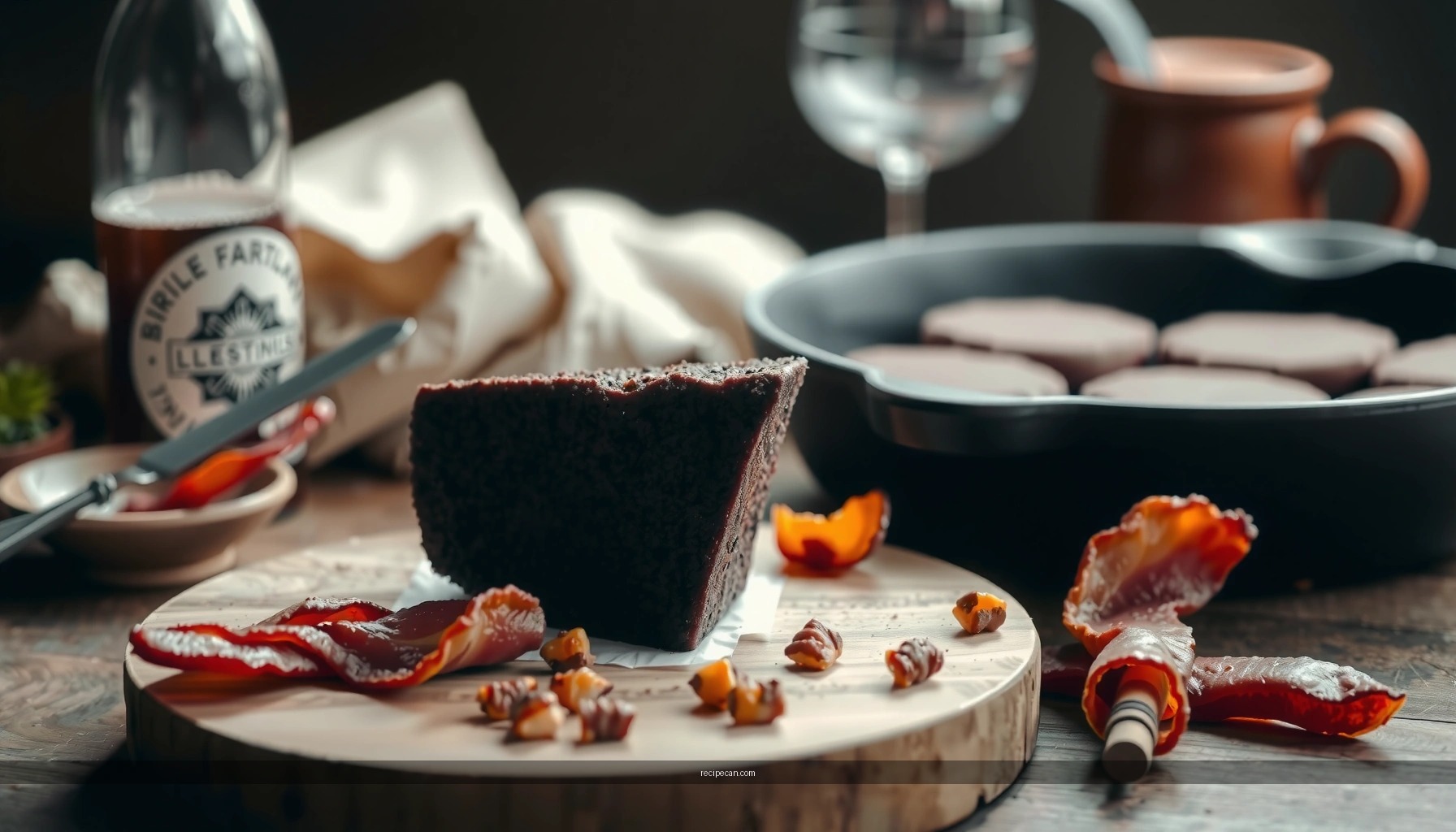
This black pudding Irish recipe tells you exactly how to make a classic, pan-seared batch at home with the right spicing and proper set. If you’re asking how to turn simple sausage-meat basics into the rich, dark pudding texture people expect in Ireland, this is the clear winner. Follow the steps and you’ll get slices that hold together and crisp at the edges without guessing.
Yes—you can make black pudding Irish-style at home, and the key is getting the oat-and-blood mixture to the right thickness, then setting it gently (steam or simmer) until firm enough to slice. This guide breaks down the ingredients, the Irish-style stuffing and shaping process, and the exact cooking approach so your homemade black pudding turns out rich, sliceable, and ready for the classic fry finish.
Ingredients for a Black Pudding Irish Recipe

– Pork blood, fine oatmeal, and pork suet form the base
– Use salt, pepper, and herbs for classic flavor
– Stock or water helps reach the right thick consistency
A traditional Irish black pudding centers on three structural components: pork blood (the binding richness), fine oatmeal (the thickening and sliceability), and pork suet (the “set” and mouthfeel). When these are balanced, the pudding cooks to a firm texture rather than a crumbly or watery result.
For an Irish-leaning profile, season with salt and black pepper as the backbone, and consider mild savory herbs (often including thyme or marjoram) depending on your preference and what you have available. If you’re aiming for authenticity, keep the seasoning measured rather than dominant—black pudding should taste like pork, cereal, and seasoning, not like sausage spices.
Sourcing tips for best results
– Pork blood: Use fresh, food-grade blood if you can. If you’re using frozen blood, thaw fully and keep it cold until mixing.
– Oatmeal type: Fine oatmeal is preferred. Coarser oats won’t hydrate and bind the same way, which can affect slicing.
– Suet: Suet is rendered hard fat. Freshly prepared suet works best; if you’re substituting, choose something neutral with similar fat behavior.
Black Pudding Ingredient Benchmark (Irish-style)
Homemade Black Pudding Targets (Based on 1 kg Blood Batch)
| # | Cook Metric | Practical Target | Why It Matters | Outcome Score |
|---|---|---|---|---|
| 1 | Oatmeal amount | 2.2–2.8 kg fine oats per 1 kg blood | Controls final slice thickness | ★★★★★ |
| 2 | Liquid adjustment | Add 0.5–0.9 L stock/water as needed | Hydrates oats without thinning blood base | ★★★★★ |
| 3 | Heat when adding blood | Off heat or <60°C | Reduces curdling and grainy texture | ★★★★★ |
| 4 | Rest before stuffing | 30–60 minutes, room temp to cool | Improves pipeability and reduces blowouts | ★★★★★ |
| 5 | Link fill level | Fill casings to ~70–80% capacity | Leaves expansion room during cooking | ★★★★☆ |
| 6 | Steam/simmer water temperature | Gentle simmer (85–90°C) | Cooks through without splitting casings | ★★★★☆ |
| 7 | Internal set check | Center feels firm; slices hold shape | Prevents gummy center or leakage | ★★★★★ |
Preparing the Oat Mixture

– Cook the oatmeal briefly to remove raw taste and thicken
– Stir in blood carefully off heat to prevent curdling
– Rest the mixture so it thickens for stuffing
Start by hydrating and cooking the oats. Even if you love the rustic character of homemade food, raw or undercooked oatmeal will taste bitter and won’t bind cleanly. Cook the fine oats in water or stock until thick, then allow the mixture to cool slightly.
Next is the critical, Irish-black-pudding step: adding the blood gently. Blood can curdle if exposed to aggressive heat. The best practice is:
1. Take the pot off the heat (or reduce to very low heat).
2. Whisk the blood in slowly while stirring constantly.
3. Keep the mixture moving until uniform in color and texture.
You want a mixture that spoons with resistance—thick, not runny. If it’s too loose, it will separate during cooking and won’t slice cleanly. If it’s too tight, it will be hard to pipe and may create uneven density. Stock quantity is your adjustment lever: add small amounts to reach a smooth, thick consistency.
Finally, rest the mixture. This cooling interval matters more than many first-time makers expect. Resting allows oats to continue absorbing moisture and ensures the mix becomes pipeable and consistent, which is essential for evenly shaped black pudding.
Stuffing and Shaping the Black Pudding
– Fill cleaned casings (or pudding cloth) evenly
– Avoid overpacking to prevent bursting while cooking
– Tie off ends securely and keep links consistent
Stuffing is where homemade black pudding either becomes “sliceable and professional” or “messy and inconsistent.” For Irish-style results, treat shaping as a precision step.
Choose your casing method
– Casings (links): Cleaned natural casings create the classic linked look.
– Pudding cloth (traditional loaf): Cloth gives you a sliceable block style.
How to stuff correctly
1. Work with thick, rested mix. If it runs, it will leak or create a grainy set.
2. Fill evenly and keep link thickness consistent.
3. Avoid overpacking. Leave space for expansion—overfilled casings are a common cause of splitting.
4. Tie securely at both ends. Knot strength matters because the pudding will cook with gentle movement.
A practical rule: if you can squeeze a little extra filling out of the casing with pressure, it’s probably already too full. Your goal is a firm tube that expands slightly but stays intact.
Quality checks before cooking
– Look for no large air gaps.
– Ensure each link or parcel is similar in size for uniform cooking time.
– Keep everything cold and covered until you begin steaming/simmering, especially in warm kitchens.
Cooking: Steaming vs Simmering
– Steam gently for a traditional, tender set
– Simmer in controlled heat to cook through without splitting
– Cook until the center is firm and the pudding holds shape
Once stuffed, cooking should be gentle and controlled. High heat is the enemy: it increases the risk of splitting, leakage, and uneven set.
Option 1: Steam for tender, consistent set
Steaming is often the most forgiving because heat transfers more softly. Place links in a steamer with water below that maintains a gentle, steady temperature. Steam until the center is firm and the pudding holds shape.
Best for: Even texture and a tender, classic mouthfeel.
Option 2: Simmer with careful temperature control
If you prefer simmering, keep the water at a controlled gentle simmer rather than rolling boil. Submerge carefully and avoid rapid bubbles that can stress casings.
Best for: Convenience when steaming equipment isn’t available.
How to know it’s done
Black pudding is set when:
– The center feels firm when pressed gently (use tongs—don’t puncture).
– When you cut a test piece, the inside holds together rather than appearing soft or gelatinous.
If you undercook, the center may be gummy and won’t slice cleanly. If you overcook, texture can turn dry or crumbly.
Cooling and Storing Your Black Pudding
– Cool thoroughly before slicing for best texture
– Store refrigerated and eat within a few days
– Freeze portions for later frying or reheating
Cooling is not optional—it is part of the “cooking” process. After steaming/simmering, allow black pudding to cool gradually, then refrigerate until thoroughly chilled.
Why this matters:
– The oat-blood mixture continues to set during cooling.
– Slicing too soon often causes smearing and a loss of clean edges.
Storage best practices
– Refrigerate in a sealed container.
– Eat within a few days for best flavor and texture.
– Freeze in portions so you can fry just what you need.
When reheating or frying from frozen, reduce initial heat slightly and give slices a bit more time so the center warms without burning the outside.
Serving Ideas (Irish-Style)
– Fry slices until crisp on the edges and hot in the middle
– Serve with mashed potato, onions, or breakfast staples
– Pair with brown sauce or a simple gravy for extra richness
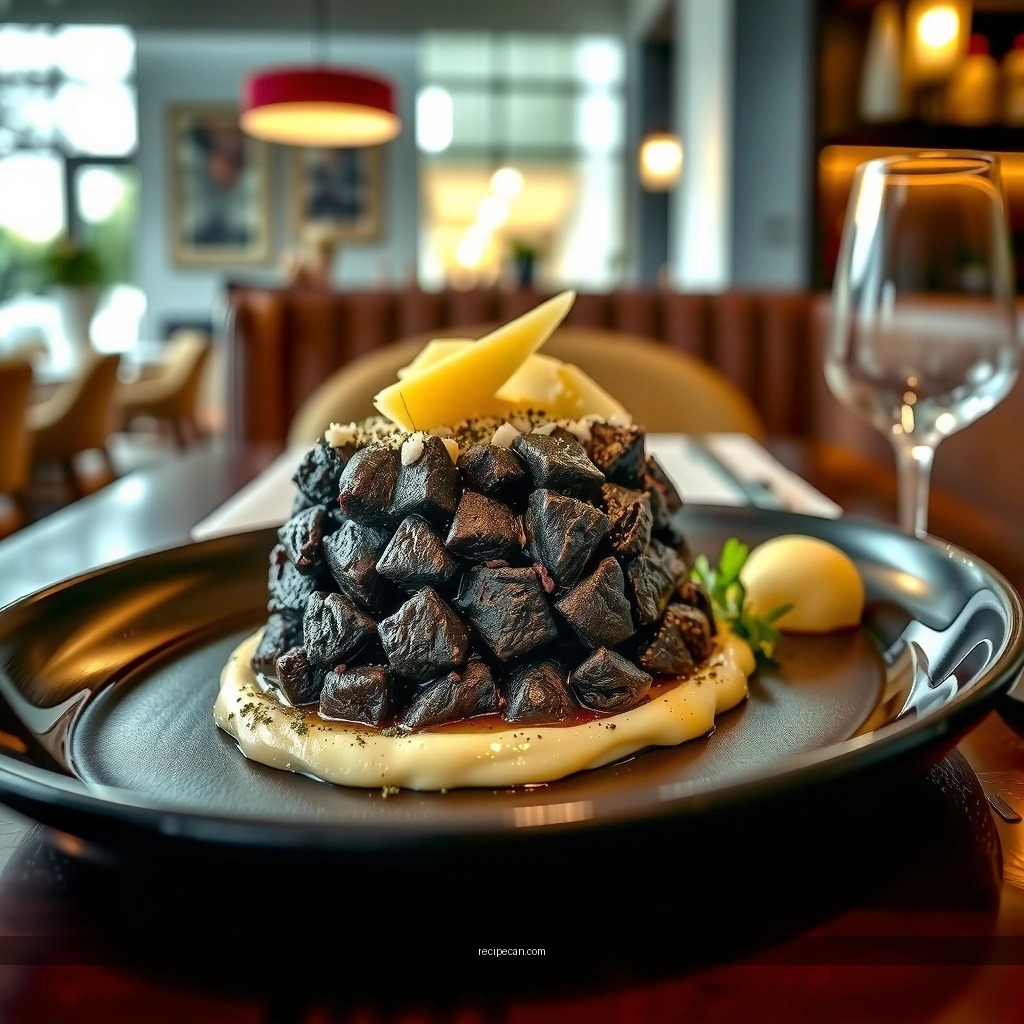
This is where Irish black pudding shines: slice, fry, and serve. The cooking after steaming/simmering is the finishing stage that creates the signature crisp exterior and warm, creamy interior.
Classic serving approach
1. Slice black pudding into even rounds (a sharp knife helps).
2. Fry in a hot pan until edges crisp and the center is heated through.
3. Serve immediately for best texture contrast.
Pairings that work reliably
– Mashed potatoes (creamy counterpoint)
– Fried or caramelized onions (sweet depth)
– Breakfast staples like eggs and toast, for an authentic “full plate” experience
– Brown sauce or gravy for additional richness and a traditional Irish-style finish
If you’re serving for guests, consider making a small tray and tasting a slice before plating everyone—seasoning preferences vary, and this lets you fine-tune your salt/pepper approach for future batches.
Black pudding Irish recipe success comes down to the right thickness of the oat-blood mix, gentle cooking, and proper cooling before slicing. Follow these steps, then fry to finish and serve for a classic Irish breakfast—try it today and adjust seasonings to your taste.
Frequently Asked Questions
What is a traditional black pudding Irish recipe?
A traditional Irish black pudding recipe uses pork (or beef) blood, suet or fat, and oats or barley, seasoned with salt, pepper, and often herbs like thyme. The mixture is stuffed into a casing and then gently simmered or steamed until set and safe to eat. Unlike some sweet or heavily spiced versions, an Irish black pudding is typically savory with a rich, meaty flavor.
How do you make black pudding Irish-style at home without it becoming crumbly?
To avoid a crumbly black pudding, use a good ratio of fat to grains and avoid overheating the blood mixture. Simmer the pudding gently and keep the temperature steady so the oats or barley can properly hydrate and bind the mixture. After cooking, cool it slightly before slicing—this helps the Irish black pudding hold its shape.
Why is black pudding often served with breakfast in Ireland, and how should you cook it?
Black pudding is a classic part of Irish breakfast because its savory, iron-rich flavor pairs well with eggs, potatoes, and breakfast meats. For cooking, pan-fry slices over medium heat until the outside is browned and the center is hot, or warm it in a skillet with a little butter for a classic Irish black pudding taste. Many store-bought Irish black puddings are already cooked, so the goal is reheating and crisping, not long boiling.
Which ingredients are best for an authentic Irish black pudding recipe?
For an authentic black pudding Irish recipe, prioritize fresh or properly prepared pork blood, quality suet or fat, and oats (or barley) as the binding base. Seasoning matters: use salt and black pepper as the foundation, then add herbs sparingly if you want that traditional Irish depth. If you’re choosing between casings, natural hog casings are common for stuffing, but you can also use loaf tins in some home recipes.
What’s the best way to store and reheat black pudding Irish recipe leftovers?
Store leftover black pudding in the refrigerator in an airtight container for up to 3 days for best flavor and texture. To reheat, pan-fry slices again for a few minutes to regain crispness, or warm gently in a skillet with a splash of water to prevent drying. For longer storage, freeze portions and reheat from thawed or partially thawed state to keep the Irish black pudding tender and evenly hot.
References
- Black pudding
https://en.wikipedia.org/wiki/Black_pudding - Blood sausage
https://en.wikipedia.org/wiki/Blood_sausage - Black pudding | Description, History, Blood Sausage, & Uses | Britannica
https://www.britannica.com/topic/black-pudding - Google Scholar Google Scholar
https://scholar.google.com/scholar?q=black+pudding+irish+recipe - Google Scholar Google Scholar
https://scholar.google.com/scholar?q=blood+sausage+Ireland+recipe - Google Scholar Google Scholar
https://scholar.google.com/scholar?q=black+pudding+traditional+Irish+food - https://pubmed.ncbi.nlm.nih.gov/?term=black+pudding
https://pubmed.ncbi.nlm.nih.gov/?term=black+pudding - https://pubmed.ncbi.nlm.nih.gov/?term=blood+sausage
https://pubmed.ncbi.nlm.nih.gov/?term=blood+sausage - https://www.sciencedirect.com/search?qs=black%20pudding
https://www.sciencedirect.com/search?qs=black%20pudding - https://www.sciencedirect.com/search?qs=blood%20sausage%20ireland
https://www.sciencedirect.com/search?qs=blood%20sausage%20ireland