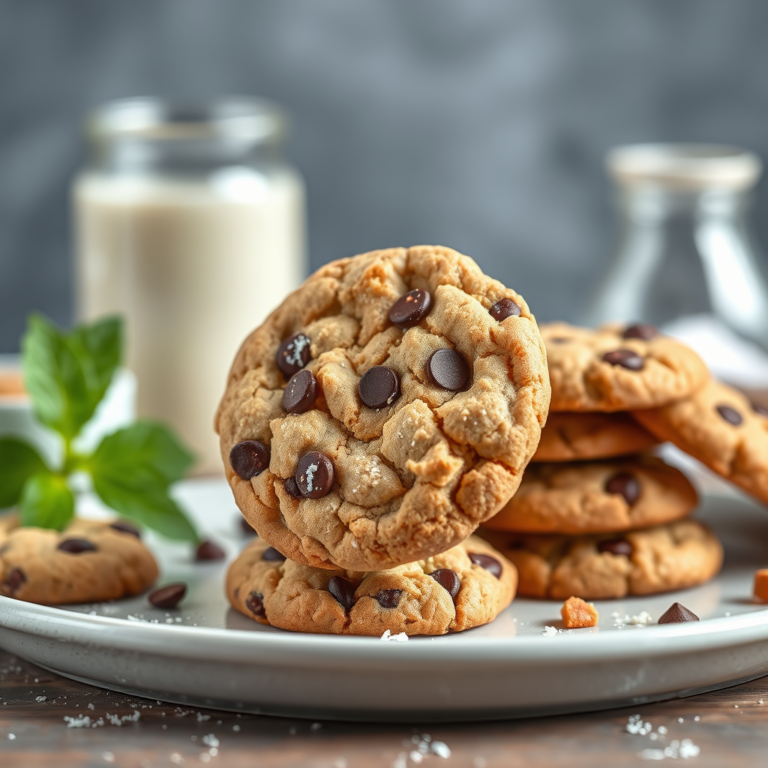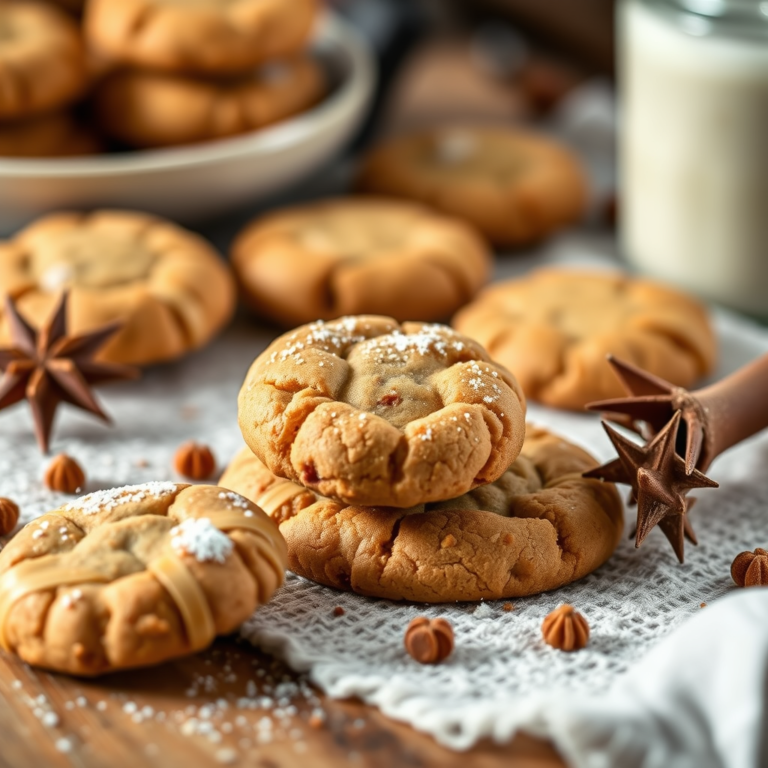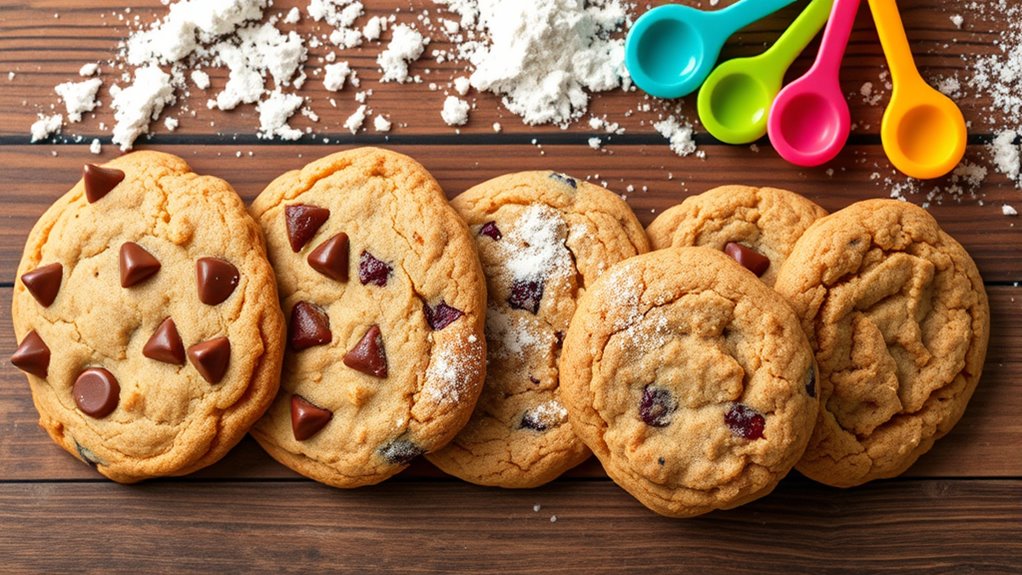
If you’re new to baking, start with simple cookie recipes featuring basic ingredients like flour, sugar, butter, and eggs—just 1 to 2 cups of flour and half a cup of butter can make magic. Measure carefully, cream your butter and sugar well, and try chilling your dough to control spreading. Baking sheets lined with parchment help too. With easy steps and some patience, you’ll soon enjoy beautifully baked treats, ready to impress friends. Keep going, and you’ll discover tips to elevate your cookie game even more!
Ingredients and Quantity
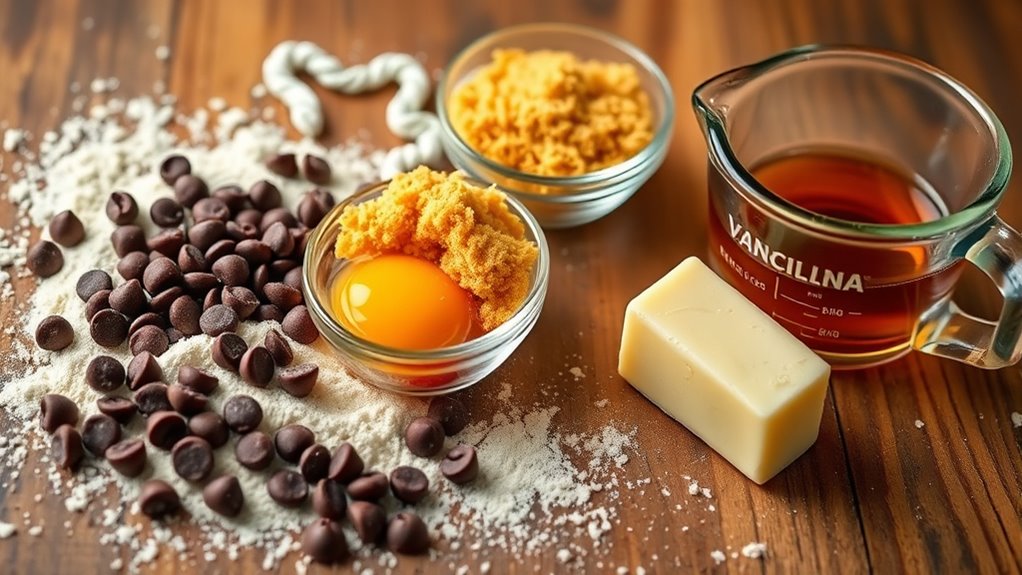
When you’re just starting out, having the right ingredients in the right amounts can make all the difference between a cookie that’s delicious and one that’s disappointing. Mastering baking essentials and measuring accuracy frees you from guesswork, giving you confidence to create treats that truly satisfy.
Here’s a quick guide to key ingredients and their usual quantities in beginner cookie recipes:
| Ingredient | Typical Quantity |
|---|---|
| Flour | 1 to 2 cups |
| Sugar (granulated) | ¾ cup to 1 cup |
| Butter | ½ cup (1 stick) |
| Eggs | 1 to 2 |
Getting these right means your cookies rise, spread, and taste just right—letting you enjoy baking as much as eating.
Preparations
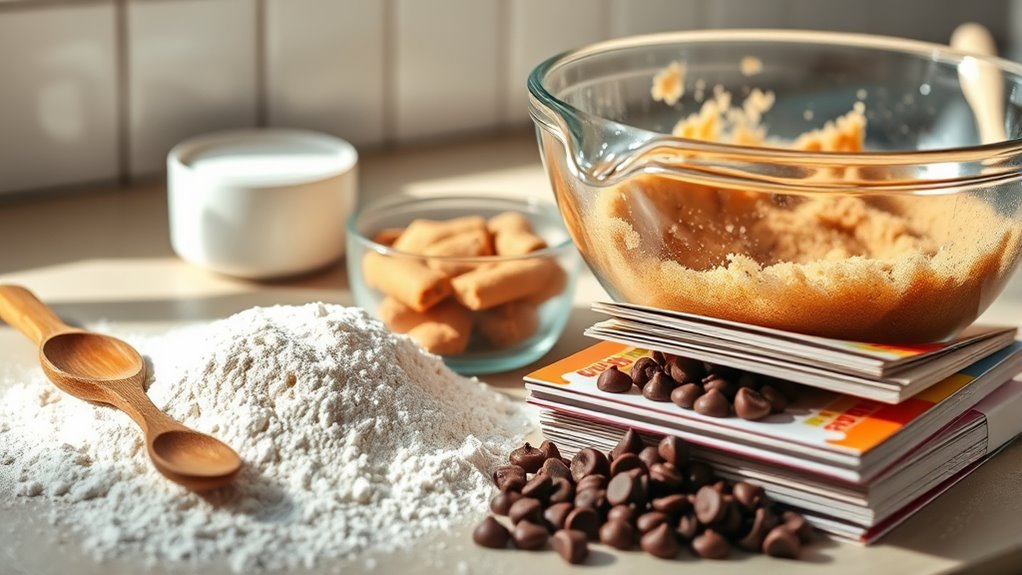
Before you plunge into mixing your ingredients, there are a few simple steps you’ll want to take to set yourself up for success. These preparations make all the difference when exploring baking techniques and experimenting with cookie variations.
- Gather all your ingredients and tools so you won’t scramble mid-recipe.
- Preheat your oven to the exact temperature required—this guarantees even baking.
- Line your baking sheet with parchment paper or a silicone mat to prevent sticking.
- Measure ingredients carefully to maintain the right balance, giving you freedom to tweak later.
How to Prepare
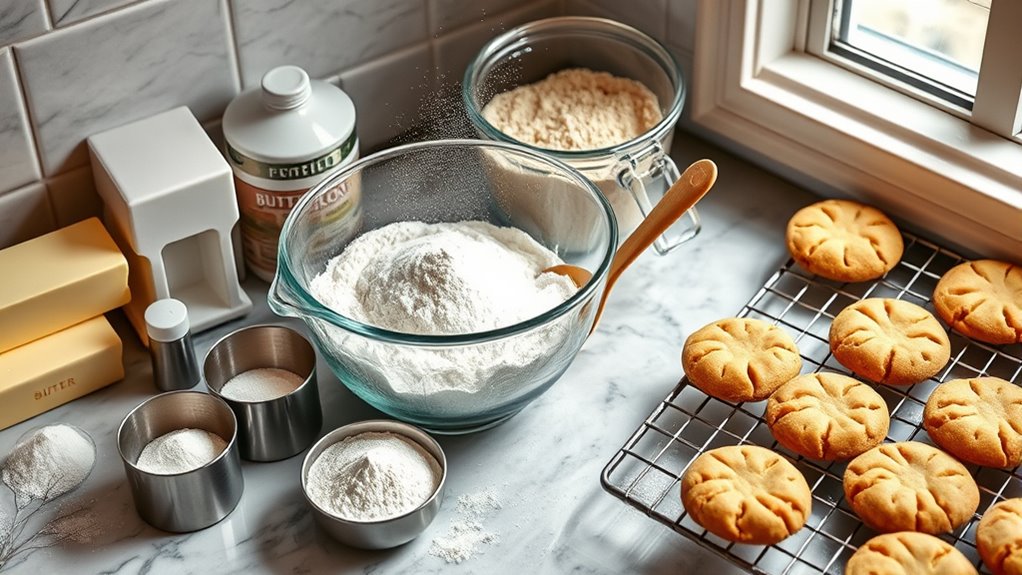
- Measure ingredients carefully—precision is key in cookie baking.
- Cream butter and sugar until light and fluffy to add air for perfect texture.
- Fold in dry ingredients gently to avoid tough dough.
- Chill the dough if the recipe suggests to control spreading during baking.
- Scoop dough into uniform sizes for even baking.
- Use your hands to feel the dough’s texture as you work.
- Master these steps to build confidence and experiment with recipes later.
How to Serve
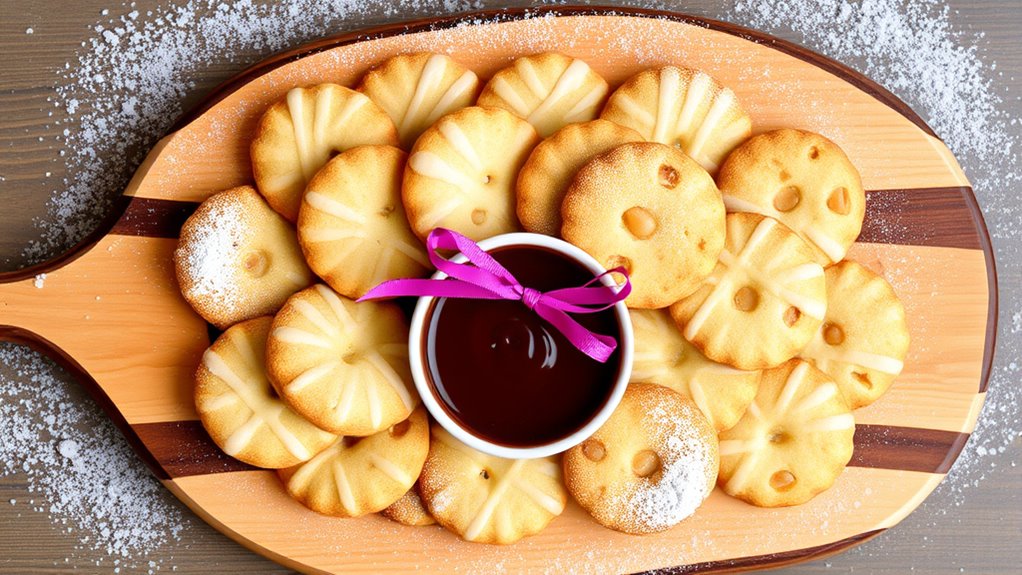
Since presentation can make all the difference, how you serve your cookies will enhance both their appeal and enjoyment. When plating cookies, think beyond just a plate—let your creativity flow with these serving suggestions:
Presentation elevates cookies, turning simple treats into delightful, visually appealing moments worth savoring.
- Arrange cookies in a circular pattern on a rustic wooden board for a cozy, inviting vibe.
- Stack a few cookies and tie them with a colorful ribbon, perfect for gifting or a sweet surprise.
- Place cookies beside a small bowl of dipping sauce like chocolate or caramel for added indulgence.
- Scatter a light dusting of powdered sugar or cocoa on the plate to add an elegant touch.
These simple ideas help you serve your cookies with flair, making every bite feel like a celebration of freedom and flavor.
Tips

Serving your cookies with style definitely sets the mood, but nailing the baking process itself can make all the difference in your final treat. To get started, focus on mastering basic baking techniques like measuring ingredients accurately and controlling oven temperature. These small details guarantee your cookies bake evenly, giving you that perfect texture every time. Don’t be afraid to experiment with cookie variations—try swapping chocolate chips for nuts or adding spices like cinnamon to discover your favorite twist. Remember, freedom in baking means trusting your instincts and adjusting recipes to suit your taste. With practice, you’ll develop a sense for when dough is just right and cookies are perfectly golden. Embrace these tips, and you’ll bake with confidence, creating treats that delight every time.
Food Value and Benefit
Cookies made with wholesome ingredients can provide significant nutritional value and health benefits. By incorporating whole grains, healthy fats, natural sweeteners, and nutrient-dense add-ins, these cookies become more than just a tasty treat—they contribute beneficial nutrients to your diet.
Food Value of Prepared Cookies:
- Rich in dietary fiber from whole wheat flour, promoting digestive health.
- Contains healthy fats from coconut oil, supporting heart health.
- Provides natural sugars from honey or maple syrup, offering a more balanced energy release.
- Includes protein, vitamins, and minerals from nuts or seeds for overall nutrition.
Benefits of Eating This Recipe:
- Supports digestive health due to high fiber content.
- Helps maintain healthy cholesterol levels with beneficial fats.
- Offers sustained energy without blood sugar spikes.
- Supplies essential vitamins such as Vitamin E (from nuts and seeds) and B vitamins (from whole wheat flour).
- Provides important minerals including magnesium, zinc, and iron, which contribute to immune function and energy metabolism.
Enjoying these nutrient-enhanced cookies can be a smart way to satisfy your sweet tooth while nourishing your body.
Frequently Asked Questions
What are the easiest cookie recipes for beginners?
The easiest cookie recipes for beginners typically include classic options like chocolate chip cookies, sugar cookies, peanut butter cookies, oatmeal cookies, and snickerdoodles. These recipes usually require minimal ingredients and straightforward techniques, making them perfect for novice bakers.
Do I need any special equipment to make cookies?
No special equipment is necessary to make cookies. Basic kitchen tools such as mixing bowls, measuring cups and spoons, a baking sheet, and an oven are all you need. A hand mixer or stand mixer can make the process easier, but mixing by hand is perfectly acceptable for beginners.
How can I ensure my cookies turn out soft and chewy?
To ensure your cookies are soft and chewy, make sure not to overmix the dough, as this can create a tougher texture. Use brown sugar in your recipe, as it adds moisture and chewiness. Also, consider underbaking them slightly, as they will continue to cook on the baking sheet after being removed from the oven.
Can I substitute ingredients in cookie recipes?
Yes, many ingredients can be substituted in cookie recipes. For example, you can use coconut oil or applesauce instead of butter for a healthier option. If you’re out of eggs, flaxseed meal mixed with water can serve as a binder. However, be cautious with substitutions, as they can affect the final texture and flavor of the cookies.
How do I store cookies to keep them fresh?
To keep your cookies fresh, store them in an airtight container at room temperature. If you’ve made different types of cookies, it’s best to keep them in separate containers to prevent them from becoming soggy or losing their distinctive flavors. For longer storage, you can freeze cookies in a sealed bag, allowing you to enjoy them later.
References
- https://en.wikipedia.org/wiki/Cookie
- https://www.thekitchn.com/how-to-make-cookies-221195
- https://www.acouplecooks.com/cookie-recipes/
- https://www.foodnetwork.com/recipes/photos/50-cookie-recipes
- https://www.seriouseats.com/cookies-5111176
- https://www.bbcgoodfood.com/recipes/collection/cookie-recipes
- https://www.nytimes.com/2021/12/15/dining/cookies-christmas-recipes.html
- https://www.simplyrecipes.com/recipes/category/desserts/cookies/