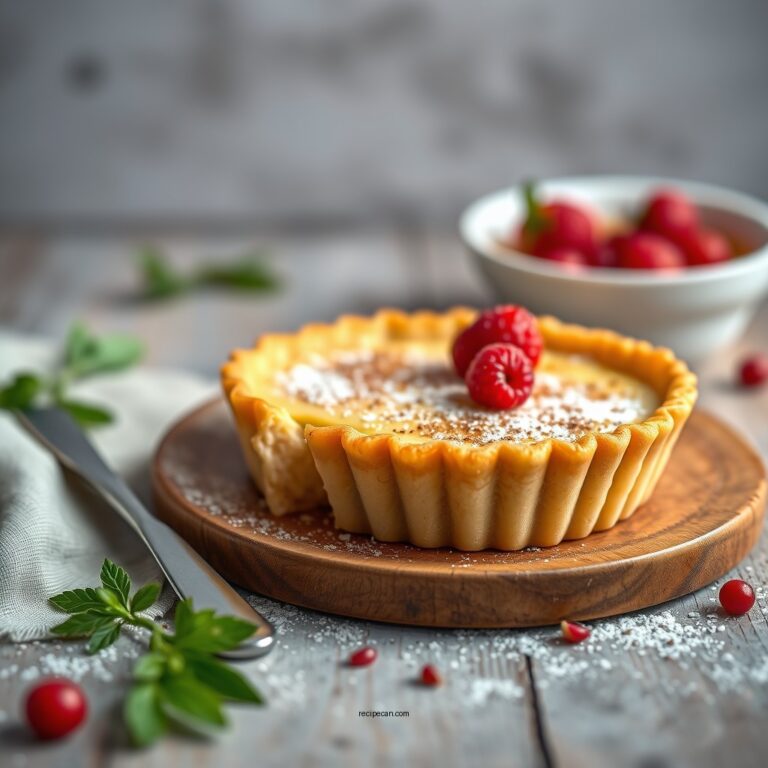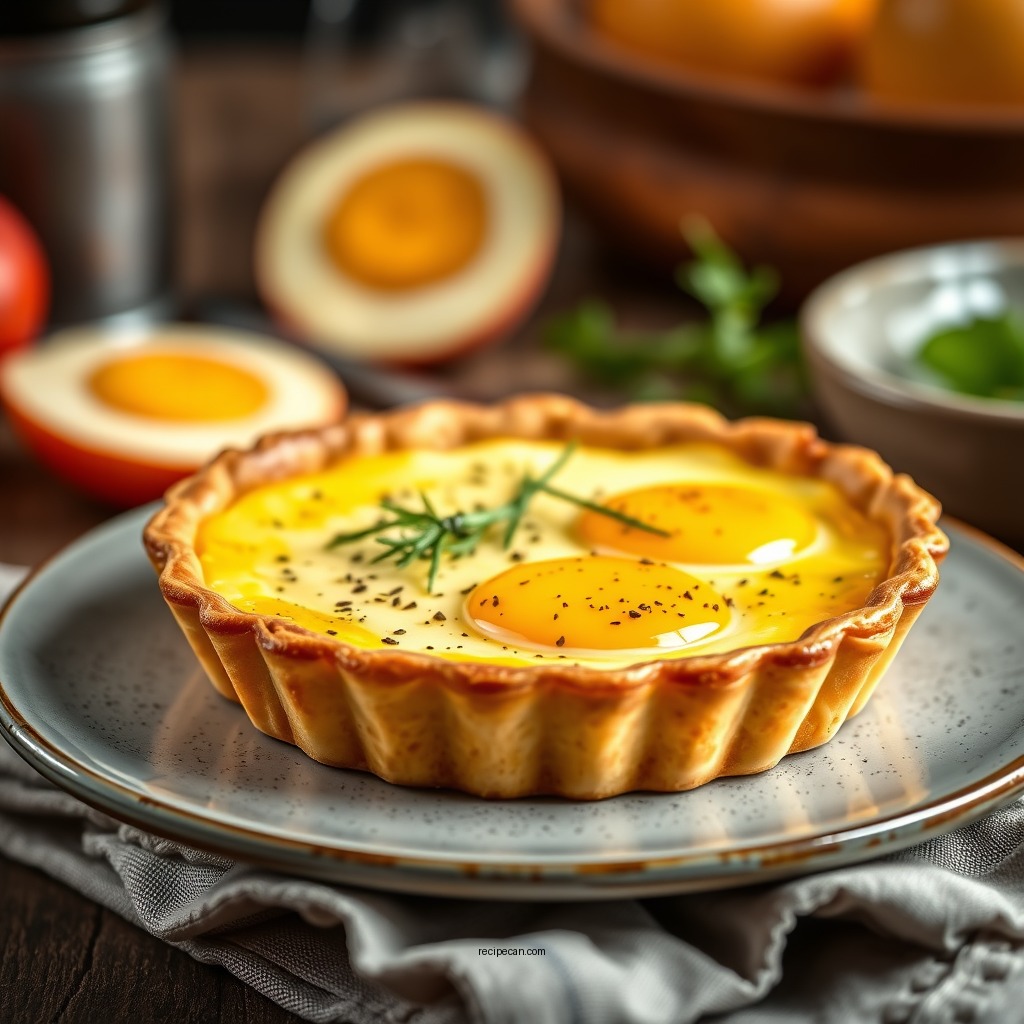
Making delicious Portuguese egg tarts is simpler than you might think. This recipe will walk you through the process of creating these creamy, flaky pastries that are sure to impress your family and friends. You’ll learn about the essential ingredients, preparation tips, and baking techniques to achieve that perfect balance of crispy crust and rich custard filling.
Key Ingredients for Portuguese Egg Tarts
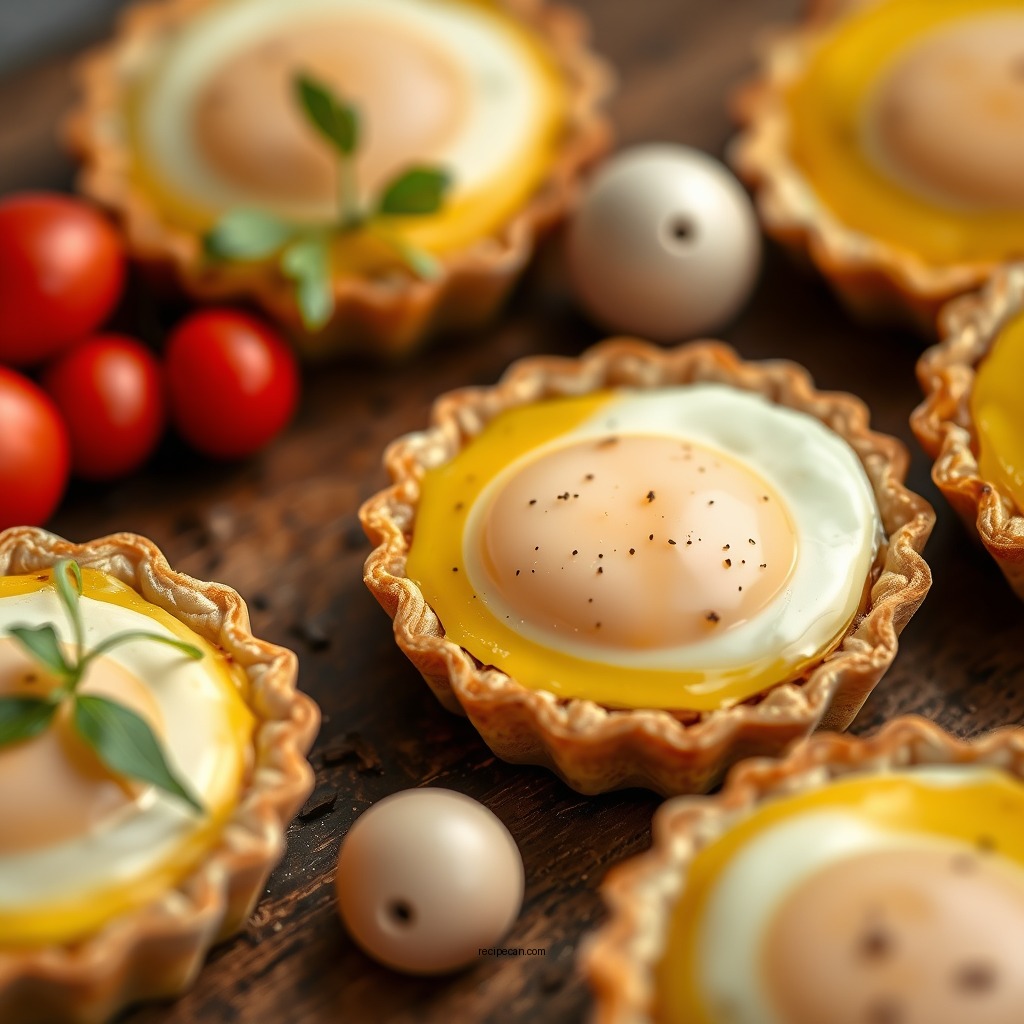
To create authentic Portuguese egg tarts, also known as pastéis de nata, selecting the right ingredients is crucial. The two primary components of these delightful pastries are the pastry dough and the custard filling.
– Pastry Dough: The choice between puff pastry and shortcrust pastry can significantly affect the texture and flavor of the tarts. Puff pastry, known for its flaky layers, is the traditional choice as it creates a light and delicate crust that contrasts beautifully with the creamy filling. Shortcrust pastry offers a crumbly texture and can be easier to handle, making it a popular alternative for home bakers.
– Custard Filling: The custard is the heart of the tart, combining eggs, sugar, milk, and vanilla. The eggs provide richness and structure, while sugar balances the flavors. Whole milk contributes to the creaminess, and a hint of vanilla enhances the overall taste. For an extra layer of depth, some recipes incorporate heavy cream or a splash of lemon zest.
Preparing the Pastry
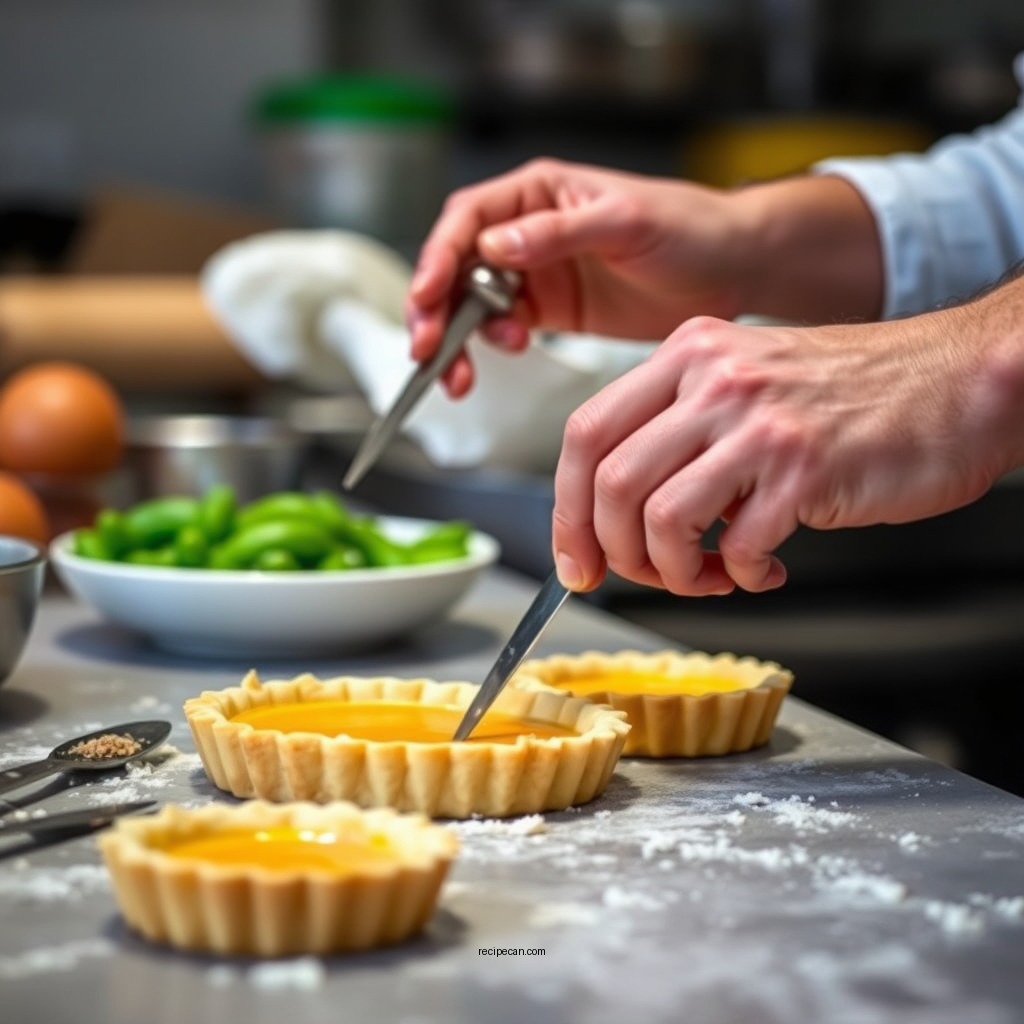
Creating the perfect pastry for your egg tarts requires attention to detail and a few essential steps to ensure a flaky result.
– Dough Preparation: Start by rolling out your chosen pastry dough on a lightly floured surface. If you’re using puff pastry, ensure it’s chilled enough to maintain its layers. Cut the dough into circles that are slightly larger than your tart molds. This allows the pastry to rise and envelop the custard filling adequately.
– Chilling the Dough: Chilling the dough before baking is an often-overlooked step that can make a significant difference in texture. Place the shaped pastry shells in the refrigerator for at least 30 minutes. This process helps the fats in the dough solidify, resulting in a flakier crust when baked.
Making the Custard Filling
The custard filling is where the magic happens. A smooth and creamy custard is essential for a successful egg tart.
– Mixing Ingredients: Begin by whisking together the eggs, sugar, and milk in a bowl. Mix until the sugar is fully dissolved and the mixture is uniform. For an extra touch of creaminess, you can substitute some of the milk with heavy cream. Whisk until you achieve a smooth consistency.
– Straining the Mixture: Straining the custard through a fine-mesh sieve is a critical step. This process removes any clumps of egg or undissolved sugar, ensuring a silky texture. It may seem like an extra step, but the resulting custard will be much smoother and more enjoyable.
Key Ingredients for Portuguese Egg Tarts
| # | Ingredient | Amount | Role |
|---|---|---|---|
| 1 | Puff Pastry | 500g | Base |
| 2 | Eggs | 4 large | Filling |
| 3 | Sugar | 150g | Sweetener |
| 4 | Milk | 300ml | Creaminess |
| 5 | Vanilla | 1 tsp | Flavor |
| 6 | Lemon Zest | 1 tsp | Flavor |
| 7 | Salt | Pinch | Balance |
Assembling the Tarts
Once you have your pastry and custard ready, it’s time to assemble the tarts.
– Filling the Tart Shells: Carefully place the prepared pastry shells into your tart pans and pour the custard mixture into each shell, filling them to about three-quarters full. This ensures that the custard has enough space to puff up without overflowing.
– Tart Sizes: While traditional pastéis de nata are often made in small, individual sizes, you can experiment with larger tart sizes. Just be mindful that larger tarts will require slightly longer baking times. Miniature versions can also be created using a mini muffin tin, which can be a fun and bite-sized alternative.
Baking the Tarts
Baking is where the tarts come to life, transforming into the golden, caramelized delights we know and love.
– Oven Temperature: Preheat your oven to a high temperature, ideally around 220°C (430°F). This high heat is essential for achieving that characteristic crispy crust and the signature burnt top of the custard.
– Monitoring Doneness: Keep a close eye on the tarts as they bake. The edges should turn a deep golden brown, while the custard should be set with a slight jiggle in the center. A good indicator of doneness is the caramelization of the top, which should have a few dark spots.
Baking Times for Different Tart Sizes
Serving Suggestions
Once baked, Portuguese egg tarts can be enjoyed in various ways to enhance their flavor and presentation.
– Garnishes: A light dusting of powdered sugar or a sprinkle of cinnamon can elevate your tarts, adding a touch of sweetness and spice. Additionally, serving them with fresh fruits or a dollop of whipped cream can create a delightful contrast.
– Storage Tips: To maintain their delightful texture, store leftover tarts in an airtight container at room temperature for up to two days. For longer storage, consider freezing them. Allow them to cool completely before wrapping them individually and placing them in the freezer. When ready to serve, reheat in the oven for a few minutes to restore their crispness.
Variations on the Classic Recipe
While the traditional recipe is a classic, experimenting with variations can lead to exciting new flavors.
– Flavor Additions: Incorporating different flavors into the custard can provide a refreshing twist. Consider adding lemon zest for a citrusy kick or even chocolate for a decadent dessert. Infusing the milk with spices like nutmeg or cardamom can also create a unique flavor profile.
– Alternative Crust Options: For those with dietary restrictions, experimenting with different crusts can yield delicious results. Gluten-free blends or almond flour crusts can serve as excellent substitutes, allowing more individuals to enjoy this delightful treat.
Enjoy these delightful Portuguese egg tarts warm or at room temperature. With this step-by-step guide, you’ll be equipped to create a batch that captures the essence of this beloved treat. Share your results and variations with friends or on social media to inspire others to try their hand at making these delicious pastries!
Frequently Asked Questions
What are the key ingredients for a traditional Portuguese egg tart recipe?
A traditional Portuguese egg tart, or “Pastel de Nata,” typically requires a few key ingredients: flaky pastry, egg yolks, sugar, heavy cream, and vanilla. The pastry is made from a dough that’s rolled and folded multiple times to achieve its signature flaky texture. The custard filling combines the egg yolks, sugar, cream, and vanilla for a rich and creamy flavor.
How do you make the perfect flaky crust for Portuguese egg tarts?
To achieve a perfect flaky crust for your Portuguese egg tarts, start with cold butter and flour, mixing them until they resemble coarse crumbs. Gradually add cold water until the dough comes together, then chill it before rolling it out. For the classic flaky texture, fold and roll the dough multiple times to create layers, ensuring it bakes up light and crispy.
Why is my Portuguese egg tart filling not setting properly?
If your Portuguese egg tart filling isn’t setting properly, it could be due to undercooking or incorrect ratios of ingredients. Ensure you’re using enough egg yolks and sugar in your custard mixture and bake the tarts until they are golden brown on top. Additionally, avoid overmixing the custard, as this can introduce too much air, affecting the texture.
What is the best way to serve Portuguese egg tarts?
The best way to serve Portuguese egg tarts is warm, right out of the oven or slightly cooled, dusted with a sprinkle of cinnamon or powdered sugar. Pairing them with a cup of strong coffee or tea enhances the experience. For added flavor, consider serving them with fresh fruits or whipped cream.
Which variations of the Portuguese egg tart recipe can I try?
You can try several delicious variations of the Portuguese egg tart recipe, such as adding citrus zest for a refreshing twist or incorporating spices like nutmeg or cardamom for extra warmth. Additionally, some recipes experiment with different types of milk or cream, like coconut or almond milk, for a unique flavor profile. You can also explore using different pastry styles, such as puff pastry, for a different texture.
References
- Pastel de nata
https://en.wikipedia.org/wiki/Pastéis_de_nata - https://www.bbc.com/food/recipes/pasteis_de_nata_53543
https://www.bbc.com/food/recipes/pasteis_de_nata_53543 - NYT Cooking – Recipes and Cooking Guides From The New York Times
https://www.nytimes.com/recipes/1020663/pasteis-de-nata-portuguese-egg-tarts - https://www.sciencedirect.com/topics/food-science/pasteis-de-nata
https://www.sciencedirect.com/topics/food-science/pasteis-de-nata - https://www.britannica.com/topic/pasteis-de-nata
https://www.britannica.com/topic/pasteis-de-nata - Google Scholar Google Scholar
https://scholar.google.com/scholar?q=portuguese+egg+tart+recipe - Google Scholar Google Scholar
https://scholar.google.com/scholar?q=pasteis+de+nata - Google Scholar Google Scholar
https://scholar.google.com/scholar?q=portuguese+desserts - https://www.cdc.gov/nutrition/index.html
https://www.cdc.gov/nutrition/index.html - https://www.nhlbi.nih.gov/health-topics/healthy-eating
https://www.nhlbi.nih.gov/health-topics/healthy-eating