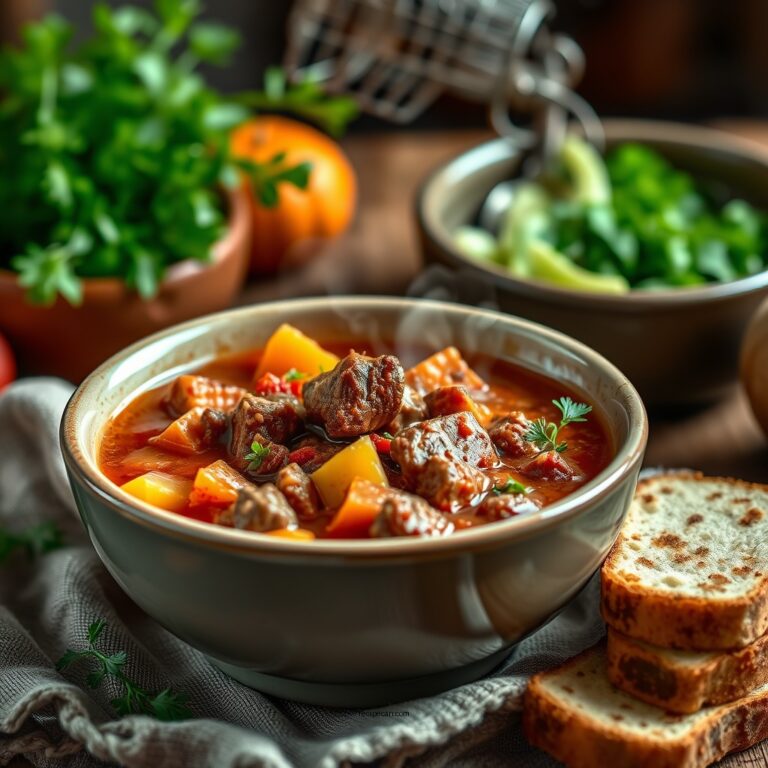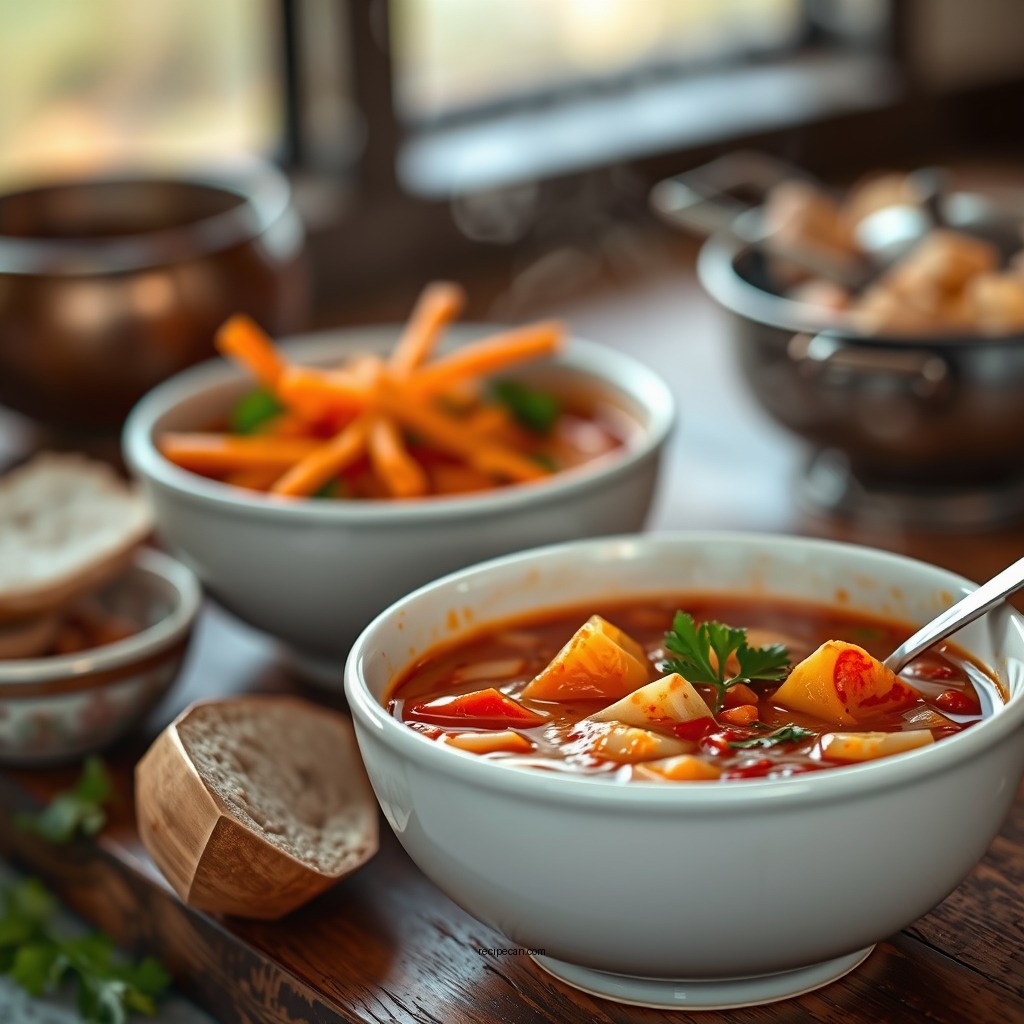
Enjoy making a delightful Indian hot and sour soup at home with this easy-to-follow recipe. This flavorful dish combines spicy and tangy elements, offering a perfect appetizer for any meal. In this article, you will learn the ingredients, preparation steps, and tips to elevate your soup experience.
Ingredients for Hot and Sour Soup
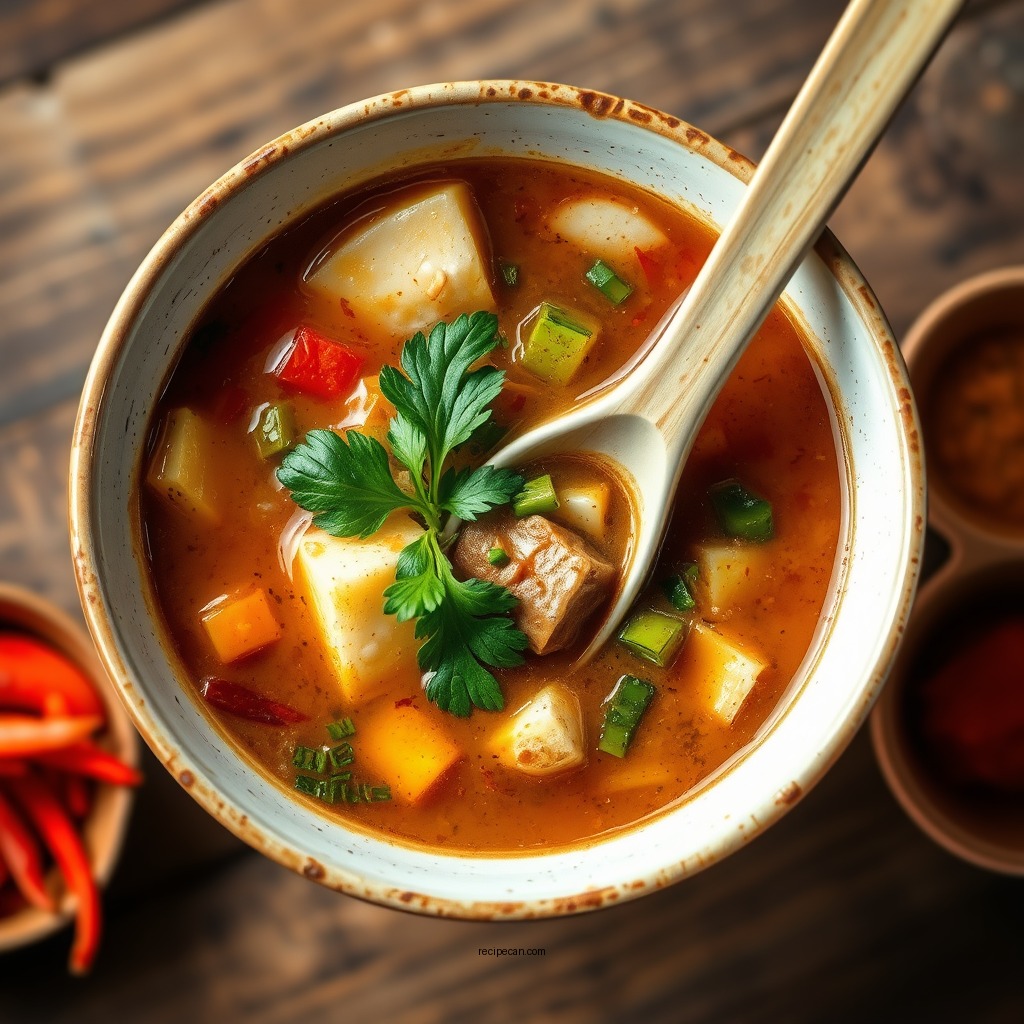
To create an authentic Indian hot and sour soup, you will need a selection of essential ingredients that are key to achieving the right flavor profile. Here’s what you will need:
– Mushrooms: Fresh shiitake or button mushrooms provide a robust earthy flavor that complements the soup’s spicy and sour notes.
– Tofu: Firm tofu adds protein and a creamy texture, balancing the soup’s heat. If you prefer a meatier option, chicken or shrimp can be substituted.
– Vegetables: A mix of bell peppers, carrots, and green onions not only enhances the flavor but also adds vibrant color and crunch.
Key spices that define the flavor:
– Soy Sauce: This umami-rich sauce is essential for depth and saltiness.
– Vinegar: Ideally, rice vinegar or distilled white vinegar introduces the necessary tanginess.
– Chili Paste: Adjust the amount based on your heat preference; it provides the signature spice that makes this soup memorable.
Preparation Steps

Making Indian hot and sour soup is a straightforward process that can be accomplished in a few simple steps. Follow these detailed instructions to ensure a perfect outcome:
1. Prepare the Ingredients: Start by cleaning and slicing the mushrooms, dicing the tofu, and chopping your selected vegetables. Aim for uniform sizes to ensure even cooking.
2. Sauté the Aromatics: In a large pot, heat a tablespoon of oil over medium heat. Add minced garlic and ginger, sautéing until fragrant, about 1-2 minutes.
3. Add the Vegetables: Introduce the chopped mushrooms, bell peppers, and carrots to the pot. Stir-fry for another 3-4 minutes until the vegetables begin to soften.
4. Incorporate Tofu: Gently add the diced tofu to the pot, stirring to combine.
5. Simmer the Broth: Pour in vegetable or chicken broth, followed by soy sauce, vinegar, and chili paste. Bring the mixture to a boil, then reduce the heat and let it simmer for about 10-15 minutes.
6. Adjust Seasoning: Taste the soup and modify the seasoning with extra vinegar, soy sauce, or chili paste to suit your preferences.
7. Finish with Garnishes: Just before serving, stir in chopped green onions and adjust the thickness with cornstarch mixed with water if desired.
Tips on how to chop vegetables effectively for the best texture:
– Use a sharp knife to ensure clean cuts and reduce bruising.
– Cut vegetables uniformly to allow for even cooking, which enhances the texture of the final dish.
– Use a cutting board with a non-slip surface to maintain safety while chopping.
Cooking Techniques

Understanding the cooking techniques involved in making hot and sour soup is vital for maximizing flavor and achieving the desired consistency.
Simmering and its Importance for Flavor Development
Simmering allows the ingredients to meld together, helping to extract flavors from the mushrooms and spices. By maintaining a gentle simmer rather than a vigorous boil, the soup develops a rich, layered taste without compromising the texture of the vegetables and tofu.
Balancing Spice Levels
Spice levels can vary significantly based on personal preference. Start with a small amount of chili paste and gradually increase it until you achieve your desired heat. Remember that the acidity from vinegar will also balance the spice, so taste as you go.
Serving Suggestions
The presentation of your hot and sour soup can elevate the dining experience. Consider these ideas for garnishing and serving:
– Garnishes: Top each bowl with a sprinkle of fresh cilantro, sliced green onions, and a few drops of sesame oil for added flavor and visual appeal.
– Pairings: This soup pairs beautifully with Indian bread like naan or roti and can be complemented by a side of vegetable samosas or a fresh cucumber salad.
Variations of Hot and Sour Soup
Adapting the hot and sour soup recipe to suit different dietary needs or preferences can enhance its versatility.
Vegetarian and Non-Vegetarian Adaptations
For a vegetarian version, stick to mushrooms and tofu, while for non-vegetarian versions, consider adding shredded chicken or prawns. The broth can also be adjusted to include fish sauce for a deeper umami flavor.
Suggestions for Different Proteins or Vegetables
Feel free to incorporate other proteins like seitan or chickpeas for a plant-based option. Vegetables such as bok choy, baby corn, or snap peas can introduce new textures and flavors, keeping the soup exciting.
Common Mistakes to Avoid
While making hot and sour soup is relatively simple, several common pitfalls can detract from the final product.
– Overcooking Vegetables: Avoid mushy vegetables by ensuring they are added at the right time and cooked only until tender-crisp.
– Incorrect Balance of Flavors: Too much vinegar can overpower the broth. Start with small amounts and adjust gradually.
– Ignoring Texture: Ensure the tofu is firm enough to maintain its shape in the soup. Silken tofu may disintegrate during cooking.
Tips on How to Fix or Adjust Flavors
If the soup turns out too sour, a pinch of sugar can help balance the flavors. Conversely, if it’s too salty, adding more broth or water can dilute the saltiness.
Storing and Reheating
Proper storage and reheating are essential for maintaining the quality of your hot and sour soup.
Best Practices for Storing Leftover Soup
Allow the soup to cool completely before transferring it to an airtight container. It can be stored in the refrigerator for up to three days or frozen for up to a month. Be sure to separate any tofu or vegetables if you plan to freeze it, as they may lose texture when thawed.
Tips on Reheating
Reheat the soup on the stove over medium heat, stirring occasionally to ensure even heating. If the soup has thickened, add a splash of water or broth to restore the desired consistency.
Enjoy this flavorful Indian hot and sour soup with friends and family. With the right ingredients and techniques, you can create a restaurant-quality dish at home. Don’t hesitate to experiment with flavors and share your version of the recipe!
Top 7 Ingredients for Hot and Sour Soup (Popularity)
| # | Ingredient | Popularity (%) | Texture Rating |
|---|---|---|---|
| 1 | Mushrooms | 85% | ★★★★☆ |
| 2 | Tofu | 75% | ★★★★☆ |
| 3 | Bell Peppers | 70% | ★★★☆☆ |
| 4 | Carrots | 65% | ★★★☆☆ |
| 5 | Green Onions | 60% | ★★★☆☆ |
| 6 | Soy Sauce | 50% | ★★★★☆ |
| 7 | Vinegar | 45% | ★★☆☆☆ |
Ingredient Contribution to Flavor Profile (%)
In summary, the authentic Indian hot and sour soup recipe is a rich blend of flavors and textures that can be tailored to personal preferences and dietary needs. With a few simple steps and the right ingredients, you can recreate this delicious dish in your own kitchen, making it a perfect appetizer or a comforting meal on its own. Enjoy cooking and sharing this delightful soup with loved ones!
Frequently Asked Questions
What ingredients are essential for making Indian hot and sour soup?
The essential ingredients for Indian hot and sour soup include vegetable or chicken broth, tofu or paneer for protein, various vegetables like mushrooms, carrots, and bell peppers, and a blend of spices such as black pepper, red chili paste, and vinegar for the signature heat and tang. Additionally, fresh herbs like cilantro and scallions enhance the flavor profile, making the soup aromatic and refreshing.
How can I adjust the spice level in my Indian hot and sour soup?
To adjust the spice level in your Indian hot and sour soup, you can modify the amount of red chili paste or fresh green chilies you add. For a milder soup, reduce these spices or use less spicy varieties, such as bell peppers. Conversely, if you prefer it spicier, consider adding more chili paste or a dash of hot sauce just before serving.
Why is vinegar important in an Indian hot and sour soup recipe?
Vinegar is crucial in an Indian hot and sour soup recipe as it adds the signature sour flavor that balances the heat from the spices. The acidity of vinegar enhances the overall taste and complements the umami flavors from the broth and vegetables, creating a well-rounded dish. Using white vinegar or rice vinegar can provide the best results for achieving that authentic taste.
What is the best way to thicken Indian hot and sour soup?
The best way to thicken Indian hot and sour soup is by using a cornstarch slurry, which is a mixture of cornstarch and water. Simply mix equal parts cornstarch and water, then gradually stir it into the simmering soup until you reach your desired consistency. Alternatively, you can blend some of the cooked vegetables into the broth for a natural thickening effect.
Which vegetables work best in an Indian hot and sour soup?
The best vegetables for Indian hot and sour soup include mushrooms, which add a rich umami flavor, and bell peppers for sweetness and crunch. Carrots, bok choy, and bamboo shoots also work well, providing texture and nutrition. Feel free to experiment with seasonal vegetables to create a personalized version of this delicious soup.
References
- Soup
https://en.wikipedia.org/wiki/Soup - https://www.ncbi.nlm.nih.gov/pmc/articles/PMC6446161/
https://www.ncbi.nlm.nih.gov/pmc/articles/PMC6446161/ - https://www.ncbi.nlm.nih.gov/pmc/articles/PMC6152044/
https://www.ncbi.nlm.nih.gov/pmc/articles/PMC6152044/ - Google Scholar Google Scholar
https://scholar.google.com/scholar?q=hot+and+sour+soup+recipe+indian - Google Scholar Google Scholar
https://scholar.google.com/scholar?q=Indian+hot+and+sour+soup - Recipes – BBC Food
https://www.bbc.co.uk/food/recipes - Vitamin C (Ascorbic Acid) – StatPearls – NCBI Bookshelf
https://www.ncbi.nlm.nih.gov/books/NBK499877/ - https://www.sciencedirect.com/topics/food-science/hot-and-sour-soup
https://www.sciencedirect.com/topics/food-science/hot-and-sour-soup - Food | The Guardian
https://www.theguardian.com/food - NYT Cooking – Recipes and Cooking Guides From The New York Times
https://www.nytimes.com/recipes