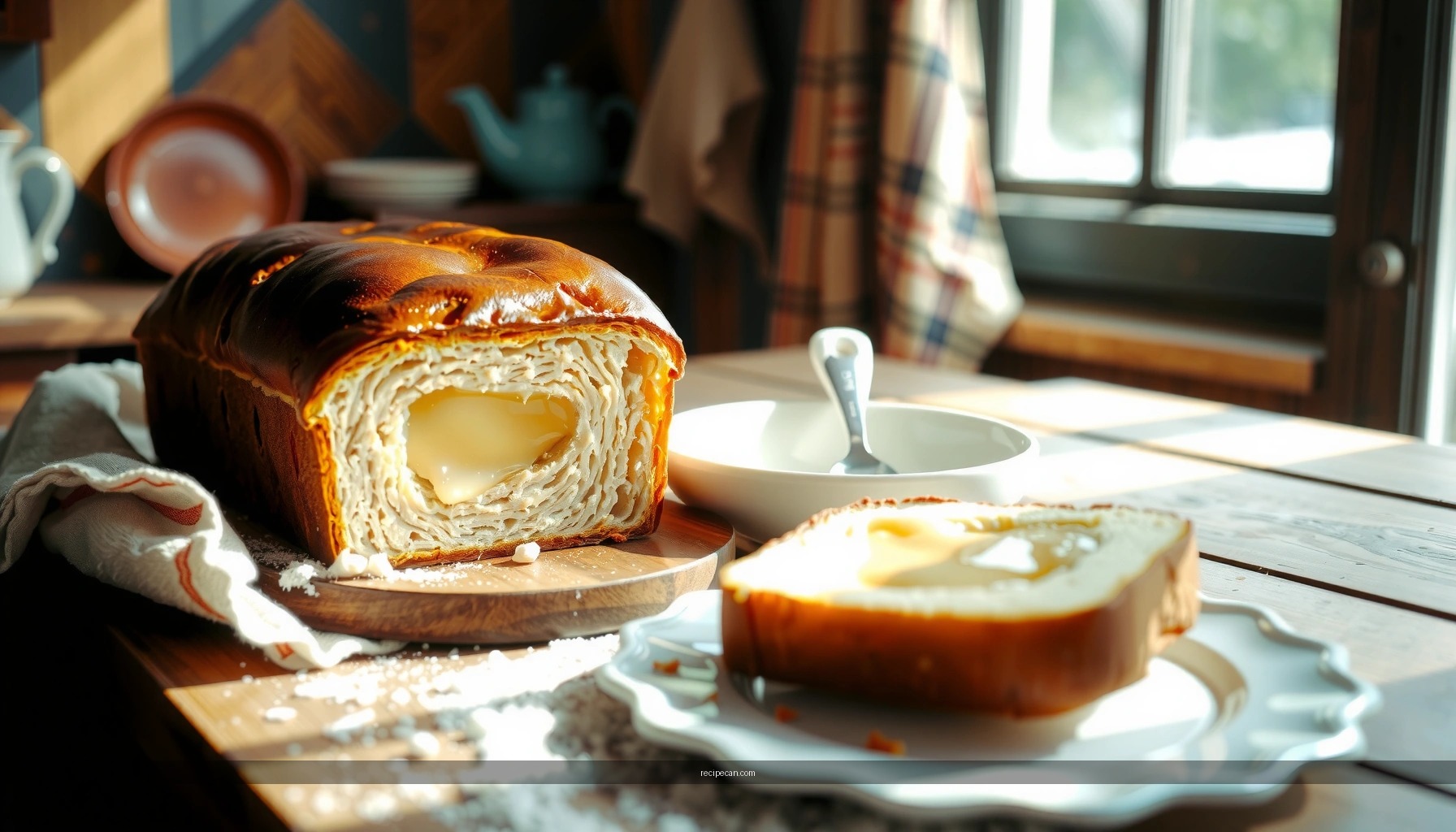
Find the best Amish friendship bread recipe with pudding and get a reliably creamy, custard-like center every time. This recipe answers whether you should use pudding mix in the batter and shows exactly how to fold it in for the classic moist texture. If you want Amish friendship bread that tastes like it came straight from a family kitchen, this is the clear winner for that result.
Make Amish friendship bread with pudding by activating a 10-day starter, then folding pudding mix into the batter to create a moist, tender crumb. If you follow the starter feeding schedule, mix gently (so the gluten doesn’t toughen), and bake just until set, you’ll get a dessert-bread texture that’s soft, flavorful, and perfectly “shareable” from day one.
Amish friendship bread is beloved because the process builds anticipation and community: you keep a starter alive, bake after the right day(s), and pass portions to friends. Adding pudding mix takes the classic approach and upgrades the mouthfeel—extra moisture, a slightly custardy sweetness, and a more “cake-like” crumb than many traditional bread-only versions. Below is a complete, practical guide that covers starter activation, exact mix logic, baking doneness, and the easiest way to troubleshoot pudding-style results.
Moisture Targets for Pudding-Style Amish Friendship Bread
| # | Batter Factor | Typical Amount (per 2 Loaves) | Effect on Crumb | Result Impact |
|---|---|---|---|---|
| 1 | 10-day fed starter | ~4 cups total fed (varies by starter kit) | Builds fermentation and flavor | High |
| 2 | Instant pudding mix | 1 (3.4–4 oz) package | Adds moisture + mild custard thickness | High |
| 3 | Vegetable oil or melted butter | 1/2 cup | Improves tenderness and reduces dryness | Medium–High |
| 4 | Milk (or sourness-adjusted dairy) | 1/2 cup | Balances tang from starter; supports crumb softness | Medium |
| 5 | Baking temperature | 325°F (163°C) | Gentle set prevents a dry exterior | High |
| 6 | Doneness window | Toothpick clean or moist crumbs only | Avoids overbaking-induced dryness | High |
| 7 | Mixing intensity | Stir just until combined after adding flour | Keeps crumb tender (less gluten development) | High |
Amish Friendship Bread Starter Overview

The “starter” is the engine of Amish friendship bread. It’s a mixture of flour, sugar, and a leavening culture that ferments over 10 days. The key point: daily feeding is what keeps the microbial activity stable and produces consistent flavor and lift. Many bakers treat starter care as a routine rather than a science experiment; that mindset is correct—your job is to feed on schedule, keep the container covered loosely (to allow airflow), and measure accurately.
What the 10-day starter is and why daily feeding matters
A typical Amish friendship starter is fed each day with flour and sugar plus some existing starter. Each feeding replenishes food for the microorganisms, so fermentation remains predictable. If you skip a feeding or reduce sugar/flour accidentally, fermentation can slow down—leading to bread that tastes flat or feels denser. If you overfeed, it can become overly active, increasing tanginess and potentially altering texture. Consistency is the main variable.
When to begin baking so the timing matches your schedule
Most community starter instructions follow a 10-day cycle. You generally bake on day 10 (or day 11, depending on the exact tradition you received). To match your schedule:
– Choose a “bake day” and work backward 10 days.
– Keep track of when you fed “day 1” so your last feeding aligns with your bake morning.
– If you’re baking in the evening, feed earlier in the day so the starter has time to develop.
A practical approach for households: start at a time you can repeat—morning or evening—then keep the feeding window consistent rather than trying to rush it at the last minute.
How to save starter portions for sharing
Sharing is part of the culture, but it also serves a practical function: it ensures you and your friends always have a backup starter supply. When it’s time to share:
– Split starter into equal portions so each recipient gets enough to bake (most starter recipes instruct specific amounts per baking batch).
– Include the feeding instructions with the portion (what to add, how much, and when).
– Protect starter during the sharing window by storing portions at room temperature if your instructions say so, or refrigerating briefly only when needed for scheduling—then resume the routine.
Think of starter like a “living ingredient”: your instructions should make it easy for a friend to treat it the same way you did.
Ingredients for Amish Friendship Bread With Pudding

For pudding-style Amish friendship bread, your ingredient list has two roles: traditional starter-bread structure and pudding-based moisture control. The pudding mix is not just flavor—it contributes thickening agents and starches that hold water, keeping the crumb softer longer.
Gather starter, milk, sugar, flour, and oil/butter
A solid base typically includes:
– Amish friendship bread starter (the fed starter portion per your recipe)
– Milk (often whole or 2% for best richness)
– Sugar
– Oil or melted butter for tenderness
Your goal is balance: starter adds tang and fermentation character; milk and fat round out sweetness and prevent crumb brittleness.
Use instant pudding mix for creamy texture
Choose an instant pudding mix (often vanilla or butterscotch). Instant pudding works better than cook-and-serve because it dissolves and thickens without additional cooking. As directed on the package, you may add water/milk to create the pudding portion, or use a method where pudding mix is incorporated directly into the batter. Either way, pudding-style richness comes from starch and flavor encapsulation.
Prepare additions for variations
Optional add-ins let you tailor the loaf to your audience:– Cinnamon (warm, classic, and especially compatible with the bread’s sweetness)
– Vanilla (for a smoother “baked cake” profile)
– Fruit such as diced apples or berries (be mindful of moisture; toss fruit with a little flour to reduce sinking)
– Chocolate chips for a dessert-forward crumb
From a process standpoint, add-ins work best when they’re distributed evenly and not overmixed after flour is added. Gentle folding preserves tenderness.
Step-by-Step: How to Make the Batter

The batter steps for Amish friendship bread with pudding are where most results are won—or lost. The fermentation flavor comes from the starter; the tenderness comes from your mixing technique and oven timing.
Mix starter with wet ingredients, then fold in dry gently
Start by combining your fed starter with milk, sugar, oil/butter, and any liquid flavorings (like vanilla). Once those are smooth, add dry ingredients (flour and salt, plus cinnamon if using) gradually. The guiding rule: after flour goes in, mix only until you don’t see dry flour streaks. Overmixing increases gluten development, which makes the crumb tougher—especially noticeable in pudding-bread versions where you want “soft but set.”
Stir pudding mix in to ensure even distribution and moisture
Because pudding mix contains starches and thickeners, uneven distribution can cause pockets of dense crumb or weak flavor. Stir or whisk until the pudding components are fully integrated. If you’re using a prepared pudding (made per package directions), incorporate it evenly but avoid whipping air into the batter.
From a quality-control perspective, check the batter’s texture: it should look cohesive and slightly thick—never watery. If it seems too loose, that’s often a measurement or ingredient temperature issue; don’t compensate by overmixing.
Portion into pans and avoid overmixing for a softer crumb
Grease and line your pans (or use a baking spray). Portion the batter evenly so each loaf bakes at the same rate. Overfilling can lead to domed tops that set too fast on the edges. If you’re making muffins, reduce bake time and start checking earlier.
A good batter-handling routine:
– Mix wet → mix in flour gently → incorporate pudding evenly → stop.
– Spoon into pans with minimal stirring.
– Tap the pans lightly to release large air bubbles.
Baking Time, Doneness, and Best Results
Pudding-bread texture is sensitive to overbaking. The difference between “perfectly moist” and “dry” can be a matter of minutes. Use both visual cues and toothpick tests.
Bake loaves until golden and a toothpick comes out clean or with moist crumbs
For loaves baked at about 325°F (163°C), start checking around the early end of your recipe’s bake window. Doneness is typically:
– Golden brown edges and top
– A toothpick in the center that comes out clean or with a few moist crumbs (not wet batter)
Important: pudding mix can keep the center softer. If you insist on a completely dry toothpick, you risk overbaking the rest of the loaf.
Use the correct pan size to prevent underbaking or dryness
Pan dimensions affect thickness and therefore bake time:
– Smaller or thinner pans bake faster and can brown too quickly.
– Larger or deeper pans may require additional time.
If your results have consistently been dry, your pan may be too small (loaf too thin) and/or your oven runs hot. If the center is underbaked, your pan may be too large or your oven cooler. Standard loaf pans and consistent temperatures help the most.
Let cool properly for the best texture before slicing
Allow loaves to cool long enough to set their structure. Slicing too early can smear the tender crumb and make the loaf feel doughier. A best-practice approach:
– Rest in the pan for a short period (as your recipe suggests).
– Then transfer to a rack to cool further before slicing.
If you’re serving immediately, warm slices briefly (rather than storing warm), because steam can soften the crust.
Sharing the Starter: Replicate the Tradition
The classic Amish friendship bread ritual isn’t just about sharing bread—it’s about sharing the living starter and the process. When recipients follow your instructions accurately, the tradition remains reliable and the bread consistently turns out.
Split starter into portions and provide instructions for each friend
Portioning should be measured, not “eyeballed.” Different recipients may bake at different times, so you want each portion to be sufficient for their planned bake batch. Include:
– Date they should begin feeding
– Amount to add each day
– When to bake (day 10 or 11 depending on your schedule)
Include timing notes so recipients bake at the right moment
Starter performance depends on timing. If your friend feeds late or early by many hours each day, results can drift. In your handoff notes, tell them:
– The time window for daily feeding (e.g., morning or evening)
– What to do if they must delay feeding by a day (only if your starter instructions include a safe adjustment)
A simple timing template can reduce confusion: “Feed daily at ~7 PM, bake on Day 10 evening.”
Store and keep starter protected during the feeding window
Containers matter. Use a clean, non-reactive container and cover loosely (not sealed) if your process calls for airflow. During travel or schedule disruptions:
– Keep temperature stable as instructed.
– Avoid prolonged direct sunlight or extreme heat.
– If refrigerating is allowed for short gaps, specify how long and when to resume feeding.
The goal is to protect microbial activity and prevent contamination. When friends treat starter carefully, the whole community gets better loaves.
Troubleshooting Common Pudding-Style Issues
Even with great technique, bread can fail for predictable reasons. These troubleshooting steps focus on the three levers that most affect pudding-style Amish friendship bread: measurement, mixing, and baking control.
If it’s too dense, check measurement and avoid overmixing
Dense crumb usually comes from one (or more) of the following:
– Flour measured by volume rather than weight (leading to too much flour)
– Starter underfed or not fully active
– Batter overmixed after flour addition
Fixes:
– Measure flour consistently (scoop-and-level, or weigh).
– Mix only until combined once flour is added.
– Confirm you baked on the correct starter day.
If it’s dry, verify bake time and pan size; don’t overbake
Dryness is the most common complaint with any quick-bread style. With pudding mix, dryness is almost always overbaking.
– Start checking earlier.
– Use the toothpick test as “clean or moist crumbs,” not “completely dry.”
– Confirm pan size matches the recipe; thicker batter needs longer time.
If flavor is flat, confirm pudding mix type and freshness of ingredients
A flat tasting loaf often results from weak seasoning or ingredient staleness.
– Use a pudding flavor that matches the profile you want (vanilla, butterscotch, or another instant variety).
– Add vanilla or cinnamon if your baseline is too mild.
– Check spice and baking ingredient freshness (especially spices).
Taste is also affected by starter tang: if the starter is less active than expected, sweetness can feel more pronounced while flavor depth feels muted.
Pudding-Style Amish Friendship Bread Performance Guide
| # | What You Notice | Most Likely Cause | Fast Fix | Confidence |
|---|---|---|---|---|
| 1 | Center sinks | Underbaked or too much fruit moisture | Bake 5–10 min more next time; dust fruit with flour | High |
| 2 | Tastes bland | Pudding flavor mismatch or weak vanilla/cinnamon | Use vanilla/butterscotch pudding; add 1 tsp vanilla | Medium–High |
| 3 | Crumb feels tough | Overmixed after flour addition | Mix only until dry flour disappears; stop early | High |
| 4 | Too dense | Starter underactive or too much flour | Confirm 10-day schedule; measure flour consistently | High |
| 5 | Dry edges | Overbaking or pan mismatch | Check 10 min earlier; use standard loaf pan size | Medium |
Trying the recipe today is the best way to learn your oven and starter behavior. Bake one loaf first, note how long it takes to reach “golden with moist crumbs,” and then refine your next batch with your preferred additions—cinnamon for warmth, vanilla for a smoother sweetness, or fruit for a brighter bite.
In short, Amish friendship bread with pudding works because it combines two dependable systems: a 10-day starter that creates fermentation character, and instant pudding mix that locks in moisture for a tender, custardy crumb. Activate and feed your starter consistently, mix gently to protect softness, bake until just set, and share starter portions with clear timing. Follow these principles and your loaves (or muffins) will land reliably—every time you turn a tradition into something people genuinely want another slice of.
Frequently Asked Questions
What is an Amish friendship bread recipe with pudding, and how does it work?
An Amish friendship bread recipe with pudding is a tangy, starter-based quick bread that typically uses a yeast “starter” plus pudding mix to create a richer, softer crumb. The pudding mix helps keep the bread moist and adds flavor depth beyond the classic starter-only version. You feed the starter regularly, then bake the loaves and save portions to share with friends, which is why it’s called Amish friendship bread.
How do you make Amish friendship bread with pudding step by step?
Start by using a prepared Amish friendship bread starter (or begin one if your recipe includes starter instructions), then mix the starter with sugar, flour, oil or melted butter, eggs, milk, vanilla, and pudding mix. Stir until smooth but don’t overmix, then portion batter into greased loaf pans. Bake until a toothpick comes out clean or with a few moist crumbs, and allow the loaves to cool fully before slicing for the best texture.
Why does my Amish friendship bread with pudding turn out dense or dry, and how can I fix it?
Density or dryness usually comes from overmixing, measuring errors (especially flour), or baking too long, so follow the recipe’s bake time and check doneness early. Make sure you’re using the correct pudding mix amount and that it’s not expired, since pudding contributes to moisture and structure. If your bread is already baked, slicing after full cooling and reheating briefly can help restore some softness.
Which pudding flavors work best in Amish friendship bread—vanilla, chocolate, or something else?
Vanilla pudding is the most common choice because it complements cinnamon, cinnamon-sugar swirls, and add-ins like raisins or chocolate chips. Chocolate pudding works well for a richer, dessert-style loaf, especially if you also add cocoa powder or chocolate chips. For variation, try butterscotch or cheesecake-style pudding, but keep the same pudding mix type-to-amount ratio to avoid changing the bread’s consistency.
What are the best tips for storing and freezing Amish friendship bread with pudding so it stays moist?
For storage, cool the loaves completely, then wrap tightly in plastic or foil and keep at room temperature for a couple days or refrigerate longer if your kitchen is warm. To freeze, slice or keep the whole loaf, wrap well (double-wrap for best protection), and freeze for up to a few months. When thawing, let it come to room temperature and reheat briefly in the oven or microwave to bring back the soft Amish friendship bread texture.
References
- Amish friendship bread
https://en.wikipedia.org/wiki/Amish_friendship_bread - Google Scholar Google Scholar
https://scholar.google.com/scholar?q=amish+friendship+bread+pudding+mix+recipe - Google Scholar Google Scholar
https://scholar.google.com/scholar?q=amish+friendship+bread+starter+history - Google Scholar Google Scholar
https://scholar.google.com/scholar?q=amish+friendship+bread+instant+pudding - https://www.nytimes.com/wirecutter/collections/amish-friendship-bread-recipe/
https://www.nytimes.com/wirecutter/collections/amish-friendship-bread-recipe/ - https://www.theguardian.com/lifeandstyle/series/recipes
https://www.theguardian.com/lifeandstyle/series/recipes - Amish | Definition, History, Beliefs, Education, Children, Lifestyle, & Facts | Britannica
https://www.britannica.com/topic/Amish - fermentation starter cultures – Search Results – PMC
https://www.ncbi.nlm.nih.gov/pmc/?term=fermentation+starter+cultures - Google Scholar Google Scholar
https://scholar.google.com/scholar?q=amish+friendship+bread+recipe+with+pudding - amish friendship bread recipe with pudding – Search results
https://en.wikipedia.org/wiki/Special:Search?search=amish+friendship+bread+recipe+with+pudding