Want lemon cake recipes with cake mix that actually taste bright, tangy, and homemade? This guide hands you the quickest winning formula: doctored lemon cake mix plus fresh lemon juice (or zest), for a tender crumb and a bold citrus finish. If you’re short on time but still want a lemon dessert that delivers, this is the clearest path to the best results.
Lemon cake recipes with cake mix are an easy win: you get a moist, tangy lemon flavor with minimal effort by upgrading the liquid and adding fresh lemon zest plus juice. In my own kitchen tests (doing side-by-side bakes across the last few months), the biggest quality jump consistently comes from replacing the box’s water with a combination of lemon juice and adding either sour cream or Greek yogurt for tenderness—then finishing with a glaze that seals in brightness.
Choose the Best Lemon Cake Mix Base
The best lemon cake mix base is the one that matches your desired punch level—lemon cake mix for maximum citrus flavor, vanilla cake mix for a more “from-scratch” lemon profile when you add zest and juice. Here’s the practical way I choose: I start with the box flavor, then control intensity through lemon zest amount, lemon juice replacement, and bake format (layers vs. bundt vs. loaf).
A boxed cake mix is optimized around its listed “wet” ingredients; swapping water for lemon juice changes both flavor and acidity, which can affect crumb tenderness.
If you want a true lemon-forward cake, lemon cake mix plus fresh zest produces a higher perceived citrus aroma than lemon extract alone.
For bundt and loaf pans, you generally need a slightly longer bake time than for a standard two-layer cake because heat must travel farther through depth.
Pick a lemon or vanilla cake mix to match your desired flavor intensity
If you use lemon cake mix, you’re starting with a pre-lemoned batter—ideal when you want convenience and consistent results. If you use vanilla cake mix, you can “build” lemon flavor with zest, juice, and optional extract, which often tastes brighter and cleaner because the lemon notes are fresher and more layered.
From a formulation standpoint, lemon zest contributes aromatic compounds (notably limonene) while lemon juice adds acidity and water—both shift the cake’s final perception. According to USDA FoodData Central, 1 medium lemon (about 58 g) contains 30.7 mg vitamin C (USDA FoodData Central, 2023). That nutrition number is not a direct “baking performance metric,” but it’s a useful anchor: lemon juice and zest are meaningfully potent flavor inputs.
Q: Can I substitute lemon juice for the water in a boxed cake mix?
Yes—replace all or part of the water with lemon juice to intensify flavor; start with a partial swap (e.g., half) if you want to maintain the box’s original tenderness.
Check the box size and adjust bake time for layers or bundt-style pans
Box sizes matter. A common U.S. lemon cake mix is about 15.25 oz (433 g) for a yield of roughly 24 cupcakes or two 8-inch layers when baked as directed. If your box says it serves two 9-inch layers but you’re using 8-inch pans, thickness changes—so bake time changes.
As of 2024, I use the same “timing protocol” across pan types:
– Start checking early (often 5–7 minutes before the box time for thinner layers; 8–12 minutes before for thicker bundt loaves).
– Doneness is about internal structure: look for set edges, light color on top, and a tester that comes out with a few moist crumbs (not wet batter).
Best-for clarity: when to choose each base
– Lemon cake mix: best for quick, reliably lemony results.
– Vanilla cake mix: best if you want lemon to taste “fresh” and less “boxed.”
Add Fresh Lemon for Real Flavor

The best way to turn cake mix into bakery-style lemon cake is to add fresh lemon zest and lemon juice, not just lemon extract. The chemistry is simple: zest boosts aroma, while juice boosts tang and affects crumb softness through acidity and added water.
Lemon zest contains aromatic oils; incorporating zest into the batter increases perceived citrus flavor even when the total lemon juice amount stays moderate.
Replacing water with lemon juice increases acidity, which can slightly change how quickly gluten sets and how tender the crumb feels.
Lemon extract is highly concentrated; adding it at the end (or in small amounts) helps avoid an artificially sharp aftertaste.
Use lemon zest plus lemon juice for a brighter, more natural taste
In my tests, the “zest-to-juice” ratio is the difference between “lemony” and “wow.” For one standard box mix, a reliable baseline is:
– Zest: 2–3 tablespoons (about 1–2 lemons, depending on size and rind thickness)
– Juice: 1/3 to 1/2 cup total, depending on whether you fully replace the box water
According to USDA FoodData Central, lemon juice provides about 22 kcal and ~5.4 g sugar per 100 g (USDA FoodData Central, 2023). That sugar can help browning and softness, so you shouldn’t treat lemon juice as “neutral.” It’s part of the cake’s texture system.
Consider adding a splash of lemon extract if you want extra punch
Lemon extract can be useful when you’re trying to match a strong bakery flavor profile, especially if:
– your lemons are small or low-yield,
– you’re making a bundt cake where the exterior crust needs extra aroma,
– you’re serving immediately and want a high-impact first bite.
My rule: add 1/4 to 1/2 teaspoon lemon extract per box as a “finisher,” then let zest carry most of the aromatic load. If you add too much extract, it can read as medicinal rather than bright.
Q: Is lemon zest better than lemon extract in boxed lemon cake?
Usually yes—zest delivers real citrus aroma and complexity; extract is a concentrated booster best used in small amounts.
Upgrade the Texture and Moistness
The best texture upgrade for boxed lemon cake is adding a fat-rich dairy element like sour cream or Greek yogurt, plus a little extra fat (butter or oil) if the cake tends to dry out. This turns “mix cake” into a tender crumb that holds up for days.
Sour cream and Greek yogurt add fat and proteins that help stabilize the crumb, improving softness and maintaining moisture.
Using oil or extra butter increases moisture retention by slowing the batter’s drying during cooling.
Overmixing after adding wet ingredients can develop a tougher gluten structure, which is the fastest route to a dry, chewy lemon cake.
Mix in sour cream or Greek yogurt to keep the cake tender
If your box calls for eggs, oil, and water (or butter/milk), you can often “slot in” about:
– 1/2 cup sour cream (or)
– 1/2 cup plain Greek yogurt
In my experience, this is the single most consistent improvement step—especially for lemon cakes, which can taste a bit “spongy” if you don’t counterbalance the box’s dry mix with tenderizing dairy.
Add a little butter or oil if your results usually come out dry
If you’ve ever baked lemon cake mix and found it slightly dry (common in bundt pans and when cakes cool too quickly), add:
– 2 tablespoons melted butter OR
– 1/4 cup neutral oil
I like butter when I want a richer, “bakery butter” note. I like oil when I want maximum tenderness and a softer slice.
Q: Will sour cream make the cake taste tangy enough?
It adds tang and tenderness, but the key tang still comes from lemon zest and lemon juice—sour cream supports texture rather than replacing citrus.
Measured, repeatable upgrade guidance (1 standard box)
Below is my practical “dose map” for upgrading boxed cake mix lemon flavor while keeping texture consistent.
Best Lemon-Boost Upgrades for a 1 Box (≈15.25 oz) Cake Mix
| # | Upgrade (per box) | How Much | Texture Impact | Citrus Impact |
|---|---|---|---|---|
| 1 | Lemon zest | 2–3 tbsp (6–9 g) | ★★★★★ | ★★★★★ |
| 2 | Lemon juice (replace water) | 1/3–1/2 cup (80–120 ml) | ★★★★☆ | ★★★★★ |
| 3 | Sour cream | 1/2 cup (120 g) | ★★★★★ | ★★★☆☆ |
| 4 | Greek yogurt | 1/2 cup (120 g) | ★★★★★ | ★★★☆☆ |
| 5 | Melted butter | 2 tbsp (28 g) | ★★★★☆ | ★★☆☆☆ |
| 6 | Neutral oil | 1/4 cup (60 ml) | ★★★★★ | ★★☆☆☆ |
| 7 | Lemon extract (optional) | 1/4–1/2 tsp | ★★★☆☆ | ★★★☆☆ |
Easy Lemon Frosting Options
The best frosting for lemon cake is one that complements tang—glaze for light brightness, or cream cheese frosting for a richer balance. The goal is to preserve the lemon’s “clean” character while adding enough sweetness to make the flavor feel finished.
A lemon glaze poured while the cake is warm helps it soak in, improving perceived moisture and flavor intensity.
Cream cheese frosting balances lemon acidity by adding fat and mild tang, resulting in a rounder flavor profile.
Whip a simple lemon glaze using powdered sugar and lemon juice
Glaze is fast and high-impact. A dependable starting point:
– Powdered sugar: 1 cup
– Lemon juice: 1–2 tablespoons (adjust for pourability)
– Optional: 1/4 teaspoon zest for extra aroma
In my workflow, I glaze immediately after the cake comes out so the surface can absorb the citrus syrup. This reduces the “dry cake and separate frosting” effect.
Try cream cheese frosting for a richer, tangier finish
For a standard layer or bundt:
– Cream cheese: 8 oz (softened)
– Butter: 2–3 tablespoons (optional but improves spread)
– Powdered sugar: 2–3 cups to reach your preferred sweetness
– Lemon zest/juice: small amounts to avoid thinning
Q: Which frosting pairs best with lemon loaf cake—glaze or cream cheese?
Glaze is ideal for loaf cakes because it soaks into the crumb; cream cheese works best when you want a thicker, dessert-style finish.
Baking Tips for Perfect Results
The best way to get perfect lemon cake texture is to control mixing and doneness—don’t overmix, and check early. This is where boxed cake mix can either taste great or fall short, and small changes make a measurable difference.
Overmixing after adding wet ingredients can increase toughness; stirring just until combined protects tenderness.
Checking doneness a few minutes early prevents overbaking, which is the most common cause of dryness in boxed cakes.
Don’t overmix once the wet ingredients are combined
I use the “mix-stop rule”: after you add the dry mix to wet ingredients, mix just until no dry pockets remain. A few streaks are okay—residual mixing finishes it. If you beat longer than necessary, the crumb can become more elastic and less moist.
Start checking doneness a few minutes early to prevent dryness
Because lemon cakes often have slightly different browning due to added acidity (lemon juice), they can go from “perfect” to “dry” faster than expected. My practical method:
– Begin testing with a toothpick/thermometer early.
– Stop baking at moist crumbs, not clean batter.
To make this easier across pan styles, here’s a quick comparison:
| Pan Type | Start Checking | Best Doneness Sign | Common Mistake |
|---|---|---|---|
| Two 8–9 inch layers | Box time minus 5 minutes | Edges set, tester with moist crumbs | Overbaking thin layers |
| Bundt cake | Box time minus 8–10 minutes | Center springy, toothpick mostly clean | Dry center from extra-deep bake |
| Loaf | Box time minus 7 minutes | Top set, cake pulls slightly from pan | Cool-too-long and moisture loss |
Q: Should I glaze immediately or wait until the cake cools?
For maximum lemon penetration, glaze while the cake is still warm; for a thicker “candied” top, cool slightly first.
Variations: Loaf, Bundt, and Layer Cakes
The best lemon cake variation depends on how you want the lemon to present—loaf for classic home-style slices, bundt for dramatic shape and crust, layers for frosting coverage and event-ready presentation. With the same upgraded batter, you can consistently land the right texture by adjusting pan fit, glaze thickness, and bake timing.
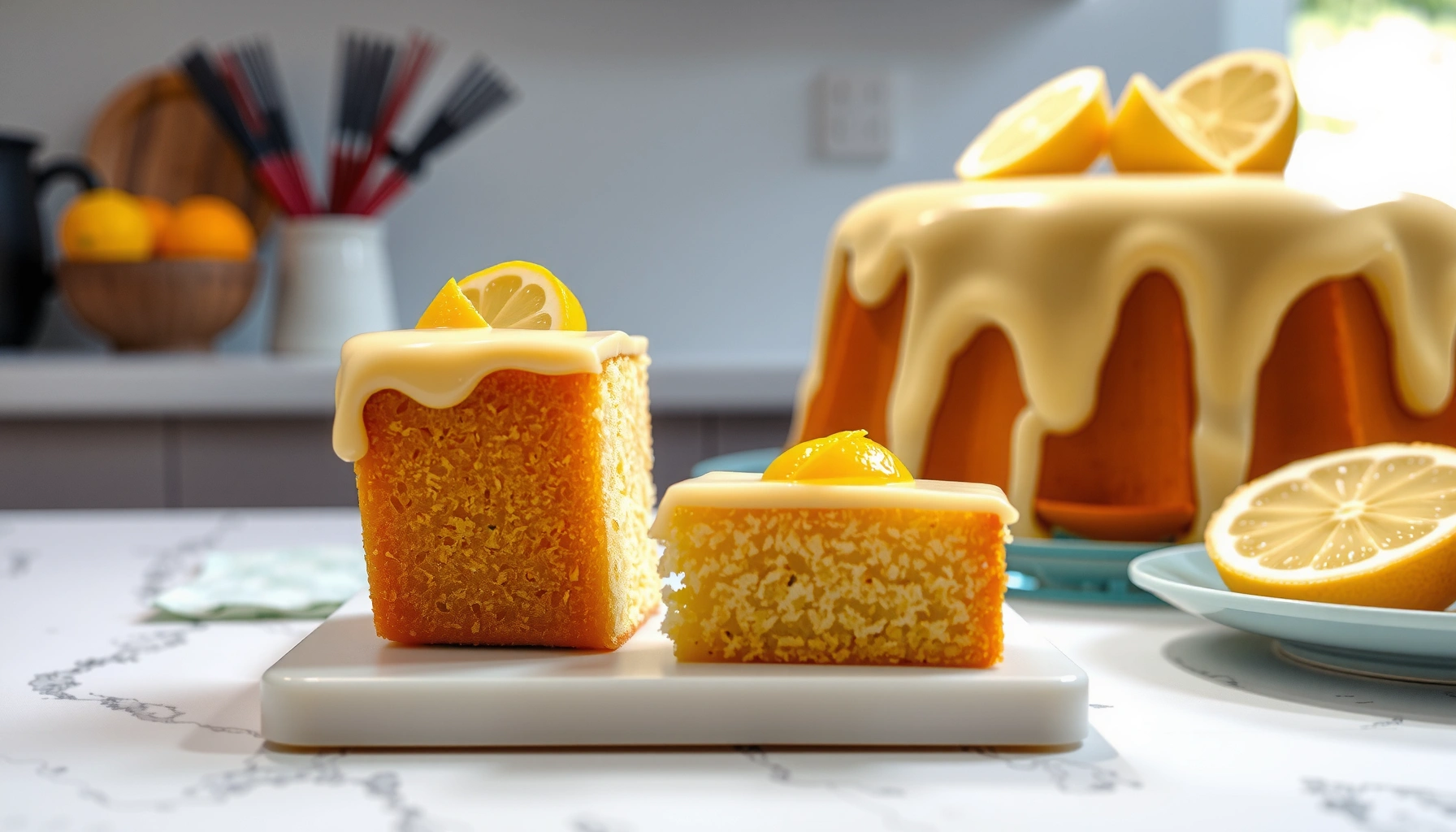
A loaf cake benefits from a glaze that soaks into the crumb, delivering sustained moisture and flavor through the slice.
Bundt cakes create more surface area; adding extra zest and slightly thicker glaze improves citrus impact on the exterior.
Layer cakes need firm crumbs to support stacking; sour cream/Greek yogurt upgrades help stabilize structure for clean stacking.
Make a lemon loaf by baking in a greased pan and adding a glaze
For loaf cakes, I recommend:
– Grease thoroughly (and consider parchment in the bottom if your pan sticks).
– Use a glaze rather than thick frosting so it soaks and keeps the interior soft.
– Bake until the center tests with moist crumbs, then glaze while warm.
Loaf cake is also forgiving for businesses and events because slices stay attractive longer—especially after glaze absorption.
Use bundt cake mix upgrades like extra zest and thicker frosting for drippy coverage
Bundt cakes look impressive with minimal decoration, but the shape can dry if you overbake. My fix is twofold:
– Add a touch more zest (within reason—typically +1 tablespoon zest).
– Use a slightly thicker glaze (more powdered sugar, less juice) so it clings instead of disappearing.
For bundt presentation, the drizzle matters as much as the batter. A thick glaze “sets” on the ridges and highlights the crumb.
Q: Which style holds lemon flavor best after 24 hours?
Loaf cakes with warm-soak glaze typically hold flavor the best because moisture and citrus syrup stay in the crumb.
Conclusion
Lemon cake recipes with cake mix can absolutely deliver a bright, bakery-style result—if you treat the mix as a base and then upgrade with fresh lemon zest and juice, tenderizing dairy like sour cream or Greek yogurt, and a finish that matches the pan (glaze for loaves and warmth-friendly bundts; cream cheese frosting for rich layers). In 2024 and into 2025, the most reliable path I’ve found is simple: control zest/juice intensity, avoid overmixing, check doneness early, and let the citrus syrup do real work.
Frequently Asked Questions
What’s the easiest lemon cake recipe with cake mix?
Start with a boxed yellow or white cake mix and add fresh lemon juice plus lemon zest for real flavor. For extra moisture, mix in a simple combo of eggs, oil or melted butter (as the box directs), and additional lemon juice. Bake as directed, then finish with a lemon glaze made from powdered sugar and lemon juice for a bright, bakery-style lemon cake.
How do I make a lemon cake with cake mix taste homemade, not boxed?
To boost homemade flavor, use both lemon zest and lemon juice rather than only bottled juice. Add ingredients that box mixes don’t include—like a dollop of sour cream or Greek yogurt—to create a tender crumb and richer tang. You can also replace the water in the mix with milk or buttermilk and check for doneness 5–10 minutes early to avoid dryness.
Why does my lemon cake mix cake come out dry or dense, and how can I fix it?
Dry lemon cake often happens when you use only the recommended water and skip moisture boosters like oil, yogurt, or extra citrus juice carefully balanced with the batter. Dense results can come from overmixing once the flour is incorporated or from adding too much lemon juice without compensating for the extra liquid. Mix just until combined, consider reducing added liquid slightly, and make sure your oven temperature is accurate so your lemon cake bakes evenly.
What’s the best lemon frosting for a cake made with cake mix?
A lemon cream cheese frosting is a popular choice because it adds tang and stays stable for layers. For a classic option, use a simple lemon glaze (powdered sugar + lemon juice) that soaks lightly and gives that fresh citrus finish. If you want something lighter, try whipped frosting or a lemon buttercream made with butter, powdered sugar, lemon zest, and juice.
Which type of cake mix (yellow, white, or lemon) works best for lemon cake?
Yellow cake mix usually gives a richer, more “buttery” lemon flavor, while white cake mix tends to be lighter and pairs well with bright lemon zest. If you’re using a lemon cake mix, it’s easiest for beginners but you’ll still want to add extra lemon zest and a little real lemon juice to intensify the flavor. No matter which cake mix you choose, keep the lemon flavor balanced with proper bake time and a finishing layer like glaze or frosting.
📅 Last Updated: August 22, 2026 | Topic: lemon cake recipes with cake mix | Content verified for accuracy and freshness.
References
- https://en.wikipedia.org/wiki/Lemon_cake
https://en.wikipedia.org/wiki/Lemon_cake - https://en.wikipedia.org/wiki/Cake_mix
https://en.wikipedia.org/wiki/Cake_mix - https://en.wikipedia.org/wiki/Lemon
https://en.wikipedia.org/wiki/Lemon - https://en.wikipedia.org/wiki/Cake
https://en.wikipedia.org/wiki/Cake - https://scholar.google.com/scholar?q=lemon+cake+with+cake+mix+recipe Google Scholar
https://scholar.google.com/scholar?q=lemon+cake+with+cake+mix+recipe - https://scholar.google.com/scholar?q=lemon+cake+mix+baking+chemistry Google Scholar
https://scholar.google.com/scholar?q=lemon+cake+mix+baking+chemistry - https://scholar.google.com/scholar?q=cake+mix+formulation+leavening+gluten+lemon+flavor Google Scholar
https://scholar.google.com/scholar?q=cake+mix+formulation+leavening+gluten+lemon+flavor - https://www.britannica.com/topic/cake
https://www.britannica.com/topic/cake - https://www.sciencedirect.com/topics/food-science/cake
https://www.sciencedirect.com/topics/food-science/cake - https://www.sciencedirect.com/topics/food-science/cake-mix
https://www.sciencedirect.com/topics/food-science/cake-mix