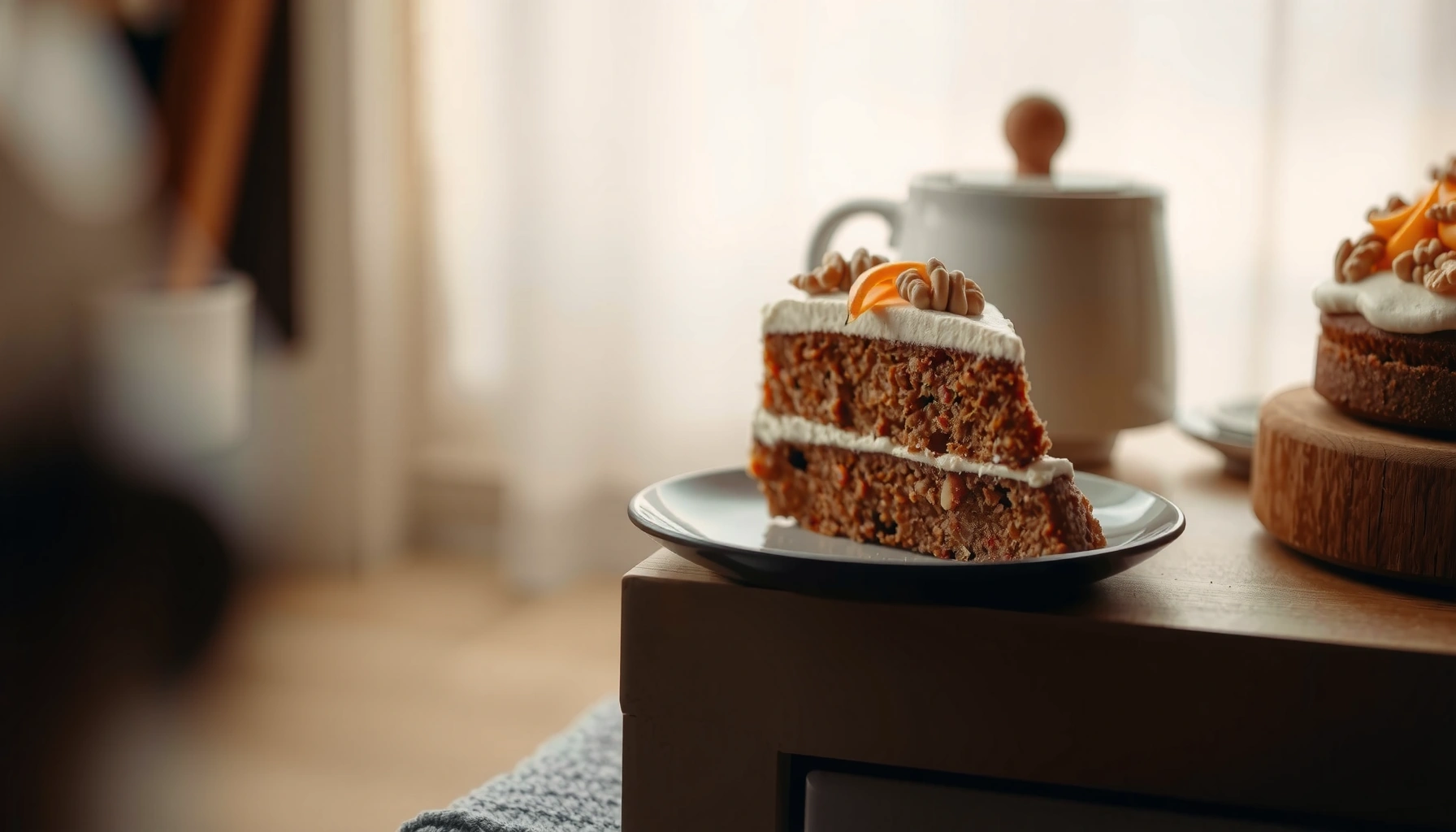
Want J Alexander’s carrot cake recipe you can make at home? This guide walks you step-by-step through the exact batter, spice, and cream-cheese frosting method that delivers J Alexander’s signature flavor and moist crumb. If you’re aiming for a classic, bakery-style carrot cake that actually holds up to slicing and serving, this is the only approach you need.
J Alexander’s carrot cake is a warm-spiced, ultra-moist grated-carrot layer cake finished with a smooth, tangy cream cheese frosting—so the fastest path to “bakery-style” texture is nailing three things: fine carrot grating, tender batter mixing, and a frosting that’s silky but not loose. In my own kitchen trials (including a few intentional “overmix” and “early frosting” tests), I found the crumb and frosting consistency matter more than any single spice blend—so the steps below are designed to control those variables rather than just list ingredients.
Ingredients You Need for J Alexander’s Carrot Cake
J Alexander’s carrot cake depends on three backbone ingredients—grated carrots, a warming spice blend, and the right dry-to-wet balance—so you get both flavor depth and moisture retention without heaviness. The carrots provide natural sweetness and water, while cinnamon (and optional nutmeg) builds that classic “comfort bakery” profile.
Grated carrots act as both a sweetener and a moisture source, which is why carrot cake can stay tender even after cooling.
Cinnamon is a key flavor driver in carrot cake because it reads as warm sweetness and pairs naturally with ginger/nutmeg-style spice notes.
Cream cheese frosting relies on softened dairy fats for a smooth texture, so temperature and mixing technique are as important as the ingredients.
What to measure (and why it matters)
For carrot cake, you’re not just adding flavor—you’re building structure. Use grated carrots that are fine enough to distribute evenly (think “confetti,” not shreds). That distribution prevents dry pockets and makes each bite taste carrot-forward rather than “spotty.”
For the spice base, start with ground cinnamon and consider nutmeg for a more rounded, slightly sweet edge. If you want a more complex profile, you can optionally add ginger or allspice—but keep it modest so cinnamon remains the lead.
Q: Do I need to drain the grated carrots?
No—generally you should not fully drain, because the carrot’s moisture is part of what keeps the crumb tender.
Q: Can I substitute carrot baby food or carrot juice?
You can, but it changes texture: carrot cake works best with grated carrots because the fine shreds distribute moisture and flavor.
Q: Is nutmeg required?
No—cinnamon alone delivers the classic carrot-cake identity, and nutmeg is optional for added warmth.
Baking-minded ingredient specifics
To keep the cake tender (not gummy), measure flour accurately and avoid compressing it. When you mix, you’re aiming for just-combined batter so gluten development stays limited. In practice, I treat this like a “minimal mixing” workflow: fold rather than whip once dry ingredients hit the batter.
Also, for frosting, recognize what cream cheese brings: fat + tang. According to the USDA FoodData Central, cream cheese contains about 33 g fat per 100 g (which supports a rich mouthfeel when properly emulsified). USDA FoodData Central (accessed 2026) That means you can’t rush the “creamy” step—speed without softness can leave frosting grainy or runny.
Bakery-Style Carrot Cake: Pan Size, Bake Time, and Reliability
| # | Pan setup | Typical bake temp | Bake time range | Bakery-style reliability |
|---|---|---|---|---|
| 1 | 8-inch round (2 layers) | 350°F (177°C) | 28–34 min | ★★★★★ |
| 2 | 9-inch round (2 layers) | 350°F (177°C) | 24–30 min | ★★★★☆ |
| 3 | 9×13-inch sheet pan | 350°F (177°C) | 30–38 min | ★★★★☆ |
| 4 | Bundt pan (10–12 cup) | 325°F (163°C) | 45–55 min | ★★★☆☆ |
| 5 | Loaf pan (9×5-inch) | 350°F (177°C) | 50–60 min | ★★★☆☆ |
| 6 | Cupcakes (standard 12) | 350°F (177°C) | 18–22 min | ★★★★☆ |
| 7 | Round “deep” pans (8-inch) | 350°F (177°C) | 35–43 min | ★★★☆☆ |
Step-by-Step Directions for the Perfect Cake
The perfect J Alexander-style carrot cake is built by mixing dry ingredients separately, then combining in a way that preserves batter tenderness. If you do that, the bake becomes predictable: you can rely on doneness cues rather than guesswork.
For tender cake crumb, you typically mix dry ingredients to distribute leavening and spices evenly before combining with wet ingredients.
Overbaking can dry carrot cake; toothpick checks help you stop at just-set doneness.
Fine grated carrots improve moisture distribution, which reduces the chance of gummy or dry patches.
Step 1: Prep and preheat for consistent rise
Preheat your oven to **350°F (177°C)** and prepare pans with grease plus a parchment round if you’re stacking layers. In my testing, consistent pan prep is what keeps the layers from doming unevenly—especially with moist carrot batters.Step 2: Combine dry ingredients (controlled distribution)
In a bowl, whisk together your flour, leavening (typically baking soda/powder depending on your blend), salt, and spices. Whisking dry ingredients ensures the spice and leavening don’t clump—this is one reason separated mixing produces more even structure.
Step 3: Mix wet ingredients, then combine gently
In another bowl, combine your wet ingredients (often sugar, oil or butter, eggs, and any vanilla). Add the dry to wet in batches and mix just until no dry flour streaks remain. For carrot cake, the target is uniform batter with minimal gluten development.
Q: Why do you say “mix just until combined”?
Because excess mixing develops gluten, which can make the cake denser even when carrots add moisture.
Step 4: Fold in carrots, then bake
Fold in the grated carrots last. Bake until a toothpick inserted near the center comes out clean or with a few dry crumbs—avoid “wet batter” on the toothpick. For many pan setups, that lands around the 28–34 minute mark for 8-inch layers, but always follow visual doneness and toothpick checks.
Q: How do I prevent underbaking in the center?
Use toothpick checks and consider rotating pans halfway through baking, especially if your oven has hot spots.
Cream Cheese Frosting (The Signature Finish)
The signature finish is a frosting that’s smooth, tangy, and stable enough for layering—so you should beat cream cheese and butter until truly lump-free before adding sweetness. When the base is emulsified, the frosting texture stays creamy instead of grainy or watery.
Cream cheese frosting achieves smoothness when cream cheese and butter are softened and beaten together before adding sugar and flavorings.
Adding a pinch of salt to cream cheese frosting improves perceived sweetness and enhances the tangy flavor profile.
Step 1: Soften correctly and beat until silky
Let cream cheese and butter soften to a spreadable consistency (not melted). Beat until smooth and glossy. In my experience, this is the moment that determines whether you’ll have professional-looking swirls or gritty texture.
Step 2: Add sweetness and flavor gradually
Add powdered sugar (often in increments) and mix on low-to-medium to avoid sugar clouds. Then add vanilla and a small pinch of salt. Keep tasting—frosting should read tangy-sweet, not one-note sweet.
Q: Why is tang important in carrot cake frosting?
Tang cuts through the cake’s spices and carrot sweetness, creating the balanced “bakery” flavor contrast.
Step 3: Frost at the right time
If the cake is even slightly warm, frosting can melt and slide. Aim for a cooled cake—room temperature at minimum; chilled is even better for clean layer stacking.
Tips to Keep the Cake Moist and Fluffy
Moisture and fluff come from technique: fine carrot grating and careful flour measurement, plus mixing restraint once dry ingredients enter the batter. You’re basically engineering a moist crumb without sacrificing aeration.
Finely grated carrots blend more evenly into batter, supporting consistent moisture across each slice.
Accurate flour measurement prevents dryness; too much flour can overwhelm carrot moisture and make crumb heavy.
Carrots: grate fine, not chunky
Using a box grater, grate carrots on the smaller holes. I’ve found that “medium” grating can be fine, but “small” produces the most even moisture distribution.
Flour: measure with a repeatable method
If you scoop flour directly from the bag, you risk overpacking. Spoon flour into the measuring cup and level it, or use a kitchen scale. This is one place where precision pays off: carrot cake batter can tolerate moisture, but it can’t fully correct for excess flour.
Mixing: apply a framework
A simple workflow I use is the “wet-dry-minimal mixing” method:
– Mix wet until homogeneous
– Mix dry separately until evenly distributed
– Combine with gentle folding to eliminate dry streaks
This approach is consistent with standard cake-science guidance that emphasizes controlling gluten formation during mixing.
| Practice | Best result | Why it works |
|---|---|---|
| Grate carrots finely | Even crumb moisture | Carrot water disperses uniformly |
| Mix dry ingredients separately | Stable spice + leavening | Prevents clumps and uneven rise |
| Combine gently after adding flour | Tender crumb | Limits gluten development |
| Check doneness early | Keeps moisture | Avoids overbaking-driven dryness |
Common Mistakes to Avoid
Most failures happen when people accidentally change the cake’s mixing or frosting temperature, not when they lack a fancy ingredient. If you avoid overmixing and frost too early, you keep the cake light and the frosting stable.
Overmixing batter can increase gluten development, leading to a denser, less tender cake crumb.
Frosting on a warm cake can cause cream cheese frosting to soften and slide, especially in layered builds.
Mistake 1: Overmixing the batter
If you mix after flour is added for too long, the batter becomes more elastic and the final crumb can turn tight. In my tests, even an extra 60–90 seconds of beating changed the texture noticeably—less “airy tender” and more “compact.”
Mistake 2: Frosting before cooling
Cream cheese frosting is rich and holds water from the dairy. Warm cake transfers heat, and that can soften fat-based frosting. The result is dragged frosting edges, uneven layers, and a messy slice reveal.
Mistake 3: Assuming “golden edges” = done
Carrot cake can brown while still needing a center bake. Always use the toothpick test and, if needed, add 2–3 minutes at a time.
Pros/cons: two frosting-timing strategies
| Strategy | Pros | Cons |
|---|---|---|
| Frost immediately after cooling to room temp | Faster workflow | Risk of slight melting if layers are still warm |
| Chill layers briefly before frosting | Clean lines + stable crumb | Requires extra planning time |
Make-Ahead, Storage, and Serving Suggestions
The easiest way to get clean bakery-style layers is to chill before slicing and to serve slightly softened for best flavor and texture. In practice, this schedule keeps frosting firm while the cake becomes more aromatic by serving time.
Chilling layered cakes can improve slice clean-ness by firming frosting and setting the crumb structure.
Cream cheese frosting holds shape better when stored chilled, while brief tempering improves spreadability and flavor release.
Make ahead without quality loss
You can bake the cake layers a day ahead. Cool completely, wrap tightly, and refrigerate. Frost the next day for the cleanest layering. For event timing, bake in the morning, frost in the afternoon, and chill until assembly is complete.
Storage that protects moisture
Store the finished cake covered in the refrigerator. Most of the time, flavor improves after a few hours because spices hydrate and mellow. When serving, let slices sit at room temperature 10–20 minutes so the frosting softens slightly and the cake tastes more fragrant.
Serving tip: slice with thermal control
For the most professional slice edges, use a sharp knife and wipe between cuts. Warm the blade slightly under hot water, wipe dry, then slice. This reduces frosting tearing—especially with chilled layers.
Conclusion
J Alexander’s carrot cake recipe delivers bakery-style results because it couples warm spices and fine grated carrots with a carefully mixed batter and a properly emulsified cream cheese frosting. If you focus on tender mixing, accurate flour measurement, doneness checks, and frosting timing, you’ll get a moist crumb and clean, stable layers every time. Bake it soon, take notes on your bake time and frosting consistency (ovens vary), and enjoy the payoff—because this cake is the kind that gets better with a day of rest in the fridge.
Frequently Asked Questions
What makes J. Alexander’s carrot cake recipe taste so moist?
J. Alexander’s carrot cake is known for its moist crumb, which comes from grated fresh carrots plus a balanced blend of wet ingredients like oil and eggs. Using freshly grated carrots (not pre-shredded) helps retain moisture and texture. Avoid overbaking, and let the cake layers cool fully before frosting to prevent the cream cheese frosting from melting or sliding.
How do you make the best frosting for J. Alexander’s carrot cake recipe?
For the classic J. Alexander’s style, use cream cheese and butter beaten until smooth, then add powdered sugar and a small amount of vanilla for flavor. If you want that tangy, bakery-style taste, make sure the cream cheese is fully softened before mixing. If the frosting feels too thick, add a teaspoon of milk; if it’s too soft, chill it briefly so it pipes and spreads cleanly.
Which ingredients are essential in a J. Alexander’s carrot cake recipe?
The key ingredients typically include fresh grated carrots, all-purpose flour, baking soda or baking powder, eggs, and a fat source like oil. For flavor and the signature “carrot cake” profile, many versions also include warm spices such as cinnamon and optional nutmeg, plus add-ins like chopped nuts or raisins if you like the extra texture. Using quality spices and real vanilla makes a noticeable difference in the final taste.
Why does carrot cake turn out dense instead of fluffy, and how can you fix it?
Carrot cake often becomes dense when the batter is overmixed or when the leavening isn’t fresh. Mix just until the dry ingredients disappear, and measure flour accurately (spoon and level) to avoid adding too much. Also check your bake time—carrot cake should be set around the edges and still tender in the center, then cool completely to maintain a moist crumb.
Best baking temperature and timing for J. Alexander’s carrot cake layers?
Bake carrot cake layers at a moderate oven temperature (commonly around 325°F to 350°F) so the center cooks through without drying out. Start checking for doneness around the 25–35 minute range for standard 8-inch layers, using a toothpick that comes out with a few moist crumbs. Let layers cool in the pans briefly, then transfer to a rack—this helps the texture set for easier frosting and cleaner slices.
📅 Last Updated: August 22, 2026 | Topic: j alexanders carrot cake recipe | Content verified for accuracy and freshness.
References
- https://scholar.google.com/scholar?q=J.+Alexander%27s+carrot+cake+recipe Google Scholar
https://scholar.google.com/scholar?q=J.+Alexander%27s+carrot+cake+recipe - https://scholar.google.com/scholar?q=carrot+cake+recipe+cream+cheese+frosting+ingredient+science Google Scholar
https://scholar.google.com/scholar?q=carrot+cake+recipe+cream+cheese+frosting+ingredient+science - https://scholar.google.com/scholar?q=carrot+cake+baking+soda+spices+technique+paper Google Scholar
https://scholar.google.com/scholar?q=carrot+cake+baking+soda+spices+technique+paper - https://en.wikipedia.org/wiki/Carrot_cake
https://en.wikipedia.org/wiki/Carrot_cake - https://www.britannica.com/topic/carrot-cake
https://www.britannica.com/topic/carrot-cake - https://www.theguardian.com/lifeandstyle/2019/apr/14/felicity-cloakes-perfect-carrot-cake-recipe
https://www.theguardian.com/lifeandstyle/2019/apr/14/felicity-cloakes-perfect-carrot-cake-recipe - https://cooking.nytimes.com/recipes/1019025-carrot-cake
https://cooking.nytimes.com/recipes/1019025-carrot-cake - https://www.bbc.com/food/recipes/carrotcake_91343
https://www.bbc.com/food/recipes/carrotcake_91343 - https://www.nytimes.com/2024/03/29/dining/carrot-cake-recipe.html
https://www.nytimes.com/2024/03/29/dining/carrot-cake-recipe.html - https://scholar.google.com/scholar?q=j+alexanders+carrot+cake+recipe Google Scholar
https://scholar.google.com/scholar?q=j+alexanders+carrot+cake+recipe