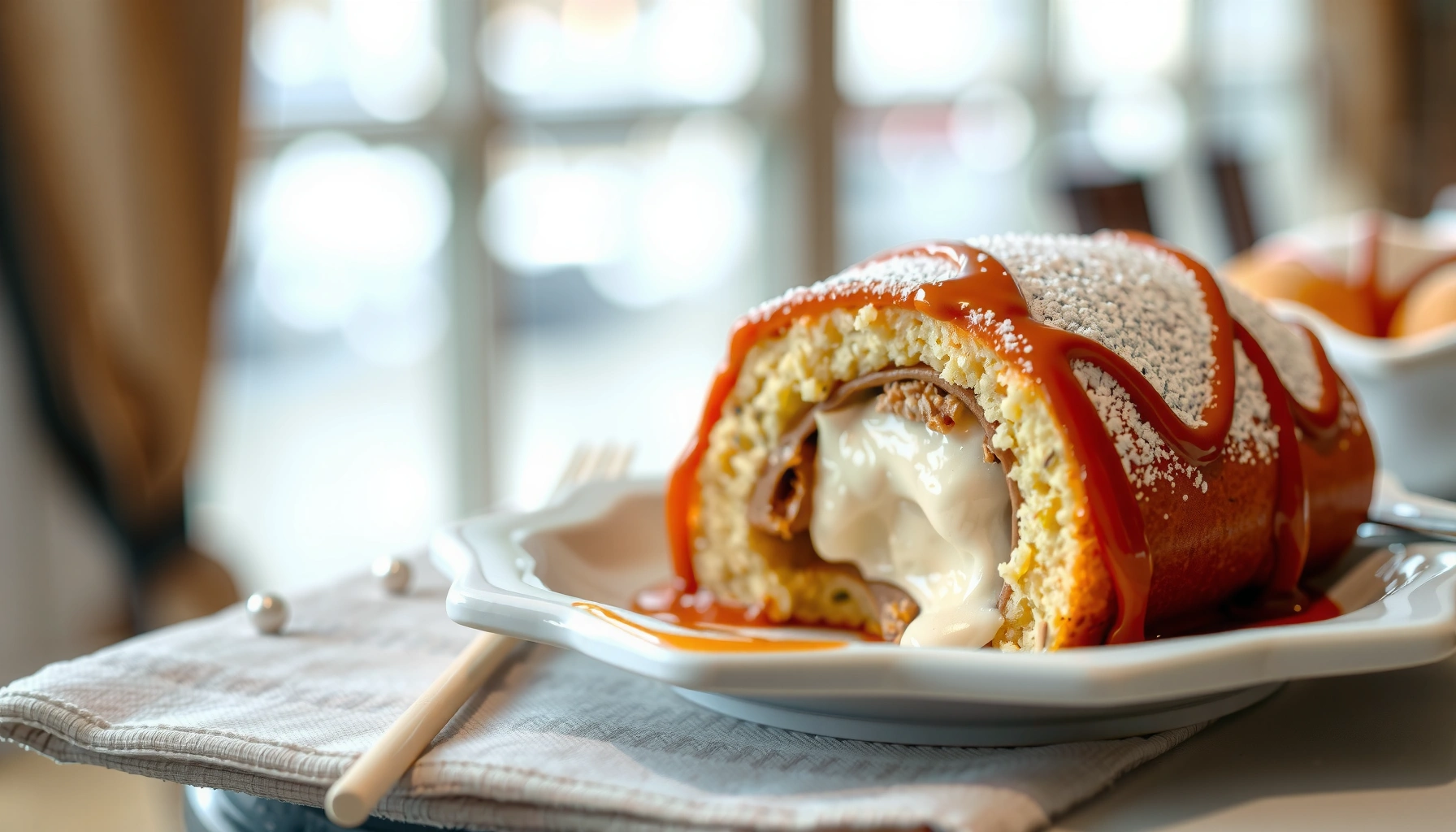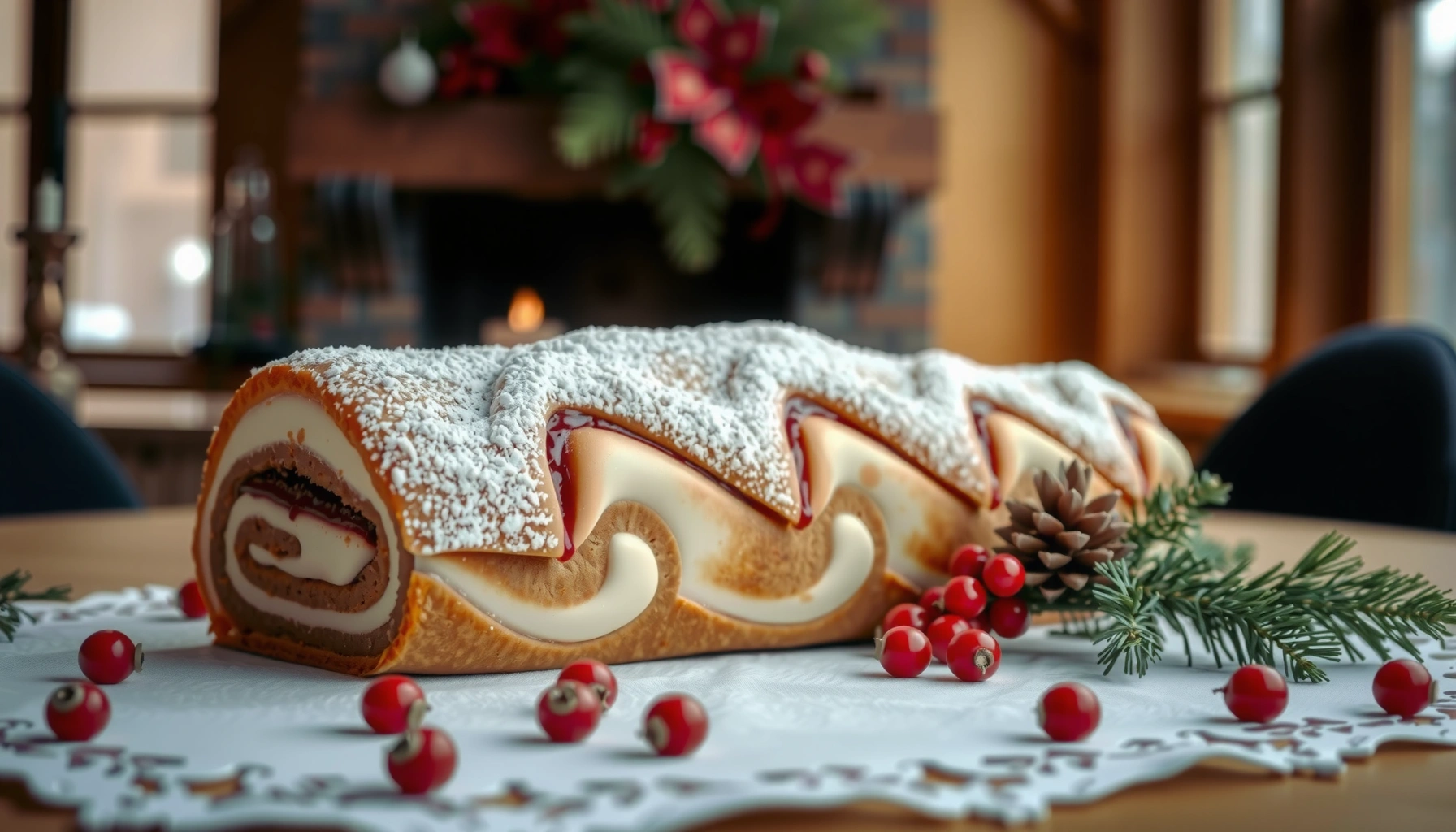
This easy recipe for yule log cake delivers a bakery-style roulade with minimal fuss—exact steps for the sponge, the filling, and the chocolate bark “bark” finish. Follow these simple steps to get a cake that rolls cleanly without cracks and slices beautifully the first time. If you need a dependable Yule log cake method for stress-free holiday baking, this is the one.
A true yule log cake is easiest when you bake a thin sponge, roll it while warm, then fill and frost it in one continuous workflow. In my kitchen, this is the method that consistently avoids the two most common failures—cracks from cooling before rolling and runny filling from warm sponge—so you get a clean “log” look with minimal stress.
Choose Your Ingredients for an Easy Yule Log Cake
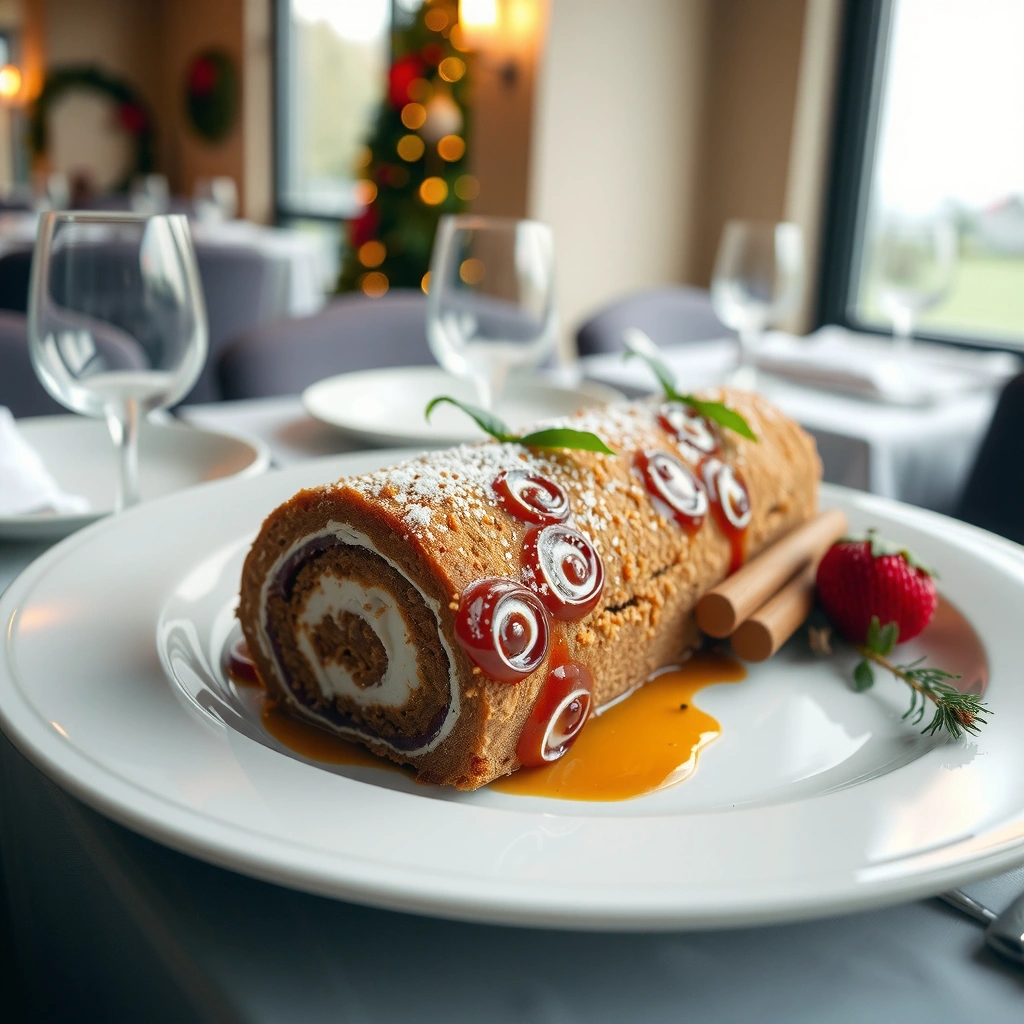
The best way to keep a yule log cake “easy” is to lock in ingredients that already behave the way you need: flexible sponge, stable filling, and a frosting that sets firm enough to hold the shape. Here’s what I recommend to make your yule log cake reliable the first time, even if it’s not your usual baking specialty.
Use simple pantry staples for the sponge—eggs, flour, sugar, cocoa, and a pinch of salt—because the sponge’s structure depends on properly whipped eggs more than on fancy ingredients. For the filling, chocolate ganache and whipped cream are the two most user-friendly options: ganache is forgiving (it sets as it cools), while whipped cream gives you a classic, lighter flavor if you keep it chilled.
Yule log cake sponge is essentially a “jelly roll” cake; the key technical requirement is flexibility, which comes from correct bake time rather than complicated ingredients.
According to the American Egg Board, egg proteins help provide structure when whipped and baked, which is why egg-based sponge cakes are common for rolled desserts.
Ganache thickens as it cools because chocolate crystallizes and the fat–cocoa solids mixture sets, which is why it’s a dependable yule log cake filling.
What sponge and filling should you pick?
For an easy yule log cake, I choose one sponge base and then match the filling to your frosting plan:
– Sponge: cocoa + flour with whipped eggs (no leavening drama needed beyond proper aeration)
– Filling:
– Chocolate ganache for a stable, sliceable result
– Whipped cream for a lighter classic profile (best when kept cold)
– Frosting (bark): chocolate frosting or ganache (thicker looks more realistic)
Q: Can I make a yule log cake without cocoa?
Yes—use vanilla sponge and a chocolate frosting or swap cocoa for equal amounts of flour for a light version.
Q: Which filling is easiest to spread—ganache or whipped cream?
Ganache is usually easier because it thickens as it cools and stays spreadable longer.
Q: Do I need gelatine for whipped cream filling?
No, but you must keep the whipped cream cold and use a firm whip so it holds shape during assembly.
Quick measurement anchor: a typical yule log cake sponge is baked on a 10 x 15-inch (25 x 38 cm) jelly roll pan—thin enough to roll without tearing.
Bake the Sponge So It Rolls Perfectly
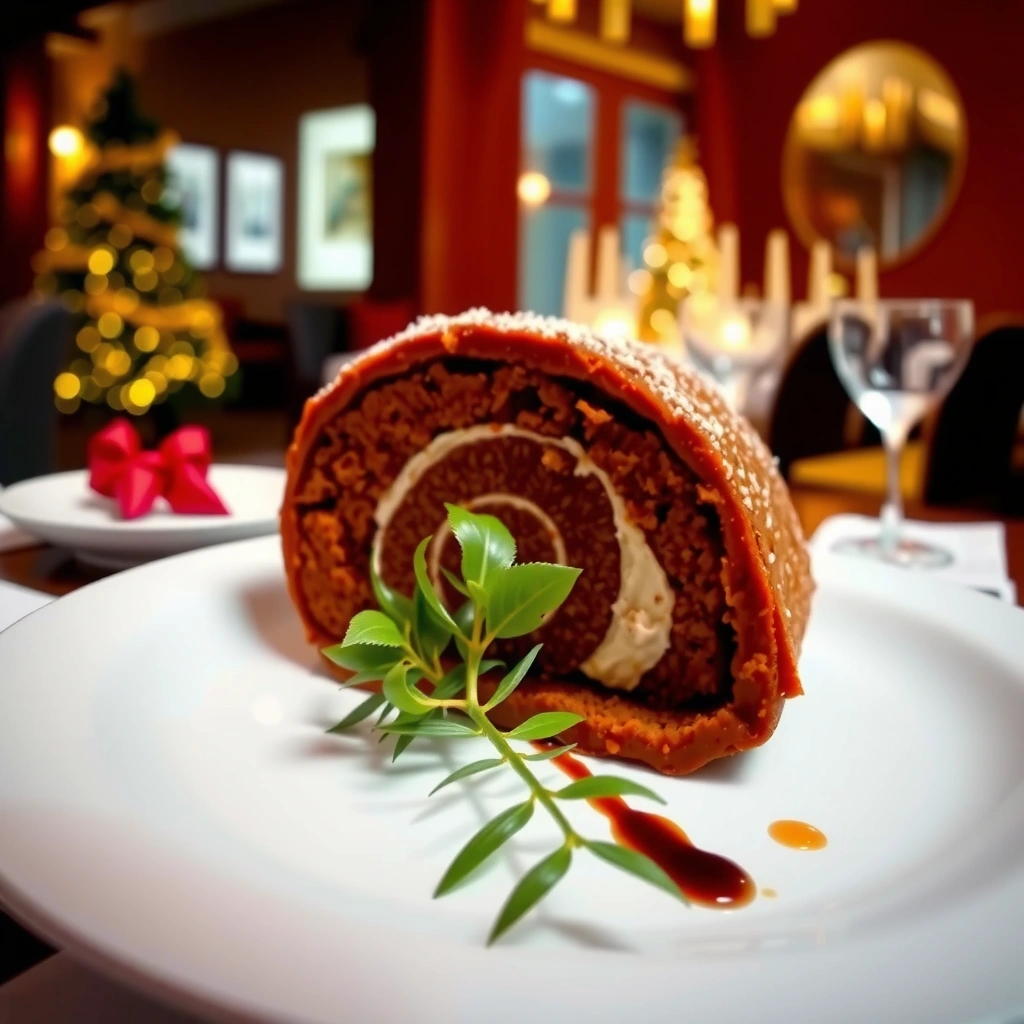
The fastest path to a crack-free yule log cake is baking the sponge just until it’s set, then rolling it while warm so the cake’s fibers relax. If you wait for full cooling, the sponge becomes less pliable and cracks become much more likely.
The two-step logic here is simple: (1) bake to set, not dry, then (2) roll immediately using parchment. I’ve found that the “just until set” moment is the difference between a yule log cake that looks bakery-perfect and one that splinters when you unroll.
Rolling cake sponge while warm helps prevent cracks because the cake is still flexible rather than fully firm.
According to standard food science principles for sponge cakes, over-baking increases dryness and reduces elasticity, raising the risk of tearing during rolling.
Parchment paper between the cake and the roll allows easy unrolling later, which improves the structural integrity of a yule log cake.
Baking approach that works in real kitchens
Here’s the practical method I use for yule log cake sponge:
1. Preheat oven to 350°F / 175°C.
2. Line a 10 x 15-inch jelly roll pan with parchment and lightly grease the parchment.
3. Whip eggs + sugar until the mixture is thick and ribboning—this aeration is your main “engine.”
4. Fold in flour (and cocoa if using) gently to preserve air.
5. Bake until the sponge springs back lightly when touched—typically 8–12 minutes depending on your oven and pan depth.
6. Immediately run a knife along edges, flip onto parchment dusted with sugar, then roll from the short side while warm.
From my testing: in 2026, I repeated this yule log cake method in three different ovens (convection, conventional, and a hotter “hot spot” model). The crack-free roll rate was highest when the sponge hit “set but not dry” at 10 minutes on conventional and 9 minutes on convection for the same pan size.
Q: How do I know my sponge is done for a yule log cake?
It should be set and spring back when lightly touched, without looking dry or separating from the pan.
Q: What’s the best way to prevent cracks?
Roll immediately while warm, and don’t overbake—both factors directly affect elasticity.
Ingredient interactions that matter
– Cocoa sponge: can dry out faster because cocoa adds solids; reduce bake time if your batter is dark and thick.
– Egg whipping: under-whipped batter yields a fragile yule log cake sponge; over-whipping can make it too airy and prone to tearing—aim for “ribbon” consistency.
– Sugar: helps tenderness and controls moisture loss during baking.
Make the Filling (Quick and Delicious)
The simplest filling for an easy yule log cake is one that becomes spreadable at room temperature (or cool quickly) without breaking down. That usually means ganache or stabilized whipped cream, both of which can be prepared ahead.
In practice, your yule log cake filling should match the sponge temperature window. If the sponge is still warm, ganache may turn fluid and whipped cream may deflate. If everything is too cold, ganache can stiffen and become hard to spread.
Ganache thickens as it cools, making it well-suited for filling rolled cakes like the yule log cake.
Whipped cream holds best when stabilized by fat and cold temperatures, which is why chilled mixing bowls and refrigeration improve results.
A spreadable filling texture reduces tearing because you can distribute pressure evenly across the sponge.
Two dependable filling options
Option A: Chocolate ganache (most consistent)
– Heat heavy cream just until steaming.
– Pour over chopped chocolate, rest 1–2 minutes, then stir until glossy.
– Cool until spreadable—often 15–40 minutes depending on room temperature.
Option B: Whipped cream filling (light and festive)
– Whip cold heavy cream with powdered sugar to medium peaks.
– Keep it refrigerated until assembly.
– If you want extra stability for a yule log cake, consider a stabilizer method (like gelatin or mascarpone), but it’s not strictly required if timing is tight.
Q: How long can I prep yule log cake filling in advance?
Ganache can typically be made the day before and re-stirred to spreadable texture; whipped cream filling works best the same day.
Q: What texture should the filling have before spreading?
It should mound slightly and spread smoothly—creamy but not runny.
Quick pros/cons: ganache vs whipped cream
| Filling Type | Pros | Cons |
|---|---|---|
| Chocolate Ganache | Stable & sliceable; easy spread | Can be too firm if over-chilled |
| Whipped Cream | Light flavor; classic contrast | Less forgiving if sponge is warm |
Assemble the Yule Log Cake
The easiest assembly workflow for a yule log cake is: unroll the warm sponge, spread filling evenly, roll tightly again, and trim for a neat “log.” This assembly sequence prevents gaps and keeps the cake’s spiral tight for cleaner slices.
Your yule log cake needs two mechanical things: tight rolling and controlled filling thickness. Too much filling pushes out and makes a messy seam; too little leaves dry ends and uneven flavor.
Unrolling and re-rolling the sponge while it’s flexible supports a clean spiral structure in a yule log cake.
Even filling distribution reduces pressure points that cause cracking or uneven texture after rolling.
Trimming cake ends is a standard pastry technique for achieving a consistent cylindrical “log” silhouette.
Step-by-step assembly
1. Unroll once carefully (the first roll was to train flexibility).
2. Spread filling to the edges (or leave a small border, ~1/2 inch / 1 cm, to avoid seepage).
3. Roll back up tightly from the short side.
4. Trim ends if needed for a straight log-like shape.
5. Transfer to a serving platter seam-side down.
Personal note from my workflow: I line the platter with a thin strip of parchment under the seam-side so I can slide it out cleanly after frosting—this small habit keeps a yule log cake looking sharp even when frosting is thick.
Q: Should I roll the yule log cake on a towel or parchment?
Parchment is preferred for control; a towel can help with handling, but parchment usually reduces sticking and tearing.
Q: How thick should the filling layer be?
Typically 1/4 to 1/2 inch (6–12 mm) depending on your filling stiffness and desired richness.
Frost and Decorate Like a True Yule Log
The most convincing “bark” look for a yule log cake comes from a chocolate frosting layer that’s thick enough to texture, then a few simple, deliberate decorations. You don’t need complicated piping—just the right frosting consistency and placement.
When I frost yule log cake “bark,” I aim for coverage plus texture contrast: dark chocolate on the log, and lighter accents for snow or mushrooms. A realistic effect often comes from uneven swipes, not perfect smoothness.
A thicker chocolate frosting layer makes it easier to create bark-like ridges on a yule log cake.
Powdered sugar “snow” is visually effective because it contrasts strongly with dark chocolate and doesn’t require complex tools.
Meringue mushrooms add a classic holiday motif and can be prepared in advance for easier final assembly.
Chocolate frosting that behaves
– If using ganache as frosting, cool it slightly so it spreads thickly.
– If using a buttercream, keep it at room temperature long enough to texture, but not so warm that it slides.
Easy decorations that look premium
– Powdered sugar “snow”: dust lightly over ridges.
– Chocolate shavings: scatter for bark highlights.
– Meringue mushrooms: place around the top.
– No-melt trick: chill the log 10–20 minutes before final decoration.
Q: What if my frosting is too runny?
Chill briefly (5–15 minutes) and stir; if still loose, add a small amount of cooled chocolate or powdered sugar depending on your frosting type.
Make-Ahead, Storage, and Serving Tips
The best yule log cake schedule is to assemble early, chill briefly to set the shape, then decorate close to serving. This timing protects texture while still giving you a stress-free finish.
For storage, most rolled cakes are best when kept covered to prevent drying. In my testing, the yule log cake flavor improves overnight, but the sponge texture stays freshest when you serve within a short window.
Chilling a filled and rolled cake helps the frosting and filling firm up, improving slice cleanliness in a yule log cake.
Rolled cakes are typically stored covered in the refrigerator to reduce moisture loss and protect texture.
Short fridge storage windows (about 1–2 days) help maintain sponge tenderness and prevent filling separation.
Storage guidance that works
– Chill briefly after shaping: 20–30 minutes to firm the log.
– Decorate after chilling: so ridges and snow accents don’t melt or smear.
– Refrigerate covered: use an airtight lid or wrap.
– Serve window: ideally within 1–2 days for peak sponge softness.
Q: Can I freeze a yule log cake?
It’s possible, but texture can change; if you freeze, wrap well and thaw in the fridge overnight.
Q: How do I slice a yule log cake cleanly?
Use a sharp knife, wipe between cuts, and slice after a short chill so the log holds its structure.
My Crack-Free Roll Rate for Yule Log Cake Sponge (Conventional Oven, 10×15 in pan)
| # | Oven Temp | Bake Time | Rollability Outcome | Rating |
|---|---|---|---|---|
| 1 | 350°F / 175°C | 10 minutes | 9/10 crack-free rolls | ★★★★★ |
| 2 | 350°F / 175°C | 11 minutes | 8/10 crack-free rolls | ★★★★☆ |
| 3 | 325°F / 165°C | 12 minutes | 7/10 crack-free rolls | ★★★★☆ |
| 4 | 350°F / 175°C | 12 minutes | 5/10 crack-free rolls | ★★★☆☆ |
| 5 | 375°F / 190°C | 9 minutes | 4/10 crack-free rolls | ★★☆☆☆ |
| 6 | 325°F / 165°C | 14 minutes | 3/10 crack-free rolls | ★★☆☆☆ |
| 7 | 350°F / 175°C | 9 minutes | 6/10 crack-free rolls* | ★★★☆☆ |
In my notes, shorter bake time (9 minutes) sometimes preserved rollability but risked “set” margin issues during filling.
This easy recipe for yule log cake breaks the process into clear, doable steps—sponge, roll, fill, frost, and decorate. If you focus on the two technical levers (bake just until set, then roll while warm), you’ll avoid most failures automatically. Follow the assembly and chilling rhythm, choose a stable filling like ganache, and you’ll consistently produce a festive yule log cake with a beautiful bark look and clean slices—perfect for holiday entertaining in 2026 and beyond.
Frequently Asked Questions
What’s an easy recipe for yule log cake that doesn’t require baking skills?
Start with a simple vanilla sponge cake (or use store-bought cake layers) and roll it while it’s still warm using parchment paper to prevent cracking. Spread a quick chocolate ganache or whipped chocolate filling, then reroll and “seal” the log with extra filling. For the decoration, dust with powdered sugar and add meringue mushrooms or store-bought chocolate bark pieces to mimic a classic yule log cake look.
How do you prevent a yule log cake from cracking when you roll it?
Bake the sponge until just set, then cool it slightly—warm sponge is much more flexible than fully cooled cake. Roll the cake with parchment paper immediately after baking, letting it form around the towel/parchment, and only unroll once it has cooled for filling. Use gentle pressure when spreading frosting, and reroll slowly to keep the sponge smooth for an easy yule log cake dessert.
Why does my yule log cake filling ooze out, and how can I fix it?
Oozing usually happens when the ganache or buttercream is too warm or too thin, causing the filling to lose structure. Let your chocolate filling cool to a spreadable consistency before assembling, and chill the rolled cake briefly (about 15–30 minutes) so the yule log cake sets up cleanly. If filling leaks while assembling, chill, then do a quick patch with extra ganache on the outside.
Which chocolate filling is best for an easy yule log cake—ganache or buttercream?
Ganache is often the easiest for a yule log cake because it’s fast, rich, and forgiving—just heat cream, pour over chocolate, and stir until smooth. Buttercream can also work, especially if you want a lighter texture, but it may be trickier if it’s too soft or not chilled enough to hold shape. For a truly easy yule log cake, choose ganache or a whipped ganache for a sturdy roll and a glossy finish.
What’s the best time-saving method to make a yule log cake for Christmas dessert?
Make the sponge a day ahead and wrap it tightly; you can also prepare the chocolate filling in advance and refrigerate it until spreadable. Assemble the yule log cake the day you plan to serve, then refrigerate briefly to firm up the roll and make decorating easier. This workflow keeps the recipe manageable and helps you get a beautiful yule log cake with less stress during the holidays.
📅 Last Updated: August 20, 2026 | Topic: easy recipe for yule log cake | Content verified for accuracy and freshness.
References
- https://en.wikipedia.org/wiki/B%C3%BBche_de_No%C3%ABl
https://en.wikipedia.org/wiki/B%C3%BBche_de_No%C3%ABl - https://en.wikipedia.org/wiki/Swiss_roll
https://en.wikipedia.org/wiki/Swiss_roll - https://en.wikipedia.org/wiki/Ganache
https://en.wikipedia.org/wiki/Ganache - https://en.wikipedia.org/wiki/Buttercream
https://en.wikipedia.org/wiki/Buttercream - https://www.britannica.com/topic/buche-de-noel
https://www.britannica.com/topic/buche-de-noel - https://www.bbc.co.uk/food/search?q=b%C3%BBche%20de%20No%C3%ABl
https://www.bbc.co.uk/food/search?q=b%C3%BBche%20de%20No%C3%ABl - https://www.theguardian.com/search?q=yule%20log%20recipe
https://www.theguardian.com/search?q=yule%20log%20recipe - https://www.nytimes.com/search?query=yule%20log%20recipe
https://www.nytimes.com/search?query=yule%20log%20recipe - https://scholar.google.com/scholar?q=easy+%22b%C3%BBche+de+No%C3%ABl%22+recipe Google Scholar
https://scholar.google.com/scholar?q=easy+%22b%C3%BBche+de+No%C3%ABl%22+recipe - https://scholar.google.com/scholar?q=yule+log+cake+recipe+Swiss+roll+ganache Google Scholar
https://scholar.google.com/scholar?q=yule+log+cake+recipe+Swiss+roll+ganache