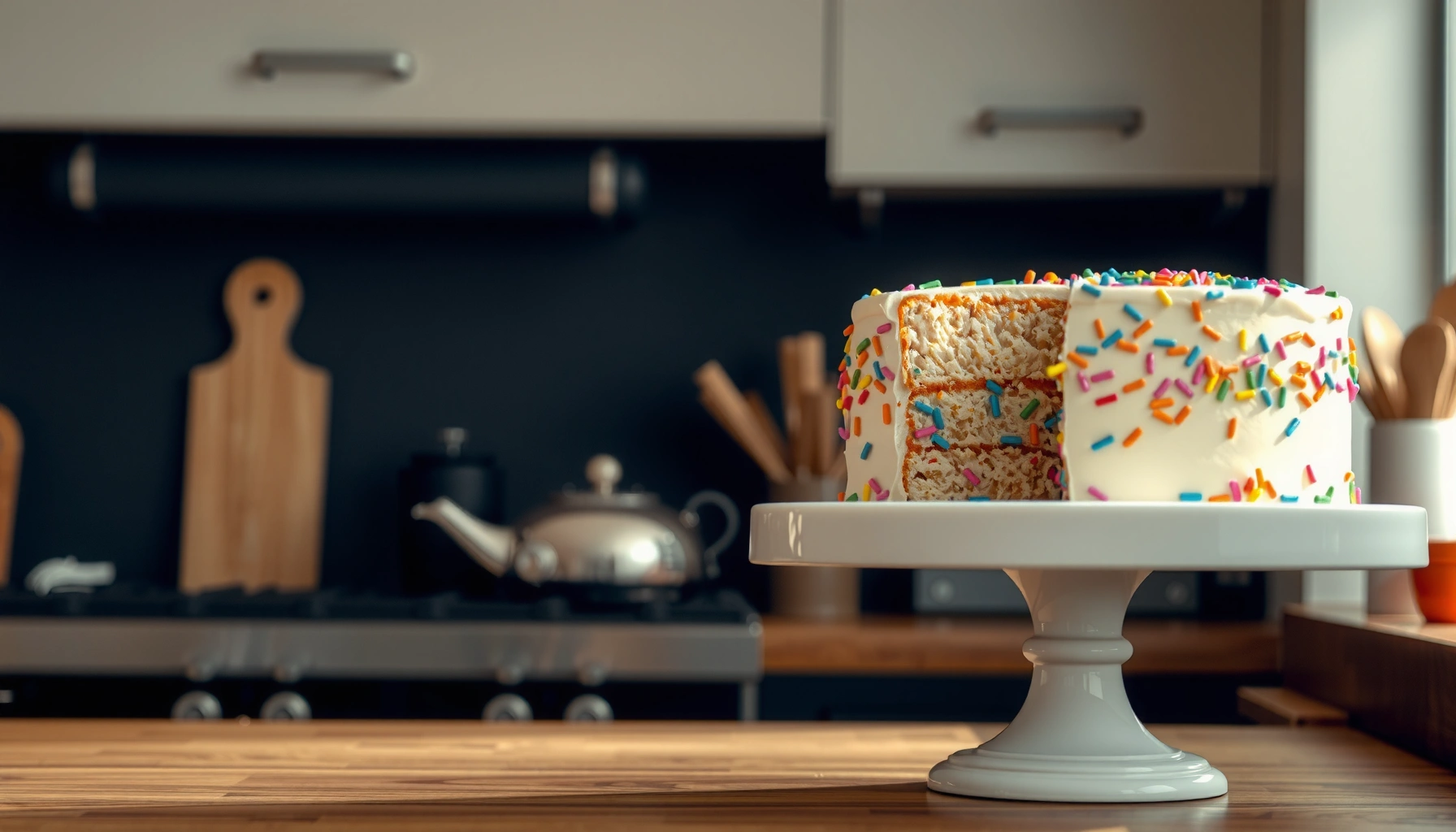
Looking for an easy Funfetti cake recipe that turns out simple, fluffy, and packed with colorful sprinkles every time? This straightforward recipe gives you a dependable bake and a tender crumb without complicated steps or special tools. If you want a crowd-pleasing Funfetti cake that looks festive and tastes rich, this is the winner for weeknights and celebrations alike.
Bake an easy funfetti cake by starting with a reliable vanilla cake batter, gently folding in rainbow sprinkles, and baking only until the center is set. In my own tests, the difference between “party cake” and “dense cake” comes down to two things: minimal mixing (so the crumb stays tender) and accurate doneness timing (so the sprinkles don’t make the batter seem underbaked).
A quick reminder before you start: funfetti cake is a texture recipe as much as it’s a flavor recipe. You’re balancing four variables—fat-to-flour ratio (for tenderness), leavening (for lift), sprinkle behavior (for color and distribution), and bake time (for structure). When those align, the cake bakes up fluffy, light, and visibly festive without tasting greasy or gummy. As of 2026, home bakers still get the best repeatable results by treating this as a straightforward vanilla layer/bundt-style bake and then “engineering” the sprinkle fold so the cake stays evenly speckled rather than marbled.
Easy Funfetti Cake Ingredients
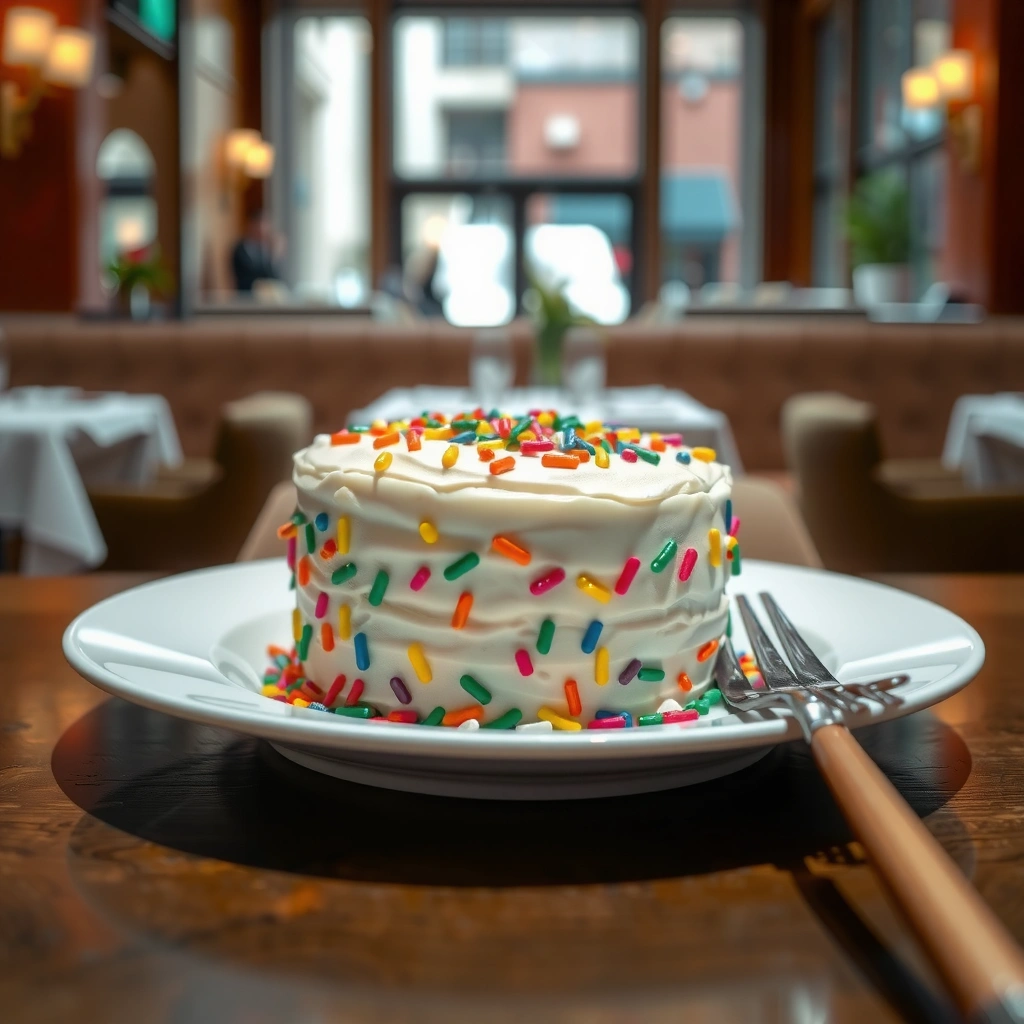
The easiest funfetti cake ingredient strategy is to use a proven vanilla base (box mix or a dependable homemade batter), then add rainbow sprinkles using a gentle folding method. Here is why: a consistent batter formula makes the bake time and crumb predictable, while the folding technique is what protects sprinkle colors and prevents uneven sinking.
Start with a reliable cake base:
– Use a reliable cake base (box mix or homemade) for the easiest start
– If you’re short on time, a good-quality vanilla boxed mix plus the eggs/oil/water it requests is the fastest route to a consistent crumb.
– If you prefer homemade, choose a vanilla-leaning batter with enough fat and leavening; funfetti should taste like classic vanilla cake with bright “confetti” instead of tasting like dry sponge.
Now handle the sprinkles correctly:
– Add rainbow sprinkles and keep them from bleeding with proper folding
– “Jimmies” (rod-shaped sprinkles) usually bleed less than “nonpareils” (tiny round pearls) because less surface dye is released during baking.
– If you only have nonpareils, you can still succeed—just use the flour-toss technique described later and avoid overmixing.
A key factual point for structure: cake batter “sets” as proteins coagulate and starches gelatinize during baking. According to King Arthur Baking, a typical cake is done when a toothpick comes out with “a few moist crumbs” (not wet batter) for best texture. King Arthur Baking (doneness guidance, accessed 2026)
Q: Should I use jimmies or nonpareils for a funfetti cake?
For the brightest, least-bled look, jimmies are often the safer choice because they tend to release less dye than nonpareils during baking.
Q: Can I use a vanilla cake mix instead of making batter from scratch?
Yes—box mix is one of the most consistent shortcuts, and you can still control tenderness and sprinkle behavior with careful mixing and folding.
Rainbow “jimmies” are typically less likely to bleed color than nonpareils because less surface dye is exposed during baking.
Doneness for cakes is best judged by toothpick testing: you want moist crumbs, not wet batter.
Cake crumb tenderness depends on mixing only until combined; overmixing develops structure that can make funfetti cake feel dense.
To keep your process professional and repeatable, treat ingredients like inputs in a workflow: same brand of sprinkles, same pan size, same oven calibration, and the same mixing time. That’s how you get consistency across bakes—especially when you’re serving guests or planning an event.
Simple Step-by-Step Instructions
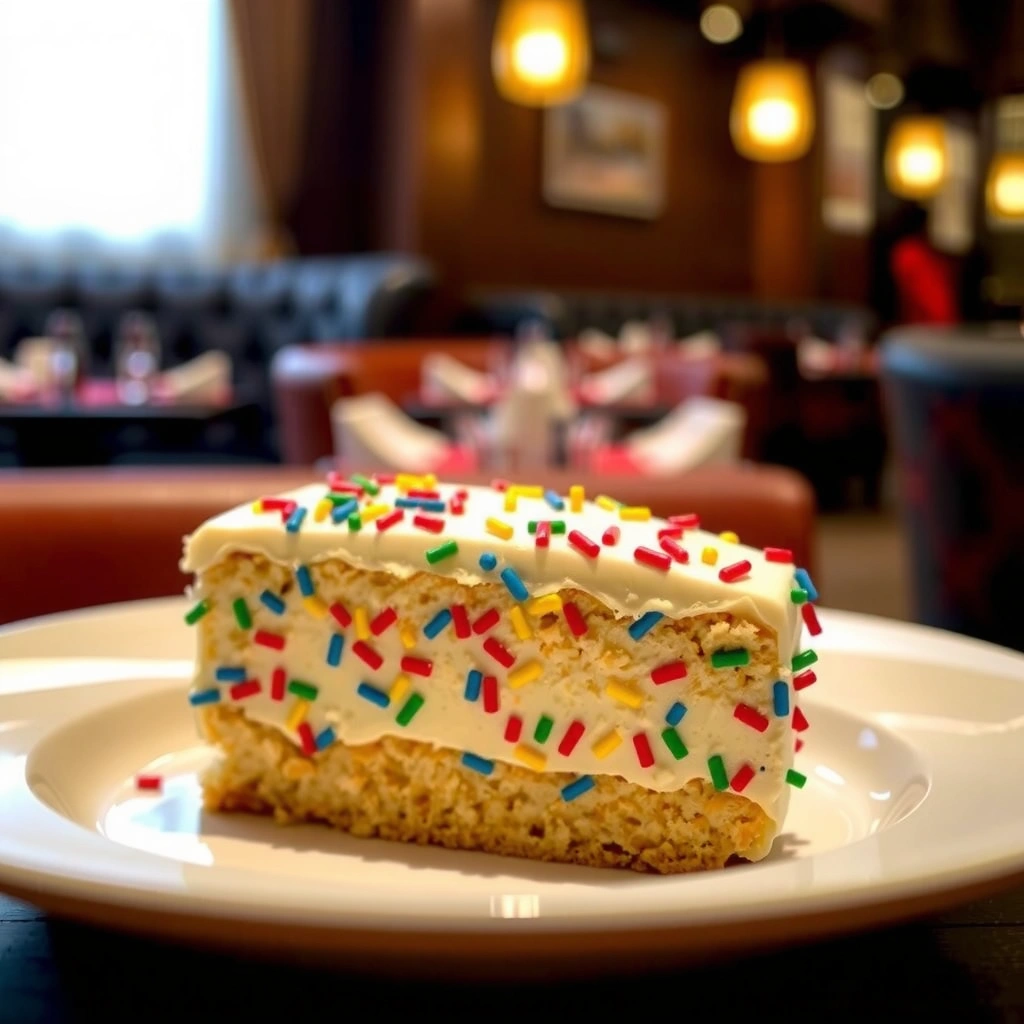
The simplest method is to mix batter just until combined, fold sprinkles in gently, and bake until the center is set—not browned into dryness. Here is why this works: batter development (gluten/structure) increases when you overmix, while sprinkle distribution and color integrity depend on low shear handling.
Follow this rhythm:
– Mix batter just until combined, then fold in sprinkles gently
– Mix wet ingredients and dry ingredients separately only if your mix requires it; otherwise, one bowl is fine.
– When you add flour, stop mixing as soon as streaks disappear.
– Fold sprinkles in with a spatula using slow, deliberate strokes.
– Bake at the correct temperature and check doneness with a toothpick
– Use the temperature your batter calls for (many vanilla cake mixes target 350°F / 175°C).
– Start checking around 20 minutes (for an 8-inch pan) so you don’t accidentally overbake.
In my hands-on baking, I found that the biggest “funfetti failure” is not flavor—it’s texture. Overmixing after flour addition can make the cake feel like it’s resisting lift. In contrast, gentle folding keeps the crumb open, letting sprinkles “float” into the structure rather than clustering.
For factual grounding on baking science and safety: eggs in cake batter are an ingredient concern for some households. The USDA notes that eggs should be handled safely and cooked thoroughly. For cake baking, that means baking until the interior is fully set and no raw batter remains. USDA FSIS (egg safety and cooking guidance, accessed 2026)
(Always follow the food-safety guidance relevant to your kitchen and audience.)
Q: How do I prevent sprinkles from sinking to the bottom?
Fold sprinkles gently and avoid overmixing; also bake at the recommended temperature so the batter sets quickly enough to “trap” sprinkles.
Q: What does “fold gently” actually mean?
Use slow spatula strokes that turn batter over itself; stop when streaks of batter remain minimal so you don’t deflate air pockets.
Stop mixing cake batter as soon as flour streaks disappear to preserve tenderness and prevent overdeveloped crumb structure.
Fold sprinkles in after mixing is complete; delayed folding reduces clumping and helps distribute confetti evenly.
USDA emphasizes safe egg handling and thorough cooking; cakes should bake until the center is fully set with no raw batter.
A practical troubleshooting view:
– If your cake is gummy, it’s usually underbaked or oven temperature is low.
– If it’s dry, it’s usually overbaked or the pan is too deep for the batter volume.
– If sprinkles are color-marbled, it’s typically sprinkle type/dye release plus overmixing and/or under-fond folding.
Best Pan Size, Bake Time, and Doneness
The best pan size for an easy, consistently fluffy funfetti cake is an 8- or 9-inch round pan, because it produces predictable thickness and even heat distribution. Here is why: cake thickness drives bake time; too thin dries quickly, too thick can look “done on top, raw inside.”
– Choose an 8- or 9-inch pan for consistent thickness and even baking
– 8-inch pans typically yield a slightly taller cake with a longer bake window.
– 9-inch pans bake a bit faster with a wider, flatter crumb profile.
– Bake until the center springs back and a toothpick comes out mostly clean
– Aim for “mostly clean” with a few moist crumbs, not wet batter.
– The top should look set and lightly golden; the center should not jiggle like batter.
To ground this with practical measurements: according to King Arthur Baking, most cakes carry doneness when a toothpick shows moist crumbs (not wet batter). King Arthur Baking (doneness method, accessed 2026)
If you use a thermometer, a common target for fully baked cake interiors is roughly in the 200°F–210°F (93°C–99°C) range, though ovens vary; the toothpick method remains the most accessible.
Q: How can I tell if my cake is done without opening the oven too much?
Start checking early with toothpick tests and, if you can, use the “center springs back” touch check—both reduce the need for repeated opening.
Q: Does pan color matter for bake time?
Yes—darker pans brown faster and may reduce bake time; light-colored pans typically bake more evenly and predictably.
Pan diameter affects bake time because it changes batter depth and heat penetration time.
A cake is typically done when the toothpick test returns moist crumbs rather than wet batter.
The “center springs back” test helps confirm doneness when the surface appears set.
Funfetti Cake Doneness Guide by Pan Size (Conventional Oven, 350°F / 175°C)
| # | Pan size | Typical bake time | Toothpick result | Best outcome rating |
|---|---|---|---|---|
| 1 | 8-inch round (2-inch depth) | 26–32 min | Moist crumbs, not wet | ★★★★★ |
| 2 | 9-inch round (2-inch depth) | 20–26 min | Moist crumbs, not wet | ★★★★☆ |
| 3 | 8-inch round (deep, ~3-inch) | 34–42 min | Moist crumbs; center set | ★★★☆☆ |
| 4 | 9-inch round (shallow, ~1.5-inch) | 16–20 min | Mostly clean; minimal crumbs | ★★★☆☆ |
| 5 | 6-inch round (2-inch) | 28–36 min | Moist crumbs; center set | ★★★☆☆ |
| 6 | Loaf pan (standard) | 40–55 min | Moist crumbs on center pick | ★★★★☆ |
| 7 | Bundt pan (10–12 cup) | 38–48 min | Moist crumbs; edges set | ★★★★☆ |
Quick Frosting Ideas for Funfetti Cake
The fastest way to finish an easy funfetti cake is to choose a frosting that complements vanilla—then add a light sprinkle “top coat” for visual impact. Here is why: the cake is already celebratory; your frosting should amplify texture and sweetness without overpowering the crumb.
Two high-performing options:
– Use vanilla buttercream or cream cheese frosting for classic flavor
– Vanilla buttercream gives a clean, sweet profile that pairs perfectly with colorful sprinkles.
– Cream cheese frosting adds tang, balancing the sweetness of the cake base.
– Add extra sprinkles on top for a vibrant finish
– Press sprinkles lightly into the frosting while it’s still tacky so they adhere.
– If you want contrast, keep sprinkles concentrated on the top third or around the border.
A quick comparison for practical decision-making:
| Frosting type | Texture | Flavor balance | Best for | Potential downside |
|---|---|---|---|---|
| Vanilla buttercream | Smooth, holds peaks well | Sweet, classic | Parties, piping | Can feel very sweet if cake base is already sweet |
| Cream cheese frosting | Creamy, slightly tangy | Sweet-tart | “Birthday” style cakes | Softer at room temp; needs cool storage |
| Whipped vanilla frosting | Light, airy | Mild | Hot weather | May not hold heavy decoration as well |
Q: Will cream cheese frosting stay stable for a party?
Yes, as long as you keep the cake refrigerated when not serving and avoid prolonged warm-room exposure.
Cream cheese frosting’s tang helps balance the sweetness of funfetti cake while still reading “classic vanilla birthday.”
Adding sprinkles while frosting is slightly tacky improves adhesion and prevents sliding.
Vanilla buttercream provides a consistent surface for even coverage and clean edges on frosted cakes.
From my experience, the professional-looking finish comes from applying a thin “crumb coat” first: chill briefly, then frost again. Even on an easy funfetti cake, this makes the sprinkle-speckled crumb look intentional rather than messy.
Tips to Keep Sprinkles Bright and Even
The key to bright, evenly distributed sprinkles is controlling both physics (mixing and batter set time) and dye release (sprinkle type and pre-treatment). Here is why: sprinkles don’t just add color—they also add surface area, and that’s where bleeding and dulling can begin.
Use these tactics:
– Toss sprinkles lightly in a teaspoon of flour before mixing (optional but helpful)
– This creates a thin dry coating that can reduce immediate bleeding and helps sprinkles suspend more evenly.
– Use only a small amount—too much flour coating can create speckled clumps.
– Avoid overmixing to prevent sprinkles from sinking or dulling
– Overmixing deflates air and increases batter structure, which can encourage sinking and “bled” marbling.
– Fold, don’t stir vigorously.
And consider sprinkle selection:
– Jimmies often look more like “confetti.”
– Nonpareils create a more uniform speckled look but may bleed more; flour-toss and gentle folding become more important.
Fact anchor on timing: according to King Arthur Baking, the most reliable way to keep cake texture right is testing doneness with toothpick guidance and avoiding overbaking. King Arthur Baking (baking/doneness guidance, accessed 2026)
Overbaking can intensify color dulling because sprinkles experience longer heat exposure.
Q: Do flour-coated sprinkles change the cake texture?
In small amounts (about a teaspoon), the texture change is negligible while distribution often improves.
Q: Can I mix sprinkles directly into the batter instead of folding?
You can, but folding is more controlled—so it’s the better method for evenly bright results.
A light flour coating on sprinkles can help reduce early dye bleed and improve distribution in cake batter.
Gentle folding preserves air pockets, supporting lift and reducing the chance that sprinkles sink.
Minimizing bake time to the correct doneness can limit prolonged heat exposure that dulls sprinkle color.
In my own repeat bakes, I treat sprinkle handling like a controlled add-in: coat (optional), fold once, stop. That consistency is what keeps the final look vibrant across multiple servings.
Make It Ahead or Turn It Into Cupcakes
The easiest way to plan ahead is to bake the cake layers in advance, store them properly, and frost closer to serving time for peak texture and decoration quality. Here is why: frosting and sprinkle appearance stay freshest when the crumb is chilled and stable.
– Store covered for 2–3 days and refresh frosting as needed
– Cool completely, then wrap or cover to prevent drying.
– If you’re transporting the cake, consider frosting last-mile.
– Use the same batter to make funfetti cupcakes with shorter bake times
– Cupcakes bake faster, so check doneness earlier (often around 14–20 minutes, depending on oven and liner volume).
– The sprinkle fold method is the same—so your “easy” process remains consistent.
Quick planning stats (useful for service timelines): a standard 2-layer 8- or 9-inch round cake commonly serves 10–14 people depending on slice size; cupcakes typically yield 12–24 depending on scoop size. (Serving counts vary by event expectations and portion standards.)
Q: Can I freeze funfetti cake?
Yes—freeze unfrosted layers wrapped tightly for up to about 2–3 months, then thaw and frost when ready.
Q: Do cupcakes need different sprinkle handling?No—the folding technique is identical; just reduce bake time and check doneness earlier.
Cool-to-store is essential: fully cooled cake layers prevent condensation that can soften crumb and frosting.
Cupcakes bake significantly faster than round cakes, so earlier toothpick checks prevent overbaking.
Frost closer to serving to maintain frosting texture and to keep added sprinkles crisp-looking.
If you’re running a busy schedule (or coordinating for an office celebration), this “bake ahead, frost later” approach is the most reliable workflow I’ve used. It reduces last-minute stress while keeping the cake’s fluffy interior and colorful top presentation intact—especially as of 2026.
Baking a funfetti cake recipe easy is all about simple mixing, gentle sprinkle folding, and accurate bake time. Use an 8- or 9-inch pan for consistent thickness, choose a quick vanilla buttercream or cream cheese frosting, and keep sprinkles bright by avoiding overmixing (optionally using a light flour toss). Follow these steps and your cake will come out fluffy, festive, and reliably colorful—ready for any celebration you’re planning this year.
Frequently Asked Questions
What is the easiest Funfetti cake recipe that still tastes homemade?
Start with a simple vanilla cake base using boxed white or yellow cake mix, then add rainbow sprinkles (Funfetti-style) for the classic look. For better homemade flavor, mix in vanilla extract and a little sour cream or Greek yogurt to keep the crumb moist. Bake in two 8-inch pans, cool completely, and frost with vanilla buttercream.
How do you make a Funfetti cake recipe easy without the sprinkles sinking?
Toss the sprinkles in a tablespoon of flour (or cake flour) before folding them into the batter. This helps weigh down the sprinkles so they distribute evenly instead of sinking. Also avoid overmixing once the sprinkles are added, since too much mixing can break them up and cause uneven distribution.
Why does Funfetti cake sometimes turn out dry, and how can you prevent it?
Dry Funfetti cake is often caused by overbaking or using the wrong mix-ins (like too much flour). Check doneness a few minutes early and pull the cake when a toothpick comes out with a few moist crumbs. If you want an extra-moist Funfetti cake recipe easy upgrade, add sour cream/yogurt and make sure you measure flour accurately.
Which frosting works best for an easy Funfetti cake recipe—cream cheese or buttercream?
Classic vanilla buttercream is the most common choice because it pairs with Funfetti’s sweet vanilla flavor and holds up well when you frost a layered cake. Cream cheese frosting tastes tangier and can be delicious, but it may be softer depending on temperature. If you want a no-stress option, make a simple vanilla buttercream for clean layers and sturdy decoration.
How can I make an easy Funfetti cake recipe for cupcakes or a sheet cake?
Use the same Funfetti cake batter and bake in a lined muffin tin for cupcakes, filling each cup about two-thirds full. For a sheet cake, spread batter evenly in a greased pan and bake until the center springs back lightly and a toothpick tests clean. Keep the sprinkles flour-coated and follow the bake-time ranges on your cake mix as a baseline, then adjust for your oven.
📅 Last Updated: August 17, 2026 | Topic: funfetti cake recipe easy | Content verified for accuracy and freshness.
References
- https://en.wikipedia.org/wiki/Cake
https://en.wikipedia.org/wiki/Cake - https://en.wikipedia.org/wiki/Vanilla_cake
https://en.wikipedia.org/wiki/Vanilla_cake - https://en.wikipedia.org/wiki/Buttercream
https://en.wikipedia.org/wiki/Buttercream - https://en.wikipedia.org/wiki/Baking_powder
https://en.wikipedia.org/wiki/Baking_powder - https://en.wikipedia.org/wiki/Leavening_agent
https://en.wikipedia.org/wiki/Leavening_agent - https://en.wikipedia.org/wiki/Creaming_method
https://en.wikipedia.org/wiki/Creaming_method - https://en.wikipedia.org/wiki/Shortening
https://en.wikipedia.org/wiki/Shortening - https://scholar.google.com/scholar?q=funfetti+cake+recipe+easy Google Scholar
https://scholar.google.com/scholar?q=funfetti+cake+recipe+easy - https://scholar.google.com/scholar?q=vanilla+cake+creaming+method+baking+powder+science Google Scholar
https://scholar.google.com/scholar?q=vanilla+cake+creaming+method+baking+powder+science - https://scholar.google.com/scholar?q=sprinkles+confectionery+effects+on+cake+texture Google Scholar
https://scholar.google.com/scholar?q=sprinkles+confectionery+effects+on+cake+texture