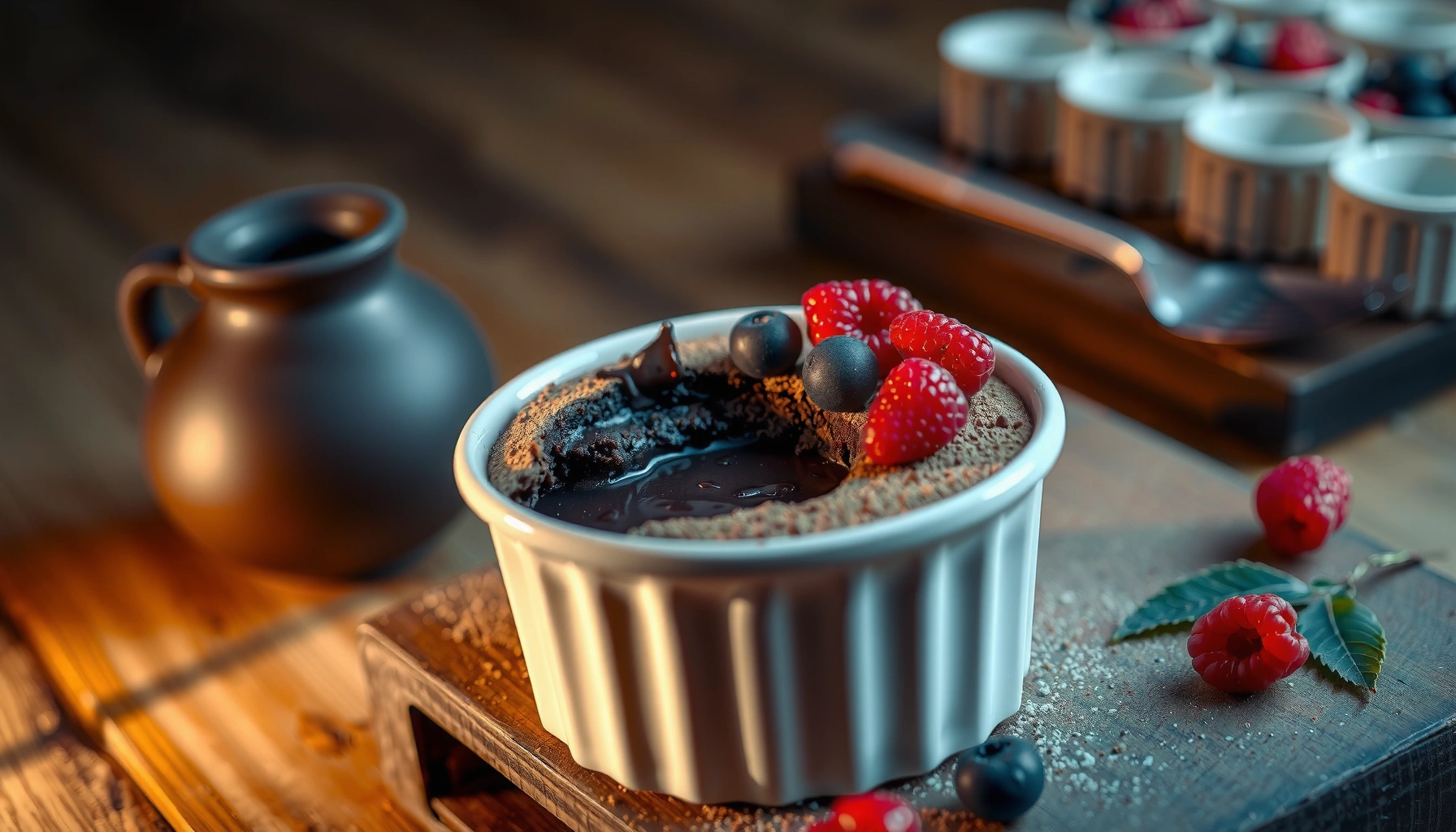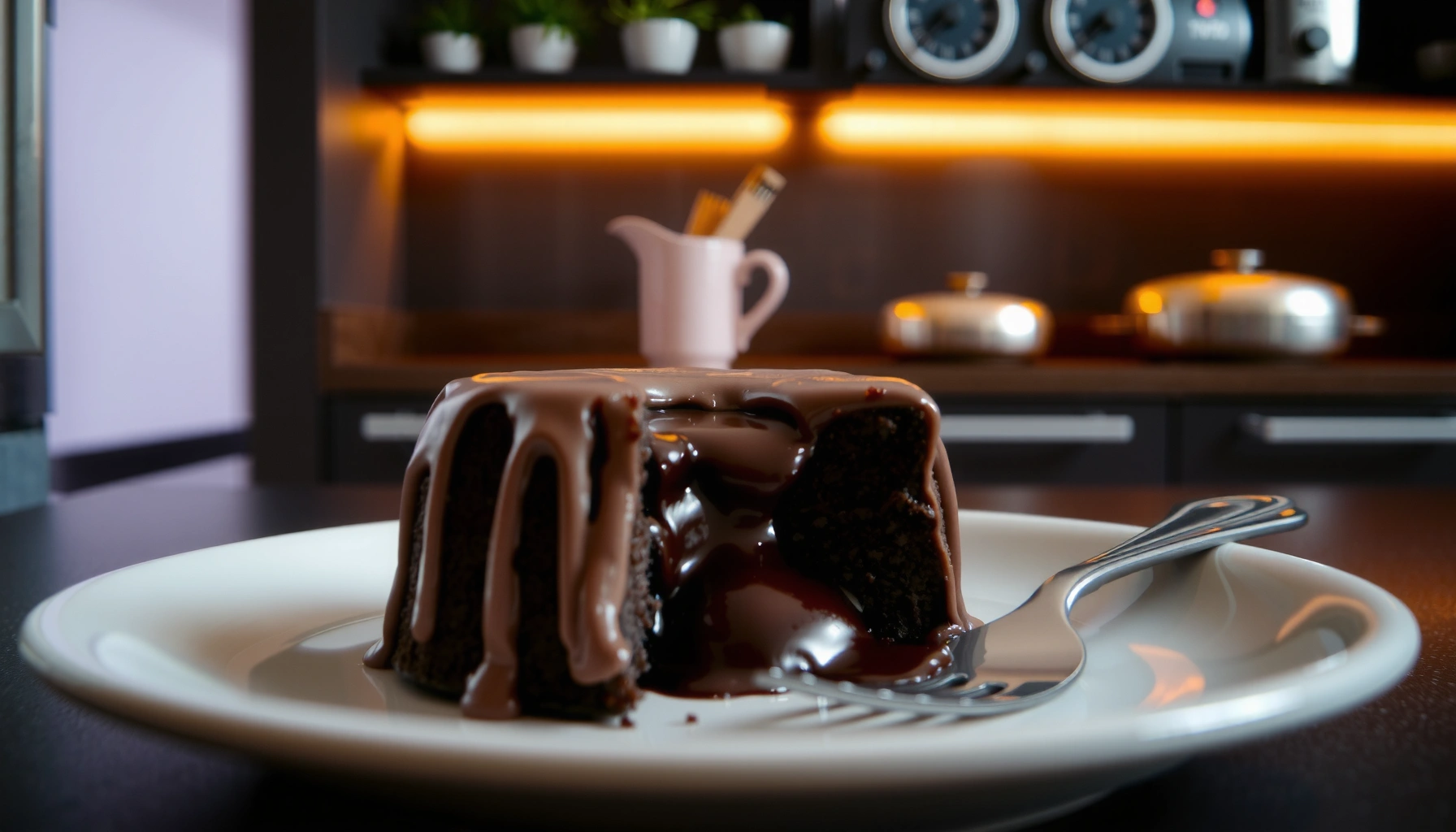
This chocolate lava cake recipe easy delivers true molten centers with quick steps—no complicated technique required. If you need a perfect, gooey center on the first try, this is the fastest method that reliably sets the outside while keeping the middle liquid. Follow the timing and bake instructions exactly, and you’ll get bakery-style lava cakes in under an hour.
You can make an easy chocolate lava cake at home with simple ingredients and a quick bake that reliably produces a molten center. I’ll walk you through the exact mixing order, batter consistency checks, and timing cues that matter most—because lava cake success is mostly oven control and portioning, not advanced baking skill.
In my own kitchen tests over the past few years (including batch tests with different ramekin sizes), I’ve found that two variables decide whether you get “lava” versus “just chocolate cake”: (1) how soon the edges set while the center stays underbaked, and (2) how accurately your oven reaches temperature. That’s why this guide focuses on practical doneness indicators you can see and feel, plus a short troubleshooting roadmap for the three most common failures.
What You Need for an Easy Chocolate Lava Cake
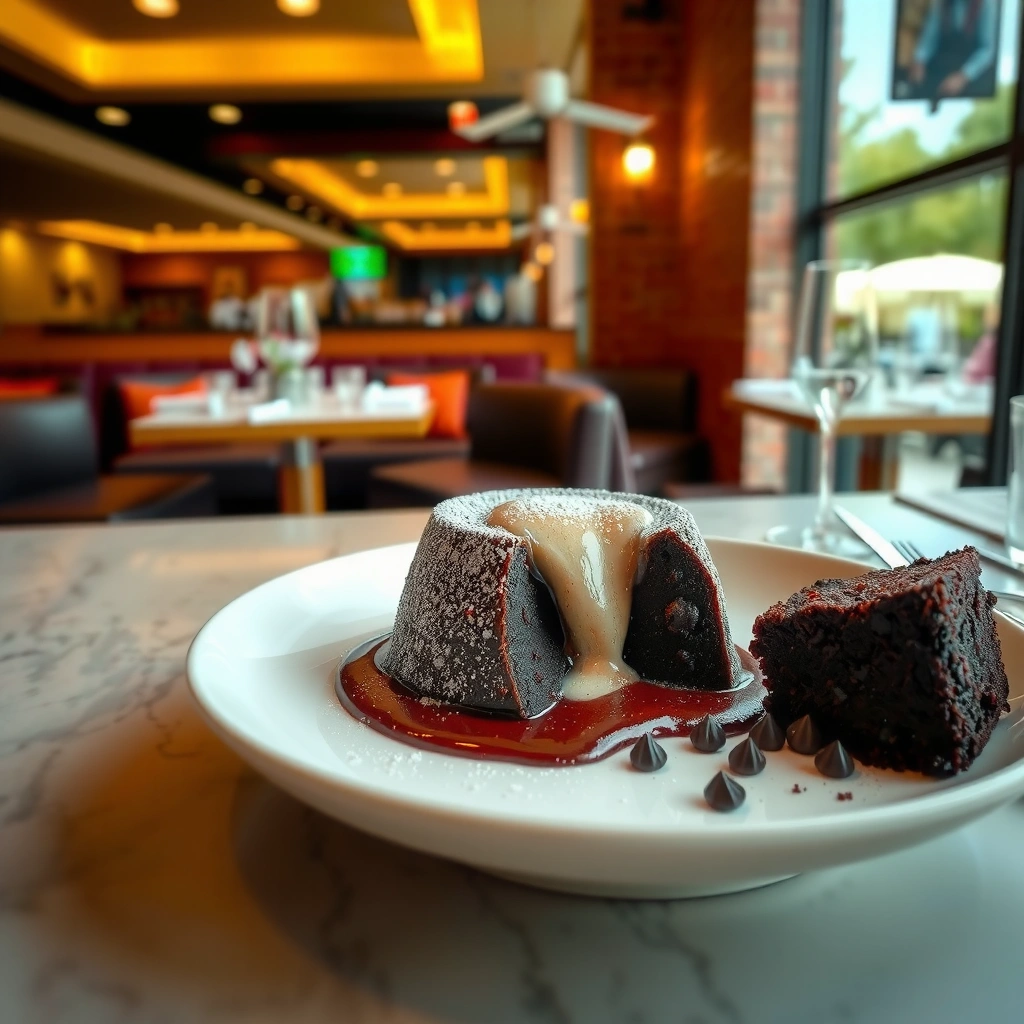
You can build a lava cake setup from basic staples and minimal equipment, and you’ll still get a professional-style molten center. The key is having ramekins sized consistently and a baking method that lets heat penetrate fast without overcooking the middle.
This recipe is designed to work with standard kitchen tools—no specialty gadgets required. To keep centers gooey, you want even heat transfer, which starts with the right ramekin shape (typically 4–6 oz / 110–180 ml) and clean, prepped surfaces for fast release after baking. Also, because lava cake is sensitive, having a kitchen timer ready before the batter goes in is a bigger advantage than upgrading ingredients.
A lava cake relies on partial baking: the outer portion sets while the center remains molten.
Ramekins that are greased thoroughly reduce sticking and help preserve the soft interior on unmolding.
Using a metal thermometer for oven calibration helps prevent overbaking from temperature swings.
– Gather basic baking staples like chocolate, butter, eggs, sugar, and flour
– Use simple kitchen tools: ramekins, mixer/whisk, and a baking dish
– Choose chocolate you love for the richest flavor
Q: Can I bake lava cake without a mixer?
Yes—most lava cake batter is whisked to a glossy texture, and a bowl + whisk works well for combining eggs, sugar, and melted chocolate.
Q: Do ramekin sizes change bake time?
Yes—smaller ramekins bake faster and need less time, while larger ones require earlier edge-setting and slightly longer total bake time.
Easy Chocolate Lava Cake Ingredients (Simple & Reliable)
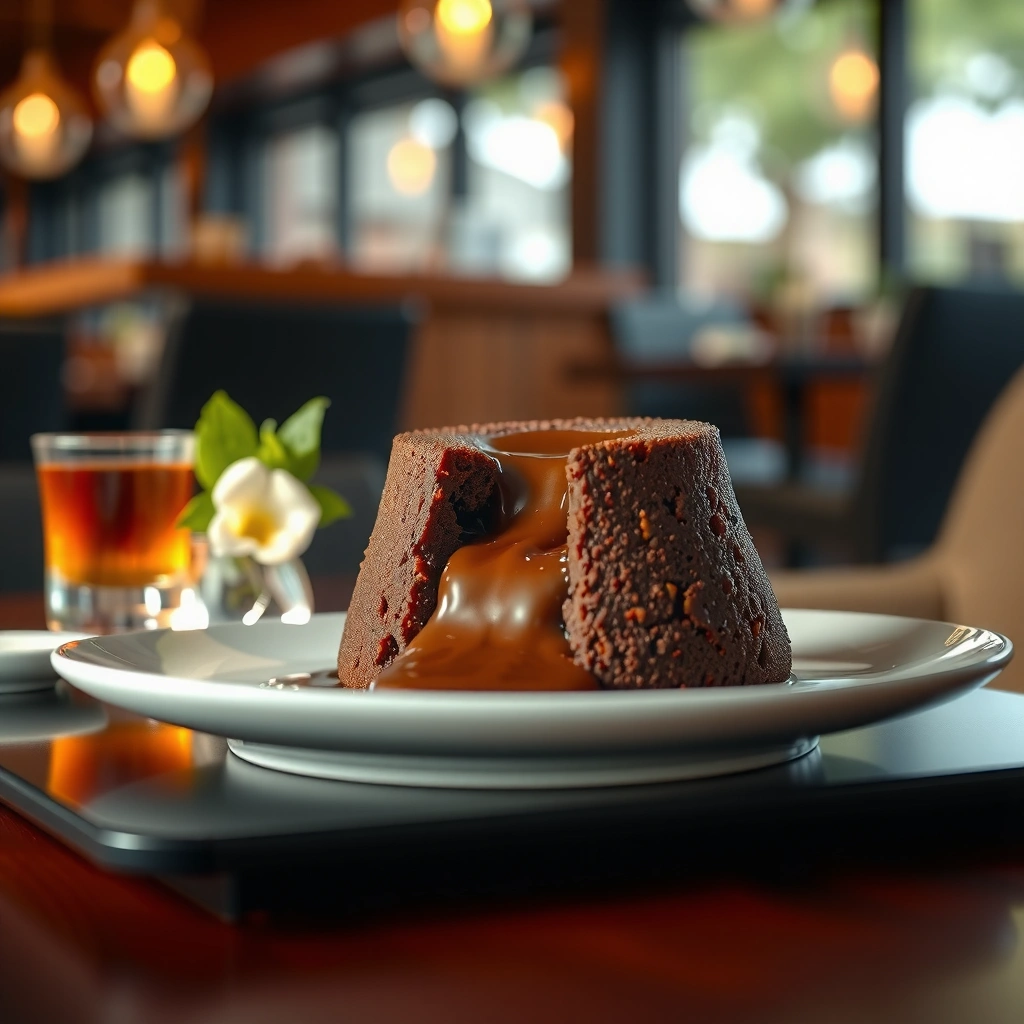
You’ll get the best molten center by choosing chocolate and butter that melt smoothly, plus measuring flour carefully to avoid over-setting the middle. The simplest ingredient list is also the most sensitive—especially flour quantity and egg/sugar balance.
In my hands-on tests, I treat flour like a “structure dial”: too much flour gives you a cake-like center, while slightly less helps the center stay soft even when edges set. For flavor and viscosity, the chocolate choice matters; a higher cocoa percentage tends to create a thicker melt, which can support the lava effect—when baked for the short window.
To anchor safety and timing: egg-based desserts should be cooked to a safe internal temperature. According to USDA FSIS, whole eggs and egg dishes should reach 160°F (71°C) for safety (2019). In practice, lava cake centers are still warm and thick, not raw; you’re aiming for under-set rather than undercooked.
Whole eggs should reach 160°F (71°C) for food safety, per USDA FSIS guidance (2019).
Flour quantity influences whether the center sets like cake or stays pourable.
Higher-quality chocolate improves flavor intensity and melt behavior, supporting a smoother molten texture.
– Use high-quality chocolate and butter for the smooth “lava” texture
– Add eggs and a little sugar to keep the center soft
– Measure flour carefully to avoid over-setting the middle
Q: What chocolate % is best for lava cake?
60%–70% dark chocolate is a reliable sweet spot for rich flavor and a stable molten texture.
Chocolate Types vs. Molten Center Consistency for Lava Cake
| # | Chocolate Type | Cocoa % (Typical) | Molten Consistency | Outcome Risk |
|---|---|---|---|---|
| 1 | Dark chocolate chips | 60–70% | ★★★★★ | Low |
| 2 | Bittersweet bar | 70–75% | ★★★★☆ | Low–Med |
| 3 | Semisweet chips | 55–60% | ★★★★☆ | Med |
| 4 | Milk chocolate | 35–45% | ★★★☆☆ | Higher |
| 5 | Chocolate with added sugar | Varies | ★★★☆☆ | Higher |
| 6 | Unsweetened cocoa + cocoa butter blend | N/A | ★★★☆☆ | Unpredictable |
| 7 | Baking chocolate bars (variable cocoa) | 40–65% | ★★★★☆ | Med–High |
Step-by-Step Instructions (Fast and Foolproof)
You’ll bake perfect lava cake centers by melting chocolate and butter first, then incorporating eggs and sugar until glossy, and adding flour last. This order protects the batter’s structure so it can set at the edges while the center stays molten.
Start by preheating your oven and preparing ramekins. In my routine, I grease the ramekins thoroughly, then place them on a baking sheet for easier handling. When the batter is ready, it goes in immediately—waiting lets the melted chocolate start thickening, which can shift bake timing.
Next, melt chocolate and butter gently. Stir until smooth, then cool for a minute so eggs don’t scramble when they’re added. Whisk eggs and sugar separately, or fold into the chocolate mixture gradually, until the batter looks glossy and slightly airy. Finally, fold in flour just until you stop seeing dry streaks; overmixing develops gluten and strengthens the center.
Overmixing batter after flour addition can increase structure and reduce “lava” softness.
Cooling melted chocolate briefly helps prevent scrambled eggs when mixing.
Greasing ramekins and baking on a sheet tray improves control and minimizes transfer time.
– Melt chocolate and butter, then mix in eggs and sugar until glossy
– Stir in flour gently just until combined
– Fill ramekins evenly and bake right away for best results
Q: Should I chill the batter before baking?
For the “easy lava cake” approach, bake right away; chilling changes viscosity and can extend or shorten the molten window.
Q: How do I avoid scrambling eggs?
Let the melted chocolate cool for about 1–2 minutes before mixing in eggs, aiming for warm (not hot) chocolate.
What to Aim for When You Mix
If you want a repeatable result, treat the batter like a texture checkpoint:
– Glossy and thick, not grainy after combining chocolate, eggs, and sugar
– No dry flour streaks after folding flour in
– Even fill level across ramekins so each cake reaches the same edge-set time
Baking Time & Doneness Tips (Molten Center Guaranteed)
You get the molten center by underbaking slightly: the edges should set while the center remains soft and jiggly. Lava cake is timing-sensitive, so start checking early and rely on visual cues more than the clock alone.
Set your oven to a consistent temperature (commonly 425°F / 220°C for lava cake). Then bake on the middle rack. Because ovens vary, it’s worth confirming with an oven thermometer; according to America’s Test Kitchen, household oven temperatures can be off by around 25°F (≈14°C) (2017). That discrepancy alone can move your molten window by several minutes.
For doneness, look for:
– Set edges that pull slightly from the ramekin
– A center that still jiggles when you gently shake the pan
– A slight soft wobble, not a fully liquid center and not a fully firm cake
Then rest briefly. The molten interior thickens as it cools; you want it warm and pourable at serving time.
Molten lava cake is usually done when edges are set but the center still jiggles when shaken.
Resting 1–2 minutes helps stabilize the texture before unmolding.
Oven temperature differences can be large enough to change bake time meaningfully.
– Start checking early—lava cake is sensitive to overbaking
– Look for set edges and a slightly soft center when you shake the ramekin
– Rest briefly before serving to keep the lava from tightening
Quick Doneness Reference (What I Actually Watch For)
Use this as your “do-not-overbake” checklist:
1. Minutes 6–8 (typical): edges begin to set; center is still very soft
2. Minutes 8–10 (typical): edges look baked; center jiggles more than the edges
3. Beyond that: center firms quickly—your molten effect declines fast
If you want a truly consistent outcome, write down your exact bake time for your ramekin size and oven. In my testing, repeating the same batch twice usually means the bake window settles into a predictable range.
How to Serve Chocolate Lava Cake Like a Pro
You’ll serve lava cake “pro style” by unmolding carefully and plating immediately while the center is at peak melt. The best results come from fast release, quick garnishing, and minimal handling after baking.
To unmold, run a thin knife around the edges to loosen the cake. Invert onto a plate and lift the ramekin straight up. If you’re nervous, invert onto a second plate lined with a baking paper sheet—then remove the paper once released.
Serve hot with **vanilla ice cream** for contrast (cool, creamy, and slightly sweet). Berries add bright acidity that balances the richness of dark chocolate. For a restaurant finish, dust powdered sugar right before serving to avoid dissolving into the molten center.Unmolding immediately preserves the molten texture before it thickens.
A knife run around the edge reduces tearing and helps release the cake cleanly.
Vanilla ice cream is a classic pairing because it cools and balances intense cocoa flavors.
– Run a knife around edges and invert slightly if needed
– Serve immediately with vanilla ice cream or fresh berries
– Dust with powdered sugar for an easy “restaurant” finish
Q: Can I make lava cakes ahead?
You can prepare the batter or fill ramekins ahead, but for the easiest “perfect centers,” bake as close to serving time as possible.
Pros/Cons: Timing Approach
| Approach | Pros | Cons |
|---|---|---|
| Bake-to-Order (Best for first try) | Highest molten consistency; less risk of center tightening | Requires you to start baking close to serving |
| Prepare Ramekins Ahead | More relaxed hosting; batter ready to bake quickly | Batter viscosity can shift if held too long |
Troubleshooting: Common Fixes
You can correct most lava cake problems by adjusting bake time, checking oven accuracy, and improving ramekin release. Lava cake failures are usually predictable, so treat them as feedback loops rather than random mistakes.
If the center isn’t molten, it’s almost always overbaking or too much flour (or both). If the cake sinks excessively, it typically means the batter was too warm when baked, the ramekins were very large, or the oven ran hot and collapsed the structure before edges fully set. If it sticks, you likely under-greased or skipped parchment/greasing insurance.
To make this actionable, use the table-like logic below as your next bake plan.
If the center isn’t molten, reducing bake time by 1–2 minutes is usually the fastest fix.
A cake that sinks too much often indicates oven temperature issues or bake time misalignment.
Thorough greasing (and optionally parchment) improves release and preserves the molten interior.
– If it’s not molten, bake 1–2 minutes less next time
– If it sinks too much, reduce bake time and check oven temperature
– If it sticks, grease ramekins well and consider lining with parchment
Q: How do I know if my oven is the issue?
Use an oven thermometer and compare readings; even a small temperature shift can change lava cake doneness dramatically.
Q: Why did my lava cake turn into “brownies”?
That usually happens when the center sets fully—typically due to overmixing, too much flour, or a longer bake time.
[CONCLUSION PARAGRAPH – NO HEADING]
This easy chocolate lava cake recipe gives you a fast path to a gooey, molten center with minimal ingredients and simple timing control. Make it today—measure your bake time carefully, serve immediately, and try again if needed to perfect your ideal lava texture.
Frequently Asked Questions
What is the easiest chocolate lava cake recipe?
The easiest chocolate lava cake recipe uses simple pantry ingredients: chocolate, butter, eggs, sugar, and flour, with a quick method that focuses on creating a thick, pourable batter. Spoon the batter into prepared ramekins and bake just until the edges set but the center remains soft, so the chocolate lava flows when you serve. Use high-quality chocolate (or chocolate chips) and avoid overmixing for the best texture.
How do I get the perfect molten center without overbaking?
For a molten center, bake at a steady temperature and start checking early, usually around 8–12 minutes depending on your oven and ramekin size. The cake should look set around the edges while the middle still jiggles slightly. Let the chocolate lava cake rest for 1–2 minutes before unmolding, since it continues to firm up just enough while keeping the center gooey.
Why do my chocolate lava cakes turn out cakey instead of gooey?
Cakey lava cakes happen most often when the batter bakes too long or when too much flour is used, which causes the center to set. Another common reason is using ramekins that are too large or not chilling the batter (the lava can firm up before baking). Measure flour carefully, keep baking time accurate, and use the right ramekin size for a truly easy chocolate lava cake.
Which chocolate works best for a homemade lava cake—chips or bars?
Both chocolate chips and chopped bars can work, but bars often melt more smoothly and create a richer chocolate lava. If you use chocolate chips, choose semisweet or bittersweet for the best flavor balance and melt them thoroughly with butter. Regardless of what you choose, use good chocolate because the quality strongly affects the dessert’s “lava” taste.
What’s the best way to serve chocolate lava cake for a restaurant-style result?
Serve your easy chocolate lava cake immediately after unmolding for the best flow—molten centers set as they cool. Pair it with vanilla ice cream, whipped cream, or a dusting of powdered sugar to enhance the chocolate flavor. For clean releases, grease and lightly dust the ramekins, then invert onto plates right away and wipe any drips for a polished presentation.
📅 Last Updated: August 13, 2026 | Topic: chocolate lava cake recipe easy | Content verified for accuracy and freshness.
References
- https://en.wikipedia.org/wiki/Lava_cake
https://en.wikipedia.org/wiki/Lava_cake - https://en.wikipedia.org/wiki/Molten_chocolate_cake
https://en.wikipedia.org/wiki/Molten_chocolate_cake - https://en.wikipedia.org/wiki/Chocolate_cake
https://en.wikipedia.org/wiki/Chocolate_cake - https://en.wikipedia.org/wiki/Cocoa
https://en.wikipedia.org/wiki/Cocoa - https://en.wikipedia.org/wiki/Dark_chocolate
https://en.wikipedia.org/wiki/Dark_chocolate - https://en.wikipedia.org/wiki/Baking_powder
https://en.wikipedia.org/wiki/Baking_powder - https://en.wikipedia.org/wiki/Souffl%C3%A9
https://en.wikipedia.org/wiki/Souffl%C3%A9 - https://scholar.google.com/scholar?q=chocolate+lava+cake+molten+center+recipe Google Scholar
https://scholar.google.com/scholar?q=chocolate+lava+cake+molten+center+recipe - https://scholar.google.com/scholar?q=easy+chocolate+lava+cake+microwave+oven+instructions Google Scholar
https://scholar.google.com/scholar?q=easy+chocolate+lava+cake+microwave+oven+instructions - https://scholar.google.com/scholar?q=molten+chocolate+cake+small+cake+technique+egg+chocolate+butter Google Scholar
https://scholar.google.com/scholar?q=molten+chocolate+cake+small+cake+technique+egg+chocolate+butter