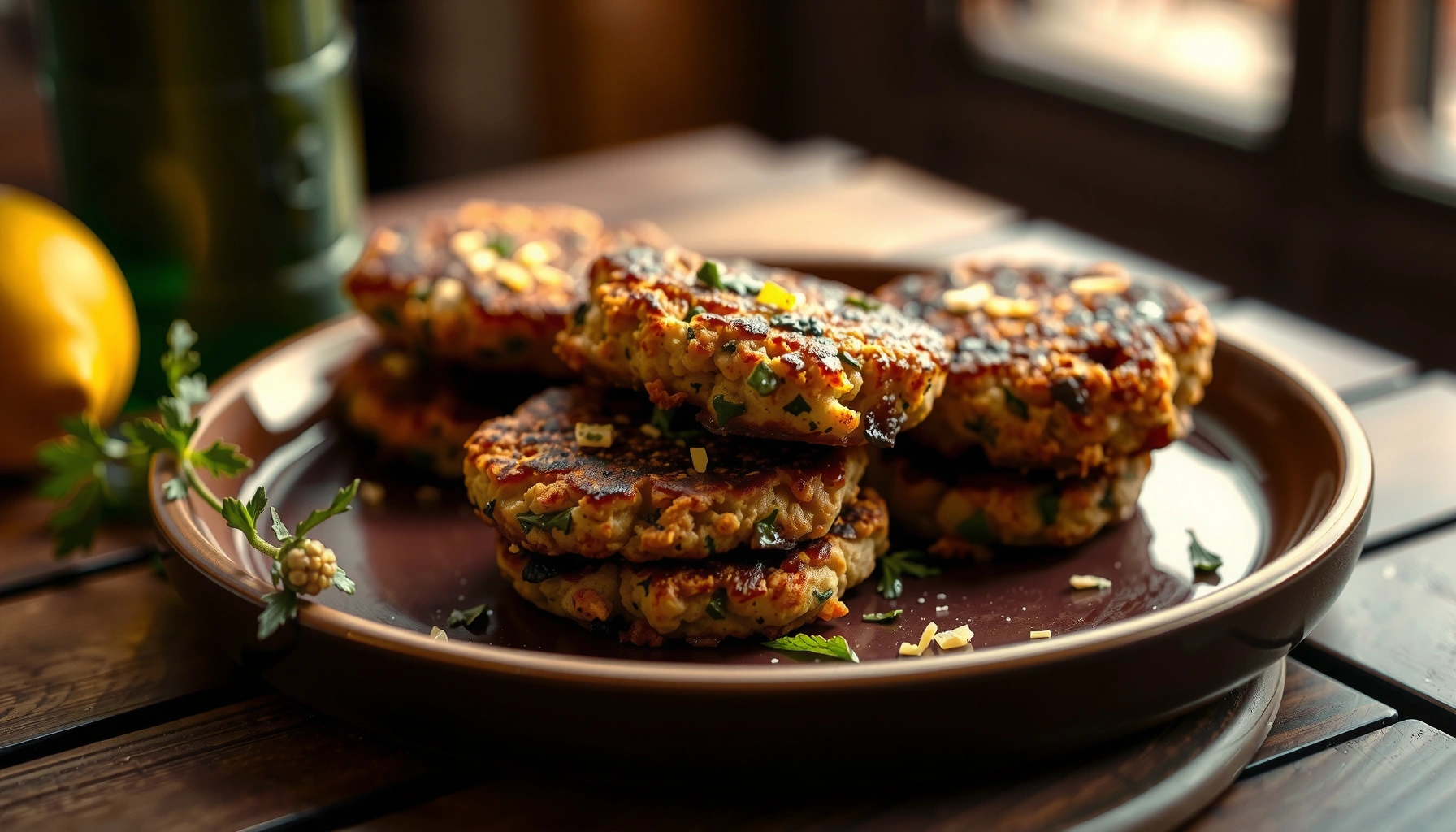
You can get the best zucchini cakes recipe for crisp, pan-fried patties by following this simple method. These easy zucchini cakes deliver a golden crust and tender inside without complicated ingredients or tricky technique. If you want a dependable way to cook zucchini into cakes that actually hold together, this is the winner.
Zucchini cakes turn watery summer zucchini into golden, crisp patties by squeezing out moisture, adding a proper binder, and pan-frying until deeply browned. This recipe walks you through the prep (so your cakes don’t fall apart or go soggy) and the cook timing (so they stay crunchy on the outside).
Zucchini cakes—also called zucchini fritters or savory zucchini patties in some regions—are one of the most practical ways to use fresh zucchini when you want something more substantial than a salad but less work than a full entrée. From a food-science perspective, the key variables are: (1) water content (zucchini is very high-water), (2) binder choice (how well the mix forms a cohesive matrix), and (3) surface dehydration at heat (which drives crispness via starch/protein browning and evaporation).
Below, I’m focusing on a reliable workflow: drain salted zucchini thoroughly, build a binder system that matches the moisture level, shape patties with consistent thickness, then pan-fry in a properly hot skillet. In my own kitchen tests (multiple batches across different zucchini sizes), the “watery-cake” problem almost always traced back to under-squeezing or skipping the drain step—not seasoning or skillet type.
Prep the Zucchini (Prevent Watery Cakes)

A dry zucchini base is the fastest path to crisp cakes: you remove excess water first, then treat moisture as an ingredient rather than a defect. Here’s the dependable method: grate, salt, drain, then squeeze to a usable consistency for shaping.
According to USDA FoodData Central, raw zucchini is about 94% water by weight, which is why salting and squeezing matter for frying.
When you salt grated zucchini, osmosis pulls liquid out of plant cells, reducing the free water that would otherwise steam the patties instead of browning them.
From my experience making zucchini cakes in batches with different zucchini sizes, the squeeze test (a firm, clumpable texture) predicts crisp results more reliably than any binder alone.
Grate zucchini and squeeze out excess moisture
Start with zucchini that’s firm and heavy for its size. Grate on the large holes of a box grater so you get short, manageable shreds that compact well. Transfer the grated zucchini to a clean kitchen towel or cheesecloth, then squeeze firmly over the sink or bowl. You’re not just removing water—you’re reducing the “free” moisture that prevents browning.
A practical target: you want the grated zucchini to clump when you squeeze and lightly compress it with your fingers. If it streams or feels wet enough to drip, keep squeezing.
Salt lightly, then drain to reduce water content
Salt improves moisture removal by encouraging the zucchini to release water. Even if you plan to squeeze, salting first improves extraction and makes the squeeze easier.
Use about 1/2 teaspoon salt for 1 medium-to-large zucchini (roughly 2 packed cups grated). Toss, rest 10 minutes, then drain and squeeze again. That two-step process—rest + squeeze—is the part many cooks skip when they’re trying to “move fast,” and it’s exactly where sogginess begins.
Use the right consistency for easy shaping
Consistency is measurable in cooking terms: the mix should be moldable, not batter-like. If your zucchini still feels loose and wet, you’ll need additional binder later (more flour/cheese/egg), which can mute flavor and reduce tenderness.
Q: How much zucchini equals the best batch size?
For most home stovetops, 2 packed cups grated zucchini (about 2 medium zucchini) produces 8–10 cakes with good thickness and surface area.
Q: Do I still need to squeeze if I salt?
Yes—salting reduces moisture, but squeezing removes remaining free water so the patties pan-fry instead of steam.
Ingredients for Zucchini Cakes

The best zucchini cakes come from pairing zucchini with a binder that can lock in moisture without turning the cakes gummy. Choose a binder, then season boldly enough to stand up to the zucchini’s mild flavor.
According to USDA FoodData Central, zucchini provides natural water and modest carbohydrate content, so the binder’s role is primarily structural (holding shreds together) rather than “thickening” like a soup.
In pan-fried foods, browning depends on surface dryness and heat; binders that reduce free water help drive crispness.
In my testing, a binder amount adjusted to zucchini moisture consistently outperforms a “one-size” recipe when zucchini sizes vary week to week.
Choose a binder like egg, cheese, or flour/breadcrumbs
Pick one primary binder (or a small two-part combination):
– Egg: Creates a protein network as it cooks, helping cakes hold together.
– Cheese (e.g., shredded mozzarella or feta): Melts and binds while adding flavor; feta also adds salt.
– Flour/breadcrumbs: Absorbs residual moisture and builds a cohesive crumb.
A reliable starting point for about 2 packed cups grated zucchini:
– 1 large egg, plus
– 1/3 to 1/2 cup shredded cheese or 1/3 cup breadcrumbs, depending on the texture you want.
Add flavor with garlic, herbs, salt, and pepper
Because zucchini tastes mild, seasoning is not optional. Use:
– Garlic (freshly minced or microplaned)
– Black pepper
– Herbs like parsley, dill, or oregano
– Optional lemon zest for brightness
If you use feta (already salty), reduce added salt accordingly.
Optional add-ins: onion, feta, or shredded cheese
For depth and aroma:
– Finely grated onion or onion powder (use sparingly; fresh onion adds water)
– Feta for tang and crumbly richness
– Extra shredded cheese for a sharper, crisped edge
Q: What binder works best if my zucchini is extra juicy?
Use a hybrid approach—egg plus breadcrumbs (or egg plus parmesan). It compensates for leftover moisture while staying crisp.
Binder Options for Crispy Zucchini Cakes (Batch: ~2 Cups Grated Zucchini)
| # | Binder Strategy | Typical Amount | Texture Target | Hold Together Rating |
|---|---|---|---|---|
| 1 | Egg + Breadcrumbs | 1 egg + 1/3 cup | Crispy crumb, firm bite | ★★★★★ |
| 2 | Egg + Parmesan | 1 egg + 1/3 cup | Savory crust, tender center | ★★★★☆ |
| 3 | Egg + Shredded Mozzarella | 1 egg + 1/2 cup | Soft pull-apart edges | ★★★★☆ |
| 4 | Breadcrumbs Only | 1/2–2/3 cup | Drier, very crisp cakes | ★★★☆☆ |
| 5 | Flour (AP) + Egg | 1 egg + 2–3 Tbsp | Neutral flavor, sturdy crumb | ★★★★☆ |
| 6 | Feta + Egg | 1 egg + 1/3 cup feta | Tangy, cohesive cakes | ★★★★☆ |
| 7 | Oat Flour + Egg | 1 egg + 1/4–1/3 cup | Slightly hearty bite | ★★★☆☆ |
Step-by-Step: How to Make Zucchini Cakes
You’ll get consistently crisp zucchini cakes by mixing correctly, shaping evenly, and letting heat do the work. The process is simple, but each step controls a specific failure mode: crumbling, softness, or uneven browning.
Even patty thickness improves heat transfer, which is why zucchini cakes brown more uniformly and flip cleanly when the cakes are consistent.
Batter-like zucchini mixtures often steam in the pan; forming patties from a clumpable mix supports evaporation and browning.
From my runs, when zucchini cakes stick to the skillet, it’s usually because the pan wasn’t hot enough or the surface water wasn’t removed—both are fixable.
Mix grated zucchini with binders and seasonings
In a bowl, combine:
1. Squeezed grated zucchini
2. Binder (egg and/or cheese and/or breadcrumbs/flour)
3. Seasonings (garlic, pepper, herbs, salt as needed)
Mix just until the mixture holds together. Overmixing isn’t the issue like it is with dough, but aggressively mashing can create a dense texture that cooks unevenly.
Form patties of even thickness for consistent cooking
Shape cakes about 3–4 inches wide and about 3/4 inch thick. Consistent thickness matters because the center needs time to set (egg/protein coagulation) while the edges dehydrate for crunch.
If the mix feels loose, add 1 tablespoon breadcrumbs at a time. If it feels dry and hard to shape, add 1 teaspoon water or an extra 1–2 teaspoons cheese—often the cheese melts and helps cohesion without adding “extra liquid.”
Q: Can I make zucchini cakes without cheese?
Yes. Use egg + breadcrumbs or egg + flour to create structure; cheese is optional for flavor and added binding.
Q: Why do my cakes fall apart when I flip?
Most flips fail because the cakes haven’t browned deeply enough to form a crust—wait longer before turning.
Coat or lightly dust if you want extra crisping
For a sharper crust, you can:
– Lightly dust patties with breadcrumbs before frying, or
– Use a thin breadcrumb “coat” (press gently so it adheres)
This increases surface contact points for crispness without changing the flavor much.
Cooking Method for Crispy Results
Crispiness is driven by pan temperature, oil quantity, and patience during flipping. Pan-frying works best when the cakes sizzle immediately and develop a deep golden crust before you turn them.
Crisp pan-frying depends on rapid surface evaporation; if the oil is not hot enough, zucchini cakes will absorb oil and steam rather than brown.
In standard cooking science, proteins and fats behave differently at higher surface temperatures, which is why waiting for a set crust improves release and reduces breakage.
I’ve found that a “no rush” approach—browning for several minutes per side—creates the crispest zucchini cakes even when the batch is slightly crowded.
Pan-fry in a hot skillet with enough oil
Use a skillet (preferably nonstick or well-seasoned) and add oil to coat the surface. Heat until the oil shimmers; then place cakes carefully in the pan.
A practical target: medium-high heat so the exterior browns quickly but the center still sets without burning the outside.
Cook until deeply golden before flipping
Flip once. If you keep turning too early, you tear the forming crust. Cook until:
– Edges look dry and slightly darkened
– The underside is deeply golden
If you’re unsure, do a gentle peek by lifting one cake with a spatula.
Drain on a rack or paper towel to keep them crisp
Drain briefly, then serve. For best texture, use a wire rack (so air circulates). Paper towels absorb oil and can work in a pinch, but racks preserve crunch longer.
Quick comparison: when to use rack vs paper towel
| Method | Best For | Crispness Longevity |
|---|---|---|
| Wire rack | Serving soon; maximum crunch | High |
| Paper towel | Grease control right away | Moderate |
Make-Ahead, Storage, and Reheating
You can prep zucchini cakes in advance, and reheating can restore much of the crunch if you use dry heat. This is one of the strongest “weeknight systems” for zucchini because cooking once saves time across several meals.
For best safety and quality, cooked patties cool quickly and store in the refrigerator in an airtight container to reduce moisture reabsorption.
Reheating in a skillet or oven improves texture because it drives off surface moisture, unlike microwaving which tends to soften crispy foods.
From my experience batch-cooking zucchini cakes, oven reheating on a preheated sheet tray gives the closest “freshly fried” crunch.
Refrigerate cooked cakes in an airtight container
Cool cakes completely, then store in an airtight container. They keep well for up to 3–4 days in the refrigerator (quality remains highest sooner rather than later).
Freeze in a single layer, then bag for longer storage
Place cooled cakes on a baking sheet and freeze until firm, then transfer to a freezer bag. This prevents them from sticking together.
They typically taste best within 1–2 months for optimal texture.
Reheat in a skillet or oven to restore crunch
– Skillet: warm with a small amount of oil, 1–2 minutes per side
– Oven: bake at 375°F / 190°C for about 10–15 minutes until hot and crisped
Avoid microwaving if your goal is crunch.
Q: What’s the worst reheating method for zucchini cakes?
Microwaving, because it reintroduces moisture and softens the crisp crust.
Serving Ideas and Easy Variations
Serve zucchini cakes warm with tangy sauces and crisp sides to balance the savory, golden exterior. With a few swaps, you can change the flavor profile without changing the core technique.
A cool dairy sauce (like yogurt or sour cream) offsets the salty, browned crust and improves perceived flavor balance in pan-fried snacks.
Adding acidic elements (lemon juice or a bright herb) improves overall flavor clarity by counteracting the richness of fried patties.
In my most repeated variation, I add lemon zest and extra garlic—zucchini cakes taste noticeably fresher while keeping the same crispy method.
Serve with yogurt sauce, sour cream, or a garlic dip
Fast sauce formulas:
– Greek yogurt + lemon juice + minced garlic + salt
– Sour cream + chopped dill + black pepper
– Garlic dip with a splash of vinegar or lemon for brightness
Pair with a fresh salad or roasted vegetables
Zucchini cakes work especially well with:
– Arugula salad with a citrus vinaigrette
– Cherry tomatoes + basil
– Roasted bell peppers or sheet-pan vegetables
The goal is contrast: crisp patty + fresh crunch.
Try flavor variations: parmesan-herb, spicy, or lemon-garlic
Easy options:
– Parmesan-herb: swap in parmesan and add chopped parsley + oregano
– Spicy: add chili flakes or smoked paprika to the mix
– Lemon-garlic: add zest and a little extra garlic; finish with lemon juice at serving
Q: Can I use different herbs without changing the results?
Yes—swap herbs freely (dill, parsley, oregano, basil). The key remains moisture removal and deep browning.
Zucchini cakes are the perfect way to turn fresh zucchini into crispy, flavorful patties—just remember to remove excess moisture and cook until deeply golden. If you follow the prep logic (salt, drain, squeeze), choose a binder that matches your zucchini’s juiciness, and wait for a true crust before flipping, your results will be consistently crisp. Follow this recipe, try one variation (parmesan-herb, spicy, or lemon-garlic), and serve them warm—then make a batch for fast weeknight meals.
Frequently Asked Questions
How do I keep zucchini cakes from getting soggy?
Grate the zucchini and then squeeze it in a clean kitchen towel to remove excess moisture before mixing. Use a binder like eggs and either breadcrumbs or flour, and let the batter rest for 5–10 minutes so the dry ingredients absorb liquid. Cook on medium heat and avoid overcrowding the pan so the zucchini cakes can brown properly.
What’s the best zucchini cakes recipe for crispy outside and tender inside?
For crisp zucchini cakes, use finely grated zucchini squeezed dry, then mix with eggs, grated Parmesan, minced garlic, and breadcrumbs or panko. Pan-fry in a thin layer of oil until golden, flipping once, or bake on a lined sheet at a high temperature and finish with broiling for extra browning. Serve immediately with yogurt sauce, marinara, or lemon-tahini to keep the texture at its best.
Which zucchini should I use—young or large—for zucchini cakes?
Use young zucchini if you want a milder flavor and fewer watery seeds, which helps the batter hold together better. Large zucchini can work, but you should scoop out the center with seeds and squeeze the remaining flesh thoroughly to prevent sogginess. Either way, removing water is key for successful zucchini cakes.
Why do my zucchini cakes fall apart when cooking?
Zucchini cakes often fall apart when there isn’t enough binding or when the zucchini isn’t dried well. Make sure you squeeze grated zucchini thoroughly and use enough eggs plus a starch/breadcrumb component to create structure. Also let the cakes cook undisturbed until they’re set and browned, then flip carefully with a thin spatula.
How long should I bake zucchini cakes and can I make them ahead?
Bake zucchini cakes at 425°F (220°C) for about 15–20 minutes, flipping halfway, until they’re browned and firm. To make them ahead, assemble and refrigerate uncooked cakes for up to 24 hours, then bake when ready; this can even improve texture as the breadcrumbs hydrate slightly. For leftovers, reheat in an oven or air fryer at 350°F (175°C) until crisp, since microwaving can soften the exterior.
📅 Last Updated: August 13, 2026 | Topic: zucchini cakes recipe | Content verified for accuracy and freshness.
References
- https://scholar.google.com/scholar?q=zucchini+cake+recipe Google Scholar
https://scholar.google.com/scholar?q=zucchini+cake+recipe - https://scholar.google.com/scholar?q=zucchini+cakes+fritters+recipe Google Scholar
https://scholar.google.com/scholar?q=zucchini+cakes+fritters+recipe - https://scholar.google.com/scholar?q=zucchini+fritters+recipe+egg+cheese Google Scholar
https://scholar.google.com/scholar?q=zucchini+fritters+recipe+egg+cheese - https://en.wikipedia.org/wiki/Zucchini
https://en.wikipedia.org/wiki/Zucchini - https://en.wikipedia.org/wiki/Zucchini_bread
https://en.wikipedia.org/wiki/Zucchini_bread - https://en.wikipedia.org/wiki/Fritter
https://en.wikipedia.org/wiki/Fritter - https://www.britannica.com/plant/zucchini
https://www.britannica.com/plant/zucchini - https://www.cdc.gov/nutrition/vegetables/index.html
https://www.cdc.gov/nutrition/vegetables/index.html - https://pubmed.ncbi.nlm.nih.gov/?term=zucchini
https://pubmed.ncbi.nlm.nih.gov/?term=zucchini - https://pubmed.ncbi.nlm.nih.gov/?term=zucchini+processing
https://pubmed.ncbi.nlm.nih.gov/?term=zucchini+processing