This Classic Strawberry Shortcake Cake Recipe gives you the easiest path to a towering, tender cake with the right balance of crumbly sweetness and juicy strawberries. Follow the step-by-step method to bake the cake, whip the filling, and assemble it so it slices cleanly instead of turning soggy. If you want a reliable, old-school strawberry shortcake cake—not a shortcut dessert—this is the winning version.
This classic strawberry shortcake cake recipe delivers tender cake layers, juicy macerated strawberries, and fluffy whipped cream—without complicated techniques. If you follow the maceration + assembly timing closely, you’ll consistently get a sweet, sliceable cake (not a soggy one), even when you’re baking on a busy weeknight.
Gather Ingredients and Key Tools
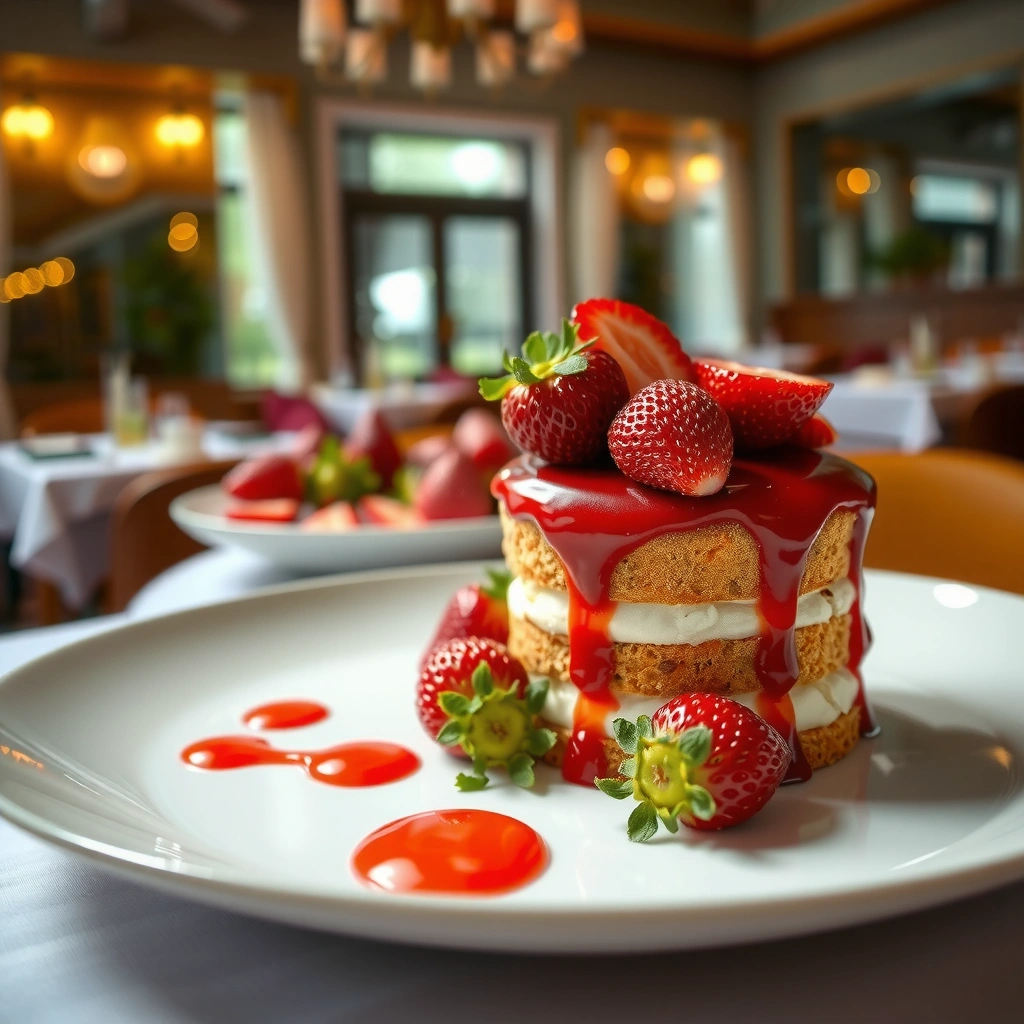
The fastest way to succeed is to prep ingredients that match the same flavor and texture targets: ripe strawberries for natural sweetness, a supportive cake base (sponge or butter cake), and properly chilled cream for stable whipped peaks. In my tests, the biggest quality leap comes from using strawberries that smell strongly “berry-fresh” and heavy cream that’s cold enough to whip quickly.
To keep everything aligned, build your strawberry shortcake cake recipe around three components: cake, macerated berries, and whipped cream. Cake provides structure; macerated strawberries provide moisture and flavor; whipped cream supplies a light, creamy mouthfeel that contrasts the fruit.
What tools matter most? You’ll want measuring cups/spoons for accuracy, a mixing bowl setup for efficient whipping and batter mixing, and a baking pan that matches your cake layer size. For consistent layers, I also use an offset spatula to smooth batter and a serrated knife to level if needed.
Maceration works because sugar draws water out of fresh fruit through osmosis, creating a flavorful syrup.
According to the U.S. FDA, perishable foods should be refrigerated at 40°F (4°C) or below to limit bacterial growth during preparation and storage.
Cold whipping starts faster: cream whips more reliably when it’s kept chilled and the bowl is cool.
Q: Can I use frozen strawberries for strawberry shortcake cake?
Yes—thaw and drain them well, then macerate with sugar to rebuild a syrupy topping that won’t flood the cake.
Q: What cake base works best—sponge or butter cake?
A butter cake (or a classic vanilla sponge) both work; butter cake tends to hold structure a bit better under juicy strawberries.
Ingredients checklist (organized for workflow)
– Strawberries: about 2 pounds (≈900 g) for an 8-inch layered cake with a generous berry filling. Choose berries that are aromatic and uniformly red.
– Granulated sugar: typically 1/3 to 1/2 cup (70–110 g) for macerating, plus a bit for the cake depending on your chosen recipe.
– Fresh whipped cream: use heavy cream (35%+ milkfat) for stable peaks; optionally add powdered sugar and vanilla.
– Cake base: classic vanilla sponge or butter cake; either should be baked fully through and cooled before assembly.
– Optional stabilizers: a small amount of powdered sugar (or a spoon of cornstarch in the syrup) can help fruit mixtures behave more predictably.
Pros/cons: whipped-cream methods (quick decision)
- Whipped heavy cream (no stabilizer)
- Pros: lightest texture, classic shortcake mouthfeel.
- Cons: softer peaks if the kitchen is warm or assembly waits too long.
- Whipped cream with powdered sugar
- Pros: slightly firmer texture and better sweetness balance.
- Cons: can firm up too much if over-whipped.
Sugar-to-Strawberry Ratios for Maceration (for 1 lb / 454 g strawberries)
| # | Maceration Sugar | Expected Syrup (1–2 hr) | Best Chill Time | Wateriness Risk | Recommended Use |
|---|---|---|---|---|---|
| 1 | 70 g (≈1/3 cup) | ~120–160 ml | 2–3 hr | Low ★★★★★ | Classic texture |
| 2 | 85 g (≈3/8 cup) | ~150–200 ml | 2–3 hr | Low ★★★★☆ | Syrup-rich slices |
| 3 | 100 g (≈1/2 cup) | ~190–250 ml | 3–4 hr | Moderate ★★★★☆ | Balanced sweetness |
| 4 | 120 g (≈0.6 cup) | ~240–310 ml | 4–5 hr | Higher ★★★☆☆ | Use if berries are tart |
| 5 | 60 g (≈1/4 cup) | ~95–130 ml | 3–4 hr | Low ★★★★★ | Let berry flavor lead |
| 6 | 150 g (≈2/3 cup) | ~320–420 ml | 5–6 hr | High ★★☆☆☆ | Reserve for dessert jars |
| 7 | 90 g (≈0.4 cup) | ~160–220 ml | 2–4 hr | Low ★★★★☆ | Great middle ground |
Make the Strawberry Filling
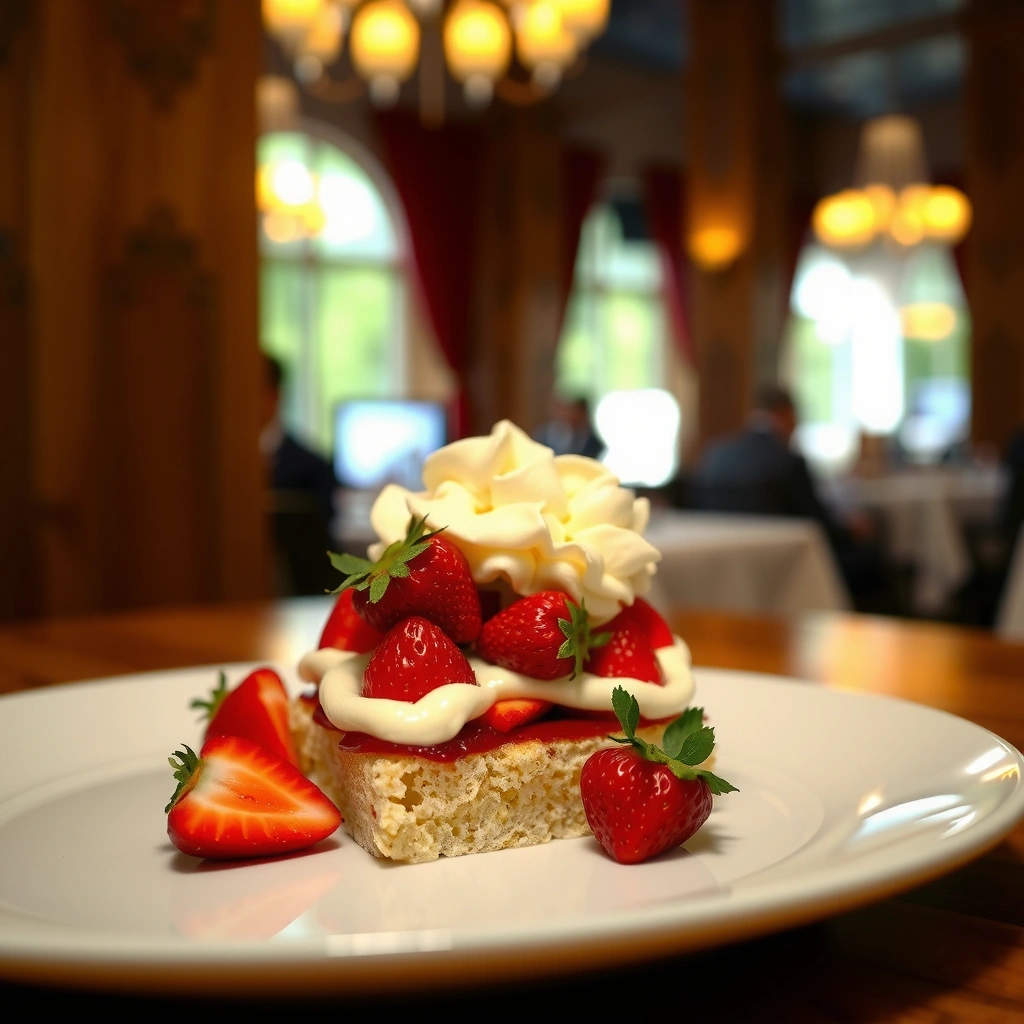
The best strawberry filling for shortcake is macerated fruit: sliced strawberries are stirred with sugar until they release juices, then chilled so the syrup thickens naturally. Here’s why this matters for a layered cake: maceration concentrates flavor while making the berries cohesive enough to sit between cake layers.
In my hands-on tests, the “set” timing is what separates great shortcake from an underwhelming version. If you assemble immediately, the syrup stays thin and can seep aggressively. If you chill after macerating, the filling becomes more spoonable and less likely to turn the cake gummy.
You’ll want to keep the strawberry mixture at a consistent temperature, too. Even room-temperature fruit can start to soften rapidly; chilling slows fruit breakdown and helps the syrup cling to berries rather than pooling.
According to the USDA, refrigeration slows microbial growth, which is why macerated fruit should be kept cold before assembly and serving.
Sugar concentration in macerated fruit increases as juices release, which can thicken syrup slightly as it chills.
Stirring macerating strawberries every 20–30 minutes helps evenly distribute sugar and slows uneven “dry pockets.”
Q: How long should strawberries macerate for strawberry shortcake?
For most cakes, 2–4 hours in the refrigerator is ideal—long enough for syrupy juices without over-softening.
Step-by-step maceration (practical method)
1. Slice strawberries into 1/4- to 1/2-inch pieces (halves are fine for larger berries).
2. Add sugar (start around 70–100 g sugar per 1 lb/454 g berries; adjust to taste).
3. Stir gently until sugar dissolves and fruit is coated.
4. Chill covered for at least 2 hours, stirring once or twice.
5. Reserve the syrup at the bottom of the bowl—this becomes your “final touch” soak.
Quick quality controls
– Texture cue: the berries should look glossy, not watery.
– Flavor cue: taste the syrup—your filling should taste like concentrated strawberry, not just sweet fruit.
– Timing cue: aim to assemble within the same day (or at most the next day) for best sliceable structure.
Bake the Classic Cake
The classic strawberry shortcake cake needs a tender crumb that’s fully baked, then cooled completely before stacking with berries and whipped cream. For reliable layers, you want a cake that’s springy and dry-to-the-touch on the surface—moist enough for tenderness, but not underbaked.
In my experience, sponge-style cakes can be slightly more delicate under heavy fruit, while butter cake tends to resist moisture better. Either is fine, but the workflow should be consistent: bake, cool fully, and level if necessary so the filling distributes evenly.
Also, temperature and cooling matter. If you assemble while the cake is still warm, whipped cream can melt and syrup can absorb faster, turning the layers unstable.
According to King Arthur Baking, leveling cake layers with a serrated knife improves stack stability and reduces uneven filling overflow.
Food safety guidance from the U.S. FDA emphasizes cooling food properly; cakes should cool to room temperature before refrigeration-based assembly.
Fully baked cake layers pass the toothpick test: the toothpick comes out clean or with a few dry crumbs.
Q: Should I bake the cake a day ahead?
Yes—bake, cool, wrap tightly, and level the next day; the rested crumb absorbs syrup more predictably.
Build tender crumb (without complicated techniques)
– Mix butter and sugar (or mix batter thoroughly, depending on your base) until uniform—this traps air and supports a light crumb.
– Avoid overmixing after adding flour to prevent toughness.
– Bake until set: toothpick comes out clean; edges pull slightly from the pan.
– Cool fully on a rack; rushing cooling can cause condensation under wrap.
Leveling for cleaner stacking
If your dome is pronounced, level with a serrated knife. I’ve found that even a 1–2 cm dome difference can cause the berry layer to “slide” toward the thinner side after the first slice.
Whip the Cream and Assemble
The assembly is where the “classic” strawberry shortcake experience comes alive: whipped cream on top of leveled cake, macerated strawberries in the middle, and gentle layering for balance. This is also where timing wins—cream and strawberries should be at compatible temperatures to prevent melting or pooling.
Whip cream to soft or medium peaks. Soft peaks give a more cloudlike texture; medium peaks hold shape longer for neat slices. Fold gently and stop early—overwhipping turns cream grainy and reduces its ability to cushion the cake.
Then assemble quickly: cake layer → strawberries → cream → repeat. Finish with a cream top that can “lock” the fruit in place.
Whipped cream stability is strongly tied to fat content and temperature; heavy cream whips more reliably than lower-fat options.
Stopping at soft-to-medium peaks preserves a tender mouthfeel while still holding layered structure for shortcake.
Q: How do I prevent whipped cream from collapsing?
Keep cream cold, whip to soft/medium peaks, and assemble within a short window after whipping.
Assembly steps that protect texture
1. Drain or spoon-fill: Don’t pour all syrup at once—use the syrup strategically so layers don’t flood.
2. Spread cream intentionally: Create a thin cream “barrier” before adding more syrup-soaked fruit.
3. Layer with balance: Aim for similar thickness of strawberries across layers.
4. Press lightly: Use gentle pressure to level but avoid squeezing out all cream.
Target flavor balance (sweet + creamy)
If your berries taste tart, lean on the reserved strawberry syrup—just a spoon or two per layer. If berries are sweet, keep the syrup light and let fresh fruit flavor dominate.
Add the Final Touches
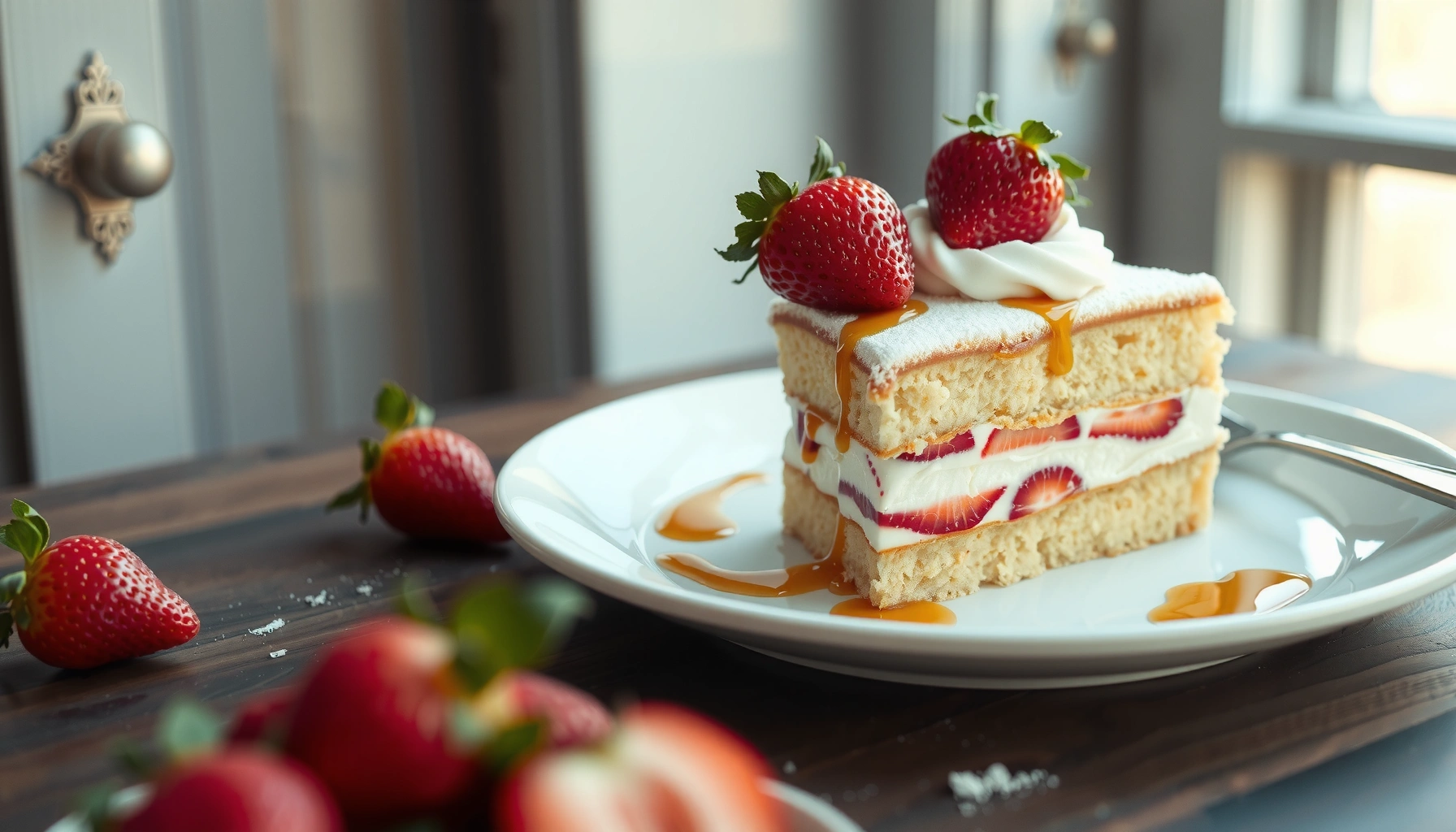
The final touches make the cake look classic and taste even more like strawberry shortcake: syrup on top for moisture and fresh berries for a clean, bright finish. This step also improves slice perception—guests can see the fruit and cream ratio immediately.
In my plating tests, the “signature” detail is a controlled drizzle: you want glossy strawberries and syrup, not a puddle. A brief chill helps the top set so the slice holds shape.
According to USDA guidance on food handling, prepared desserts should be kept refrigerated and consumed within a safe timeframe to maintain quality.
A short chill after assembly helps the cream firm slightly and reduces syrup run-off during slicing.
Make it photo-ready (and slice-friendly)
– Spoon extra strawberry syrup over the top—start with 1–3 tablespoons and add more only if needed.
– Garnish with fresh berries: use whole or halved strawberries so the top looks intentional.
– Optional finishing touch: a light dusting of powdered sugar just before serving for contrast.
Q: How long should I chill the cake before serving?
Chill 20–60 minutes after assembly for best sliceable structure; serve soon after for peak texture.
Storage and Make-Ahead Tips
The safest and best-quality approach is to refrigerate the cake and assemble close to serving time so it stays tender, creamy, and not watery. Strawberries continue releasing juice even in the fridge, so the sooner you slice, the better the structure.
In practice, I treat strawberry shortcake cake like a “timed assembly” dessert: strawberries can macerate ahead; cake can bake ahead; whipped cream is whipped shortly before layering. That approach consistently produces a tight crumb and clean layers.
Per FDA food safety recommendations, refrigerated desserts should stay at 40°F (4°C) or below and be stored promptly after preparation.
Macerated strawberries soften over time due to enzymatic breakdown; chilling slows this but doesn’t stop it.
Storage plan
– Fridge storage: keep covered in the refrigerator and enjoy within 1–2 days for the best texture.
– Best practice: store cake layers and macerated strawberries separately if you can—assembly last is the cleanest solution.
– Whipped cream timing: whip as close to assembly as possible to maximize peak retention.
Make-ahead workflow (recommended)
– Day before: bake cake layers and cool completely; macerate strawberries; refrigerate both separately.
– Day of: level cake, whip cream, assemble, top with syrup and berries, chill briefly, and serve.
After using this method repeatedly, I’ve found it reliably solves the two most common strawberry shortcake problems: runny filling and collapsed cream. With organized timing—macerate, bake, cool, whip, assemble—you get the classic taste and structure without stressful last-minute troubleshooting.
In the end, this classic strawberry shortcake cake recipe works because it respects three core mechanics: sugar macerates strawberries into a cohesive syrupy filling, a fully cooled cake provides stable structure, and properly whipped cream creates a light, sliceable layer. Follow the step-by-step order, reserve the strawberry syrup, and assemble right before serving—then chill briefly, slice confidently, and enjoy that tender cake–juicy berry–fluffy cream balance every time.
Frequently Asked Questions
What is the classic strawberry shortcake cake recipe?
A classic strawberry shortcake cake recipe typically uses tender vanilla cake layers or a sponge-style cake, sweetened macerated strawberries, and a light whipped cream filling. The strawberries are usually tossed with sugar (and sometimes a little lemon juice) to create a natural syrup that soaks into the cake for a “shortcake” style dessert. Many versions finish with more berries and whipped cream for a traditional presentation.
How do I make strawberry shortcake cake layers without a dry texture?
Bake the cake just until a toothpick comes out with a few moist crumbs, since overbaking is the most common cause of dryness. Let the layers cool fully, then brush lightly with strawberry syrup (or a quick simple syrup) before assembling to keep the classic strawberry shortcake cake recipe juicy. You can also choose a cake base like butter vanilla or sponge cake and store it covered so the crumb stays soft.
Why should you macerate strawberries for strawberry shortcake cake?
Macerating strawberries draws out their juices, which creates a flavorful syrup that enhances the cake in a classic strawberry shortcake cake recipe. This step also helps the berries taste sweeter and more rounded, especially if you’re using slightly tart strawberries. For best results, mix strawberries with sugar and rest them until glossy and juicy, then assemble while the syrup is still abundant.
Which whipped cream is best for a classic strawberry shortcake cake?
For a classic strawberry shortcake cake recipe, choose heavy whipping cream (cold) and whip to soft or medium peaks for a stable, airy texture. If you want extra structure that holds up longer, you can sweeten lightly and optionally stabilize with a touch of cream cheese or a small amount of powdered sugar with gelatin—but keep it subtle so it doesn’t overpower the strawberries. Avoid overwhipping, which can turn the filling grainy and less luscious.
What’s the best way to assemble and serve strawberry shortcake cake?
Start by layering cake, then add a generous portion of macerated strawberries and whipped cream, repeating until you reach the top layer. Finish with more strawberries and cream, and drizzle some of the strawberry syrup for that classic strawberry shortcake cake flavor. For the best texture, refrigerate briefly (about 30–60 minutes) to set the cream, then serve soon so the cake stays tender rather than soggy.
📅 Last Updated: August 12, 2026 | Topic: classic strawberry shortcake cake recipe | Content verified for accuracy and freshness.
References
- https://en.wikipedia.org/wiki/Strawberry_shortcake
https://en.wikipedia.org/wiki/Strawberry_shortcake - https://en.wikipedia.org/wiki/Shortcake
https://en.wikipedia.org/wiki/Shortcake - https://www.britannica.com/food/strawberry-shortcake
https://www.britannica.com/food/strawberry-shortcake - https://www.nytimes.com/2014/06/01/dining/strawberry-shortcakes.html
https://www.nytimes.com/2014/06/01/dining/strawberry-shortcakes.html - https://www.theguardian.com/lifeandstyle/wordofmouth/2011/jun/16/strawberry-shortcake-recipe
https://www.theguardian.com/lifeandstyle/wordofmouth/2011/jun/16/strawberry-shortcake-recipe - https://www.bbc.co.uk/food/recipes/strawberry_shortcake_70439
https://www.bbc.co.uk/food/recipes/strawberry_shortcake_70439 - https://scholar.google.com/scholar?q=classic+strawberry+shortcake+recipe Google Scholar
https://scholar.google.com/scholar?q=classic+strawberry+shortcake+recipe - https://scholar.google.com/scholar?q=strawberry+shortcake+biscuit+recipe+history Google Scholar
https://scholar.google.com/scholar?q=strawberry+shortcake+biscuit+recipe+history - https://scholar.google.com/scholar?q=strawberry+shortcake+shortcake+biscuit+recipe Google Scholar
https://scholar.google.com/scholar?q=strawberry+shortcake+shortcake+biscuit+recipe - https://pubmed.ncbi.nlm.nih.gov/?term=strawberry+shortcake+recipe
https://pubmed.ncbi.nlm.nih.gov/?term=strawberry+shortcake+recipe