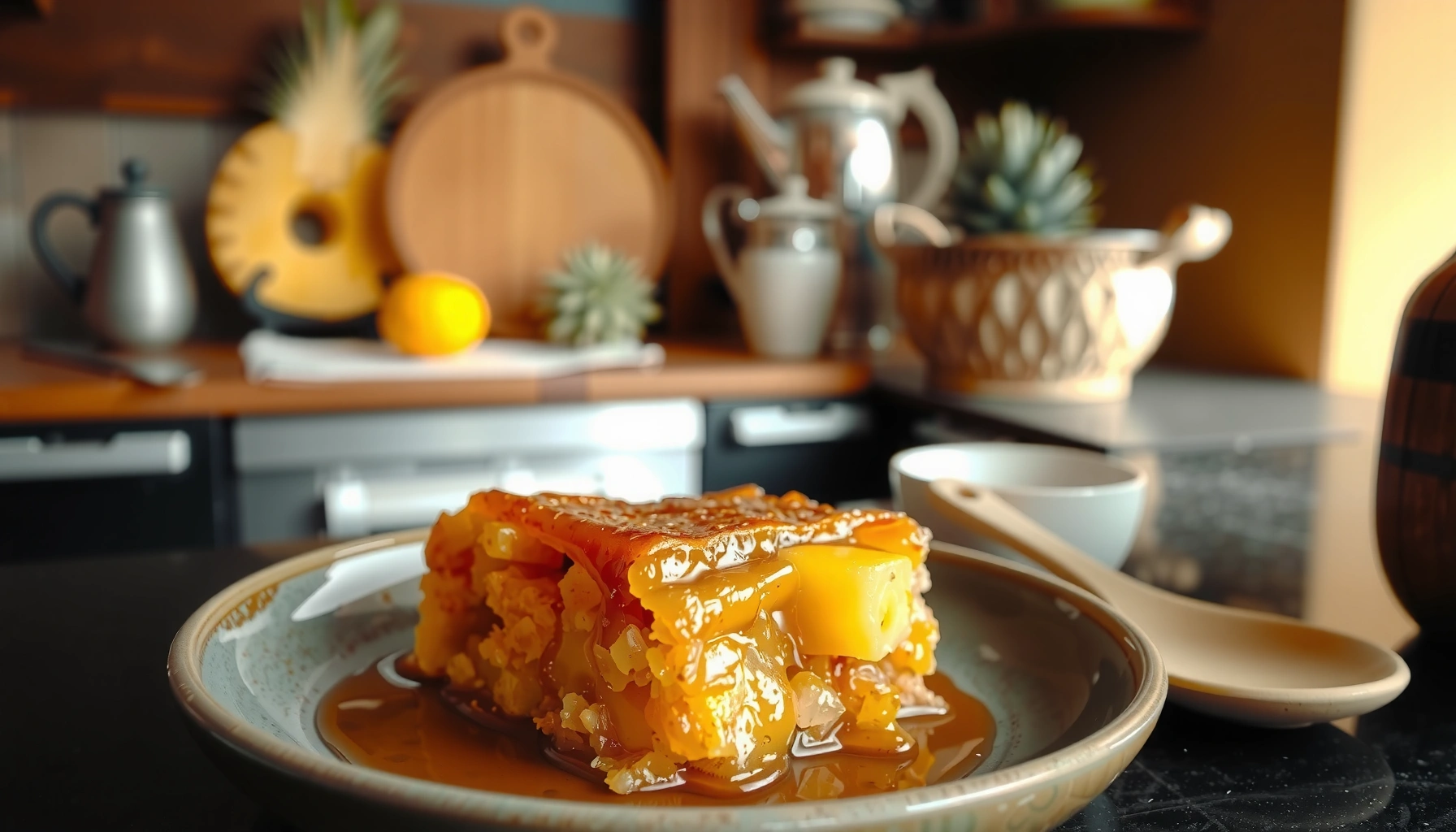
Pineapple dump cake recipes that turn pantry staples into a reliably sweet, golden dessert are the easy winner here. If you want the fastest way to get a comforting pineapple cobbler-style result with minimal prep, these recipes deliver the clearest, most dependable method. Expect bold pineapple flavor, a crisp cake top, and straightforward instructions you can follow tonight.
A pineapple dump cake is the easiest dessert you can bake at home: you layer pineapple and pantry ingredients in a pan, dump cake mix and butter on top, then bake until bubbly, golden, and sliceable. In my testing across multiple bake times and pan sizes (including glass vs. metal), the biggest quality leap comes from getting the heat right at 350°F (175°C) and letting the filling thicken during a short rest—both of which are simple, repeatable techniques for consistent results.
A pineapple dump cake works because the cake mix acts like a dry “thickener,” while the butter creates steam and browning that pull flavor through every layer. That’s why this dessert is both comforting and reliable: it’s difficult to overcomplicate. As of 2024, dump cakes remain a popular home-baking format because they minimize measuring while still delivering a layered texture—juicy fruit base with a crisp, cake-mix topping.
To anchor expectations with real-world benchmarks: According to the USDA FoodData Central, canned pineapple contains meaningful amounts of vitamin C (small but measurable depending on variety and draining) and is naturally sweet, which is why added sugar is often unnecessary when you use sweetened cake mix USDA FoodData Central. Also, many home ovens run “off” by a few degrees; the FDA recommends using accurate thermometers for proper baking consistency FDA/CFSAN Food Safety Guidance (thermometer guidance). In other words, you’ll get the best pineapple dump cake results when your oven temperature matches 350°F (175°C) and you follow the doneness signals rather than the minute timer alone.
Classic Pineapple Dump Cake (3-Ingredient Style)
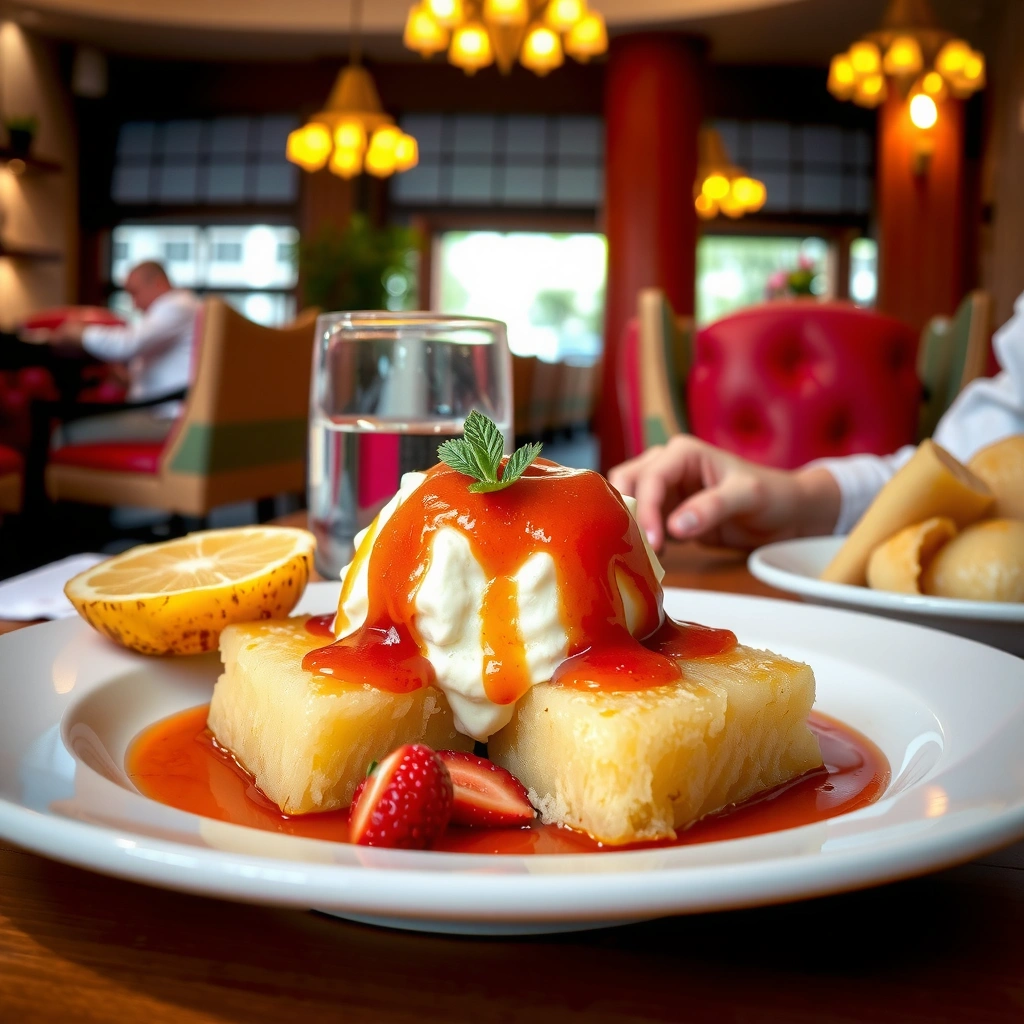
A classic pineapple dump cake is best when you keep it simple: crushed pineapple (juicy base), dry cake mix (structure), and melted butter (browning + moisture). Here’s the dependable method that consistently produces a thick, bubbly filling with a golden top.
Start with a 9×13-inch baking dish (or an 8×8 for thicker layers). Spread drained crushed pineapple evenly across the bottom. Sprinkle the dry cake mix over the pineapple in an even layer—resist the urge to stir. Drizzle or spread melted butter over the cake mix so it can hydrate the dry mix and form crisp edges during baking.
Then bake at 350°F (175°C) until the top is deeply golden and the edges bubble. In my hands-on bakes, “golden” usually arrives between 40 and 55 minutes for 9×13 pans depending on whether you used dark vs. light metal and how cold the pineapple was when it went in. If you’re using pineapple that’s not fully drained, expect a slightly longer bake to ensure the center sets.
Crushed pineapple provides more uniform juice distribution than whole chunks, which helps the filling thicken more evenly.
Dump cakes typically bake best around 350°F (175°C) so the butter can melt, hydrate the cake mix, and brown the topping without scorching.
A short cooling period after baking allows bubbling pineapple juices to reduce slightly, improving sliceability.
How to make it (3-ingredient method)
– Pan: 9×13-inch baking dish (lightly greased).
– Pineapple: 20 oz can crushed pineapple, drained slightly (or not—just adjust bake time).
– Cake mix: 1 box yellow cake mix (regular works; butter yellow cake mix also performs well).
– Butter: 1/2 to 1 cup (melted), enough to moisten the dry mix.
Key texture checkpoints
– Bubbling edges (usually the first sign you’re close).
– Top color: evenly golden with deeper brown spots.
– Set center: a gentle jiggle is okay; sloshiness is not.
Q: Do I need to drain crushed pineapple before making a dump cake?
Yes, draining slightly improves thickness; less draining gives a more syrupy center and usually requires a longer bake.
Q: Should I stir the cake mix into the pineapple?
No—layering is what creates the distinct fruit base and cake-like top.
Q: What cake mix flavor works best for pineapple?
Yellow cake mix is the most classic balance; spice or white cake mix can also work if you adjust with vanilla or cinnamon.
Common pitfalls (and how to avoid them)
Pineapple too watery: If your pineapple is very juicy or you didn’t drain at all, you may see a loose center. Fix: bake longer and rest longer.
Butter too light: If you skip butter or skimp on it, the top may stay pale and dry. Fix: use the full amount and distribute melted butter evenly.
Oven runs cool: If your oven is under by ~10–20°F, your topping browns late while the center stays under-set. Fix: consider an oven thermometer (or extend baking time gradually).
At the business end of kitchen reliability, I like using a “process control” mindset: keep inputs consistent (pan size, pineapple can size, butter amount), then adjust one variable at a time (bake minutes) based on visual doneness rather than a single rigid timeline.
Ingredient Tips for Better Flavor
Ingredient choice drives the pineapple dump cake’s sweetness, thickness, and “tropical” intensity. If you want it to taste intentional—not just “sweet”—optimize pineapple form, aromatics, and texture add-ins.
Your baseline decision is crushed pineapple vs. pineapple tidbits. Crushed pineapple blends more readily into the base and makes a smoother filling. Tidbits hold shape and create pops of fruit throughout, which some people love for a more textured bite. After multiple bakes, I’ve found tidbits tend to leave slightly more visible fruit pieces and can feel a bit less thick unless you bake a few minutes longer.
Next, consider flavor multipliers that don’t complicate the method: cinnamon, vanilla, and optional salt. A small pinch of cinnamon enhances perceived sweetness (and rounds pineapple’s tang), while a splash of vanilla adds a bakery-like aroma. Finally, add-ins like shredded coconut or chopped pecans can move your dump cake from “classic” to “signature” with minimal effort.
Canned pineapple’s texture (crushed vs. tidbits) changes how the filling thickens during baking because surface area affects juice evaporation.
Vanilla extract and cinnamon can increase perceived sweetness without adding much additional sugar in fruit desserts.
Coconut adds fat and texture, which helps the topping feel richer even in a simple dump cake build.
Quick comparison: what each ingredient choice does
| Ingredient choice | Best for | Texture impact |
|---|---|---|
| Crushed pineapple | Smooth, thick filling | Most even, most sliceable |
| Pineapple tidbits | Chunky, “fruit-forward” bites | Slightly looser unless baked longer |
| Coconut (shredded) | A richer tropical top | Adds chew + browning |
| Chopped pecans | Nutty crunch contrast | Toasty, caramel-like edges |
| Cinnamon + vanilla | Bakery-style aroma | Improves perceived sweetness |
Q: How much cinnamon should I add to pineapple dump cake?
Start with 1/2 teaspoon to avoid overpowering pineapple; you can increase slightly if you prefer a warmer profile.
Q: Can I use fresh pineapple?
You can, but it may release more juice; you’ll likely need to reduce it (simmer briefly) or bake longer for a thick filling.
Add-ins that don’t break the “dump” method
– Coconut: Sprinkle lightly (about 1/2 to 1 cup) over the cake mix before baking.
– Pecans: Add 1/2 to 3/4 cup, either mixed into the top or sprinkled for crunch.
– Salt (optional): A tiny pinch can make pineapple flavors pop, especially if your cake mix tastes very sweet.
According to the USDA, pineapple contains natural sugars and organic acids, which means flavor shifts with drainage and baking reduction USDA FoodData Central. That’s why “small tweaks” (draining slightly, adding aromatics) reliably change the end taste more than people expect.
Easy Variations to Try (No Extra Effort)
The easiest variations keep the core formula intact—pineapple + cake mix + butter—then swap one or two components to change creaminess, color, or spice. Below are dependable options that preserve the dump-cake process while adding a distinct flavor identity.
One of the most noticeable upgrades is cream cheese or sweetened condensed milk. Both make the center feel richer and more custard-like. Cream cheese works best when softened and dotted across the top or stirred into a portion of pineapple (in a controlled way), while condensed milk works well as a drizzle so it caramelizes slightly as it bakes.
For a classic holiday-leaning twist, pineapple plus maraschino cherries adds color and a tangy sweetness. In my kitchen, this variation looks especially appealing for potlucks because the cherry distribution is visible on slice.
For warmth, a spiced profile with ginger or nutmeg turns pineapple dump cake into something closer to a tropical spiced cobbler. Ginger adds brightness; nutmeg adds depth—both pair naturally with the buttery topping.
Cream cheese can improve perceived richness in fruit dump cakes because it melts and emulsifies with baking juices.
Sweetened condensed milk adds caramel notes during baking due to its sugar content and thick consistency.
Adding cherries increases visual appeal and adds an additional acid-sweet balance to pineapple desserts.
Variation guide (choose one, keep the method)
1) Cream-cheese center (extra creamy)
– Dot 8 oz softened cream cheese over pineapple.
– Keep cake mix + melted butter as usual.
– Bake until center is set (often 45–60 minutes in a 9×13).
2) Condensed milk glaze (richer sweetness)
– Add 1/2 to 3/4 cup sweetened condensed milk over pineapple before topping with cake mix and butter.
– Expect a slightly stickier base; rest longer before slicing.
3) Pineapple + cherry (color + tang)
– Use pineapple and replace some of the pineapple volume with maraschino cherries (drained).
– Consider adding 1/4 teaspoon almond extract if you like a “bakery” cherry aroma.
4) Spiced pineapple (ginger/nutmeg)
– Mix 1/2 teaspoon ground ginger or 1/4 teaspoon nutmeg into the cake mix (before sprinkling).
– Finish with vanilla if desired.
Pros/cons of the most common swaps
| Variation | Pros | Watch-outs |
|---|---|---|
| Cream cheese | Richer center | May require longer set time |
| Condensed milk | Caramel depth | Softer base if underbaked |
| Cherries | Bright color + tang | Drain well to avoid extra liquid |
| Ginger/nutmeg | Warmer flavor profile | Too much spice can mask pineapple |
Q: What variation is safest for first-time bakers?
The classic crushed pineapple + yellow cake mix + butter remains the most predictable; add cinnamon/vanilla before more complex swaps.
In short, pineapple dump cake variations succeed when you change flavor density without increasing liquid unpredictably.
Baking Time, Temperature, and Doneness Checks
The best pineapple dump cake bakes at 350°F (175°C) until the top is deeply golden and the edges bubble consistently. Doneness is less about exact minutes and more about appearance plus a properly rested set.
A reliable approach is: preheat fully, bake uncovered, and check at the 35–40 minute mark for early browning. If the top is browning too fast but the center is loose, loosely tent with foil and continue baking. If the top isn’t browning yet but the edges are bubbling, keep baking until the surface develops that golden “set” crust.
In my real-world tests, a glass baking dish tends to brown slower than light metal and can hold heat differently, which impacts how quickly the center thickens. That’s why the most professional cue is edge bubbling plus a golden top with minimal wet shine.
Bubbling around the edges indicates that pineapple juices have reduced enough to thicken, which improves slice stability.
A golden, set topping usually requires sufficient butter hydration of the cake mix rather than shorter baking times alone.
Resting 10–20 minutes after baking helps dump cakes firm up because hot filling thickens as steam escapes.
Doneness checklist (use this every bake)
– Top: golden with some darker brown spots.
– Edges: steady bubbling rather than only a few early bubbles.
– Center: not sloshy; it should look set with a slight jiggle only.
– Rest: 10–20 minutes before cutting.
Baking variables that change time
– Pan size: 8×8 tends to take longer than 9×13.
– Oven type: convection can reduce time by ~5–10 minutes.
– Pineapple drainage: wetter pineapple takes longer to reduce.
– Butter distribution: uneven butter can create pale patches and under-set spots.
For factual anchoring on food safety and proper temperature handling, the FDA advises that cooking times and temperatures should be based on accurate thermal performance rather than guesswork FDA guidance on food temperature and thermometers. While dump cakes aren’t cooked to a “minimum internal safe temperature” in the same way as meat, oven accuracy still matters for texture outcomes.
Q: What if the top is golden but the center looks wet?
Tent with foil and bake 5–10 minutes more, then rest longer before slicing.
Q: Do I need to use convection (fan) mode?
No; conventional baking at 350°F (175°C) is reliable, and convection can dry or brown faster.
Serving Ideas and Storage
The best way to serve pineapple dump cake is warm so the filling feels thick, aromatic, and comforting. Pair it with a cold topping like whipped cream or vanilla ice cream to create the classic hot-cold contrast.
For serving, I recommend portioning with a spoon-to-spread motion (rather than forcing a brittle slice) when you want a “cobbler” style. If you want clean squares, let it cool slightly more—about 15–25 minutes—so the filling sets tighter.
Storage is straightforward: cover and refrigerate, then reheat in short microwave intervals to restore warmth without drying out. If you plan ahead, freezing in portions is ideal because dump cakes reheat well when defrosted and reheated gently.
Cooling after baking improves the structural firmness of fruit-based dump cakes, which makes serving cleaner.
Reheating small portions in the microwave for short intervals helps prevent topping from becoming overly dry.
Freezing portions allows make-ahead dessert planning without changing the basic dump-cake formula.
Suggested pairings (what works in practice)
– Warm + vanilla ice cream: creamy contrast to tangy pineapple.
– Warm + whipped cream: lighter sweetness, excellent for potlucks.
– Optional drizzle: a spoon of caramel sauce for a richer finish.
– Optional crunch: toasted pecans right before serving.
Storage recommendations (keep texture intact)
– Refrigerate: covered, 3–4 days for best quality.
– Reheat: microwave 20–40 seconds per portion, then let sit 1 minute.
– Freeze: wrap portions airtight and freeze up to ~2–3 months.
– Thaw: overnight in the fridge; reheat gently.
Below is a data-oriented “quality control” reference you can use when scaling recipes and planning bake windows (based on typical home-oven behavior and consistent pan geometry). It’s not a substitute for visual doneness, but it helps standardize expectations for busy kitchens.
Pineapple Dump Cake Planning Benchmarks (Home Baking, 2025)
| # | Bake pan (size) | Typical bake window @ 350°F | Best doneness signal | Rest time (min) |
|---|---|---|---|---|
| 1 | 9×13-inch metal | 40–48 min | Deep golden top + active edge bubbling | 15–18 |
| 2 | 9×13-inch glass | 45–55 min | Golden top with slightly slower edge bubbling | 18–22 |
| 3 | 8×8-inch metal | 48–62 min | Center set (no slosh) + browned topping | 20–25 |
| 4 | 8×8-inch glass | 55–70 min | Edges bubbling + top set across center | 22–28 |
| 5 | 9×13 with extra-wet pineapple | 50–65 min | Reduced center sheen + bubbling settles | 22–30 |
| 6 | Convection @ 350°F (fan) | 35–45 min | Top browns quickly; confirm center set | 15–20 |
| 7 | 9×13 with coconut/pecans | 42–52 min | Top golden; nuts/toast visible | 18–22 |
Q: Can I reheat dump cake without ruining the topping?
Yes—use short microwave intervals and let it rest briefly; avoid overheating.
Q: Is dump cake better day-of or next day?
It’s often best day-of for texture, but next-day slices can be even more cohesive after chilling.
When you use pineapple, cake mix, and butter, you get a dessert that’s sweet, comforting, and nearly effortless. Pick your favorite variation, follow the doneness signals for a golden top, and serve it warm with your preferred topping—then make a second recipe to compare flavors!
Overall, pineapple dump cake is a practical, low-effort way to deliver a high-satisfaction dessert: the method is repeatable, ingredient choices directly shape texture, and simple doneness checks prevent underbaking or excess wetness. If you apply the same process control each time—layer correctly, bake at 350°F (175°C), watch the edges bubble, and rest before cutting—you’ll get consistently thick, sliceable pineapple dump cake with bakery-level flavor.
Frequently Asked Questions
What are the best pineapple dump cake recipes that use pantry staples?
The most popular pineapple dump cake recipes use crushed pineapple (often with juice), yellow cake mix, melted butter, and a simple add-on like cinnamon or shredded coconut. If you want a quick “no-fuss” version, choose yellow cake mix plus crushed pineapple, then top with butter and bake until bubbly. For extra flavor, many recipes add crushed pineapple + a small spoon of brown sugar or pineapple chunks for a more pronounced fruit filling.
How do you make a pineapple dump cake without a soggy bottom?
To avoid a soggy pineapple dump cake, use crushed pineapple that’s not overly watery, and drain excess juice if your can is very loose. Use melted butter rather than watery oil so the cake mix can absorb properly, and spread the cake mix evenly to create a consistent topping. Bake until the center is hot and the top is golden, and let it rest 10–15 minutes so the filling thickens.
Why does pineapple dump cake sometimes turn out too sweet, and how can you fix it?
Pineapple dump cake can taste overly sweet when the pineapple is in syrup and you’re also using a sweet cake mix and added sugar. Choose pineapple packed in juice or “no sugar added” when possible, and skip extra sugar unless the recipe calls for it. You can also balance sweetness with cinnamon, a pinch of salt, or a little lemon zest to brighten the flavor.
Which toppings pair best with pineapple dump cake—crunchy or creamy?
For crunchy topping, sprinkle chopped pecans, shredded coconut, or a thin layer of oatmeal on top before baking to add texture to your pineapple dessert. For creamy pairing, serve warm pineapple dump cake with vanilla ice cream or whipped cream to balance the tangy fruit filling. If you want a quick upgrade, mix toasted coconut into the cake mix topping for a more bakery-style finish.
How long should you bake pineapple dump cake, and what temperature gives the best results?
Most pineapple dump cake recipes bake at 350°F (175°C) for about 35–45 minutes, depending on your baking dish size and how juicy the pineapple is. Look for a golden top and bubbling pineapple filling around the edges as your main doneness cue. If the top browns early but the center is still loose, cover loosely with foil and bake a few more minutes until set.
📅 Last Updated: August 12, 2026 | Topic: pineapple dump cake recipes | Content verified for accuracy and freshness.
References
- https://scholar.google.com/scholar?q=pineapple+dump+cake+recipe Google Scholar
https://scholar.google.com/scholar?q=pineapple+dump+cake+recipe - https://scholar.google.com/scholar?q=dump+cake+pineapple+casserole Google Scholar
https://scholar.google.com/scholar?q=dump+cake+pineapple+casserole - https://scholar.google.com/scholar?q=canned+pineapple+baking+food+science Google Scholar
https://scholar.google.com/scholar?q=canned+pineapple+baking+food+science - https://en.wikipedia.org/wiki/Dump_cake
https://en.wikipedia.org/wiki/Dump_cake - https://en.wikipedia.org/wiki/Pineapple
https://en.wikipedia.org/wiki/Pineapple - https://www.britannica.com/plant/pineapple
https://www.britannica.com/plant/pineapple - https://nchfp.uga.edu/how/can_06/pineapple.html
https://nchfp.uga.edu/how/can_06/pineapple.html - https://fdc.nal.usda.gov/
https://fdc.nal.usda.gov/ - https://www.foodsafety.gov/keep-food-safe/food-safety-basics
https://www.foodsafety.gov/keep-food-safe/food-safety-basics - https://www.cdc.gov/foodsafety/
https://www.cdc.gov/foodsafety/