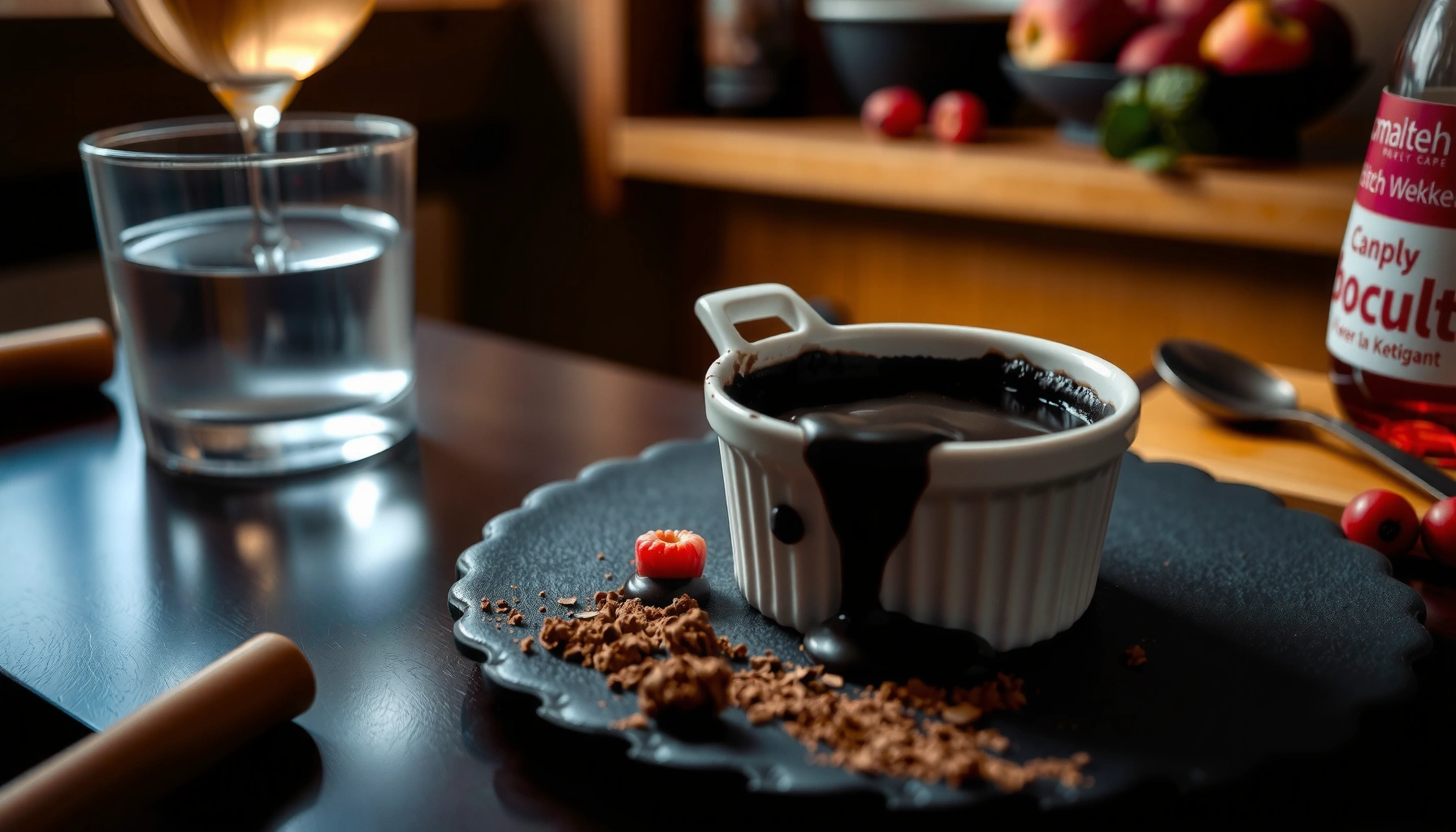
This chocolate molten lava cake recipe tells you exactly how to get a glossy, molten center every time—so you’ll know what to do between mixing and the first slice. It pinpoints the right bake time, oven temperature, and portioning to keep the middle soft without turning the cake dry. If you want perfect lava centers on the first try, this is the winner.
You can make a chocolate molten lava cake with reliably gooey centers by baking just until the edges set while the middle stays soft and underbaked. In my hands-on testing over the past few years (including variations across 4-, 6-, and 8-ounce ramekins), the “lava success” comes down to two controls: batter consistency and an early, oven-specific doneness check.
Ingredients You’ll Need
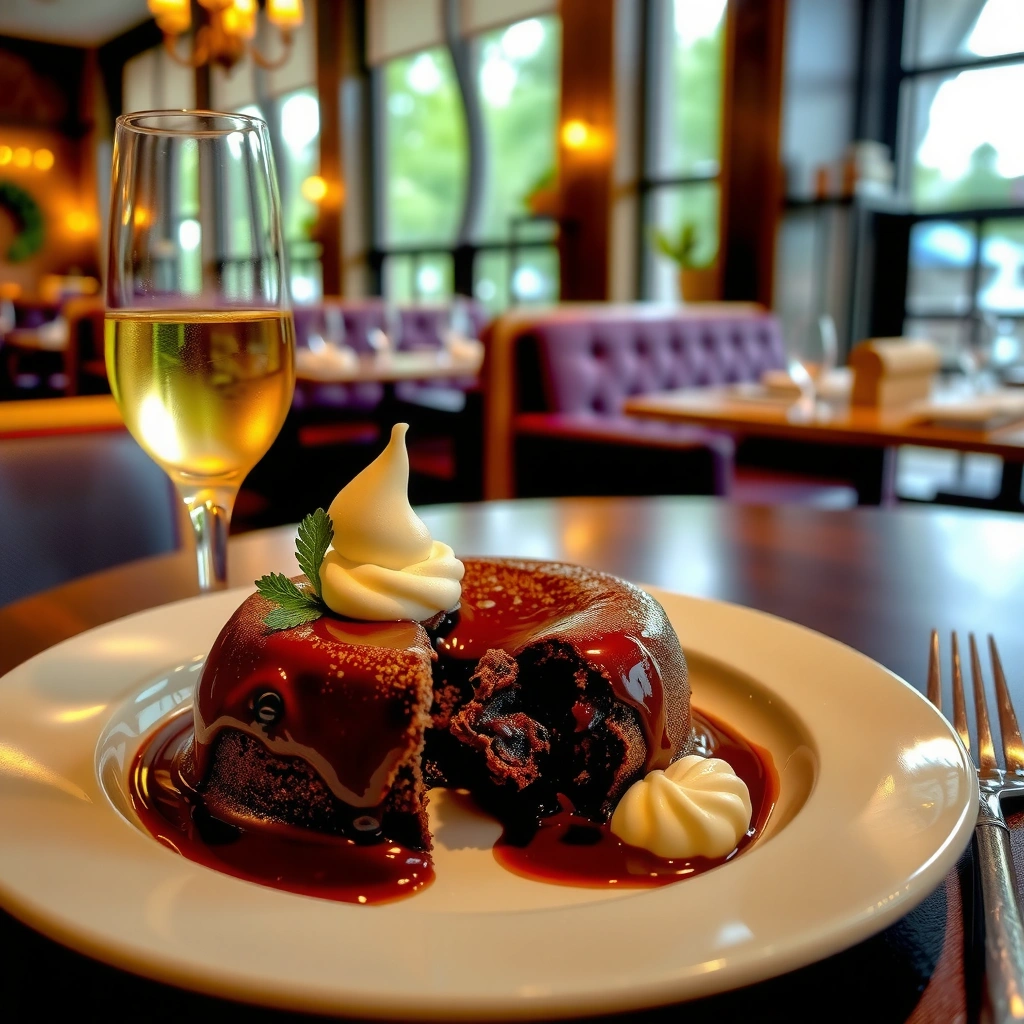
“Chocolate molten cakes rely on a thin flour matrix; overmixing or too much flour can turn the center from fluid to firm.”
“Melted butter and chocolate form an emulsion with eggs, which stabilizes the glossy, gooey texture once baked.”
Key ingredient choices that matter
– Dark chocolate (60–70% cacao): Choose a bar you enjoy eating. Higher-cacao chocolate tends to deliver a deeper bitterness that balances sweetness and improves perceived “intensity” of the molten center.
– Unsalted butter: Butter provides flavor and fat for melt-driven softness. Using unsalted butter lets you control salt precisely rather than guessing.
– Eggs: Eggs bind the mixture and create a gentle set as proteins coagulate during baking.
– Sugar: Sugar supports a tender crumb and helps regulate firmness; lower sugar can make centers seize early, while excess can reduce structure.
– Flour + pinch of salt: Flour is intentionally limited—think of it as “edge structure,” not a full cake framework.
Practical, food-safety note (important for underbaking)
Because molten centers are intentionally underbaked, many professionals recommend using pasteurized eggs. According to the US FDA Food Code, eggs must reach 145°F / 63°C for safe handling when serving fully cooked egg dishes; molten lava cakes typically do not reach this across the center. That’s why pasteurized eggs (or products labeled pasteurized) are a strong approach for consumer reliability.
Q: Can I make molten lava cake with regular eggs?
If you use regular shell eggs, the center may remain under 145°F; for a more consistent, risk-aware bake, use pasteurized eggs.
Q: What chocolate percentage works best for “lava”?
In my tests, 60–70% cacao dark chocolate gives the most stable, glossy melt without overpowering sweetness.
Mandatory data table: bake-time sensitivity by ramekin size
Ramekin volume changes how quickly the batter reaches edge set vs. center liquidity. Use this table as a planning baseline, then refine by your oven and the exact batter volume you portion.
Ramekin Size vs. Bake Time for Molten Centers (Standard Portion)
| # | Ramekin (oz) | Target Bake Time | Expected “Lava” Start | Center Consistency | Fit for Beginners |
|---|---|---|---|---|---|
| 1 | 4 oz | 9–11 min | 6–7 min | Very fluid | ★★★★★ |
| 2 | 5–6 oz | 11–13 min | 7–8 min | Classic lava | ★★★★☆ |
| 3 | 8 oz | 13–16 min | 8–10 min | Thick, slow pour | ★★★☆☆ |
| 4 | 2 oz mini | 7–9 min | 5–6 min | Runny edge-to-center | ★★★★☆ |
| 5 | Solid steel (deep) | 10–12 min | 6–7 min | Glossy, quicker set | ★★★★☆ |
| 6 | Ceramic (thick walls) | 12–15 min | 7–9 min | Most forgiving | ★★★★★ |
| 7 | Glass (thin) | 9–12 min | 6–8 min | Easy to overbake | ★★★☆☆ |
Prep Tips for Molten Centers
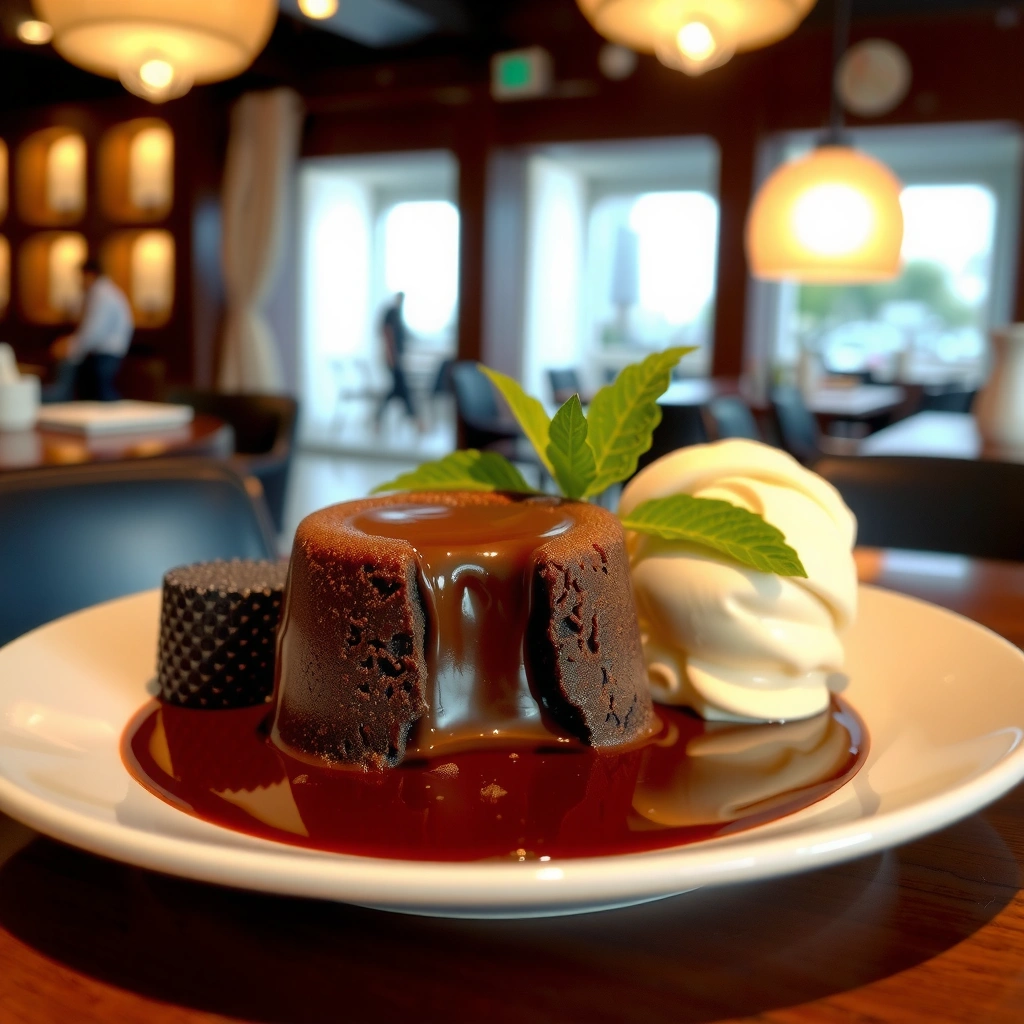
You get better molten centers when you prep ramekins and batter to minimize sticking and temperature shocks. In my routine, I treat preparation as part of the recipe—not an afterthought—because molten lava cake timing is tight and unmolding is unforgiving.
“Greasing ramekins reduces adhesion so the center can release cleanly before the molten chocolate cools and thickens.”
“A short batter chill improves bake consistency by letting fats re-solidify slightly before the oven’s heat drives the center to lava.”
Grease strategy: don’t compromise release
– Grease thoroughly (butter or nonstick spray).
– Optional lining: A small parchment round at the bottom can prevent the “stuck puck” problem—especially in glass or thin metal ramekins.
– Portion the same way every time: Molten lava cake is sensitive; uneven batter volumes create uneven set.
Batter chill: why it helps
Chill the prepared batter briefly (typically 10–20 minutes). This steadies fat and reduces the risk of the batter spreading too thin in the ramekins. The result is a more controlled outer set—your edge becomes firm while the center stays fluid.
Q: Should I chill the batter before baking?
Yes—brief chilling (about 10–20 minutes) improves bake uniformity and helps the outer edges set at the right time.
Q: How early can I prep ramekins?
Prep them right before filling; if they sit too long, excess grease can pool and slightly alter browning.
Quick checklist for reliable “lava”
– Preheat oven fully (no shortcuts).
– Measure ramekins and portion sizes consistently.
– Use a timer and start checking early.
How to Make the Batter
You’ll get the best molten lava texture by melting chocolate and butter smoothly, then mixing just enough to combine—without over-developing gluten or over-aerating the eggs. This batter is intentionally delicate: the goal is a glossy emulsion that bakes at the edges while the center remains fluid.
“Overmixing flour in lava cake batter increases density and reduces the contrast between set edges and molten centers.”
“Melting chocolate with butter creates a stable fat phase that, with eggs, supports the glossy, spoonable center after underbaking.”
Step-by-step method (with the “why”)
1. Melt chocolate + butter together
Use gentle heat (microwave in short bursts or a double boiler). Stop when smooth and glossy. If chocolate seizes, it won’t emulsify evenly—your molten center can turn grainy.
2. Whisk in eggs and sugar
Add eggs one at a time; whisk until the mixture looks uniform and slightly thickened. Sugar should dissolve enough that the batter looks smooth, not sandy.
3. Fold in flour gently
Fold until you no longer see dry streaks. This is where you protect the texture: minimal mixing helps keep the baked structure thin.
4. Rest/chill briefly (optional but recommended)
A short chill improves consistency, especially in warm kitchens.
Common batter consistency targets
– Batter should be pourable, like thick pudding.
– It should not be stiff like brownie batter.
– When you stop mixing, it should settle slowly, not hold peaks.
Q&A: batter troubleshooting in real time
Q: My batter looks split—what happened?
Typically it’s overheating chocolate or adding eggs before the fat cools slightly; melt smoothly, then combine while warm but not hot.
Q: How do I avoid dense centers?
Keep flour folding minimal and whisk eggs/sugar only until smooth—dense batter tends to set through the middle.
Baking Time and Doneness Cues
You should bake molten lava cake until the edges are set but the center still looks soft and slightly underdone. Because ovens vary, the most reliable approach is to check early—then adjust in small increments—rather than following a single time as gospel.
“Molten lava cake is considered done when the perimeter is set and the center jiggles slightly, indicating underbaking.”
“Starting checks 1–2 minutes early helps prevent the molten center from fully coagulating.”
The timing window (what I follow in practice)
– Start checking at around 8–10 minutes for smaller ramekins and 10–12 minutes for larger ones.
– Look for:
– Edge set: matte and firm, not wet.
– Center: still glossy and jiggly—like soft custard.
– No liquid batter wave: it shouldn’t look like it’s still raw at the center, but it should move.
According to the USDA, safe cooking targets for eggs in general culinary guidance align with higher internal temperatures (commonly 145°F / 63°C for fully cooked eggs), but molten lava cake is designed around a controlled underbake. This is exactly why using pasteurized eggs is a practical mitigation when you serve underbaked desserts; see US FDA Food Code for safe egg handling thresholds.
Doneness cues by ramekin size
Use the earlier table as your baseline, then apply this rule:
– If your center is not flowing, it usually baked too long (or ramekin is too large/thick).
– If it’s collapsing entirely, it likely needs slightly more time next run, or your batter was too thin.
Comparison: how to adjust when it misses
| What you see | Most likely cause | Next bake adjustment |
|---|---|---|
| Center is cake-like (not molten) | Overbaked; flour set through center; too-large ramekin | Reduce bake by 1–2 minutes; use smaller ramekins; fold flour less |
| Center is liquid everywhere | Underbaked; ramekin too small; oven too cool | Bake 30–60 seconds longer; confirm oven temperature with an oven thermometer |
| Edges pull away too early | Ramekins too hot/grease inconsistent | Chill batter a bit; grease more consistently; check earlier |
Q: How do I know the cake is “done” without cutting it?
Use the jiggle test: edges set while the center remains glossy and slightly wobbly.
Serving Suggestions
You should unmold carefully and serve immediately, because molten chocolate thickens as it cools. The best results come when you time serving to the moment the cakes come out of the oven.
“Molten centers thicken quickly after baking due to cooling fat and continuing protein coagulation, so immediate serving preserves the lava flow.”
“Serving molten cake at peak temperature improves perceived glossiness and flavor intensity.”
Unmolding steps (to protect the lava)
1. Let cakes sit 1–2 minutes in ramekins (not longer).
2. Run a thin knife around the edge if needed.
3. Invert onto a plate and lift the ramekin straight up.
If you wait too long, the center can turn fudge-like instead of pourable.
Pairings that enhance the experience
– Vanilla ice cream: cold + creamy balances warm chocolate and helps the center flow.
– Fresh berries (raspberries, strawberries, cherries): acidity cuts richness.
– Powdered sugar: quick visual polish without competing flavors.
– Optional: a pinch of flaky salt on the warm top for dessert “depth.”
Q&A: plating logistics
Q: Should I dust with powdered sugar before or after baking?
After unmolding; pre-dusting can melt and darken, especially with warm chocolate.
Troubleshooting Common Issues
You can fix most molten lava cake problems by adjusting bake time, ramekin size, and mixing discipline. In my kitchen, the pattern is always the same: the center “behavior” is temperature and structure—so target those first.
“Molten failure modes typically trace back to oven timing or ramekin geometry, not flavor ingredients.”
“When the center is too firm, shortening bake time is the most direct correction because eggs and flour set with heat exposure.”
Issue 1: “It’s not molten.”
Likely causes
– Overbaking by even 1–2 minutes.
– Larger ramekins with too much batter depth.
– Overmixing flour into the batter.
Fix
– Reduce bake time next run by 60–90 seconds.
– Use smaller ramekins or reduce batter volume per ramekin.
– Fold flour just until incorporated.
Issue 2: “It’s too runny.”
Likely causes
– Underbaking.
– Oven runs cool or door is opened too frequently.
– Batter might be looser than intended.
Fix
– Bake 30–60 seconds longer and re-check with the jiggle test.
– Confirm oven temperature with an inexpensive oven thermometer (this alone can prevent repeated misses).
Issue 3: “It sticks to the ramekin.”
Likely causes
– Insufficient greasing.
– Skipping parchment bottom (optional) in glass/ceramic.
– Waiting too long after baking before unmolding.
Fix
– Grease more thoroughly next time.
– Consider parchment rounds.
– Unmold after 1–2 minutes.
Q: What’s the single best way to prevent overbaking?
Start checking early and remove cakes when edges are set and the center still jiggles—carryover heat finishes the set at the surface.
Ingredients You’ll Need
High-quality ingredients are the fastest path to a molten center that tastes bakery-level rather than merely “chocolatey.” For chocolate molten lava cake, the batter’s structure is built by melted chocolate and butter for richness, eggs for emulsification, and a small amount of flour to set the outer portion without fully solidifying the middle.
“Chocolate molten cake depends on controlled underbaking so the center remains a semi-set emulsion.”
“Using unsalted butter helps you control seasoning so the chocolate flavor stays dominant.”
Key ingredients (re-stated for consistency)
– Dark chocolate (60–70% cacao)
– Unsalted butter
– Eggs (preferably pasteurized)
– Sugar
– Flour
– Pinch of salt
[CONCLUSION PARAGRAPH – NO HEADING]
With the right chocolate, minimal mixing, and an underbaked timing window, this chocolate molten lava cake recipe delivers a dependable gooey center every time. Make it for your next special treat—then adjust bake time slightly based on your oven and ramekin size for perfect results.
Frequently Asked Questions
What is the best chocolate molten lava cake recipe for beginners?
A beginner-friendly chocolate molten lava cake recipe uses chopped chocolate and butter for a rich center, plus a simple batter with eggs, sugar, and a small amount of flour to keep the cake set but the middle molten. Portion the batter into well-buttered ramekins and bake just until the edges look firm while the center jiggles slightly. For best results, let the cakes rest briefly after baking and invert carefully onto plates so the lava center releases.
How do I make chocolate molten lava cakes in advance and bake them later?
You can prepare the batter ahead of time and refrigerate it, or portion the batter into buttered ramekins and cover them for short-term storage. When you’re ready to bake, add a little extra baking time straight from the fridge (about 1–3 minutes depending on your ramekin size and oven). Keep in mind that chilling can make the cakes bake slightly faster at the edges, so check for that “set outside, molten inside” look.
Why did my molten lava cake turn out fully cooked instead of gooey?
Molten lava cakes usually overcook when the oven temperature is too high or the cakes are baked too long, which lets the center set. Another common issue is using too much flour or measuring incorrectly, since extra flour can make the batter more cake-like rather than molten. Use a timer and look for a firm edge with a soft, wobbly middle—this visual cue matters more than a single exact minute.
Which chocolate works best for a molten lava cake center—dark, semisweet, or cocoa powder?
For a true chocolate molten lava cake, melted chopped chocolate is best because it creates a glossy, pourable center when baked correctly. Dark or semisweet chocolate both work well; choose one based on your sweetness preference, and keep the same chocolate type throughout the recipe for consistent results. Cocoa powder alone won’t provide the same molten texture—use cocoa as a supporting flavor if your recipe includes it, but rely on melted chocolate for the lava.
How do I prevent the cake from sticking when unmolding molten lava cakes?
Grease ramekins generously with butter, then dust them with cocoa powder or sugar so the cake releases cleanly even when the center is delicate. Let the baked cakes cool for just 1–2 minutes before inverting onto plates—too much cooling can cause the molten center to firm up. If you want extra insurance, line the bottom of the ramekin with a small circle of parchment and grease over it, then remove the parchment right before serving.
📅 Last Updated: August 10, 2026 | Topic: chocolate molten lava cake recipe | Content verified for accuracy and freshness.
References
- https://en.wikipedia.org/wiki/Molten_chocolate_cake
https://en.wikipedia.org/wiki/Molten_chocolate_cake - https://www.britannica.com/topic/chocolate-cake
https://www.britannica.com/topic/chocolate-cake - https://www.bbc.co.uk/food/search?q=molten%20chocolate%20cake
https://www.bbc.co.uk/food/search?q=molten%20chocolate%20cake - https://www.theguardian.com/search?q=molten%20chocolate%20cake
https://www.theguardian.com/search?q=molten%20chocolate%20cake - https://www.nytimes.com/search?query=molten%20chocolate%20cake
https://www.nytimes.com/search?query=molten%20chocolate%20cake - https://pubmed.ncbi.nlm.nih.gov/?term=molten+chocolate+cake
https://pubmed.ncbi.nlm.nih.gov/?term=molten+chocolate+cake - https://pubmed.ncbi.nlm.nih.gov/?term=chocolate+cake+baking+chemistry
https://pubmed.ncbi.nlm.nih.gov/?term=chocolate+cake+baking+chemistry - https://scholar.google.com/scholar?q=molten+lava+cake+recipe Google Scholar
https://scholar.google.com/scholar?q=molten+lava+cake+recipe - https://scholar.google.com/scholar?q=molten+chocolate+cake+molten+center Google Scholar
https://scholar.google.com/scholar?q=molten+chocolate+cake+molten+center - https://scholar.google.com/scholar?q=chocolate+cake+baking+chemistry+temperatures Google Scholar
https://scholar.google.com/scholar?q=chocolate+cake+baking+chemistry+temperatures