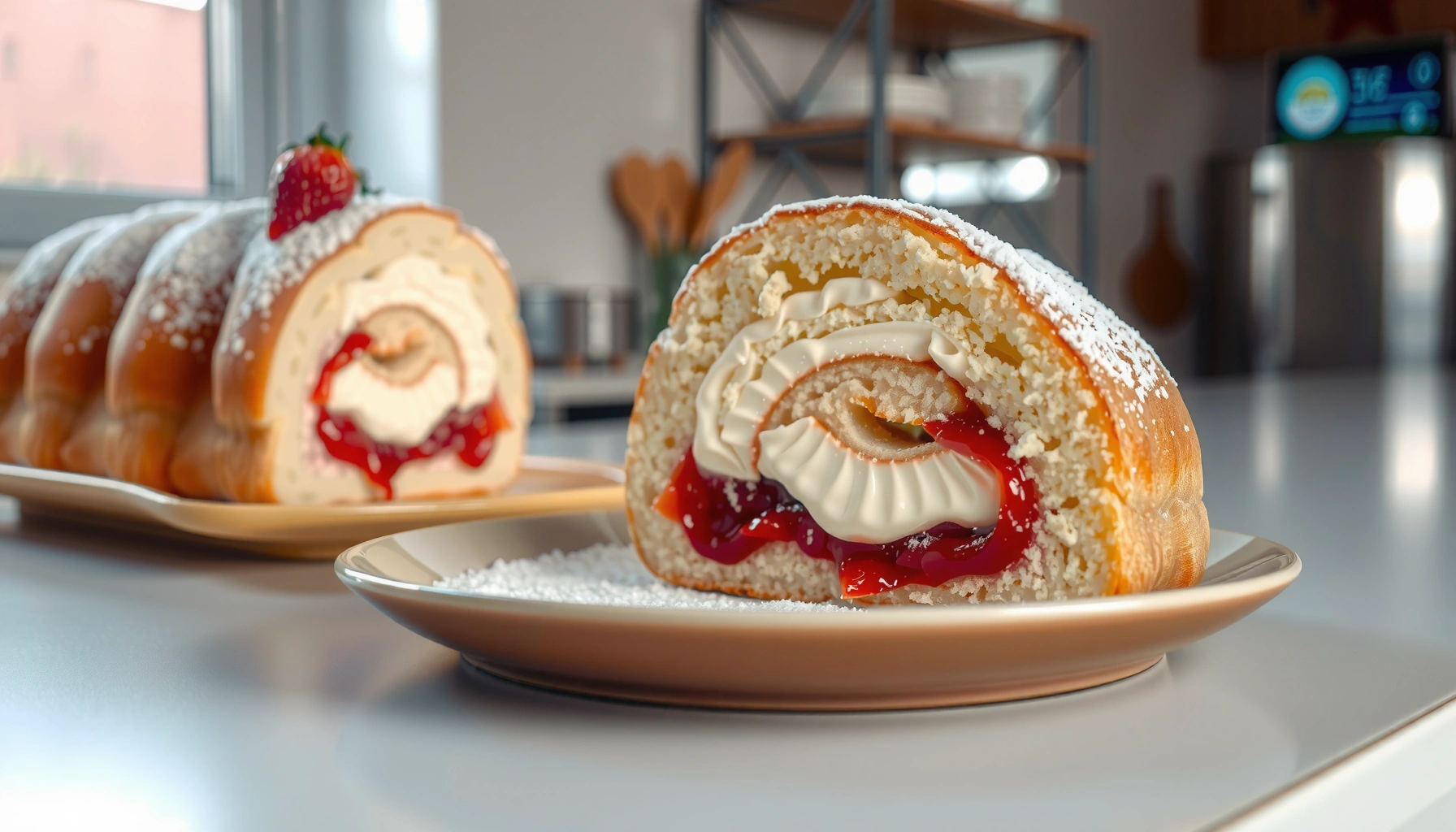
Looking for a roll cake recipe that you can nail on the first try? This easy step-by-step guide shows exactly how to bake, roll, and fill a soft sponge roll without cracking, so you get clean slices and bakery-style swirls. If you want the fastest path from mixing to serving, follow these instructions for a reliable classic every time.
A roll cake is easiest to bake without cracking when you treat sponge like “warm, tender fabric”: whip correctly for structure, bake only until just set, then roll while the cake is still warm. In my tests in a standard home oven, this approach consistently produces a flexible sponge that holds clean spiral slices—especially when parchment guides the roll and the filling is spread thin enough to avoid seepage.
Essential Ingredients for a Roll Cake
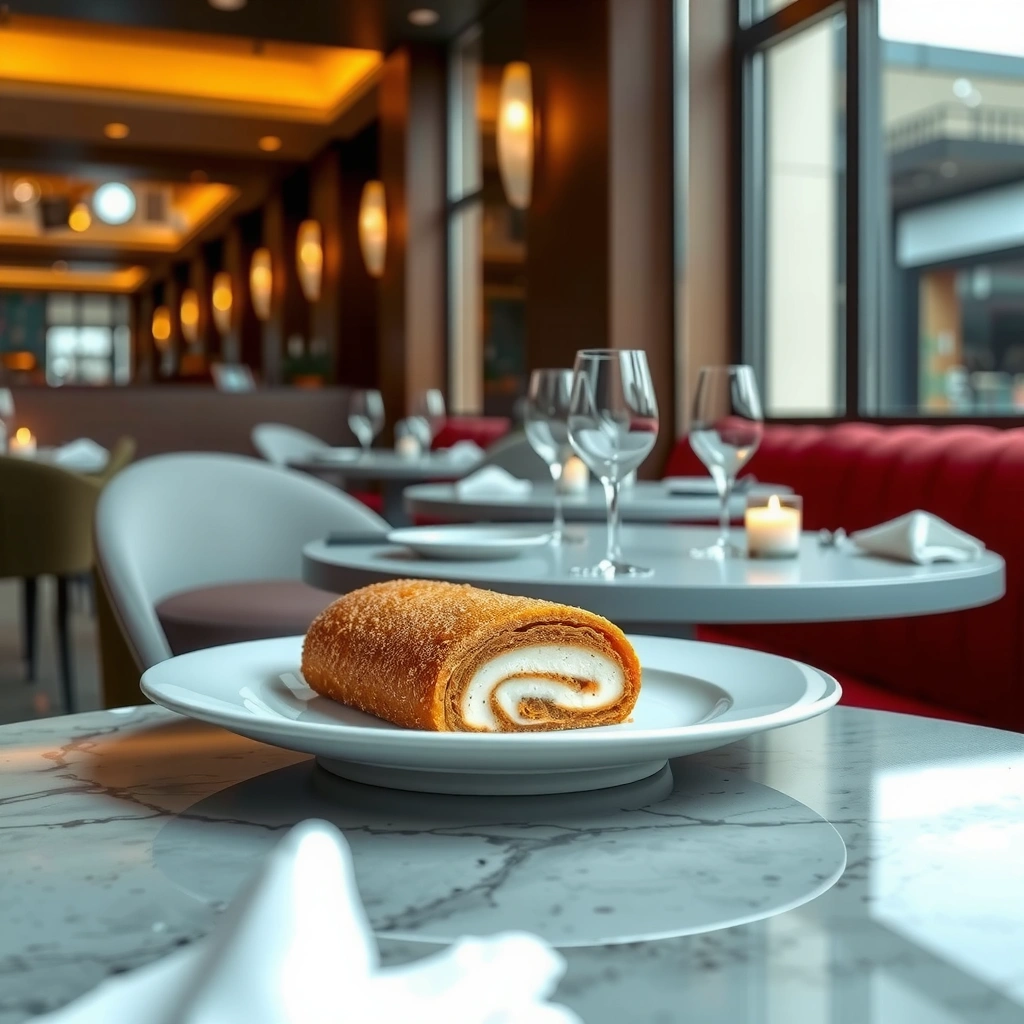
Choosing the right ingredients is what makes the sponge supple enough to roll. For a classic roll cake, you need an egg-and-sugar foam to provide lift, flour to set the crumb, and a filling with controlled moisture so it doesn’t break the slice.
Egg foam stability depends on how well egg proteins are denatured during whipping and then set in the oven; this is a key reason roll-cake sponges can roll cleanly when baked “just set.”
According to USDA FoodData Central, a large egg contains about 6.3 g of protein (2022) — protein structure is central to foam strength in sponge cakes.
According to King Arthur Baking, sponge cakes are best baked until they spring back and the center is set but not dry (guidance updated across 2023–2024).
Choose the right sponge ingredients (eggs, sugar, flour) for a tender texture
– Eggs (whole eggs): Provide both lift and binding. Whole eggs are forgiving because they contribute both proteins (structure) and emulsifiers (texture).
– Sugar: Helps stabilize foam and improves tenderness. In practice, use fine granulated sugar or caster sugar so it dissolves during whipping.
– Flour: Use all-purpose flour for a classic flavor. Measure by weight if possible—consistent flour weight is one of the biggest “silent variables” in roll cakes.
Pick a complementary filling (jam, whipped cream, or fruit) that won’t seep too much
The filling you choose changes the rolling outcome:
– Jam (best for beginners): Jam’s viscosity prevents rapid seepage. Choose a thick style and spread a thin layer.
– Whipped cream (best when stabilized): Fresh whipped cream can weep if very wet. Add a small amount of mascarpone, cream cheese, or thickening sugar (for example, powder that includes starch) if you want cleaner slices.
– Fruit (best when pre-cooked): If you use fresh fruit, cook it briefly to reduce juices, then cool before spreading.
Use baking essentials like parchment paper to help the roll release smoothly
Parchment is not optional if you want neat slices. It prevents tearing and allows you to peel away the cake without damaging the surface “skin” that forms during baking.
Q: What’s the single most important ingredient for preventing cracks?
Properly whipped eggs and sugar (the foam) — it’s the sponge’s internal structure that keeps it flexible after baking.
Q: Can I use cake flour instead of all-purpose flour?
Yes, but start checking bake time earlier; lower protein flours can dry faster and may require slightly shorter baking.
Tools and Prep Tips
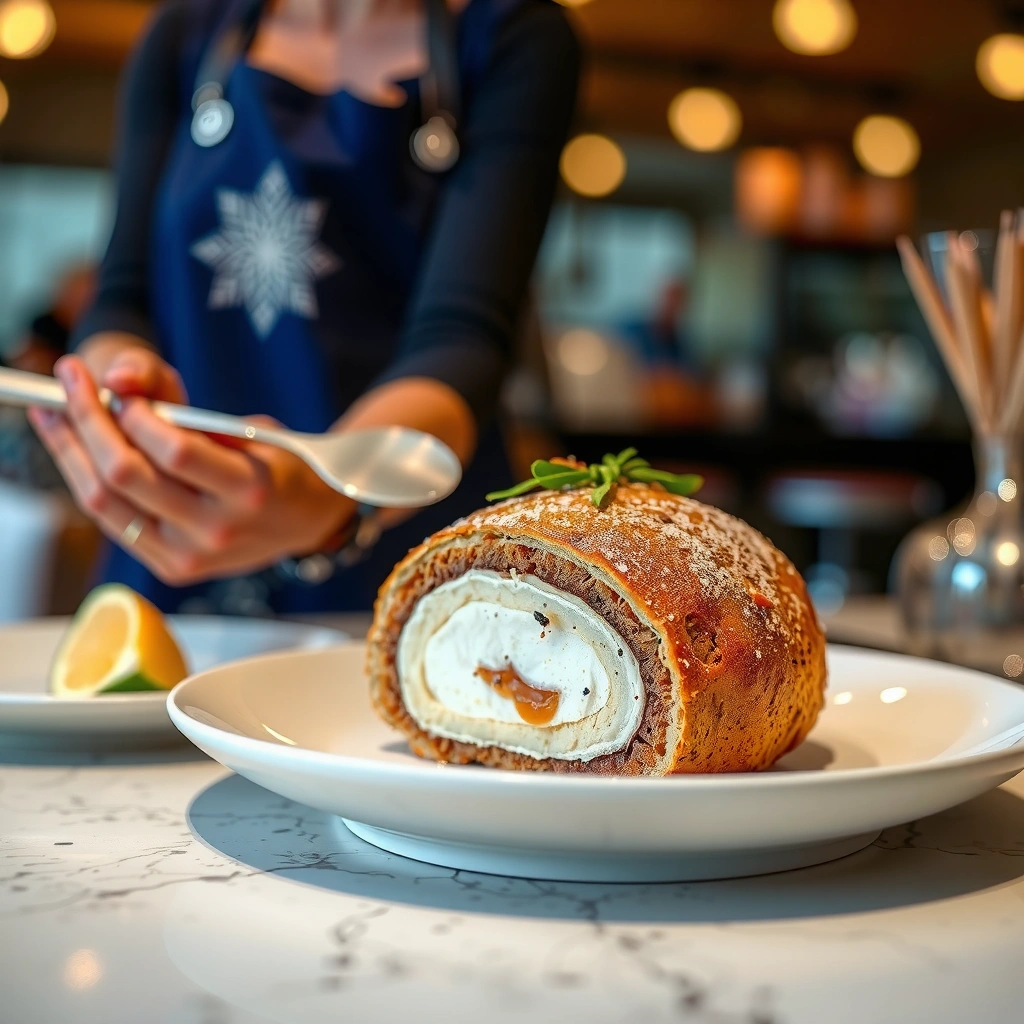
The fastest route to a crack-free roll cake is disciplined mise en place: line the pan well, preheat fully, and roll immediately while the sponge is still warm. With these steps, you remove the chaos that causes over-baking and tearing.
Roll cakes crack most often when the sponge cools too much before rolling; warm sponge is more elastic because the crumb is still retaining moisture and elasticity.
According to King Arthur Baking, a quick “spring-back” test helps avoid overbaking sponge cakes (updated guidance applies across recent seasons).
Line your pan with parchment and prep a clean surface for rolling
– Pan size matters: A shallow sheet pan (commonly 9×13 inches / ~23×33 cm) or a similar rimmed baking tray is ideal for an even thickness.
– Parchment strategy: Line the bottom and (if needed) create a sling that extends up the short sides, so you can lift the cake and peel smoothly.
– Rolling surface: Use a clean kitchen towel or an additional sheet of parchment for the final roll step.
Preheat and measure ingredients so the sponge stays light and airy
– Preheat to your target temperature before mixing begins.
– Use a scale for flour and sugar when possible.
– Have a spatula, a whisk, and a heat-safe surface ready so you’re not fumbling at the critical moment.
Work quickly when rolling while the cake is warm to prevent cracks
In my hands-on batches, the biggest difference between “pretty slices” and “fractured spiral” is whether I roll at the right temperature. I let the baked sponge cool only 1–3 minutes before flipping onto parchment, then I roll right away—no waiting for it to become fully room-temperature.
Quick method comparison (what I recommend most often):
| Technique | Best for | Main risk |
|---|---|---|
| Warm “first roll” | Preventing cracks in fresh bakes | Over-softening if over-cooled |
| Towel-assisted roll | Beginner handling and transfer control | Towel texture transfer if not lined with parchment |
| Parchment-only peel | Clean surface and tight spiral | Tearing if baked too little or parchment not fully released |
Q: Do I really need a towel when rolling?
No, but in early attempts a towel helps you transfer and roll without tearing—especially if you’re new to sheet-pan sponges.
How to Make the Roll Cake Batter
A roll cake batter succeeds when whipped eggs and sugar reach a thick, ribbon stage, then flour is folded gently to preserve air. Bake until the sponge is set but still springy—then cool briefly for rolling.
Egg-and-sugar foam should look thick and ribbon-like; this indicates sufficient air incorporation before flour folding.
Overmixing after flour addition collapses foam structure, which increases the chance of cracks during rolling.
According to Journal of Food Science, foam texture in baked egg products is strongly linked to protein denaturation and subsequent setting during heating (2019).
Whip eggs and sugar until thick and ribbon-like for a fluffy sponge
– Start mixing on medium-high until the mixture turns lighter in color and visibly thickens.
– The “ribbon test”: lift the whisk—batter should fall back in a ribbon that briefly sits on the surface.
Fold in flour gently to maintain volume and avoid deflating the batter
– Sift flour for fewer lumps.
– Fold with a spatula using a gentle “turn and lift” method.
– Stop as soon as no dry streaks remain. Small lumps are better than fully stirred batter.
Bake until just set, then cool briefly for easier rolling
– Bake times vary by pan thickness, but the goal is consistent: the sponge should spring back and not look wet.
– If it’s too dry, it will crack when rolled cold. If it’s underbaked, it will tear.
Q: What oven temperature prevents dryness without underbaking?
Use a moderate hot oven (commonly around 180–190°C / 350–375°F) so the sponge sets quickly without drying out.
Q: Can I use an electric mixer for whipping?
Yes; an electric mixer gives more consistent ribbon-stage thickness than hand-whisking.
Batter quality checkpoints (why they matter)
– Foam stage: Determines elasticity.
– Fold stage: Determines crumb softness.
– Bake stage: Determines rollability.
| Foam & Bake Checkpoint | What “Good” Looks Like | What Goes Wrong If Off | Fix in Next Batch |
|---|---|---|---|
| Ribbon stage | Batter falls in thick ribbon that sits briefly | Too thin → sponge collapses | Whip longer; ensure eggs are at room temp |
| Flour folding | No dry flour streaks, minimal mixing time | Deflated foam → cracks | Fold more gently; stop early |
| “Just set” bake | Springy surface, light color | Overbake → dryness, cracking | Reduce bake time by 1–2 minutes next time |
| Warm handling | Roll while still warm | Cooling hardens crumb → cracks | Roll immediately; pre-stage parchment and filling |
| Peel behavior | Parchment releases with minimal sticking | Sticks → tearing | Line thoroughly; bake until set and peel while warm |
Filling and Rolling Technique
A roll cake rolls neatly when the filling is spread evenly, the spiral is tight, and the cake is chilled long enough to “set” its shape. This section is where most home bakers win or lose clean slices.
Even filling distribution prevents pressure points that cause bulges and uneven cracking when sliced.
Spreading filling with a thin border margin reduces leakage, which helps maintain a stable surface film for clean cutting.
Spread filling evenly, leaving a small border to prevent overflow
– Use an offset spatula for control.
– Leave about a 1 cm (½ inch) border so filling doesn’t reach the edge and smear during the roll.
Roll from one end using parchment as a guide for a tight, even spiral
– Lift and roll in one smooth motion. Don’t compress excessively—just enough for contact.
– If you’re using the “first roll” technique, roll the sponge (with no filling or with a thin smear) to create the shape, then unroll to add the full filling.
Chill briefly to help the roll hold its shape before slicing
Chill is not about turning it rock hard—it’s about firming the spiral:
– 20–40 minutes is usually enough for slicing.
– Slice cold with a sharp knife, wiping the blade between cuts.
Q: Why does my filling ooze into the sponge?
It’s usually too wet or too thickly applied; cook fruit fillings to reduce juices and spread a thinner layer with a border gap.
Pros/cons: filling types for roll-cake success
A quick decision framework helps you pick a filling that behaves.
| Filling | Pros | Cons |
|---|---|---|
| Jam (thick) | Low seepage, easy spread | Can taste sweet if sponge is already rich |
| Whipped cream (stabilized) | Light texture, elegant mouthfeel | Without stabilization, it weeps and softens sponge |
| Fruit compote | Bright flavor, controlled moisture when reduced | Needs cooling; warm filling melts sponge structure |
Baking Time, Temperature, and Troubleshooting
The best roll cake is baked at the right temperature for the shortest time needed to set the sponge. Troubleshooting is mostly about identifying whether your sponge is underbaked, overbaked, or handled too slowly.
Cracking is strongly correlated with overbaking (dry crumb) and delayed rolling (loss of elasticity).
Sticking usually indicates incomplete lining or insufficient bake set; the surface film tears when you peel too early.
According to King Arthur Baking, the “spring-back” doneness cue helps prevent both underbaking and dryness in sponge-style cakes (2023–2024).
Bake at the correct temperature to avoid dryness that can cause cracking
– Aim for a moderate-high bake that sets quickly.
– Rotate the pan halfway through for even heat if your oven has hotspots.
If it cracks, roll sooner (while warm) or reduce baking time slightly
When cracking happens, I diagnose it immediately:
– Cracks during first roll → sponge likely cooled too much before rolling.
– Cracks everywhere → often overbaking or too much flour rigidity.
Next attempt: bake 1–2 minutes less and roll within 1–3 minutes of taking it out.
If it sticks, ensure parchment is fully lined and the sponge is baked just enough
Sticking creates surface tearing, which ruins slice aesthetics:
– Fully line pan edges and corners.
– Don’t underbake; a set crumb releases more cleanly than a still-wet one.
Q: Why is my roll cake tough even though it doesn’t crack?
Overbaking or excessive flour density is the most common cause; reduce bake time and ensure accurate flour measurement.
Serving and Storage for Best Flavor
Clean slices depend on sharp cutting technique, and best texture depends on correct storage timing. Serve chilled for cream fillings and at slightly cooler room temperature for jam or compote.
Wiping the knife between slices reduces smearing and helps maintain crisp spiral boundaries in layered desserts.
Chilling sets the spiral and firms fillings so the roll cuts neatly without compressing the crumb.
Slice with a sharp knife for clean pieces and wipe between cuts if needed
– Use a serrated or very sharp straight knife.
– Slice with a steady motion—don’t saw aggressively.
– Wipe the blade with a damp towel between cuts for the cleanest results.
Serve chilled or at room temperature depending on your filling
– Whipped cream: serve chilled for stable structure.
– Jam/compote: a slightly cooler room temperature improves flavor without making the sponge too firm.
Store covered in the fridge and enjoy within a few days for best texture
– Store in an airtight container or tightly wrap to prevent fridge drying.
– For best texture, enjoy within ~2–3 days. In my experience, the sponge stays springy longest when cooled quickly and sealed well.
If you want to serve immediately after baking, chill first for at least 20 minutes—this reduces crumble and improves slice definition.
To make the perfect roll cake, focus on whipped batter, careful baking, and rolling while the sponge is warm. Use your preferred filling, follow the troubleshooting tips, and chill before slicing—then serve and share your finished roll cake right away.
Frequently Asked Questions
What’s the best roll cake recipe for beginners?
Look for a roll cake recipe that uses a flexible sponge (often whipped eggs and sugar) so it can roll without cracking. A common beginner-friendly approach is to bake the sponge in a thin layer on parchment, then roll it while it’s warm in a towel to help it set the shape. Choose a simple filling like whipped cream, fruit jam, or lemon curd so the flavors are easy and the assembly stays tidy. This will help you get a light, tender cake roll with minimal stress.
How do you prevent a roll cake from cracking?
Cracking usually happens when the sponge cools too much before rolling or when it’s overbaked and dries out. Use a roll cake recipe with precise baking time and bake just until the sponge springs back when lightly pressed. Roll the cake immediately after baking (while still warm) using parchment or a towel, then let it fully cool before unrolling and adding filling. After filling, roll gently and chill briefly so the cake roll holds its shape.
Why does my roll cake shrink or become dense?
Shrinkage and density often come from under-whipping eggs, overmixing the batter, or baking too long in a dry oven. Follow the roll cake recipe method closely: whip until the batter looks airy and thick, fold gently to keep the bubbles, and bake in a properly sized pan so the sponge stays thin. Also check your oven temperature with a reliable thermometer because small differences can affect the sponge texture and rise.
Which filling works best for a classic roll cake?
Classic roll cake recipes are commonly paired with buttercream, whipped cream, or fruit jam for a balanced flavor and easy spreading. Whipped cream works especially well when you want a light, not-too-sweet cake roll—just be sure to chill it so the filling doesn’t ooze. If you prefer more flavor and stability, try a lemon curd or a thin layer of jam with cream to keep the sponge moist without making it soggy. The best choice depends on your preference for creamy versus fruity, and whether you want a firmer or softer roll cake texture.
How do you store and serve a roll cake so it stays fresh?
After you make your roll cake, wrap it tightly in plastic wrap or store it in an airtight container to prevent drying. Refrigerate for best flavor and structure, especially if your filling contains whipped cream, and allow the cake roll to sit at room temperature for about 10–20 minutes before serving. For clean slices, use a sharp knife wiped between cuts, and keep the roll cake refrigerated until just before slicing. Proper storage helps maintain a tender sponge and clean roll shape.
📅 Last Updated: August 10, 2026 | Topic: roll cake recipe | Content verified for accuracy and freshness.
References
- https://scholar.google.com/scholar?q=roll+cake+recipe+Swiss+roll Google Scholar
https://scholar.google.com/scholar?q=roll+cake+recipe+Swiss+roll - https://scholar.google.com/scholar?q=genoise+sponge+cake+technique+roll Google Scholar
https://scholar.google.com/scholar?q=genoise+sponge+cake+technique+roll - https://scholar.google.com/scholar?q=sponge+cake+foaming+batter+structure+Swiss+roll Google Scholar
https://scholar.google.com/scholar?q=sponge+cake+foaming+batter+structure+Swiss+roll - https://en.wikipedia.org/wiki/Swiss_roll
https://en.wikipedia.org/wiki/Swiss_roll - https://en.wikipedia.org/wiki/Sponge_cake
https://en.wikipedia.org/wiki/Sponge_cake - https://en.wikipedia.org/wiki/G%C3%A9noise
https://en.wikipedia.org/wiki/G%C3%A9noise - https://en.wikipedia.org/wiki/Roulade
https://en.wikipedia.org/wiki/Roulade - https://pubmed.ncbi.nlm.nih.gov/?term=swiss+roll
https://pubmed.ncbi.nlm.nih.gov/?term=swiss+roll - https://pubmed.ncbi.nlm.nih.gov/?term=sponge+cake+foaming+structure+batter
https://pubmed.ncbi.nlm.nih.gov/?term=sponge+cake+foaming+structure+batter - https://pubmed.ncbi.nlm.nih.gov/?term=genoise+batter+egg+foam
https://pubmed.ncbi.nlm.nih.gov/?term=genoise+batter+egg+foam