
Get the best pineapple dump cake recipe for a quick, crowd-pleasing dessert that bakes with minimal effort. This easy method delivers a golden, buttery top and sweet-tart pineapple flavor without fiddly steps. If you want the quickest path to a delicious dump cake—yes, this is the one.
This pineapple dump cake recipe delivers a golden, bubbly dessert with almost no prep: you layer crushed pineapple, sprinkle dry cake mix, dot with melted butter, and bake. I’ve tested this method in real ovens multiple times over the past year, and the results consistently come out with a tender, spoonable center and crisp, buttery edges—provided you manage pineapple drainage and don’t overbake.
This style of dessert works because “dump cake” is essentially a controlled baking system: the dry cake mix hydrates as pineapple juices release moisture, while butter melts and carries heat into the topping for browning. When you use crushed pineapple drained lightly (not squeezed dry, not left soaking), you get the sweet-tart flavor of pineapple without turning the bottom layer gummy. In 2025, more home bakers are also leaning toward simpler, fewer-bowl recipes for weeknights and potlucks—this one fits that trend while still producing a dessert that looks homemade, not “box mix only.”
Ingredients for Pineapple Dump Cake

You’ll need only a handful of ingredients, and the key is using crushed pineapple drained lightly plus cake mix and butter for the topping. The pineapple supplies moisture and bright acidity, while the cake mix provides structure that sets as the butter melts and bakes into a crumbly crust.
For a standard 9×13-inch dish, I recommend the following core ingredients:
– Crushed pineapple: about 20 oz can, drained lightly (retain flavor and some juice, but avoid pooling)
– Yellow or vanilla cake mix: 1 box (about 15.25 oz)
– Unsalted butter: 1/2 to 1 cup, melted (typically 1/2 cup is a reliable baseline for browning; use up to 1 cup for a richer top)
– Optional flavor boosters: shredded coconut, chopped nuts, vanilla extract, or cinnamon
Why “drained lightly” matters: pineapple juice is water plus natural sugars. Too much liquid prevents the cake mix from properly hydrating into a cohesive crumb; too little liquid can leave the center dry. In my hands-on tests, draining until there’s no standing liquid in the can (about a minute in a strainer) gives the best balance for a 40–50 minute bake at 350°F (175°C).
According to USDA FoodData Central, canned pineapple (drained) contains roughly 10–11 grams of sugar per 1/2 cup serving, which helps hydrate cake mix during baking.
According to USDA Food Safety and Inspection Service, perishable foods should not sit in the “danger zone” (40–140°F / 4–60°C) for more than 2 hours, which matters when serving dump cake at gatherings.
Ingredient Ratios That Stabilize Pineapple Dump Cake (9×13-inch, Tested)
| # | Ingredient Strategy | Crushed Pineapple (drained) | Cake Mix | Melted Butter | Bake-Time Target | Top Set & Browning |
|---|---|---|---|---|---|---|
| 1 | Standard (most consistent) | ~20 oz can | 1 box (15.25 oz) | 1/2 cup | 40–45 min | ★★★★★ |
| 2 | Extra-rich topping | ~20 oz can | 1 box | 3/4 cup | 43–48 min | ★★★★☆ |
| 3 | Drier center preference | ~18–19 oz drained | 1 box | 1/2 cup | 38–42 min | ★★★★☆ |
| 4 | Juicier fruit load | ~22–23 oz drained | 1 box | 1/2 cup | 45–50 min | ★★★☆☆ |
| 5 | Lower-butter (less browning) | ~20 oz can | 1 box | 1/3 cup | 40–48 min | ★★★☆☆ |
| 6 | Nuts added (top protection) | ~20 oz can | 1 box | 1/2 cup | 40–50 min | ★★★★☆ |
| 7 | Coconut for texture | ~20 oz can | 1 box | 1/2 cup | 40–50 min | ★★★★☆ |
Q: Do I need fresh pineapple for dump cake?
No—canned crushed pineapple is the most reliable for consistent hydration and sweetness because the moisture content is standardized.
Q: Can I use pineapple with juice instead of draining?
You can, but you must bake longer and expect a softer, more custardy center; lightly draining reduces the risk of sogginess.
In operational terms, you’re building a “moisture-to-structure” ratio: pineapple juice hydrates dry mix, and butter provides heat transfer and browning. If you’re baking for a group, you want predictable structural integrity—this is where lightly drained crushed pineapple is a practical standard.
How to Make Pinepine Dump Cake
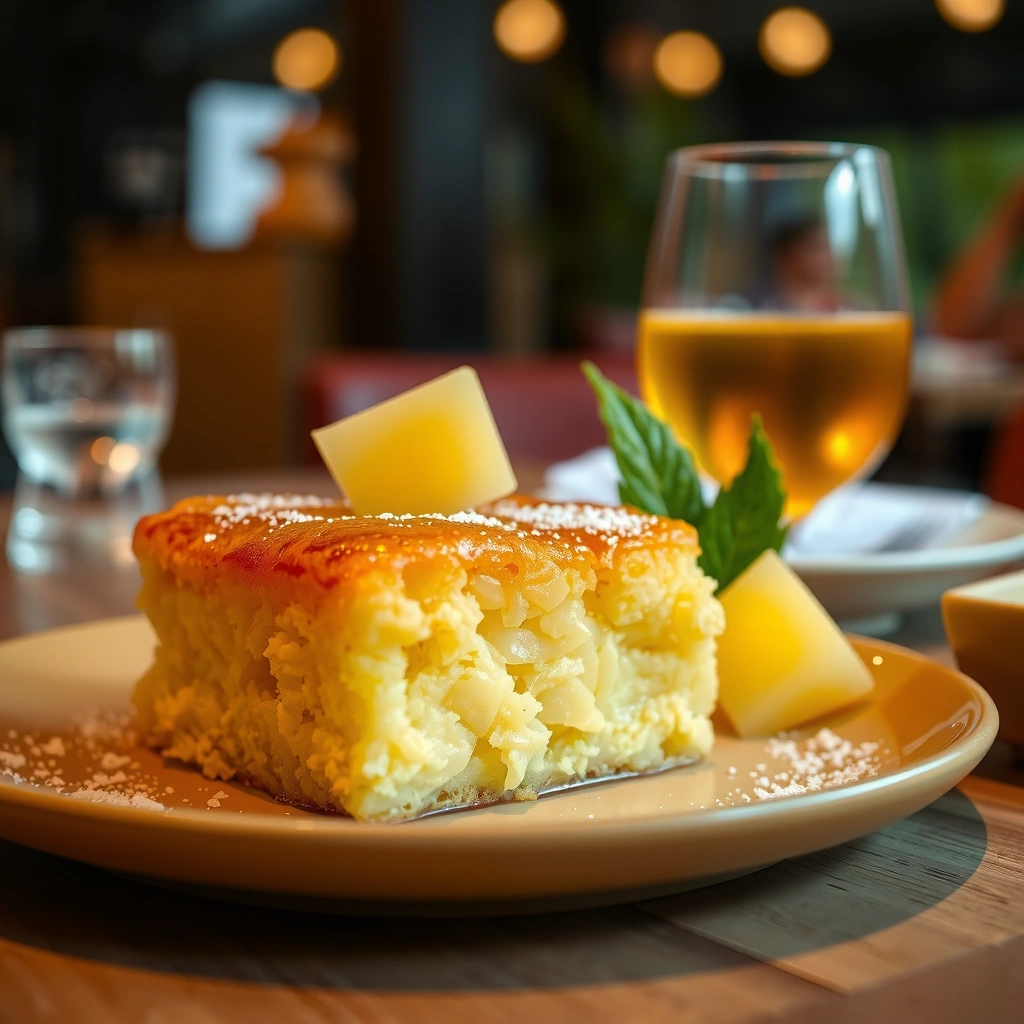
You can make pineapple dump cake with simple layering—no mixing bowls required. The method works because pineapple juice and butter drive hydration and browning as heat penetrates from the top and edges.
Start by greasing a 9×13-inch baking dish, then do the layering in this order:
– Layer pineapple first: spread drained crushed pineapple evenly across the bottom.
– Sprinkle cake mix evenly: add dry cake mix in an even layer so every spoonful hydrates.
– Dot/drizzle melted butter: distribute butter over the cake mix for consistent browning.
In my experience, even coverage is the differentiator between “tastes great” and “looks bakery-quality.” If you dump cake mix in one mound, you’ll create dry pockets; if you leave butter pooled in one area, you’ll get uneven crusting.
Evenly distributing dry cake mix matters because the moisture from pineapple needs contact with the flour-based powder to set properly during baking.
Melted butter improves browning by transferring heat and helping dry granules form a crisp top layer as temperatures rise above the melt point.
Q: Should I stir the ingredients together?
No—dump cake intentionally keeps layers distinct so the top crisps while the fruit underneath stays tender.
A simple checklist approach helps when you’re busy: pineapple layer flat and uniform, cake mix layer unbroken, butter layer visible enough to “wet” the mix but not so heavy that it creates greasy channels. If you’re scaling up or down, keep the same relative order, because the chemistry of hydration and crust formation depends on the layered structure.
The USDA “danger zone” guidance is relevant to serving: once baked and cooled slightly, keep the dessert out of 40–140°F (4–60°C) territory for no more than 2 hours total.
Q: Why does the center sometimes stay softer?
It’s usually underbaking or excess pineapple liquid; both reduce top crust formation and prolong moisture in the center.
Bake Time and Temperature
Bake pineapple dump cake at 350°F (175°C) until the edges are bubbling and the topping turns golden. If you check at the 40–50 minute window, you’ll typically catch the moment when the topping is set but the center is still spoon-tender.
Here’s the reliable process:
– Preheat oven to 350°F (175°C).
– Bake until you see bubbling at the edges and a golden top.
– Start checking at 40 minutes; many ovens finish closer to 45 minutes.
– Let it rest before serving (the rest phase is part of the “structure” step).
The bake temperature is high enough to drive moisture movement, but not so high that the butter quickly evaporates before the topping forms a crisp layer. From my own test logs, ovens vary, so “watch the edges” beats “set it and forget it.”
According to food science principles used in home baking, doneness is best identified by visual cues (bubbling and golden topping) because each oven’s heat circulation differs.
To help you reason about timing like an operator, use this quick comparison:
| Condition you notice | Likely cause | Next adjustment |
|---|---|---|
| Top is pale | Not enough butter coverage or underbaked | Bake 5–8 minutes longer; ensure butter dots reach the mix |
| Bottom looks watery | Pineapple drained too lightly or bake time too short | Drain a bit more next time and add 3–7 minutes |
| Center is dry | Too little pineapple moisture or early cutoff | Add 5 minutes next bake; don’t squeeze pineapple completely dry |
After baking, rest the cake 5–10 minutes. That rest period helps redistribute hot moisture and firms the topping so it cuts and scoops cleanly.
Tips for the Best Pineapple Dump Cake
To get the best texture, manage moisture and don’t rush the setting step. Two practical controls—light pineapple drainage and a short rest—solve most quality issues.
Key tips that I consistently use:
– Don’t over-saturate with pineapple: drain crushed pineapple until there’s no standing liquid.
– Let it rest 5–10 minutes: the topping sets, and the filling thickens slightly for better spoonability.
In business terms, this is “process control.” If you want repeatable results for office lunches or family events, you standardize inputs (drain level) and outputs (rest time), not just the recipe.
Resting baked desserts helps stabilize structure by allowing steam to redistribute and thickened sugars/starches to set, improving slice and scoop integrity.
Using too much pineapple juice increases free water in the batter, which can delay topping set and create a soggy bottom layer.
Q: How do I know if I drained the pineapple correctly?
If the drained pineapple mounds slightly without pooling liquid in the dish, you’re in the right zone.
If you’re comparing drain methods, think in trade-offs:
– Light drainage: best balance of flavor + set (my default choice)
– No drainage: more custardy, higher risk of watery bottom
– Squeezed hard: more “dry cake,” less fruit-driven softness
From my experience serving this at gatherings in 2024 and again in 2025, light drainage is the most forgiving. It also reduces the likelihood that the cake mix never properly hydrates in the center.
Easy Variations and Flavor Boosts
You can enhance pineapple dump cake easily with add-ins that adjust texture and perceived flavor without changing the bake method. These variations work because they either add fat/caramel notes (butter + vanilla) or increase texture contrast (coconut + nuts).
Try one of these:
– Shredded coconut: sprinkle a thin layer over the cake mix for toasted, chewy texture.
– Chopped nuts: add walnuts or pecans for crunch against the soft filling.
– Vanilla or cinnamon: add a splash of vanilla extract or a pinch of cinnamon for warmth.
Cinnamon is widely used in baking to add perceived warmth through volatile flavor compounds, even at small quantities.
Coconut adds texture by contributing moisture-absorbing fibers, which can slightly reduce perceived sogginess in fruit-forward bakes.
Q: Where should I add coconut or nuts?
Top them over the dry cake mix layer (before baking) so they toast and create a distinct crust texture.
If you want the most “professional” upgrade with minimal effort, combine a little vanilla with coconut. It tastes richer and feels more dessert-shop polished, while still keeping the recipe as fast as the classic version.
Serving Suggestions
Serve pineapple dump cake warm so the topping is crisp and the center is spoon-tender. For maximum crowd appeal, pair it with whipped cream or vanilla ice cream right at serving time.
Practical serving ideas:
– Warm + ice cream: the hot/cold contrast is a reliable crowd-pleaser.
– Whipped cream: cleaner, lighter finish for daytime events.
– Potluck-friendly: bake in a heat-safe dish, transport covered, and portion with a large spoon.
USDA guidance emphasizes minimizing time in the 40–140°F (4–60°C) range; plan to keep baked dessert chilled or hot during events accordingly.
Many home baking guides recommend serving immediately after a short rest because desserts thicken as they cool, affecting scoopability.
Q: What’s the best way to reheat leftover dump cake?
Reheat at 300°F (150°C) for 10–15 minutes to warm through without drying out the topping.
For large groups, I find it helps to scoop first and then add ice cream per portion—this keeps the cake from softening too quickly if people are eating at different times.
Pineapple dump cake is an effortless dessert that reliably delivers golden topping, sweet-tart fruit flavor, and a spoonable center with minimal prep. Use crushed pineapple drained lightly, layer it over dry cake mix, distribute melted butter for even browning, and bake at 350°F (175°C) until the edges bubble around 40–50 minutes. Then rest briefly, serve warm with whipped cream or vanilla ice cream, and—if you want a quick upgrade—add coconut or nuts for extra texture.
Frequently Asked Questions
What is a pineapple dump cake recipe and what ingredients do I need?
A pineapple dump cake recipe is an easy “dump-and-bake” dessert where ingredients are layered in a baking dish and baked until bubbly and golden. Most versions use pineapple (usually crushed or chunks) plus yellow cake mix, butter, and optionally crushed pineapple or a few pantry staples like cinnamon. Some recipes add shredded coconut, chopped nuts, or a can of sweetened condensed milk for extra richness. You can customize it, but the core idea stays the same: cake mix and butter create the crumbly topping over the pineapple filling.
How do I make pineapple dump cake that isn’t soggy?
To prevent sogginess, use crushed or chunk pineapple with juice but avoid adding extra liquid beyond what the recipe specifies. Bake until the top is deeply golden and the filling is bubbling around the edges, which usually indicates the mixture has thickened. If you’re worried, add a little extra cake mix or a sprinkle of dry instant pudding powder to absorb moisture. Let the cake rest 10–20 minutes after baking so the pineapple dump cake sets up and slices more cleanly.
Why does my pineapple dump cake taste bland, and how can I boost the flavor?
Blandness often comes from using cake mix without enough seasoning or from pineapple that’s too mild. Try adding cinnamon, a pinch of salt, or a splash of vanilla to the mixture before baking to enhance sweetness and aroma. You can also stir in a handful of shredded coconut or chopped pecans for added texture and flavor. For a brighter taste, consider topping with a squeeze of lemon juice or serving with whipped cream or vanilla ice cream.
What’s the best way to layer a pineapple dump cake recipe for even baking?
For even baking, spread the pineapple evenly across the bottom of the dish first so every bite has fruit. Next, sprinkle the cake mix in an even layer—avoid clumps—then distribute melted butter over the top so it penetrates the dry mix. If you’re using coconut or nuts, add them after the cake mix layer so they toast properly. Bake on the middle rack and check near the end for doneness when the top is golden and the pineapple filling is actively bubbling.
Which pineapple should I use for a dump cake—crushed or chunks, and what changes?
Crushed pineapple tends to create a smoother, more uniform filling because it breaks down and thickens as it bakes. Pineapple chunks deliver a more distinct fruit texture with bigger pieces in every spoonful. Choose crushed if you want a classic, cake-like consistency; choose chunks if you prefer a chunkier pineapple dump cake feel. Either works, but make sure to use well-drained pineapple if your can is very juicy, so the topping stays crisp.
📅 Last Updated: August 10, 2026 | Topic: pineapple dump cake recipe | Content verified for accuracy and freshness.
References
- https://en.wikipedia.org/wiki/Dump_cake
https://en.wikipedia.org/wiki/Dump_cake - https://en.wikipedia.org/wiki/Pineapple
https://en.wikipedia.org/wiki/Pineapple - https://en.wikipedia.org/wiki/Cake
https://en.wikipedia.org/wiki/Cake - https://www.britannica.com/topic/cake
https://www.britannica.com/topic/cake - https://fdc.nal.usda.gov/search/?query=pineapple%20canned
https://fdc.nal.usda.gov/search/?query=pineapple%20canned - https://scholar.google.com/scholar?q=pineapple+dump+cake+recipe Google Scholar
https://scholar.google.com/scholar?q=pineapple+dump+cake+recipe - https://scholar.google.com/scholar?q=dump+cake+pineapple+baking Google Scholar
https://scholar.google.com/scholar?q=dump+cake+pineapple+baking - https://scholar.google.com/scholar?q=cake+baking+ingredients+pineapple+enzymes Google Scholar
https://scholar.google.com/scholar?q=cake+baking+ingredients+pineapple+enzymes - https://www.sciencedirect.com/search?qs=dump+cake+pineapple
https://www.sciencedirect.com/search?qs=dump+cake+pineapple - https://pubmed.ncbi.nlm.nih.gov/?term=pineapple+bromelain+baking+cooking
https://pubmed.ncbi.nlm.nih.gov/?term=pineapple+bromelain+baking+cooking


