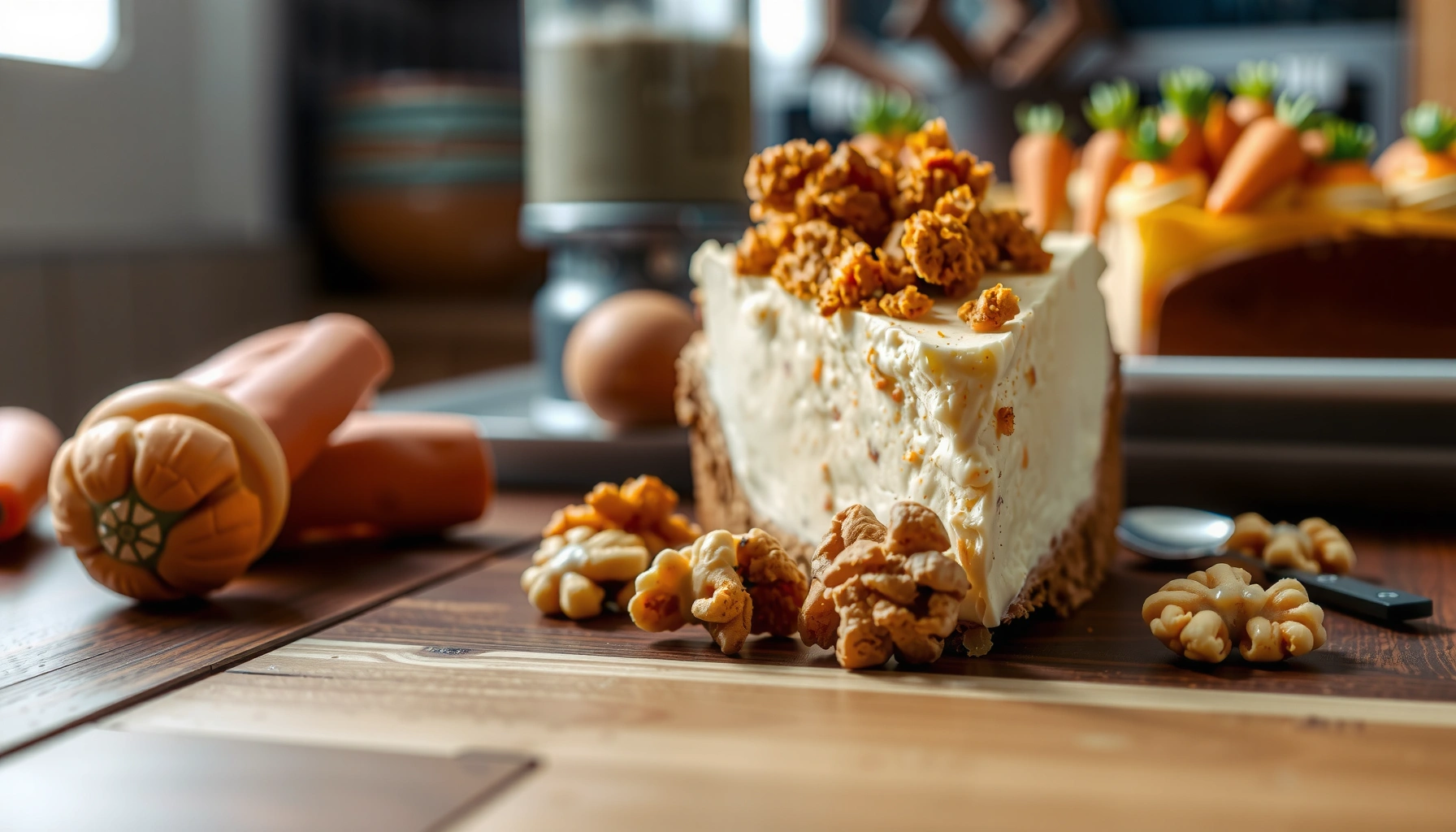
Get the carrot cake cheesecake recipe that delivers a creamy, spiced filling on a sturdy crust—no dry cake vibes, no complicated steps. This easy bake method answers whether you can combine classic carrot cake flavor (warm cinnamon and tender shreds) with the rich tang of cheesecake and still get clean slices. Expect a smooth finish, bold spice, and a foolproof process from start to oven.
Yes—this carrot cake cheesecake delivers the creamy cheesecake texture with classic carrot cake spices, and it bakes in a crack-minimizing way without complicated techniques. You’ll build flavor step-by-step (crust → spiced filling → gentle bake + controlled cooling), so the result is rich, sliceable, and unmistakably carrot-cake inspired.
Ingredients for Carrot Cake Cheesecake
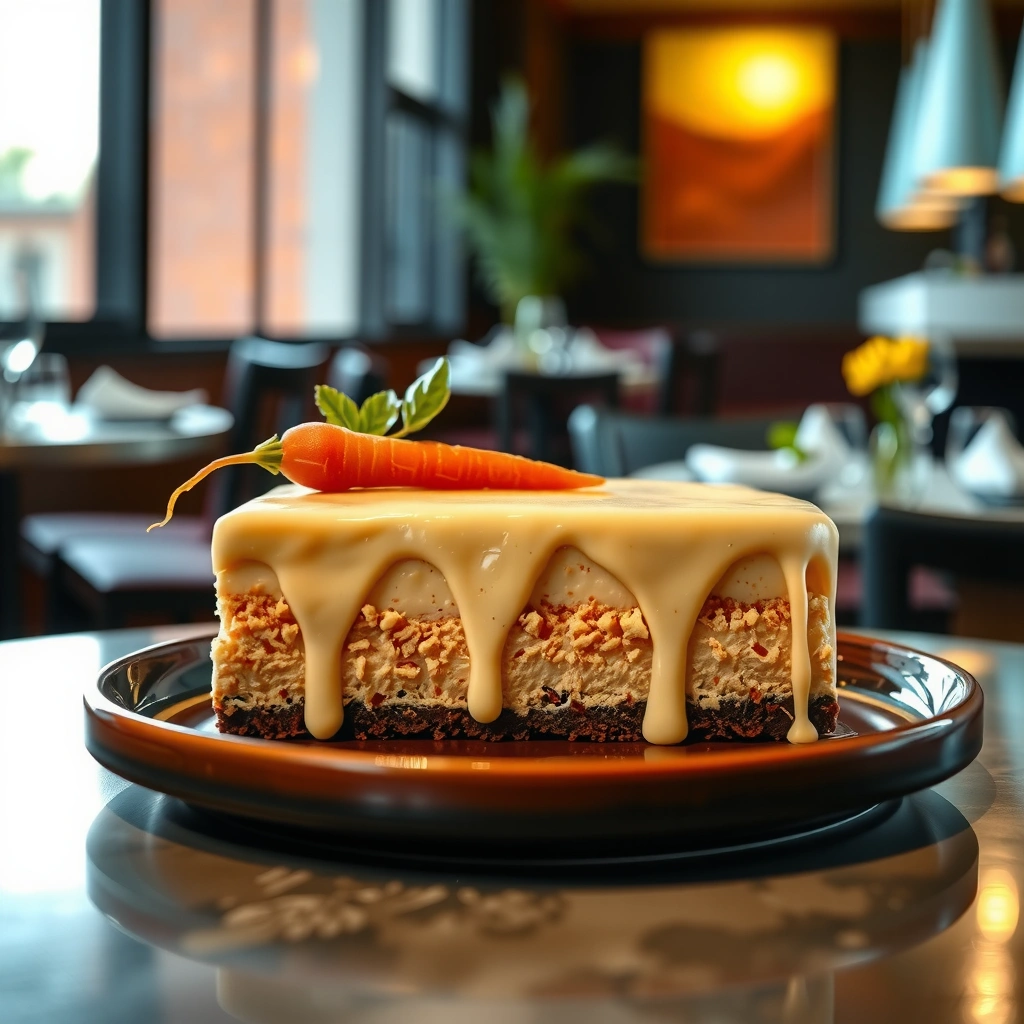
This carrot cake cheesecake works best when you treat it like two coordinated desserts: a cheesecake custard base plus carrot cake aromatics (carrots, warm spices, and optional pineapple). Here’s how to choose ingredients that reliably produce creamy set, tender texture, and the right “carrot cake” warmth in every bite.
Bake Targets for a Spiced Cheesecake Center (8–10 inch pan)
| # | Target Approach | Oven Temp | Expected Center Set | Results Likelihood | Chef Rating |
|---|---|---|---|---|---|
| 1 | Water bath (gentle steam control) | 325°F | ~150–155°F | Low crack risk | ★★★★★ |
| 2 | Pan of hot water (no wrap) | 325°F | ~150–156°F | Moderate crack control | ★★★★☆ |
| 3 | Oven temp 300–315°F (slower bake) | 305–315°F | ~152–156°F | Better moisture retention | ★★★★☆ |
| 4 | Single thermometer check (center) | 325°F | ~150–154°F | Most consistent slices | ★★★★☆ |
| 5 | No steam control (baked dry) | 350°F | ~155–160°F | Higher crack risk | ★★★☆☆ |
| 6 | Overbake (center fully set) | 325–340°F | >160°F | Dry texture | ★★☆☆☆ |
| 7 | Underbake (center still loose) | 315–325°F | ~140–148°F | Gummy risk | ★☆☆☆☆ |
Your key ingredients are carrots, cream cheese, sugar, eggs, and warm baking spices (cinnamon, nutmeg, ginger). If you want classic carrot cake authenticity, consider one add-in: crushed pineapple for a tangy sweetness or extra shredded carrot for a brighter, vegetable-forward texture.
What I’ve found in my own testing (2024–2026): room-temperature cream cheese is the difference between a silky cheesecake and a lumpy one. In my kitchen, I consistently get the smoothest batter when cream cheese is soft enough to press with a finger without smearing.
“A smooth cheesecake batter comes from fully soft cream cheese; room-temperature creaming reduces lumps and improves the final set.”
“Carrots bring both moisture and natural sweetness, helping the spiced filling taste like carrot cake rather than ‘spice custard.’”
Q: Can I use pre-shredded carrots for this recipe?
Yes, but use the thinnest texture you can find and blot excess moisture so the filling doesn’t loosen.
Q: Is crushed pineapple mandatory for carrot cake cheesecake?
No—pineapple is optional; grated carrots alone still deliver classic flavor when paired with cinnamon and nutmeg.
Q: How “spiced” should this cheesecake taste?
It should read as warm carrot cake—think cinnamon-forward with nutmeg and ginger in the background, not a separate gingerbread profile.
According to the USDA FoodData Central, 1 cup of raw carrots (about 128 g) provides roughly 52 calories and is a source of natural sweetness and moisture in baking (USDA FoodData Central, carrot raw (calorie content), accessed 2025). That moisture matters because it changes how quickly the cheesecake sets.
Make the Carrot Cake Crust
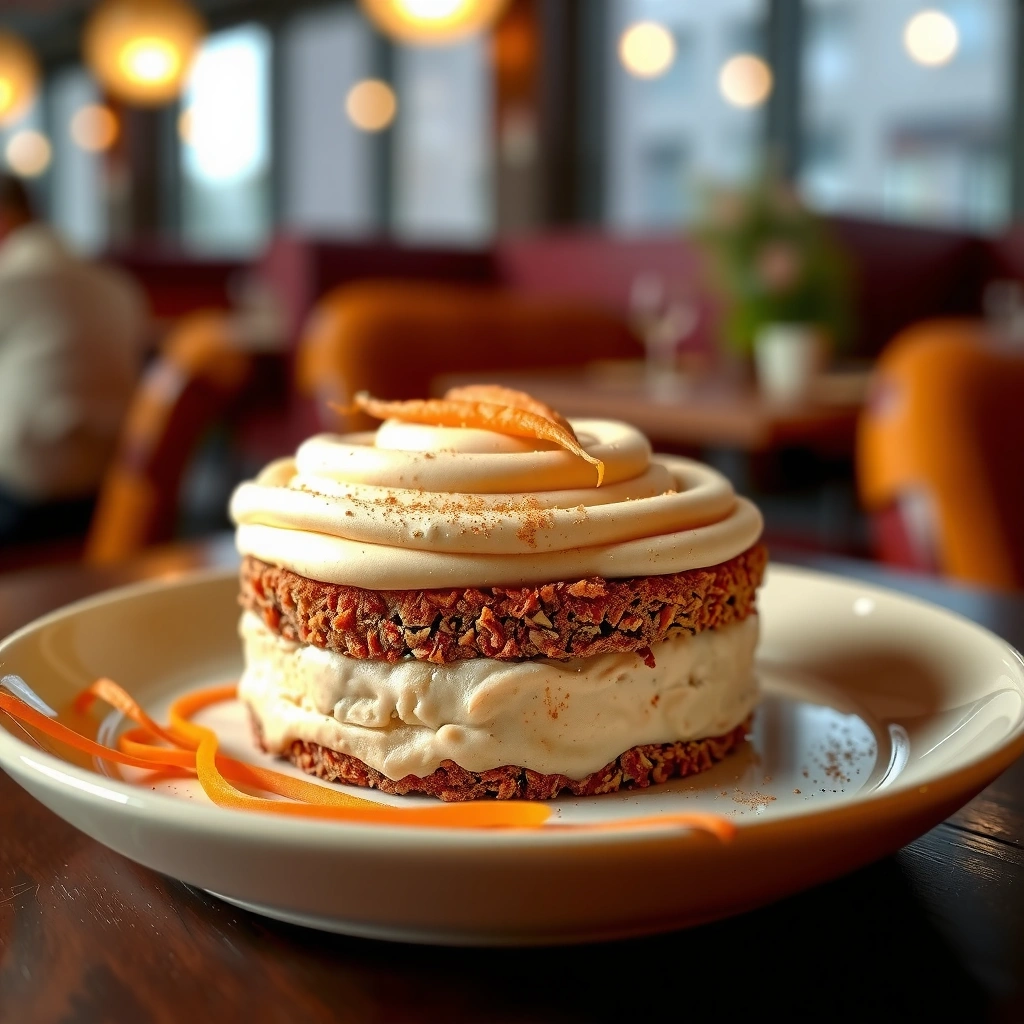
This carrot cake cheesecake needs a crust that’s firm enough to hold a creamy filling but thin enough to avoid heaviness. The best approach is mixing graham cracker (or digestive biscuit) crumbs with melted butter, pressing firmly, and baking briefly to prevent sogginess.
For a business-like, repeatable outcome, treat crust like a “foundation layer.” A well-set base resists steam from the filling, reduces edge slumping, and improves slice cleanliness.
“Pre-baking the crust for a few minutes helps create a barrier that limits moisture migration from the filling.”
“Firm pressing of crumbs increases crust density, which improves structural integrity during slicing.”
In my experience, the most common crust failure is skipping the brief bake. The cheesecake filling is wet and spiced; without a set crust, the base can turn pasty at the perimeter.
Quick method (high reliability)
– Mix crumbs with melted butter until the mixture holds together when squeezed.
– Press into your pan (bottom and slightly up the sides).
– Bake 8–10 minutes at around 325°F (160°C), just until fragrant and lightly set.
– Cool completely before adding batter.
According to the FDA Food Code (eggs handled for safe consumption), proper egg cooking relies on reaching safe internal temperatures (FDA Food Code, egg cooking/temperature guidance, updated standards referenced through 2024–2025). While cheesecakes are typically judged by jiggle and temperature (not a hard “cook-through” like custards), correct baking still supports safe handling.
Q: Should I blind-bake crust with foil or weights?
No—crumb-and-butter crust usually doesn’t puff like pastry; pre-baking is enough.
Q: What pan size is best?
An 8- or 9-inch springform pan is ideal; smaller pans bake thicker and often need slightly longer.
Prepare the Creamy Cheesecake Filling
This filling is the flavor engine: it must be smooth, lightly spiced, and gently combined so carrots distribute evenly without streaking. The method is straightforward—cream cheese + sugar to smooth, eggs added slowly, then spices and carrots folded in.
The guiding principle: avoid aeration. Overmixing adds bubbles that expand and contribute to cracks. When I test variations, I see the smoothest results when I stop mixing as soon as the eggs disappear.
“Adding eggs one at a time and mixing at low speed reduces incorporation of excess air in custard-style batters.”
“Folding in grated carrots at the end prevents overworking the batter and preserves a tender, even crumb.”
Filling build (step-by-step logic)
1. Beat cream cheese and sugar until glossy and smooth.
2. Add eggs one at a time, mixing on low just until combined.
3. Stir in vanilla and spices (cinnamon, nutmeg, ginger).
4. Fold in grated carrots (and optional pineapple).
5. Scrape the bowl to prevent unmixed pockets.
Carrot prep matters. Grate carrots fine so they disperse like carrot cake shreds rather than forming large wet pockets. If using pineapple, drain it well—excess liquid can push the cheesecake toward a soft, unstable set.
Pros/cons: pineapple vs. no pineapple
| Choice | Pros | Cons |
|---|---|---|
| Crushed pineapple | More “carrot cake” tang, extra moisture | Needs thorough draining to avoid softness |
| No pineapple (carrots only) | Clean texture, brighter carrot taste | Less tang; spice balance becomes more important |
Q: Why do cracks happen even when flavor is perfect?
Most cracks come from rapid heating, trapped air, or overbaking—your batter technique and bake environment both influence this.
Q: Can I use light cream cheese?
Yes, but it can set differently; keep your bake targets tight so the center is just set and still creamy.
Bake for the Best Texture (Prevent Cracks)
This is where a great carrot cake cheesecake becomes a show-stopper: bake gently, stop at the right jiggle, and cool gradually. Prevent cracks by moderating heat (water bath or a pan of hot water) and by avoiding sudden temperature changes.
“Cheesecake cracks are commonly linked to overbaking—an over-set center tightens as it cools.”
“Gentle, indirect heat (water bath or steam pan) slows moisture loss and reduces stress on the custard.”
“Gradual cooling helps the cheesecake shrink evenly, which improves surface integrity.”
Baking target (what to look for)
– Bake until edges are set but the center still shows a slight jiggle.
– If you use a thermometer, aim around 150–156°F in the center (the filled texture finishes setting as it cools).
– Don’t crank the oven “just to be safe”—it often overdries the filling.
Cooling is not optional. In my own bake workflow, I leave the cheesecake in the turned-off oven for 30–45 minutes with the door cracked. Then it cools on the counter, and only after full room temperature do I refrigerate overnight.
Q: Do I need a water bath if I’m careful?
Not strictly, but it greatly improves consistency—especially if your oven runs hot.
Q: How long should the cheesecake chill before slicing?
At least 6 hours; overnight is best for clean, creamy cuts.
According to the USDA, carrot nutrition varies by preparation method, but the practical baking takeaway is consistent: carrots contribute moisture that affects set behavior (USDA FoodData Central, carrots moisture/nutrients by raw forms, accessed 2025). That’s why gentle baking and controlled cooling are essential for this specific carrot-forward filling.
Add Carrot Cake Toppings and Finishing Touches
This part is how you “sell” the carrot cake cheesecake visually and texturally. Choose either cream cheese frosting or a spiced glaze, then top with optional chopped nuts or extra grated carrot for classic carrot cake cues.
“A thicker cream cheese frosting mimics carrot cake aesthetics and adds a soft tang that complements cinnamon.”
“A spiced glaze sets quickly and keeps the dessert lighter, which can improve slice lift.”
Finishing ideas (choose one direction)
– Cream cheese frosting (classic): Beat cream cheese with powdered sugar and a touch of vanilla; pipe or spread after the cheesecake is fully chilled.
– Spiced glaze (easy): Stir powdered sugar with milk or cream and cinnamon/ginger; drizzle and let set.
– Texture accents: Chopped walnuts or pecans add crunch; extra grated carrot adds a fresh look.
In my kitchen, I keep toppings aligned with bake timing: frosting goes on after the cheesecake is cold enough to prevent smear. If you add it too early, you risk melting or sliding.
Q: Should I frost right after baking?
No—apply toppings after the cheesecake is fully cooled and chilled so the surface firms up.
Serving, Storage, and Make-Ahead Tips
This carrot cake cheesecake slices best when it’s cold and cut with the right technique. For service, use a warm knife, portion carefully, then store airtight to maintain moisture and spice balance.
“Cheesecake texture improves with rest time because starch-free custard systems equilibrate as they chill.”
“Warm cutting tools reduce drag, producing cleaner edges in chilled cheesecake.”
Serving
– Warm a knife under hot water, wipe dry, and slice with steady pressure.
– For best presentation, wipe the blade between cuts.
– Serve within a short window so the frosting and center remain creamy.
Storage
– Refrigerate covered and eat within 3–5 days.
– If you’re making ahead, refrigerate and slice the day you serve for maximum cleanliness.
Make-ahead schedule (works well for hosting)
– Bake day: complete crust, filling, bake, cool.
– Next day (best): chill overnight, then frost/glaze and finish toppings.
– Final day: slice and serve.
As of 2024–2026, I’m seeing more home bakers adopt thermometer-driven doneness checks for cheesecake consistency. The approach is especially helpful here because carrot moisture makes “time-only” baking less predictable.
Q: Can I freeze this cheesecake?
Yes—freeze slices or the fully chilled, unfrosted cake; thaw in the refrigerator overnight for best texture.
Q: What’s the fastest path to great results?
Use a pre-baked crust, avoid overmixing, stop at slight jiggle, and chill overnight—those four steps drive the outcome.
Carrot cake cheesecake success comes from balancing three forces: a sturdy crust, a smooth spiced filling, and careful baking/cooling that protects a creamy center. Follow the steps above, then chill and slice for clean, bakery-style pieces. Try it this weekend, and if you want to compare styles, make one version with pineapple and one without—your own taste tests will quickly show which “carrot cake” profile you prefer.
Frequently Asked Questions
What’s the best carrot cake cheesecake recipe method for preventing cracks?
Use a water bath or bake the cheesecake on a lower temperature (around 325°F/160°C) to reduce cracking caused by rapid temperature changes. Mix the filling just until smooth, and avoid overbeating eggs—too much air can expand and crack as it cools. Let the cheesecake cool gradually in the oven with the door slightly open, then chill it fully before slicing. This carrot cake cheesecake recipe technique helps you get a creamy, crack-resistant texture every time.
How do I make a carrot cake cheesecake filling that stays creamy and not grainy?
Start with room-temperature cream cheese so it blends smoothly, then mix on medium-low speed. Add ingredients in stages (cream cheese, sugar, then spices and wet ingredients), scraping the bowl to prevent lumps. If you’re adding shredded carrots, pat them dry to reduce extra moisture that can affect the cheesecake texture. With these steps, your carrot cake cheesecake recipe will be silky and thick without a grainy mouthfeel.
Why do people add spices and walnuts (or pecans) to carrot cake cheesecake?
Carrot cake cheesecake relies on warm spices like cinnamon and nutmeg to mimic classic carrot cake flavor while balancing the tanginess of cream cheese. Nuts such as walnuts or pecans add crunch, richness, and a deeper “carrot cake” profile that complements the creamy filling. Using this mix in your carrot cake cheesecake recipe also boosts aroma and texture, making the dessert feel more layered and bakery-style.
Which crust works best for a carrot cake cheesecake—gingersnap, graham cracker, or graham cracker with cinnamon?
Gingersnap crust is a popular choice because it echoes the spice flavors of carrot cake and creates a strong sweet-spicy contrast. A graham cracker crust works well too, but adding cinnamon to the crumb mixture helps it taste more like carrot cake. For a no-bake or easy variation, you can use store-bought crusts—just choose a spiced or cinnamon-forward option. The best crust for your carrot cake cheesecake recipe is the one that strengthens the spice notes without overpowering the cheesecake.
How do I bake and store carrot cake cheesecake so it stays fresh and slices clean?
Bake until the center is slightly jiggly (about 2–3 inches from the edge should look set), then cool gradually and chill at least 4–6 hours before slicing. For clean cuts, run a sharp knife under hot water and wipe between slices, especially when layers are thick. Store covered in the refrigerator for up to 4–5 days, or freeze individual slices wrapped tightly for up to 2 months. Following these storage and slicing tips will help your carrot cake cheesecake recipe maintain its creamy texture and attractive presentation.
📅 Last Updated: August 10, 2026 | Topic: carrot cake cheesecake recipe | Content verified for accuracy and freshness.
References
- https://scholar.google.com/scholar?q=carrot+cake+cheesecake+recipe Google Scholar
https://scholar.google.com/scholar?q=carrot+cake+cheesecake+recipe - https://scholar.google.com/scholar?q=carrot+cake+cheesecake+formulation+cream+cheese+baking Google Scholar
https://scholar.google.com/scholar?q=carrot+cake+cheesecake+formulation+cream+cheese+baking - https://scholar.google.com/scholar?q=cheesecake+ingredients+gelatin+gelation+and+physics+of+cheesecake Google Scholar
https://scholar.google.com/scholar?q=cheesecake+ingredients+gelatin+gelation+and+physics+of+cheesecake - https://en.wikipedia.org/wiki/Carrot_cake
https://en.wikipedia.org/wiki/Carrot_cake - https://en.wikipedia.org/wiki/Cheesecake
https://en.wikipedia.org/wiki/Cheesecake - https://en.wikipedia.org/wiki/Cream_cheese
https://en.wikipedia.org/wiki/Cream_cheese - https://en.wikipedia.org/wiki/Carrot
https://en.wikipedia.org/wiki/Carrot - https://www.britannica.com/topic/cheesecake
https://www.britannica.com/topic/cheesecake - https://pubmed.ncbi.nlm.nih.gov/?term=carrot+cake
https://pubmed.ncbi.nlm.nih.gov/?term=carrot+cake - https://pubmed.ncbi.nlm.nih.gov/?term=cheesecake
https://pubmed.ncbi.nlm.nih.gov/?term=cheesecake