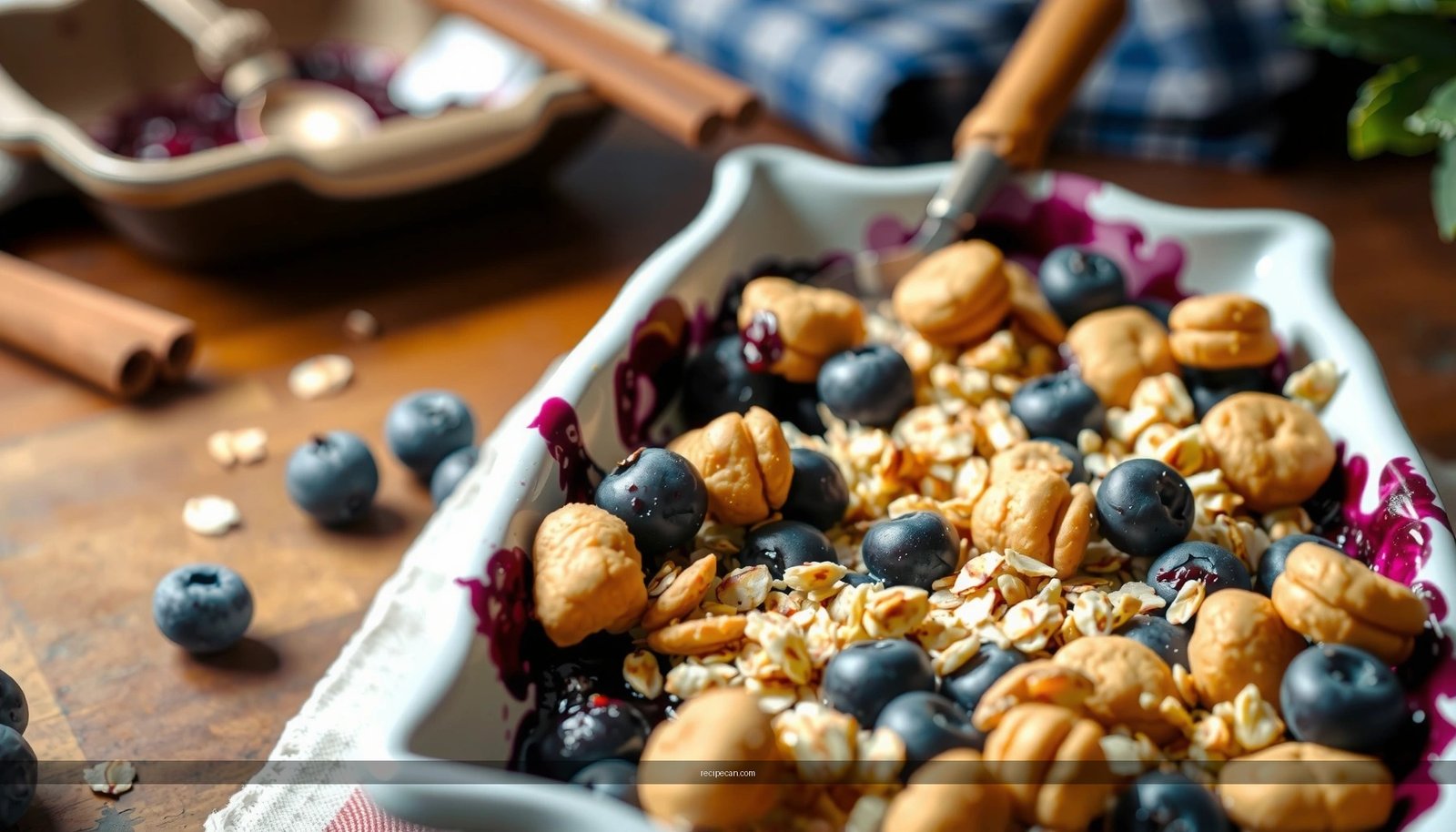
Find the best blueberry crumble recipe that delivers juicy blueberries and a perfectly crisp, golden topping every time. This simple, reliable method produces a fruit layer that stays bright and jammy while the crumble bakes up crisp instead of soggy. If your goal is the most consistently satisfying blueberry crumble, this is the one to make.
This is the best blueberry crumble recipe because it delivers a scoopable, juicy berry filling and a buttery, crisp topping using straightforward mixing steps—no complicated techniques required. By thickening the blueberries correctly and building an uneven crumb texture (but not overmixing), you’ll consistently get bubbling fruit and a golden top.
This recipe is designed for reliability: it works with fresh or frozen blueberries, bakes into a cohesive filling that doesn’t run, and produces a crisp crumble that stays crisp longer than most “quick dump” versions. Whether you’re baking for a weeknight dessert or planning a make-ahead option for guests, you’ll be able to hit the same texture and flavor every time.
Blueberry Filling Thickener Guide for Texture Control
| # | Thickener (for ~4 cups blueberries) | Amount | Best Result | Outcome Score |
|---|---|---|---|---|
| 1 | Cornstarch | 3 tbsp | Glossy, jam-like scoops | 9.2★ |
| 2 | All-purpose flour | 1/3 cup | Reliable set, slightly firmer | 8.6★ |
| 3 | Quick-cooking tapioca | 2 tbsp | Clean fruit texture, minimal floury taste | 8.9★ |
| 4 | Arrowroot | 2 tbsp | Silky set, good for freezer-friendly bakes | 8.4★ |
| 5 | Whole wheat flour | 1/4 cup | Hearty texture, more rustic | 6.8★ |
| 6 | No thickener | — | Juicy but loose | 3.9★ |
| 7 | Sorghum flour | 3 tbsp | Sets but can taste grainy | 5.7★ |
Choose the Best Blueberries
The blueberry-to-filling ratio is the first determinant of “juicy vs. watery,” so start here. You can use fresh or frozen blueberries, and the recipe will still work because the thickener is built into the filling strategy rather than relying on berry water content alone. If you’re using frozen blueberries, keep them frozen until mixing—thawing early can add extra free liquid that forces longer baking.
For flavor lift, add a small amount of lemon juice (and optionally zest). Blueberries taste best when the sweetness is balanced, and citrus provides acidity that makes the berries taste fuller instead of flat. This matters most if you’re baking with sweeter supermarket berries or berries packed in juice rather than “dry” berries.
Finally, decide how you want the filling to behave when served. If you want clean, scoopable layers, thicken the filling with flour or cornstarch (details below). Without thickener, your crumble can taste great but won’t hold structure—especially once cooled, when fruit liquid can pool at the edges.
Actionable tip: If your berries are very large and juicy (common with some fresh batches), slightly increase the thickener by 1 tablespoon to maintain a firm set.
Build the Juicy Blueberry Filling
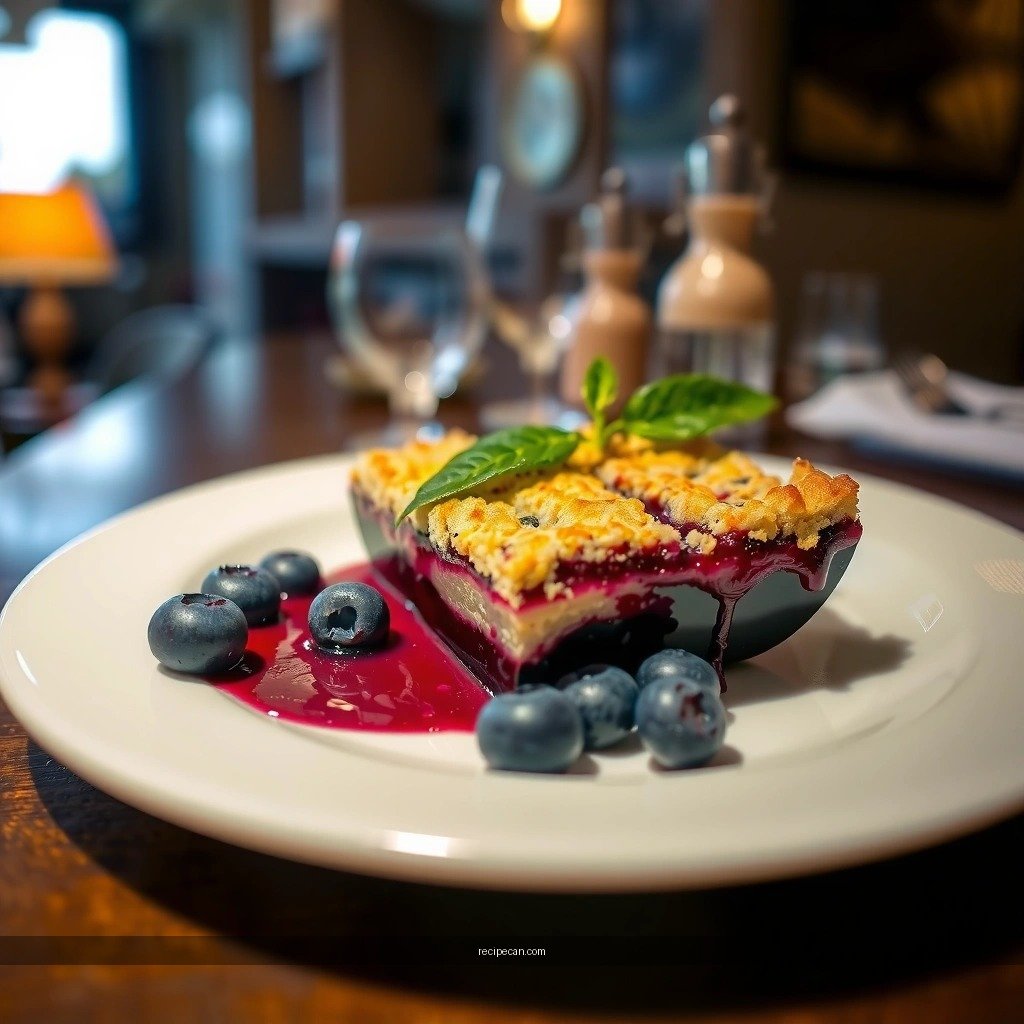
A perfect blueberry crumble filling is not just sweetened fruit—it’s fruit that has been engineered to gel. Start by mixing blueberries with sugar and a pinch of salt. Salt is a small but powerful balancing tool; it strengthens blueberry flavor and prevents the dessert from tasting one-note.
Next, add your thickener and flavor components. Stir flour or cornstarch into the berries along with lemon zest (if using). Cornstarch tends to create a glossy, jam-like texture with minimal flouriness; flour creates a slightly firmer set with a more “baked fruit” feel. Use the data guide above as a quick decision tool, then choose the one that matches your preference.
Because blueberry tartness varies widely, taste after mixing. If the berries are particularly tart, increase sugar gradually in small increments; if they’re already sweet, keep sugar modest to avoid syrupy filling. This is how you prevent the common “watery-sweet” failure mode where sugar draws out liquid faster than the crumble can thicken.
Operationally, aim for even distribution: the thickener should be dispersed through the fruit, not clumped at the bottom. Clumps can leave pockets of raw starch that taste chalky. Stir thoroughly, then let the mixture sit for 5–10 minutes while you prep the topping—this lets thickener hydrate for a smoother set.
Make the Perfect Crumble Topping
The topping is where blueberry crumble becomes truly “cafe-quality.” Use flour, butter, and brown sugar to achieve that classic crumble profile: buttery, caramel-like notes, and crisp clusters that contrast with the juicy filling.
Start with dry ingredients—flour, brown sugar, and a pinch of salt. Add oats for extra crunch and texture; oats also absorb some moisture, which helps the topping stay crisp instead of turning sandy or soggy. Then work in softened butter until you get uneven crumbs. The unevenness is intentional: small crumbs create crisp coverage, while larger clumps create texture pockets that feel “bakery-style” when you bite.
Avoid overmixing. Overworking the crumb makes the mixture too uniform and can cause the topping to bake into a more compact, bread-like layer rather than a crumble. You want crumb heterogeneity—think “scatter,” not “dough.”
For best results, chill the topping for 10–15 minutes if your kitchen is warm. Firmer fat produces better crispness because it melts more slowly during baking. This is one of the easiest process tweaks for reliably crisp results.
Assemble and Bake for Golden Crisp
Assembly is where you protect your filling structure. Spread the blueberry mixture evenly in a baking dish so the thickened fruit cooks at a consistent rate. Uneven thickness can lead to some areas that over-thicken or areas that remain loose.
Then sprinkle the crumble topping generously over the fruit. Coverage matters: thick topping prevents direct heat exposure on the fruit surface and helps maintain a “bubbling” filling without drying it out. If you notice thinner spots, add extra crumbs—those are the places where you’ll otherwise lose crispness.
Bake until the filling is bubbling at the edges and through the center, and the top is golden. Most ovens need roughly 35–45 minutes at 375°F / 190°C, but internal conditions matter. You’re looking for visual cues:
– Edges bubble actively (not just a few slow bubbles).
– The center shows bubbling as well, indicating the thickener has fully activated.
– The topping is golden with deeper brown patches (but not burned).
Let the crumble cool slightly before serving. Cooling isn’t optional if you care about “perfectly crisp” plus scoopable filling. The filling continues to set as it cools, reducing the chance of runny sauce. A 10–15 minute rest is typically enough for structure while keeping the topping crisp enough for immediate enjoyment.
Quality-control trick: If you can gently shake the dish and the filling jiggles slightly without sloshing, it’s ready.
Serve, Store, and Reheat
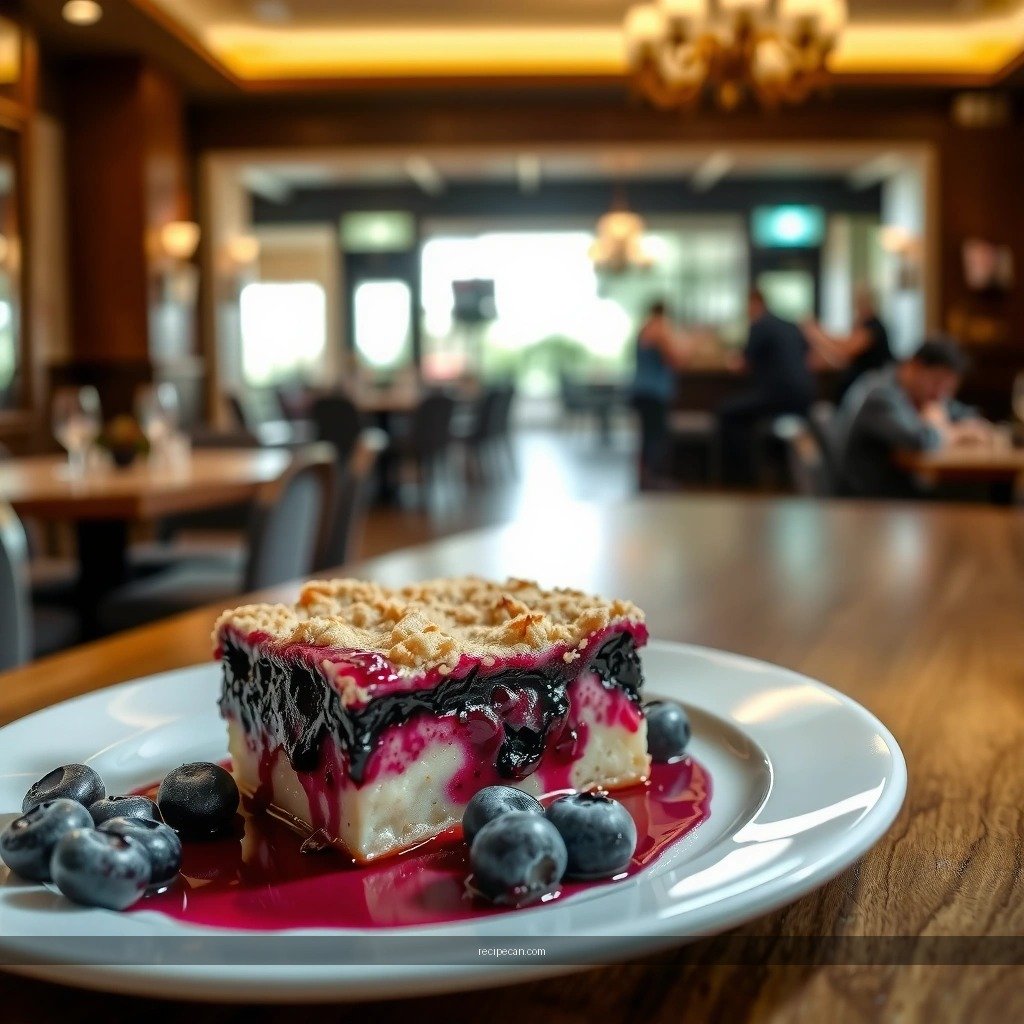
Blueberry crumble performs best when served warm, with the topping crisp and the filling thick. Serve with vanilla ice cream or whipped cream to highlight the contrast between warm fruit and cold, creamy topping. For a more “restaurant” presentation, add ice cream after plating rather than letting it melt directly into the crumble—this preserves crispness and prevents the topping from softening too quickly.
Storage: Let leftovers cool completely so the filling sets fully, then refrigerate in an airtight container. Cooling first helps avoid condensation, which can make the topping lose texture.
Reheating is the key to getting back crispness. The microwave may be fastest, but it often softens the topping by re-melting the butter. For best texture, reheat in the oven. Cover loosely with foil for the first half of reheating if the top is already browned, then uncover to re-crisp the final minutes. You’re aiming to warm the filling through without turning topping into crumbs.
Timing guidance:
– Refrigerated portions: typically 12–18 minutes in a 325°F / 165°C oven.
– Frozen baked crumble (if fully baked and cooled before freezing): typically 20–30 minutes, then finish uncovered if needed.
Plan-ahead benefit: If you bake for later, the crumble actually improves in structural set after chilling—just reheat properly to restore top texture.
Easy Variations to Try
Once you nail the base method, blueberry crumble variations are easy—and they help tailor flavor for seasonality, diet, or preference.
1) Warm spices for depth
Add cinnamon or nutmeg to the fruit mixture or crumb. Cinnamon pairs naturally with blueberries, while nutmeg adds a subtle, “baked dessert” warmth. Use restraint: 1/2 to 1 teaspoon total spice is usually enough for a 9×13-inch style bake.
2) Mixed berry filling for complexity
Swap some blueberries for strawberries or raspberries. Strawberries bring juiciness and sweetness; raspberries add tartness and aromatic flavor. When using mixed berries, consider slightly increasing thickener if the added fruit is particularly watery (commonly strawberries). The goal is the same: a thick, glossy filling you can scoop.
3) Gluten-free crumble topping
If you need a gluten-free option, use a gluten-free 1:1 baking flour blend for the topping and consider cornstarch for thickening (cornstarch is naturally gluten-free and tends to gel cleanly). The crumb texture can be slightly different, but with proper butter-to-dry ratio and oats (certified gluten-free), you can still get that golden, crisp result.
4) “Lemon-forward” brightness
Increase lemon zest and add a little extra lemon juice for a brighter, more dessert-like flavor profile. This works especially well with sweet berries because it enhances contrast.
The consistent thread across every variation is the same: thickened fruit + buttery uneven crumbs + baking until bubbling and golden. That’s what makes this the best blueberry crumble recipe rather than just another fruit crumble.
The best blueberry crumble is all about juicy, thickened fruit and a crisp, buttery topping. Use this layout to nail the filling, assemble evenly, and bake until bubbling and golden—then serve warm and enjoy (or make a batch for later).
Frequently Asked Questions
What makes a blueberry crumble the best, and how do I get the topping right?
The best blueberry crumble has a thick, buttery crumb topping that bakes up crisp while still staying flavorful. Use cold butter and a mix of flour, oats, and sugar so the topping clumps instead of turning into sand. For extra crunch, bake until the topping is deeply golden and the filling is bubbling around the edges.
How do I prevent my blueberry crumble from becoming watery?
Watery crumble usually comes from blueberries that are too juicy or not thickened enough. Toss your blueberries with sugar and a thickener like cornstarch or flour before baking, and let the mixture sit for a few minutes so the juices start to bind. If using frozen blueberries, increase the thickener slightly and bake until you see clear bubbling in the center.
Which blueberries are best for a crumble—fresh or frozen?
Both fresh and frozen blueberries work well, but the best choice depends on your schedule and desired texture. Fresh blueberries give a brighter, fruit-forward flavor, while frozen blueberries are convenient and consistent year-round. If you use frozen, don’t thaw them—bake straight from the freezer to help the topping stay crisp and reduce excess moisture.
Why do some blueberry crumble recipes taste bland, and how can I boost flavor?
Bland crumble often happens when the blueberry filling isn’t seasoned enough or when the topping lacks warmth and depth. Add a pinch of salt, a squeeze of lemon, and spices like cinnamon or nutmeg to elevate the best blueberry crumble flavor. For a bakery-style finish, consider mixing in vanilla extract and using a blend of brown sugar and granulated sugar in the topping.
How do I make the best blueberry crumble ahead of time and store it properly?
You can prep the blueberry filling and crumble topping separately, then assemble right before baking for the best texture. If you bake it in advance, cool completely, cover, and refrigerate for up to 3 days. Reheat in a 325°F (163°C) oven until warmed through and the topping regains crispness; microwave can soften the crumble.