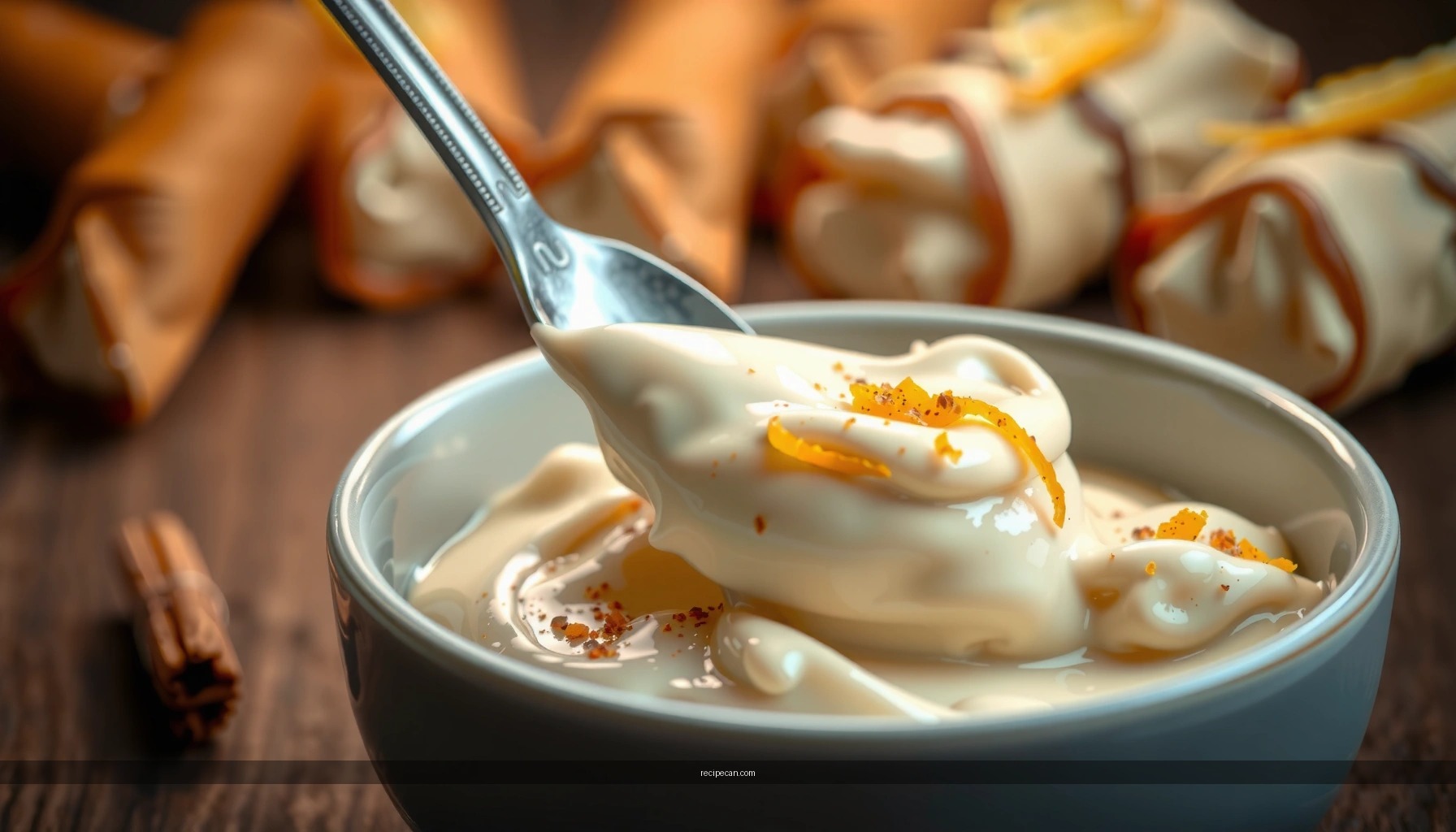
You can make a cannoli filling recipe with ricotta that turns out easy, creamy, and reliably scoopable every time—if you follow the right mix of ricotta, sugar, and flavorings. This recipe answers the one question that matters: how to get rich, smooth filling that pipes cleanly into cannoli shells without being grainy or watery. You’ll get a dependable method from start to finish, with simple steps and clear ratios for bakery-style results.
Make a thick, creamy cannoli filling by draining ricotta first, then sweetening and flavoring it just enough to stay stable and non-watery. This easy ricotta cannoli filling recipe teaches you how to achieve the classic texture—smooth, spoonable, and rich—while keeping your cannoli shells crisp.
Drain and Prep the Ricotta

– Drain ricotta to prevent a runny filling
– Aim for a thick, spoonable consistency before mixing
The single biggest determinant of whether your cannoli filling is “restaurant quality” or disappointingly loose is water content. Ricotta is naturally high in whey, and if you skip drainage, the filling can weep as it sits—especially once it’s exposed to shell moisture or refrigerated overnight.
How to drain ricotta effectively
1. Spoon ricotta into a fine-mesh sieve set over a bowl.
2. Press gently with the back of a spoon to speed up drainage.
3. Let it drain for at least 30–60 minutes for fresh ricotta; 60–90 minutes if it’s particularly wet or you’re using store-bought tub ricotta.
4. For the most consistent results, cover and refrigerate while draining—cold ricotta firms up slightly and holds shape better.
What “ready” looks like
– The ricotta should be thick and spoonable with minimal pooling at the bottom of the bowl.
– If you lift the spoon and ricotta slowly drips in ribbons, you’re close; if it pours like yogurt, drain longer.
– For highly wet ricotta, consider blotting on the sieve or using cheesecloth (tie and hang for 1–2 hours).
Optional professional upgrade
If you want an ultra-smooth cannoli filling (more “piping” than “rustic”), pass drained ricotta through a sieve or mix it briefly in a stand mixer on low. Overmixing can make some ricotta grainy, so keep it short—just until uniform.
Sweeten and Season the Filling

– Add sugar (and a pinch of salt) to balance the flavor
– Stir in vanilla and/or citrus zest for brightness
Ricotta’s flavor is mild, so cannoli filling relies on sweetness plus a small amount of contrast. Traditional cannoli filling typically tastes both sweet and slightly “tangy-creamy”—not flat, not overly candy-like. Achieving that balance is where good seasoning matters.
Sweetener choices that work
– Granulated sugar: Classic texture; dissolves fully when mixed thoroughly.
– Powdered sugar: Creates a silkier mouthfeel immediately, but can slightly dull the ricotta’s tang.
– Honey or maple: Adds floral notes, though it can slightly change the flavor profile and may be softer in texture.
A practical approach for a classic taste is:
– Start with granulated sugar for reliable dissolution.
– Mix long enough that crystals are no longer detectable.
Salt is not optional
A pinch of salt (roughly 1/8 tsp per 2 cups ricotta) makes the filling taste more “whole” and less one-dimensional. Without it, sweet ricotta can taste bland—even if it’s technically sweet.
Flavor boosts
– Vanilla extract: Adds bakery-like warmth. Use 1/2 to 1 tsp depending on your taste and how strongly you want it to read.
– Citrus zest (orange or lemon): Brightens and offsets dairy richness. Zest only the colored outer layer (avoid bitter pith).
– Cinnamon (optional): A warm accent that pairs especially well with chocolate chips and candied fruit.
Practical tip for consistent sweetness
Taste your filling after mixing sweetener and flavorings, but remember: refrigeration can slightly mute flavors. If you’re serving guests later, it’s often better to taste and adjust after chilling 10–20 minutes.
Ricotta Drainage Time vs. Likely Filling Thickness (Quick Guide)
| # | Ricotta Type | Drain Time | Texture Outcome | Best Use |
|---|---|---|---|---|
| 1 | Fresh cow’s milk ricotta (drier) | 20–30 min | Piping-stable, minimal pooling | Traditional cannoli |
| 2 | Fresh ricotta (average moisture) | 35–50 min | Thick spoonable; smooth after mixing | Shell filling same day |
| 3 | Tub ricotta (higher whey) | 60–75 min | Creamy but holds shape if not overmixed | All-purpose cannoli filling |
| 4 | Part-skim ricotta (wet tubs) | 75–90 min | Reduced weeping; better refrigeration stability | Make-ahead filling |
| 5 | Ricotta labeled “fresh” but very soft | 90–120 min | Risks being dense if over-drained; drain moderately | If in doubt, check every 20 min |
| 6 | Low-fat ricotta (can separate) | 60–90 min | May need gentle mixing; avoid thinning | Crisp-shell strategy |
| 7 | Ricotta with extra moisture added (some brands) | 120 min (cheesecloth) | Most reliable thickness, minimal liquid separation | Events & batching |
Add Traditional Cannoli Flavor

– Fold in mini chocolate chips and/or candied fruit
– Use cinnamon or orange peel for a classic touch
This is where the filling becomes undeniably cannoli. Classic cannoli filling uses mix-ins that provide contrast in sweetness, texture, and aroma. The key is to fold them in gently so you keep a smooth base while distributing the add-ins evenly.
Chocolate chips
Mini chocolate chips are the most reliable choice because they distribute well and create consistent bites. If you use larger chips, you’ll get uneven pockets—some too sweet, some missing chocolate.
Candied fruit (or candied citrus)
Candied orange peel or chopped candied citron introduces a subtle tang and bright color. If your candied fruit is very syrupy, pat it dry before folding to prevent stickiness and excess moisture.
Spice and aromatic classics
– Cinnamon: Adds warmth, especially if you’re serving cannoli as part of a dessert spread.
– Orange peel: A small amount of finely minced orange peel or extra zest can echo traditional Italian flavors without tasting artificial.
Folding method that prevents streaks
1. Whisk ricotta base smooth before adding mix-ins.
2. Add chocolate chips and candied fruit.
3. Fold with a spatula just until combined—about 20–30 strokes.
Professional note: If you plan to pipe or spoon into shells, keep your mix-ins small enough to pass smoothly. “Mini” is typically the right scale.
Mix for the Right Texture
– Stir gently to keep the filling light and smooth
– Adjust thickness with a small amount of drained liquid only if needed
“Creamy” doesn’t mean thin. A high-performing cannoli filling is stable under refrigeration, spoonable without running, and capable of holding decorative structure when piped.
Mixing: what to do
– Stir or mix on low speed to combine sugar and flavorings.
– Keep the texture smooth but not aerated. Overmixing can introduce a slightly airy feel that collapses after chilling.
– If you used a sieve for smoothing, stop as soon as the ricotta looks uniform.
How to fix thickness
– If your filling seems too thick: add a small amount of reserved drained liquid—think 1 tsp at a time—then test again.
– If you don’t have reserved liquid: add 1 tsp at a time of cold milk or cream, only if necessary.
What not to do
Avoid adding water directly from the sink or letting the filling sit uncovered while you “think about it.” Even brief exposure increases surface moisture and can slightly loosen the mix.
A reliable final-check
Spoon filling onto a plate:
– It should hold its mound for a few seconds.
– It should not spread into a puddle.
That simple test helps you avoid runny cannoli filling—one of the most common failure modes.
Make Ahead and Store Properly
– Refrigerate the filling until ready to use
– Store in an airtight container for best freshness
Cannoli filling is ideal for advance prep because chilling helps flavors meld and the texture firms up—provided your ricotta was drained well.
Make-ahead timing
– Prepare the filling base and mix-ins up to 24 hours in advance.
– If you’re using candied fruit, add it before serving or the next day if it’s very moist; otherwise it can soften slightly and release syrup.
Storage method
– Place filling in an airtight container, pressing a piece of plastic wrap directly against the surface if possible.
– This prevents oxidation and keeps the top from drying out.
Texture after refrigeration
Some ricotta fillings become marginally firmer overnight. That’s normal and often beneficial. If it tightens too much, stir gently to bring it back to spoonable consistency—adding drained liquid only if needed.
Food safety note
Ricotta is dairy and perishable. Keep refrigerated at or below 40°F / 4°C and use within 1–2 days for best quality.
Fill and Serve for Peak Freshness
– Fill cannoli shells just before serving for crispness
– Garnish with extra chocolate chips or powdered sugar
Crisp shells and creamy filling are a timing-sensitive pairing. Cannoli shells absorb moisture, and even a perfect filling can soften the shell if it sits too long.
Best practice
– Fill shells right before serving for maximum crispness.
– If you must stage parts, you can:
– Store filled shells briefly (generally 1–2 hours) in the refrigerator, but expect some softening.
How to fill without mess
– Use a piping bag if you have one; otherwise, a sturdy spoon works well.
– Fill shells evenly, leaving a small gap at the end so they don’t split under pressure.
Garnish strategy
A light finish adds visual appeal and a final layer of flavor:
– Extra mini chocolate chips
– Powdered sugar (dust lightly right before serving)
– A tiny pinch of orange zest for aroma, if your guests enjoy citrus notes
Serving tip
Plate cannoli on a dry surface and avoid stacking tall layers immediately—shells remain crisp longer when they aren’t compressed.
—
A perfect cannoli filling recipe with ricotta comes down to three controllable variables: drain the ricotta thoroughly, balance sweetness with sugar and a pinch of salt, and fold in classic mix-ins without overworking the texture. With correct thickness checks, smart make-ahead storage, and filling shells at the last moment, you’ll get a creamy, non-watery filling that tastes authentically traditional while keeping every cannoli shell crisp and presentable.
Frequently Asked Questions
What is the best cannoli filling recipe with ricotta that’s not runny?
Start with well-drained ricotta (preferably whole milk) to avoid a watery cannoli filling. For best results, blend the ricotta briefly and then fold in powdered sugar, vanilla, and finely chopped chocolate or candied fruit. If your ricotta is still loose, drain it in a fine-mesh sieve or cheesecloth for 1–4 hours before mixing.
How do you drain ricotta properly for cannoli filling?
Drain ricotta by chilling it, then spoon it into a fine-mesh strainer or cheesecloth and let it sit over a bowl in the refrigerator for several hours. This removes excess whey that can make ricotta filling taste thin or separate. After draining, taste and adjust sweetness with powdered sugar, and mix just until smooth so the texture stays creamy.
Why does cannoli filling sometimes become gritty or grainy?
Grittiness often comes from using ricotta that hasn’t been processed enough or from not sweetening properly. Make sure you use fresh ricotta and blend or strain it so the texture is smooth before adding sugar; powdered sugar dissolves more easily than granulated. Overmixing can also dull texture, so aim to mix until combined and creamy.
Which add-ins work best with ricotta for a classic cannoli filling?
Traditional cannoli filling usually includes mini chocolate chips and/or candied orange peel or candied citron for a classic Sicilian flavor. You can also add a small amount of cinnamon or a splash of vanilla for warmth, but keep the amounts modest so the ricotta flavor remains dominant. If you want a richer filling, use full-fat ricotta and fold in the add-ins at the end for even distribution.
How do you make cannoli filling ahead of time and keep it fresh?
Prepare the ricotta filling and refrigerate it in an airtight container, but wait to pipe or stuff shells until shortly before serving for best crunch. Stir the filling gently before using, since chocolate chips or fruit can settle, and check consistency—drained ricotta should hold up well. For optimal flavor, let the filling rest in the fridge for 30–60 minutes so the flavors meld while keeping the cannoli filling creamy.
References
- Cannoli
https://en.wikipedia.org/wiki/Cannoli - Ricotta
https://en.wikipedia.org/wiki/Ricotta - https://www.britannica.com/topic/cannoli
https://www.britannica.com/topic/cannoli - Google Scholar Google Scholar
https://scholar.google.com/scholar?q=cannoli+ricotta+filling+recipe - Google Scholar Google Scholar
https://scholar.google.com/scholar?q=ricotta+sweet+filling+cannoli+sugar+cinnamon+zest - Google Scholar Google Scholar
https://scholar.google.com/scholar?q=Sicilian+cannoli+ricotta+cheese+filling+recipe - https://www.bbc.co.uk/food/recipes/cannoli_77575
https://www.bbc.co.uk/food/recipes/cannoli_77575 - https://www.theguardian.com/food/2016/aug/01/cannoli-recipe
https://www.theguardian.com/food/2016/aug/01/cannoli-recipe - https://cooking.nytimes.com/recipes/1017597-cannoli-with-ricotta-filling
https://cooking.nytimes.com/recipes/1017597-cannoli-with-ricotta-filling - Google Scholar Google Scholar
https://scholar.google.com/scholar?q=cannoli+filling+recipe+with+ricotta