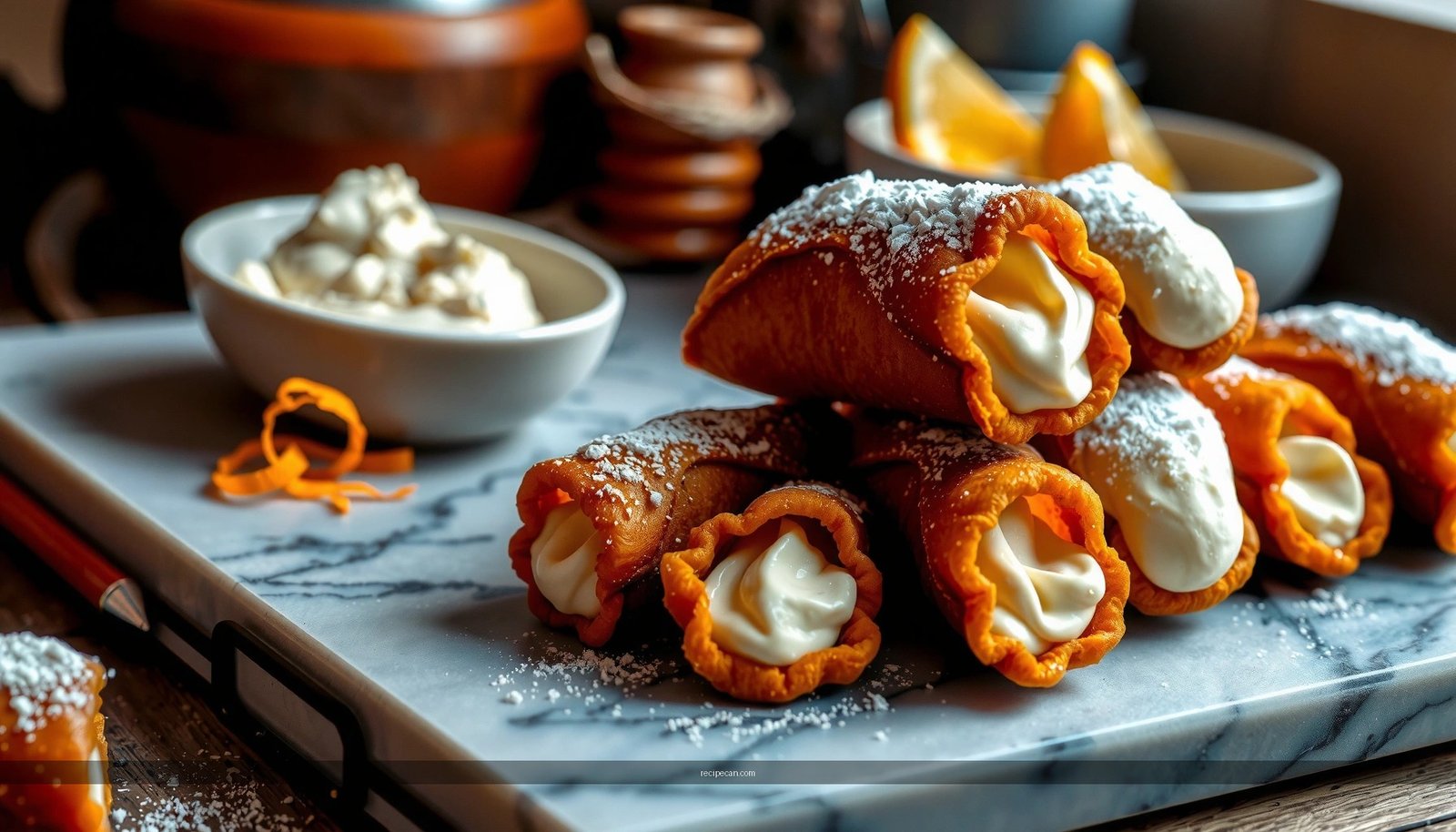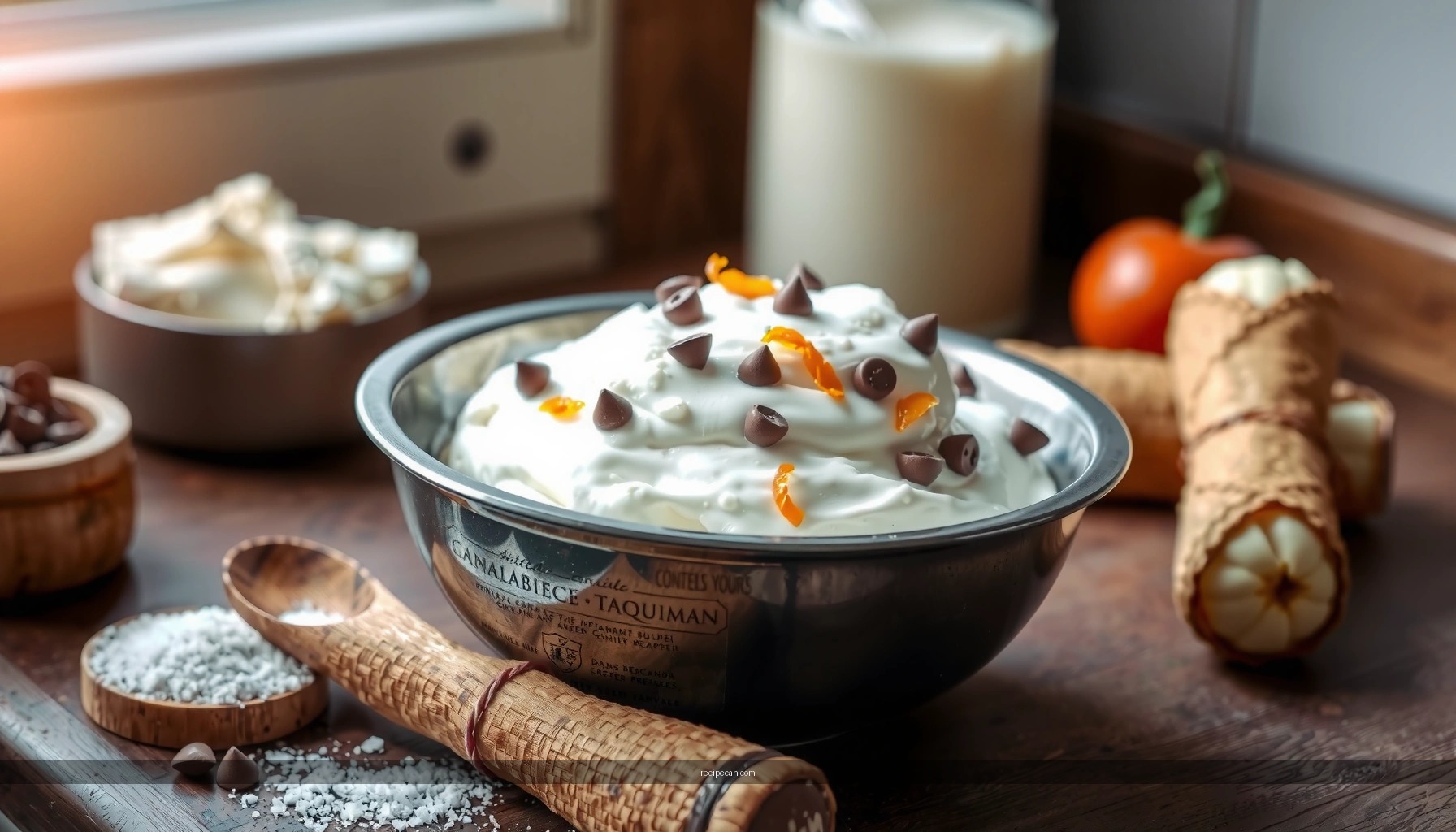
Get the traditional cannoli filling recipe for classic ricotta filling with the exact ratios and method that produce a thick, creamy, pipeable center. If your goal is a rich ricotta filling that tastes like old-school Italian cannoli—not grainy, runny, or overly sweet—this is the definitive approach. Follow these steps and you’ll get a filling that holds its shape in the shell and finishes with the right balance of sweetness, citrus, and vanilla.
This traditional cannoli filling recipe delivers the authentic, creamy ricotta flavor by starting with well-drained ricotta and then balancing sweetness, vanilla, citrus, and chocolate into a thick, pipeable texture. If you prepare the ricotta correctly and mix minimally (to avoid graininess), your cannoli shells will stay crisp and your filling will taste like the classic Italian version you’re aiming for.
Choose and Prep the Ricotta

The foundation of classic cannoli filling is ricotta that’s fresh, properly drained, and smooth. In traditional recipes, ricotta is never treated like a “ready-to-go” ingredient—moisture control is the difference between a creamy filling and one that turns thin or causes soggy shells.
– Use fresh ricotta for the best traditional flavor
Look for whole-milk ricotta with a clean, milky aroma and no bitterness. Fresh ricotta (not low-fat) typically has more fat, which supports a richer mouthfeel and helps stabilize the filling so it stays thick when piped.
– Drain well (or strain) to remove excess moisture
Even high-quality ricotta can be watery. Strain it through a fine-mesh sieve, or for best results use cheesecloth to hang or press gently. A simple benchmark: ricotta should hold shape when you spoon it—if it spreads like yogurt, it needs more drainage time.
– Aim for a smooth, creamy consistency before mixing
Traditional cannoli filling should be silky, not lumpy. If your ricotta has small curds, press it through a sieve or mix it briefly until smooth before adding sugar and flavorings. This step prevents graininess later.
Actionable tip (texture control):
If you’re short on time, strain ricotta in the fridge for 2–4 hours. For a more polished, bakery-style texture, press/strain it overnight.
Mix the Classic Sweeteners
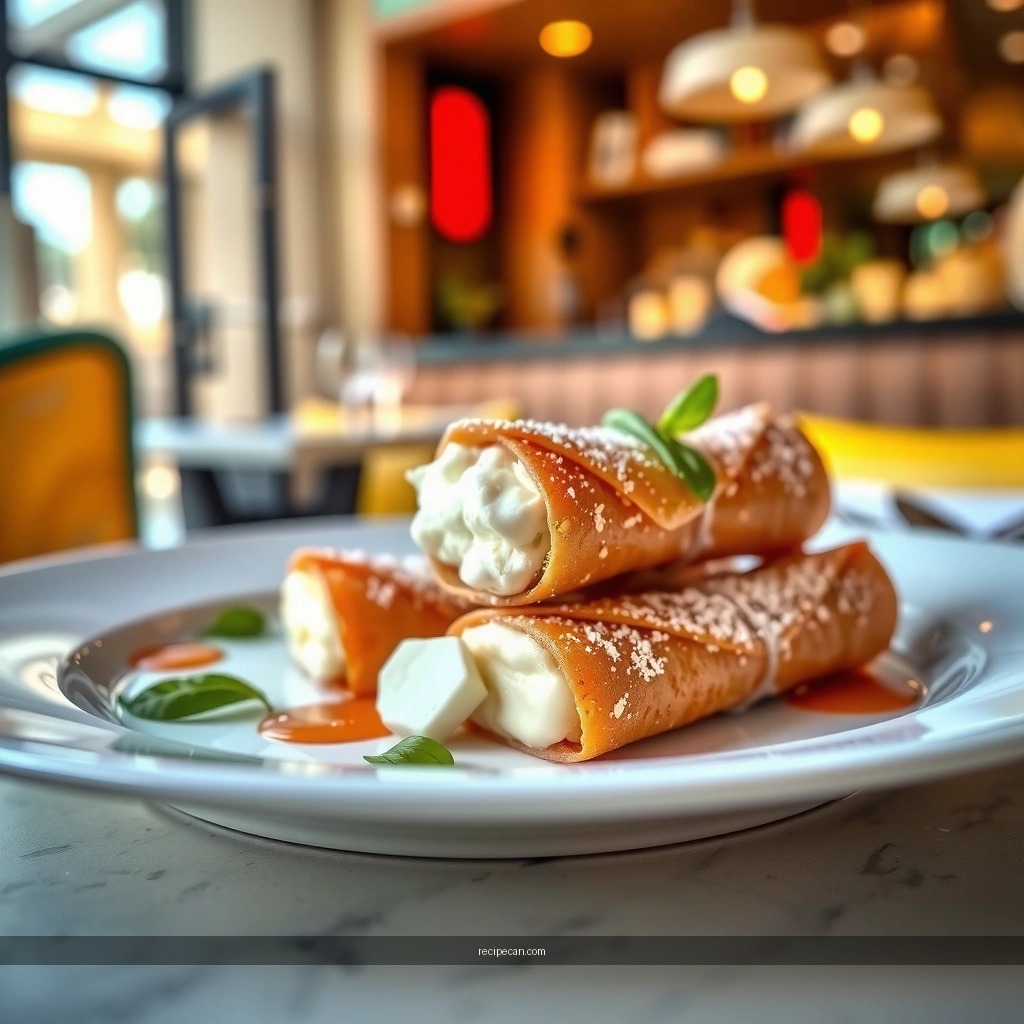
Classic cannoli filling is sweet, but not candy-sweet—the sweetness is designed to balance ricotta’s natural tang. Getting this balance right is also practical: too much sugar can loosen the filling and make it harder to pipe.
– Sweeten with sugar to balance the ricotta’s tang
– Add vanilla extract for a traditional aroma
Vanilla rounds out ricotta’s flavor and makes the filling taste “complete.” Use pure vanilla extract for best results; avoid overpowering amounts that can shift the flavor away from classic.
– Fold in cinnamon (optional) for classic depth
Cinnamon is optional, but it’s a common classic note in many cannoli recipes. Use a light hand—cinnamon should read as warmth, not as a dominant spice.
Why resting matters:
After mixing sugar into ricotta, refrigerate the base filling for at least 30 minutes. That rest helps dissolve sugar and improves pipeability, especially in kitchens with warm temperatures.
Add Flavor: Orange Zest and Optional Liqueur

Where classic cannoli filling becomes unmistakably “cannoli” is the citrus aroma—especially orange zest. Optional liqueur adds depth and a subtle, aromatic richness when used thoughtfully.
– Use orange zest for the traditional cannoli profile
Zest provides fragrant essential oils without watering down the filling. Grate only the bright orange portion—avoid the white pith, which can introduce bitterness.
– Consider a splash of orange liqueur for added richness
Orange liqueur (such as orange-forward aperitifs) can deepen the aroma and make the filling feel more “restaurant-grade.” Start small; a teaspoon or two per batch is typically enough.
– Mix just until combined to keep the filling tender
Overmixing after you add zest and liqueur can make the texture less tender. Stir/fold gently—your goal is uniform distribution, not whipping air into the mixture.
Pro-level approach:
Zest oranges at the moment you begin mixing, and add liqueur only after the sugar has incorporated. This preserves aroma and maintains a consistent texture.
Incorporate Chocolate and Texture
Chocolate chips are the classic “bite” element—small pops of sweetness and cocoa that contrast with the creamy ricotta. Just as important as flavor is thickness: the filling must hold its shape in the shell.– Fold in mini chocolate chips for the classic bite
Mini chips distribute more evenly and reduce the chance of large chocolate pockets that can break texture when piping.
– Keep the filling thick enough to hold its shape
If your filling looks loose, don’t panic—chill will firm it slightly, but excess moisture can’t be solved by waiting alone. Proper ricotta draining is the real fix.
– Adjust sweetness or thickness with small amounts as needed
If it tastes flat, add a small pinch more sugar. If it feels too soft, strain a bit more or refrigerate longer before piping. Avoid large adjustments; cannoli filling is sensitive to ratio changes.
To help you calibrate your expectations, here’s how moisture management typically affects filling thickness and cannoli performance.
Ricotta Drainage Time vs. Filling Pipeability (Typical Results)
| # | Drain Method | Typical Drain Time | Pipeability (Cold) | Shell Crispness Impact |
|---|---|---|---|---|
| 1 | Cheesecloth (gentle hang/press) | 6–10 hours | Excellent | Best (minimal softening) |
| 2 | Fine-mesh sieve (refrigerated) | 3–5 hours | Very Good | Good (crispness holds longer) |
| 3 | Sieve (room temp) | 60–120 minutes | Good | Moderate softening |
| 4 | Quick drain (paper towels) | 10–20 minutes | Fair | Likely to soften shells |
| 5 | No draining (direct use) | 0 minutes | Poor | Rapid crispness loss |
| 6 | Sieve + press (light) | 2–3 hours | Very Good | Good, with proper chilling |
| 7 | Sieve overnight (tightly covered) | 10–14 hours | Excellent | Best (pipeable and stable) |
Prevent Common Filling Mistakes
Professional results come from avoiding predictable failure points. Many “bad cannoli” outcomes trace back to technique rather than ingredients.
– Don’t skip draining—watery filling will soften shells
This is the #1 operational mistake. Excess moisture transfers into the shell quickly, reducing crispness and making the dessert collapse in texture.
– Avoid overmixing to prevent graininess
Ricotta can become slightly grainy if you overwork it, especially after adding sugar. Mix just enough to create uniformity, then stop.
– Refrigerate before filling for better texture and flavor
Chilling does more than firm the filling; it lets sugar fully dissolve and integrates orange zest and vanilla into a cohesive flavor profile.
Troubleshooting quickly:
– If it’s too loose: chill longer and ensure ricotta was drained; if needed, strain the already-mixed filling briefly.
– If it’s grainy: gently press the mixture through a sieve or re-mix briefly at low speed, then chill again.
– If it’s too sweet: add a little extra orange zest or a small amount of ricotta (if you have it). Avoid adding salt unless you’re confident—ricotta sweetness is best tuned with citrus and balance.
Fill and Serve for Best Results
Even perfect filling can underperform if cannoli shells are filled too early. Serving strategy is part of the recipe.
– Fill cannoli shells right before serving to keep them crisp
Cannoli shells are designed for crunch, and any moisture from filling gradually softens them. For best texture, pipe close to serving time—especially for events or product presentations.
– Pipe the filling evenly for a classic look
Use a piping bag with a wide tip to pipe consistently. Even distribution helps each bite have the right ratio of shell to filling.
– Store appropriately (and consume soon) for best texture
Store filled cannoli separately from unfilled shells. If you must store them, keep them chilled in a sealed container, but recognize crispness will decline over time. For high-quality results, store filling in the fridge and fill shells upon demand.
If you’re batching for service:
Prepare and chill filling up to a day ahead. For the freshest texture, schedule a “fill-and-finish” window rather than piping hours earlier.
—
This traditional cannoli filling recipe comes down to three essentials: well-drained ricotta, classic flavor additions (like orange zest), and careful mixing for the right thickness. Make the filling ahead, chill it for the best texture and flavor integration, and pipe it into shells when ready—then adjust sweetness and chocolate level to match your preferred classic profile.
Frequently Asked Questions
What is the traditional cannoli filling recipe made of?
Traditional cannoli filling is typically made with ricotta cheese, sugar, and beaten eggs, often enriched with mascarpone or strained ricotta for a smooth texture. Many classic recipes also include chocolate chips or candied fruit for sweetness and texture, plus a touch of vanilla or cinnamon for aroma. Some versions add a pinch of salt to balance the sweetness and make the ricotta taste more “bright.”
How do you get the classic cannoli filling thick and not watery?
The key to thick cannoli filling is draining the ricotta properly. Use well-drained, preferably “fresh” ricotta, and strain it through cheesecloth or a fine sieve for several hours (or overnight) to remove excess whey. After draining, mix the ricotta with sugar gradually and fold in any chocolate chips last to avoid loosening the filling. If your filling still seems loose, chill it for at least 30–60 minutes so the mixture firms up before filling the shells.
Why do traditional cannoli fillings include powdered sugar instead of granulated sugar?
Powdered sugar dissolves more quickly and evenly, which helps create the creamy, cohesive texture people expect from a traditional cannoli filling. Granulated sugar can sometimes leave a slight graininess if it isn’t fully dissolved, especially when the filling is chilled only briefly. For the most authentic result, mix until smooth and taste to ensure the sweetness is balanced.
Which sweet add-ins taste most authentic in a traditional cannoli filling?
Classic cannoli filling commonly includes mini chocolate chips and either candied orange peel or candied fruit for a traditional flavor profile. The chocolate adds richness, while the citrusy candied peel cuts through the sweetness and complements the ricotta. If you want a more traditional Sicilian approach, stick to candied citrus rather than overly flavored mix-ins. Keep add-ins minimal so the filling stays creamy and not overloaded.
What’s the best way to fill cannoli shells so the filling stays crisp?
Fill cannoli shells right before serving to preserve crunch, since the shells can soften from moisture in the ricotta. Use a piping bag to portion the traditional cannoli filling evenly, and avoid overfilling or pressing too hard, which can cause filling to leak. If you must prepare ahead, store the filling covered in the refrigerator and pipe into shells shortly before eating. Serve promptly for the best texture contrast between crisp shell and creamy filling.
References
- Cannoli
https://en.wikipedia.org/wiki/Cannoli - https://www.britannica.com/topic/cannoli
https://www.britannica.com/topic/cannoli - Ricotta
https://en.wikipedia.org/wiki/Ricotta - Candied fruit
https://en.wikipedia.org/wiki/Candied_fruit - Zest (ingredient)
https://en.wikipedia.org/wiki/Orange_zest - Google Scholar Google Scholar
https://scholar.google.com/scholar?q=traditional+cannoli+filling+ricotta+recipe - Google Scholar Google Scholar
https://scholar.google.com/scholar?q=cannoli+filling+recipe+candied+fruit+orange+zest - Google Scholar Google Scholar
https://scholar.google.com/scholar?q=Sicilian+cannoli+filling+historical+ricotta+sugar - Italian cuisine
https://en.wikipedia.org/wiki/Italian_cuisine - Sicilian cuisine
https://en.wikipedia.org/wiki/Sicilian_cuisine