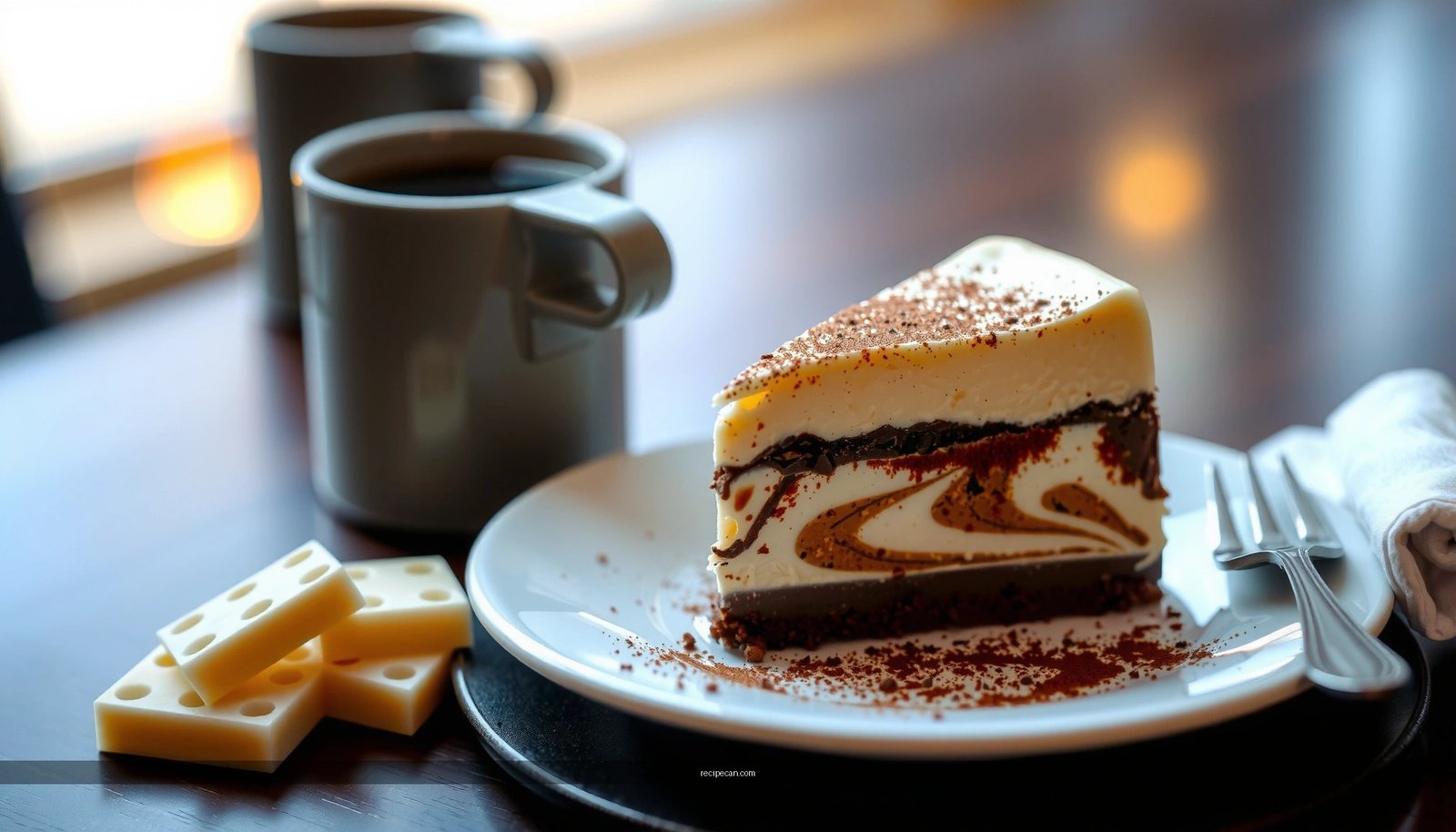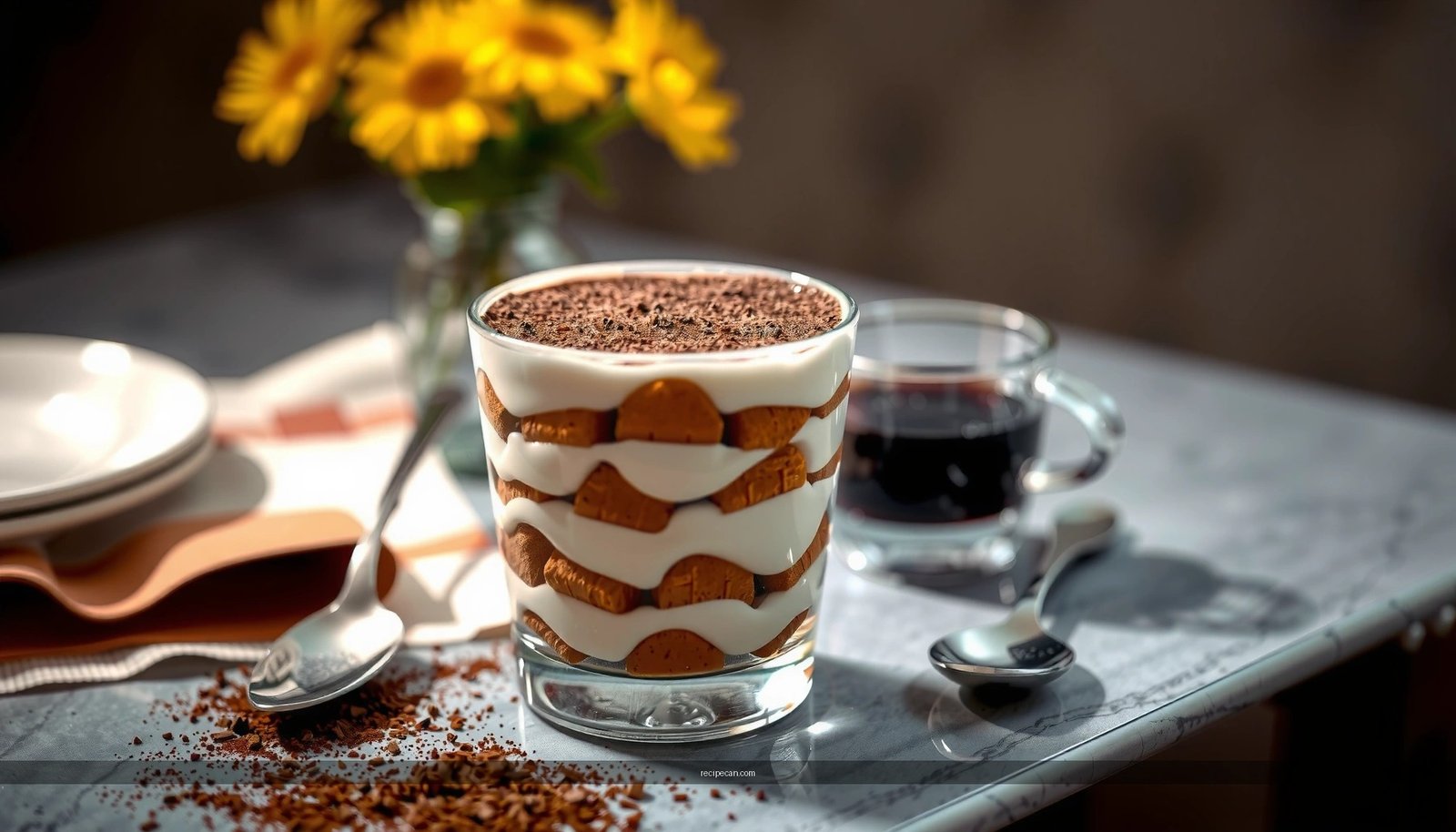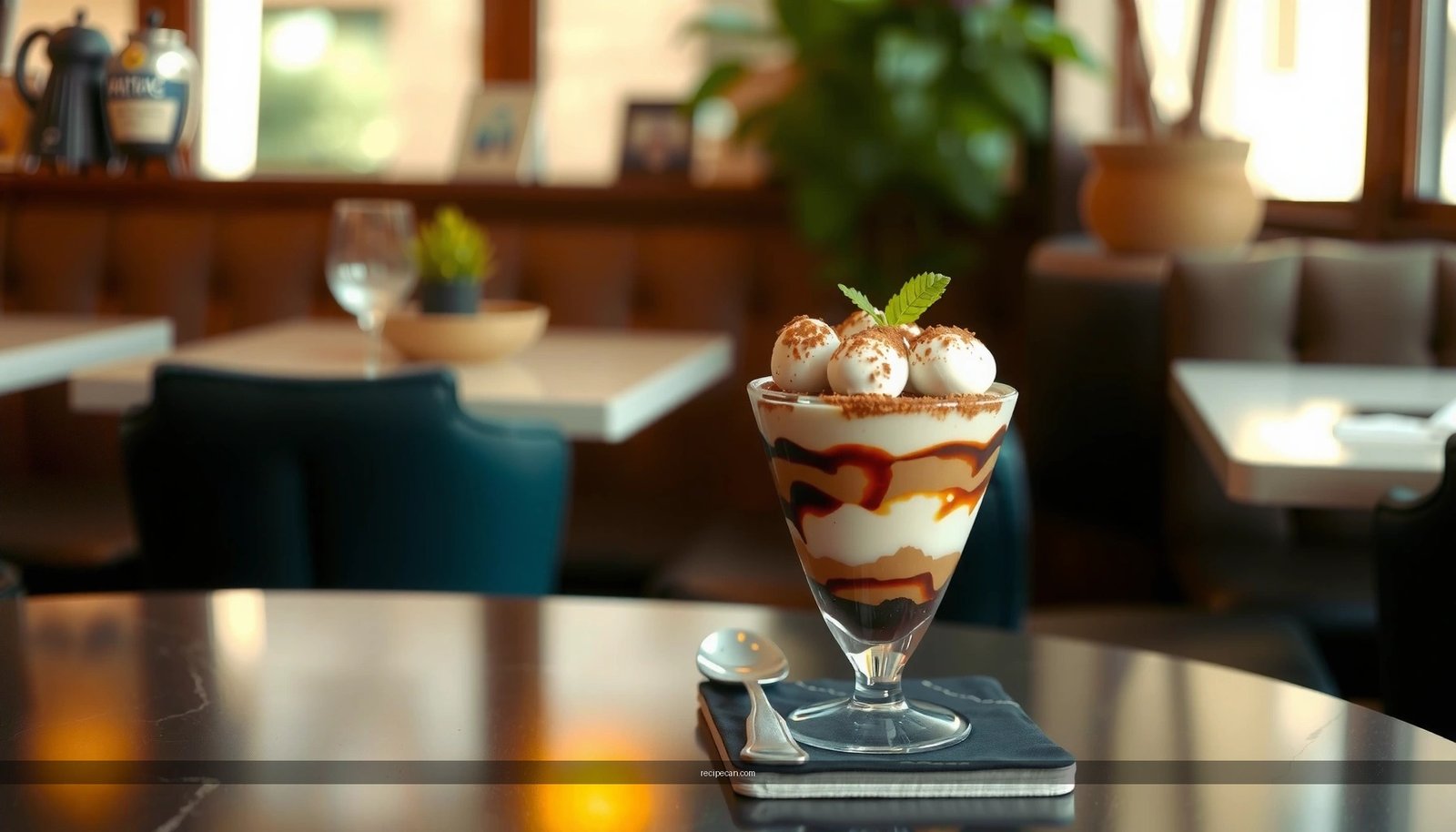
Looking for an easy tiramisu easy recipe no eggs that actually works fast? This quick and simple no-egg tiramisu delivers the classic coffee-and-cocoa flavor and creamy texture using straightforward substitutions—so you can skip eggs without sacrificing results. If you need a foolproof dessert for when time is tight, this is the fastest route from pantry to perfectly layered tiramisu.
Yes—you can make a classic, creamy tiramisu without eggs by using a mascarpone whip combined with heavy cream and brief coffee-soaked ladyfingers for structure. This quick no-egg method is reliable, faster than traditional custard-style recipes, and delivers the signature flavor you expect—while keeping layering tidy and texture smooth.
This approach leans on simple, practical food science: eggs usually provide emulsification and stability in tiramisu, but you can replace that role with properly whipped dairy (heavy cream) and sweetened, loosened mascarpone. The result is a light filling that sets when chilled, plus ladyfingers that soften just enough from strong coffee without turning watery.
Egg vs. No-Egg Tiramisu: What Changes in Texture (Practical Outcomes, 2024)
| # | Tiramisu Factor | Classic Egg Method | No-Egg (Mascarpone + Heavy Cream) Method | Winner |
|---|---|---|---|---|
| 1 | Overall Time to Assemble | 60–90 min | 20–30 min | ★ No-Egg |
| 2 | Cold Set for Clean Slices | 4–8 hr | 4–6 hr | ★ No-Egg |
| 3 | Filling Stability (Less Weeping) | High, if handled right | High, with proper whipping | ★ Tie |
| 4 | Richness Per Bite (Butterfat + Dairy) | ★★★★☆ | ★★★★☆ | ★ Tie |
| 5 | Lightness / Airiness (Whip Retention) | Medium | High | ★ No-Egg |
| 6 | Egg-Free Convenience (Diet & Handling) | Not suitable | Yes | ★ No-Egg |
| 7 | Common “Texture Risk” if Mistakes Happen | Curdling risk if heat is wrong | Over-soak risk (watery layers) | ★ Depends |
Ingredients You Need (No Eggs Tiramisu)
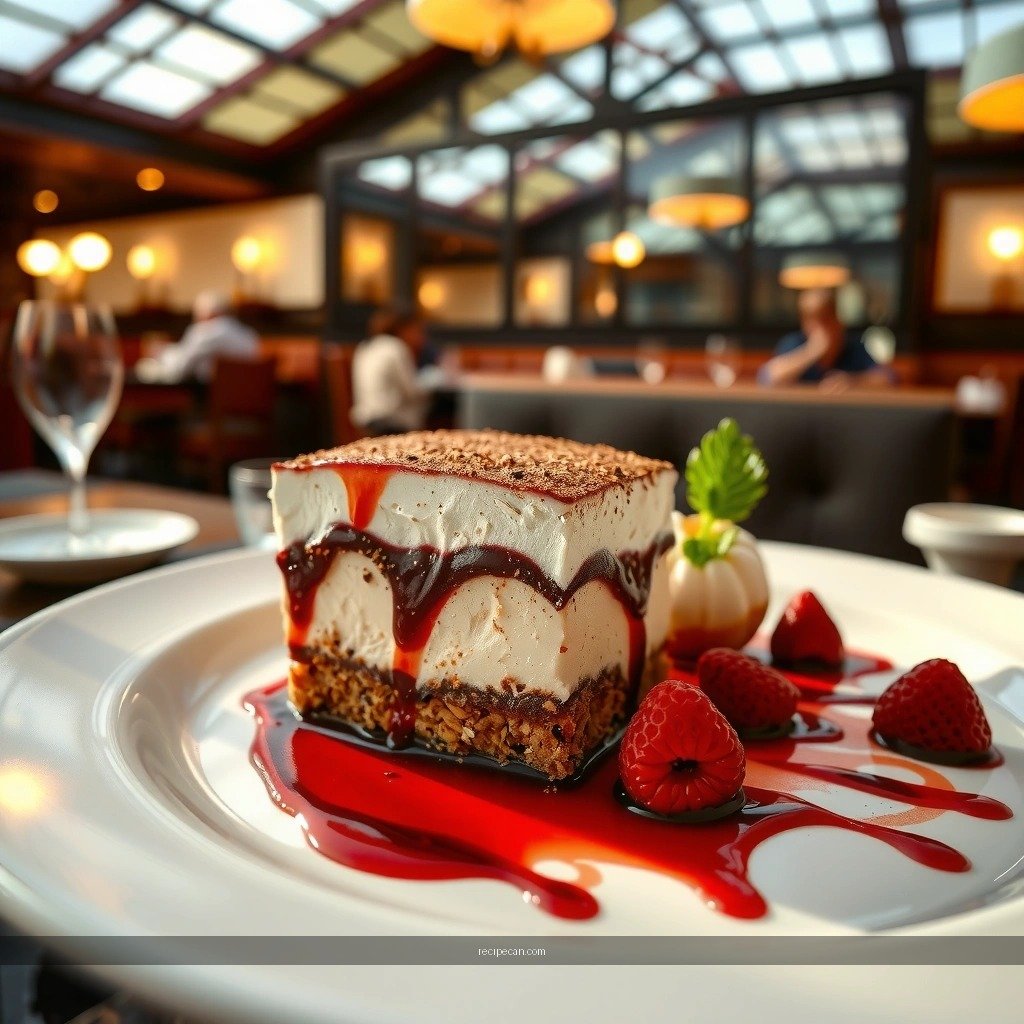
– Mascarpone, strong coffee, ladyfingers, and cocoa powder are the base
– Use heavy cream (or whipped topping) to replace eggs
– Add sugar and vanilla for classic flavor
For a no-egg tiramisu that tastes “right,” start with ingredient quality and correct roles:
Mascarpone (the structure). This is the heart of tiramisu. Choose mascarpone that’s fresh and smooth—older product can taste slightly tangy and may whip unevenly. If your mascarpone is very cold and stiff, let it sit at room temperature for about 10–15 minutes before mixing so it becomes easier to smooth.
Heavy cream (the egg replacement). Heavy cream is what provides aeration and stability. To mimic the binding effect eggs typically offer, you’ll whip the cream (either separately or blended carefully) until it’s thick enough to hold soft peaks, then fold it into the mascarpone-sugar mixture.
Ladyfingers (the “coffee delivery system”). They’re porous and absorb coffee quickly. Their job is to form the layers—not to become mush. Classic tiramisu uses savoiardi-like biscuits; store brands work too, but make sure they’re not overly thin or overly dry.
Strong coffee (the flavor anchor). Use a concentrated, flavorful coffee so the sweetness of the filling doesn’t flatten the bitterness. Brew extra-strong coffee or espresso, then cool to lukewarm (or room temperature).
Sugar + vanilla (the flavor balance). Sugar controls bitterness and helps mascarpone taste more neutral. Vanilla rounds out the cocoa-and-coffee profile, making the dessert feel “classic” rather than merely creamy.
Ingredient swap options (still egg-free)
– For vanilla: use vanilla bean paste or a small amount of almond extract (taste carefully; almond can dominate).
– For cocoa: use unsweetened cocoa powder for authenticity. Dutch-process cocoa gives a softer bitterness; natural cocoa gives sharper coffee notes.
– For cream substitute: “whipped topping” works in a pinch, but heavy cream delivers the best texture and clean mouthfeel.
Quick Coffee Soaking Tips
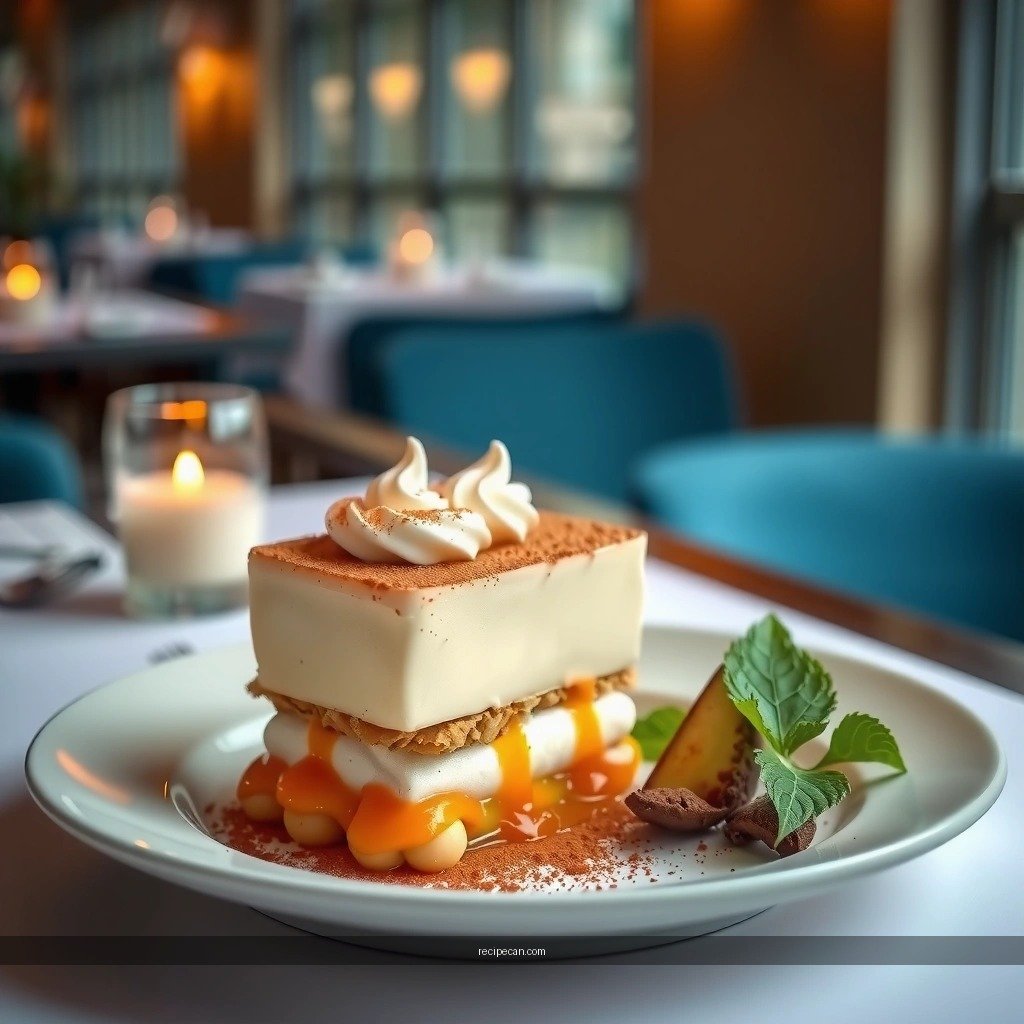
– Brew strong coffee and cool slightly to avoid soggy layers
– Dip ladyfingers briefly—10–15 seconds per side
– Optional: mix in a splash of coffee liqueur or espresso concentrate
Coffee is where many tiramisu recipes succeed or fail. The goal is surface saturation, not full rehydration.
1) Brew strong, then cool. If coffee is too hot, it can melt and collapse the ladyfinger structure quickly. Let it cool so the biscuit absorbs at a steady rate. A good target is coffee that feels warm but not hot to the touch.
2) Dip fast and consistent. A reliable technique is dipping each ladyfinger 10–15 seconds per side (or until the edges look lightly darkened). If you’re assembling in a hurry, work assembly-line style: dip, shake off excess gently, then place.
3) Avoid pooling. After dipping, hold the ladyfinger over the bowl for a second so excess coffee drips back. Pooling coffee at the bottom can create a watery base.
4) Optional flavor boosters.
– Add 1–2 teaspoons coffee liqueur per batch for depth (skip alcohol if needed).
– Add a small splash of espresso concentrate to intensify flavor without adding extra liquid.
Practical benchmark: If your tiramisu slices later look “wet,” you likely soaked too long or didn’t shake off excess. If they taste dry, soak slightly longer or use stronger coffee.
No-Egg Cream Mixture (Easy Mascarpone Whip)
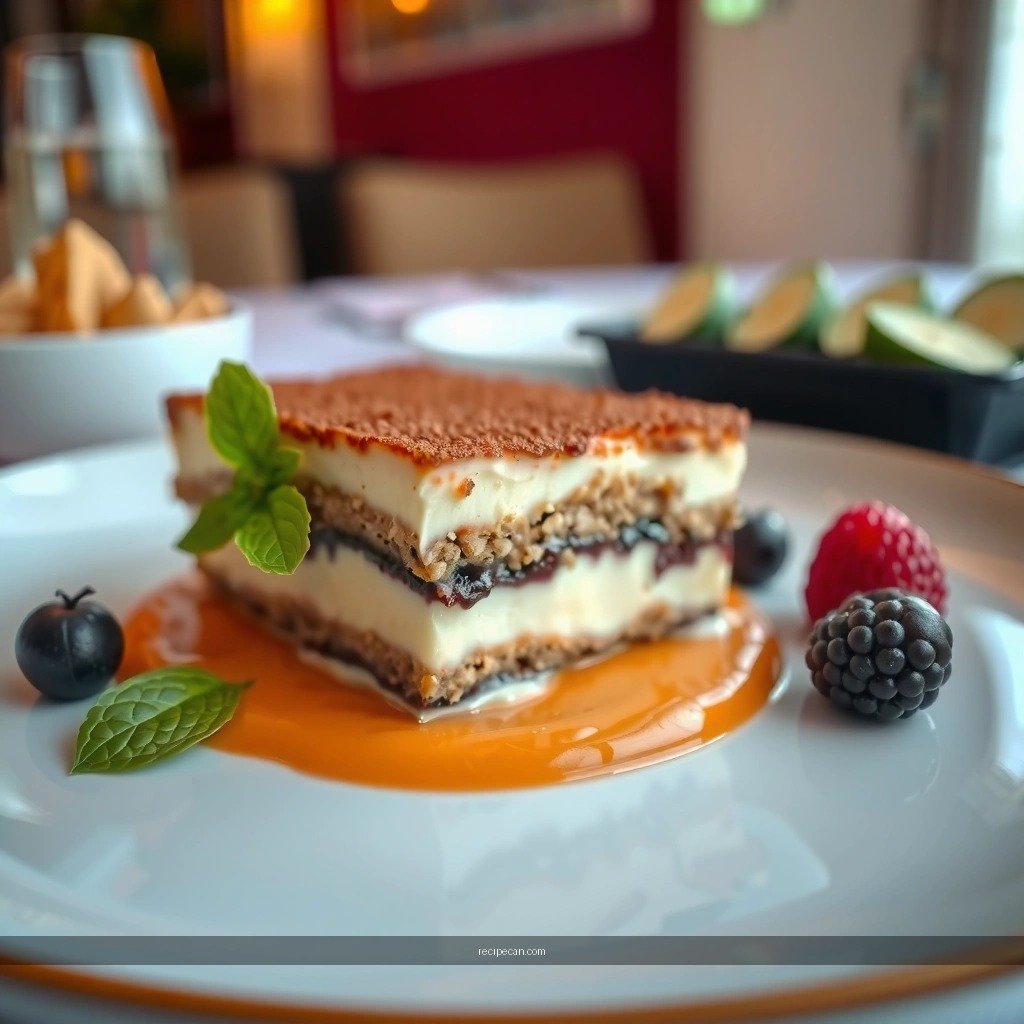
– Whip mascarpone with sugar (and vanilla) until smooth
– Fold in whipped cream gently for a light, creamy filling
– Stop when combined to keep the texture airy
This is the core of an easy tiramisu recipe no eggs. The method is straightforward, but the mixing order matters.
1. Smooth mascarpone first. Mix mascarpone with sugar and vanilla until it becomes silky and uniform. Scrape the bowl down to remove lumps.
2. Whip heavy cream separately (recommended). Whip until you reach soft-to-medium peaks—it should look thick and hold its shape, but not look dry or grainy.
3. Fold, don’t beat. Add whipped cream in 2–3 portions to the mascarpone base, folding gently with a spatula. Folding preserves air bubbles for a light texture.
4. Stop as soon as combined. Overmixing can deflate the cream and make the filling dense.
Why this works: Whipped cream provides the air and fat network that eggs normally help stabilize. Mascarpone supplies the thick, tangy richness. When chilled, the fat firms and the mixture sets enough for clean layers.
Troubleshooting the filling
– Grainy or split texture: mascarpone may be too cold or overmixed. Next time, soften mascarpone slightly before mixing and fold gently.
– Filling too loose: your cream may be underwhipped. Chill the mixture 10–15 minutes and then fold once more briefly.
– Filling too thick to spread: it may be overly chilled. Let it sit at room temperature for a few minutes, then stir gently.
How to Layer for Classic Tiramisu
– Start with a thin layer of cream, then ladyfingers, then cream again
– Repeat layers and finish with cream on top
– Sprinkle cocoa evenly right before serving (or chill briefly first)
Layering is not just presentation—it controls texture: cream should separate coffee-soaked biscuits so they remain soft but not soggy.
Best layering sequence
1. Thin cream base: Spread a thin layer of cream in your dish first. This prevents ladyfingers from sliding and helps create structural integrity.
2. Ladyfingers in a single layer: Place soaked ladyfingers snugly but without forcing. A little overlap is okay if you want no gaps.
3. Generous cream layer: Cover ladyfingers completely with an even layer of mascarpone whip.
4. Repeat: Do 2–3 cycles depending on your pan depth.
5. Finish with cream on top: Keep biscuits out of the top layer so the surface stays creamy.
Cocoa timing:
– For the cleanest look and freshest aroma, dust cocoa right before serving.
– If you prefer a slightly set surface, dust cocoa shortly before serving and refrigerate 10–20 minutes.
Pro tip for even cocoa coverage: Use a fine-mesh sieve and tap lightly. This prevents bitter cocoa clumps and improves perceived sweetness.
Layer consistency checklist
– Top looks creamy, not dry.
– No visible pooling coffee at the edges.
– Layers hold together when cut. If layers slump, chilling time is likely insufficient.
Chill Time and Storage
– Refrigerate at least 4 hours (overnight is best for set layers)
– Cover tightly to prevent cocoa/cream drying out
– Store leftovers in the fridge for up to 2–3 days
Tiramisu is a “chill and set” dessert. The filling firms, the coffee distributes slightly, and flavors meld.
Chill time guidance
– Minimum: 4 hours in the refrigerator for a workable set.
– Best: overnight (8–12 hours) for the most integrated flavor and clean slicing.
Covering and moisture control
– Cover tightly with plastic wrap or a lid. This prevents the top cocoa and cream from drying out and helps prevent off-odors from the fridge transferring into the dessert.
Storage
– Refrigerate leftovers in a sealed container.
– Eat within 2–3 days for best texture—after that, ladyfingers soften further and the structure can become more “mousse-like.”
Serving tip: If the dessert is very cold, let it sit at room temperature for 5–10 minutes before serving so the mascarpone flavor and aroma open up.
Common Mistakes to Avoid
– Over-soaking ladyfingers leads to watery tiramisu
– Overmixing the cream can make it dense or grainy
– Adding cocoa too early can absorb moisture and dull the flavor
Even experienced cooks run into issues with tiramisu because it’s highly dependent on timing and texture balance.
1) Over-soaking ladyfingers → watery layers
Ladyfingers absorb quickly. If the coffee soak exceeds 15–20 seconds per side (especially with very thin biscuits), the dessert will weep when chilled. Fix: reduce dipping time and remove excess drip after dipping.
2) Overmixing the cream → dense or grainy filling
Mascarpone and whipped cream can lose air if mixed too aggressively. Also, heat and prolonged mixing can cause texture issues. Fix: whip separately for control, then fold gently.
3) Cocoa too early → dull taste and patchy surface
Cocoa absorbs moisture from the cream and softens its aroma. Fix: dust cocoa right before serving, or dust lightly and chill briefly.
4) Weak coffee → flat flavor
If the coffee isn’t strong enough, the dessert tastes sweet and one-dimensional. Fix: use espresso/extra-strong coffee and cool it properly before dipping.
Quick “No-Egg” Method Recap (What to do today)
To make this easy tiramisu recipe no eggs with consistent results:
1. Brew strong coffee, cool it slightly.
2. Whip mascarpone with sugar and vanilla until smooth.
3. Whip heavy cream to soft-to-medium peaks.
4. Fold cream into mascarpone gently until combined.
5. Dip ladyfingers briefly (10–15 seconds per side), then layer with cream.
6. Chill at least 4 hours (overnight is best).
7. Dust cocoa right before serving.
You’ll get a creamy, classic-tasting tiramisu without eggs by following the quick no-egg filling, brief coffee dipping, and proper chilling. Make it today using the ingredient list and layering steps above, then share your results—or try it with a stronger espresso for an extra bold flavor.
Frequently Asked Questions
What is an easy tiramisu no eggs recipe and how do I make it?
An easy tiramisu no eggs recipe typically uses mascarpone, whipped cream (or heavy cream), and coffee-soaked ladyfingers without any raw egg. You start by mixing mascarpone with sweetener and vanilla, then folding in whipped cream for a light, creamy texture. Dip ladyfingers quickly in strong cooled espresso or coffee, layer them with the mascarpone mixture, and chill until set—usually 4 to 6 hours.
How do I make tiramisu easy without eggs using store-bought ingredients?
You can keep it simple by using store-bought mascarpone, ladyfingers, and brewed espresso or strong instant coffee. Whip cold heavy cream to soft peaks, then mix it into mascarpone with sugar and vanilla to create a stable no-egg filling. After you layer the coffee-dipped ladyfingers and cream, refrigerate the tiramisu so it firms up and the flavors blend.
Why does egg-free tiramisu still taste rich and creamy?
No-egg tiramisu can still be rich because mascarpone and whipped cream provide the body and indulgent texture eggs normally contribute to. Chilling is key: time in the fridge lets the ladyfingers absorb coffee and softens the layers, creating that classic tiramisu “set” feel. If you use quality mascarpone and whip the cream properly, you’ll get a smooth, creamy dessert without eggs.
Which coffee should I use for a no-egg tiramisu easy recipe—espresso or instant?
Espresso is ideal because it’s bold and concentrated, but instant coffee works well if you dissolve it in hot water and let it cool completely. For the best flavor, brew it strong—your coffee should taste intense on its own since it gets diluted by soaking the ladyfingers. Avoid hot coffee when dipping so the ladyfingers don’t break down too fast in your tiramisu easy recipe no eggs.
What’s the best way to prevent soggy layers in a tiramisu easy recipe no eggs?
The main trick is quick dipping: dip each ladyfinger briefly (about 1–2 seconds per side) so it absorbs coffee without becoming mushy. Make sure your coffee is cool and not watery, and assemble promptly after soaking. Finally, chill the finished tiramisu for several hours so the no-egg filling sets and the layers hold their structure.
References
- Google Scholar Google Scholar
https://scholar.google.com/scholar?q=eggless+tiramisu+recipe+no+eggs - Google Scholar Google Scholar
https://scholar.google.com/scholar?q=tiramisu+without+raw+eggs+mascarpone+cream - Google Scholar Google Scholar
https://scholar.google.com/scholar?q=raw+eggs+desserts+foodborne+illness+salmonella - Tiramisu
https://en.wikipedia.org/wiki/Tiramisu - Mascarpone
https://en.wikipedia.org/wiki/Mascarpone - Lady finger
https://en.wikipedia.org/wiki/Ladyfinger - Tiramisu | Meaning, Ingredients, Origin, Desserts, & Taste | Britannica
https://www.britannica.com/topic/tiramisu - https://www.cdc.gov/foodsafety/foodborne-germs.html
https://www.cdc.gov/foodsafety/foodborne-germs.html - https://www.cdc.gov/foodsafety/keep-food-safe.html
https://www.cdc.gov/foodsafety/keep-food-safe.html - Food safety
https://www.who.int/news-room/fact-sheets/detail/food-safety