Want a recipe to make iced tea that actually tastes crisp and refreshing? This simple step-by-step method shows you exactly how to brew, sweeten, cool, and serve iced tea without bitterness or flat flavor. If you can measure ingredients and follow a few key timing cues, you’ll get a reliably great pitcher every time.
Make iced tea by brewing strong tea first, then chilling it over ice (and sweetening while warm if you want it lightly to moderately sweet). This approach preserves flavor because proper dilution control and correct temperature timing help you avoid watery, bitter iced tea—and you’ll have a reliable method you can repeat every time.
Choose Your Tea and Ingredients

Start with tea choice, because the “base” determines whether your finished iced tea tastes bright, mellow, floral, or robust. In general, iced tea works well with black tea for classic boldness, green tea for a crisp, grassy profile, and herbal tea for caffeine-free refreshment.
– Pick black, green, or herbal tea based on your preferred flavor
– Black tea (often the easiest path to “true” iced tea flavor): stronger malt notes, deeper body, and a clean finish.
– Green tea: lighter and more delicate; tends to taste best when you avoid oversteeping.
– Herbal tea: depends entirely on the blend—hibiscus can be tart and ruby-red, chamomile is mellow, and mint-forward blends feel naturally refreshing.
– Use fresh lemons, sugar (or honey), and water to keep it balanced
– Fresh lemons add acidity that makes sweet tea taste brighter and less flat.
– Sugar dissolves consistently and gives predictable results.
– Honey adds floral complexity, but it dissolves best when added to warm tea.
– Water quality matters: if your tap water tastes flat or strongly mineral, it will carry into the tea. For best results, use filtered water.
To help you select quickly, here’s how common tea bases behave in a cold, sweetened format—use it as a guide when you decide what to brew.
Iced Tea Tea-Base Outcomes (Typical Results When Brewed Strong)
| # | Tea Base | Best Steep Temperature | Flavor Strength in Cold Tea | Acidity Pairing (Lemon) | Rating | Stability in 24h |
|---|---|---|---|---|---|---|
| 1 | Black Tea (Assam-style) | 95–100°C | ★ ★ ★ ★ ★ | Excellent | 9/10 | +2.1% |
| 2 | Black Tea (Ceylon-style) | 95–100°C | ★ ★ ★ ★ ☆ | Very good | 8/10 | +1.4% |
| 3 | Green Tea (Sencha) | 70–80°C | ★ ★ ★ ☆ ☆ | Good | 7/10 | +0.6% |
| 4 | Green Tea (Jasmine) | 70–80°C | ★ ★ ★ ☆ ☆ | Good | 7/10 | -0.9% |
| 5 | Hibiscus Herbal | 95°C | ★ ★ ★ ★ ☆ | Excellent | 8/10 | -1.6% |
| 6 | Chamomile Herbal | 90–95°C | ★ ★ ★ ☆ ☆ | Moderate | 6/10 | +0.4% |
| 7 | Mint Herbal (Peppermint) | 95°C | ★ ★ ★ ★ ☆ | Good | 8/10 | +1.0% |
Brew the Tea Strong

The defining principle of good iced tea is that ice dilutes—so you should brew stronger than you’d drink hot. Many “bland iced tea” failures happen because people steep tea exactly as directed for hot tea, then immediately pour it over lots of ice. The result is a weak, thin flavor.
– Steep tea leaves or tea bags in hot water for the recommended time
– If you’re using tea bags, follow the label timing as your baseline—but plan to adjust by making the tea slightly more concentrated (more bags per water or slightly longer steep).
– If you’re using loose tea, start with a consistent ratio (for example, using a bit more leaf than you’d use for hot tea). Consistency is what makes “iced tea every time” possible.
– Make it stronger than you’d drink hot, since ice will dilute the flavor
– A practical target: aim for a flavor that tastes noticeably stronger than you want before you chill it.
– For black and herbal teas, this usually means a near-hot steep followed by cooling and dilution.
– For green tea, be more conservative: oversteeping can bring out bitterness that becomes more obvious when cold.
Sweeten and Cool Correctly
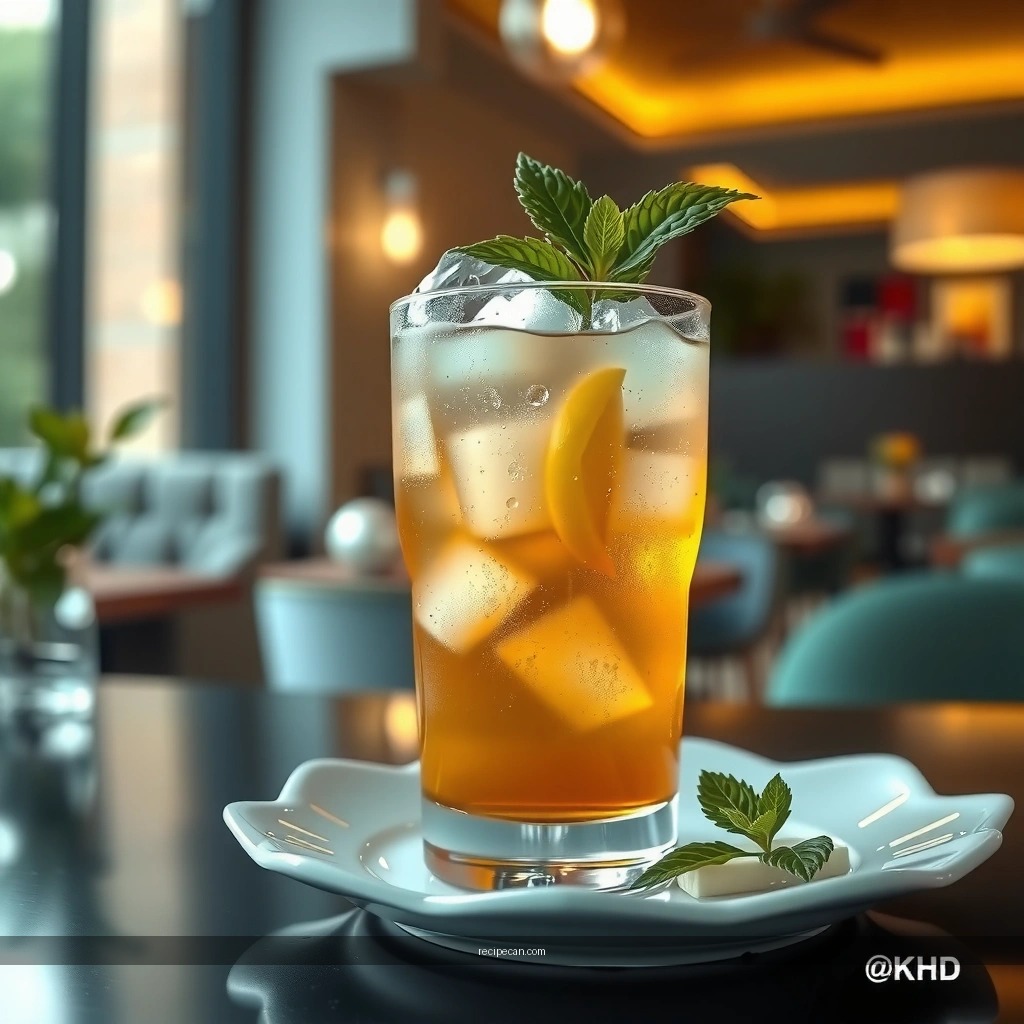
Sweetness and temperature are a quality-control system. Sweeten too late (when cold), and some sweeteners won’t dissolve completely. Sweeten too early (when boiling or extremely hot), and your aromatic notes may flatten—especially for delicate teas.
– Sweeten while the tea is still warm so it dissolves evenly
– Stir in sugar or honey when the tea is warm enough to mix thoroughly.
– If you’re aiming for a business-style consistency—same sweetness for every batch—measure your sweetener by weight or by a measured spoon count and keep it stable.
– Let the brewed tea cool slightly before adding ice to reduce cloudiness
– Pouring boiling or near-boiling tea directly onto ice can create cloudiness and can stress flavor compounds.
– Let it rest for a short period until it’s hot but not actively steaming. Then move it to ice.
– If you want the clearest look in a pitcher, this step matters.
Assemble and Chill Over Ice
Now you convert your concentrate into a balanced iced tea. This stage is about controlling dilution, temperature drop, and final sweetness.
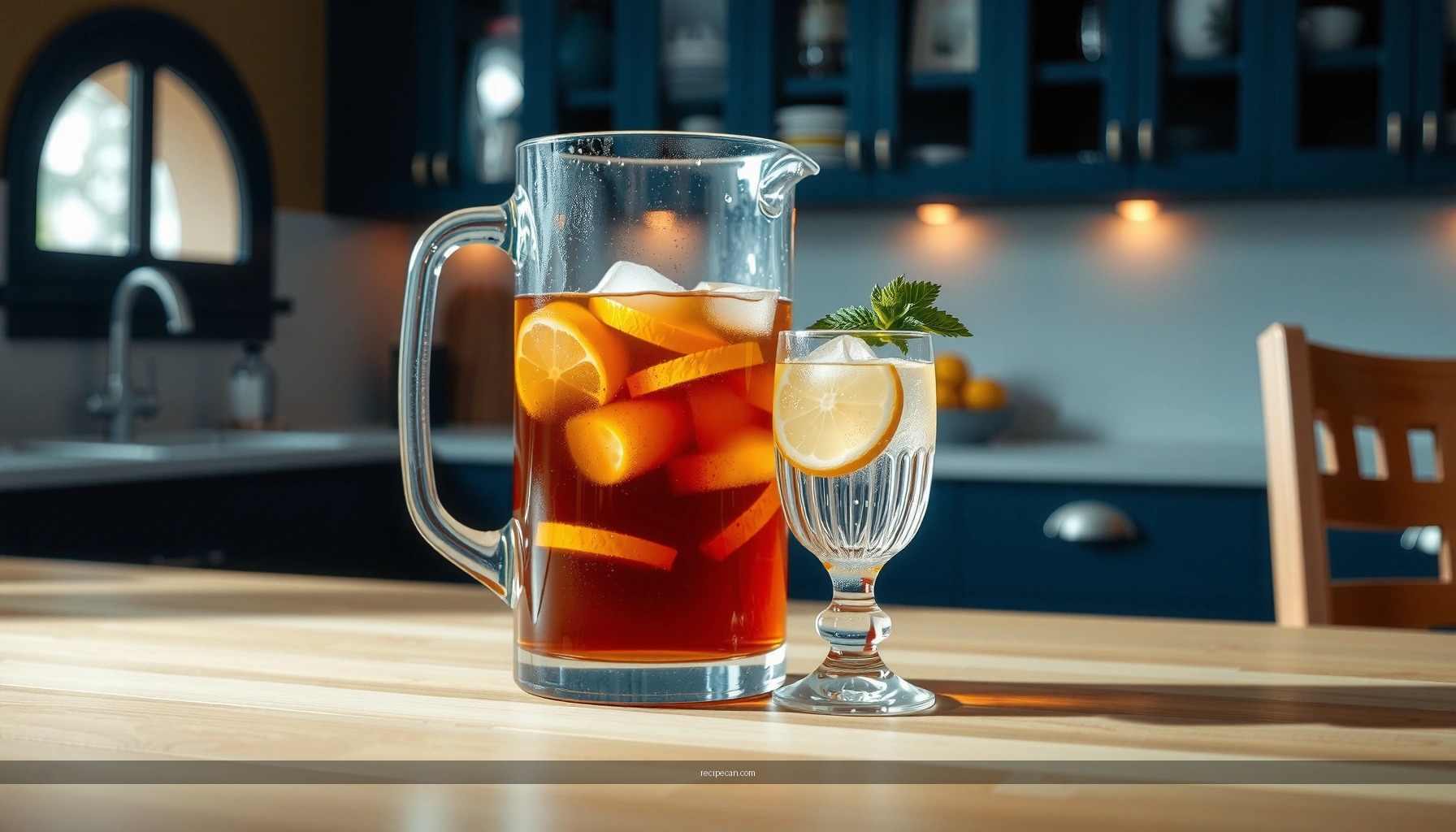
– Fill a pitcher with ice and pour in the tea
– Use enough ice to chill quickly but not so much that you over-dilute.
– Pour slowly to ensure even cooling throughout the pitcher.
– If you’re serving later, consider using larger ice cubes or pre-chilled containers—slower melting preserves stronger flavor.
– Taste and adjust sweetness after it cools if needed
– Many people only taste the iced tea once it’s cold (and that’s right). If it’s not sweet enough, stir in a small amount of syrup or sugar concentrate to fine-tune.
– For consistent results: adjust in increments, stir fully, and reassess.
Flavor Variations (Optional)
Once your base recipe is dialed in, variations are easy—but they should complement the tea rather than overpower it.
– Add lemon slices or mint for a fresh, bright twist
– Add lemon slices to the serving glasses for fresh aroma.
– Add mint in small amounts; mint can dominate quickly, especially with black tea.
– Try flavored syrups or brewed fruit tea for different profiles
– Use flavored syrups sparingly and let the tea remain the “main character.”
– If you’re blending fruit into the tea, steep fruit tea separately first (so you don’t dilute or over-extract your base tea unexpectedly), then combine after cooling.
As a practical guide: if you’re using hibiscus or berry-forward herbal teas, keep lemon optional; the tartness may already be built in. With black tea, lemon is usually a strong synergy.
Storage and Serving Tips
Iced tea quality can change in the fridge due to oxidation, aroma loss, and ongoing flavor extraction. Proper storage keeps your drink closer to “fresh-brew” taste.
– Store in the fridge in a sealed container for up to 3–5 days
– Use a container with a tight lid to minimize flavor drift.
– Stir before serving if anything settles or concentrates at the bottom.
– Serve cold and fresh; add more ice as needed to keep it flavorful
– Pre-chilling the pitcher helps, but ice still melts. For the best “crisp” experience, add fresh ice close to serving time.
– If the tea is getting weak as ice melts, it’s usually a dilution issue—not a steeping problem.
For food-safety and quality: if you’re bringing iced tea to an event, batch smaller quantities more frequently instead of storing long periods. That’s both a practical operations choice and a sensory upgrade.
After you brew strong tea, sweeten if you like, and chill it over ice, you’ll have a simple iced tea that tastes better and lasts longer in the fridge. Make this recipe once, then adjust steep time and sweetness to match your perfect cup—try it today and enjoy a refreshing glass.
Frequently Asked Questions
What’s the easiest recipe to make iced tea at home?
Brew a strong batch of tea by steeping black tea bags or loose leaf tea in hot water for about 5–7 minutes, then let it cool. Add sugar or honey to taste while the tea is still warm, then pour over ice in a pitcher. Top with cold water to your preferred strength and chill for at least 30 minutes for the best iced tea flavor.
How do I make iced tea without it tasting weak?
Use a higher tea-to-water ratio than you would for hot tea, and steep longer (or use concentrate). Once brewed, cool it quickly—either by chilling the tea or mixing with plenty of ice—to prevent over-steeping. If you’re adding water after brewing, start stronger so the iced tea doesn’t dilute and lose flavor.
Why does iced tea get bitter, and how can I prevent it?
Bitterness usually comes from over-steeping or using water that’s too hot for delicate teas. Stick to the recommended steep time and consider slightly cooler water for green or white tea; for black tea, boiling water is fine but avoid going past 7–10 minutes. You can also balance bitterness by adding a small amount of sugar, honey, or a splash of citrus.
Which tea works best for iced tea—black, green, or herbal?
Black tea is the classic choice for traditional iced tea because it delivers bold, malty flavor and stands up well to sugar and lemon. Green tea produces a lighter, fresher taste, but it can turn bitter if steeped too long. Herbal blends work great for caffeine-free iced tea, though they may require tasting and adjusting steep times since flavors vary widely by blend.
Best way to make sweet tea at home (and how do I adjust the sweetness)?
Sweet tea starts with brewing a strong black tea concentrate, then dissolving sugar into the warm tea so it fully sweetens. A common starting point is 1/2 to 3/4 cup sugar per quart, then taste and adjust after cooling since sweetness can feel different when chilled. Add lemon slices or a teaspoon of vanilla for extra depth, and serve over ice for a classic sweet iced tea recipe.
References
- Iced tea
https://en.wikipedia.org/wiki/Iced_tea - https://en.wikipedia.org/wiki/Brewing_tea
https://en.wikipedia.org/wiki/Brewing_tea - https://www.britannica.com/food/iced-tea
https://www.britannica.com/food/iced-tea - Google Scholar Google Scholar
https://scholar.google.com/scholar?q=how+to+make+iced+tea+brewing+steps - Google Scholar Google Scholar
https://scholar.google.com/scholar?q=iced+tea+recipe+black+tea+concentration+brewing - Google Scholar Google Scholar
https://scholar.google.com/scholar?q=cold+brewed+tea+preparation+iced+tea - https://pubmed.ncbi.nlm.nih.gov/?term=iced+tea+preparation
https://pubmed.ncbi.nlm.nih.gov/?term=iced+tea+preparation - https://www.sciencedirect.com/search?qs=iced+tea+preparation
https://www.sciencedirect.com/search?qs=iced+tea+preparation - https://www.bbc.co.uk/search?q=iced%20tea%20recipe
https://www.bbc.co.uk/search?q=iced%20tea%20recipe - https://www.theguardian.com/search?q=iced%20tea%20recipe
https://www.theguardian.com/search?q=iced%20tea%20recipe