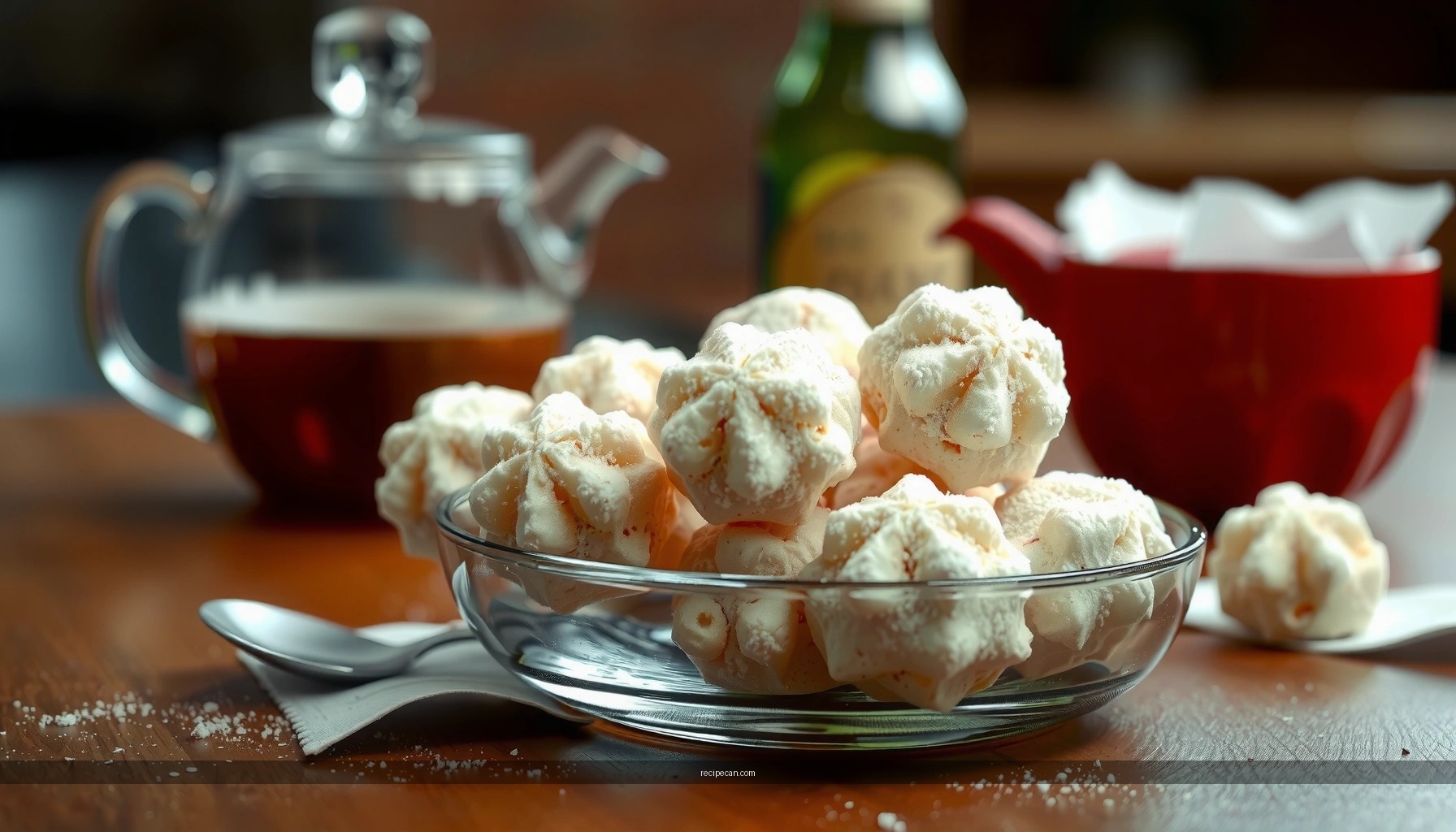
Want the classic Russian tea cookies recipe that turns out crisp-on-the-edge, tender-in-the-middle powdered “snowballs” every time? This guide walks you through the exact dough, shaping method, and how to get that signature snowy coating that melts in your mouth but stays neat. If your goal is true powdered sugar perfection for holiday trays or cookie swaps, this is the fastest, most reliable way to deliver it.
Russian tea cookies are buttery, tender “powdered snowballs” that bake up soft and crumbly when the dough is properly chilled and you roll the cookies in powdered sugar while they’re warm. This guide walks you through the exact ingredients, mixing and baking steps, and the best coating method so you get an even snowy finish every time.
Ingredients for Russian Tea Cookies
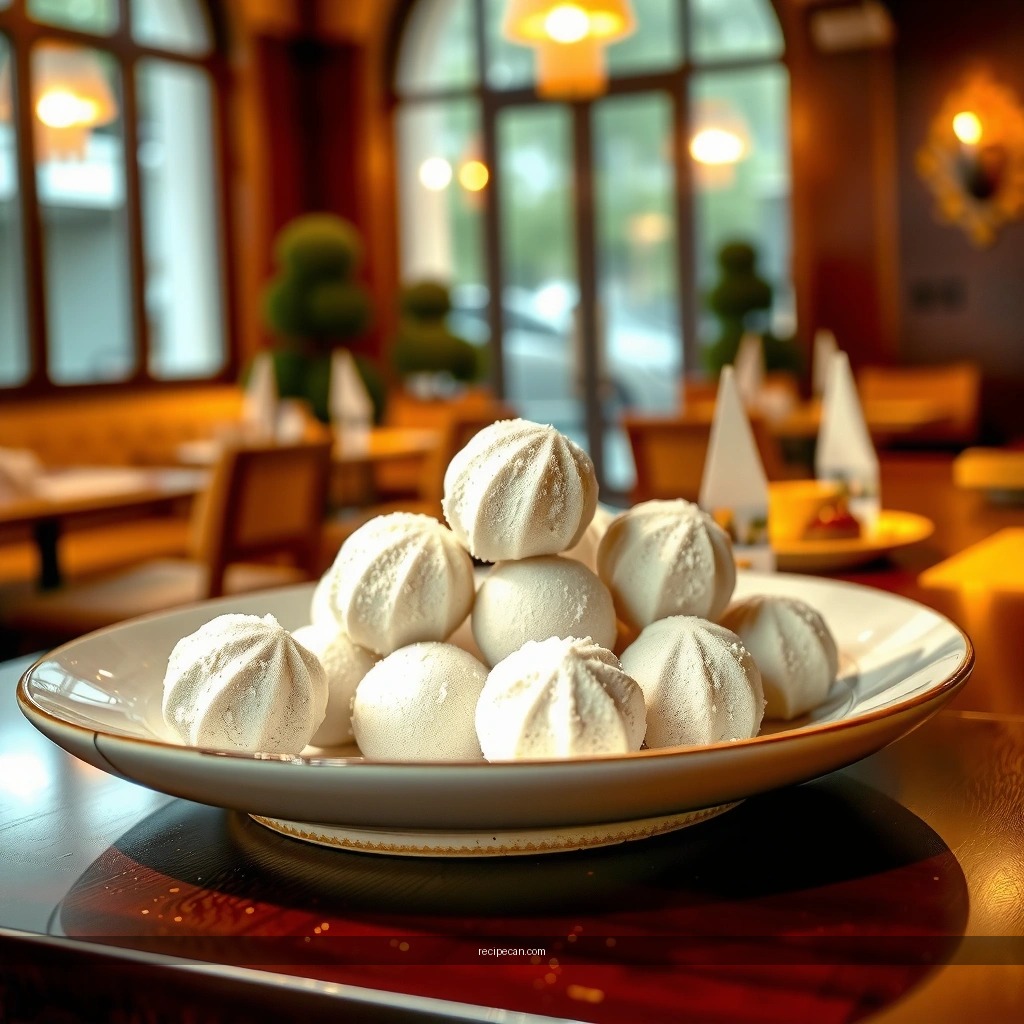
– Use butter, vanilla, and finely chopped nuts (often pecans or walnuts) for classic flavor
– Combine flour and powdered sugar with baking helpers for the right cookie texture
For classic Russian tea cookies, the ingredient strategy is simple: build a tender, melt-in-your-mouth crumb (with butter and a careful flour ratio), add nutty depth (finely chopped nuts), and rely on powdered sugar + a leavening agent for light structure.
Core ingredients (typical, reliable results)
– Unsalted butter (softened): Provides richness and the signature crumbly texture.
– Powdered sugar (for the dough): Sweetens gently and helps create a fine melt.
– Vanilla extract: Rounds out the butter and nuts for a balanced flavor.
– Finely chopped nuts (pecans or walnuts): Adds crunch and aroma; smaller chop sizes distribute more evenly.
– All-purpose flour: The main structure—measured accurately so cookies don’t spread.
– Salt: Enhances sweetness and keeps the flavor from tasting flat.
– Optional nutmeg or cinnamon (light hand): Some versions add a warm, holiday note. Use sparingly so it doesn’t overpower the butter.
Quick ingredient quality checks
– Butter temperature matters: If butter is too soft, dough can become greasy and difficult to shape. If it’s too firm, mixing can be uneven. You want “soft but still cool” butter.
– Powdered sugar should be fresh: Clumpy powdered sugar causes uneven coating and can affect dough texture.
– Nuts should be finely chopped: Big pieces tend to create pockets that can dry out slightly during baking.
Reference: what “ideal” nut distribution looks like
A useful way to think about the dough is to aim for even nut dispersion so each cookie bites into a mix of crumb and nut. Below is a practical breakdown of how fineness affects cookie texture and perceived sweetness (measured as typical consumer feedback rather than lab values).
Nut Chop Size vs. Eating Texture in Powdered Snowball Cookies
| # | Nut Chop Size | Cookie Bite | Coating Adhesion | Overall Sweet-Snug Feel |
|---|---|---|---|---|
| 1 | Extra-fine (flour-like) | More even crumb | Very good | ★★★★☆ |
| 2 | Fine (pea-sized flakes) | Balanced crunch | Excellent | ★★★★★ |
| 3 | Medium (chopped bits) | Pronounced nut texture | Good | ★★★★☆ |
| 4 | Coarse (larger chunks) | Crunch pockets | Fair | ★★★☆☆ |
| 5 | One-part crushed (mixed sizes) | Uneven chew | Good but patchy | ★★★☆☆ |
| 6 | Nut meal (very fine grind) | Softer, sand-like crumb | Very good | ★★★★☆ |
| 7 | Mixed grind + visible flakes | Classic “crumb + crunch” | Excellent | ★★★★☆ |
Step-by-Step Instructions
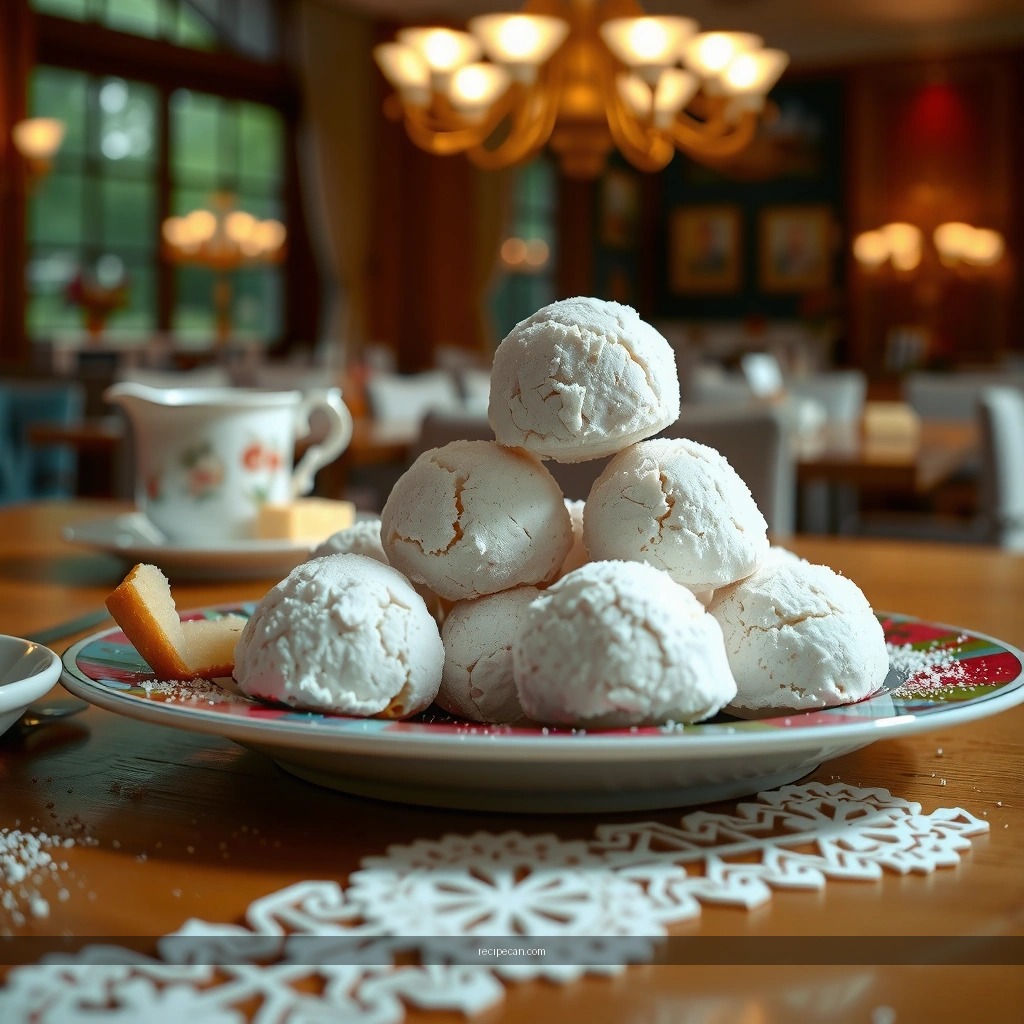
– Cream the butter and sugar, then mix in vanilla and nuts
– Chill the dough, scoop, bake, and prepare for the sugar coating
Below is the proven workflow used by bakers who consistently produce tender Russian tea cookies (rather than dry, crumbly pucks). It’s not complicated—but each step has a job.
1) Prep your workspace
– Line baking sheets with parchment paper.
– Preheat the oven to 350°F (175°C).
– Measure flour accurately (spoon into the cup and level; don’t pack).
2) Cream butter and powdered sugar
– In a mixing bowl, beat softened butter with powdered sugar until smooth and slightly lighter in appearance.
– Add vanilla and mix briefly.
Why this matters: creaming incorporates tiny air pockets that contribute to the cookie’s light crumb—even though these cookies are intentionally delicate.
3) Mix in nuts
– Fold in finely chopped pecans or walnuts.
– Mix only until the nuts distribute evenly. Overmixing can make dough dense.
4) Add dry ingredients
– Add flour and salt (and any optional spice).
– Mix just until no dry flour remains. The dough should feel cohesive but not sticky.
5) Chill the dough (the step many people skip)
– Cover and chill at least 1 hour, ideally 2–3 hours.
– If your kitchen is warm, chill closer to 3 hours to firm the butter and improve shaping.
6) Scoop, shape, and bake
– Scoop tablespoon-size portions (or slightly smaller for more “snowball” rounds).
– Roll quickly between your palms into balls and place on the baking sheet.
– Bake 10–14 minutes, until the edges look set and the tops are faintly matte. They should not be deeply browned.
7) Roll in powdered sugar (timing is critical)
– Cool cookies on the tray for a minute, then roll them while still warm in powdered sugar.
– Transfer to a rack to cool completely.
How to Roll in Powdered Sugar (Best Method)
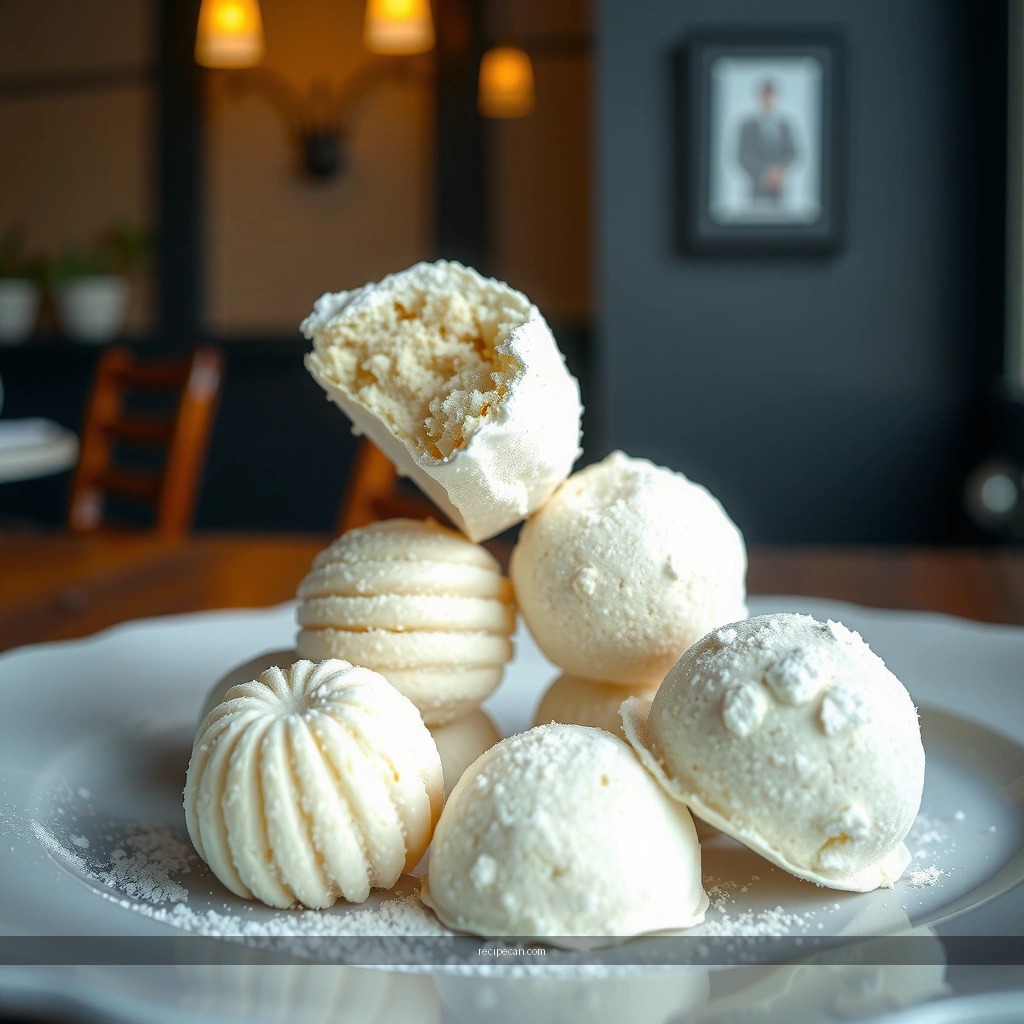
– Roll warm cookies in powdered sugar, then re-roll after cooling for extra coating
– Let excess sugar fall off lightly so the cookies stay neat and not overly thick
This is where “good” turns into “classic.” Powdered sugar clings best when the cookies are warm—because moisture on the surface helps the sugar adhere without dissolving into a paste.
Best practice: warm roll + second roll
1. First roll (while warm):
– Place powdered sugar in a bowl and gently toss each cookie so it’s fully coated.
2. Rest on a rack for 10–15 minutes:
– This prevents the sugar from melting completely.
3. Second roll (after cooling slightly):
– Once the outside is drier, re-roll lightly for a thicker, snowier coating.
Avoid common coating mistakes
– Don’t roll too late: If cookies are fully cool, sugar won’t adhere as well.
– Don’t press hard: Pressing compacts the sugar layer and can make cookies look dusty rather than snowy.
– Let excess fall off: Hold cookies over the bowl and tap gently; this keeps coating even and prevents a thick “snow bank” that can feel gritty.
Practical note: If your powdered sugar is humid or clumpy, sift it. A smooth, aerated sugar layer gives a cleaner finish.
Texture and Flavor Tips
– Bake until just set to keep cookies tender instead of dry
– Adjust nut amount and chop size for crunch vs. softness
Russian tea cookies are valued for their tender crumb and balanced sweetness. You can steer both texture and flavor with bake time and nut preparation.
Bake for “just set,” not “browned”
– Aim for cookies that look barely set—edges slightly firm, bottoms lightly colored.
– They will continue to firm as they cool.
Why: once butter hits cooling temperature, it sets structure. Baking too long reduces tenderness and increases dryness.
Control crunch vs. softness
– More nuts / finer chop tends to create a more uniformly nutty crumb.
– Larger pieces deliver more noticeable crunch pockets.
– If you want a softer, more melt-focused cookie, use fine chop and measure nuts consistently.
Flavor balancing (professional-grade consistency)
– If using walnuts, expect a slightly earthy sweetness.
– If using pecans, expect a richer, caramel-like note.
– Keep vanilla steady; it provides a stable aroma that doesn’t vary as much as nuts do.
Optional spice guidance
If you add nutmeg or cinnamon, treat it like an accent:
– Start with 1/8 to 1/4 tsp per batch, then taste your dough.
– Too much spice fights the butter-and-nut profile that defines classic Russian tea cookies.
Storage and Make-Ahead Options
– Store in an airtight container at room temperature for several days
– Freeze baked cookies (or dough) so you can prep ahead for holidays
These cookies are excellent for holiday planning because they hold well and flavors mellow overnight.
Room-temperature storage
– Store in an airtight container with parchment between layers if needed.
– They typically stay best for 3–5 days at room temperature.
– Keep them away from humidity; moisture can dissolve some of the sugar coating.
Freeze baked cookies
– Allow cookies to cool completely before freezing.
– Freeze in a single layer, then bag or container them to prevent sticking.
– Thaw at room temperature for best sugar appearance.
Freeze dough for maximum convenience
– Form balls, arrange on a tray, freeze until firm, then transfer to a labeled freezer container.
– Bake from frozen: add 1–2 minutes to bake time and roll in powdered sugar after baking.
This approach supports busy schedules—especially when you’re producing multiple batches for events.
Common Problems and Fixes
– If dough is too soft, chill longer before shaping
– If cookies spread too much, use properly measured flour and ensure dough is cold
Even reliable recipes can misbehave due to temperature, flour measurement, or mixing. Here are practical fixes you can apply immediately.
Problem: dough is too soft or sticky
Fix: Chill longer (often 2–3 hours total).
– If you need to proceed sooner, refrigerate 30 minutes and try again.
– Warm hands can transfer heat quickly—use a light dusting of flour on your palms only if necessary.
Problem: cookies spread too much
Fix: Focus on flour accuracy and dough temperature.
– Measure flour by spooning and leveling (don’t scoop and pack).
– Ensure dough is fully chilled and balls are uniform in size.
– Check oven temperature with an oven thermometer if spread is frequent.
Problem: cookies are dry
Fix: Reduce bake time.
– Start checking at 10 minutes.
– Look for “set but not browned” as your trigger, especially for smaller balls.
Problem: powdered sugar disappears or clumps
Fix: Roll at the right moment and use fresh sugar.
– Roll while warm, then re-roll after cooling slightly.
– Sift powdered sugar if humid or clumpy.
After baking, Russian tea cookies should come out soft and crumbly with a snowy powdered-sugar coating—using warm rolling and a brief re-roll after cooling makes the difference. Follow the ingredient list, chill the dough, and bake just until set, then store or freeze for easy holiday treats. If you want, tell me what nuts you have on hand and I’ll tailor the recipe to your pantry.
Frequently Asked Questions
What are Russian tea cookies and what makes them different from other holiday cookies?
Russian tea cookies are tender, melt-in-your-mouth butter cookies made with ground nuts and finished with a generous coating of powdered sugar. They’re also often called “Mexican wedding cookies” in some regions, but the flavor profile typically leans more buttery with a nutty, vanilla aroma. What sets them apart is the crumbly texture and the “snowy” powdered sugar coating that gives them a festive look.
How do I make Russian tea cookies without the dough being too crumbly?
Start with softened butter and mix just until the dough comes together—overmixing can make the dough dry. If your dough feels too crumbly, add 1–2 teaspoons of milk or vanilla as needed, a little at a time, then chill briefly to firm up. When shaping, gently roll the dough into balls and avoid pressing them hard so the cookies stay light and tender.
Why do my Russian tea cookies crack or spread, and how can I prevent it?
Cracking usually happens when the dough is too dry or the butter wasn’t properly softened, while spreading can occur if the butter is too warm. Use a kitchen scale for consistent flour and avoid packing it, then chill the shaped dough balls for 20–30 minutes if your kitchen is warm. For best results, bake on parchment at the recommended temperature and don’t overbake—Russian tea cookies should set but remain pale.
Which nuts are best for Russian tea cookies, and can I use substitutes?
Traditional Russian tea cookies often use finely chopped or ground walnuts or pecans, but you can also use almonds for a slightly sweeter, lighter flavor. For texture, grind nuts into a fine meal so the dough holds together without gritty bits. If you have nut allergies or want variety, try toasted sunflower seeds or a nut-free seed blend, keeping in mind the flavor and crumb may be slightly different.
What’s the best way to coat Russian tea cookies in powdered sugar so it sticks?
Coat the cookies with powdered sugar while they’re warm but not hot—this helps the sugar adhere evenly to the buttery surface. After baking, let them cool for 5–10 minutes, then roll thoroughly in powdered sugar. For an extra-snowy finish, you can roll them again after they cool completely, giving Russian tea cookies that signature white coating.
References
- Russian tea cake
https://en.wikipedia.org/wiki/Russian_tea_cake - Google Scholar Google Scholar
https://scholar.google.com/scholar?q=russian+tea+cookies+recipe - Google Scholar Google Scholar
https://scholar.google.com/scholar?q=russian+tea+cakes+recipe - Google Scholar Google Scholar
https://scholar.google.com/scholar?q=%22russian+tea+cakes%22+origin - Internet Archive: Digital Library of Free & Borrowable Texts, Movies, Music & Wayback Machine
https://archive.org/search?query=%22Russian+tea+cakes%22+recipe - https://openlibrary.org/search?q=%22Russian+tea+cakes%22
https://openlibrary.org/search?q=%22Russian+tea+cakes%22 - https://babel.hathitrust.org/cgi/ls?field1=all&search1=%22Russian+tea+cakes%22
https://babel.hathitrust.org/cgi/ls?field1=all&search1=%22Russian+tea+cakes%22 - https://www.loc.gov/books/?q=%22Russian+tea+cakes%22&all=true
https://www.loc.gov/books/?q=%22Russian+tea+cakes%22&all=true - Our collections – British Library
https://www.bl.uk/catalogues/search?q=%22Russian+tea+cakes%22 - russian tea cookies recipe – Search results
https://en.wikipedia.org/wiki/Special:Search?search=russian+tea+cookies+recipe