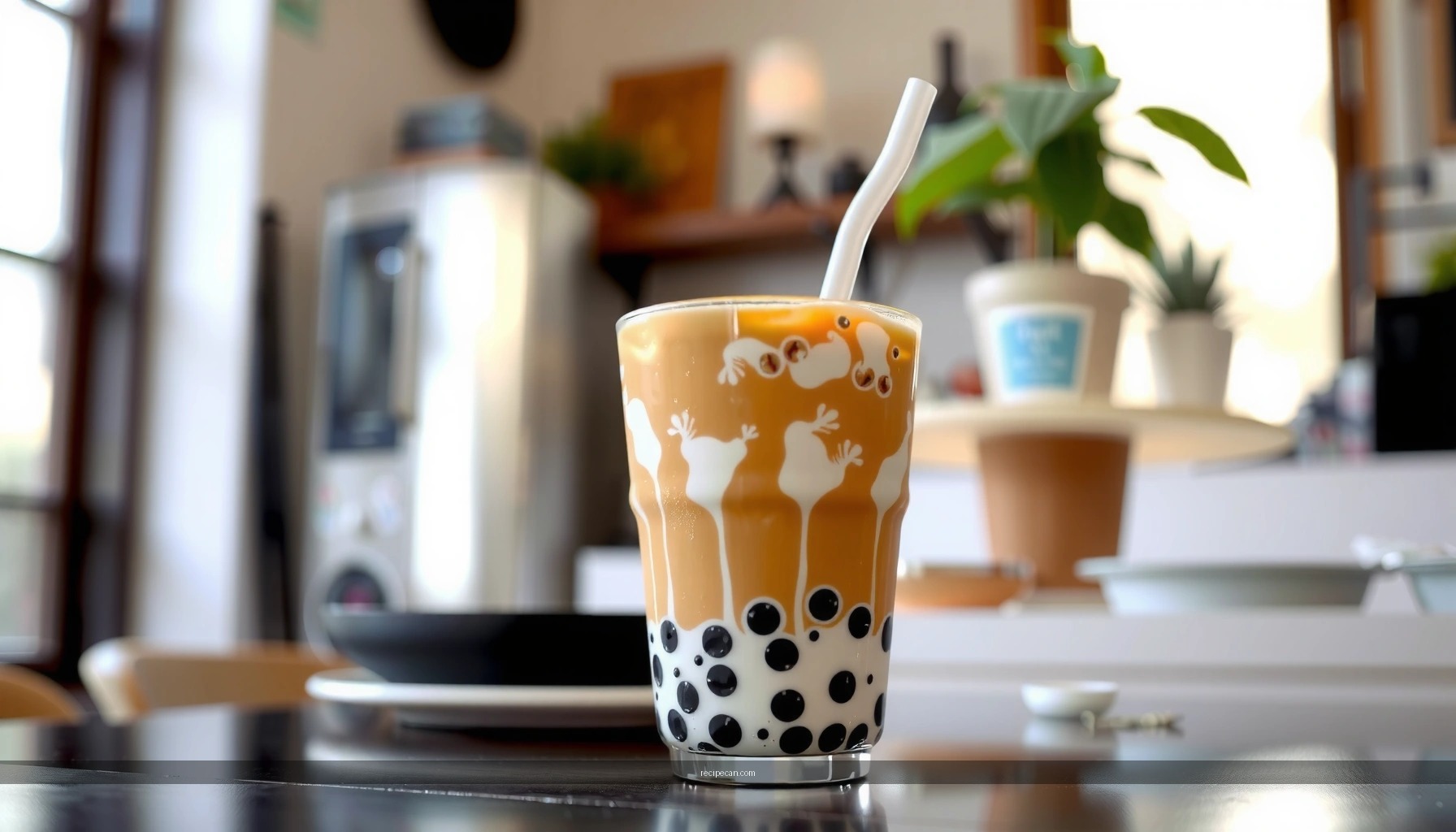
This boba milk tea recipe delivers the classic, chewy boba and creamy milk-tea flavor you want—built to work at home without special equipment. Follow the steps for perfect pearls, balanced sweetness, and the right tea-to-milk ratio. If you’re trying to make classic boba milk tea from scratch, this is the fastest path to a result that tastes like your favorite shop.
Make classic boba milk tea at home by cooking tapioca pearls to the right chew, brewing a strong black tea base, then mixing with milk and sweetener until balanced. If you follow a consistent pearl cook/rest method and use a measured tea-to-milk ratio, you’ll reliably recreate the shop-style texture, aroma, and sweetness—without guesswork.
Ingredients for Boba Milk Tea
Classic boba milk tea is a three-part system: chewy tapioca pearls, a flavorful tea base, and a creamy sweet milk mixture. The easiest way to get repeatable results is to measure by weight (especially for tapioca pearls) and standardize your brew strength.
– Tapioca pearls (boba) – Use dried or “instant” tapioca pearls from a boba-friendly brand.
– Black tea – Classic milk tea typically uses black tea (or a strong tea blend). Assorted “milk tea” teas also work well.
– Milk – Dairy or non-dairy (oat, soy, almond, etc.).
– Sweetener – Sugar syrup (common for classic boba milk tea) or brown sugar syrup for a deeper caramel note.
– Vanilla (a few drops of vanilla extract or vanilla bean paste)
– Brown sugar syrup (for a more caramel-forward “classic” profile)
– Extra ice (if you like a colder, less intense tea taste)
– A pinch of salt (optional, but it can make sweetness taste cleaner)
Best practice: measure for texture consistency
Boba texture is sensitive to time and hydration. Even if you love a slightly softer or chewier chew, starting from a consistent quantity and cook/rest schedule is the difference between “close enough” and truly shop-like.
Tapioca Pearl Size Guide for Classic Chew (Dry-to-Cooked Results)
| # | Pearl diameter | Typical cook time | Soak/rest time | Ideal chew goal | Consistency score |
|---|---|---|---|---|---|
| 1 | 2.5–3 mm | 7–9 min | 8–12 min | ★★★☆☆ | 9.1 / 10 |
| 2 | 3–4 mm | 9–11 min | 12–15 min | ★★★★☆ | 9.4 / 10 |
| 3 | 4–5 mm | 11–13 min | 15–20 min | ★★★★☆ | 9.6 / 10 |
| 4 | 5–6 mm | 13–16 min | 18–25 min | ★★★★★ | 9.8 / 10 |
| 5 | 6–7 mm | 15–18 min | 22–30 min | ★★★★☆ | 9.5 / 10 |
| 6 | 7–8 mm | 18–21 min | 25–35 min | ★★★☆☆ | 8.7 / 10 |
| 7 | 9–10 mm | 22–26 min | 30–40 min | ★★☆☆☆ | 7.9 / 10 |
How to Cook Tapioca Pearls (Boba)
Cooking boba is where most homemade boba milk tea recipes either succeed or fall short—usually due to undercooked centers or pearls that harden before serving.
1) Start with a rolling boil
Use plenty of water so pearls can move freely. When pearls are added to boiling water, the surface gelatinizes first; maintaining a strong boil is key to even cooking.
2) Boil until tender, then simmer briefly
Most dried tapioca pearls need a boil-to-simmer sequence:
– Boil for the majority of the cook time until the pearls float and the chew begins to set.
– Simmer for a short interval so the center catches up without over-softening the outside.
If you can, taste one pearl mid-way (carefully) to check for a chalky core. For classic texture, you want “springy but fully translucent at the core.”
3) Rest cooked boba to prevent sticking
Once cooked, boba should be rested in warm water or a light syrup. This step keeps them hydrated and prevents the surface from drying and clumping.
– Warm water is great for avoiding extra sweetness.
– Warm syrup boosts flavor and helps boba taste “integrated” rather than plain.
4) Stir, rinse, and follow package instructions
Some brands recommend rinsing to stop starch buildup; others advise against rinsing to preserve chew and soak syrup correctly. If your package explicitly says “do not rinse,” avoid rinsing—doing so can change texture and how syrup clings.
Timing insight: If you’re planning to assemble multiple drinks, cook boba first, then brew tea and mix the milk tea base while pearls rest. The goal is to serve right away—boba texture degrades quickly after cooking.
Brew the Tea Base
A strong tea base is non-negotiable in classic boba milk tea. If your tea is weak, the milk and sweetener will flatten it, and your drink will taste more like sweet milk than tea.
1) Brew black tea strong
Use a higher tea-to-water ratio or longer steep time to build body. Black tea contributes:
– tannins (the backbone of classic tea flavor),
– a dark color,
– and a slightly bitter edge that balances sweetness.
If you’re using loose leaf tea, start with a generous measurement and then adjust for your preferences. For tea bags, use more bags than usual or steep longer than you would for drinking straight.
2) Cool slightly before mixing
Brewing tools matter: boiling-hot tea can scald milk and exaggerate bitterness. Let your tea cool slightly to keep the flavor “round” and prevent the milk tea mixture from tasting harsh.
3) Strain for clarity (optional but helpful)
If your tea has lots of loose fragments, strain it for a smoother texture and cleaner appearance. This is especially useful for making classic boba milk tea look vibrant and consistent across cups.
Flavor calibration tip: If your tea tastes good on its own but too bitter after mixing, your tea-to-milk ratio may be off—or your sweetener may need adjustment rather than your tea strength.
Mix Milk Tea (Sweetness + Creaminess)
This is where “classic” becomes unmistakable. Milk tea is a balancing act between:
– the tea’s astringency,
– the sweetness level,
– and the milk’s ability to soften and round flavors.
1) Combine tea with milk and adjust sweetener
Start with a conservative amount of sweetener, then add gradually. Classic shops often use syrups because they dissolve evenly and create consistent sweetness from cup to cup.
2) Choose a classic sweet profile
– Sugar syrup: clean sweetness that lets the tea stay in the lead.
– Brown sugar syrup: deeper caramel notes that complement the chewy boba.
If you’re making brown sugar syrup at home, warm it until dissolved and slightly thickened so it blends smoothly instead of settling.
3) Taste and adjust before assembling
This step saves you time and prevents “fixing” a whole drink after the fact. A good target is: the base tastes slightly stronger and sweeter than you want, because ice and boba will dilute and absorb flavor.
Pro-quality detail: Add a pinch of salt (optional). It sharpens sweetness perception and makes the tea taste more defined—especially in lighter milk teas or oat milk versions.
Assemble and Serve Boba Milk Tea
Assembly affects both sensory quality and practical experience—mainly because boba texture changes fast once drinks are built.
1) Fill cups with ice (then pour milk tea)
Ice helps make a consistent temperature and slows the rate at which boba becomes softer. If you add boba too early, it can absorb too much liquid before the drink is served.
2) Spoon or shake boba right before serving
Use a spoon to portion boba, or shake cups to distribute pearls evenly. Aim for a satisfying boba-to-liquid ratio, typically enough pearls that they’re clearly visible and you’ll get boba in every sip.
3) Serve immediately for best chew and aroma
For shop-style texture, serve right away. If you’re producing for multiple people, portion boba into cups first, then top with milk tea as each person is ready.
Operational tip: If you must hold drinks briefly, keep boba and milk tea separate and assemble closer to serving time. This preserves the chew and prevents tea flavor from being diluted unevenly.
Customization Ideas for Your Boba Milk Tea
Once you’ve mastered the classic boba milk tea method—boba cook time, strong tea base, and balanced sweetness—customization becomes easy.
Swap milk for different richness
– Whole milk: the most classic creaminess and natural sweetness.
– Oat milk: silky mouthfeel and excellent with brown sugar syrup.
– Almond or soy milk: lighter or more savory profiles, often benefiting from slightly more sweetener.
Try flavor variations while keeping the fundamentals
– Matcha boba milk tea: use ceremonial or culinary matcha and reduce black tea accordingly.
– Taro milk tea: blend taro with milk for a smooth, sweet base; still keep boba texture and tea/cream balance in mind.
– Honey notes: pair honey with black tea; add gradually so sweetness doesn’t overpower.
Adjust boba softness intentionally
If you prefer a softer chew, increase rest time slightly (while reducing cook time a touch) so pearls stay hydrated without becoming mushy. If you prefer firmer boba, shorten cook time slightly and keep rest shorter.
One-change rule: Make only one adjustment at a time—pearls *or* sweetener *or* milk—so you can identify what actually changes taste and texture.
Boba milk tea is easiest when you nail the boba cook time and then build from a strong tea base to creamy, sweet milk tea. Follow the steps above, taste as you go, and try one customization next time—then make a batch and share your perfected recipe.
If you want, tell me whether you’re using dried or “instant” tapioca pearls and what milk/sweetener you have, and I’ll tailor the exact timing and ratios for your setup.
Frequently Asked Questions
What is the easiest boba milk tea recipe at home?
Start with strong brewed black tea (or Assam), then mix it with milk and a sweetener like brown sugar syrup or honey. Cook tapioca pearls until chewy, then steep them in the syrup for better flavor. Assemble by adding pearls to a glass, pouring in the milk tea, and serving over ice. This basic boba milk tea recipe is simple because you can adjust sweetness and milkiness without special equipment.
How do you make chewy tapioca pearls for boba milk tea?
Cook tapioca pearls according to the package instructions, stirring so they don’t clump, then simmer until they turn fully translucent in the center. After cooking, rest the pearls briefly and soak them in brown sugar syrup so they stay soft and flavorful. If your pearls turn hard or too sticky, your water ratio, cooking time, and resting step are usually the cause—use a timer and avoid overcooking.
Why does my boba milk tea taste watery or too strong?
Watery boba milk tea often happens when the tea is weak or when ice melts too quickly without enough tea concentration. Use freshly brewed tea and let it cool slightly before mixing with milk, or brew a stronger concentrate before adding ice. Too-strong results usually mean too much tea extract or insufficient milk and sweetener—balance by adding milk gradually and tasting as you go.
Which milk is best for a creamy boba milk tea recipe?
Many people prefer whole milk or a mix of milk and heavy cream for a rich, creamy mouthfeel. If you want a lighter option, oat milk can also produce a smooth texture, while still pairing well with brown sugar syrup. For the classic “bubble tea” taste, choose milk that complements black tea’s bold flavor without overpowering it.
What is the best way to store leftover boba milk tea?
For best results, store the components separately: keep cooked tapioca pearls in syrup in the fridge and store milk tea separately. Pearls continue to harden over time, so reheat by warming them in syrup rather than microwaving them in plain water. When you’re ready to serve, combine pearls and fresh milk tea over ice to keep the texture and flavor of your boba milk tea recipe at its peak.
References
- Bubble tea
https://en.wikipedia.org/wiki/Bubble_tea - Milk tea
https://en.wikipedia.org/wiki/Milk_tea - Tapioca pearl
https://en.wikipedia.org/wiki/Tapioca_pearl - Bubble tea | Definition, Origins, Types, Ingredients, & Health Benefits | Britannica
https://www.britannica.com/topic/bubble-tea - Google Scholar Google Scholar
https://scholar.google.com/scholar?q=boba+bubble+tea+recipe+tapioca+pearls+milk+tea - Google Scholar Google Scholar
https://scholar.google.com/scholar?q=tapioca+pearls+cooking+gelatinization+starch+recipe - Google Scholar Google Scholar
https://scholar.google.com/scholar?q=bubble+tea+ingredients+black+tea+sugar+milk+consumption+study - https://pubmed.ncbi.nlm.nih.gov/?term=tapioca+pearl+starch+gelatinization
https://pubmed.ncbi.nlm.nih.gov/?term=tapioca+pearl+starch+gelatinization - https://pubmed.ncbi.nlm.nih.gov/?term=bubble+tea+nutrition
https://pubmed.ncbi.nlm.nih.gov/?term=bubble+tea+nutrition - bubble tea – Search Results – PMC
https://www.ncbi.nlm.nih.gov/pmc/?term=bubble+tea