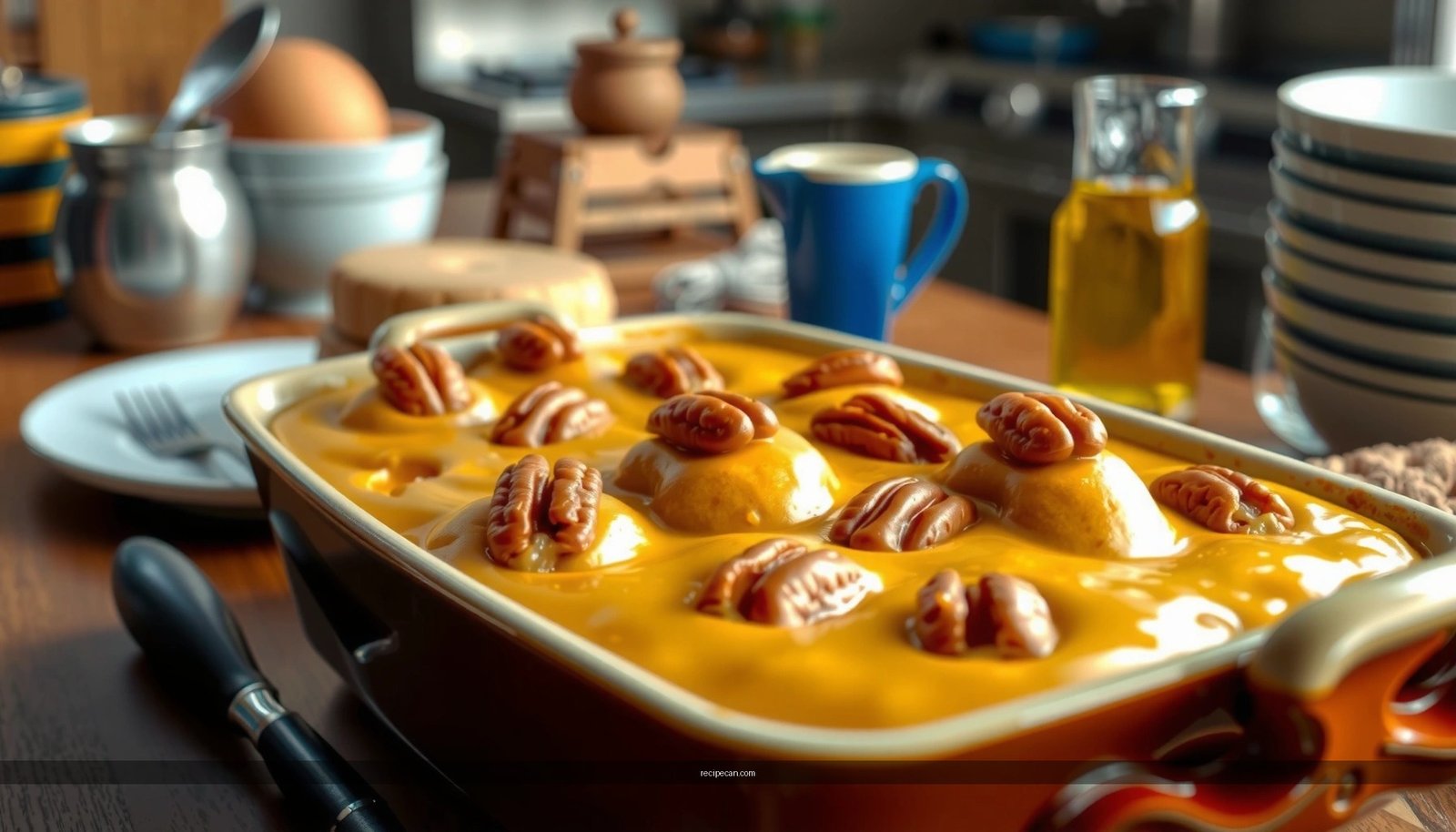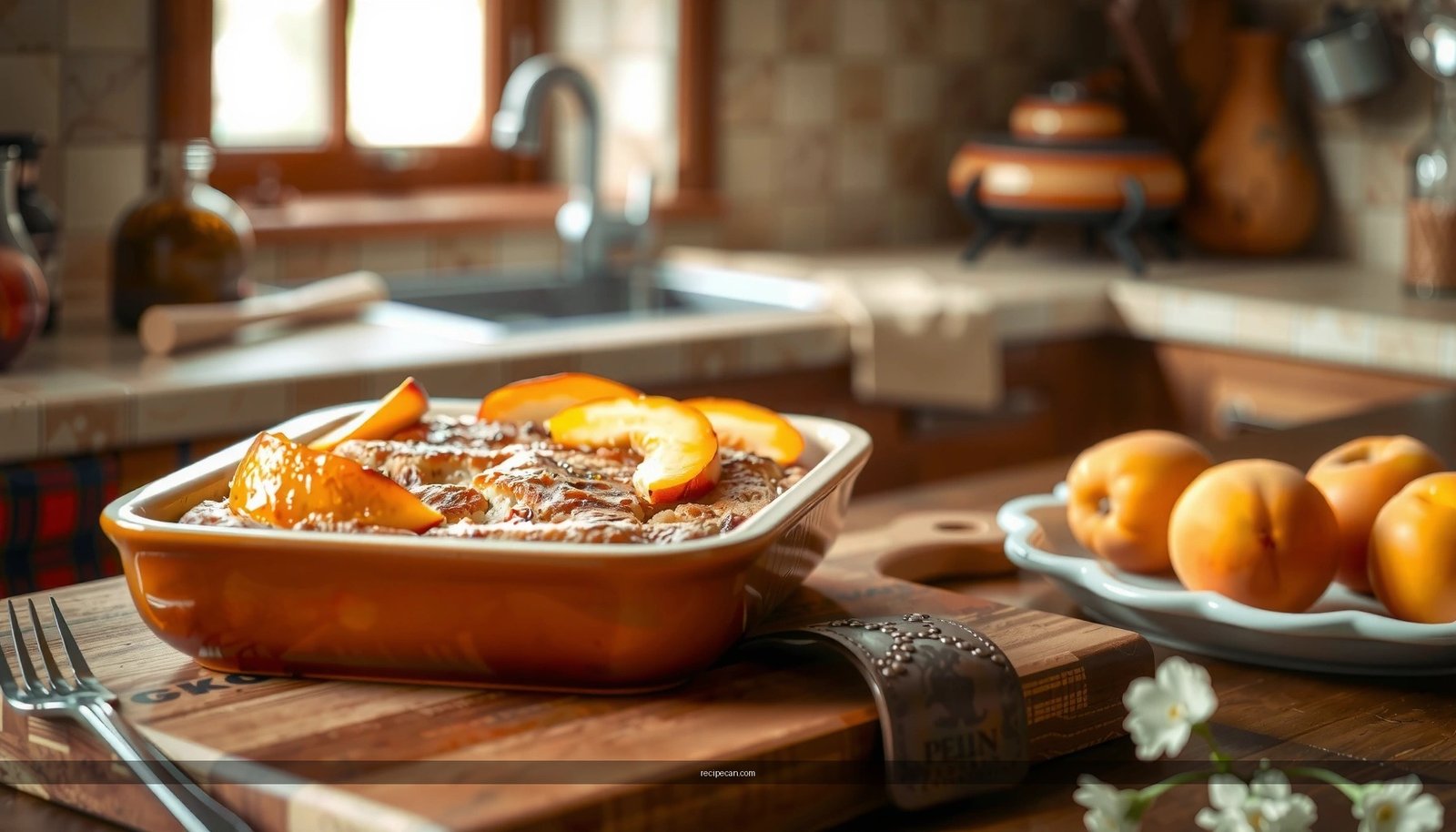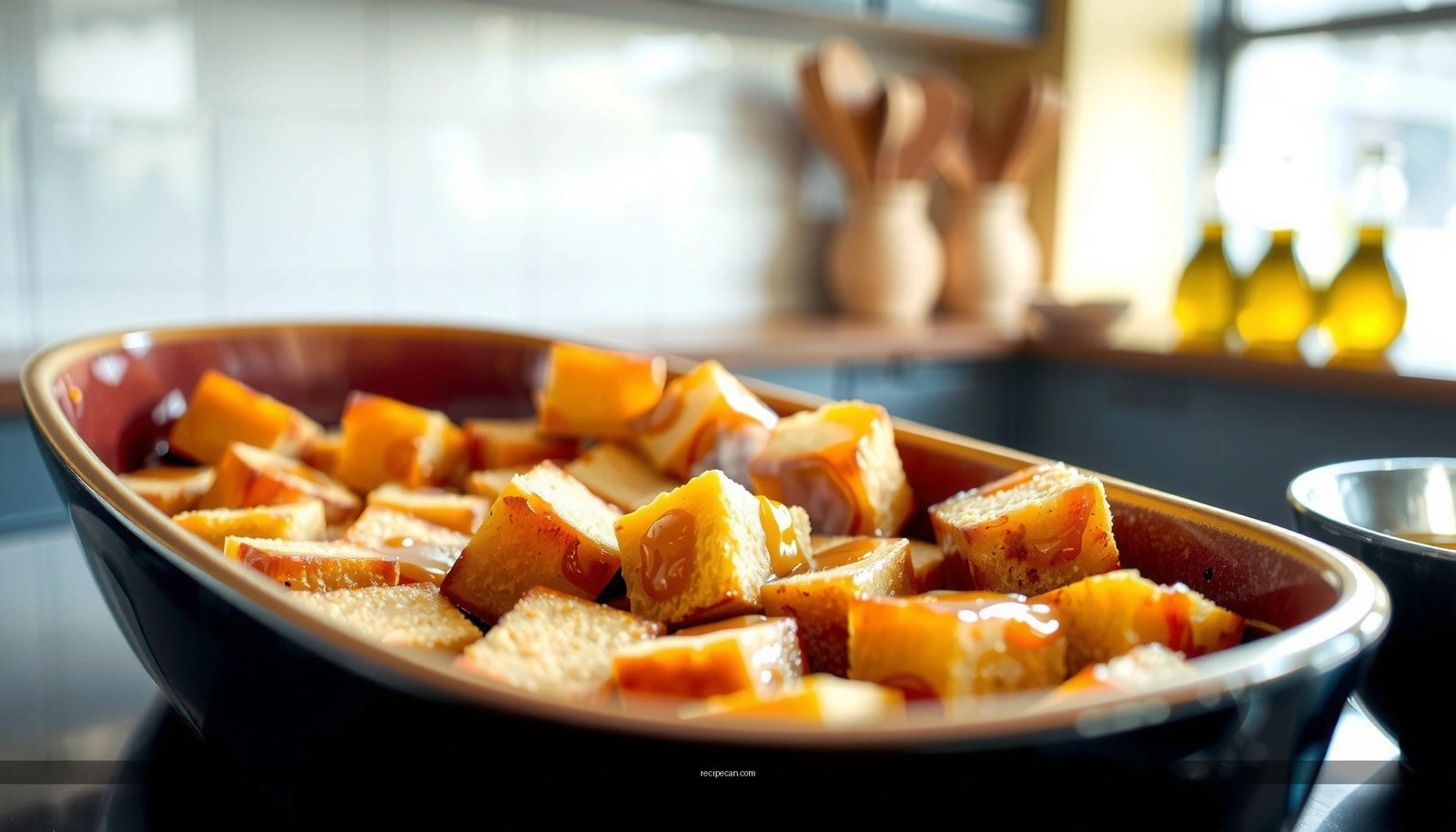
Get a bread pudding recipe with caramel sauce that comes out custardy, golden, and properly sauced—no dry slices, no bland flavor. This method tells you exactly how to soak the bread, bake until set, and make a glossy caramel sauce that clings to every bite. If your goal is the richest, most dependable caramel topping for bread pudding, this is the recipe that delivers.
This bread pudding recipe delivers a soft, custardy interior with a golden top, finished with a silky caramel sauce that’s easy to pour. Get the texture right by soaking stale bread thoroughly in a balanced custard, then cook the caramel gently until it thickens—never burns.
Whether you’re serving guests, meal-prepping a holiday dessert, or building a reliable “signature” item for events, the most important variable isn’t the bread—it’s the custard hydration and caramel technique. Below, you’ll find a practical, step-by-step approach designed for consistent results, plus troubleshooting tips for the two most common failure points: undercooked pudding and caramel that’s too thick or grainy.
—
Ingredients for Bread Pudding
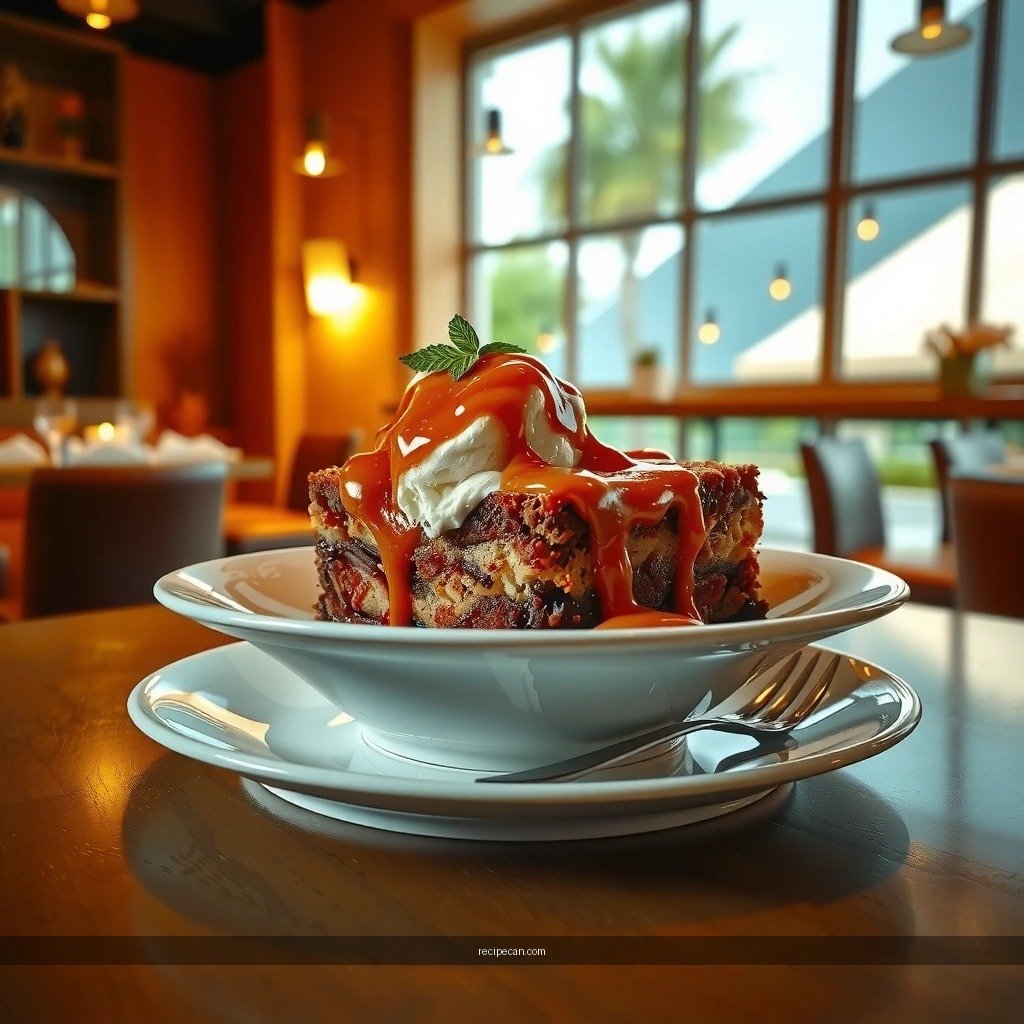
– Gather bread, eggs, milk/cream, sugar, and flavorings like vanilla and cinnamon
– Optional add-ins: raisins, chocolate chips, or toasted nuts for extra texture
To make bread pudding properly, you’ll want ingredients that create two outcomes: (1) bread that can absorb custard without turning gummy, and (2) a custard that sets into a smooth sliceable dessert.
Core ingredients (recommended for best custard structure)
– Bread (stale preferred): 6–7 cups cubed, 1-inch pieces (about 1 lb / 450 g). Brioche, challah, or French bread work beautifully; for a more traditional profile, use a dense white bread.
– Eggs: 4 large eggs to set the custard (and add richness).
– Milk and/or cream: 2 cups total (e.g., 1 cup whole milk + 1 cup heavy cream for maximum softness).
– Sugar: 1/2 cup granulated sugar for the pudding. (Caramel supplies the rest of the sweetness.)
– Salt: 1/4 teaspoon to sharpen flavor and improve custard balance.
– Vanilla: 2 teaspoons vanilla extract.
– Cinnamon: 1–1 1/2 teaspoons ground cinnamon (optional but classic).
Optional add-ins (choose based on the flavor direction you want)
– Raisins: 1/2 cup soaked briefly in warm water or warm rum (optional) for plumper fruit.
– Chocolate chips: 1/2 cup for pockets of melted chocolate.
– Toasted nuts (pecans or walnuts): 1/2 cup for a warm, bakery-style crunch.
– Citrus zest: 1 teaspoon orange or lemon zest if you want a slightly brighter profile that complements caramel.
Ingredient quality notes (why these choices matter)
– Use stale bread: Fresh bread can collapse unevenly and may create a bready rather than custardy texture.
– Keep the custard warm, not hot: Warm ingredients help bread absorb more evenly, but boiling can curdle eggs.
– Don’t oversweet the base: Too much sugar in the pudding can cause a baked custard that’s overly firm; caramel will supply the signature sweetness.
Quick reference: bread type impact on texture
Bread Type and Expected Bread Pudding Texture
| # | Bread Type | Absorption | Best Texture Goal | Ease Score |
|---|---|---|---|---|
| 1 | Brioche | High | Very soft & rich | ★★★★★ |
| 2 | Challah | High | Custardy, tender crumb | ★★★★★ |
| 3 | French bread | Medium-High | Soft center, lightly chewy edges | ★★★★☆ |
| 4 | Sourdough (day-old) | Medium | More structured, bakery-style bite | ★★★★☆ |
| 5 | Whole wheat sandwich bread | Medium | Heartier, slightly less airy crumb | ★★★☆☆ |
| 6 | Gluten-free loaf | Varies | Can be softer with correct soak | ★★★☆☆ |
| 7 | Angel food (day-old) | Low | Drier unless soaked longer | ★☆☆☆☆ |
—
How to Make Bread Pudding
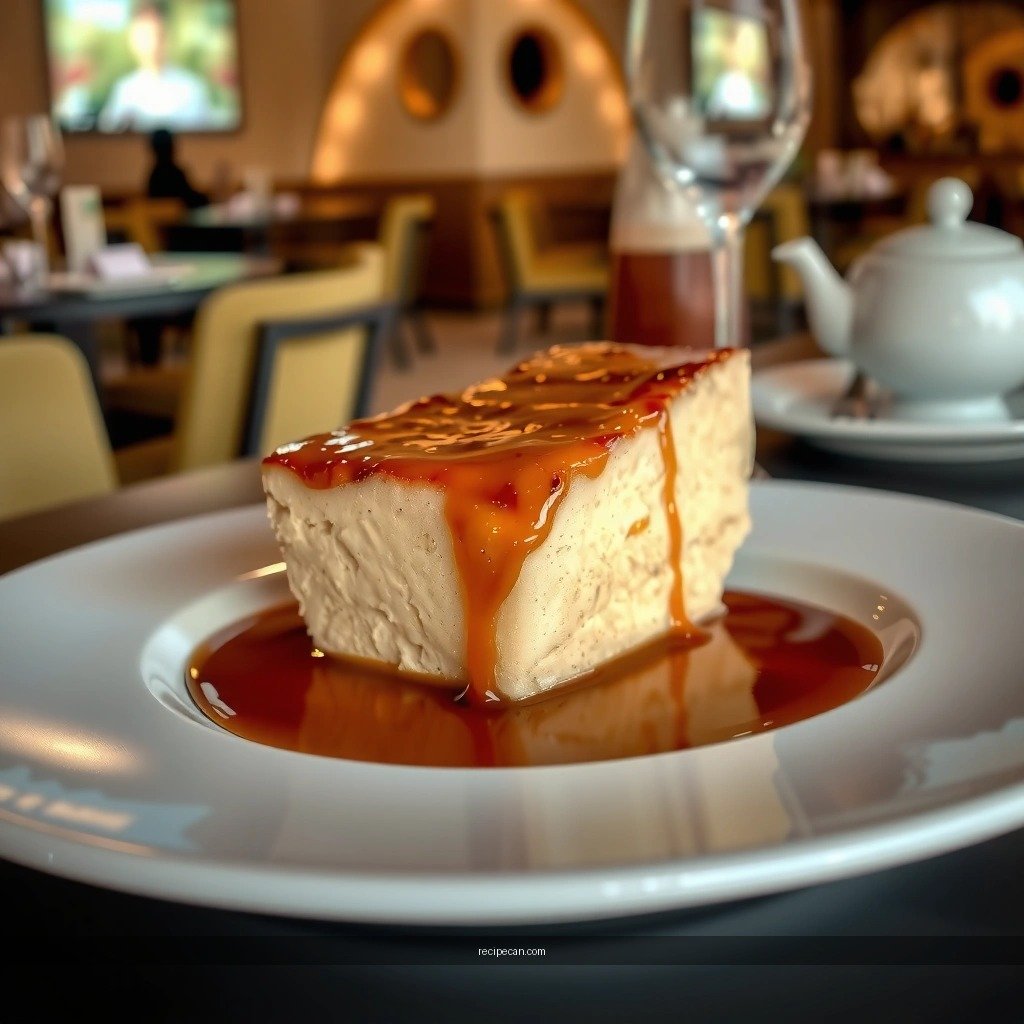
– Soak bread in the custard mixture until fully saturated
– Bake until the center is set and the top turns golden brown
This is where bread pudding succeeds or fails: you’re building custard absorption first, then controlled setting in the oven. Think of the pudding as two processes—hydration and coagulation.
Step 1: Prepare your baking setup
– Preheat the oven to 350°F (175°C).
– Grease a 9×13-inch baking dish (or an equivalent 3-quart dish) with butter.
– Optionally, line with parchment to lift slices out cleanly.
Step 2: Mix the custard
In a bowl or pitcher, whisk together:
– eggs
– milk/cream
– sugar
– salt
– vanilla
– cinnamon (and any zest, if using)
Whisk until the mixture is smooth and the sugar is dissolved.
Step 3: Soak properly (the real “recipe”)
Add cubed bread to the custard and fold gently so every piece is exposed. Then let it stand:
– Minimum: 20–30 minutes
– Better: 45–60 minutes
– Best for maximum custard: 2–4 hours refrigerated (covered)
How to tell it’s saturated: the bread should look heavier and slightly compressed, with minimal dry pockets at the bottom.
Step 4: Fold in add-ins
When the bread is fully soaked, fold in raisins, chocolate chips, or toasted nuts. Keep in mind:
– Chocolate chips may sink slightly; that’s normal.
– Nuts add texture, but if you want a softer bite, reserve half for sprinkling on top.
Step 5: Bake until “set, not dry”
Spoon the mixture into the baking dish and bake:
– 35–50 minutes (depending on your dish depth and bread density)
Doneness indicators:
– The edges should be set and puffed slightly.
– The center should jiggle gently like set custard—not slosh.
– A knife inserted near the center should come out mostly clean, with a few moist crumbs (not wet batter).
Step 6: Rest before serving
Rest 10–15 minutes. Resting matters because custard continues to set as it cools slightly—this prevents runny slices and improves slice integrity.
Best practice: portion for consistent results
For predictable serving size, cut into even squares and spoon caramel over each portion right before serving.
—
Caramel Sauce Ingredients & Prep
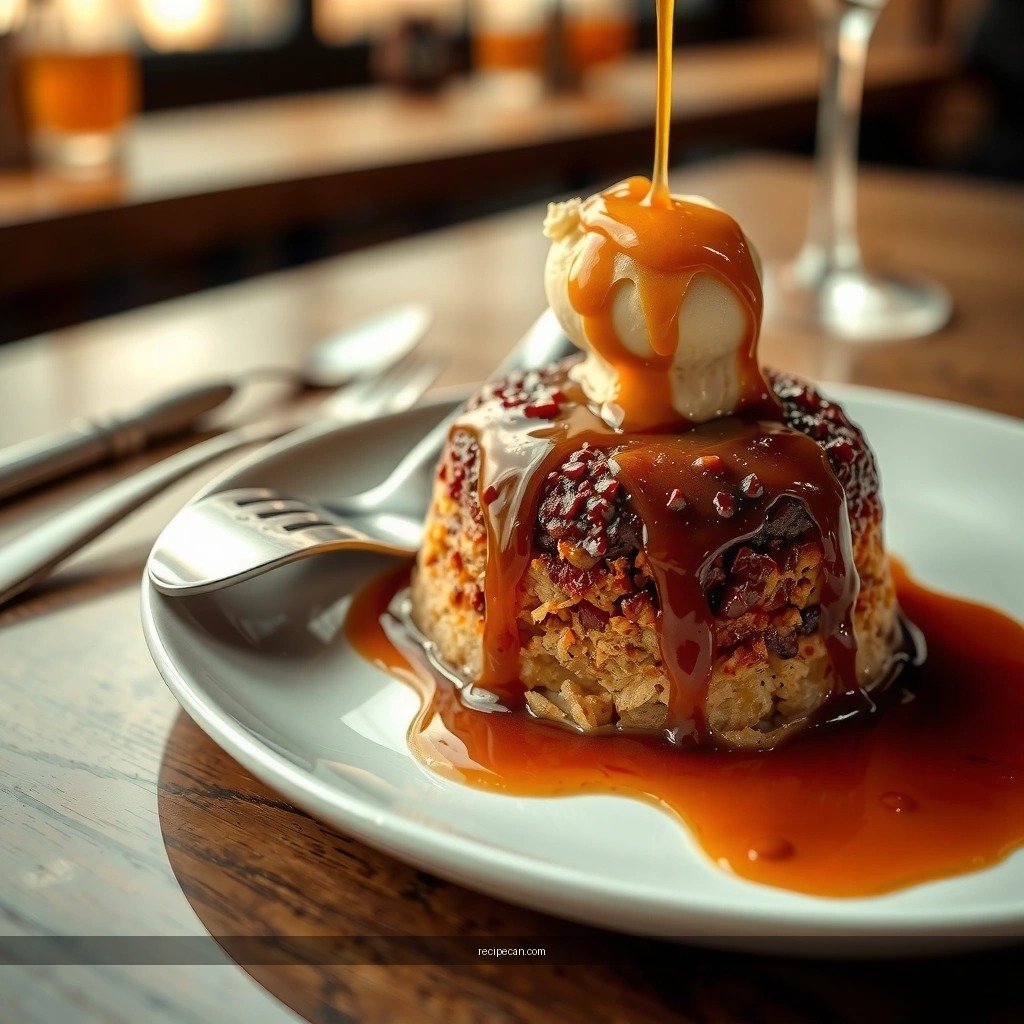
– Use butter, sugar, cream, and a pinch of salt for classic caramel flavor
– Prep ingredients ahead so the caramel cooks smoothly without burning
A great caramel sauce is not just “cooked sugar.” It’s a controlled emulsification and thickening process. The main risks are scorching sugar and crystallization (grainy texture).
Ingredients (classic, pourable caramel)
– Granulated sugar: 1 cup (for roughly 1 1/2 cups sauce; adjust for thickness)
– Butter: 6 tablespoons
– Heavy cream: 1/2–3/4 cup (add carefully for desired pourability)
– Salt: 1/4 teaspoon (helps caramel taste more complex than simply sweet)
– Optional vanilla: 1 teaspoon after removing from heat
Prep steps that prevent burning
Caramel moves fast once the sugar melts, so do these before you start:
– Measure cream and butter and have them ready.
– Line up a heat-safe whisk/spatula.
– Use a light-colored saucepan so you can see color change.
Color target: medium amber. If the caramel goes too dark, it becomes bitter and can overpower the pudding.
—
Step-by-Step Caramel Sauce
– Heat sugar to amber, then carefully stir in butter and cream
– Simmer briefly to thicken, then keep warm or cool slightly before serving
Follow the caramel sequence precisely for silky texture and ease of pouring.
Step 1: Melt sugar (no stirring at first)
In a saucepan over medium heat, add sugar. Let it melt gradually.
– If needed, gently swirl the pan—avoid constant stirring, which can trigger crystallization.
Step 2: Watch for amber and act immediately
When the sugar reaches amber (like light brown sugar), remove from heat briefly if it’s close to the edge of burning.
Step 3: Add butter (it will foam)
Add butter and whisk until smooth. The mixture will bubble vigorously—this is normal.
Step 4: Add cream slowly for a stable emulsion
Pour in warm cream slowly while whisking. The caramel will thin first, then become glossy.
Step 5: Simmer briefly to thicken
Return to low/medium-low heat and simmer 1–3 minutes until the sauce lightly coats a spoon.
Step 6: Adjust thickness and temperature
– If it’s too thick: whisk in a splash of cream.
– If it’s too thin: simmer another 30–60 seconds.
– Keep warm for pouring (or cool slightly for a thicker “drip”).
—
Serving Suggestions & Storage Tips
– Drizzle warm caramel sauce over hot bread pudding for best melt
– Store leftovers in the fridge and reheat gently to preserve texture
Best serving approach
For maximum aroma and melt:
1. Serve bread pudding warm.
2. Spoon or drizzle warm caramel just before serving.
3. Optional: top with a small pinch of flaky salt or toasted nuts for texture.
Why warm caramel matters: it slightly re-liquefies the top layer of pudding, creating a cohesive dessert experience rather than separate “layers.”
Storage tips (practical for real schedules)
– Refrigerate leftovers in an airtight container for up to 3 days.
– For best texture, reheat in the oven or microwave:
– Oven: 300°F (150°C) for 10–15 minutes until warm.
– Microwave: 20–40 seconds per portion, then rest 1 minute.
Caramel storage
– Refrigerate caramel in a sealed jar for up to 2 weeks.
– Rewarm gently in a saucepan over low heat, whisking until smooth.
Freezing (optional)
Bread pudding freezes well for up to 2 months:
– Freeze portions tightly wrapped.
– Thaw overnight in the fridge.
– Reheat gently to avoid drying.
—
Common Fixes for Issues
– If caramel is too thick, loosen with a splash of cream
– If pudding is undercooked, bake longer until the custard is fully set
Even experienced cooks run into predictable issues—here’s how to correct them without starting over.
Caramel turned grainy or crystallized
Causes
– Sugar crystals formed during melting
– Heat was too low or stirred too much
Fix
– Add 1–2 tablespoons warm water and whisk over low heat until smooth.
– In future attempts, avoid stirring early and use medium heat for steady melting.
Caramel is too thick to pour
– Whisk in 1–2 tablespoons warm cream and reheat briefly.
– If you overshoot and it’s too thin, simmer 30–60 seconds.
Bread pudding is undercooked (center looks loose)
Fix
– Bake longer in 5–8 minute increments until set.
– If the top browns too quickly, tent loosely with foil.
Bread pudding is dry or rubbery
Causes
– Overbaked, or bread wasn’t soaked adequately
– Too much liquid evaporated
Fix
– For the next round: ensure full saturation and remove at the first sign of gentle jiggle.
– If you need to rescue now, drizzle a small amount of warm milk/cream over portions and reheat gently.
Custard tastes “eggy”
– Usually from overbaking or using too much egg relative to dairy
– Next time, bake to jiggle-set and keep the temperature steady
—
Bread pudding with caramel sauce is all about the right custard soak and a carefully cooked caramel. Follow the steps for soaking, baking, and making caramel sauce, then serve warm with an extra drizzle—try it tonight and share how it turns out!
At a glance: soak thoroughly, bake just until set, caramelize sugar to amber, then emulsify with butter and cream. With that disciplined process, you’ll reliably produce a dessert that looks restaurant-quality and tastes unmistakably homemade.
Frequently Asked Questions
What’s the best bread pudding recipe with caramel sauce?
A classic bread pudding recipe uses slightly stale bread, warm milk/cream, eggs, sugar, and vanilla so the custard sets without being soggy. For caramel sauce, melt sugar until amber, then whisk in butter and warm cream to create a smooth, pourable texture. Choose bread like brioche or challah for richer flavor, and bake until the center is just set for the best results.
How do I make bread pudding not soggy when adding caramel sauce?
Use slightly stale bread (or toast it lightly) so it absorbs the custard without turning mushy. Let the custard mixture soak for about 15–30 minutes, then bake immediately rather than soaking too long. Serve caramel sauce on top after baking (instead of mixing it into the pudding) so the caramel doesn’t break down the bread pudding’s structure.
Why does my caramel sauce turn grainy for bread pudding?
Grainy caramel sauce usually happens when sugar crystallizes, often due to stirring too much or adding cold ingredients at the wrong time. Melt sugar slowly over medium heat and avoid stirring—swirl the pan instead—then whisk in warm cream and butter gradually to keep the texture silky. If it thickens too fast, add a small splash of warm water or cream and whisk until smooth.
Which bread works best for bread pudding with caramel sauce?
Brioche, challah, and sourdough are popular because they hold their shape while soaking up the egg-milk mixture evenly. If you want a lighter dessert, use French bread or a hearty white loaf, but ensure it’s slightly stale. Cut bread into cubes and use a good custard ratio so every bite stays tender and flavorful with caramel sauce.
How can I store and reheat bread pudding with caramel sauce while keeping it tasty?
Store baked bread pudding covered in the refrigerator for up to 3–4 days, and keep caramel sauce separate if possible to prevent the dessert from getting overly soft. Reheat individual portions in the microwave at 20–30 second intervals or in a 300°F (150°C) oven until warmed through. Warm the caramel sauce gently so it pours again, then drizzle over the reheated bread pudding for the best caramel sauce flavor and texture.
References
- Bread pudding
https://en.wikipedia.org/wiki/Bread_pudding - Caramel
https://en.wikipedia.org/wiki/Caramel_sauce - Crème anglaise
https://en.wikipedia.org/wiki/Cr%C3%A8me_anglaise - Custard
https://en.wikipedia.org/wiki/Custard - https://www.britannica.com/topic/bread-pudding
https://www.britannica.com/topic/bread-pudding - Caramel | Definition, Preparation, & Uses | Britannica
https://www.britannica.com/topic/caramel - https://www.theguardian.com/food/2013/jan/18/caramel-bread-and-butter-pudding-recipe
https://www.theguardian.com/food/2013/jan/18/caramel-bread-and-butter-pudding-recipe - Google Scholar Google Scholar
https://scholar.google.com/scholar?q=bread+pudding+caramel+sauce+recipe - Google Scholar Google Scholar
https://scholar.google.com/scholar?q=caramel+sauce+custard+bread+dessert+milk+eggs - Google Scholar Google Scholar
https://scholar.google.com/scholar?q=bread+pudding+recipe+caramel+sauce