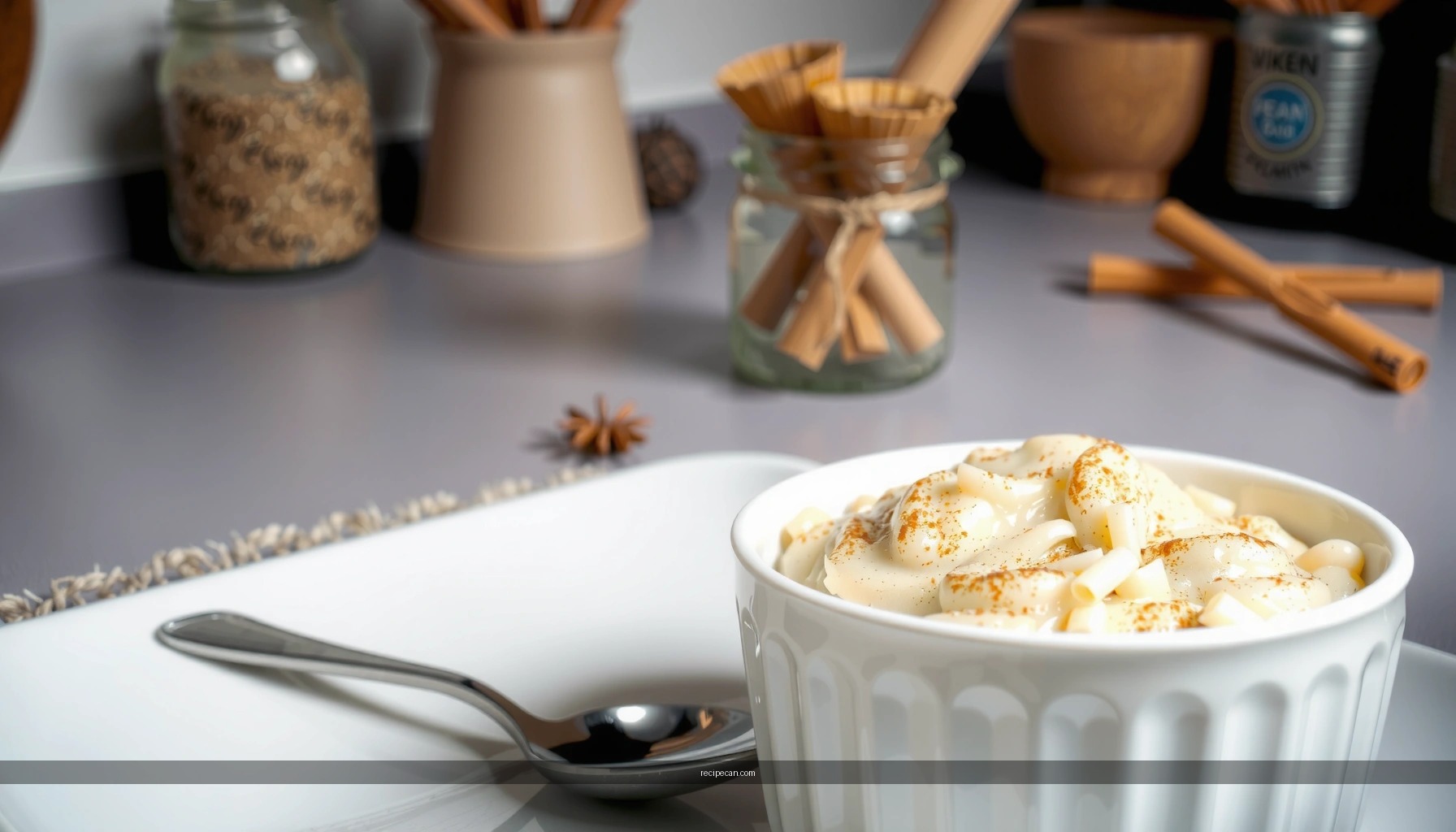
This mom’s old fashioned rice pudding recipe delivers the creamy, classic comfort you want—without turning grainy or watery. The verdict is clear: slow simmering Arborio or short-grain rice in milk with vanilla and a lightly sweetened custard base produces the spoon-tender texture every time. If you’re searching for the exact method to get that nostalgic “stirred, set, and spooned” finish, this recipe tells you how.
This Mom’s old fashioned rice pudding recipe delivers reliably creamy, spoonable pudding by slowly simmering rice in milk and adding sweeteners and spices at the correct stages—so you get tender rice without ending up with a runny or grainy texture. Follow the timing cues closely, adjust liquid only if needed, and finish with butter, cinnamon, and vanilla for that classic, nostalgic comfort.
Mom’s old fashioned rice pudding comes together with a deceptively simple principle: rice thickens the dairy as it cooks, releasing starch that naturally creates body. The “magic” is process control—heat level, stirring frequency, and when you sweeten—because those variables determine whether the starch emulsifies into a smooth custard-like texture or separates into watery puddles. Below, you’ll find a method built for consistency, including what to do when your pudding runs thin, turns too thick, or rice stays firm.
Gather Ingredients for Mom’s Old Fashioned Rice Pudding
Start with pantry staples and keep the ingredient list clean; the flavor comes from proper simmering and warm spices, not from complicated components. This old-fashioned rice pudding approach emphasizes real dairy richness and classic aromatics.
– Rice: Medium-grain white rice (or long-grain, though it may be slightly less creamy). Medium grain releases enough starch for a traditional, creamy pudding.
– Milk: Whole milk for the richest “classic” mouthfeel. For a lighter pudding, you can use reduced-fat milk, but you’ll want to watch thickening time closely.
– Sugar: Granulated sugar for straightforward sweetness and even dissolving.
– Salt: A small amount to sharpen flavor and balance the sweetness.
Optional flavor boosters (recommended)
– Cinnamon: Warm spice that tastes like home and deepens perceived sweetness.
– Vanilla extract: Adds a smooth, fragrant finish that pairs naturally with dairy.
– Ground nutmeg (optional): A subtle layer that complements cinnamon without turning the pudding “holiday-spiced.”
Butter
– Use butter for that classic finish—its fat adds sheen and richness, and it rounds off the flavor so the pudding tastes “finished,” not merely cooked.
Old Fashioned Rice Pudding: Ingredient Impact on Texture (Stovetop Method)
| # | Ingredient | Role in Pudding | Expected Effect | Texture “Score” | Notes |
|---|---|---|---|---|---|
| 1 | Medium-grain white rice | Starch source | Creamier body | ★★★★☆ | Most reliable for classic spoonable texture. |
| 2 | Whole milk | Cream and proteins | Softer custard feel | ★★★★★ | Best for classic flavor and natural thickening. |
| 3 | Granulated sugar | Sweetness + viscosity | Balanced thickness | ★★★★☆ | Add after rice is tender for best control. |
| 4 | Salt | Flavor activation | More “classic” taste | ★★★☆☆ | A tiny amount prevents flat sweetness. |
| 5 | Cinnamon | Warm aromatic spice | Perceived creaminess | ★★★★☆ | Adds depth without changing texture. |
| 6 | Vanilla extract | Finish and fragrance | Smoother flavor arc | ★★★★☆ | Stir in at the end to preserve aroma. |
| 7 | Butter | Fat emulsion | Gloss + richness | ★★★★★ | Add last for maximum aroma and silkiness. |
Step-by-Step Cooking Instructions
Below is the core stovetop method that mirrors how an old-fashioned rice pudding is typically made—slowly simmering the rice until tender, then finishing with sweetness and spice.
1. Rinse (optional) and measure your rice
– For the creamiest classic texture, don’t over-rinse; a quick swirl helps remove excess surface starch without stripping all of it.
– Measure rice and milk precisely for predictable thickening.
2. Start the gentle simmer
– Combine rice, milk, salt, and (optional) cinnamon stick or a pinch of cinnamon.
– Warm on medium-low, bringing to a gentle simmer.
– The goal is a simmer that actively cooks without scorching the milk—frequent small bubbles, not a rolling boil.
3. Stir often to prevent sticking
– Stir every few minutes at first, then more frequently as the pudding thickens.
– Stirring isn’t only about preventing sticking—it also distributes heat so the rice cooks evenly.
4. Cook until rice is truly tender
– Continue simmering until rice is soft and the grains break down slightly at the edges.
– In practice, this usually takes about 30–40 minutes with medium-grain rice (times vary with stovetop heat and pot thickness).
5. Sweeten at the right point
– Once rice is tender, stir in sugar.
– Sweetening later keeps sweetness more controlled and helps you avoid over-thickening early.
6. Finish with warm spices and fragrance
– Add more cinnamon if desired and stir until evenly incorporated.
– Add vanilla near the end for the best aroma.
A reliable doneness check
– Spoon the pudding into a bowl. It should mound slightly and fall slowly, not pour like milk. If it’s looser than you want, it will thicken as it cools—but the rice must already be tender before you judge final thickness.
Achieving the Perfect Creamy Texture
Creamy, classic rice pudding is a balance of starch release and liquid absorption. Many “runny” versions happen when heat is too low or simmering time is cut short; many “gluey” versions happen when the pudding is cooked too hard or sugar is added too early without accounting for thickening.
Use a slow-simmer method (not a boil)
– Milk can scorch if the heat is too aggressive, which also creates off-flavors.
– A steady gentle simmer gives time for starch to emulsify into the dairy—turning milk into pudding.
Adjust milk gradually, not all at once
– If the mixture thickens faster than the rice softens, add warm milk by the tablespoon to splash increments while stirring.
– This prevents abrupt texture changes and keeps the rice cooking evenly.
Aim for “spoonable thickening,” not full set
– The pudding should be thick enough to cling to a spoon but still loose enough to stir smoothly.
– Remember: chilling thickens rice pudding further, so the final warm consistency should be slightly more fluid than the chilled version.
Practical timeline
– Early stage (first 10–15 minutes): rice begins absorbing milk; texture looks thinner.
– Middle stage (15–30 minutes): starch release increases; it becomes creamy and glossy.
– Finish stage (last 5–10 minutes): you can fine-tune thickness and sweetness.
Classic Finishing Touches (Vanilla, Cinnamon, and Butter)
This is where Mom’s old fashioned rice pudding becomes unmistakably “classic.” The finishing ingredients don’t just add flavor—they also change how the pudding feels on the tongue.
1. Vanilla: add at the end
– Stir vanilla extract in after the rice is tender and after sugar is dissolved.
– This protects vanilla’s delicate aroma, which can fade if boiled.
2. Cinnamon: layer your spice
– You can start with a light cinnamon presence during simmering, then add more at the end.
– This approach gives you a fuller cinnamon profile instead of a one-note taste.
3. Butter: add last
– Remove the pot from heat (or lower to the lowest setting), then stir in butter.
– Butter increases richness, improves mouthfeel, and adds a warm “finished” aroma.
4. Taste and tweak
– If you like classic nostalgia (less “dessert-sweet”), keep sugar modest and rely on cinnamon for warmth.
– If you prefer a more dessert-like profile, adjust sugar by small increments—especially after the sugar dissolves.
Quality cue
– When it’s done, the pudding should look creamy and cohesive—not separated, not watery, and not overly thick.
Serving Ideas and Best Ways to Store It
One advantage of old-fashioned rice pudding is its flexibility. It can be served warm for comfort or chilled for a thicker, almost sliceable texture.
Serve warm
– Spoon into bowls and enjoy immediately. Warm rice pudding tastes more “custardy” and comforting.
– For an extra classic touch, sprinkle with a light dusting of cinnamon right before serving.
Serve chilled
– Let it cool at room temperature, then refrigerate.
– Chilled rice pudding becomes thicker and more stable, often ideal for making dessert portions.
Store properly
– Refrigerate in an airtight container.
– It typically keeps 3–4 days in the refrigerator.
– Reheat gently on the stovetop or in the microwave.
Reheating tip
– Rice pudding tightens when cold. To restore spoonability, reheat with a splash of milk and stir until smooth.
Troubleshooting Common Rice Pudding Issues
Even with a great method, rice pudding can behave differently based on rice type, pot material, and stovetop intensity. Use these fixes to recover confidently.
If it’s too thin
– Fix: simmer a few more minutes on low, stirring constantly.
– Add a thickening buffer: keep it at a gentle simmer until the spoon test improves.
– If rice is still firm, it may need more cooking time rather than extra simmering of the dairy alone.
If it’s too thick
– Fix: loosen with warm milk, stirring until smooth.
– Add gradually to avoid returning to runny texture.
If rice is firm (undercooked)
– Fix: continue simmering until tender before serving.
– Don’t sweeten heavily while rice is still undercooked; you want the starch release and texture to stabilize first.
If you notice grainy or separated texture
– Fix: reduce heat and stir more often; consider adding a small splash of warm milk to help emulsify.
– Ensure you’re not boiling aggressively—gentle heat helps the starch integrate smoothly.
If you get a “skin” on top
– That’s normal with milk-based desserts. Stir it in or skim it off.
– Cover the surface with parchment paper or plastic wrap while cooling to minimize skin formation.
In summary, Mom’s old fashioned rice pudding is all about controlling simmer time, stirring to prevent scorching, and timing sweetness and flavor for smooth, creamy results. Cook until the rice is truly tender, fine-tune thickness with gentle heat and small liquid adjustments, then finish with cinnamon, vanilla, and butter for that classic comfort flavor. Serve it warm for cozy bowls or chill it for a thicker, more dessert-like texture—and you’ll get consistent, spoonable pudding every time.
Frequently Asked Questions
What is the best mom’s old fashioned rice pudding recipe for a creamy texture?
A classic mom’s old fashioned rice pudding recipe uses short-grain rice simmered slowly in milk until it breaks down and thickens. For extra creaminess, many families stir in a beaten egg at the end (or add a little extra milk) and cook just long enough to reach a custard-like consistency without curdling. Use full-fat milk and keep the heat gentle so the rice cooks evenly and the pudding stays smooth.
How do you make old fashioned rice pudding without it becoming watery or too thick?
Start by simmering the rice low and slow, stirring frequently so the milk doesn’t scorch and the starch develops for natural thickening. If your mom’s old fashioned rice pudding turns out watery, cook it a bit longer—off and on the heat—until the grains soften and the mixture reduces. If it gets too thick, loosen with a splash of warm milk while stirring, then let it rest briefly so it thickens properly as it cools.
Why does rice pudding sometimes get grainy, and how can you prevent it in a classic recipe?
Graininess often happens when the rice isn’t soft enough or when the heat is too high, which can cook the outside while leaving the inside underdone. Use short-grain rice for better creaminess, and simmer until the grains are tender and the mixture has a silky body. Frequent stirring helps release starch, which is key to achieving that old fashioned rice pudding texture.
Which ingredients are typical in a mom’s old fashioned rice pudding recipe, and what substitutes can you use?
Most traditional versions use rice, milk, sugar, salt, and flavorings like vanilla and cinnamon; some recipes also include butter and raisins. If you want a richer taste, stick with whole milk and consider adding a little butter for mouthfeel. For substitutions, you can swap raisins for chopped dried cranberries or skip them entirely, and use cinnamon plus vanilla for the classic flavor profile.
Best way to reheat and store old fashioned rice pudding so it stays smooth?
Store leftover rice pudding in an airtight container in the refrigerator, and it typically keeps well for about 3–4 days. When reheating, use low heat on the stove or microwave in short intervals, stirring often, and add a small splash of milk if needed to restore creaminess. Let it warm gently—overheating can make the milk separate and create a less smooth texture.
References
- Google Scholar Google Scholar
https://scholar.google.com/scholar?q=mom%27s+old+fashioned+rice+pudding+recipe - Google Scholar Google Scholar
https://scholar.google.com/scholar?q=traditional+rice+pudding+recipe+milk+technique - Google Scholar Google Scholar
https://scholar.google.com/scholar?q=rice+pudding+history+cuisine - Rice pudding
https://en.wikipedia.org/wiki/Rice_pudding - https://www.britannica.com/topic/rice-pudding
https://www.britannica.com/topic/rice-pudding - Custard
https://en.wikipedia.org/wiki/Custard - Simmering
https://en.wikipedia.org/wiki/Simmering - Rice
https://en.wikipedia.org/wiki/Rice - Milk
https://en.wikipedia.org/wiki/Milk - Bain-marie
https://en.wikipedia.org/wiki/Double_boiler