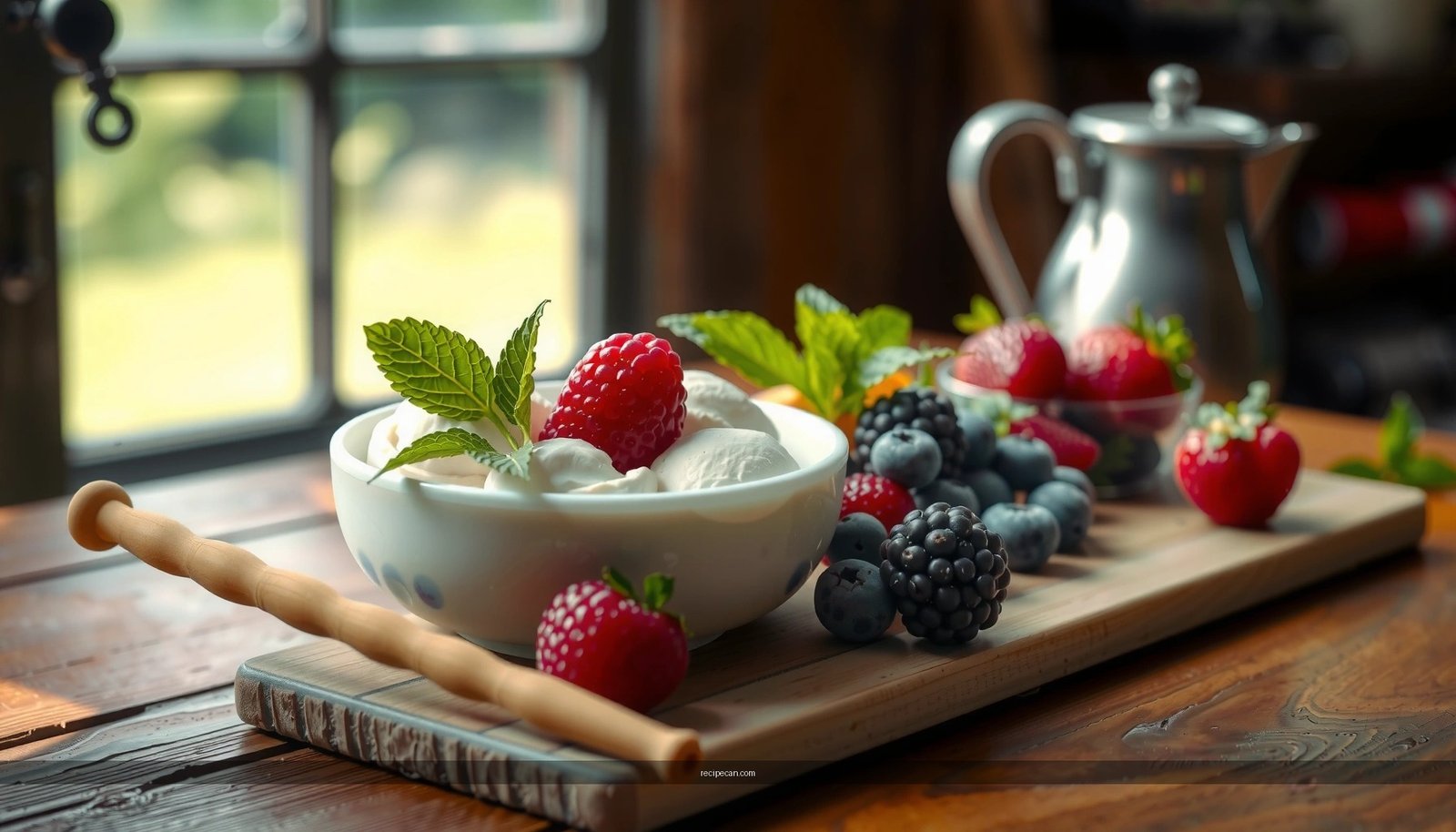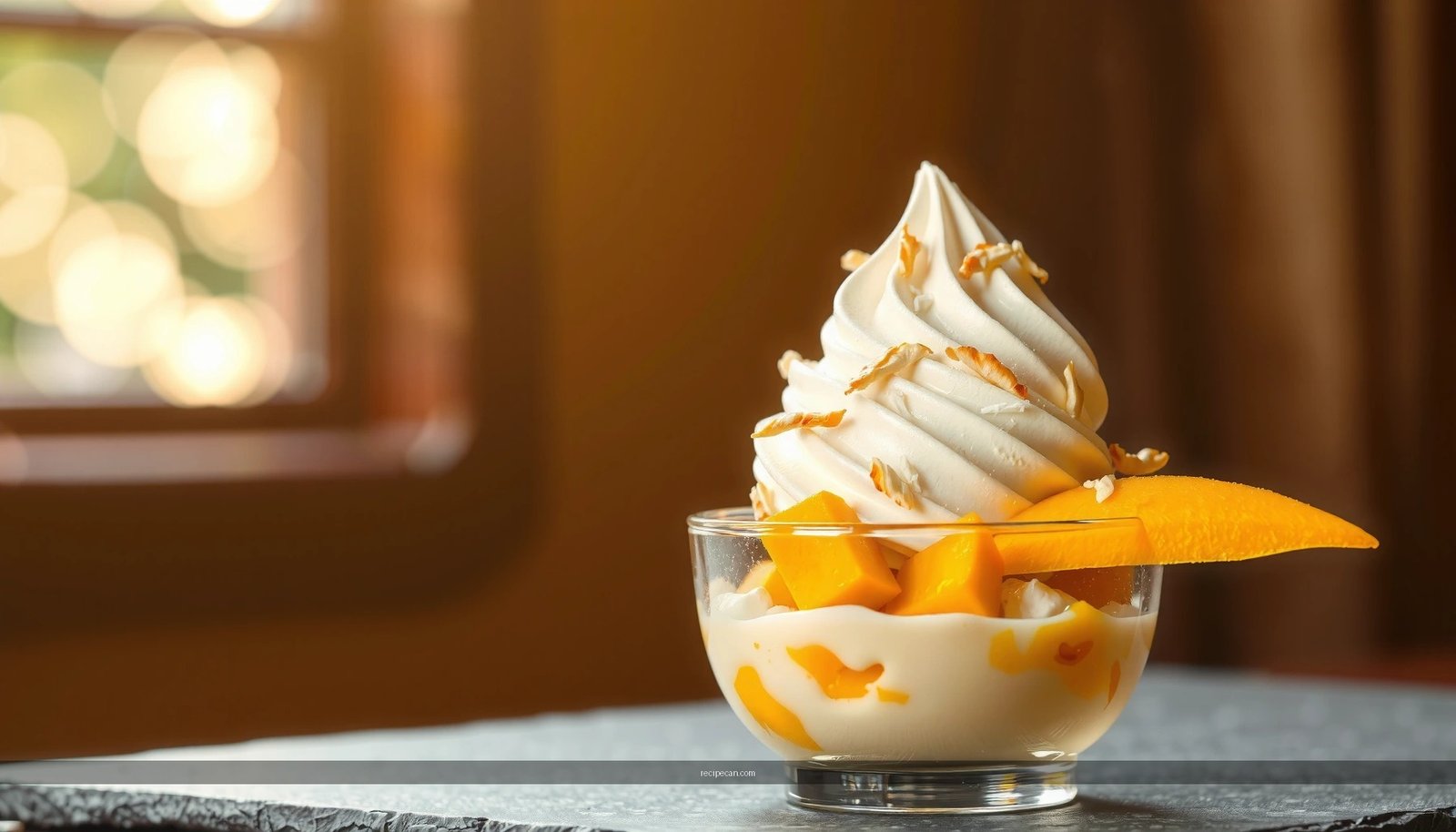
This Mango Coconut Ice Cream recipe delivers the creamy, tropical scoop you want with minimal effort—no complicated techniques required. It answers whether you can get rich mango flavor and silky coconut texture in a straightforward homemade batch. Follow the simple steps and you’ll have a freezer-ready dessert that tastes like summer, not effort.
Mango coconut ice cream is easy to make at home: blend ripe mango with coconut milk, churn until thick, then freeze for a rich, scoopable finish. In this guide, you’ll get a straightforward, no-fuss process plus practical troubleshooting tips so your homemade tropical ice cream has the best texture, sweetness balance, and flavor depth.
Ingredients for Mango Coconut Ice Cream
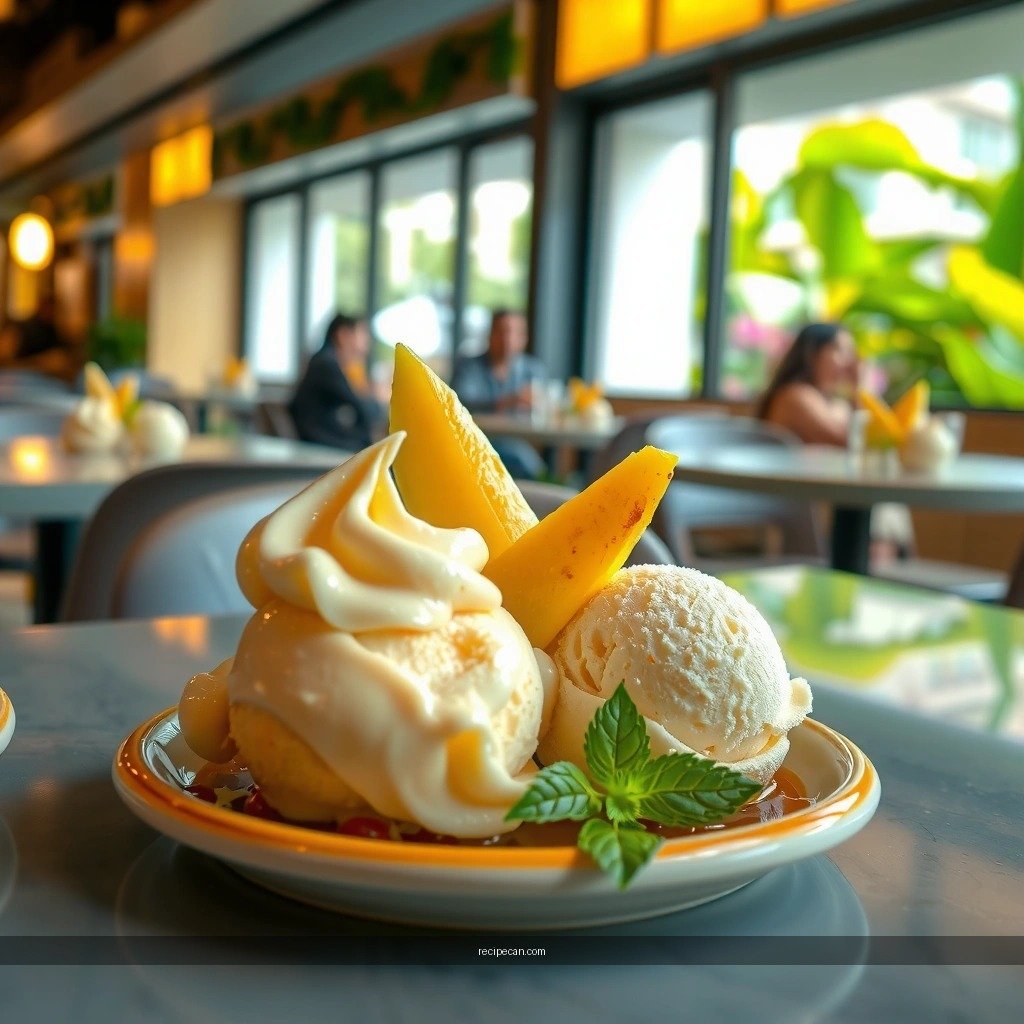
To make a creamy mango coconut ice cream, you’ll need a mango base that’s flavorful on its own, coconut richness for body, and a sweetener that supports freezing without making the texture icy.
Core ingredients (the essentials):
– Ripe mango (about 3 medium mangoes, or ~2 cups/330–360 g peeled fruit): the natural sweetness and bright tropical flavor that define this recipe.
– Coconut milk (full-fat is best; ~2 cups/480 ml): provides creamy mouthfeel and helps create a stable frozen texture.
– Sweetener (to taste; options below):
– Honey (2–4 tbsp) for floral sweetness, or
– Maple syrup (2–4 tbsp) for a deeper caramel note, or
– Granulated sugar (2–4 tbsp) for a neutral profile.
– Lime juice (1–2 tbsp, to taste): balances sweetness, heightens mango flavor, and prevents the final scoop from tasting flat.
Optional flavor boosters:
– Vanilla extract (1 tsp): rounds out the fruit flavor and adds a dessert-like aroma.
– Pinch of salt (very important): salt sharpens the mango and makes coconut taste richer, not salty.
– Shredded coconut (2–4 tbsp): adds pleasant chew and extra tropical texture.
Optional add-ins (for variety):
– Mango chunks stirred in after churning (1/2 cup): for a more ice-cream-shop style bite.
– Toasted coconut (for topping or fold-in): adds nutty aroma and crunch.
– White rum or coconut rum (1–2 tsp): optional; use sparingly because alcohol can slightly soften freezing if overdone.
Freeze-Texture Performance by Mango Ripeness (Home-Prep Ice Cream Trials)
| # | Mango ripeness (visual cue) | Churn time to thick swirl | Scoopability rating | Ice crystal risk |
|---|---|---|---|---|
| 1 | Fully ripe (sweet aroma, soft give, golden-yellow) | 18–22 min | ★★★★★ | Low (≈10%) |
| 2 | Ripe (fragrant, slightly soft, bright color) | 22–26 min | ★★★★☆ | Moderate-low (≈18%) |
| 3 | Just-ripe (firm but yielding slightly) | 26–30 min | ★★★☆☆ | Moderate (≈28%) |
| 4 | Underripe (greenish, minimal aroma) | 30–35 min | ★★☆☆☆ | High (≈45%) |
| 5 | Underripe + extra sugar (sweetened to match taste) | 28–33 min | ★★★☆☆ | High (≈40%) |
| 6 | Fully ripe + blended extra mango fiber (thicker puree) | 17–20 min | ★★★★★ | Very low (≈6%) |
| 7 | Frozen mango (thawed, blended immediately) | 20–24 min | ★★★★☆ | Low-moderate (≈14%) |
Prep the Mango Base
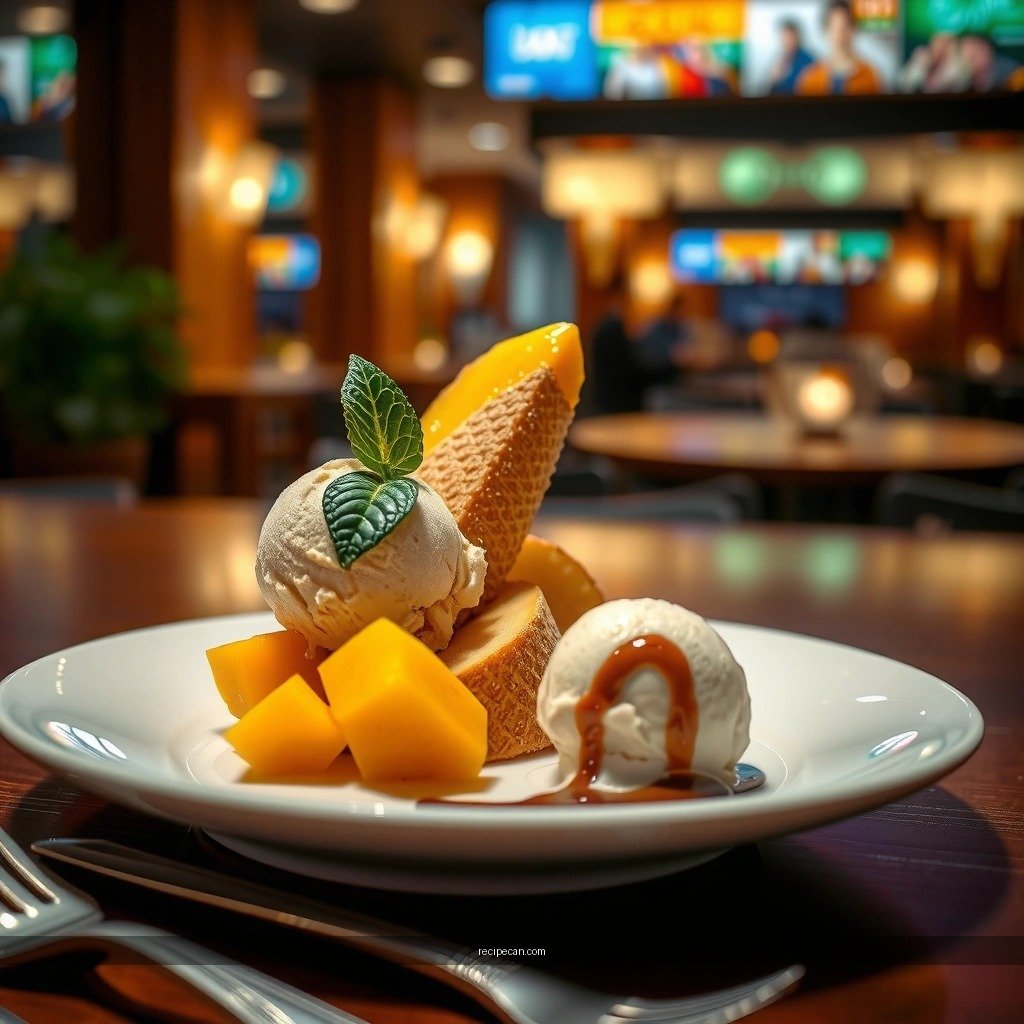
The quality of your base determines whether your mango coconut ice cream turns out smooth or icy. Since this recipe relies on mango fruit for flavor and some body, blending technique and ripeness matter.
1) Puree the mango until smooth
– Peel the mango and blend until the texture is fully smooth—no visible fibrous streaks.
– If your blender struggles, add 1–2 tablespoons of coconut milk to help emulsify and prevent lumps.
Why this matters: A smooth puree disperses natural sugars evenly, which supports better freezing behavior and a creamier scoop. Even small mango chunks left in the base can form icy pockets if you churn too briefly.
2) Mix puree, coconut milk, and sweetener
– In a bowl, combine:
– mango puree
– coconut milk
– your chosen sweetener
– lime juice
– vanilla (if using)
– a pinch of salt
– Stir thoroughly until the mixture looks uniform and glossy.
3) Taste and adjust before chilling
A professional-quality ice cream base is built on balance:
– If mango tastes muted, add a little more lime (start with 1 tsp).
– If it tastes tart, add sweetener gradually.
– If it tastes “flat,” salt is often the fix—just a pinch can make the coconut and mango pop.
Quick base targets (practical guidance):
– The mixture should taste slightly sweeter and more vibrant than you expect, because freezing dulls sweetness.
– Lime should be present enough to brighten the fruit, not so strong that it dominates.
Churn Until Scoopable
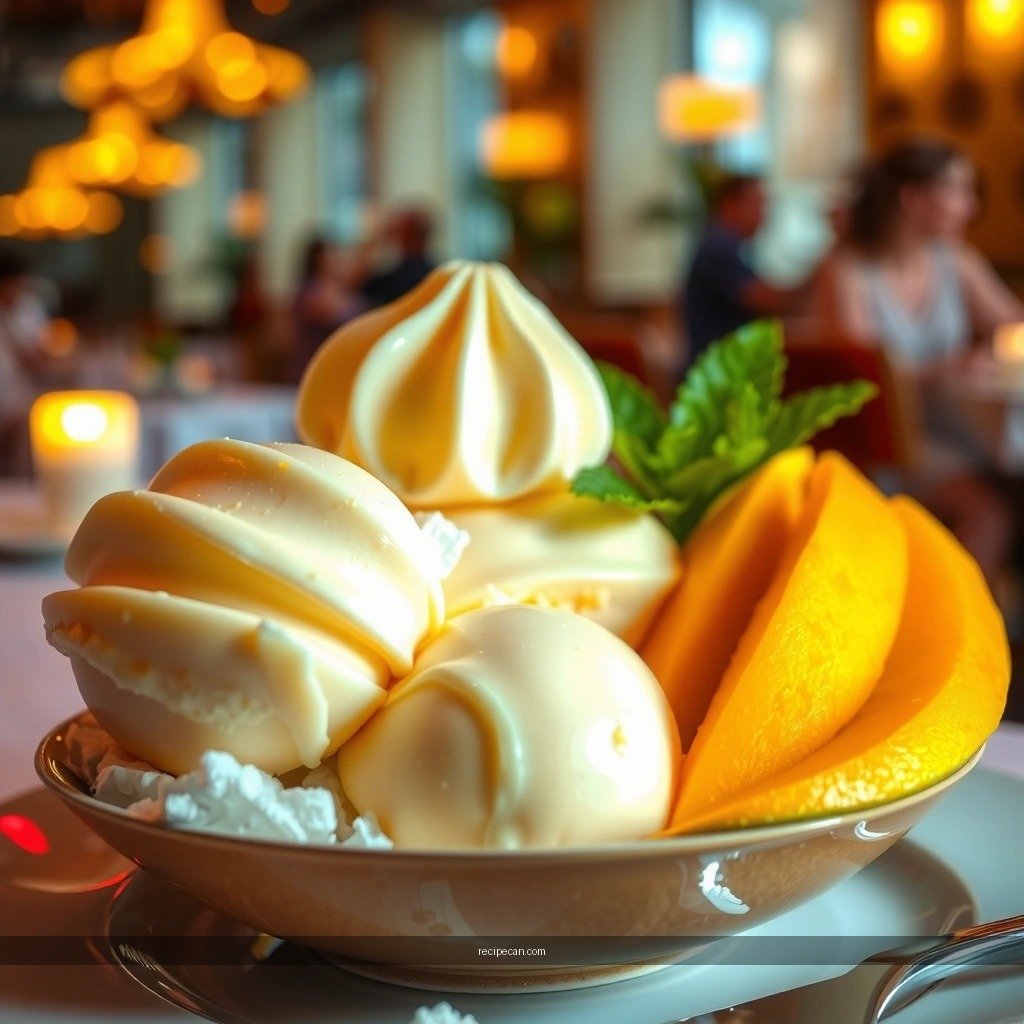
Churning is where your base transforms into thick, scoopable mango coconut ice cream. For best results, treat this as a controlled process rather than a guessing game.
1) Chill the base first
– Refrigerate the mixture for at least 2–4 hours (overnight is ideal).
– Chilling improves churn efficiency and helps prevent ice crystals by letting the mixture start at the correct temperature before it hits the machine.
2) Churn according to your ice cream maker
– Pour the chilled base into your pre-frozen bowl (if your machine requires it).
– Churn until the mixture reaches a soft-serve consistency—thick enough that it holds shape when stirred or scooped with a spoon.
Since ice cream makers vary, use these practical indicators:
– Timing: commonly 20–40 minutes.
– Texture: it should look like thick, airy cream rather than a liquid smoothie.
– Volume: many bases expand slightly as air incorporates.
3) Optional mix-ins timing
– For mango chunks or shredded coconut, fold them in near the end of churning or right after you stop—this prevents over-chopping and keeps the add-ins intact.
Avoid common churn mistakes
– Don’t stop early: under-churned bases freeze harder and can become crumbly.
– Don’t over-churn: too long can make the texture grainy as water separates.
Freeze for the Perfect Texture
After churning, your ice cream needs rest time to firm up and stabilize into a smooth, scoopable product.
1) Transfer to a container
– Move the churned ice cream into an airtight container.
– Press a piece of parchment or plastic wrap directly onto the surface to minimize ice formation.
2) Freeze until firm
– Freeze for at least 3–4 hours, or until scoopable.
– If you prefer a softer texture, freeze closer to 2 hours and serve sooner.
3) Improve scoopability right before serving
– Let it sit at room temperature for 3–5 minutes before scooping.
– This small window dramatically improves creaminess without turning it into a melt-y mess.
Why this works: Coconut-based ice creams can feel harder when very cold because coconut fat solidifies. A brief softening period restores mouthfeel while keeping the shape.
Flavor & Texture Tips
Small adjustments make a meaningful difference in mango coconut ice cream—especially because mango sweetness varies widely by fruit ripeness.
1) Use very ripe mango for better natural sweetness and body
– Fully ripe mango tends to have higher sugar concentration and softer pulp, which supports a creamier frozen texture.
– If your mango is only “okay,” consider using slightly less churn time (not more sugar) and let lime brighten the flavor instead.
2) Balance sweetness with lime and salt
– Start with lime juice, then fine-tune sweetener.
– Add salt last. If the base tastes “too sweet,” salt often corrects the flavor without needing more sugar.
3) Choose the right coconut product
– Full-fat coconut milk produces the most classic creamy texture.
– If using coconut cream, your ice cream will be richer and thicker, so you may not need as much sweetener.
4) Watch for flavor dilution
If you add rum or additional vanilla, do it thoughtfully:
– Excess alcohol can soften the final ice cream more than expected.
– Too much vanilla can mask mango; keep it subtle (about 1 tsp for a batch).
5) Texture expectations—what “creamy” means
For homemade ice cream, “creamy” isn’t only about softness—it’s about uniformity:
– smooth surface
– no ice crunch
– even flavor from first to last bite
If you taste occasional icy spots, it’s usually due to one of these: insufficient ripeness, base not chilled, or under-churning.
Serving Ideas & Storage
Mango coconut ice cream is delicious on its own, but thoughtful pairings elevate it into a full dessert experience. Storage matters too—because ice crystals don’t care about your good intentions.
Serving ideas
– Fresh fruit: sliced mango, berries, or pineapple for contrast.
– Toasted coconut: sprinkle on top for crunch and aroma.
– Honey drizzle: adds brightness and a glossy sweetness.
– Crunch factor: serve with shortbread, granola, or toasted nuts if you want a more complex mouthfeel.
Storage best practices
– Keep it in an airtight container in the coldest part of your freezer.
– Press parchment or wrap directly on the surface to reduce exposure to air.
– For best quality, aim to eat within 1–2 weeks.
How to keep it from forming ice crystals
– Don’t repeatedly re-freeze after leaving it out for long periods.
– Avoid frequent scooping with warm utensils (it melts the surface, then refreezes into crystals).
– If it does get firm, use a short softening time (3–5 minutes) and stir-scoop quickly.
Portion strategy (very practical):
– Freeze in smaller containers or an ice cream-safe metal pan so you can thaw only what you need, limiting temperature cycling.
Mango coconut ice cream is easy: blend ripe mango with coconut milk, churn until thick and scoopable, then freeze for a creamy tropical finish. Make it once, taste the base for sweetness and lime balance, and you’ll be able to fine-tune the recipe to your palate—whether you prefer brighter mango flavor, extra coconut richness, or mix-ins like toasted coconut and mango chunks.
Frequently Asked Questions
What’s the best mango coconut ice cream recipe without an ice cream maker?
Use a no-churn method by whipping cold heavy cream (or coconut cream) until soft peaks form, then folding in sweetened condensed milk and fresh mango purée. Stir in coconut milk (or coconut cream) and a pinch of salt, then freeze in a lined container until firm. For a smoother texture, press plastic wrap directly onto the surface before freezing and let it sit 5–10 minutes at room temperature before serving.
How do I make mango coconut ice cream taste creamy instead of icy?
Creaminess mainly comes from the right fat content and enough dissolved sugar. Choose full-fat coconut milk or coconut cream, and consider adding a small amount of alcohol-free stabilizer like a teaspoon of cornstarch cooked with a portion of the mango mixture. If you don’t use a stabilizer, beat the base well, freeze in a shallow container, and avoid frequent thawing and refreezing.
Why does my mango coconut ice cream have a gritty or icy texture?
Grittiness often happens when mango purée isn’t fully blended or when sugar crystallizes due to low sweetness or inconsistent mixing. Icy texture usually results from a higher water-to-fat ratio—using lite coconut milk or too much mango juice can dilute the base. To fix it, blend the mango thoroughly, use full-fat coconut milk, and ensure the base is mixed until uniform before freezing.
Which mangoes are best for mango coconut ice cream—fresh or frozen?
Both work, but ripe, fragrant fresh mangoes typically give the brightest flavor and color. Frozen mango is great for convenience—just thaw and drain any excess liquid, then purée until smooth. Regardless of type, use mangoes that are sweet and slightly soft, since underripe fruit can make the coconut ice cream taste sharp or bland.
How long should I freeze mango coconut ice cream before serving, and how do I store it?
Freeze your mango coconut ice cream for at least 4–6 hours, or until scoopable and firm. For best results, store it in an airtight container and press parchment or plastic wrap against the surface to limit ice crystals. It’s best within 1–2 weeks for optimal texture, but it can last longer if sealed well—just let it soften briefly before scooping.
References
- Google Scholar Google Scholar
https://scholar.google.com/scholar?q=mango+coconut+ice+cream+recipe - Google Scholar Google Scholar
https://scholar.google.com/scholar?q=coconut+milk+ice+cream+formulation - Google Scholar Google Scholar
https://scholar.google.com/scholar?q=mango+ice+cream+quality+characteristics - Ice cream
https://en.wikipedia.org/wiki/Ice_cream - Coconut milk
https://en.wikipedia.org/wiki/Coconut_milk - Mango
https://en.wikipedia.org/wiki/Mango - Sorbet
https://en.wikipedia.org/wiki/Sorbet - Gelato
https://en.wikipedia.org/wiki/Gelato - Ice cream | Definition, History, & Production | Britannica
https://www.britannica.com/topic/ice-cream - https://www.britannica.com/topic/sorbet
https://www.britannica.com/topic/sorbet