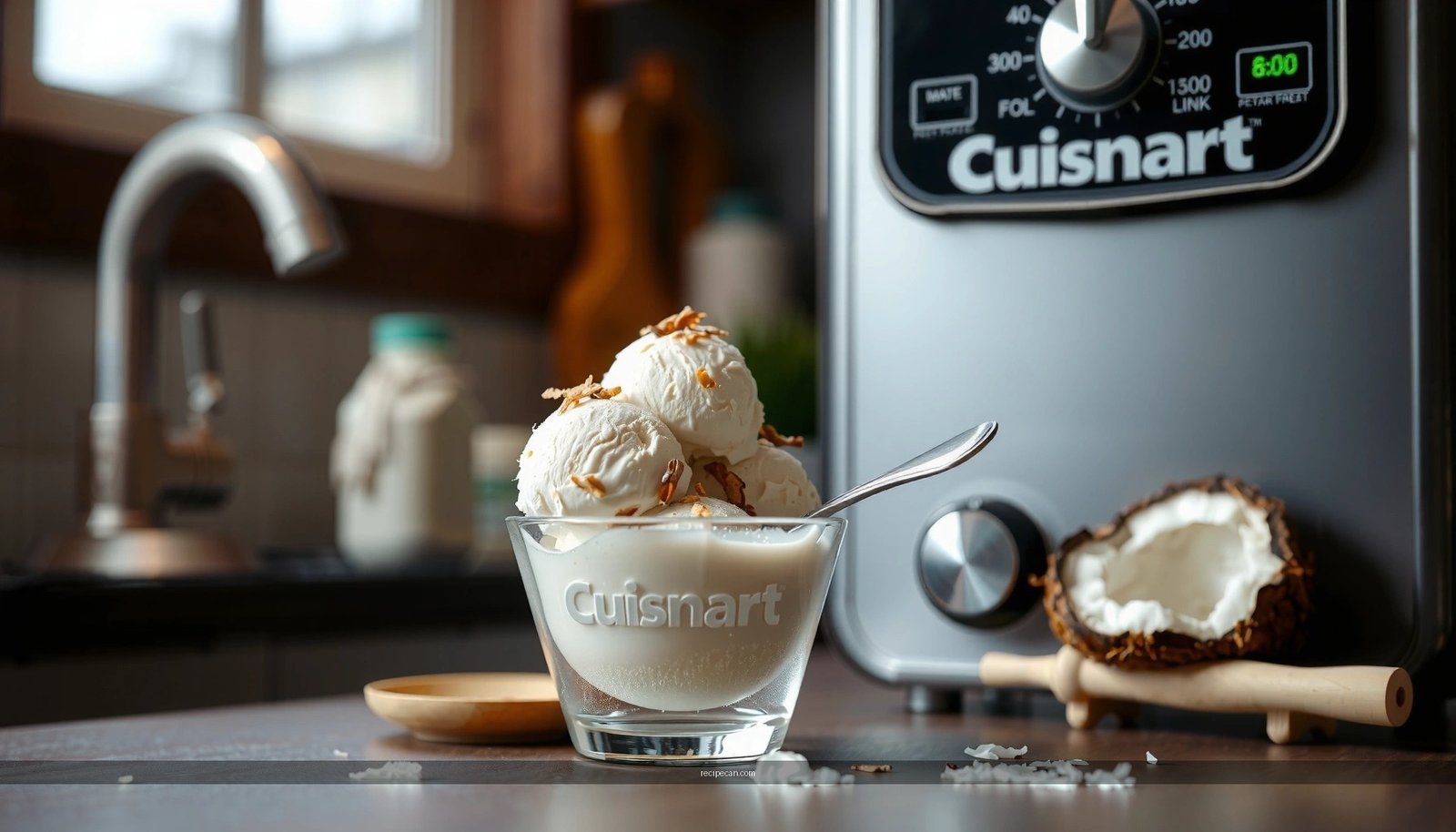
Get the easiest coconut ice cream recipe using a Cuisinart machine, with clear, step-by-step directions that produce a scoopable churn every time. This straightforward method answers whether you can make rich, creamy coconut ice cream at home without guesswork—using your Cuisinart for consistent texture. If you want homemade coconut ice cream with minimal effort and maximum results, this is the one to follow.
Make smooth, scoopable coconut ice cream with your Cuisinart by building a simple custard from coconut milk and yolks, then chilling and churning until thick and creamy. This no-fuss approach delivers a richer texture than “shake-and-freeze” methods because the custard stabilizes the fat and ice crystals for a premium homemade finish.
Choose the Right Coconut Ingredients
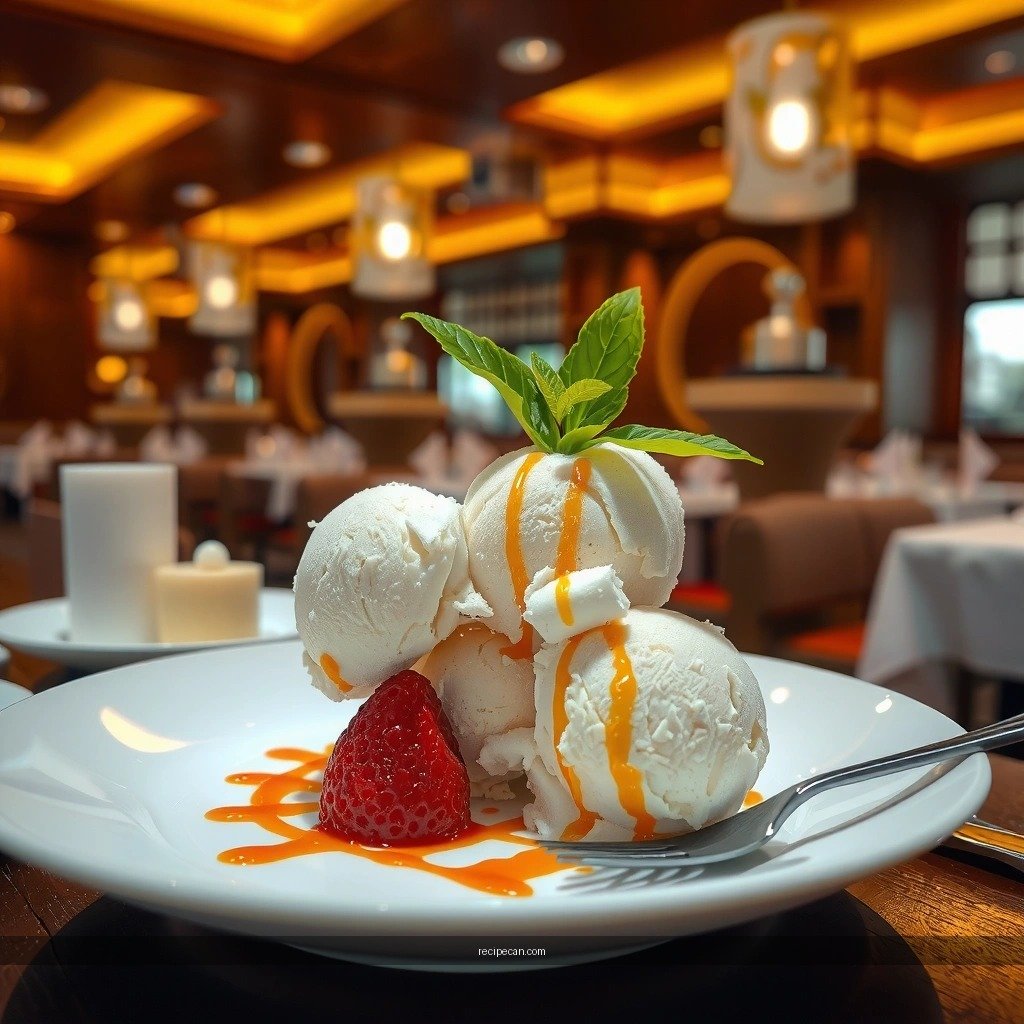
The quality of your coconut base determines everything: mouthfeel, aroma, and how well the ice cream holds shape after freezing. For a Cuisinart churn, you want a coconut mixture with enough fat to feel creamy, but not so much “coconut-only” heaviness that the flavor tastes one-note.
– Use full-fat coconut milk (and optionally coconut cream) for the best texture
Full-fat coconut milk provides the right balance of fat and liquid for both the custard and the final churn. If you want a more “luxury” body—especially if your kitchen is warm—add coconut cream (typically canned) for a thicker, more intensely coconut profile. A helpful guideline is to replace 1/4 to 1/3 of the coconut milk with coconut cream.
– Add a little sugar and salt to balance sweetness and enhance flavor
Coconut is naturally aromatic but can taste flat without seasoning. Sugar doesn’t just sweeten; it also helps prevent iciness by lowering the freezing point. Salt heightens coconut’s natural notes (think toasted-coconut sweetness) and keeps the finish from tasting “canned” or overly mild.
Practical sourcing tip: look for “canned full-fat coconut milk” rather than “light” coconut milk if your goal is a scoopable, spoon-friendly texture. Light versions contain less fat, which can lead to a softer set and more visible ice crystals after freezing.
Coconut Base—What Impacts Texture Most (for Ice Cream Churners)
| # | Coconut Product Type | Typical Fat | Best For | Churn Result Rating | Fit with Custard |
|---|---|---|---|---|---|
| 1 | Canned full-fat coconut milk | ~17–22% fat | Balanced creamy body | ★★★★★ | Excellent |
| 2 | Canned coconut cream | ~22–30% fat | Extra richness & scoop firmness | ★★★★☆ | Very good |
| 3 | Full-fat coconut milk + 1/4–1/3 cream | ~19–25% fat | “Restaurant-style” texture | ★★★★★ | Excellent |
| 4 | Light coconut milk | ~5–9% fat | Lighter spoonability | ★★★☆☆ | Moderate |
| 5 | Unsweetened coconut drink | ~1–4% fat | Coconut flavor, less creaminess | ★★☆☆☆ | Weak |
| 6 | Canned “coconut milk” with guar gum | ~17–22% fat | Slightly more stable mouthfeel | ★★★★☆ | Very good |
| 7 | Reconstituted coconut milk (powder) | Varies widely | Convenience pantry option | ★★★☆☆ | Inconsistent |
Make the Custard Base for Creaminess
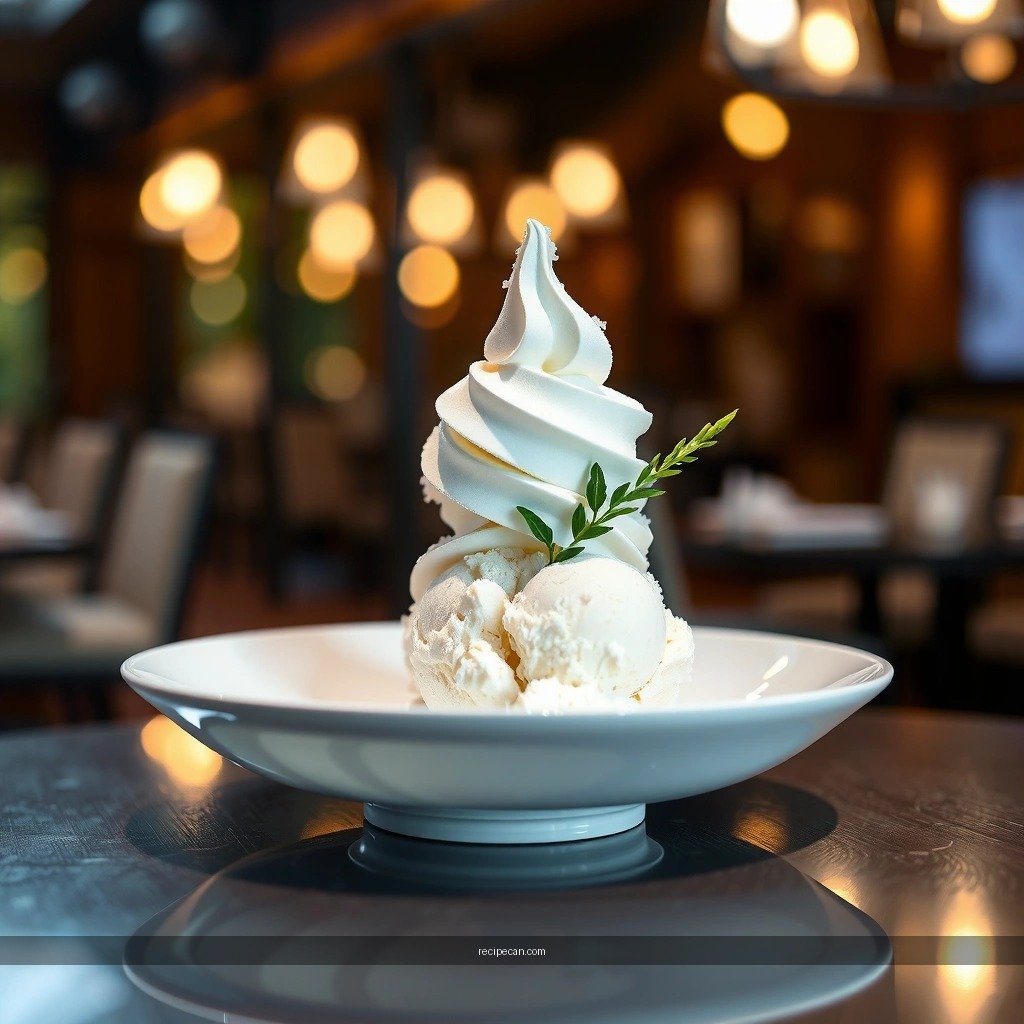
If you want coconut ice cream that tastes “real” and feels silky rather than icy, the custard base is the critical step. The goal is to gently thicken the mixture so it coats a spoon, creating a stable emulsion of fat, water, and egg proteins.
– Whisk yolks (or use a quick custard method) until smooth before heating
Whisk yolks thoroughly to eliminate streaks. If you temper the eggs (mixing a small amount of hot coconut mixture into the yolks first), you reduce the risk of scrambling and ensure even thickening. For a quick custard method, keep the process controlled: whisk consistently, and warm gradually rather than using high heat.
– Warm the mixture gently to thicken without scrambling
Use medium-low heat and stir constantly. The custard should thicken to a light nappe stage—think “coats the back of a spoon.” Overheating can curdle egg proteins and create a grainy texture, which will carry through even after churning.
Analytical note: the custard improves texture by slowing ice crystal growth during freezing. Coconut fat alone can’t fully prevent crystal formation because coconut lacks egg-based emulsifiers and proteins that help stabilize the mix at the molecular level. That’s why your Cuisinart coconut ice cream will taste smoother when the base is properly thickened.
Chill the Mixture Before Churning
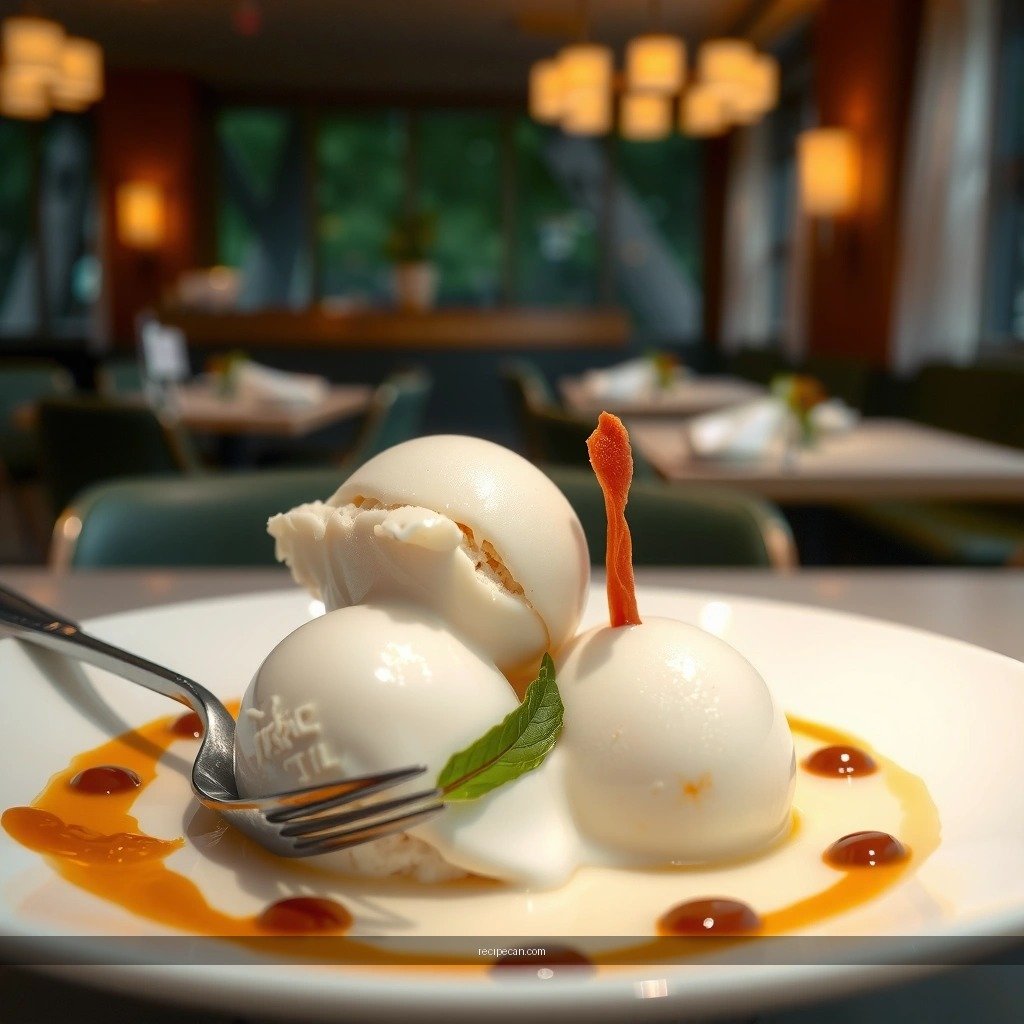
Chilling is not optional if you’re aiming for thick, scoopable coconut ice cream. A cold base gives your Cuisinart a head start: faster freezing in the bowl, more consistent churn time, and fewer large ice crystals.
– Refrigerate until fully cold for faster, smoother churning
Chill at least 4 hours, ideally overnight. If the mixture is warm when it hits the freezer bowl, you’ll often see prolonged churn time and a softer result. Cold base also helps maintain a stable emulsion during the churn.
– Cover and rest the base so flavors meld
Cover the custard to prevent coconut aromas from dissipating. Resting time also allows sugar to dissolve fully and lets the coconut flavor integrate, producing a more cohesive “coconut-forward” taste rather than a sharp, dairy-like sweetness.
Business-friendly workflow tip: you can prep the custard in the morning, refrigerate while you’re busy, and churn in the evening—making homemade production predictable and low-stress.
Churn in Your Cuisinart Ice Cream Maker
Once your custard is cold and the Cuisinart bowl is properly frozen, the churn is straightforward—but timing matters. The goal is to stop at soft-serve thickness, not at fully frozen hardness.
– Follow your Cuisinart bowl instructions for timing and operating
Most Cuisinart freezer bowls require long pre-freezing (often 16–24 hours) so the barrel reaches a sufficiently cold temperature. Follow the manual for your exact model to avoid under-churning. Start churning, then pour the mixture slowly to maintain consistent freezing around the dasher.
– Stop when the ice cream reaches soft-serve thickness
Watch texture rather than the clock. When the mixture turns from liquid to thick and aerated—about the consistency of soft-serve—stop the machine. Over-churning can lead to a grainier mouthfeel because the mixture can partially freeze in the bowl and over-aerate.
Operational insight: if your churn seems unusually slow, check two factors—(1) whether the bowl was fully frozen and (2) whether your custard was truly refrigerated (not just “cool”).
Freeze to Set the Scoop
Churning gives you creamy structure, but freezing gives you scoopability. After churning, transfer the ice cream promptly so it can set evenly.
– Transfer to a container and freeze until firm
Use an airtight container to minimize freezer burn and protect coconut aroma. Flatten the surface and press plastic wrap directly onto the ice cream before closing the lid if you want a professional finish.
– Stir once during early freezing for a smoother consistency (optional)
For extra smoothness, stir once during the first hour of freezing. This helps break up any early ice clusters that form as the mixture transitions from churned aeration to a stable frozen structure.
If you need clean portioning later, store in a container with straight sides so scoops don’t tear the surface. Commercially, this is a small step that improves repeatability and presentation.
Mix-Ins and Serving Tips
Coconut ice cream is ideal for add-ins because coconut has a naturally warm, tropical flavor that pairs well with sweet, roasted, and crunchy textures.
– Try toasted coconut, vanilla, chocolate chips, or toasted nuts
Toasted coconut intensifies flavor and adds texture; vanilla rounds out the custard profile without masking coconut. Chocolate chips work especially well when the coconut base is not overly sweet—contrast keeps the overall taste balanced.
– Serve slightly softened for the creamiest scoops
Coconut ice cream firms up in the freezer. For the best texture, let it sit 3–5 minutes at room temperature before scooping (or just until it looks glossy and slightly softened). This improves perceived creaminess and makes flavors taste more vivid.
Mix-in timing guidance: fold mix-ins in right after churning so they distribute evenly. If using nuts or cookies, ensure they’re cool and dry to avoid introducing excess moisture that can freeze into icey bits.
- For a premium “coconut bar” profile: add toasted coconut flakes and a pinch of flaky sea salt right after churning.
- For dessert-plating style: add chocolate chunks and chill until firm for clean bite structure.
- For a lighter, aromatic approach: add vanilla bean paste and keep mix-ins minimal so coconut remains the lead flavor.
After churning and freezing, your coconut ice cream should be creamy, scoopable, and packed with coconut flavor. Follow the custard + chill + Cuisinart churn steps for the best texture, then customize with your favorite mix-ins—make your batch today and enjoy it straight from the freezer.
Making coconut ice cream successfully with a Cuisinart comes down to three controllable factors: start with full-fat coconut for body, build a properly thick custard for stability, and chill the base long enough to churn efficiently. Once you get those fundamentals right, the machine does the hard work—so you can focus on personalization with toasted coconut, chocolate, nuts, and the serving texture you prefer.
Frequently Asked Questions
What coconut ice cream recipe works best with a Cuisinart ice cream maker?
A reliable coconut ice cream recipe for a Cuisinart typically uses a custard base (coconut milk plus cream, egg yolks, and sugar) because it churns smoothly and sets nicely. Look for recipes that specify chilling the base before churning, since cold mix helps your Cuisinart reach the right freezing speed. If you want a stronger coconut flavor, choose unsweetened coconut milk or add shredded toasted coconut during the final minutes of churning.
How do I adapt a coconut ice cream recipe for my Cuisinart ice cream maker model?
Start by matching the recipe’s total volume to your Cuisinart bowl capacity, usually around the max fill line to prevent overflow. For many Cuisinart models, you’ll churn the chilled coconut ice cream mixture in the pre-frozen bowl until it reaches a soft-serve consistency, then transfer to a container and freeze to firm up. If your model’s churn time differs, follow the manual’s guidance and check texture rather than relying on exact minutes.
Why is my coconut ice cream from a Cuisinart icy instead of creamy?
Icy coconut ice cream often comes from an under-chilled base, too-long churning, or insufficient fat/sugar balance in the recipe. Make sure your coconut ice cream base is thoroughly chilled (often at least 4 hours) and churn only until soft-serve thickness. Also, avoid using low-fat coconut milk or skipping eggs if the recipe calls for a custard, since those changes can reduce emulsification and lead to iciness.
Which coconut ingredients should I use—coconut milk, coconut cream, or shredded coconut—for Cuisinart ice cream?
For the creamiest coconut ice cream in a Cuisinart, coconut cream or full-fat coconut milk provides more fat and a smoother texture. Shredded coconut is great for flavor and texture, but toast it first and add it near the end of churning so it doesn’t sink or become overly hard. If you want a distinct “coconut ice cream recipe cuisinart” result, use unsweetened coconut for better control of sweetness and to keep the custard balanced.
What’s the best way to flavor coconut ice cream in a Cuisinart without overpowering it?
Start with vanilla extract or a small pinch of salt to enhance coconut flavor without making it taste harsh. For a more “coconut-forward” profile, use toasted coconut and a bit of coconut extract, but go slowly—coconut extract can be potent. Chill your coconut ice cream base well before churning, because flavors meld during rest, helping your Cuisinart churn a well-balanced, aromatic final batch.
References
- https://scholar.google.com/scholar?q=coconut+ice+cream+recipe+coconut+milk Google Scholar
https://scholar.google.com/scholar?q=coconut+ice+cream+recipe+coconut+milk - Google Scholar Google Scholar
https://scholar.google.com/scholar?q=coconut+milk+ice+cream+formulation+stabilizers+emulsion - Google Scholar Google Scholar
https://scholar.google.com/scholar?q=Cuisinart+ice+cream+maker+coconut+ice+cream+recipe - https://pubmed.ncbi.nlm.nih.gov/?term=coconut+ice+cream
https://pubmed.ncbi.nlm.nih.gov/?term=coconut+ice+cream - https://pubmed.ncbi.nlm.nih.gov/?term=coconut+milk+ice+cream
https://pubmed.ncbi.nlm.nih.gov/?term=coconut+milk+ice+cream - https://pubmed.ncbi.nlm.nih.gov/?term=ice+cream+emulsion+stabilizers+overrun+structure
https://pubmed.ncbi.nlm.nih.gov/?term=ice+cream+emulsion+stabilizers+overrun+structure - Ice cream
https://en.wikipedia.org/wiki/Ice_cream - https://en.wikipedia.org/wiki/Coconut_milk
https://en.wikipedia.org/wiki/Coconut_milk - Ice cream | Definition, History, & Production | Britannica
https://www.britannica.com/topic/ice-cream - https://www.sciencedirect.com/search?qs=ice+cream+emulsion+stabilizers+overrun
https://www.sciencedirect.com/search?qs=ice+cream+emulsion+stabilizers+overrun