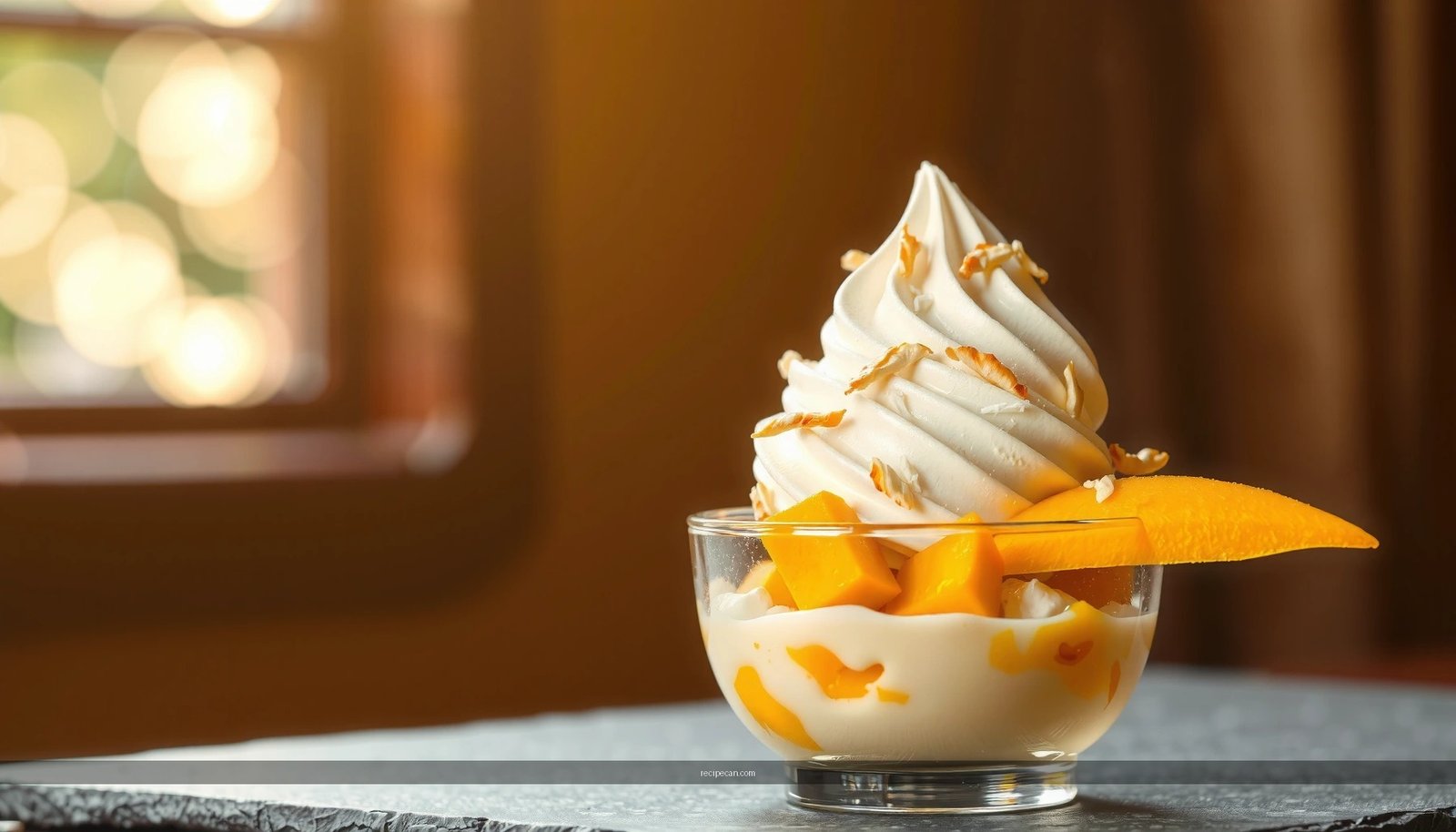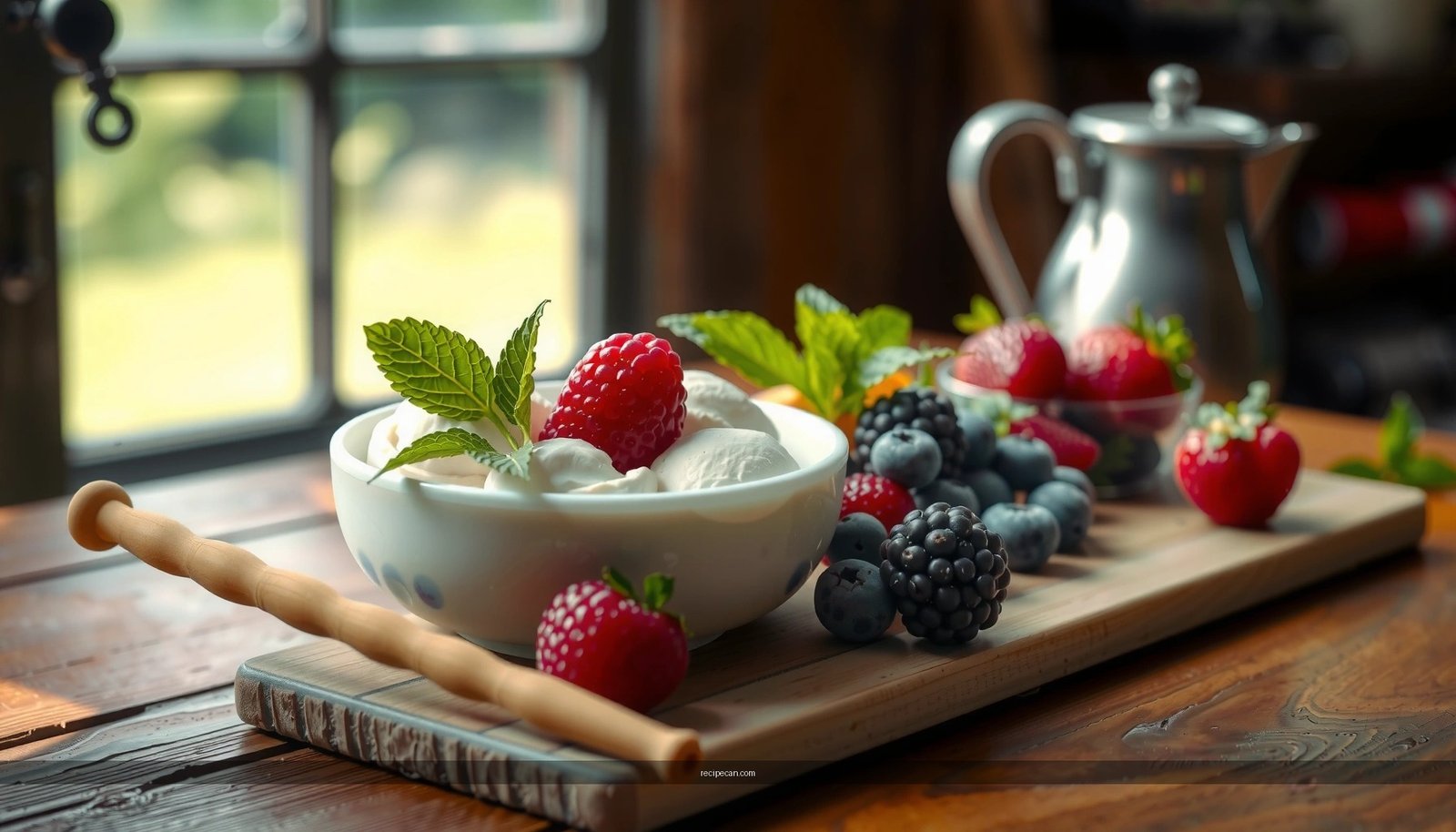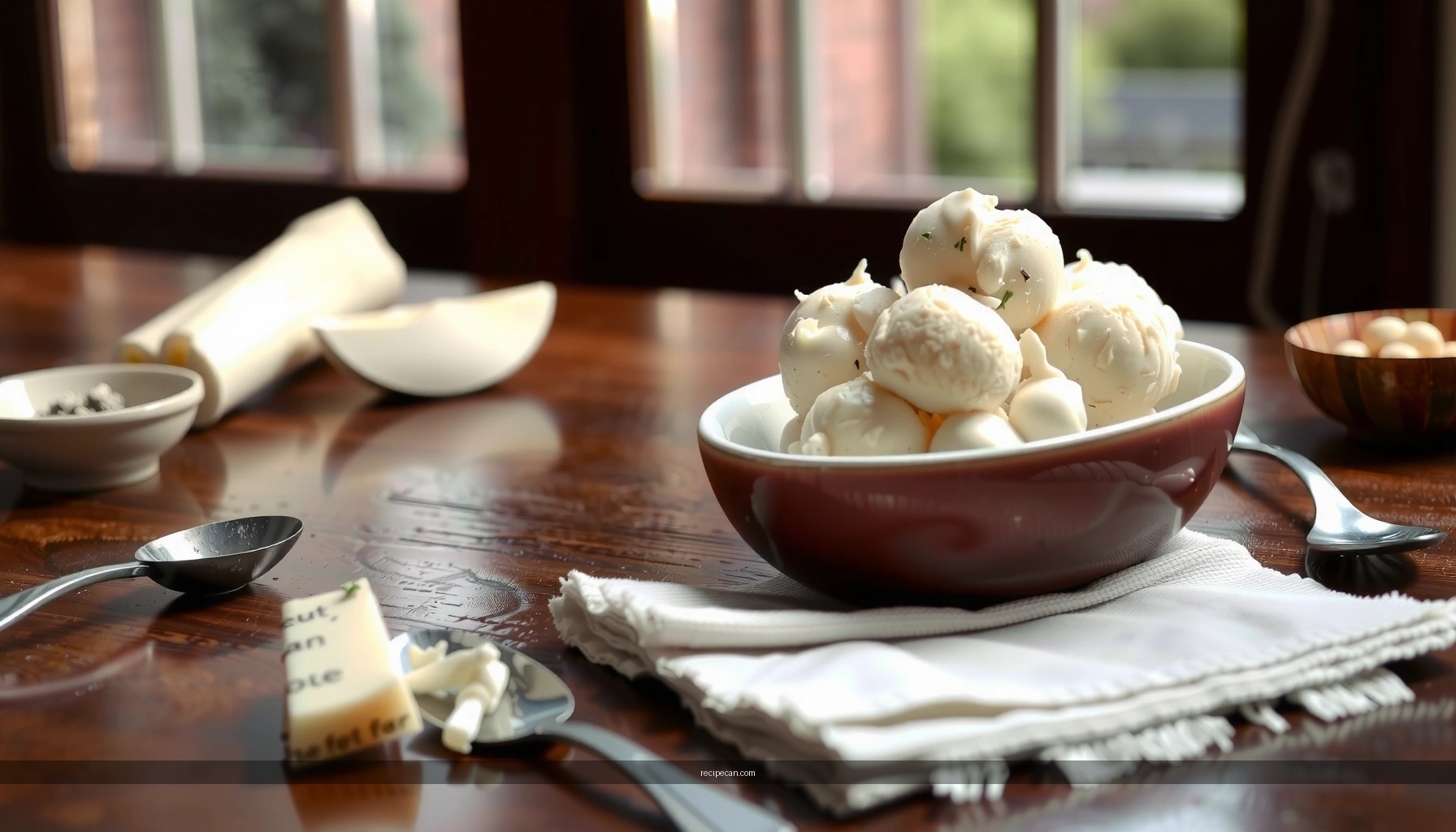
This goat cheese ice cream recipe delivers the creamy, tangy homemade dessert you’re craving, with a custard base that tastes like something between artisan gelato and cheesecake. Follow the steps below and you’ll nail the signature tang without graininess, so the flavor stays bright and the texture stays silky. If you want one clear winner for tangy goat flavor at home, this is it.
Make creamy goat cheese ice cream at home by gently steeping goat cheese into a warm custard base, then churning and freezing until scoopable. This method balances tangy goat cheese flavor with just enough sweetness for a smooth, rich texture—while the cooking and straining steps help prevent curdling and graininess.
Ingredients You’ll Need for Goat Cheese Ice Cream

– Goat cheese, heavy cream, milk, sugar, and egg yolks (for a custard base)
– Optional add-ins like honey, vanilla, or a pinch of salt for flavor balance
For best results, treat goat cheese as a “flavor ingredient” that also affects structure. Fresh chèvre varies widely in moisture and acidity, so the goal is to use enough fat (from cream) and enough emulsification (from a properly cooked custard) to keep the base cohesive.
Core ingredients (what each one does)
– Goat cheese (chèvre): Provides the tangy flavor and a mild lactic note. Choose a log-style, fresh goat cheese that melts smoothly.
– Heavy cream: Supplies fat for a creamy mouthfeel and supports a stable, scoopable texture.
– Milk: Lightens the base slightly while helping the custard cook evenly.
– Sugar: Balances acidity and improves freezing texture by lowering the freezing point.
– Egg yolks: Thicken the custard; their proteins emulsify fat and water so the ice cream stays smooth instead of separating.
Flavor balancers (optional)
– Vanilla rounds off goat cheese’s tang and adds aromatic sweetness.
– Honey (instead of all sugar) adds floral sweetness that pairs naturally with chèvre.
– Pinch of salt makes the goat cheese taste more “defined” and prevents the base from tasting flat.
– Jam or caramel swirls can add contrast in both sweetness and texture.
Goat Cheese Choice: Texture & Melting Impact (Real-World Buying Guide)
Goat Cheese Styles & Expected Behavior in Custard Ice Cream
| # | Goat Cheese Style | Typical Melting Behavior | Best Use in This Recipe | Result Rating |
|---|---|---|---|---|
| 1 | Fresh log chèvre | Melts smoothly when warmed gently | Primary melting cheese | ★★★★★ |
| 2 | Herbed chèvre | Melts well; added herbs can intensify flavor | Vanilla or honey pairing | ★★★★☆ |
| 3 | Goat cheese crumbles (fresh) | Melts unevenly unless broken very finely | Works with extra whisking | ★★★★☆ |
| 4 | Aged chèvre | Higher acidity; can curdle if overheated | Use low heat + strain | ★★★☆☆ |
| 5 | Whipped chèvre | May separate unless fully incorporated | Best folded after chilling | ★★★☆☆ |
| 6 | Goat cheese with added rennet | Generally melts, but varies by brand | Follow gentle steeping | ★★★★☆ |
| 7 | Reduced-fat chèvre | Lower fat increases iciness risk | Increase cream slightly if needed | ★★☆☆☆ |
Step-by-Step Goat Cheese Ice Cream Base
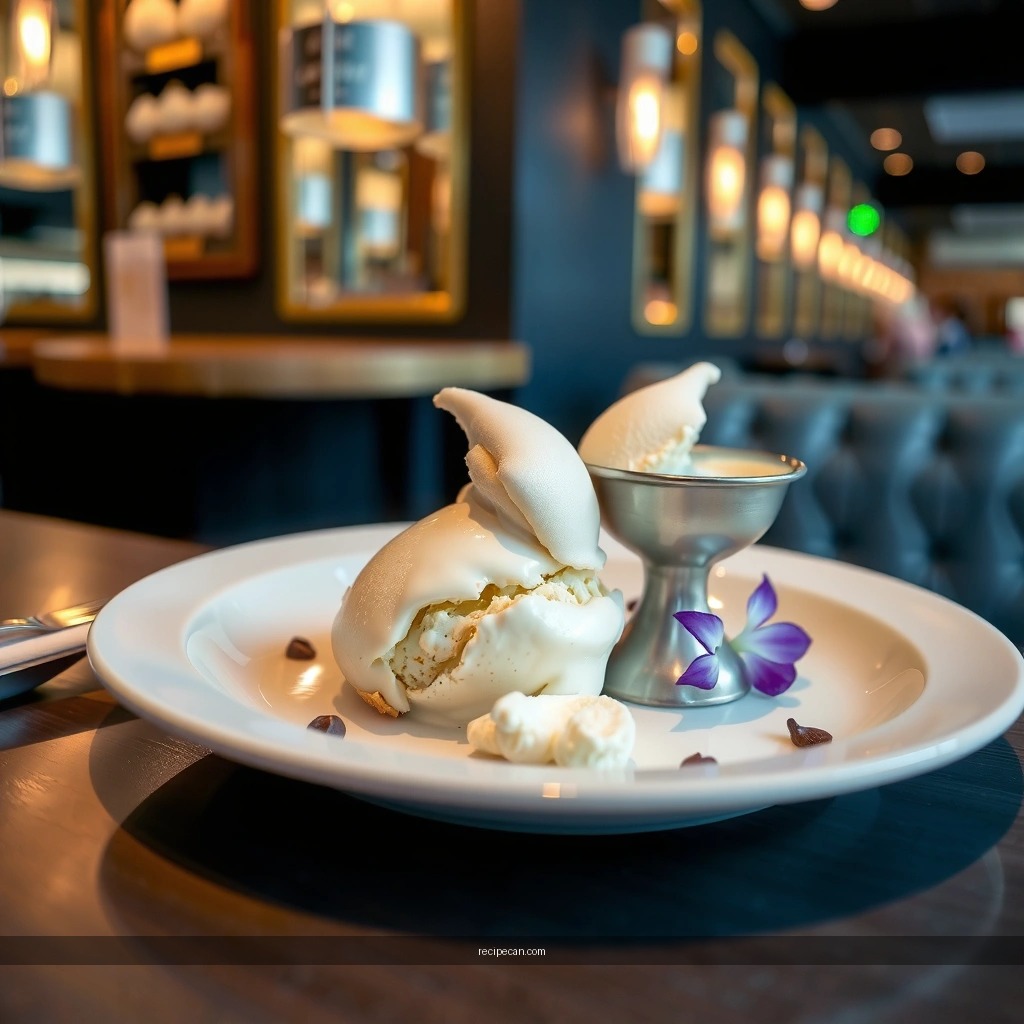
– Warm the dairy and melt the goat cheese gently, then whisk in sugar
– Temper egg yolks and cook until thickened, then strain for extra smoothness
A custard-based churn is the most reliable framework for goat cheese ice cream because egg yolks stabilize the dairy emulsion and reduce the chance of grainy texture. The key is gentle heat: goat cheese can curdle if the dairy gets too hot or if the yolks cook too aggressively.
1) Warm the dairy and steep/melt goat cheese
1. In a saucepan, combine milk, heavy cream, and sugar.
2. Warm over medium-low until the sugar dissolves and the dairy is steaming (small bubbles at the edges are okay; a full boil is not).
3. Add crumbled goat cheese and whisk gently until smooth.
4. Simmer very lightly for about 2–3 minutes, just enough to fully melt the cheese into the base.
Why this matters: melting before the yolks prevents protein shock. Goat cheese contains curd-forming proteins and acidity—so you want it dissolved into the fat and dairy before the custard phase begins.
2) Temper and cook the custard
1. In a bowl, whisk egg yolks until they look slightly lighter.
2. Slowly pour a ladle of the warm goat cheese dairy into the yolks while whisking constantly (this is tempering).
3. Pour the tempered yolk mixture back into the saucepan.
4. Cook on low heat, stirring with a silicone spatula, until the custard thickens enough to coat the back of the spoon.
Target texture: custard should reach roughly 170–175°F / 77–80°C. If you don’t have a thermometer, use the spoon test and keep heat low—once thickened, stop immediately.
3) Strain for an ultra-smooth finish
– Strain the custard through a fine-mesh sieve into a clean container.
– Press gently with a spatula to remove any undissolved bits.
Straining is what transforms “good homemade” into “restaurant-smooth,” especially when goat cheese quality or moisture varies.
4) Chill completely
– Cover and chill until cold throughout (at least 4 hours, ideally overnight).
– Cold base churns more efficiently and produces finer ice crystals.
Chilling and Churning Tips

– Chill the base thoroughly (at least 4 hours, or overnight) before churning
– Churn until thick and creamy, then freeze to set properly
Even the best custard can produce icy texture if you skip proper chilling. Think of chilling as part of the recipe’s “active ingredients,” not just waiting time.
Chilling best practices
– Chill in a shallow container if possible; it cools faster and more evenly.
– Stir once mid-chill (optional) if your container has a wide surface area, to help cool uniformly.
– If you want precise timing, cool to refrigerator temperature first, then move to the coldest part of your fridge.
Churning best practices
– Ensure your ice cream maker bowl is fully frozen (often 12–24 hours in advance for most compressor-freezers).
– Churn until the mixture looks thick like soft-serve. Over-churning can sometimes make texture too dense before freezing.
Freeze to set
– Transfer to a freezer-safe container.
– Freeze until scoopable—usually 3–6 hours depending on your freezer.
Getting the Best Texture (No Curdling, No Graininess)
– Keep heat low while cooking the custard and avoid boiling
– Strain after cooking and chill well to reduce “grainy” ice crystal texture
Curdling happens when proteins tighten and separate into lumps. Graininess happens when ice crystals are too large—often caused by insufficient chilling, rapid temperature changes, or a base that wasn’t stabilized properly.
How to prevent curdling
– Cook on low heat and stop as soon as custard coats a spoon.
– Avoid boiling at every stage. Once boiling starts, proteins and fats can separate quickly.
– Temper yolks slowly—rushing can scramble eggs and create grain.
How to prevent graininess
– Strain the custard to remove tiny curd particles or undissolved goat cheese granules.
– Chill fully before churning—cold base forms smaller ice crystals.
– Leave enough time in the freezer after churning for the ice cream to set evenly.
Troubleshooting quick fixes
– If you see small curds: strain again while still warm, then chill fully. The strain may rescue the texture.
– If it tastes too tangy: increase sweetness slightly next batch (usually an extra 1–2 tablespoons sugar for the same portion size).
– If it’s too icy: next time, increase cream fraction or ensure overnight chilling and adequate freezer set time.
Flavor Variations and Mix-In Ideas
– Add honey or fig jam for sweet contrast to tang
– Try a swirl of caramel, berries, or toasted nuts for extra depth
Goat cheese’s tang shines when paired with sweet, aromatic, or fruity elements. The best variations also respect the ice cream’s delicate emulsion—so mix-ins should be added carefully to preserve texture.
Honey-chèvre classic
– Replace part of the sugar with honey (stir honey into the warm dairy during steeping).
– Add a splash of vanilla for a “cheesecake-like” aroma without being heavy.
Fig jam swirl
– Warm fig jam just enough to loosen.
– Spoon into the churned ice cream during the final stages of freezing (or after transferring to the container), then swirl gently with a knife.
– Fig’s dark fruit sweetness counters goat cheese tang with a sophisticated finish.
Caramel or berry swirls
– Caramel adds deep sweetness; keep it thick so it doesn’t bleed too much.
– Berries (fresh or cooked down) should be reduced to avoid excess water. Excess water increases ice crystallization.
Toasted nuts (structural crunch)
– Toast nuts (almonds, pistachios, walnuts) until fragrant and cool completely before mixing.
– Fold in during the last minute of churning or after transfer—whichever your machine allows without overmixing.
Practical mixing guideline: for best scoopability, aim for mix-ins that are chopped small and relatively dry (jam is fine; watery fruit purée is not).
Storage and Serving Recommendations
– Store in an airtight container and press parchment directly on the surface
– Let it soften 5–10 minutes before scooping for best texture
Proper storage maintains the smoothness you worked hard to create. Homemade churns can develop freezer burn or texture drift if exposed to air.
Storage steps
– Transfer ice cream to an airtight container.
– Press parchment or wax paper directly on the surface before sealing the lid. This reduces oxidation and ice crystals caused by exposed surfaces.
– Freeze consistently (avoid frequent door openings if possible).
How long it lasts
– For best texture, enjoy within 2–4 weeks. After that, flavor and texture can degrade due to freezer aging.
Serving
– Let the ice cream soften 5–10 minutes at room temperature before scooping.
– If it becomes too soft, refreeze briefly—homemade ice cream often responds better to short corrections than long melts.
Wrap-Up
Homemade goat cheese ice cream is all about a gently cooked custard base, thorough chilling, and careful churning for a smooth, tangy result. If you want the most consistent texture, focus on low, controlled heat to prevent curdling, strain for clarity, and freeze fully before serving; then choose one variation—honey, fig jam, caramel, or toasted nuts—to tailor the flavor to your palate. Follow the steps above, make a batch today, and note what you love most so you can refine your “signature” next time.
Frequently Asked Questions
What makes goat cheese ice cream different from regular dairy ice cream?
Goat cheese ice cream uses tangy goat cheese to create a distinct flavor that’s slightly acidic and more complex than typical vanilla or cream-based recipes. Because goat cheese can be firmer than cow’s milk cheese, recipes usually include proper heating and straining to help it blend smoothly. The result is a creamy texture with a noticeable tang that pairs well with honey, berries, or chocolate.
How do you keep goat cheese ice cream smooth and prevent it from getting grainy?
The key is gentle heating and careful mixing: warm the cream mixture slowly until the goat cheese fully dissolves, then strain if needed before churning. Avoid boiling, which can cause the dairy solids to tighten and create a grainy texture. If your mixture looks curdled, blending and straining while it’s still warm can often rescue the texture before you churn. Churning at the right temperature also helps maintain a velvety goat cheese ice cream consistency.
Why does goat cheese need to be added carefully in an ice cream base?
Goat cheese contains proteins and fats that react differently depending on temperature, which is why it can separate if added too quickly or overheated. Adding it gradually to a warm (not boiling) custard or cream base helps it emulsify evenly for consistent goat cheese ice cream. Many best goat cheese ice cream recipes use a custard-style base because the egg yolks stabilize the mixture and improve scoopability.
Which goat cheese works best for an easy goat cheese ice cream recipe?
For most goat cheese ice cream recipes, a soft, spreadable goat cheese is easiest to blend and yields a smoother texture. Fresh chèvre is popular because it provides a bright tang, while slightly aged goat cheese can add a deeper, funkier flavor. If your chèvre is very crumbly, soften it first or blend it with a small portion of the warm dairy to avoid lumps. Choose a cheese you enjoy eating on its own, since the flavor will come through in the finished frozen dessert.
What is the best way to flavor goat cheese ice cream without overpowering the tang?
Start with complementary flavors like honey, vanilla, caramel, roasted nuts, or berries to balance the natural acidity of goat cheese. If you’re adding chocolate, opt for cocoa or dark chocolate in moderate amounts so the tang doesn’t disappear—or conversely, so it doesn’t clash. Taste the base after the goat cheese is melted, then adjust sweetness gradually before chilling and churning. This approach helps you create a balanced goat cheese ice cream that tastes smooth, creamy, and well-rounded.
References
- https://scholar.google.com/scholar?q=goat+cheese+ice+cream+recipe Google Scholar
https://scholar.google.com/scholar?q=goat+cheese+ice+cream+recipe - Google Scholar Google Scholar
https://scholar.google.com/scholar?q=goat+cheese+in+ice+cream+formulation - Google Scholar Google Scholar
https://scholar.google.com/scholar?q=frozen+dessert+goat+cheese+ice+cream+stabilizers - Goat cheese
https://en.wikipedia.org/wiki/Goat_cheese - Ice cream
https://en.wikipedia.org/wiki/Ice_cream - Frozen custard
https://en.wikipedia.org/wiki/Frozen_custard - Custard
https://en.wikipedia.org/wiki/Custard - Ice cream | Definition, History, & Production | Britannica
https://www.britannica.com/topic/ice-cream - https://pubmed.ncbi.nlm.nih.gov/?term=ice+cream+stabilizers+review
https://pubmed.ncbi.nlm.nih.gov/?term=ice+cream+stabilizers+review - https://pubmed.ncbi.nlm.nih.gov/?term=ice+cream+emulsions+fat+crystallization
https://pubmed.ncbi.nlm.nih.gov/?term=ice+cream+emulsions+fat+crystallization