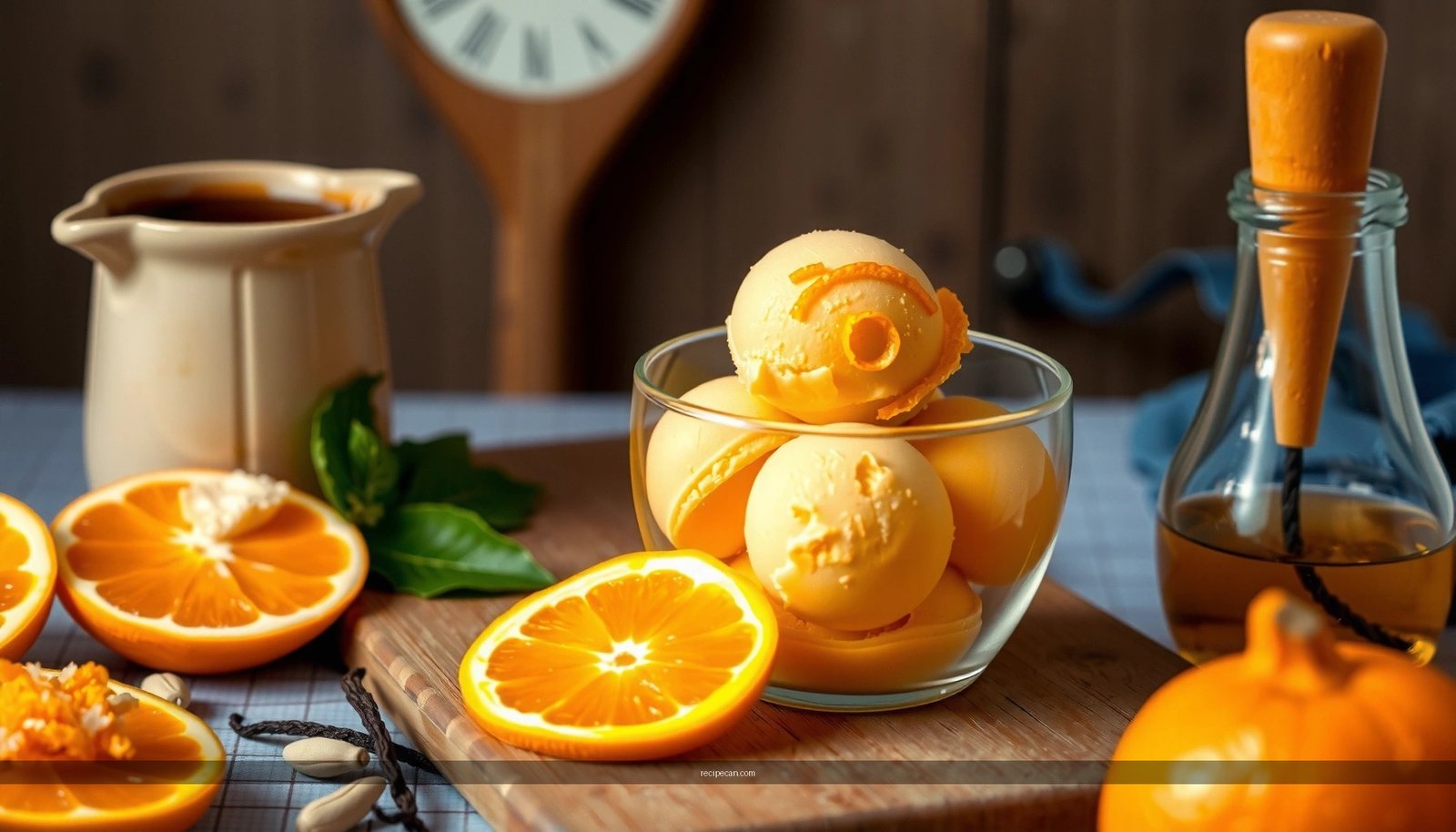
Want an orange sherbet recipe without an ice cream maker—and still get scoopable, spoon-crisp results at home? This recipe delivers the orange sherbet texture you expect by using a simple churn-free method with just a few ingredients. If you’ve been avoiding maker-free desserts because they turn icy, this is the clear fix.
Make orange sherbet at home without an ice cream maker by chilling the base thoroughly and then using a freeze-and-stir routine (stir every 30–45 minutes until scoopable). This approach controls ice crystal growth, so you get a smooth, bright, spoonable texture with an easy orange sherbet recipe that doesn’t require special equipment.
Ingredients for Easy Orange Sherbet (No Churn Needed)
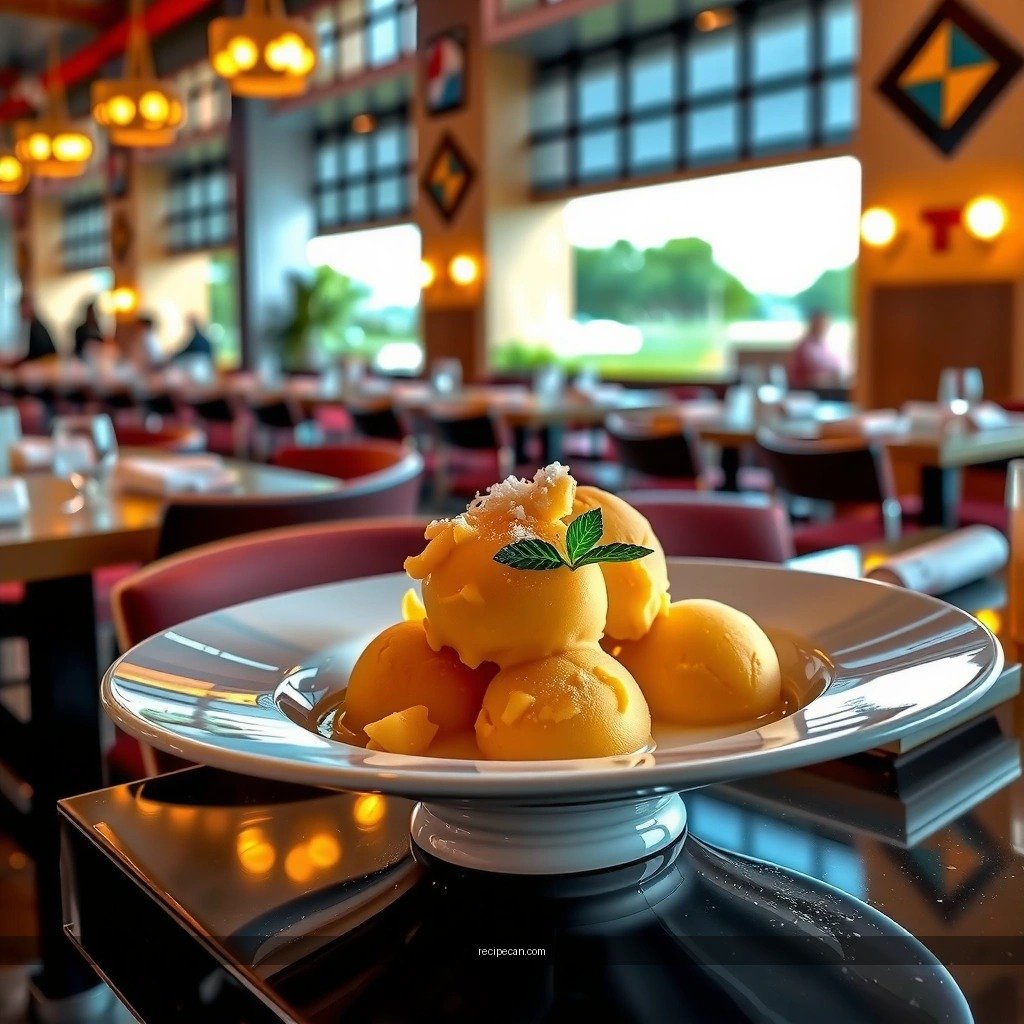
A great no-churn orange sherbet starts with a balanced base: enough sugar to lower freezing points (preventing a rock-solid result), dairy for body, and a stabilizer to keep the texture silky as it freezes.
– Use orange juice concentrate (or fresh juice) plus sugar for bright flavor
– Concentrate delivers consistent citrus intensity and reduces the chance of watery sherbet.
– Fresh orange juice is workable, but you may need a bit more sweetness and you should expect slightly more variability in texture.
– Include dairy like milk/cream and a stabilizer such as cornstarch or gelatin (optional but helpful)
– Dairy contributes fat and lactose, which soften the frozen structure.
– A stabilizer helps bind water and improves scoopability—especially important in a no-churn setup.
Practical base formula (for about 1 quart / 4–5 cups):
– 1 cup orange juice concentrate (thawed) or ~1 1/4 cups fresh orange juice
– 1/2 to 3/4 cup sugar (start at 1/2 cup, adjust after tasting the base)
– 2 cups whole milk (or 1 1/4 cups milk + 3/4 cup heavy cream)
– 1–2 tsp cornstarch or 1–2 tsp powdered gelatin (optional, recommended)
– 1/4 tsp salt (boosts citrus flavor)
– Optional flavor: 1 tsp vanilla extract and/or 1–2 tsp orange zest
If you want a “closer to store-bought” sherbet feel, prioritize concentrate + a stabilizer + full-fat dairy. That combination reduces iciness and increases the creamy mouthfeel.
No-Churn Sherbet Texture Factors: Stabilizer Impact (1 quart base)
| # | Base Approach | Recommended Stabilizer | Typical Texture Outcome | Scoopability Rating | Time to Peak Scoopable Texture |
|---|---|---|---|---|---|
| 1 | No stabilizer (milk + citrus only) | None | More ice crystals | ★ ★ ★ | 3.5–4.5 hrs |
| 2 | Cornstarch thickener | 1 Tbsp cornstarch | Smoother scoop, better body | ★ ★ ★ ★ | 2.5–3.5 hrs |
| 3 | Gelatin stabilizer | 2 tsp powdered gelatin | Creamier mouthfeel when fully chilled | ★ ★ ★ ★ ★ | 2.5–3.0 hrs |
| 4 | Custard-style (egg yolk) | 3 yolks (cooked base) | Very creamy, slightly richer | ★ ★ ★ ★ | 3.0–4.0 hrs |
| 5 | Higher fat dairy (milk + heavy cream) | None | Less iciness, good body | ★ ★ ★ ★ | 3.0–4.0 hrs |
| 6 | Concentrate + adequate sugar | 1 Tbsp cornstarch | Consistent citrus, better freeze stability | ★ ★ ★ ★ | 2.5–3.5 hrs |
| 7 | Too little sugar + diluted juice | None | Higher freezing, harder scoop | ★ ★ | 4.5–6.0 hrs |
Use this as a decision guide: if you want the most reliable “no-churn” scoopability, a small amount of cornstarch or gelatin plus full-fat dairy is the most consistent route.
Create the Orange Sherbet Base
The base is where you lock in both flavor and texture. Since you won’t churn air into the mixture, you need to start with a well-dissolved, properly thickened liquid that freezes smoothly.
– Whisk the dairy and sugar until smooth, then add orange flavor thoroughly
– Warm the milk slightly (not hot) to help sugar dissolve faster.
– Stir in orange concentrate or juice until the mixture looks uniform—no streaks of concentrate.
– Heat gently if using cornstarch/gelatin, then cool completely before freezing
– Cornstarch: mix it with a tablespoon of cold milk first to prevent lumps, then heat the dairy to a gentle simmer until it thickens (typically 1–3 minutes).
– Gelatin (optional): bloom in cold water, then melt gently and stir into the warm base.
– After thickening, cool quickly to room temperature, then refrigerate until fully cold (at least 4 hours, ideally overnight). Starting from cold is one of the most important “no-churn” texture tricks.
Flavor calibration tip: Taste the base before freezing. Sherbet should taste slightly brighter and sweeter than you expect because cold dulls flavor perception.
Freeze-and-Stir Method for Smooth Texture
Without an ice cream maker, the goal is to manage ice crystals manually. Stirring disrupts growing crystals and creates a finer frozen structure.
– Pour into a shallow, freezer-safe container to speed up freezing
– Use a metal pan or a wide container with low sides. Shallow freezing increases surface contact with cold air and speeds up the time to scoopable texture.
– Stir or scrape every 30–45 minutes during the first few hours
– In practice, you’ll do roughly 4–8 stirs depending on freezer strength and container size.
– Stir thoroughly, scraping along the edges and bottom, where larger crystals tend to form.
– Once the mixture becomes thick and scoopable, you can stop frequent stirring and let it fully firm up.
What you’re looking for: early on, the mixture will resemble icy slush. As you keep stirring, it becomes thicker, creamier, and more spoonable rather than grainy.
Achieve the Right Consistency
Texture success depends on hitting the “window” where the sherbet is thick enough to scoop but not fully frozen into a hard block.
– Target a thick, spoonable texture that firms up as it chills
– After the first stir cycle, check every 20–30 minutes. Your freezer may run warmer or colder than average.
– Sherbet should be soft enough to scoop without needing a hammer, but firm enough to hold ridges.
– If too icy, stir more frequently next time; if too soft, freeze longer
– Too icy: it usually means insufficient sugar, missing stabilizer, or not enough stirring early in the freeze.
– Too soft: either it didn’t freeze long enough, or the ratio of dairy/sugar is too soft for your freezer.
Next-batch adjustments (quick and actionable):
– Grainy/icy → add 1 tsp more cornstarch or extend stirring by 1–2 extra cycles.
– Melts too quickly or won’t firm → increase freeze time by 1–2 hours or reduce dairy a touch next time (e.g., use slightly less milk and a bit more cream for controlled firmness).
Flavor Boosts and Variations
Orange sherbet is all about bright citrus with a clean dairy finish. Small additions can make the flavor feel more “from scratch” and less one-note.
– Add orange zest, a splash of vanilla, or a pinch of salt for depth
– Zest adds aromatic oils that concentrate the orange character.
– Vanilla rounds off acidity and makes the sherbet taste more “dessert-like.”
– Salt improves perceived sweetness and makes citrus taste sharper, not saltier.
– Swap in mandarin or add a little orange zest for a stronger citrus aroma
– For mandarin sherbet, keep the same method, but use mandarin juice concentrate and consider slightly less sugar if the concentrate is already sweet.
Variation ideas (easy to execute):
– Blood orange version: use blood orange concentrate and garnish with extra zest.
– Citrus-forward: add 1 tsp orange zest plus 1/2 tsp lemon zest for a “citrus punch” profile.
– Creamy classic: vanilla + cornstarch yields the most traditional spoonable sherbet texture.
Serving and Storage Tips
No-churn sherbet can be excellent, but storage determines how long that smooth texture lasts. Ice crystals will form over time—your job is to slow them down.
– Store in an airtight container to prevent ice crystals
– Minimize air exposure by pressing parchment or plastic wrap directly against the surface before sealing.
– For best results, store at the coldest part of your freezer, not the door.
– Let sit 3–5 minutes at room temperature before scooping for best texture
– This short warm-up restores scoopability and reduces any “frozen edge” that might form right after removal.
How long will it last? For best quality, aim to eat within 1–2 weeks. After that, flavor remains good, but texture can drift slightly toward icier as crystals grow.
If you follow the freeze-and-stir method and fully chill the base first, you’ll get creamy orange sherbet without any ice cream maker. Make a batch today, adjust sweetness to taste, and share your favorite citrus variation!
Frequently Asked Questions
What’s an easy orange sherbet recipe without an ice cream maker?
A simple no-churn orange sherbet recipe uses fresh orange juice, sweetened condensed milk or sugar, a little lemon juice for brightness, and optional orange zest for extra flavor. Mix the ingredients until the sugar dissolves, then pour into a freezer-safe container and freeze, stirring every 30–45 minutes for a few hours to break up ice crystals. Once it reaches a thick, spoonable consistency, let it sit at room temperature for 5–10 minutes before serving.
How do you make orange sherbet without an ice cream maker so it’s smooth, not icy?
Use ingredients that improve texture, such as sweetened condensed milk or a small amount of alcohol (like vodka or triple sec) to reduce ice crystal formation. After freezing, stir vigorously every 30–45 minutes during the first 2–3 hours, scraping the sides and bottom to keep the mixture from locking into large ice chunks. If you have time, freeze overnight and portion scoop at a slightly warmer temperature for better softness.
Why does orange sherbet crystallize in the freezer, and how can you prevent it?
Ice crystals form when the mixture freezes without enough agitation or when there’s too much water relative to sugar and dairy. To prevent icy texture, ensure you fully dissolve sugar (if using) and consider adding condensed milk or a stabilizer like a small amount of cornstarch cooked into the base. Frequent stirring early in the freezing process and storing the sherbet in an airtight container also helps maintain creamy orange sherbet texture.
Which sweetener works best for a homemade orange sherbet without an ice cream maker—sugar or sweetened condensed milk?
Sweetened condensed milk typically produces a creamier orange sherbet because it adds sweetness and helps reduce ice crystal growth, making it easier to scoop straight from the freezer. Plain sugar can work, but it often needs thorough dissolving and more careful stirring to avoid a hard, icy result. If you prefer a lighter texture, you can use a mix of sugar and condensed milk while still keeping the base well chilled before freezing.
What’s the best way to serve orange sherbet made without an ice cream maker?
For the best scoop, remove the orange sherbet from the freezer 5–10 minutes before serving so it softens without melting. Use a warm spoon or dip your scoop in hot water and wipe it quickly between servings to get clean portions. Garnish with fresh orange zest, orange slices, or a squeeze of lemon to enhance the bright, citrusy flavor of your no-churn orange sherbet.
References
- Google Scholar Google Scholar
https://scholar.google.com/scholar?q=orange+sherbet+recipe+without+ice+cream+maker - Google Scholar Google Scholar
https://scholar.google.com/scholar?q=homemade+sherbet+no+churn+ice+cream+maker+freezer+technique - Google Scholar Google Scholar
https://scholar.google.com/scholar?q=no+churn+frozen+dessert+science+orange+juice+grenadine - https://en.wikipedia.org/wiki/Sherbet_(frozen_dessert
https://en.wikipedia.org/wiki/Sherbet_(frozen_dessert - Sorbet
https://en.wikipedia.org/wiki/Sorbet - https://en.wikipedia.org/wiki/No-churn_ice_cream
https://en.wikipedia.org/wiki/No-churn_ice_cream - Sherbet | Definition & Ingredients | Britannica
https://www.britannica.com/topic/sherbet - Projects – National Center for Home Food Preservation
https://nchfp.uga.edu/how/freeze/sherbet.html - Projects – National Center for Home Food Preservation
https://nchfp.uga.edu/how/freeze/ice_cream.html - Frozen dessert
https://en.wikipedia.org/wiki/Frozen_dessert