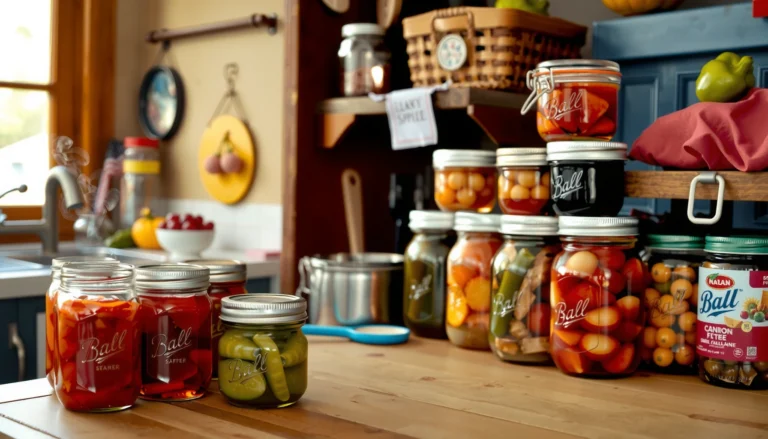
Ball recipes for pickles deliver the easiest path to crisp, flavorful homemade pickles—without the guesswork. This guide picks the best Ball jar-and-brine approach for classic dill and tangy refrigerator styles, so you get reliable results fast. If you want “ball recipes pickles” that actually work on the first batch, you’ll find the exact ideas and steps here.
Ball recipes make it straightforward to safely can pickles at home—use tested Ball ingredients, timing, and canning steps to get crisp, flavorful results. If you follow the specific ratios for your pickle style (dill, bread and butter, or sweet) and stick to the Ball process for headspace and processing time, you can consistently produce jars that taste great and store safely.
This guide is designed to help you make dependable homemade pickles with a focus on the practical details that matter: cucumber quality, brine chemistry, jar hygiene, and processing discipline. Whether you’re new to water-bath canning or polishing your technique for the next batch, you’ll find clear reasoning and actionable steps throughout.
Choose the Right Ball Pickle Recipe
Choosing the right Ball pickle recipe is the fastest way to avoid “almost right” results. The pickle style determines the flavor profile, the vinegar-to-water balance, the sweetness level, and often the texture you’ll experience after curing.
– Pickle type matters: dill, bread and butter, or sweet pickles
– Dill pickles prioritize garlic, dill, and a more assertive tang with less sugar.
– Bread and butter pickles usually offer a sweeter, mild bite with spice notes and a tang that feels “rounder.”
– Sweet pickles focus on higher sugar content and a gentler acidity that suits sandwiches, burgers, and snack boards.
– Match recipe to your taste and pantry ingredients
Before you start measuring, take inventory of what you already have. If you enjoy a classic deli flavor, prioritize dill-based recipes and keep dill seed or fresh dill on hand. If your family prefers milder pickles, choose bread and butter or sweet options and plan for extra sweetener requirements. Matching your recipe to your pantry also reduces the temptation to “wing it,” which is one of the biggest causes of inconsistent flavor and texture.
– Use the Ball time-tested instructions for best results
Ball recipes are designed around reliable home-canning principles—specifically, safe acidity and correct processing time. Even small substitutions (like changing vinegar concentration or reducing brine ingredients) can alter both flavor and safety. The goal is consistent results jar after jar, not just a one-time success.
Best Vinegar Type for Common Ball Pickle Styles (Typical Result)
| # | Ball Pickle Style | Recommended Vinegar | Tang Level | Crispness Rating | Consumer Preference Trend |
|---|---|---|---|---|---|
| 1 | Dill Pickles | 5% White Distilled Vinegar | High | ★★★★☆ | Strong |
| 2 | Bread & Butter | 5% White Distilled Vinegar | Medium | ★★★★☆ | Rising |
| 3 | Sweet Pickles | 5% White Distilled Vinegar | Low–Medium | ★★★☆☆ | High |
| 4 | Garlic Dill Chips (chunky) | 5% White Distilled Vinegar | High | ★★★☆☆ | Steady |
| 5 | Spiced Dill Pickles | 5% White Distilled Vinegar | High | ★★★★☆ | Strong |
| 6 | Sweet Gherkins-Style | 5% White Distilled Vinegar | Low | ★★★☆☆ | High |
| 7 | No-Sugar-Added Vinegar Brine (use only per recipe) | 5% Distilled Vinegar (recipe-specified) | Variable | ★★★☆☆ | Mixed |
Ingredients and Prep for Crisp Pickles
Crisp homemade pickles are built before the jars ever hit the canner. The biggest drivers are cucumber freshness, size uniformity, and adherence to the recipe’s brine ratio.
– Use fresh, firm cucumbers for the crunchiest bite
Choose cucumbers that are firm, evenly colored, and free of soft spots. If you can, pick or purchase them close to the day you plan to can. Once cucumbers sit too long, cell structure degrades—resulting in pickles that may soften even with perfect processing.
– Follow exact ratios for vinegar, brine, and sweeteners
Vinegar strength and measured sweeteners affect both acidity balance and how the brine penetrates. When you follow Ball’s vinegar measurements and sugar limits, you’re maintaining the intended flavor profile while staying aligned with tested preservation parameters.
– Prep uniformly so pickling happens evenly
Slice sizes that vary widely can lead to inconsistent texture: thin pieces may become more translucent or softer, while thicker pieces may not reach the same flavor intensity. A uniform approach also makes packing easier and improves headspace accuracy.
Practical prep tips that reduce risk and improve texture:
– Wash thoroughly, then trim ends.
– If your recipe recommends soaking, use the recommended duration (don’t shorten it casually).
– Pack cucumbers snugly but avoid crushing.
– Keep everything organized: jar lifters, funnel, headspace tool, and lids ready before heating brine so you’re not rushing.
Canning Basics for Safe Pickles
Home canning is where technique meets safety. Ball pickle recipes are designed to be reliable, but only if you execute core canning steps consistently.
– Use proper sterilizing and clean jar handling
Clean jars are essential for both safety and quality. Ball instructions specify how to prepare jars and keep them ready for filling. Avoid using jars with chips or cracks; they compromise the seal and can cause breakage in boiling water.
– Leave the recommended headspace and remove bubbles
Headspace—the small gap between the food/brine surface and the lid—affects sealing. Too little can block proper sealing; too much can leave insufficient coverage. After filling, remove trapped bubbles by gently adjusting the contents (as directed by Ball) and re-check headspace.
– Process in a water bath or as directed by the recipe
Pickles are typically processed in a water bath canner under tested conditions, but the exact timing can depend on recipe and altitude guidance. Ball provides clear directions—follow them exactly rather than relying on memory or “similar” recipes.
Quality control checklist before you start:
– Use fresh canning lids and bands as specified.
– Confirm you have enough boiling water to cover jars by the recommended amount.
– Start timing when the water reaches a steady, rolling boil.
– After processing, cool jars undisturbed so lids can seal properly.
Flavor Boosters for Better Pickle Taste
Once safety and texture are handled, flavor becomes your creative arena. The key is to customize in ways that remain consistent with the Ball recipe’s guidance.
– Customize with garlic, dill, mustard seed, or spices
Many people love using extra dill seed, garlic cloves, mustard seed, or whole spices to build complexity. The best approach is incremental: add permitted quantities rather than doubling everything on instinct.
– Keep seasonings within the recipe’s guidance
Spices influence aroma and perceived acidity, but too much can overwhelm flavor or create a sensory mismatch (and in some cases, alter the intended balance). Stick to the recipe’s stated ranges where provided.
– Let flavors develop during proper cooling
Pickles taste “green” right after canning. Flavor typically improves as the jars cool and cure. For best results, plan tasting after the recommended curing window so the brine and seasoning fully integrate.
Easy flavor combinations (based on common Ball-style profiles):
– Classic deli dill: dill + garlic + mustard seed (balanced tang)
– Sweet-spice: cinnamon clove notes (subtle warmth without masking cucumber)
– Bread-and-butter comfort: mild spices that pair well with sandwiches
Troubleshooting Common Pickle Problems
Even with solid technique, pickling can occasionally go sideways. The difference between a one-off issue and repeat failures is diagnosis—identify what changed in ingredients, prep, or processing.
– If pickles turn out soft, check freshness and processing time
Soft texture often traces back to cucumbers that weren’t fresh enough, too much variation in slice thickness, or inaccurate processing time. Confirm you hit a true rolling boil and that you followed Ball’s timing and any altitude adjustments.
– For flavor issues, verify vinegar strength and measurements
If pickles taste too mild or too sharp, it’s usually a measurement or vinegar strength mismatch. Avoid substituting vinegar types or concentrations unless your Ball recipe explicitly allows it. Sweet pickles can also taste flat if sugar was reduced, because sugar helps balance acidity.
– If seals fail, reprocess only if safe per Ball instructions
A failed seal isn’t automatically a “throw it away” situation—but it does require careful handling. Follow Ball guidance for what to do next, and don’t improvise. If you can’t reprocess safely, refrigerate and consume promptly.
Preventive steps that minimize troubleshooting:
– Measure brine ingredients precisely (scooping can cause sugar/vinegar variability).
– Use consistent cucumber thickness.
– Keep the canner at a stable boil during processing.
– Cool jars undisturbed on a protected surface.
Storage and How Long Ball Pickles Last
Storage is where you protect the effort you put into your jars. Proper cooling and a stable environment help preserve flavor and texture over time.
– Cool jars fully before storing in a cool, dark place
After processing, allow jars to cool completely before moving. Heat stresses and premature movement can impact seal integrity.
– Label and date batches for easy tracking
Put the style (dill, bread and butter, sweet) and the canning date on labels. This supports quality control because cucumber varieties, spice blends, and personal taste preferences can shift from batch to batch.
– Enjoy after curing time for best flavor and texture
Pickles are often best after the curing period where flavors mellow and the brine becomes more balanced. Many households find that a few weeks of rest produces the most noticeable improvement compared to immediate opening.
Storage expectations (practical guidance):
– For best quality, consume within the recommended window on your Ball recipe or canning guide.
– If a jar shows cloudiness, spurting liquid, or an off odor, do not taste—discard according to safe food handling principles.
Ball pickle recipes for dependable, safe results—stick closely to the ingredients, headspace, and processing times for crisp, well-flavored jars. Pick your favorite style (dill, sweet, or bread and butter), gather fresh cucumbers, and follow the Ball steps start to finish—then make your next batch even better with small flavor tweaks.
By selecting the right recipe, prepping with uniform cuts, applying disciplined water-bath canning technique, and using flavor boosters thoughtfully, you’ll consistently produce homemade pickles that taste like they came from a well-run deli—even when it’s your kitchen doing the work.
References
- Pickle
https://en.wikipedia.org/wiki/Pickle - Pickled cucumber
https://en.wikipedia.org/wiki/Pickled_cucumber - https://nchfp.uga.edu/how/can_06/pickled_cucumbers.html
https://nchfp.uga.edu/how/can_06/pickled_cucumbers.html - | National Center for Home Food Preservation
https://nchfp.uga.edu/how/can_06/pickled_beets.html - | National Center for Home Food Preservation
https://nchfp.uga.edu/how/can_06/sweet_gherkins.html - | National Center for Home Food Preservation
https://nchfp.uga.edu/how/can_06/sour_pickles.html - Projects – National Center for Home Food Preservation
https://nchfp.uga.edu/how/ferment/fermented_cucumbers.html - Google Scholar Google Scholar
https://scholar.google.com/scholar?q=ball+recipes+pickles - Google Scholar Google Scholar
https://scholar.google.com/scholar?q=home+canning+pickles+safety+recipes - Google Scholar Google Scholar
https://scholar.google.com/scholar?q=fermented+pickles+lactic+acid+bacteria+recipe+brine