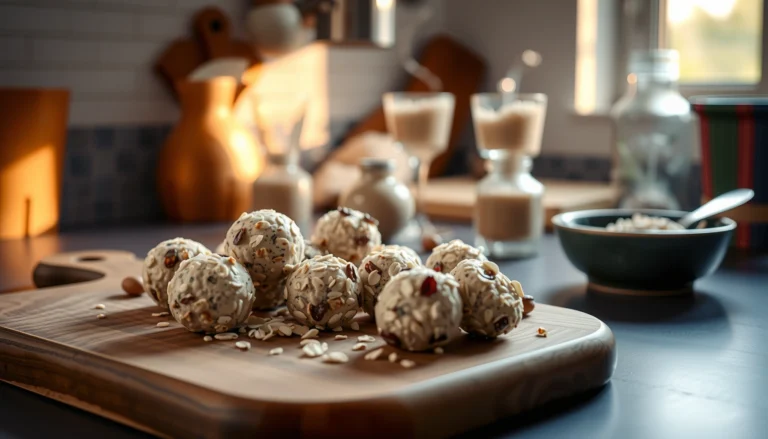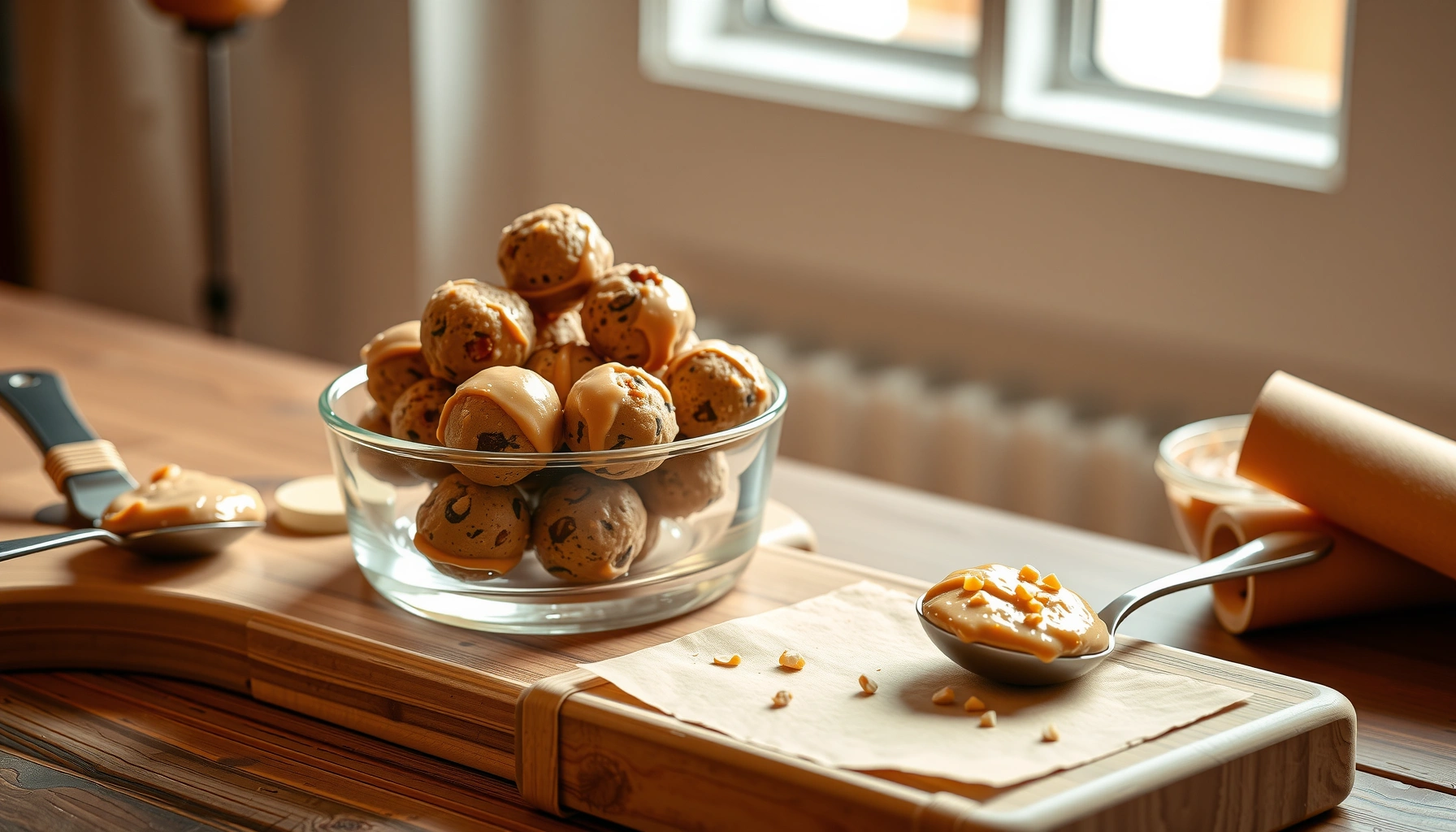
This peanut butter protein ball recipe delivers the easiest no-bake bites: fast, chewy, and packed with protein without turning on the oven. If you’re searching for a reliable way to make peanut butter protein balls at home with simple pantry ingredients, this is the one with the shortest path to a perfect roll. Expect clear steps, quick set-time tips, and the right texture every time.
Make peanut butter protein balls by mixing peanut butter, protein powder, and a few add-ins, then rolling into bite-sized balls. This quick, no-bake recipe is simple, high-protein, and great for meal prep—you’ll get exact steps and tasty flavor ideas right here.
Ingredients for a Perfect Peanut Butter Protein Ball
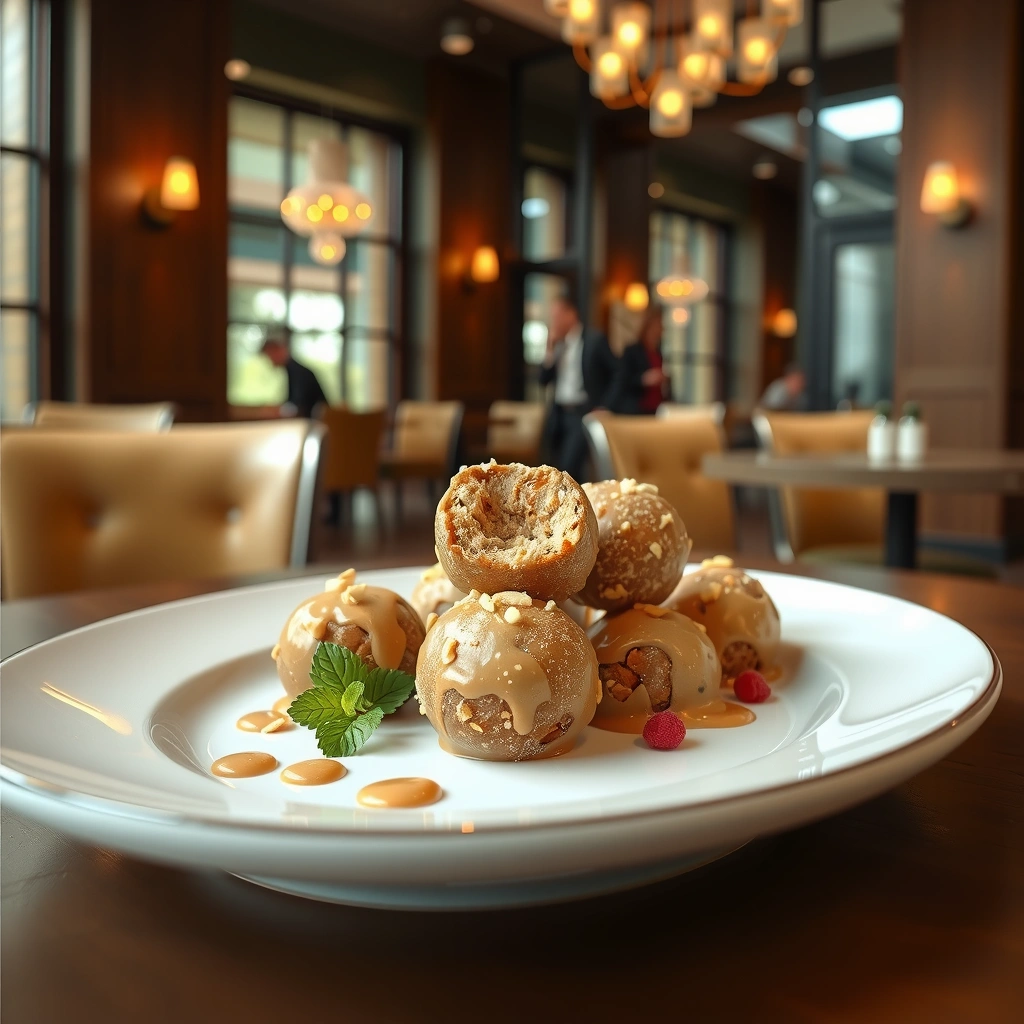
The best peanut butter protein ball recipe is built around a dependable “base + binder + flavor” framework. Practically, that means: peanut butter and protein powder provide structure and protein; oats or dates add bulk and help the mixture hold its shape; and a small amount of sweetener (honey or maple syrup) makes the dough cohesive and pleasant.
Core ingredients (the backbone)
– Peanut butter: Choose creamy or natural peanut butter. Natural varieties tend to be more fluid—if your mix feels loose, the solution is more oats or a longer chill.
– Protein powder: Whey and most plant-based blends work well. The key is to match the powder to your binding expectations: whey powders generally absorb liquid smoothly, while some plant-based powders are thirstier and may need extra oats or a tablespoon of milk.
Binding + sweetness options
– Oats (rolled or quick): Add for texture and reliable “bite” consistency. Oats also act as a buffer, helping you control thickness.
– Honey or maple syrup: Use sparingly; they act as both sweetness and glue. Too much can make the dough sticky and harder to roll.
– Dates (Medjool) or date paste: A premium, no-refined-sugar binder. Dates bring natural sweetness and moisture, which helps the balls form without needing additional syrup—though they can require extra mixing time.
Recommended add-ins (optional but impactful)
– Salt (a small pinch): Enhances peanut butter flavor and balances sweetness.
– Vanilla extract: Adds a bakery-like note with minimal effort.
– Cocoa powder: Provides a chocolate profile without needing extra chocolate for structure.
Step-by-Step Peanut Butter Protein Ball Instructions
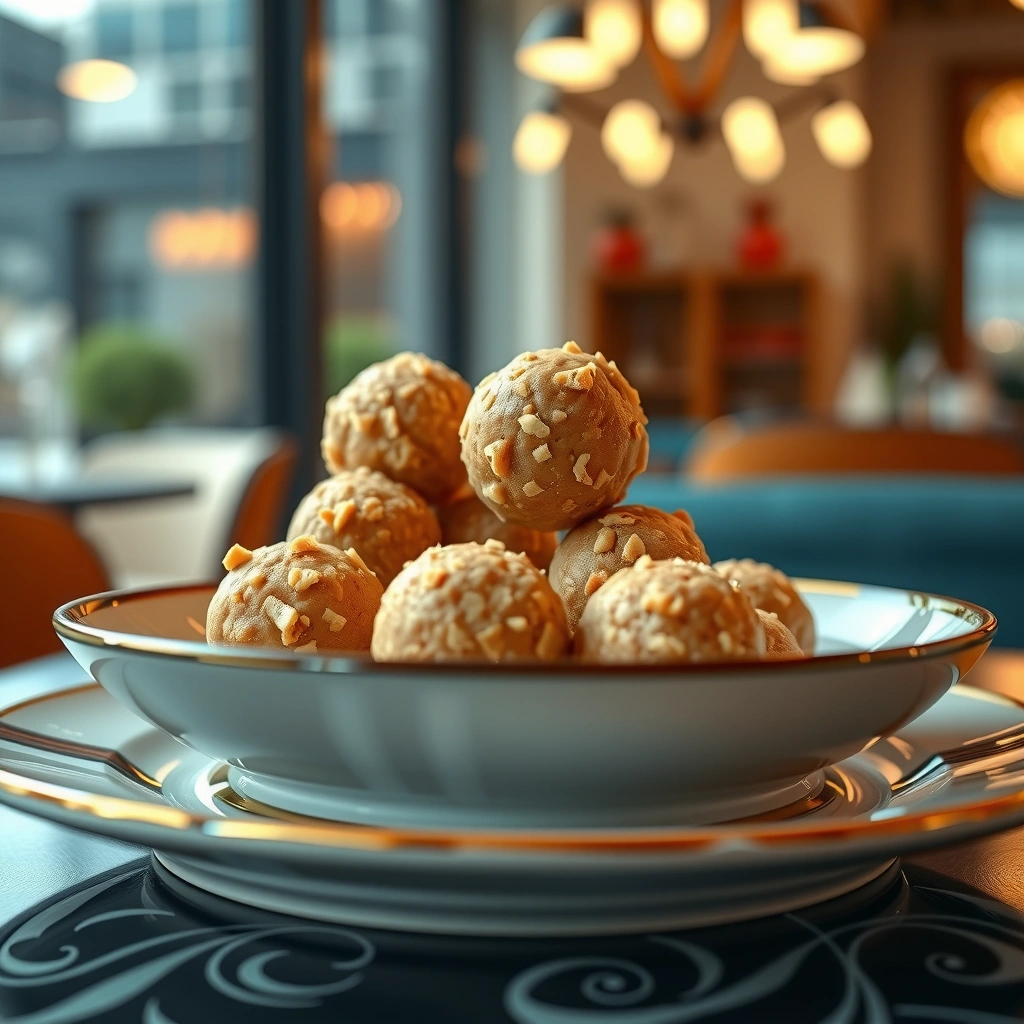
This is a true no-bake recipe: you’ll combine, roll, and chill. The “secret” to consistent peanut butter protein balls is achieving a dough that’s thick enough to roll without crumbling.
1) Mix until a thick, rollable dough forms
Start with the wet ingredients, then blend in the dry:
– In a bowl, combine peanut butter and protein powder.
– Add oats and any sweetener (honey/maple syrup or blended dates).
– Stir thoroughly. You want a texture that looks like soft cookie dough—stirrable, not pourable.
Analytical guidance:
If the mixture is too dry (cracking, crumbly), add a teaspoon of milk at a time (dairy or unsweetened plant milk). If it’s too wet (sticks to your hands excessively), add 1–2 tablespoons of oats or an extra scoop of protein powder and mix again. Small adjustments outperform “big” changes because protein powders can behave differently across brands.
2) Portion and roll
– Use a spoon or cookie scoop to portion evenly.
– Roll between your palms to form balls. For a smoother finish, lightly wet your hands or rub a tiny amount of oil on your palms.
3) Chill for a firmer texture (recommended for best results)
– Place balls on a lined tray.
– Chill at least 20–30 minutes for firmer, cleaner bites.
– If you’re meal prepping, chill 1–2 hours for maximum hold and easier storage.
Protein Yield & Texture Targets for Peanut Butter Protein Balls (No-Bake)
| # | Protein Powder Type | Typical Protein (per 30 g) | Likely Dough Tightness | Adjustment if Too Loose |
|---|---|---|---|---|
| 1 | Whey concentrate | ~20–24 g | Moderate | Add 1–2 Tbsp oats |
| 2 | Whey isolate | ~24–27 g | Tighter | Add 1 Tbsp protein powder |
| 3 | Plant blend (pea/rice) | ~20–24 g | Often needs more binder | Add 2 Tbsp oats or 1 date |
| 4 | Casein | ~18–23 g | Slow to set, holds well after chill | Chill +10–15 minutes |
| 5 | Collagen protein | ~15–20 g | May be softer | Add extra oats for structure |
| 6 | Sugar-free whey blend | ~22–25 g | Moderate-tight | Use 1 Tbsp honey if needed |
| 7 | High-protein specialty blend | ~25–30 g | Tends to firm quickly | Add 1 tsp milk to soften |
Flavor Variations to Keep It Interesting
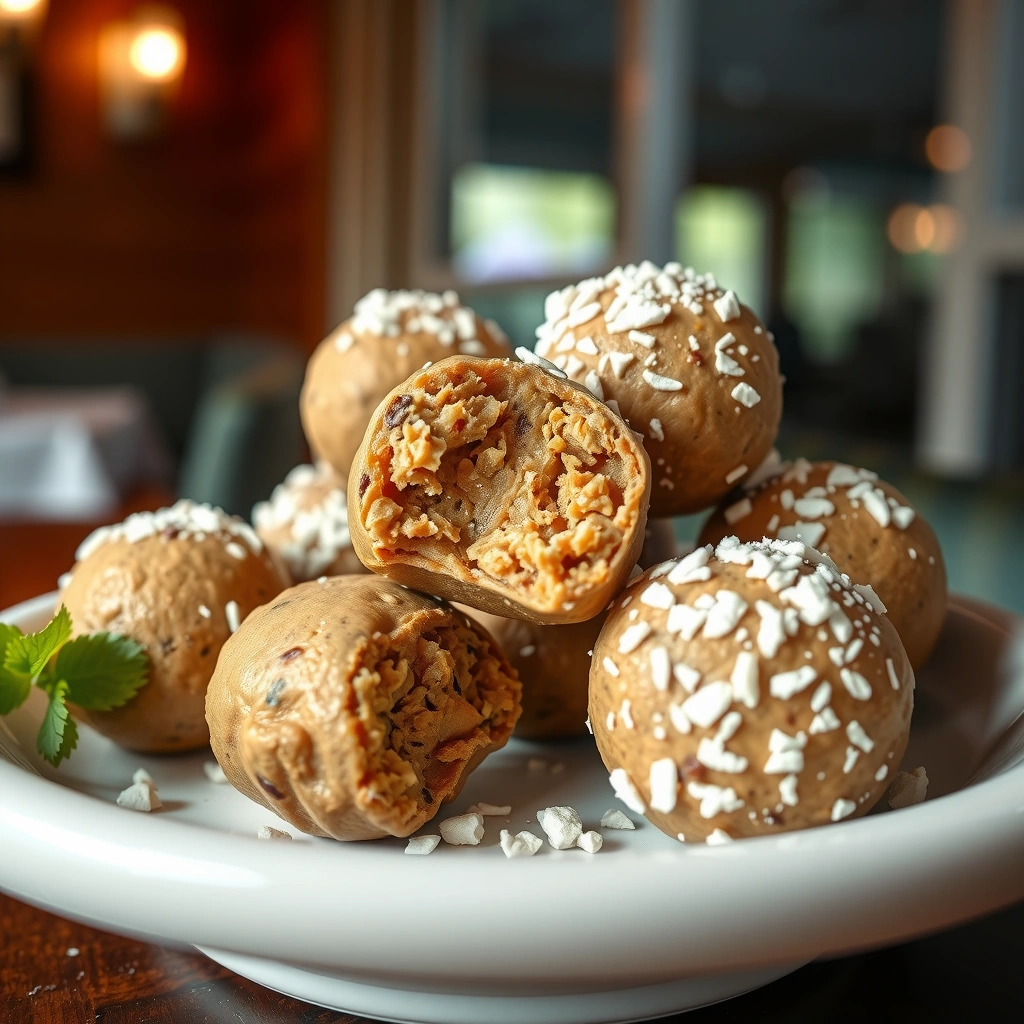
Once you master the peanut butter base, the most effective way to keep meal prep from getting boring is to rotate flavors without changing the core mechanics. Start with one variation at a time so you can accurately “tune” texture if your add-in adds moisture (like dates) or changes dryness (like cocoa powder).
Chocolate-forward options
– Chocolate chips: Fold in 1–2 tablespoons for melty pockets (they’ll firm after chilling).
– Cocoa powder: Swap a small amount of oats for cocoa powder (for example, 1–2 tablespoons). If the mixture becomes too dry, add a teaspoon of milk.
– Chocolate + peanut butter: Pair cocoa powder with a pinch of salt to intensify flavor.
Spiced and aromatic profiles
– Cinnamon: Add 1/2 to 1 teaspoon for warmth and a “snack-cake” vibe.
– Vanilla extract: Add 1/2 to 1 teaspoon for a smoother, more dessert-like finish.
– Crushed nuts (almonds, peanuts, or walnuts): Add texture and a crunch contrast to the dense center.
No-bake “dessert bar” style ideas
– Mocha: Mix in 1–2 teaspoons instant coffee (or espresso powder) and a tablespoon of cocoa powder.
– Peanut butter cookie: Add cinnamon + a splash of vanilla, and use slightly more oats for a sturdier bite.
Actionable tip: If you add strongly flavored dry ingredients (cocoa, coffee, cinnamon), keep sweetness modest—because protein powder can already contribute a slight bitterness. Increase honey/maple syrup only if the dough tastes bland after chilling.
Protein, Texture, and Binding Tips
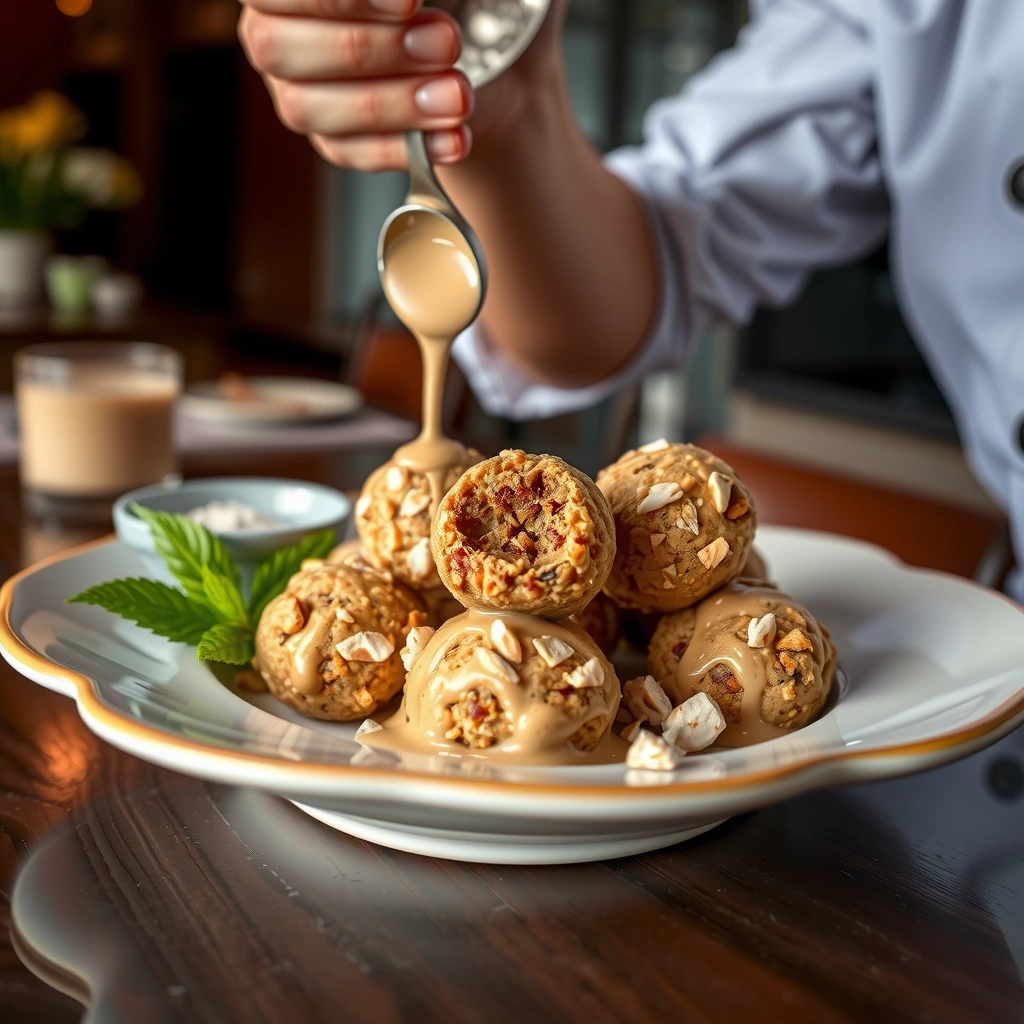
The best no-bake peanut butter protein balls are engineered for consistent texture: firm enough to roll, cohesive enough not to crumble, and soft enough to feel enjoyable rather than chalky. Protein balls are basically a matrix problem—how fats (peanut butter), water (sweeteners and milk if used), and dry solids (protein powder, oats, cocoa) interact.
1) Control thickness
– Too thick/crumbly: Add 1 teaspoon milk at a time.
– Too loose/sticky: Add oats or protein powder gradually, then remix until rollable.
2) Understand why chilling matters
Chilling improves the bond strength and sets the fat content so the balls hold shape. For many blends, the “perfect” texture is not immediate—it develops after the fat and dry solids equilibrate.
– Minimum chill: 20–30 minutes
– Strong hold: 1–2 hours
– Cleaner rolling: Chill longer before packaging
3) Avoid common failure modes
– Crumbly balls: Usually too much dry ingredient or not enough binder. Add liquid (milk) or more peanut butter/dates.
– Sticky balls: Too much honey/maple syrup or insufficient dry solids. Add oats or chill longer.
– Grainy texture: Often protein powder absorbs unevenly. Mix longer, and ensure the sweetener is fully incorporated.
4) Meal prep consistency
If you’re preparing multiple batches (e.g., for a team or recurring schedule), measure ingredients by weight where possible. Protein powders vary in absorbency; consistent weighing reduces texture variability.
Storage and Make-Ahead Guidance
Proper storage preserves both texture and flavor. Peanut butter protein balls are typically best cold because the fat firms up and the texture becomes more “bite-like.”Fridge storage
– Store in an airtight container.
– They generally keep up to 5–7 days in the refrigerator, depending on ingredient freshness.
Freezing for longer storage
– Freeze balls on a tray first (so they don’t stick together), then transfer to a freezer bag or airtight container.
– Thaw in the fridge overnight for best texture. If you thaw at room temperature, they may soften too quickly due to the natural oils in peanut butter.
Practical make-ahead workflow
– Roll and chill.
– Portion into grab-and-go containers (e.g., 3–4 balls per serving).
– Freeze the extra portions; refrigerate only what you plan to eat within a week.
Serving Ideas and Portion Suggestions
A protein ball is most effective when treated as a structured snack—not just a sweet bite. The goal is to pair it with something that supports satiety and balances macronutrients.
Balanced pairing ideas
– Fruit + protein balls: Pair with berries, sliced apple, or a banana to add fiber and freshness.
– Yogurt: Greek yogurt (or a thicker plant alternative) adds additional protein and improves overall snack satisfaction.
– Milk: A glass of milk or fortified plant milk complements the peanut flavor and supports post-snack recovery.
Portion suggestions that match daily protein goals
– For many people, 2–4 balls can be a practical snack portion depending on ball size and your protein target.
– Use consistent sizing (same scoop or same gram weight) so your nutrition stays predictable.
– If your goal is high-protein fuel (fitness or busy schedules), treat balls as a “component” of a snack plan—pairing with yogurt or milk often improves the protein and fullness outcome more reliably than eating balls alone.
Business-ready batching tip: If you’re packaging for a group, label containers with the intended serving count (e.g., “3 balls = 1 snack”) to reduce variation and simplify distribution.
Peanut butter protein balls are an easy, no-bake way to get a high-protein snack with minimal effort. Mix, roll, and chill using the ingredient ratios above—then try a flavor variation to prevent boredom. Make a batch today and portion them for your next busy day.
References
- Google Scholar Google Scholar
https://scholar.google.com/scholar?q=peanut+butter+protein+balls+recipe - Google Scholar Google Scholar
https://scholar.google.com/scholar?q=energy+balls+peanut+butter+no+bake+recipe - Google Scholar Google Scholar
https://scholar.google.com/scholar?q=peanut+butter+high+protein+snack+balls - https://pubmed.ncbi.nlm.nih.gov/?term=peanut+butter+protein+snack
https://pubmed.ncbi.nlm.nih.gov/?term=peanut+butter+protein+snack - https://pubmed.ncbi.nlm.nih.gov/?term=energy+balls+protein+peanut
https://pubmed.ncbi.nlm.nih.gov/?term=energy+balls+protein+peanut - https://fdc.nal.usda.gov/advanced-search.html?query=peanut%20butter
https://fdc.nal.usda.gov/advanced-search.html?query=peanut%20butter - https://www.myplate.gov/ingredients/peanut-butter
https://www.myplate.gov/ingredients/peanut-butter - https://medlineplus.gov/peanutallergy.html
https://medlineplus.gov/peanutallergy.html - Peanut butter
https://en.wikipedia.org/wiki/Peanut_butter - https://www.cdc.gov/foodsafety/food-allergies.html
https://www.cdc.gov/foodsafety/food-allergies.html