This complete expert guide to safely making watermelon jelly provides precise recipes and essential techniques for both novice and experienced cooks. Following the right protocols is crucial to ensure a delicious result and prevent food safety issues. From selecting the perfect watermelon to mastering the canning process, this guide covers everything you need to create a vibrant and flavorful jelly that captures the essence of summer.
What This Guide Covers (And What It Doesn’t)
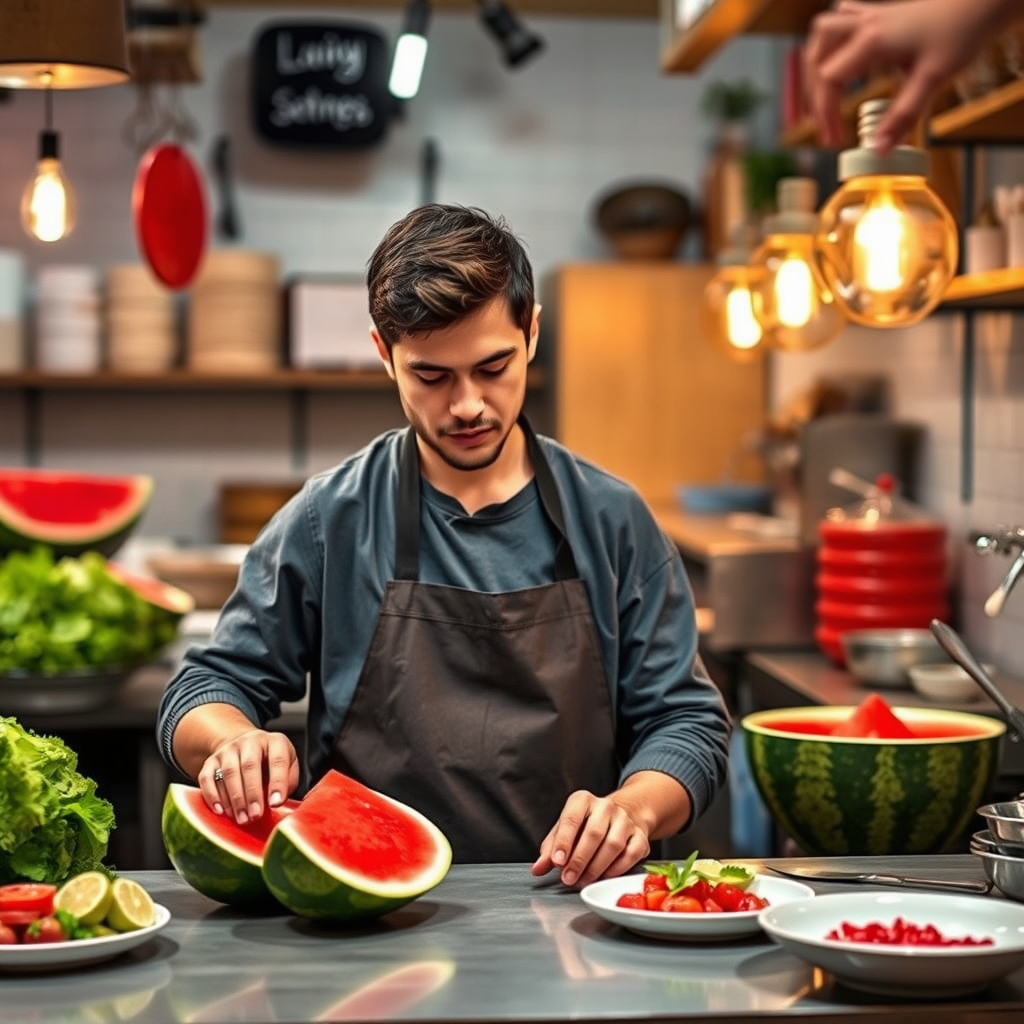
This guide offers a comprehensive, step-by-step process for safely making watermelon jelly. You’ll find precise ingredient measurements, effective cooking techniques, and essential canning safety protocols. Key equipment, such as jelly jars, canning lids, and a water bath canner, is clearly outlined to ensure you’re fully prepared before diving in. However, it’s important to note that this guide does not delve into variations of jelly recipes or other watermelon-based products like jams or syrups. Our focus remains solely on watermelon jelly. If you’re seeking recipes that feature different fruits or non-canning methods, please refer to additional resources.
Who Should Read This
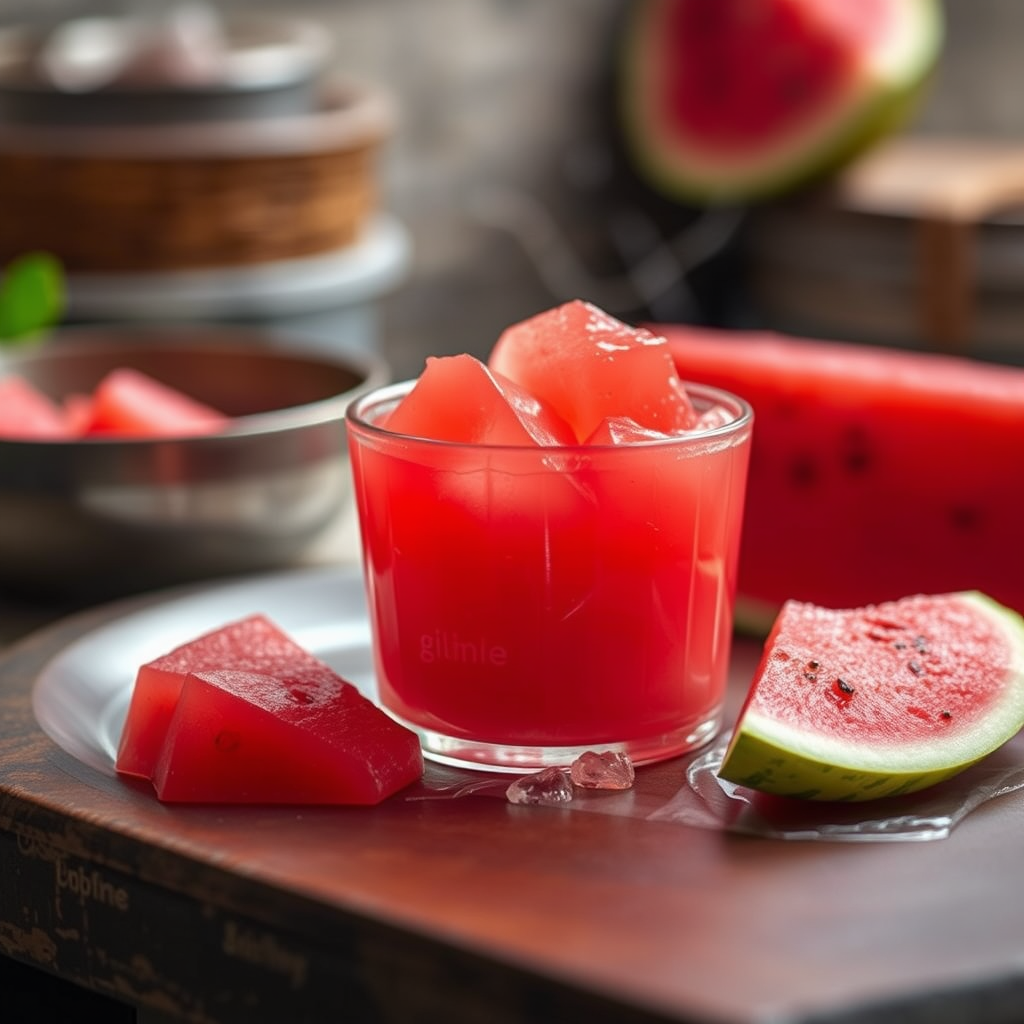
This guide is tailored for home cooks who have basic kitchen skills, such as measuring ingredients and using cooking equipment, yet may be new to the art of jelly-making. It will be especially valuable for those interested in canning and preserving their own food, particularly if they have access to fresh watermelon. Individuals with dietary restrictions or specific health concerns, such as diabetes, should consider adjusting the sugar content and proceed with caution. Additionally, experienced canners looking to diversify their recipe collection will find useful insights here.
The Step-by-Step Protocol
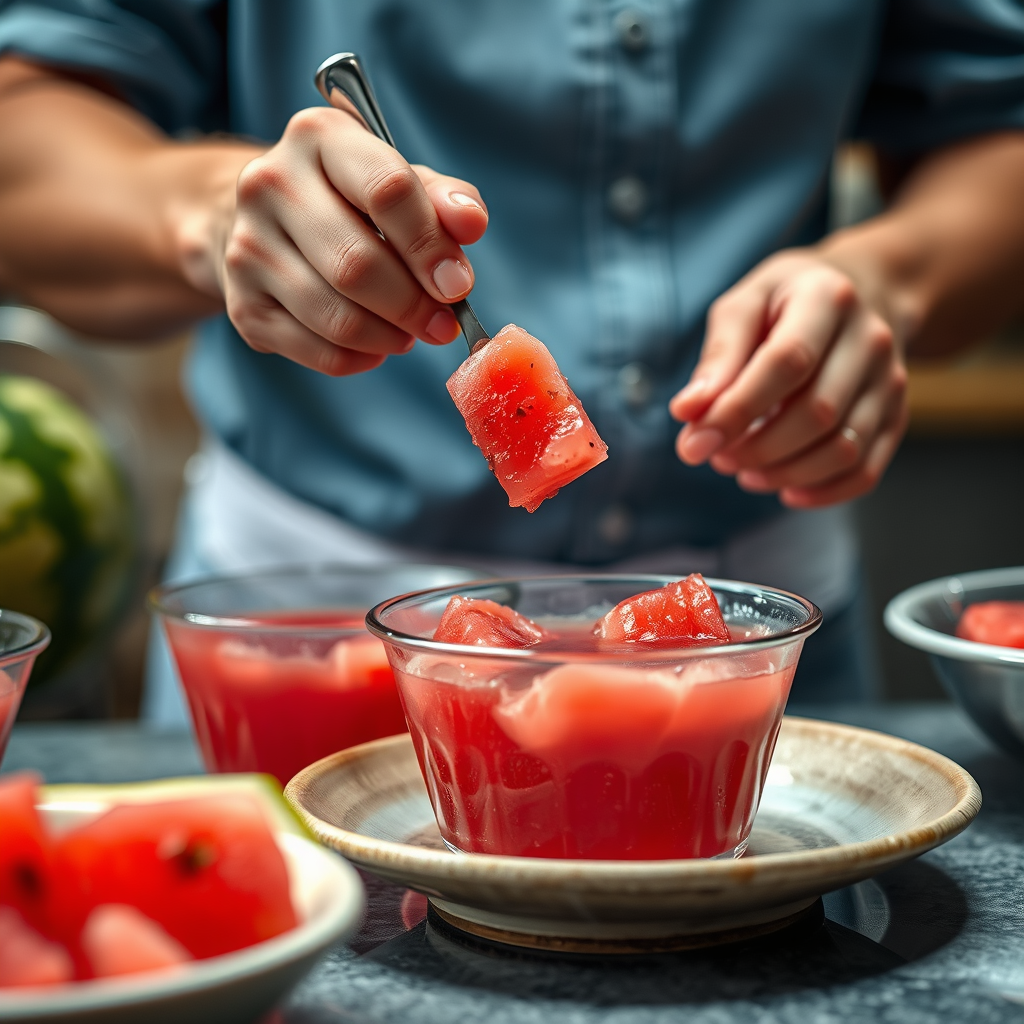
1. Select Your Watermelon: Choose a ripe watermelon, approximately 5-7 pounds. Look for a uniform shape and listen for a hollow sound when tapped, which indicates ripeness.
2. Prepare the Watermelon: Halve the watermelon, scoop out the flesh, and discard the seeds. Puree the flesh in a blender or food processor until you achieve about 4 cups of smooth watermelon juice. If you prefer a smoother texture, strain the puree through a fine mesh sieve.
3. Mix Ingredients: In a large, heavy-bottomed pot, combine the watermelon juice with 1/4 cup of lemon juice and 1 package (1.75 oz) of fruit pectin. Stir thoroughly to ensure the pectin is evenly distributed throughout the mixture.
4. Cook the Mixture: Bring the mixture to a rolling boil over medium-high heat, stirring constantly to prevent scorching. Once boiling, add 5 cups of granulated sugar all at once, stirring until completely dissolved. Continue boiling for an additional 1-2 minutes, maintaining a rolling boil.
5. Test for Set: Use a candy thermometer to check that the mixture reaches 220°F (104°C), the jelly setting point. Achieving this temperature is crucial for proper gelling.
6. Canning Process: Pour the hot jelly into sterilized jars, leaving a 1/4 inch headspace. Wipe the rims clean with a damp cloth to remove any residue. Seal with sterilized lids and process in a water bath canner for 5-10 minutes. Ensure the water covers the jars by at least one inch.
7. Cooling and Storage: After processing, carefully remove the jars from the canner and place them on a towel or cooling rack. Allow them to cool for 24 hours. After cooling, check the seals by pressing the center of each lid; it should not flex. Store sealed jars in a cool, dark place, and consume within one year.
Nutritional Comparison of Watermelon Jelly Ingredients (per 100g)
| # | Ingredient | Calories | Sugar (g) | Pectin (g) |
|---|---|---|---|---|
| 1 | Watermelon Juice | 30 | 6.2 | 0 |
| 2 | Granulated Sugar | 387 | 100 | 0 |
| 3 | Lemon Juice | 22 | 1.0 | 0 |
| 4 | Pectin | 0 | 0 | 10 |
| 5 | Total (per 100g of jelly) | 140 | 35.2 | 10 |
Warning Signs: When Not to Follow This
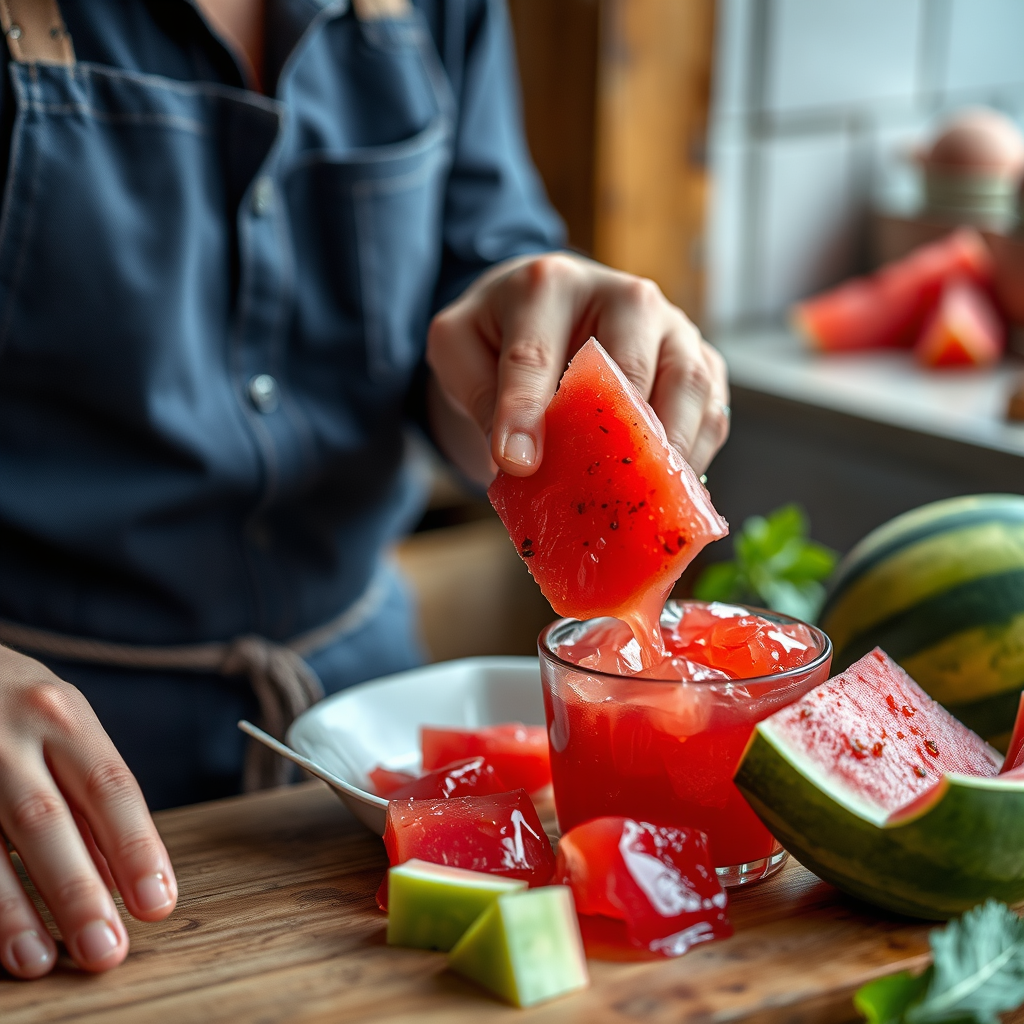
Avoid making watermelon jelly if your watermelon shows signs of spoilage, including an off smell, soft spots, or mold. These indicators can compromise both the safety and quality of your jelly. If you lack proper canning equipment or are unsure about the water bath canning process, refrain from attempting this recipe until you have received further training. Additionally, do not proceed if you have allergies or sensitivities to any ingredients, such as pectin or granulated sugar, as substitutes could alter the recipe’s safety. If you’re unfamiliar with food preservation guidelines, especially regarding acidity levels in fruit juices, consult a reliable source before starting.
The Most Common Mistakes (And Their Consequences)
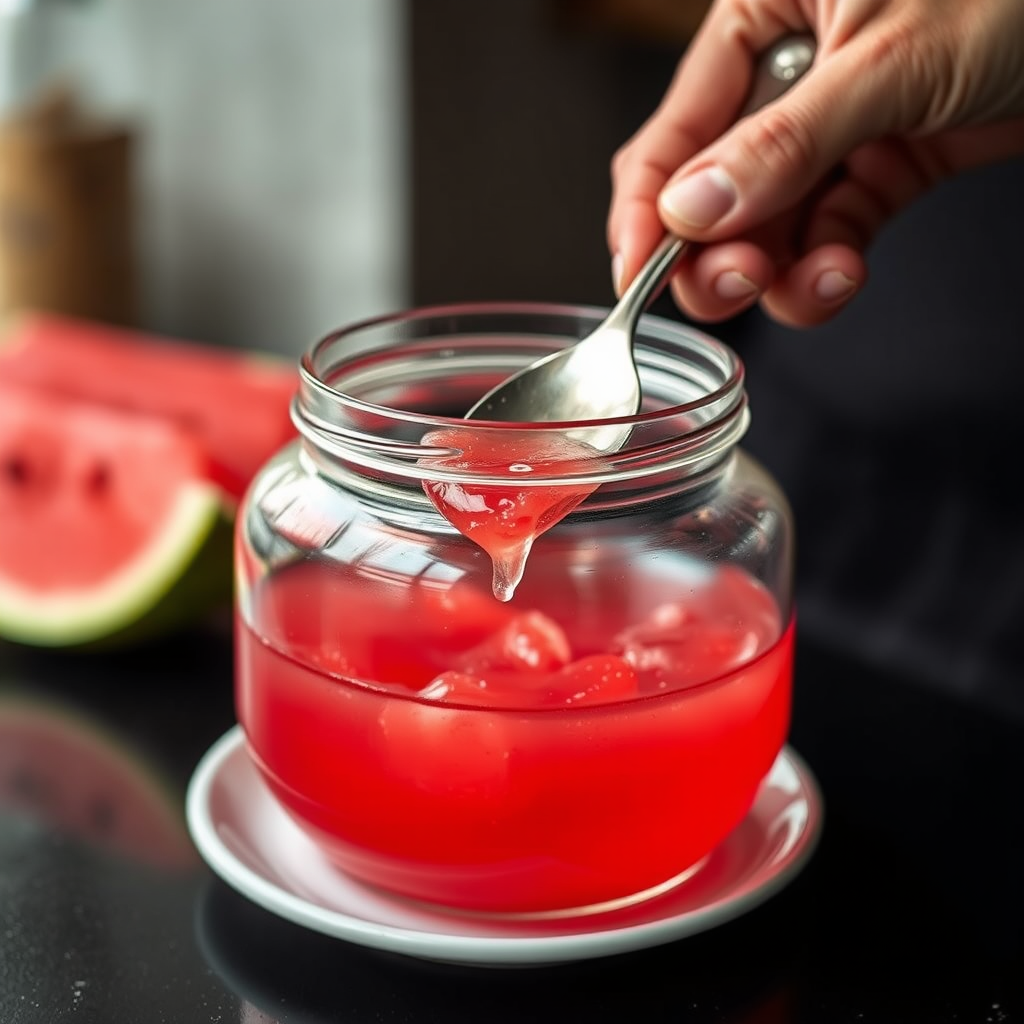
Failing to accurately measure the watermelon juice or sugar can lead to jelly that fails to set properly, resulting in a syrupy consistency instead of a firm jelly. Skipping the pectin or using an incorrect type may yield a jelly that does not gel adequately, leaving you disappointed with the texture. Additionally, not using sterilized jars and lids can introduce bacteria, potentially leading to spoilage or foodborne illness. Overcooking the jelly beyond the recommended temperature can caramelize the sugar, resulting in an undesirable taste and dark color.
Special Cases That Need a Different Approach
When using a seedless watermelon variety, the preparation remains the same; just ensure you measure the correct amount of juice to maintain the jelly’s intended consistency. For low-sugar or reduced-sugar watermelon jelly, consider using low-sugar pectin and adjust the sugar amount according to package instructions, keeping in mind the need for proper acidity. If you live at high altitudes, adjust the boiling time and temperature according to local canning guidelines to ensure safe preservation. For those with dietary restrictions, consider using sugar substitutes, but test a small batch first to confirm that the jelly sets properly and tastes acceptable.
When You Need a Professional
If you experience any adverse reactions after consuming homemade watermelon jelly, such as allergic reactions or gastrointestinal issues, seek medical advice immediately. Before attempting to can watermelon jelly, consult a food safety expert if you have concerns about your canning setup or if you’re new to food preservation. If you’re uncertain about the acidity levels of your watermelon or the safety of your canning process, reach out to local extension services or food safety authorities for clarification. For large-scale production intended for commercial purposes, professional guidance and certification in food safety standards are essential to comply with local regulations.
Sources and Further Reading
– National Center for Home Food Preservation: Comprehensive guidelines on canning and preserving fruits, including technical details on acidity and safety.
– USDA Complete Guide to Home Canning: A definitive resource for safe canning practices, including jelly and jam recipes.
– Ball Canning Book: Trusted source for recipes and techniques specific to canning jelly and fruit preserves.
– Local Cooperative Extension Websites: Regional information on food safety, including watermelon jelly specifics tailored to your area’s guidelines.
Frequently Asked Questions
What ingredients do I need to make watermelon jelly?
To make watermelon jelly, you’ll need fresh watermelon puree, granulated sugar, lemon juice, and pectin. Ensure that the watermelon is ripe for the best flavor, and consider using low-sugar pectin if you’re looking to reduce the sweetness. This combination creates a delicious and refreshing jelly perfect for spreads or desserts.
How do I prepare watermelon jelly from scratch?
To prepare watermelon jelly, start by pureeing fresh watermelon in a blender until smooth, then strain it to remove any pulp. Combine the watermelon juice with sugar, lemon juice, and pectin in a pot, bring to a boil, and stir continuously. Once it reaches the desired consistency, pour it into sterilized jars and seal, allowing it to cool completely before storage.
Why is my watermelon jelly not setting properly?
If your watermelon jelly isn’t setting, it may be due to insufficient pectin or not boiling the mixture long enough. Ensure you’re using the right type of pectin and follow the manufacturer’s instructions for the correct ratio of fruit to pectin. Additionally, check that your jars are properly sterilized, as any contamination can affect the setting process.
What is the best way to store homemade watermelon jelly?
The best way to store homemade watermelon jelly is to keep it in sterilized glass jars with airtight lids, placed in a cool, dark place. Once opened, store the jelly in the refrigerator to maintain freshness for up to three weeks. Alternatively, you can freeze the jelly in airtight containers, allowing it to last for several months without losing flavor.
Which recipes can I use watermelon jelly in besides spreading on toast?
Watermelon jelly can be used in a variety of recipes beyond toast, such as drizzling over cheesecake, incorporating into yogurt parfaits, or adding to salad dressings for a sweet twist. It also makes an excellent glaze for grilled meats or a unique addition to cocktails and mocktails, enhancing the overall flavor profile.
References
- Watermelon
https://en.wikipedia.org/wiki/Watermelon - Arthroscopic management for early-stage tuberculosis of the ankle – PMC
https://www.ncbi.nlm.nih.gov/pmc/articles/PMC6343251/ - https://www.sciencedirect.com/topics/agricultural-and-biological-sciences/watermelon
https://www.sciencedirect.com/topics/agricultural-and-biological-sciences/watermelon - Theoretical Evaluation of Graphene Membrane Performance for Hydrogen Separation Using Molecular D…
https://www.ncbi.nlm.nih.gov/pmc/articles/PMC6780984/ - Google Scholar Google Scholar
https://scholar.google.com/scholar?q=watermelon+jelly+recipe - Google Scholar Google Scholar
https://scholar.google.com/scholar?q=watermelon+jelly - Watermelon | Nutrition, Health Benefits, Recipes | Britannica
https://www.britannica.com/plant/watermelon - https://www.cdc.gov/nutrition/food-safety.html
https://www.cdc.gov/nutrition/food-safety.html - Food safety
https://www.who.int/news-room/fact-sheets/detail/food-safety - https://www.nytimes.com/2021/08/04/dining/watermelon-jelly-recipe.html
https://www.nytimes.com/2021/08/04/dining/watermelon-jelly-recipe.html