Master the art of making grape jelly at home with this complete expert guide, designed for both novice and seasoned canners. This comprehensive resource covers precise recipes, essential techniques, and safety protocols to ensure a delicious and safe outcome. Following the right methods not only enhances flavor but also prevents spoilage, making your homemade grape jelly a reliable treat.
What This Guide Covers (And What It Doesn’t)
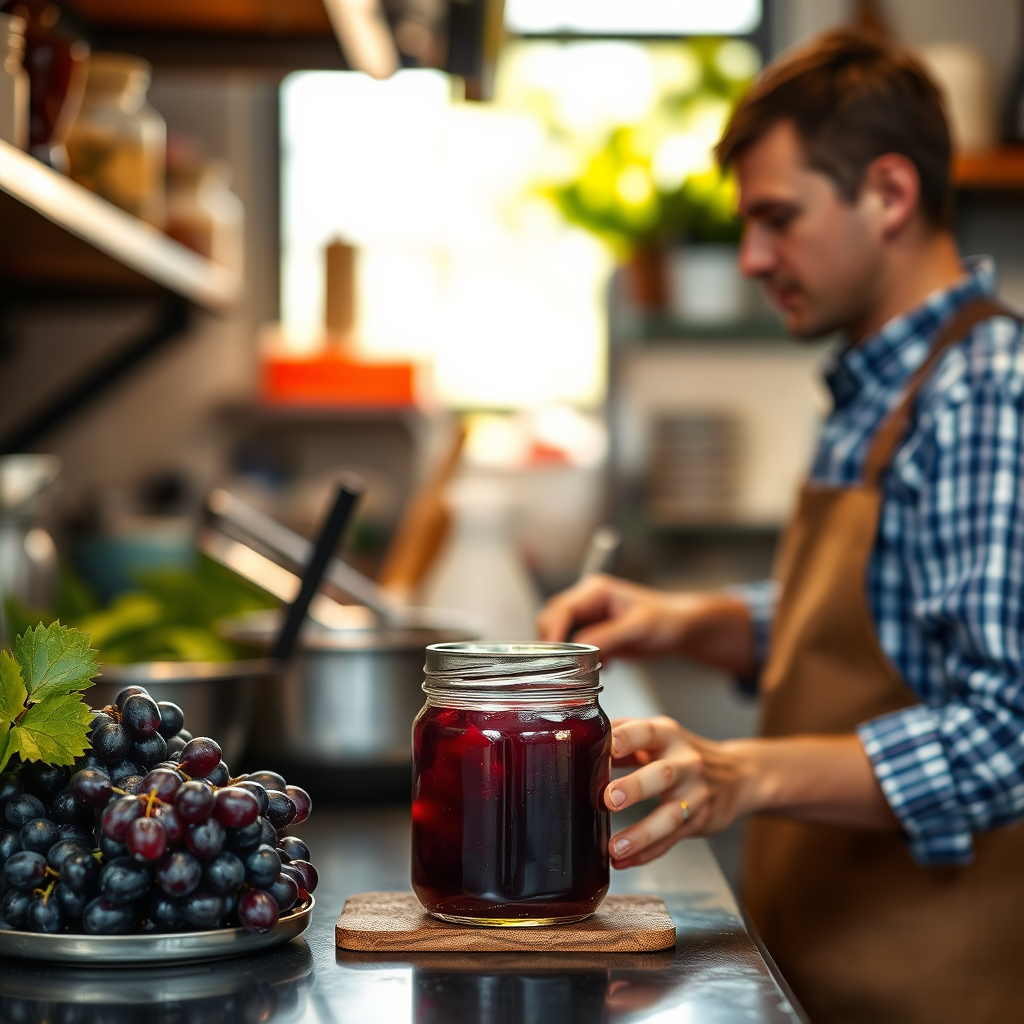
This guide offers a detailed recipe for crafting grape jelly at home, complete with ingredient lists, essential equipment, and step-by-step instructions for the jelly-making process. It emphasizes safety measures in canning and preserving, ensuring readers are well-equipped to prevent spoilage and foodborne illness. While this guide focuses exclusively on grape jelly production, it does not delve into alternative jelly flavors or methods for making grape juice.
Who Should Read This
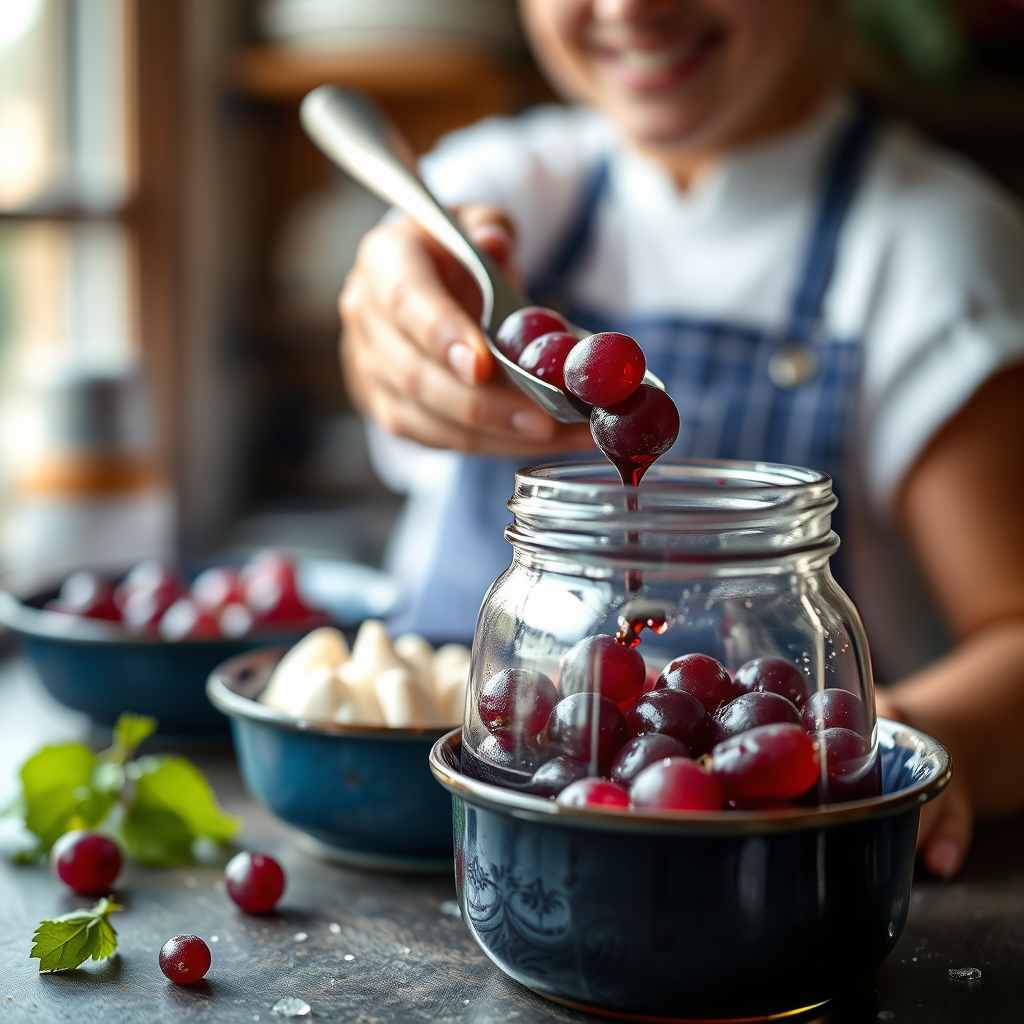
Home cooks with a basic understanding of food preparation and an interest in canning and preserving will find this guide particularly beneficial. Designed for those who possess some experience with canning, it provides a thorough, step-by-step protocol for safely and effectively making grape jelly. Beginners in canning may find this process challenging, as it involves specific techniques and a solid grasp of food safety practices.
The Step-by-Step Protocol
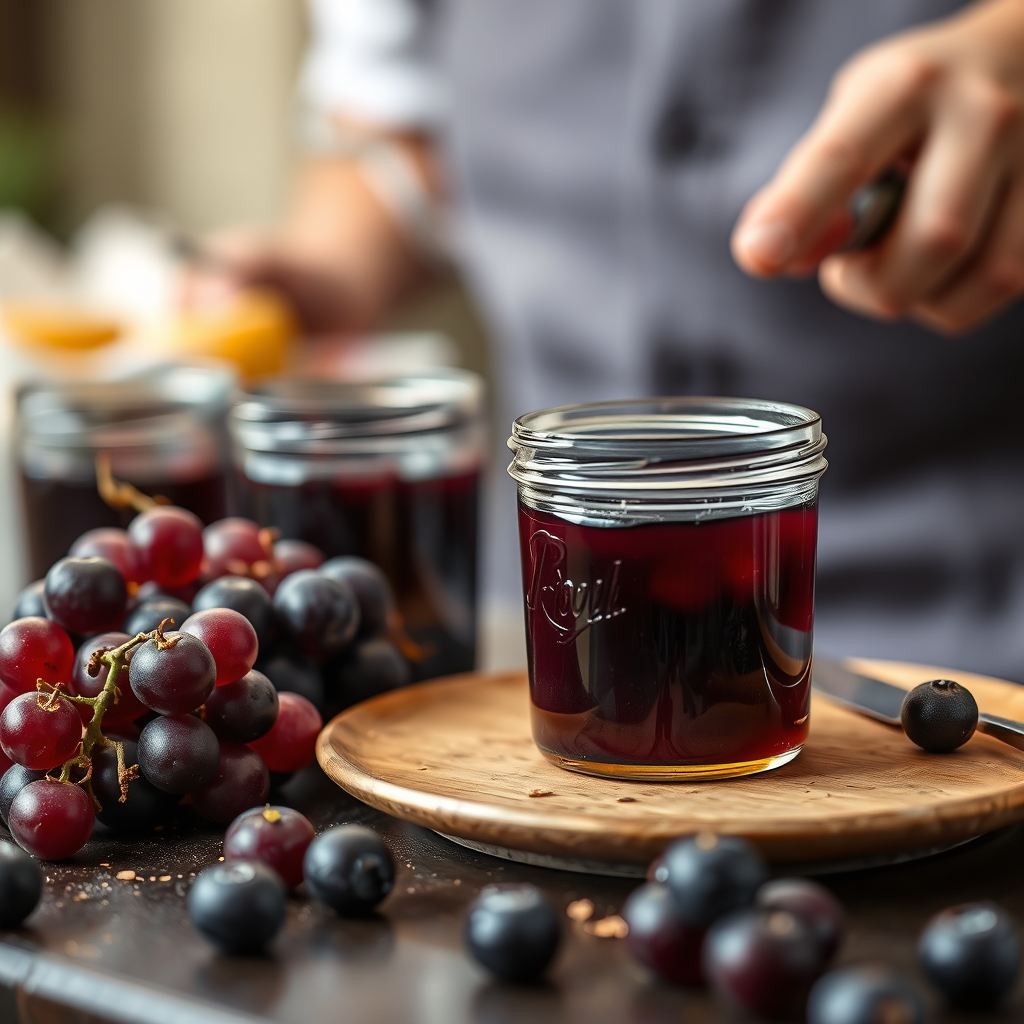
1. Gather Ingredients: Obtain 2 quarts of fresh grapes, 4 cups of granulated sugar, 1/4 cup of lemon juice, and 1 package (1.75 oz) of fruit pectin.
2. Prepare Grapes: Rinse grapes thoroughly under cold water, remove stems, and crush them using a potato masher to extract juice.
3. Cook the Mixture: In a large pot, combine the crushed grapes and 1 cup of water. Bring to a boil, then simmer for 10 minutes. Strain through a fine sieve to extract juice.
4. Make Jelly: Measure 4 cups of grape juice and add to a clean pot. Stir in lemon juice and pectin, bringing the mixture to a rolling boil. Gradually add sugar while stirring, and boil for 1 minute until fully dissolved.
5. Check for Set: After boiling, perform the “plate test” to check if the jelly has set. Place a spoonful of jelly on a chilled plate and return it to the freezer for 1-2 minutes. If it wrinkles when pushed with a finger, it’s ready to jar.
6. Prepare Jars and Lids: Ensure that your canning jars and lids are sterilized. Boil jars in water for 10 minutes, and simmer lids in hot water (do not boil) to ensure a proper seal.
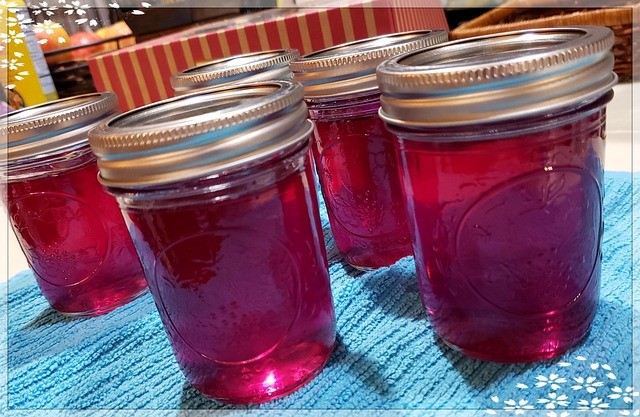
7. Fill Jars: Pour the hot jelly into the prepared jars, leaving about 1/4 inch of headspace. Wipe the rims of the jars with a clean, damp cloth to remove any residue.
8. Seal Jars: Place the sterilized lids on the jars and screw on the metal bands until they are fingertip-tight.
9. Process Jars: Process the jars in a boiling water bath for 5-10 minutes based on your altitude. Ensure that water covers the jars by at least an inch.
10. Cool and Store: Remove jars from the water bath, place them on a clean towel, and allow them to cool completely. Once cooled, check seals by pressing the center of each lid; it should not flex up and down. Store sealed jars in a cool, dark place.
Grape Varieties Used for Jelly Making
| # | Grape Variety | Sugar Content (%) | Acidity (%) | Best For |
|---|---|---|---|---|
| 1 | Concord | 16-18 | 0.5-0.7 | Jelly |
| 2 | Niagara | 14-16 | 0.6-0.8 | Jelly |
| 3 | Catawba | 15-17 | 0.5-0.6 | Jelly |
| 4 | Red Globe | 15-19 | 0.4-0.6 | Jelly |
| 5 | Thompson Seedless | 14-16 | 0.5-0.6 | Jelly |
| 6 | Chardonnay | 15-17 | 0.6-0.8 | Not Recommended |
| 7 | Cabernet Sauvignon | 14-16 | 0.5-0.7 | Not Recommended |
Warning Signs: When Not to Follow This
If you have allergies to grapes or related fruits, steer clear of this recipe, as it may provoke severe allergic reactions. Additionally, do not use grapes that display signs of mold, an off smell, or unusual coloration, as these could indicate spoilage that would compromise the jelly. It’s essential to have proper canning supplies, including sterilized jars and lids; proceeding without these increases the risk of contamination and spoilage.
The Most Common Mistakes (And Their Consequences)
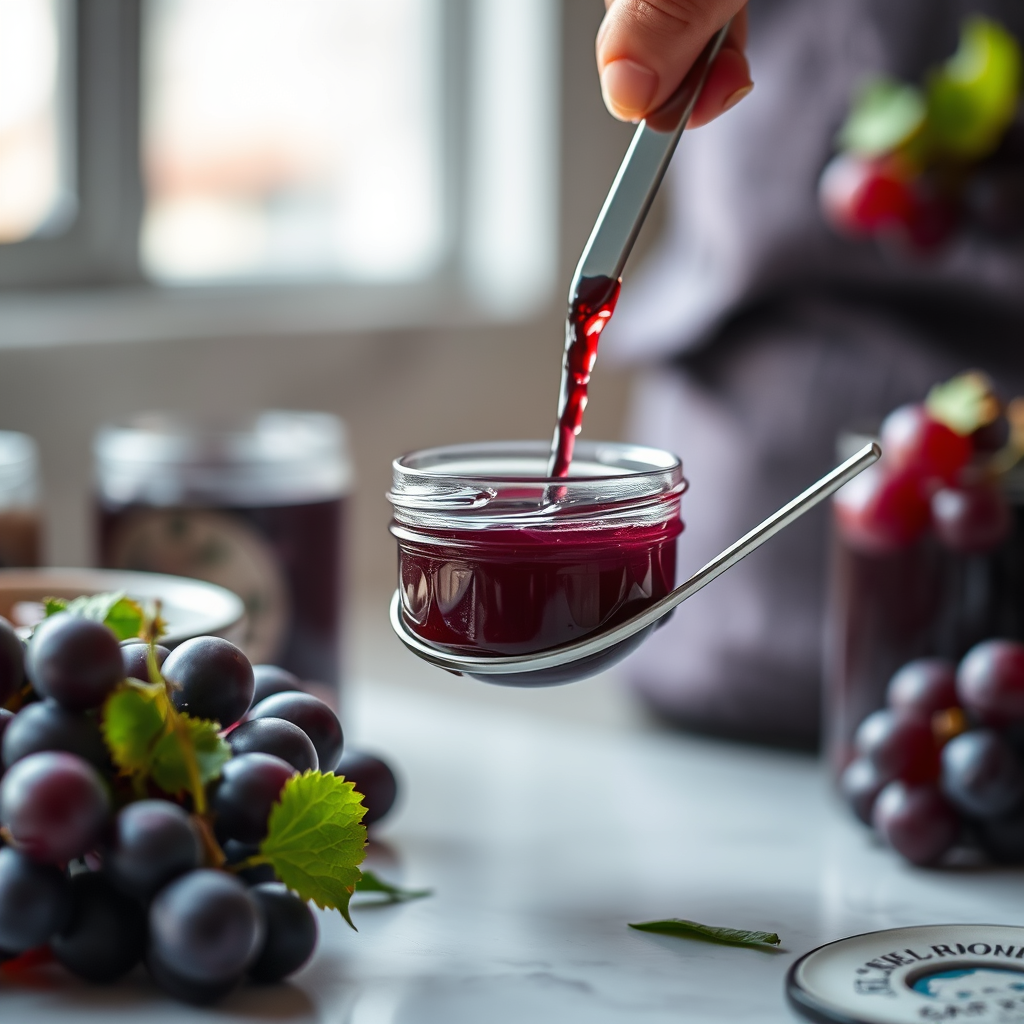
One frequent error is using unripe grapes, which can result in jelly that lacks flavor and fails to set properly. Always select fully ripe grapes for optimal results. Inaccurate sugar measurements can also lead to jelly that doesn’t set correctly; ensure you use a precise measuring cup for accuracy. Furthermore, neglecting the boiling time can yield either a jelly that is too runny or burnt; adhere strictly to the timing specified in the recipe for the best outcome.
Special Cases That Need a Different Approach
When using frozen grapes, allow them to thaw completely and drain any excess liquid, as this can affect the consistency of the jelly. If you opt for homemade fruit pectin, be prepared to make adjustments in sugar and acid levels; consult specific guidelines for homemade pectin. Additionally, if canning at high altitudes (over 1,000 feet), extend the processing time by 5-10 minutes to ensure proper sealing and safety.
When You Need a Professional
Should you notice any signs of botulism, such as unusual odors, bubbles, or discoloration in your jars of jelly, discard them immediately and consult your local health department. If you are unfamiliar with safe canning practices or feel uncertain about proper sterilization methods, seek guidance from a food preservation expert. For significant modifications to the recipe—such as reducing sugar or using alternative sweeteners—consult a food scientist or preservation expert to understand the safety implications and effects on shelf life.
Sources and Further Reading
For comprehensive guidelines and resources on safe canning practices, visit the National Center for Home Food Preservation. “So Easy to Preserve,” published by the University of Georgia Cooperative Extension, offers valuable insights into various canning techniques and recipes. Finally, refer to the USDA Complete Guide to Home Canning for established standards and safety practices relevant to fruit preservation and jelly making.
Frequently Asked Questions
What ingredients do I need for a homemade grape jelly recipe?
To make homemade grape jelly, you’ll need fresh grapes, sugar, water, and pectin. Most recipes call for about 4 cups of grape juice, which can be extracted from roughly 3-4 pounds of grapes, along with 5 cups of sugar and 1 package of pectin. These ingredients are essential for achieving the right flavor and consistency in your grape jelly.
How do I make grape jelly from scratch?
To make grape jelly from scratch, start by washing and crushing the grapes to release their juice. Strain the juice through a fine mesh sieve or cheesecloth to remove solids, then combine the juice with sugar and pectin in a large pot. Bring the mixture to a boil, stirring constantly, and then pour it into sterilized jars for canning, ensuring to leave headspace before sealing.
Why is my grape jelly not setting properly?
If your grape jelly is not setting, it may be due to insufficient pectin or not boiling the mixture long enough. Make sure to follow the recommended cooking times and use the right amount of pectin. Additionally, ensure that your grape juice is not diluted with too much water, as this can also affect the jelly’s ability to set.
What is the best type of grapes to use for making jelly?
The best types of grapes for making jelly are Concord grapes, which are known for their rich flavor and high pectin content. Other varieties like Niagara or Catawba can also be used, but Concord grapes are preferred for their sweetness and vibrant color, resulting in a deliciously flavorful grape jelly.
Which method is best for canning grape jelly: water bath or pressure canning?
The water bath method is the best and most commonly used technique for canning grape jelly. This method is suitable because jelly is high in acidity, allowing it to be safely processed in a boiling water bath for preservation. Pressure canning is not recommended for jelly, as it can alter the texture and flavor of the final product.
References
- Jelly
https://en.wikipedia.org/wiki/Jelly - https://www.nal.usda.gov/legacy/legacy/food-safety/food-safety-research/food-safety-research-projects
https://www.nal.usda.gov/legacy/legacy/food-safety/food-safety-research/food-safety-research-projects - https://www.fs.usda.gov/Internet/FSE_DOCUMENTS/stelprdb5183706.pdf
https://www.fs.usda.gov/Internet/FSE_DOCUMENTS/stelprdb5183706.pdf - https://pubmed.ncbi.nlm.nih.gov/29099349/
https://pubmed.ncbi.nlm.nih.gov/29099349/ - https://www.ars.usda.gov/ARSUserFiles/oc/np/food-safety/food-safety-fact-sheets/jelly.pdf
https://www.ars.usda.gov/ARSUserFiles/oc/np/food-safety/food-safety-fact-sheets/jelly.pdf - https://www.extension.purdue.edu/extmedia/FS/FS-55-W.pdf
https://www.extension.purdue.edu/extmedia/FS/FS-55-W.pdf - https://www.uga.edu/extension/foodpreservation/pdfs/jelly.pdf
https://www.uga.edu/extension/foodpreservation/pdfs/jelly.pdf - Google Scholar Google Scholar
https://scholar.google.com/scholar?q=recipe+for+grape+jelly - Google Scholar Google Scholar
https://scholar.google.com/scholar?q=grape+jelly+preservation - Google Scholar Google Scholar
https://scholar.google.com/scholar?q=grape+jelly+nutritional+content