Master the art of making hot chili pepper jelly with this comprehensive guide that details expert protocols for safe preparation and preservation. From selecting the right peppers to achieving the perfect balance of heat and sweetness, every step is crucial to ensure both flavor and safety. Following these precise instructions not only enhances your culinary skills but also guarantees a delicious, shelf-stable product. Elevate your preserving game and impress your guests with this fiery twist on a classic jelly.
What This Guide Covers (And What It Doesn’t)
This guide offers a comprehensive, step-by-step protocol for safely creating hot chili pepper jelly. You’ll find precise ingredient measurements, cooking times, and canning techniques. Emphasizing recipes that strike a harmonious balance between heat and sweetness, it explores various chili pepper types and their unique flavor profiles, ensuring a versatile array of jelly options. However, this guide does not delve into unrelated jelly recipes or non-canning preservation methods, such as refrigeration or freezing, which lie outside the traditional jelly-making practices.
Who Should Read This
Aimed at home cooks with a fundamental grasp of basic canning techniques, this guide is perfect for those comfortable handling spicy ingredients. It invites individuals eager to elevate their culinary skills by experimenting with bold flavors and preservation methods. However, those with specific dietary restrictions or preferences, such as low-sugar or vegan options, may find limited applicability here, as the focus remains primarily on traditional hot chili pepper jelly recipes.
The Step-by-Step Protocol
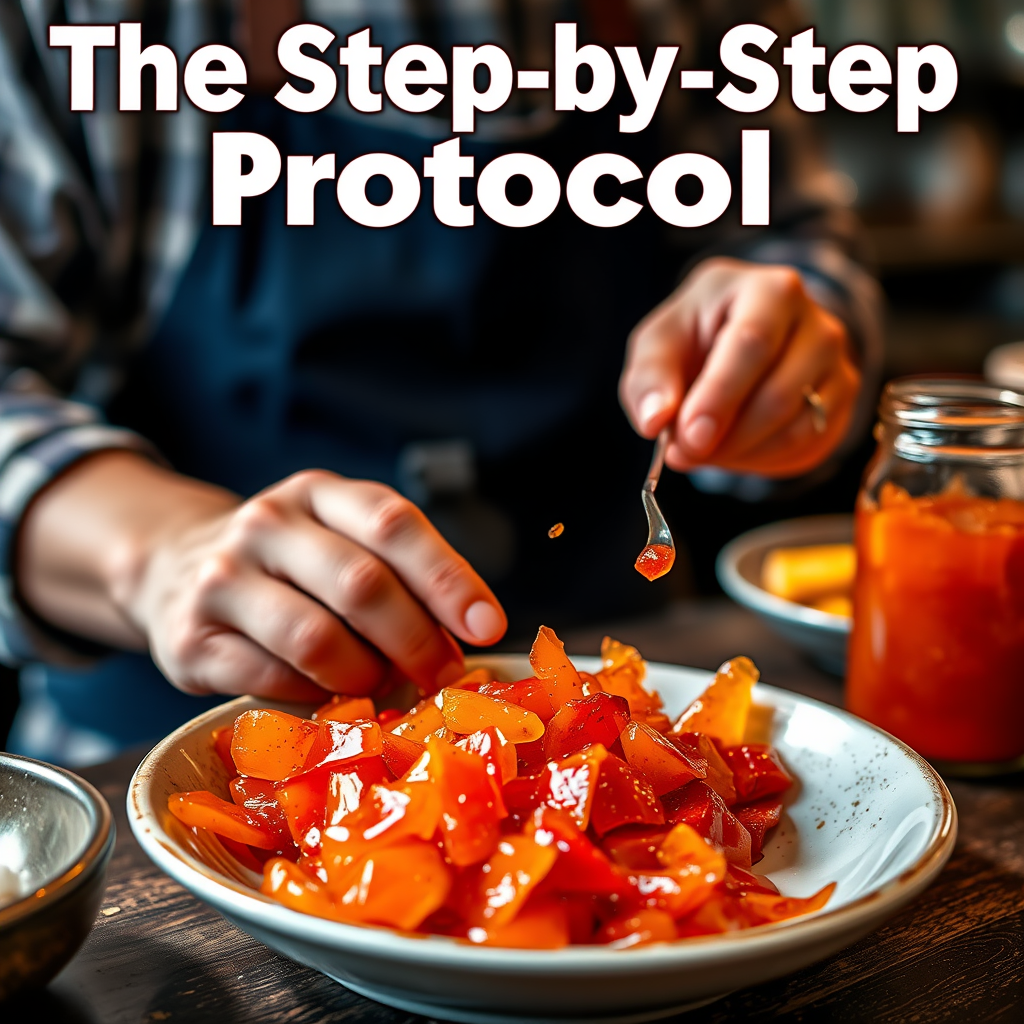
1. Select Your Peppers: Choose fresh chili peppers based on your desired heat level. For a balanced flavor, aim for 2 cups of chopped peppers. A combination of jalapeño (mild), serrano (medium), and habanero (hot) can help you achieve your ideal heat profile.
2. Prepare Ingredients: Gather 1 cup of apple cider vinegar, 5 cups of granulated sugar, and 1 package (1.75 oz) of fruit pectin. Ensure that all equipment, including jars and utensils, is properly sanitized to prevent contamination.
3. Cook the Mixture: In a large pot, combine the chopped peppers, vinegar, and sugar. Bring the mixture to a rolling boil over medium-high heat, stirring continuously for about 5-7 minutes until the sugar fully dissolves. This step is crucial for achieving the right texture.
4. Add Pectin: Stir in the fruit pectin and return the mixture to a boil. Continue boiling for an additional 1-2 minutes until the mixture thickens. To check for the gel stage, drop a small amount of jelly onto a cold plate and let it sit for a minute. If it holds its shape when you push it with your finger, it’s ready.
5. Jar the Jelly: Pour the hot jelly into prepared sterilized jars, leaving about 1/4 inch of headspace. Wipe the rims of the jars with a clean towel to remove any residue, ensuring a proper seal.
6. Seal and Process: Place the sterilized lids on the jars and screw on the rings until they are fingertip-tight. Process the jars in a boiling water bath for 5-10 minutes to guarantee proper sealing. Start timing once the water reaches a full boil.
7. Cool and Store: Remove the jars from the water bath and allow them to cool on a clean kitchen towel or cooling rack for 12-24 hours. After cooling, check that the lids have sealed correctly by pressing in the center of each lid. If it does not pop back, the jar is sealed.
8. Label and Store: Once cool, label the jars with the date and contents. Store them in a cool, dark place. Properly processed jelly can last for up to one year when stored correctly.
Top 7 Chili Pepper Varieties for Jelly Making
| # | Pepper Variety | Heat Level (Scoville) | Flavor Profile | Best For |
|---|---|---|---|---|
| 1 | Jalapeño | 2,500 – 8,000 | Fruity, slightly smoky | Mild Jelly |
| 2 | Serrano | 2,500 – 5,000 | Crisp, bright | Medium Jelly |
| 3 | Habanero | 100,000 – 350,000 | Fruity, floral | Hot Jelly |
| 4 | Thai Chili | 50,000 – 100,000 | Sweet, spicy | Exotic Jelly |
| 5 | Ghost Pepper | 855,000 – 1,463,700 | Fruity, smoky | Extreme Jelly |
| 6 | Bell Pepper | 0 | Sweet, mild | Sweet Jelly |
| 7 | Chipotle | 2,500 – 8,000 | Smoky, earthy | Smoky Jelly |
Warning Signs: When Not to Follow This
– Avoid this protocol if you have allergies to specific chili peppers; always read labels and consult ingredient lists to prevent adverse reactions.
– Do not proceed if your kitchen equipment is not properly sanitized, as this increases the risk of bacterial growth and spoilage in your jelly.
– If the peppers show signs of mold or spoilage, discard them immediately and refrain from using any part of the affected peppers in your jelly.
The Most Common Mistakes (And Their Consequences)
– Overcooking the jelly can lead to a rubbery texture; monitor cooking times closely, as this significantly affects the final product’s consistency.
– Using incorrect pectin types can result in jelly that either doesn’t set or sets too firmly; always opt for a pectin specifically labeled for jelly-making.
– Neglecting the sterilization process for jars can lead to spoilage; ensure jars are boiled for at least 10 minutes before filling to maintain food safety.
Special Cases That Need a Different Approach
– If using dried chili peppers instead of fresh, rehydrate them in hot water for at least 30 minutes before chopping and incorporating them into the recipe.
– For low-sugar diets, consider using a low-sugar pectin and adjust the sugar ratio while ensuring the jelly still sets properly.
– When making large batches (more than 10 jars), consider using a pressure canner instead of a water bath to guarantee proper sealing and safety.
When You Need a Professional
– If you consistently face issues with jelly not setting despite following protocol, consult a food preservation expert to analyze your methods and ingredients.
– Seek medical advice if you experience allergic reactions or adverse health effects after consuming homemade jelly, as this may indicate potential food safety concerns.
– For large-scale production or commercial sales of hot chili pepper jelly, engage a food safety consultant to ensure compliance with local health regulations and industry standards.
Sources and Further Reading
– The National Center for Home Food Preservation offers reliable guidelines on safe canning practices and recipes for various jellies, including hot pepper variations.
– “The Complete Book of Home Canning” by the USDA provides authoritative insights into preserving methods and safety protocols.
– Refer to “Ball Complete Book of Home Preserving” for additional recipes and techniques specific to pepper jelly and other fruit preserves.
Frequently Asked Questions
What are the basic ingredients needed for hot chili pepper jelly recipes?
The basic ingredients for hot chili pepper jelly recipes typically include fresh chili peppers, sugar, vinegar, and pectin. You can choose different types of peppers depending on your desired heat level, such as jalapeños for mild sweetness or habaneros for a fiery kick. Ensuring high-quality ingredients will enhance the flavor and texture of your jelly.
How do I make hot chili pepper jelly without canning?
To make hot chili pepper jelly without canning, simply prepare the jelly as you normally would by cooking the ingredients, then pour the mixture into sterilized jars and let it cool completely. Once cooled, store the jars in the refrigerator, where the jelly will keep for several weeks. This method is perfect for those who want to enjoy the jelly fresh without the hassle of traditional canning techniques.
Why is my hot chili pepper jelly not setting properly?
If your hot chili pepper jelly is not setting properly, it may be due to insufficient pectin or not boiling the mixture long enough. Make sure to follow the recipe instructions accurately and consider adding more pectin if needed. Additionally, ensuring that the mixture reaches a rolling boil can help activate the pectin to achieve the desired jelly consistency.
What are some creative uses for hot chili pepper jelly?
Hot chili pepper jelly can be used in various creative ways, such as a glaze for meats, a topping for cream cheese on crackers, or an ingredient in salad dressings. Its sweet and spicy flavor pairs well with cheeses and can elevate appetizers or main dishes. Experimenting with hot chili pepper jelly in your cooking can add a unique twist to traditional recipes.
Which types of chili peppers are best for making jelly?
The best types of chili peppers for making jelly depend on your heat preference; jalapeños provide a mild heat, while serranos offer a medium spice, and habaneros deliver intense heat. For a balanced flavor, consider mixing different types of peppers. Always remember to wear gloves when handling hot peppers to avoid irritation.
References
- Jelly
https://en.wikipedia.org/wiki/Jelly - Google Scholar Google Scholar
https://scholar.google.com/scholar?q=hot+chili+pepper+jelly+recipes - https://pubmed.ncbi.nlm.nih.gov/15157602/
https://pubmed.ncbi.nlm.nih.gov/15157602/ - https://www.sciencedirect.com/topics/agricultural-and-biological-sciences/chili-pepper
https://www.sciencedirect.com/topics/agricultural-and-biological-sciences/chili-pepper - Checking your browser – reCAPTCHA
https://www.ncbi.nlm.nih.gov/pmc/articles/PMC6338232/ - Google Scholar Google Scholar
https://scholar.google.com/scholar?q=chili+pepper+jelly+recipe - Checking your browser – reCAPTCHA
https://www.ncbi.nlm.nih.gov/pmc/articles/PMC5001925/ - Checking your browser – reCAPTCHA
https://www.ncbi.nlm.nih.gov/pmc/articles/PMC5618553/ - https://www.bbc.co.uk/food/recipes/chili_jelly_80050
https://www.bbc.co.uk/food/recipes/chili_jelly_80050 - NYT Cooking – Recipes and Cooking Guides From The New York Times
https://www.nytimes.com/recipes/1019770/chili-jelly