Making black raspberry jam requires precision and expertise to ensure both flavor and safety. This comprehensive guide covers everything from selecting the best berries to step-by-step instructions for the canning process, emphasizing the importance of proper techniques to prevent spoilage and ensure a delicious result. Trust these expert methods to elevate your jam-making skills and preserve the rich taste of black raspberries.
What This Guide Covers (And What It Doesn’t)
This guide offers a detailed, step-by-step recipe for crafting black raspberry jam, emphasizing safe food preservation techniques that ensure both quality and longevity. It does not delve into alternative jam recipes or preservation methods such as freezing or canning other fruits; the focus remains solely on black raspberry jam. Tailored for home cooks eager to produce small batches using fresh black raspberries, this guide highlights safety and proper techniques. However, readers seeking information on commercial jam production or large-scale recipes may find it lacking.
Who Should Read This
This guide is intended for home cooks who possess a foundational understanding of canning and food preservation techniques, particularly those interested in fruit preserves. Individuals with prior experience in making jams or jellies will find valuable insights and tips to refine their process with black raspberries. Newcomers to canning should already have some grasp of kitchen safety and hygiene practices to effectively follow the outlined steps. This guide is not suitable for those unfamiliar with food preservation or lacking the essential equipment for canning.
The Step-by-Step Protocol
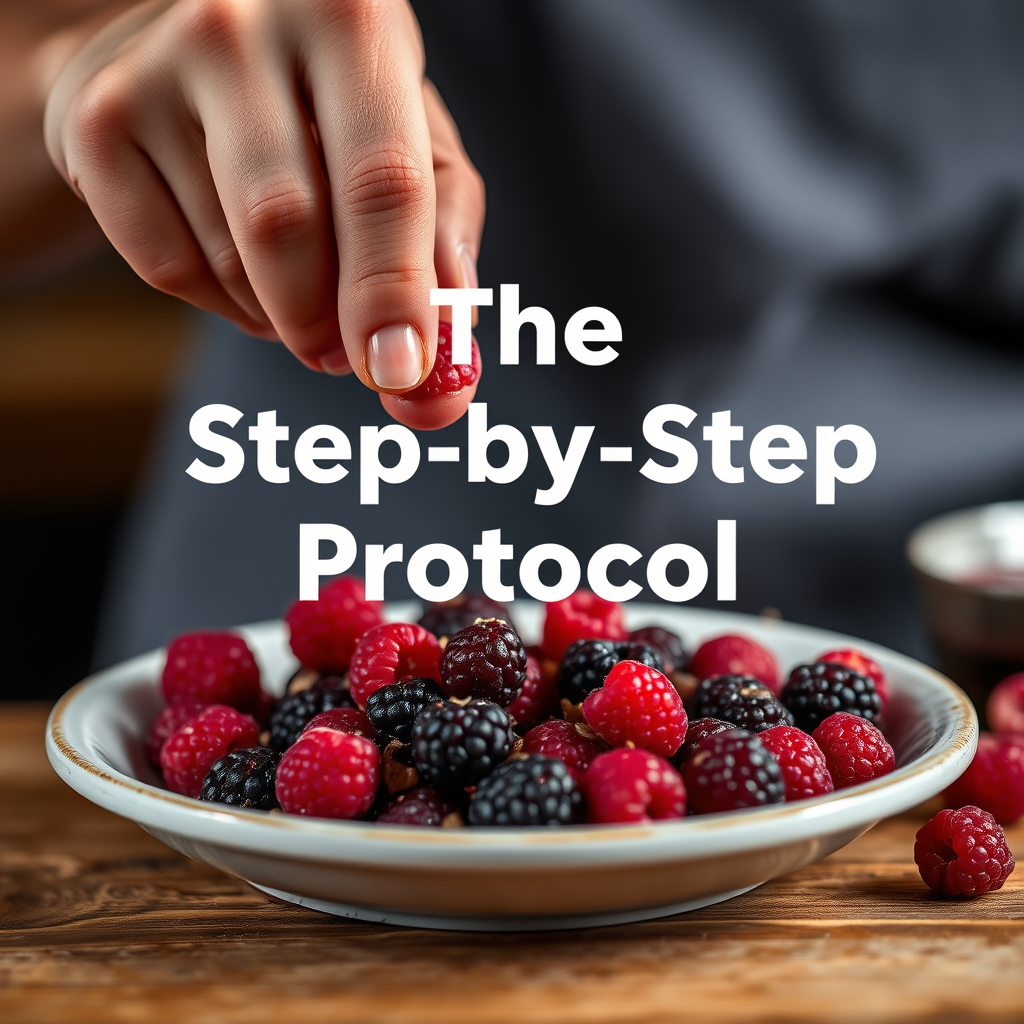
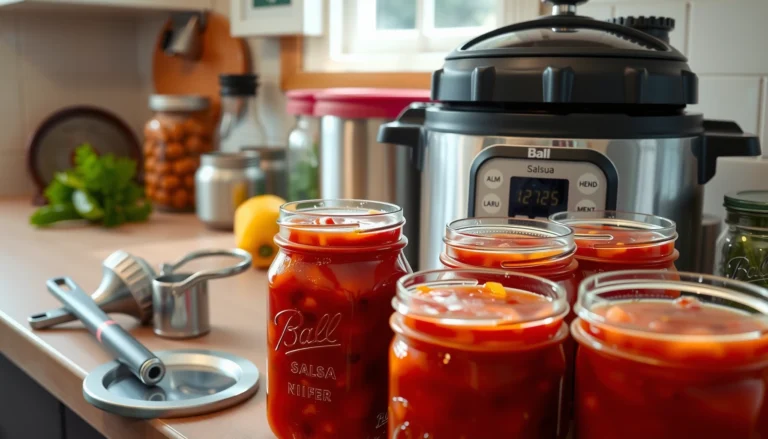
1. Gather Ingredients and Equipment: Begin by assembling 4 cups of fresh black raspberries, 1 cup of granulated sugar, 1 tablespoon of bottled lemon juice, and a package of fruit pectin (such as Sure-Jell). Ensure you have sterilized canning jars and lids, a water bath canner, a large pot, a long spoon for stirring, a ladle, and a jar lifter for safe handling.
2. Prepare the Black Raspberries: Rinse the black raspberries gently under cool running water to eliminate dirt and debris. Inspect the berries, discarding any stems, leaves, or damaged fruit. Drain them thoroughly in a colander to remove excess moisture.
3. Cook the Jam Mixture: In a large pot, combine the prepared black raspberries, sugar, and lemon juice. Heat the mixture over medium-high heat, stirring frequently to dissolve the sugar. Bring it to a rolling boil, allowing it to bubble vigorously for 10 minutes. This crucial step develops the flavors and fully integrates the sugar.
4. Add Pectin: After the initial cooking, stir in the pectin while maintaining the heat. Return the mixture to a full boil and cook for an additional 1-2 minutes. Utilize a candy thermometer to confirm it reaches the proper gel point of 220°F (104°C). To test for gel consistency, place a spoonful of the mixture on a cold plate and run your finger through it; it should hold its shape.
5. Fill Jars: Once the jam has achieved the desired consistency, remove the pot from heat. Skim off any foam from the surface using a spoon. Carefully ladle the hot jam into sterilized jars, leaving a 1/4-inch headspace at the top of each jar to allow for expansion. Wipe the rims of the jars with a clean cloth to eliminate any residue that could interfere with sealing.
6. Seal and Process: Place the sterilized lids on the jars and screw on the metal bands until they are fingertip-tight. Process the jars in a boiling water bath for 10 minutes. If your altitude exceeds 1,000 feet, increase the processing time by 1 minute for each additional 1,000 feet.
7. Cool and Store: After processing, carefully remove the jars from the water bath using a jar lifter. Allow them to cool upright on a clean towel or cooling rack for 12-24 hours. Check that the lids have sealed properly by pressing down in the center; if it pops back, the seal has failed. Store the sealed jars in a cool, dark place and savor your homemade black raspberry jam.
Nutritional Profile of Black Raspberry Jam (Per 1 Tbsp)
| # | Nutrient | Amount | % Daily Value |
|---|---|---|---|
| 1 | Calories | 50 | 2% |
| 2 | Total Fat | 0g | 0% |
| 3 | Total Carbohydrates | 13g | 4% |
| 4 | Sugars | 12g | N/A |
| 5 | Protein | 0g | 0% |
| 6 | Vitamin C | 1mg | 2% |
| 7 | Calcium | 1mg | 0% |
| 8 | Iron | 0mg | 0% |
| 9 | Potassium | 26mg | 1% |
| 10 | Fiber | 0g | 0% |
Warning Signs: When Not to Follow This
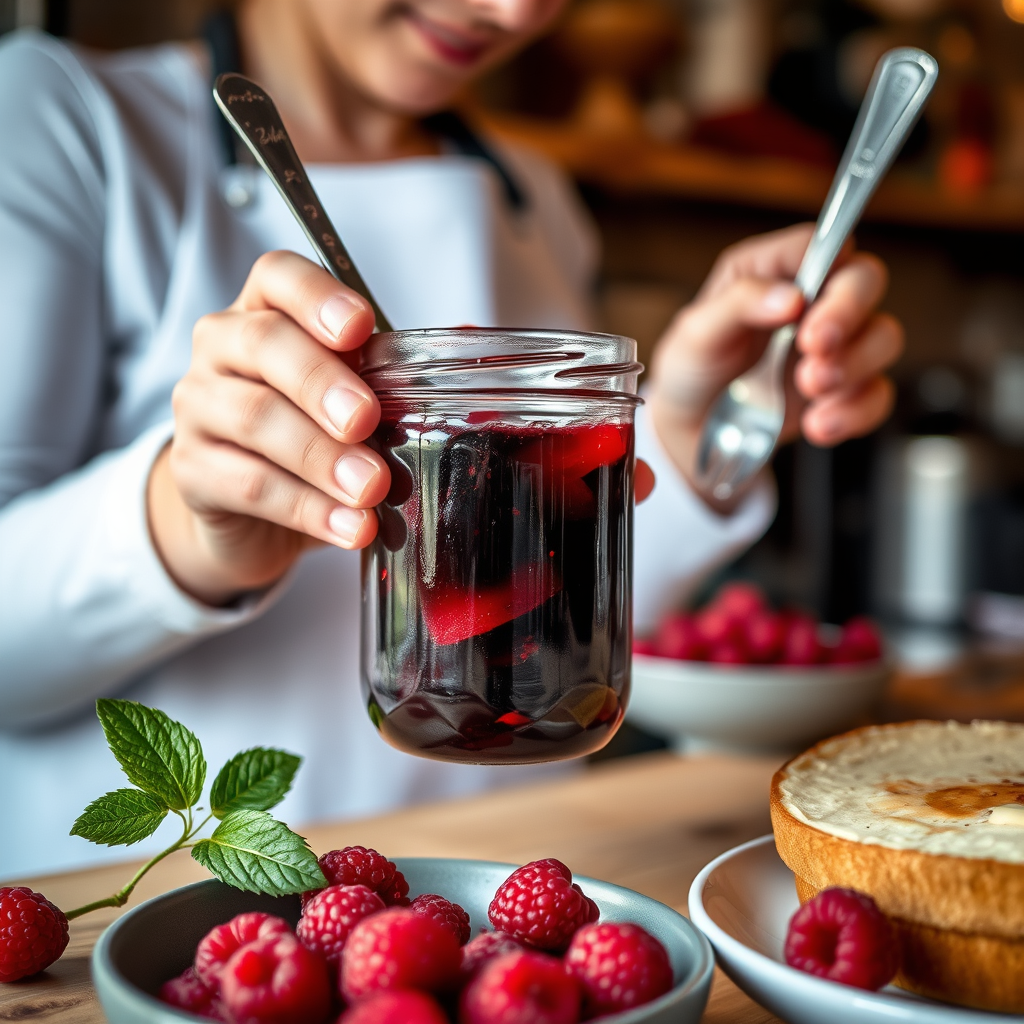
Avoid attempting this recipe if your black raspberries exhibit signs of mold, are excessively mushy, or emit an off smell, as these indicate spoilage. It’s also important to steer clear of old or expired pectin, which can lead to improper gelling and compromise the safety and quality of the jam. If you’re feeling unwell, have a weakened immune system, or cannot adhere to proper canning hygiene practices, it’s best to postpone making the jam. Additionally, refrain from altering the sugar or pectin ratios without consulting reliable sources, as this can jeopardize the preservation process.
The Most Common Mistakes (And Their Consequences)
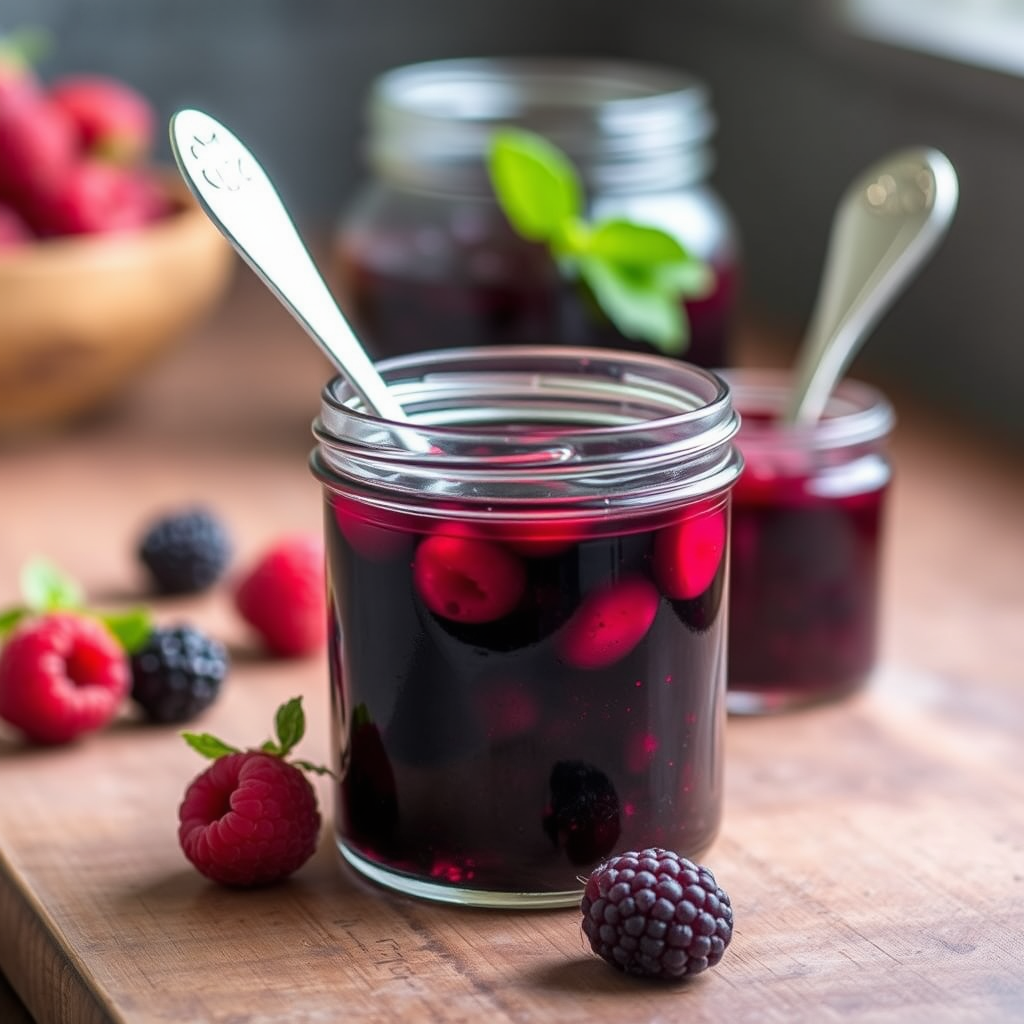
A frequent misstep among home cooks is neglecting to sterilize jars, leading to contamination and spoilage of the jam within weeks or months. Inaccurate measurement of pectin can result in a jam that is either too runny or excessively firm, failing to achieve the desired texture. Overcooking the jam can caramelize the sugars, resulting in a burnt flavor and darker color, which detracts from the natural taste of black raspberries. Ignoring the headspace guidelines during jar filling can cause improper sealing, resulting in spoilage and loss of your jam.
Special Cases That Need a Different Approach
When using frozen black raspberries, adjust cooking times and potentially increase the pectin to accommodate the excess moisture released during thawing. For low-sugar diets, consider opting for a sugar substitute specifically designed for canning, ensuring it is appropriate for high-temperature processing. If you’re at a high altitude (above 1,000 feet), increase the processing time by 1 minute for every additional 1,000 feet to ensure proper sealing. For those interested in adding spices or herbs, such as vanilla or mint, do so in small quantities after the initial cooking phase to avoid overpowering the raspberry flavor.
When You Need a Professional
If you notice any unusual odors, colors, or textures in your finished jam, seek guidance from a food preservation expert or a local extension service. If you’re considering significant alterations to the recipe, particularly for dietary restrictions, consult a licensed nutritionist or food safety specialist. For those uncertain about proper canning methods or who have never canned before, attending a local canning workshop or class is highly recommended. In the event of a foodborne illness after consuming homemade jam, contact a healthcare professional for advice, and possibly a food safety expert for further investigation.
Sources and Further Reading
– The National Center for Home Food Preservation (nchfp.uga.edu) offers comprehensive canning guidelines and recipes for black raspberry jam.
– The USDA Complete Guide to Home Canning provides detailed instructions and safety standards for preserving fruits and jams.
– “Ball Complete Book of Home Preserving” features tested recipes and preservation techniques, including dedicated chapters on berry jams.
– Local cooperative extensions often provide resources tailored to regional canning practices and fruit preservation, invaluable for both new and experienced canners alike.
Frequently Asked Questions
What ingredients are needed to make black raspberry jam?
To make black raspberry jam, you will need fresh black raspberries, granulated sugar, lemon juice, and pectin. The black raspberries provide the essential flavor, while the sugar helps with preservation and sweetness. Lemon juice adds acidity, which enhances flavor and helps the jam set properly when combined with pectin.
How do I properly prepare black raspberries for jam?
Start by rinsing the black raspberries gently under cold water to remove any dirt or insects. After rinsing, allow them to drain in a colander and remove any stems or leaves. It’s important to handle the berries carefully to prevent crushing them, as intact berries will give your jam a better texture and flavor.
Why is pectin necessary in black raspberry jam recipe?
Pectin is a natural thickening agent that helps the jam achieve the desired gel-like consistency. Without pectin, your black raspberry jam may remain runny and not set properly. Some recipes use high-pectin fruits or added pectin to ensure the jam thickens and preserves well, allowing you to enjoy it for months.
What is the best method for canning black raspberry jam?
The best method for canning black raspberry jam is the water bath canning technique. First, fill sterilized jars with the hot jam, leaving about a quarter-inch headspace. Seal the jars with lids and process them in a boiling water bath for the recommended time based on your altitude, ensuring a safe and shelf-stable product.
Which tools do I need to make black raspberry jam at home?
To make black raspberry jam at home, you will need several essential tools, including a large pot for cooking the jam, a stirring spoon, measuring cups for the ingredients, and sterilized canning jars with lids. A canning funnel can also be helpful for filling jars without making a mess, as well as a jar lifter to safely remove jars from boiling water.
References
- Fruit preserves
https://en.wikipedia.org/wiki/Jam - https://www.ncbi.nlm.nih.gov/pmc/articles/PMC5679463/
https://www.ncbi.nlm.nih.gov/pmc/articles/PMC5679463/ - https://www.sciencedirect.com/topics/agricultural-and-biological-sciences/raspberry-jam
https://www.sciencedirect.com/topics/agricultural-and-biological-sciences/raspberry-jam - https://www.ncbi.nlm.nih.gov/pmc/articles/PMC6262563/
https://www.ncbi.nlm.nih.gov/pmc/articles/PMC6262563/ - https://www.britannica.com/topic/jam
https://www.britannica.com/topic/jam - Google Scholar Google Scholar
https://scholar.google.com/scholar?q=black+raspberry+jam - Google Scholar Google Scholar
https://scholar.google.com/scholar?q=making+berry+jams - Google Scholar Google Scholar
https://scholar.google.com/scholar?q=black+raspberry+preservation - https://www.extension.purdue.edu/extmedia/HLA/HLA-609-W.pdf
https://www.extension.purdue.edu/extmedia/HLA/HLA-609-W.pdf - https://www.ars.usda.gov/ARSUserFiles/np/blackraspberry.pdf
https://www.ars.usda.gov/ARSUserFiles/np/blackraspberry.pdf