This complete expert guide to safely making traditional strawberry jam provides precise steps and essential tips for preserving the fresh, sweet flavor of strawberries while ensuring food safety. Following the right protocols is crucial to prevent spoilage and ensure a delicious end product. With detailed instructions and expert insights, this guide is designed for both novice and seasoned jam makers aiming to master this timeless culinary tradition.
What This Guide Covers (And What It Doesn’t)
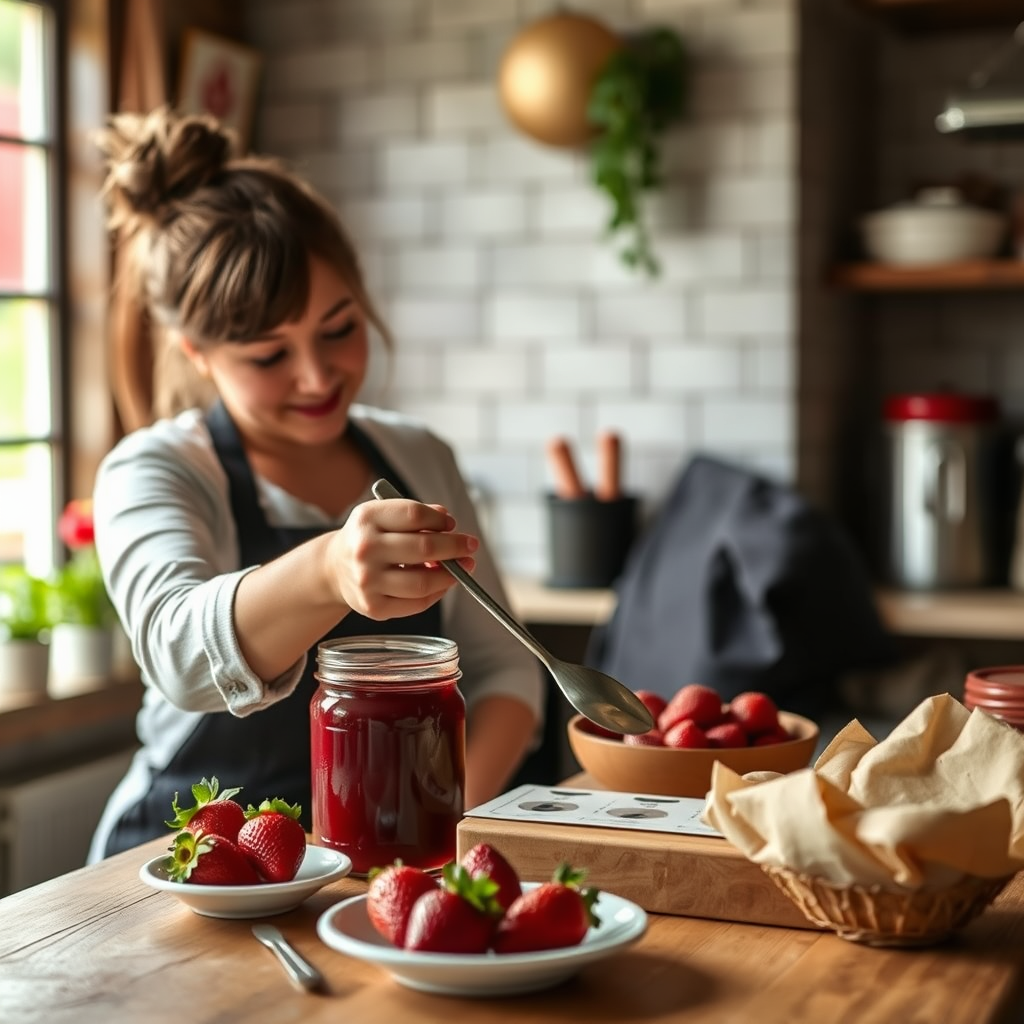
This guide offers a comprehensive, step-by-step traditional strawberry jam recipe, highlighting safe food preservation methods, precise ingredient ratios, and essential equipment for successful jam-making. You’ll discover how to create delicious, shelf-stable strawberry jam that captures the essence of fresh strawberries while following safety protocols.
However, this guide does not address variations such as low-sugar or no-sugar alternatives, nor does it include recipes for other types of fruit jams. The focus remains strictly on the traditional method using strawberries.
Designed for home cooks with basic kitchen skills, this guide aims to instill confidence in making jam safely and effectively while adhering to food safety standards.
Who Should Read This
This guide is perfect for home cooks eager to preserve seasonal fruits and master the traditional method of making strawberry jam that harmonizes flavor and safety. It caters to individuals familiar with basic cooking techniques who may be new to canning or jam-making, providing them with a clear pathway to success.
Conversely, this guide is not meant for those looking for industrial-scale jam production or those who prefer modern quick methods like microwave jam-making, as it focuses exclusively on the traditional technique.
The Step-by-Step Protocol
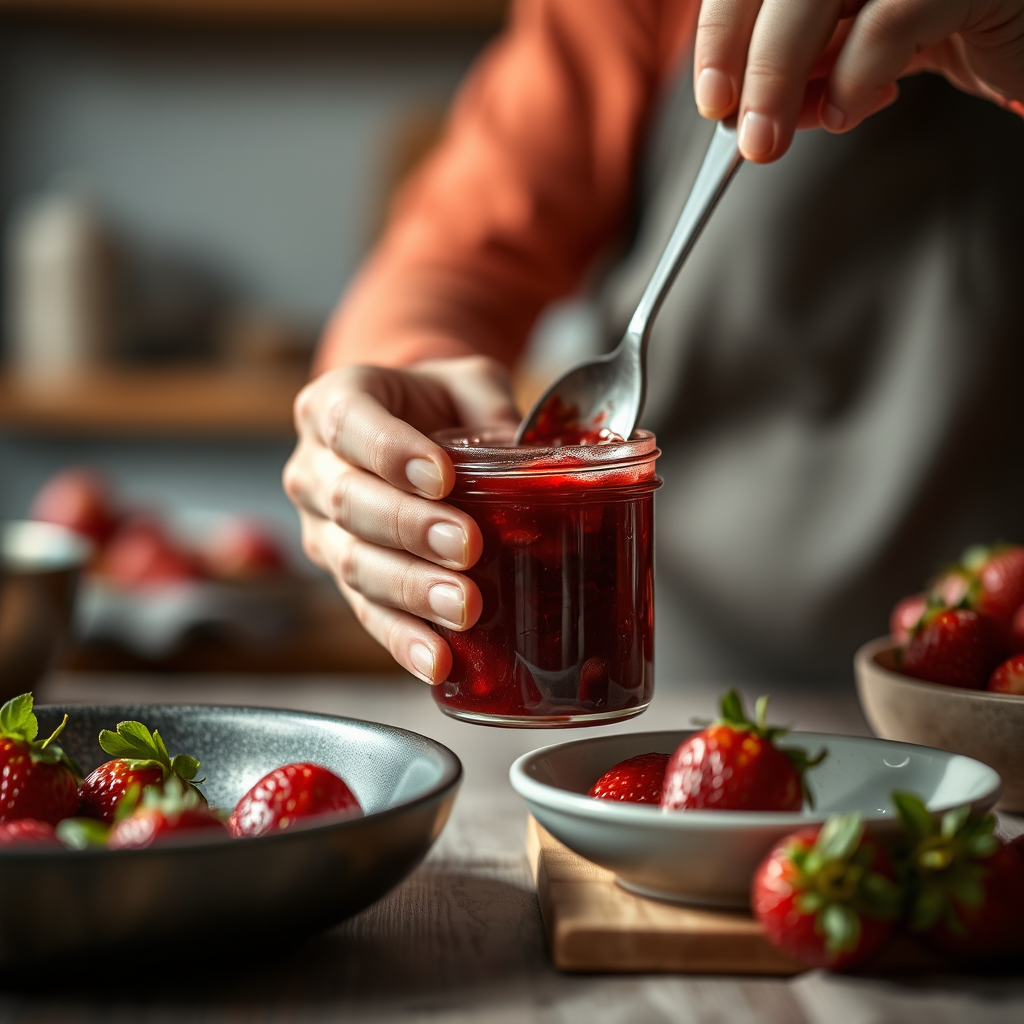
1. Gather Ingredients and Equipment: Collect the necessary ingredients and equipment. You will need:
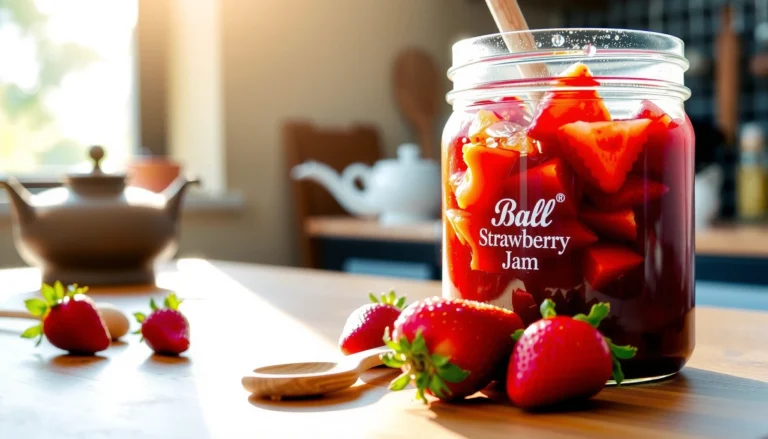
– 2 quarts of fresh strawberries (approximately 4 pounds)
– 4 cups of granulated sugar
– 1/4 cup of freshly squeezed lemon juice
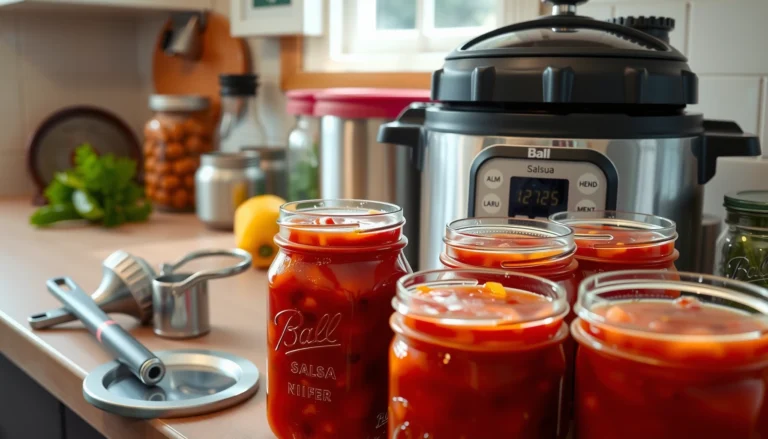
– Canning jars and lids (pint or half-pint size)
– A large pot (at least 6 quarts)
– A ladle
– A canning funnel
– A potato masher (optional)
– A thermometer (preferably an instant-read type)
– A water bath canner or a large pot with a lid for processing
2. Prepare Strawberries: Start with fresh, ripe strawberries. Wash them thoroughly under cold running water. Remove the green stems and any bruised spots. Cut the strawberries into halves or quarters, depending on your preference for chunkiness. Measure 2 quarts of prepared strawberries to ensure proper ratios for the jam.
3. Cook the Mixture: In a large pot, combine the prepared strawberries, granulated sugar, and lemon juice. Over medium heat, stir the mixture until the sugar is fully dissolved, which should take about 5 minutes. Once dissolved, increase the heat to bring the mixture to a rolling boil. Stir constantly to prevent scorching. Monitor the temperature closely with your thermometer; the jam is ready when it reaches 220°F (105°C). This process should take approximately 10-15 minutes.
4. Jar the Jam: After the jam reaches the proper temperature, remove it from the heat. Skim off any foam on the surface using a spoon. Prepare your canning jars by sterilizing them in boiling water or running them through a dishwasher cycle. Using a canning funnel, carefully pour the hot jam into the sterilized jars, leaving a 1/4-inch headspace at the top. Wipe the rims of the jars with a clean cloth to ensure a proper seal, then place the lids on and screw on the bands until they are fingertip-tight.
5. Process the Jars: Place the filled jars into your boiling water canner or a large pot. Ensure that the jars are covered by at least 1 inch of water. Bring the water to a rolling boil and process the jars for 10 minutes (adjust for altitude if necessary). After processing, remove the jars from the water and let them cool on a clean, dry towel or cooling rack. Do not touch the lids until they are fully cooled.
6. Check Seals and Store: After the jars have cooled for at least 12 hours, check the seals by pressing down in the center of each lid. If it does not pop back, the jar is sealed properly. For any unsealed jars, refrigerate and use within a few weeks. Properly sealed jars can be stored in a cool, dark place for up to one year.
Warning Signs: When Not to Follow This
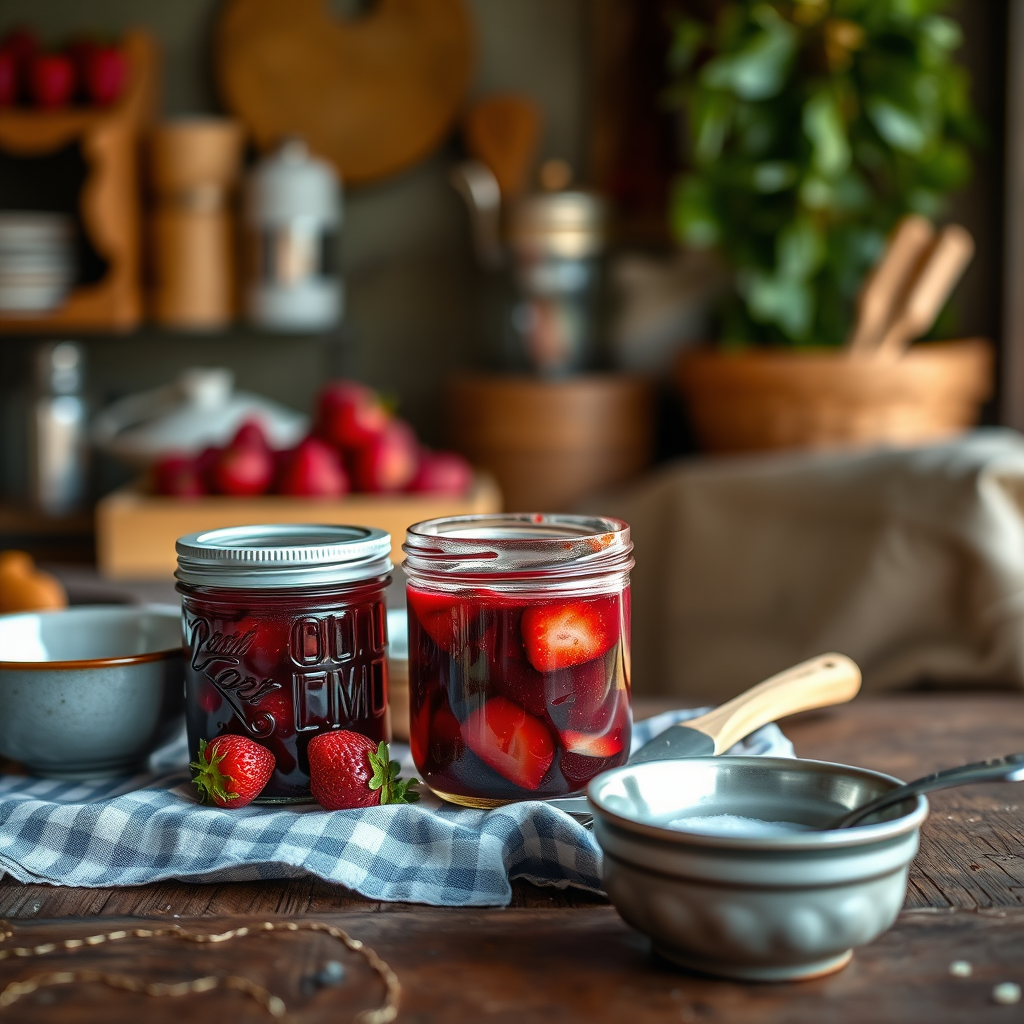
Do not proceed with this recipe if:
– You notice signs of mold on the strawberries or if they are overly soft or fermented. Using compromised fruit can jeopardize the safety and quality of your jam.
– Your kitchen environment is high in humidity or lacks adequate sanitation practices, which can increase the risk of spoilage.
– You lack the necessary canning equipment, such as proper jars and a boiling water canner, as this is crucial for safe preservation.
The Most Common Mistakes (And Their Consequences)
– Skipping the Lemon Juice: Omitting lemon juice can lead to insufficient acidity, which is vital for safe canning and can result in bacterial growth, including botulism. Always include the recommended amount of lemon juice.
– Using Overripe or Poor-Quality Strawberries: Failing to use fresh, ripe strawberries can yield a jam lacking flavor and the required pectin levels for proper gelling, resulting in a runny consistency that is unappealing.
– Overcooking the Jam: Cooking the mixture for too long can cause caramelization of sugars, resulting in a burnt flavor and dark color. This detracts from the fresh taste of strawberries and can ruin your batch.
Special Cases That Need a Different Approach
– Using Frozen Strawberries: If you choose frozen strawberries, be sure to thaw them completely and drain any excess liquid to maintain the correct sugar-to-fruit ratio for optimal gelling. You may need to adjust cooking times slightly, as they can release more moisture.
– Altitude Cooking: If you are at an altitude above 1,000 feet, processing times will need to be modified. Consult the USDA guidelines for safe processing times based on your specific altitude to ensure the jam sets correctly and remains safe for consumption.
– Allergies or Dietary Restrictions: If you need to substitute granulated sugar with alternatives like honey or agave syrup, be aware that these may alter the acidity balance. Adjust the cooking time and ensure that the final mixture maintains the safe pH level for preservation.
When You Need a Professional
Consult a licensed food preservation expert if:
– You are uncertain about the safety of your home-canned goods or have experienced any signs of spoilage after the jam has been sealed.
– You plan to make large batches for sale or distribution, as it is essential to involve a food safety consultant to ensure compliance with local health regulations and standards.
– You are working with unusual fruit varieties or methods not covered in this guide that may have different acidity or preservation requirements.
Sources and Further Reading
– Refer to the USDA’s Complete Guide to Home Canning for in-depth information on safe canning practices and recipes.
– The National Center for Home Food Preservation provides research-based guidelines specifically for preserving various fruits, including strawberries.
– Explore resources from the Ball Blue Book of Preserving, which offers trusted recipes and techniques for making fruit jams and jellies safely.
By following this guide and adhering to the detailed steps, you’ll be well-equipped to create delicious traditional strawberry jam that not only preserves the flavor of fresh strawberries but also meets safety standards for home canning. Enjoy the fruits of your labor, both in the kitchen and on your pantry shelves!
Frequently Asked Questions
What ingredients do I need for a traditional strawberry jam recipe?
To make a traditional strawberry jam, you will need fresh strawberries, granulated sugar, and lemon juice. The strawberries should be ripe for the best flavor, while the sugar helps with preservation and sweetness. Lemon juice adds acidity, which balances the sweetness and aids in the gelling process.
How do I properly sterilize jars for homemade strawberry jam?
To sterilize jars for your homemade strawberry jam, wash them in hot, soapy water, and then rinse thoroughly. Place the jars upside down on a baking sheet in a preheated oven at 225°F (110°C) for about 10-15 minutes. This process ensures that your jars are free from bacteria and safe for storing your delicious jam.
Why is pectin important in making strawberry jam?
Pectin is crucial in making strawberry jam because it acts as a natural thickening agent that helps the jam set properly. While strawberries contain some natural pectin, adding additional pectin can enhance the texture and ensure that your jam achieves the desired consistency. This is especially important for low-sugar or no-sugar recipes.
What is the best method for cooking strawberry jam to achieve the perfect consistency?
The best method for cooking strawberry jam is to combine the strawberries, sugar, and lemon juice in a large, heavy-bottomed pot and bring the mixture to a rolling boil. Stir frequently and use a candy thermometer to monitor the temperature, cooking until it reaches 220°F (104°C), which indicates that the jam will set properly. Always skim off any foam that forms on top for a smoother final product.
Which type of strawberries is best for making traditional strawberry jam?
The best type of strawberries for making traditional strawberry jam are those that are fully ripe, such as June-bearing varieties like ‘Chandler’ or ‘Honeoye’. These strawberries are sweeter and have a richer flavor, which translates into a more delicious jam. Avoid overripe or under ripe berries, as they can affect the taste and texture of your jam.
References
- Fruit preserves
https://en.wikipedia.org/wiki/Jam - https://www.uga.edu/extension/food-safety/preserving-fruits/strawberry-jam/
https://www.uga.edu/extension/food-safety/preserving-fruits/strawberry-jam/ - https://extension.psu.edu/strawberry-jam
https://extension.psu.edu/strawberry-jam - https://www.foodsafety.gov/food-safety-charts/jam-jelly
https://www.foodsafety.gov/food-safety-charts/jam-jelly - https://www.nutrition.gov/topics/food-safety/preserving-food
https://www.nutrition.gov/topics/food-safety/preserving-food - Google Scholar Google Scholar
https://scholar.google.com/scholar?q=traditional+strawberry+jam+recipe - Google Scholar Google Scholar
https://scholar.google.com/scholar?q=strawberry+preservation+methods - Google Scholar Google Scholar
https://scholar.google.com/scholar?q=home+canning+strawberry+jam - https://www.ncbi.nlm.nih.gov/pmc/articles/PMC7125169/
https://www.ncbi.nlm.nih.gov/pmc/articles/PMC7125169/ - https://www.sciencedirect.com/topics/agricultural-and-biological-sciences/strawberry-jam
https://www.sciencedirect.com/topics/agricultural-and-biological-sciences/strawberry-jam