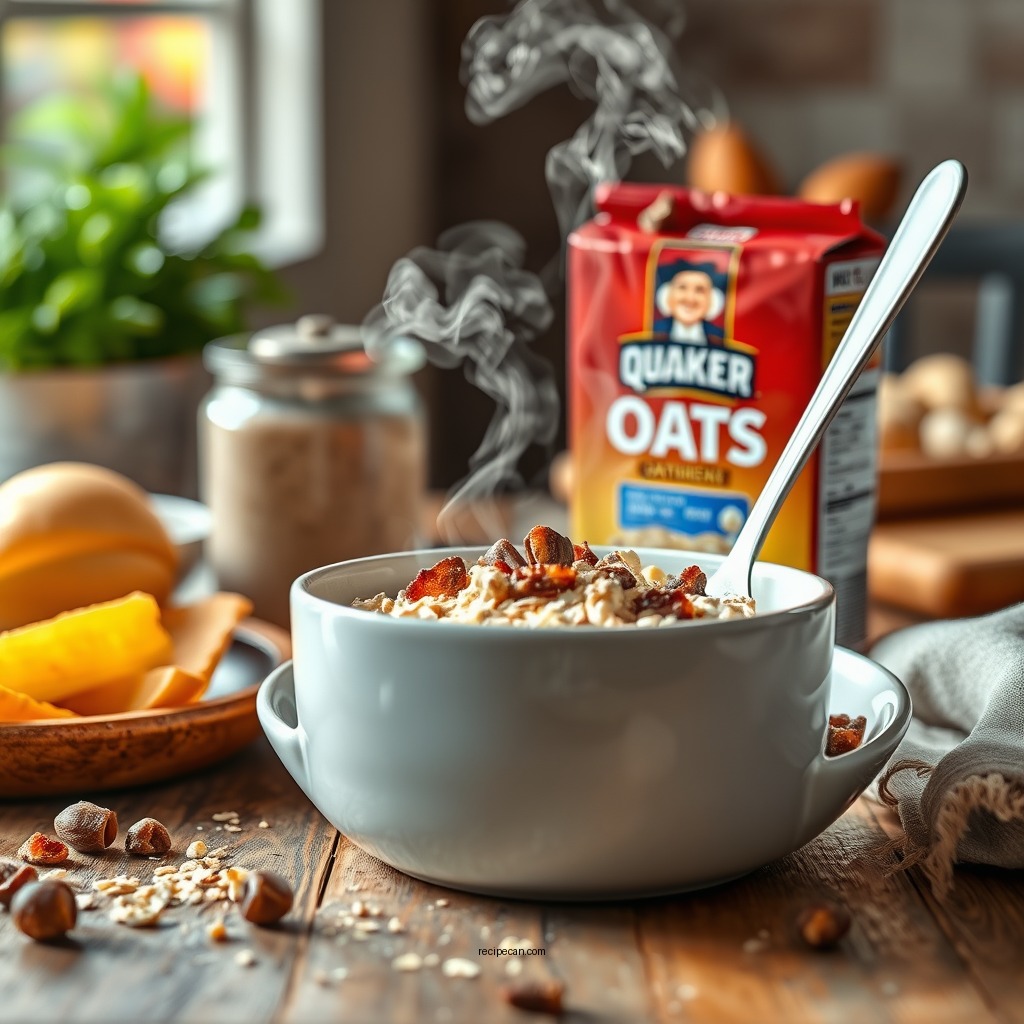
Making a delicious Quaker Oats oatmeal is simple and rewarding. This versatile recipe allows you to customize your oatmeal to suit your taste while providing a nutritious start to your day. In this article, you’ll discover how to prepare the perfect bowl of oatmeal, along with some tasty variations to keep your breakfast exciting.
Choosing the Right Oats
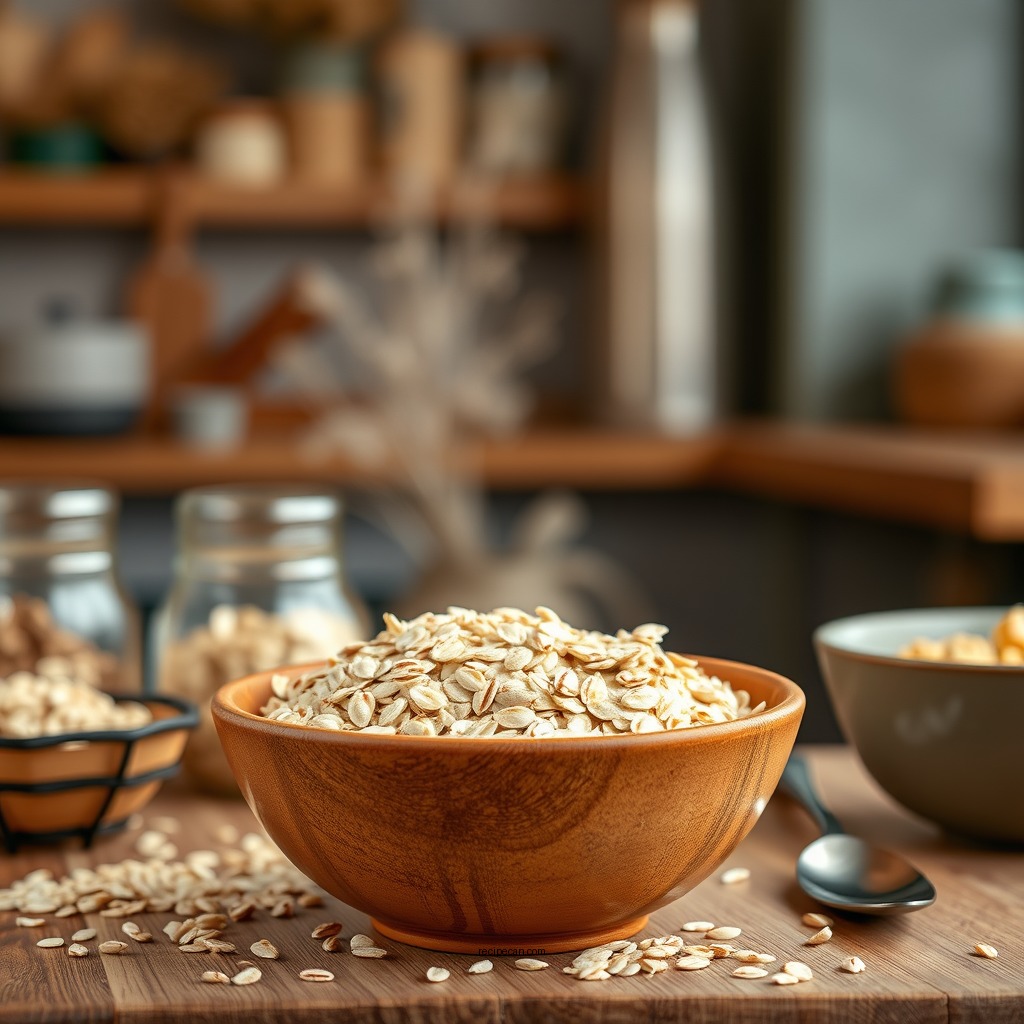
When it comes to oatmeal, the type of oats you choose can significantly affect the cooking time and texture of your final dish. The three most common varieties are rolled oats, quick oats, and steel-cut oats, each with unique characteristics.
– Rolled Oats: These are steamed and then rolled flat, making them a popular choice for oatmeal. They cook relatively quickly, typically requiring about 5 minutes on the stove or 2-3 minutes in the microwave. Rolled oats yield a creamy texture while still maintaining a bit of chew.
– Quick Oats: These oats are further processed than rolled oats, resulting in a finer texture that cooks even faster—usually in about 1-2 minutes. While quick oats are convenient, they may lack some of the heartiness and flavor of rolled oats.
– Steel-Cut Oats: Made from whole oat groats that are chopped into pieces, steel-cut oats take the longest to cook, typically around 20-30 minutes. They offer a nutty flavor and a chewy texture that many oatmeal enthusiasts prefer, although they require more planning ahead.
Understanding these differences allows you to select the right oats based on your time constraints and desired texture.
Basic Quaker Oats Oatmeal Recipe
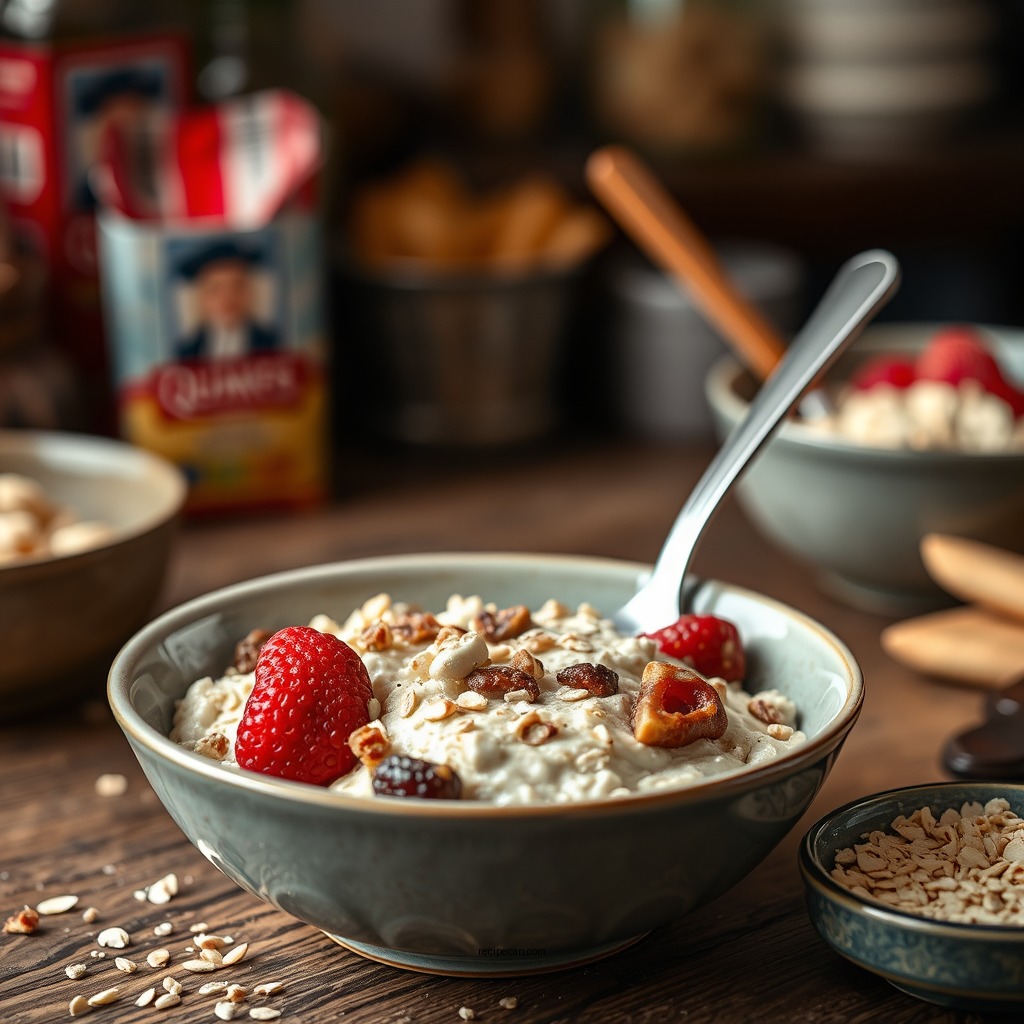
To prepare a classic bowl of oatmeal, follow these simple steps:
1. Measure Ingredients: Start by measuring 1 cup of water or milk (or a combination) for a creamier result. You may also use plant-based milk for a dairy-free option.
2. Bring to a Boil: Pour the liquid into a saucepan and bring it to a boil over medium-high heat.
3. Add Oats: Once boiling, stir in 1/2 cup of Quaker Oats.
4. Cooking Time: For rolled oats, reduce the heat and let it simmer for about 5 minutes, stirring occasionally. If using quick oats, reduce the time to about 1-2 minutes.
5. Final Touches: Once the oats have absorbed most of the liquid and achieved your desired consistency, remove them from the heat.
This basic recipe serves as a blank canvas for a wide range of flavors and toppings.
Flavoring Your Oatmeal
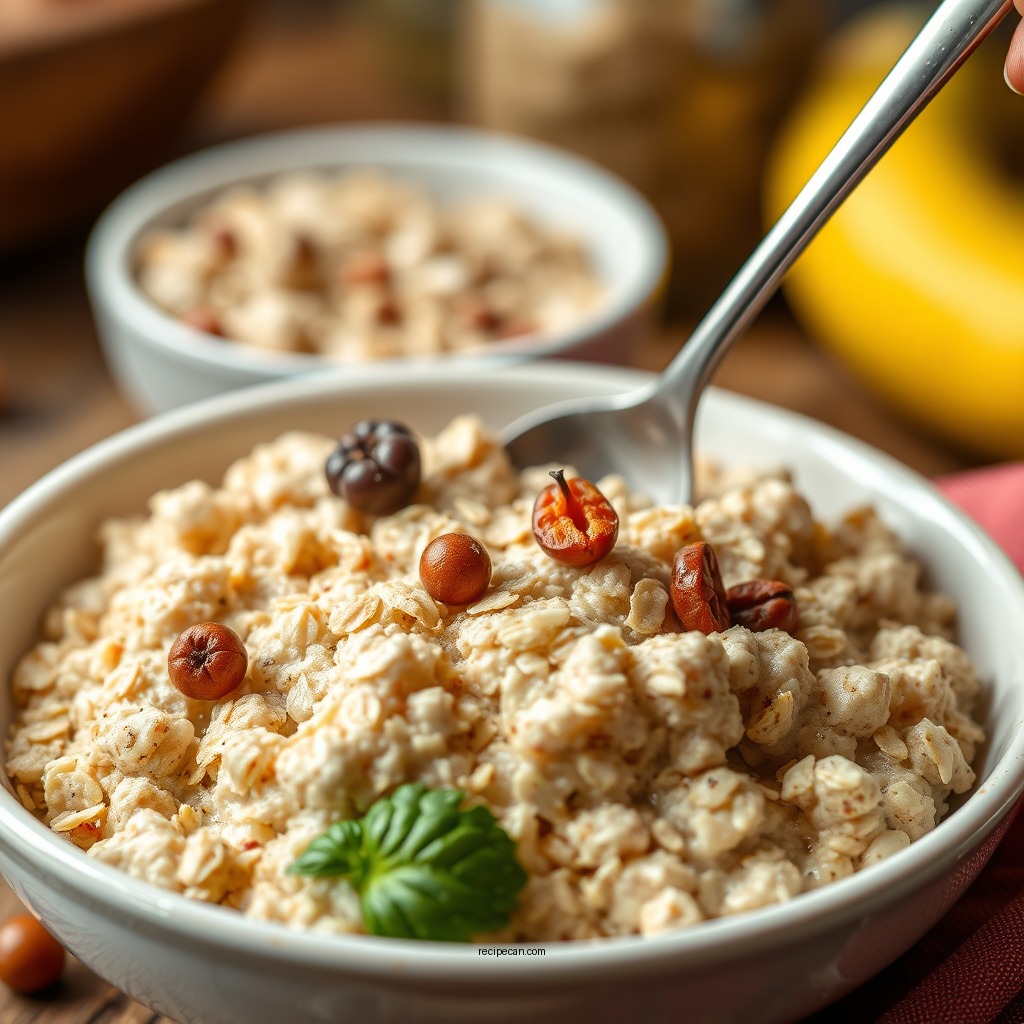
Enhancing the flavor of your oatmeal can elevate your breakfast experience. Here are some suggestions:
– Salt: Adding a pinch of salt before cooking can significantly enhance the natural flavors of oats. It balances sweetness and adds depth.
– Sweeteners: While oats have a mild flavor on their own, incorporating sweeteners can make your oatmeal more appealing. Consider options like honey, maple syrup, agave nectar, or brown sugar to add sweetness. For a healthier alternative, try using mashed bananas or applesauce.
– Spices: A dash of cinnamon, nutmeg, or vanilla extract can add warmth and flavor without extra calories.
Experimenting with these flavorings can help you discover your perfect bowl of oatmeal.
Nutritional Comparison of Oat Types (per 1/2 cup dry)
| # | Oat Type | Calories | Protein (g) | Fiber (g) | Cooking Time (min) |
|---|---|---|---|---|---|
| 1 | Rolled Oats | 150 | 5 | 4 | 5 |
| 2 | Quick Oats | 150 | 5 | 3 | 1.5 |
| 3 | Steel-Cut Oats | 170 | 6 | 5 | 20 |
Add-ins for Nutrition and Taste
To enhance the nutritional profile of your oatmeal, consider adding various ingredients that not only boost flavor but also provide essential nutrients:
– Fruits: Adding fresh, frozen, or dried fruits can significantly enhance the taste and nutritional value of your oatmeal. Bananas, berries, and apples are excellent choices as they provide natural sweetness, vitamins, and fiber.
– Nuts and Seeds: Incorporating nuts like almonds, walnuts, or seeds such as chia or flaxseed can add a satisfying crunch along with healthy fats, protein, and omega-3 fatty acids.
– Nut Butters: A spoonful of almond or peanut butter can introduce creaminess and extra protein, making your oatmeal more filling and nutrient-rich.
– Dairy or Dairy Alternatives: Mixing in yogurt or cottage cheese can add creaminess, probiotics, and a protein boost. Plant-based alternatives like soy or almond yogurt work well for a dairy-free option.
Creative Toppings and Mix-ins
Once you have the base of your oatmeal prepared, the possibilities for toppings are endless. Here are some ideas to make your oatmeal gourmet:
– Dairy Options: Topping your oatmeal with Greek yogurt or cottage cheese can add a creamy texture and additional protein, making it even more satisfying.
– Sweet Enhancements: A sprinkle of cinnamon or a drizzle of vanilla extract can provide aromatic flavors. For a touch of indulgence, consider adding a few chocolate chips or a dollop of whipped cream.
– Texture Variations: Crushed granola on top can introduce crunchy texture, while a swirl of fruit preserves or a sprinkle of shredded coconut can add visual appeal and flavor.
Utilizing a combination of these toppings will allow you to tailor your oatmeal to your personal taste preferences, ensuring that breakfast never gets boring.
Oatmeal Composition by Add-ins (%)
Meal Prep Tips for Oatmeal
To make mornings easier and ensure you enjoy your oatmeal regularly, consider meal prepping. Here are some effective strategies:
– Batch Cooking: Prepare a large batch of oatmeal at once. Cook it according to your preferred recipe, let it cool, and store it in an airtight container in the refrigerator. It can last for up to 5 days. When you’re ready to eat, simply reheat it on the stove or in the microwave, adding a splash of milk or water to restore creaminess.
– Individual Portions: For convenience, consider portioning your cooked oatmeal into single-serving containers. This way, you can quickly grab a container and reheat it in the morning without any fuss.
– Overnight Oats: Another popular meal prep method is preparing overnight oats. Combine rolled oats with milk or yogurt and your desired add-ins in a jar. Let it sit in the refrigerator overnight, and it will be ready to eat by morning—no cooking required.
By incorporating these meal prep tips, you can ensure that a nutritious breakfast is always within reach, even on the busiest mornings.
Enjoy your mornings by making this delicious Quaker Oats oatmeal recipe! With endless customization options and easy preparation, you can make breakfast both nutritious and satisfying. Try out the variations and share your favorite combinations!
Frequently Asked Questions
What is the best Quaker Oats oatmeal recipe for beginners?
The best Quaker Oats oatmeal recipe for beginners is the classic stovetop method. Simply combine 1 cup of water or milk with 1/2 cup of Quaker Old-Fashioned Oats in a pot. Bring it to a boil, reduce the heat, and simmer for about 5 minutes, stirring occasionally until the oats are creamy. You can customize it with toppings like fruits, nuts, or honey for added flavor.
How can I make my Quaker Oats oatmeal healthier?
To make your Quaker Oats oatmeal healthier, consider adding nutrient-rich toppings such as fresh fruits, chia seeds, or nut butter. You can also replace sugar with natural sweeteners like maple syrup or agave nectar. Additionally, cooking your oats in almond milk or coconut milk instead of water can enhance the nutritional profile while adding a delicious flavor.
Why do my Quaker Oats turn out gummy?
Your Quaker Oats may turn out gummy if you use too much water or don’t stir them while cooking. It’s important to follow the recommended water-to-oat ratio, typically 2:1 for instant oats and 2.5:1 for rolled oats. Cooking them at too high a temperature can also cause them to clump together, so maintaining a gentle simmer is key.
Which Quaker Oats oatmeal recipe is best for meal prep?
The best Quaker Oats oatmeal recipe for meal prep is overnight oats. Combine 1/2 cup of Quaker Oats with 1 cup of milk or yogurt and your choice of sweeteners or spices in a jar. Let it sit in the refrigerator overnight, and in the morning, add your favorite toppings like berries or nuts for a quick, nutritious breakfast.
What are some creative toppings for Quaker Oats oatmeal?
Creative toppings for Quaker Oats oatmeal can transform your breakfast into a gourmet meal. Try adding sliced bananas with peanut butter, diced apples with cinnamon, or a dollop of Greek yogurt with honey and walnuts. You can also experiment with savory options like avocado and poached eggs for a unique twist on traditional oatmeal.
References
- Oatmeal
https://en.wikipedia.org/wiki/Oatmeal - https://www.ncbi.nlm.nih.gov/pmc/articles/PMC6313440/
https://www.ncbi.nlm.nih.gov/pmc/articles/PMC6313440/ - https://www.health.harvard.edu/staying-healthy/the-health-benefits-of-oatmeal
https://www.health.harvard.edu/staying-healthy/the-health-benefits-of-oatmeal - https://www.mayoclinic.org/healthy-lifestyle/nutrition-and-healthy-eating/in-depth/oatmeal/art-20044524
https://www.mayoclinic.org/healthy-lifestyle/nutrition-and-healthy-eating/in-depth/oatmeal/art-20044524 - https://www.sciencedirect.com/topics/agricultural-and-biological-sciences/oatmeal
https://www.sciencedirect.com/topics/agricultural-and-biological-sciences/oatmeal - Oatmeal | Definition, Nutrition, Directions, & Facts | Britannica
https://www.britannica.com/topic/oatmeal - https://www.cdc.gov/nutrition/foodbasics/wholegrains.html
https://www.cdc.gov/nutrition/foodbasics/wholegrains.html - Google Scholar Google Scholar
https://scholar.google.com/scholar?q=quaker+oats+oatmeal+recipe - Google Scholar Google Scholar
https://scholar.google.com/scholar?q=oatmeal+health+benefits - Google Scholar Google Scholar
https://scholar.google.com/scholar?q=oatmeal+recipes+nutrition+research