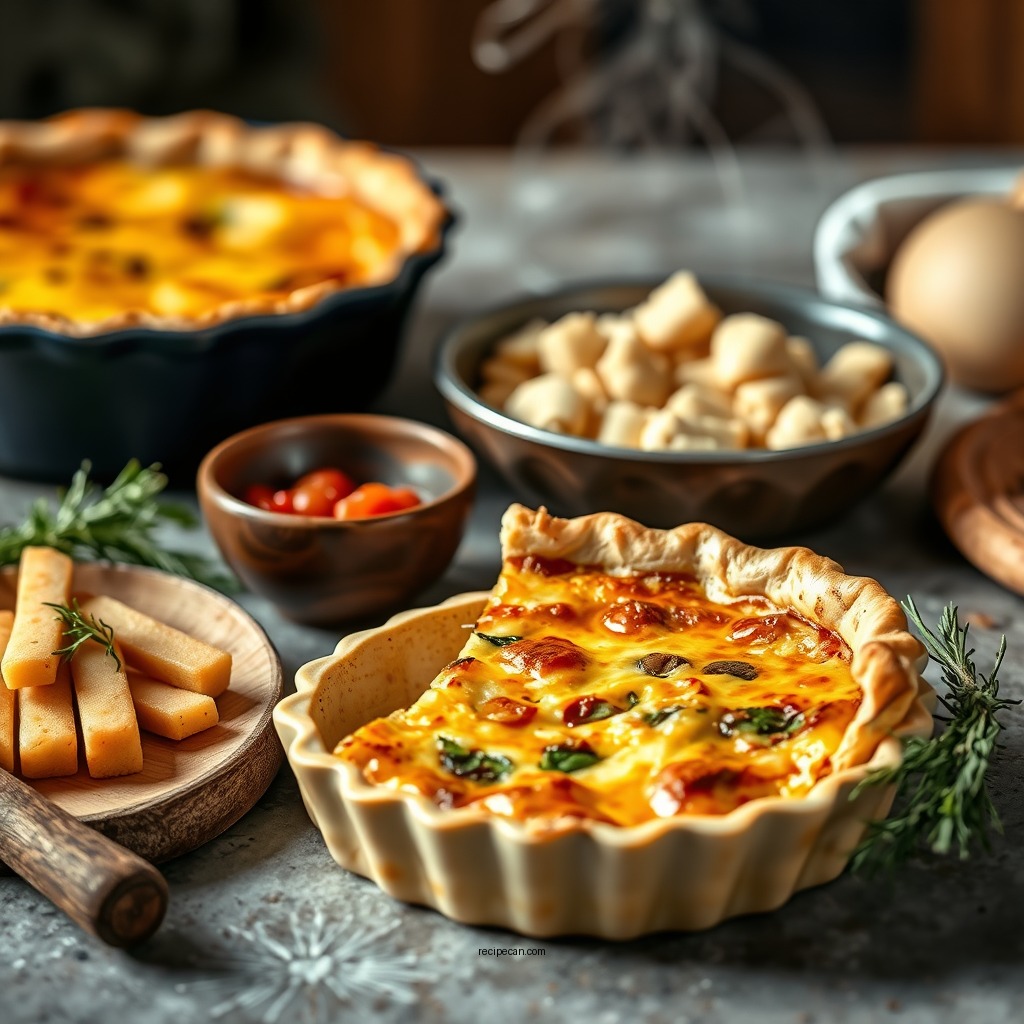
For a delicious quiche, the secret starts with a flaky and flavorful pie crust. This easy recipe will guide you through the process of creating a perfect pie crust that complements any quiche filling. In just a few simple steps, you’ll have a homemade crust that elevates your dish to the next level. With minimal ingredients and straightforward instructions, you’ll find that making your own pie crust is not only achievable but also immensely satisfying.
Ingredients You’ll Need
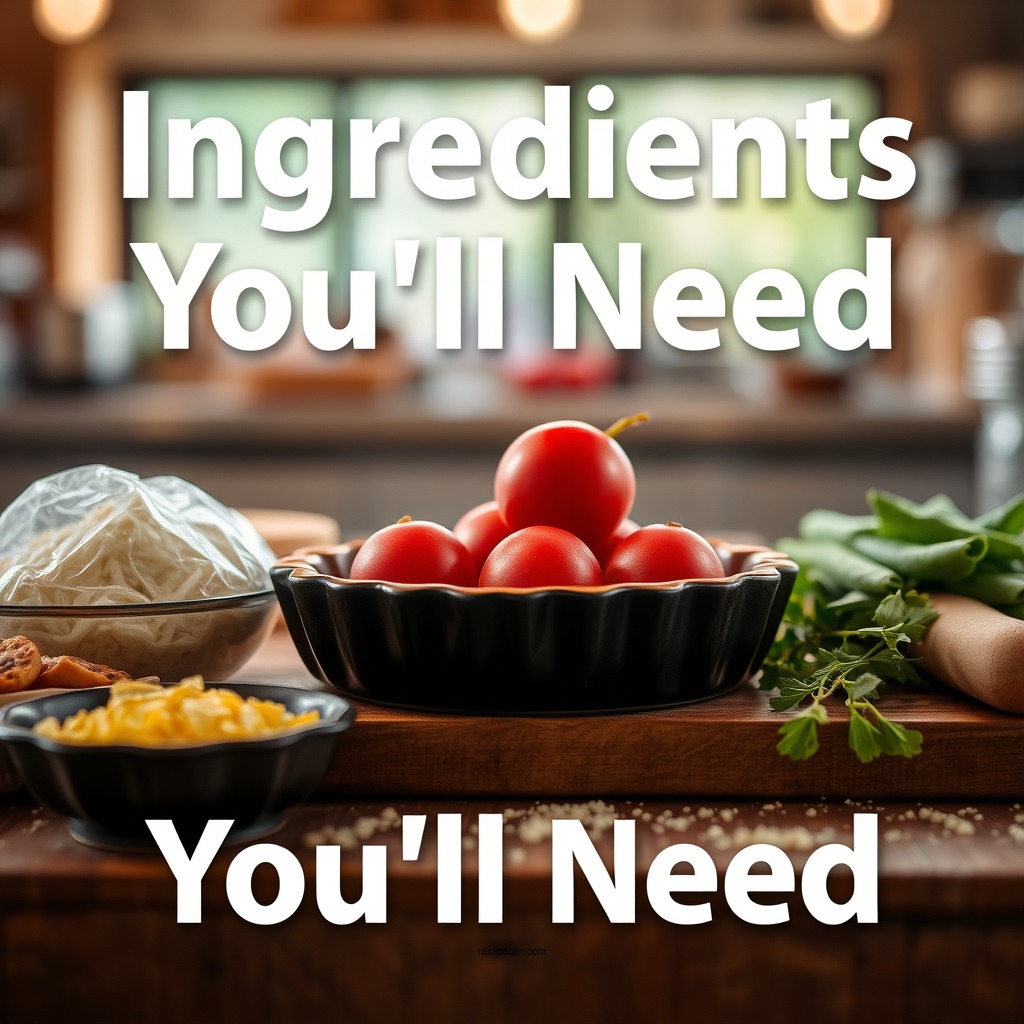
Creating a pie crust requires just three fundamental ingredients, each playing a crucial role in achieving the ideal texture and flavor.
– All-Purpose Flour: This is the backbone of your crust. The fine texture of all-purpose flour provides the necessary structure, ensuring that your crust holds its shape while still being tender and flaky.
– Unsalted Butter: The star ingredient that brings richness and flavor to your crust. Using cold, unsalted butter is essential, as it helps achieve that sought-after flakiness while allowing you to control the saltiness of the dough.
– Salt: A small but vital addition, salt enhances the overall flavor of the crust, balancing the sweetness of the quiche filling and elevating the dish as a whole.
Preparing the Dough
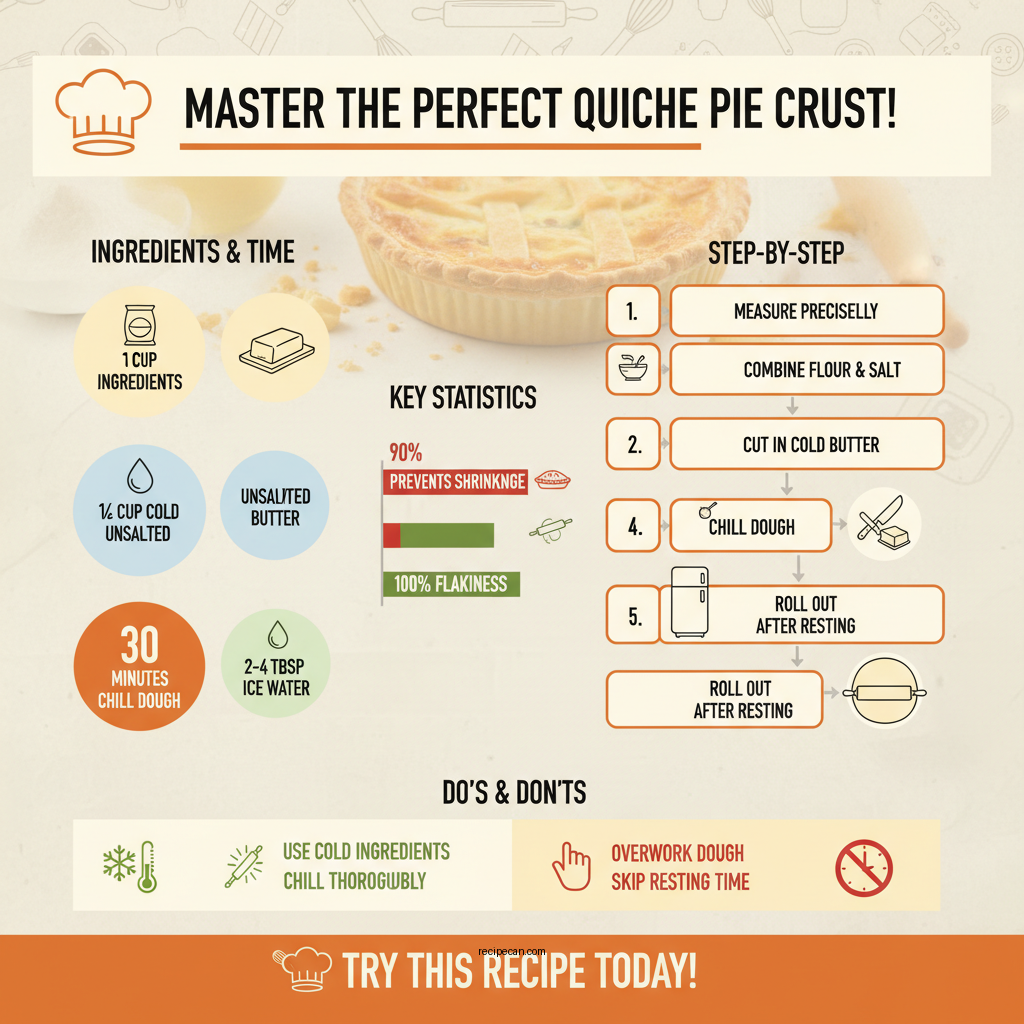
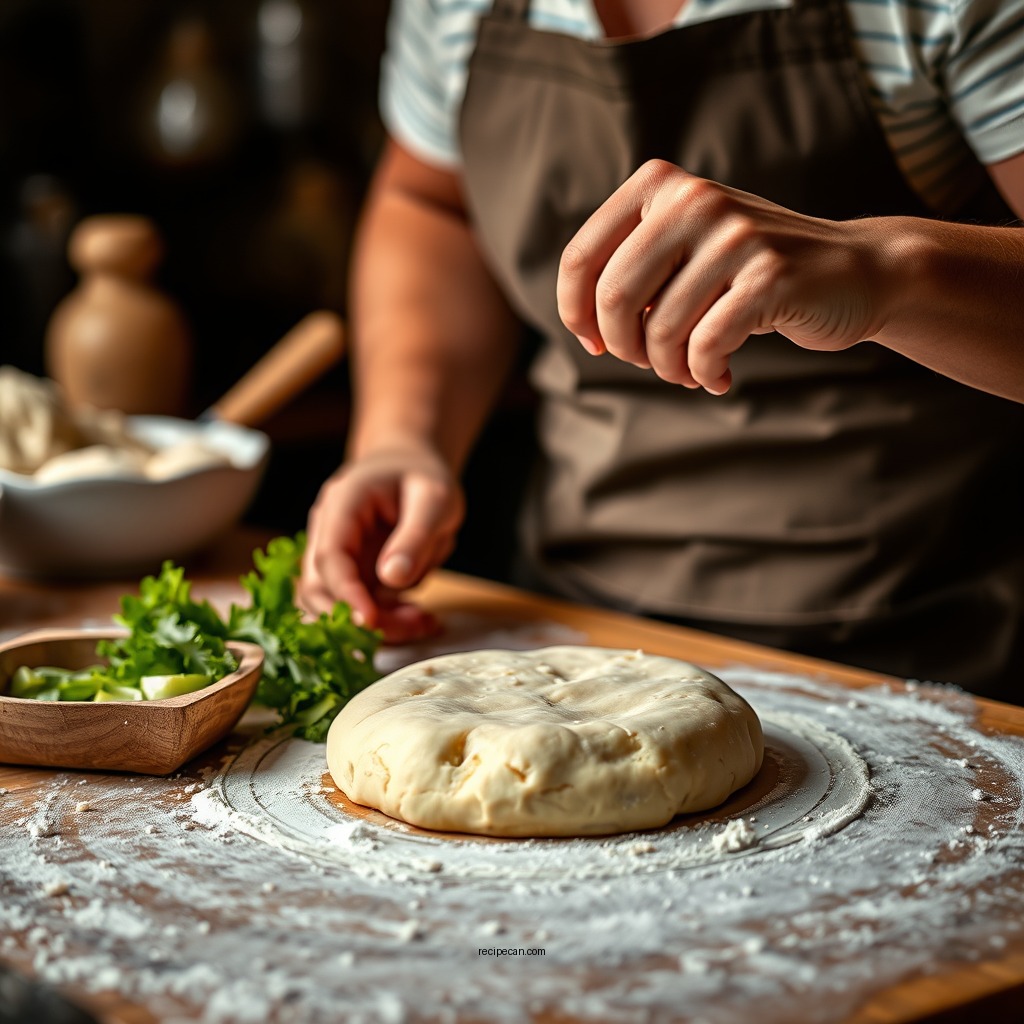
The process of preparing the dough is straightforward, yet it requires attention to detail to ensure a successful outcome.
– Combine Dry Ingredients: Start by measuring out your all-purpose flour and salt. In a large mixing bowl, whisk them together until evenly distributed. This ensures that the salt is uniformly mixed throughout the flour, preventing any pockets of saltiness in your crust.
– Cut in Butter: With a pastry cutter or your fingers, cut the chilled butter into the flour mixture. You want to work the butter until the mixture resembles coarse crumbs, with pea-sized pieces of butter remaining. This step is crucial; these small bits of butter will create steam during baking, resulting in a flaky texture.
– Add Water Gradually: Slowly drizzle in ice water, mixing with a fork or your hands until the dough begins to come together. Be careful not to overwork the dough; you want it to hold together without being sticky. If necessary, add a teaspoon of water at a time until the desired consistency is achieved.
Chilling the Dough
Chilling the dough is a critical step that many home bakers overlook, but it makes a significant difference.
– Wrap and Refrigerate: After forming the dough into a disk, wrap it tightly in plastic wrap and refrigerate for at least 30 minutes. This resting period allows the gluten to relax, making the dough easier to roll out later.
– Resting Time Benefits: Chilling the dough not only prevents shrinkage during baking but also enhances the overall texture. A rested dough will yield a more tender and flaky crust, making your quiche even more enjoyable.
Rolling Out the Dough
Once the dough has chilled, it’s time to roll it out to fit your pie pan.
– Flour Your Surface: Lightly dust your work surface and rolling pin with flour to prevent sticking. A well-floured surface will help you achieve a smooth roll without the dough tearing.
– Roll Evenly: Start rolling from the center of the dough, moving outward in all directions. Aim for an even thickness of about 1/8 inch throughout. This uniformity ensures that your crust bakes evenly, preventing some areas from being overcooked while others are underbaked.
– Transfer to Pie Pan: Carefully lift the rolled dough and place it into your pie dish. Gently press the dough into the corners and edges of the pan. Trim any excess dough hanging over the sides, and crimp the edges for a decorative touch.
Pre-Baking the Crust
Pre-baking, or blind baking, is essential for a quiche crust to prevent a soggy bottom.
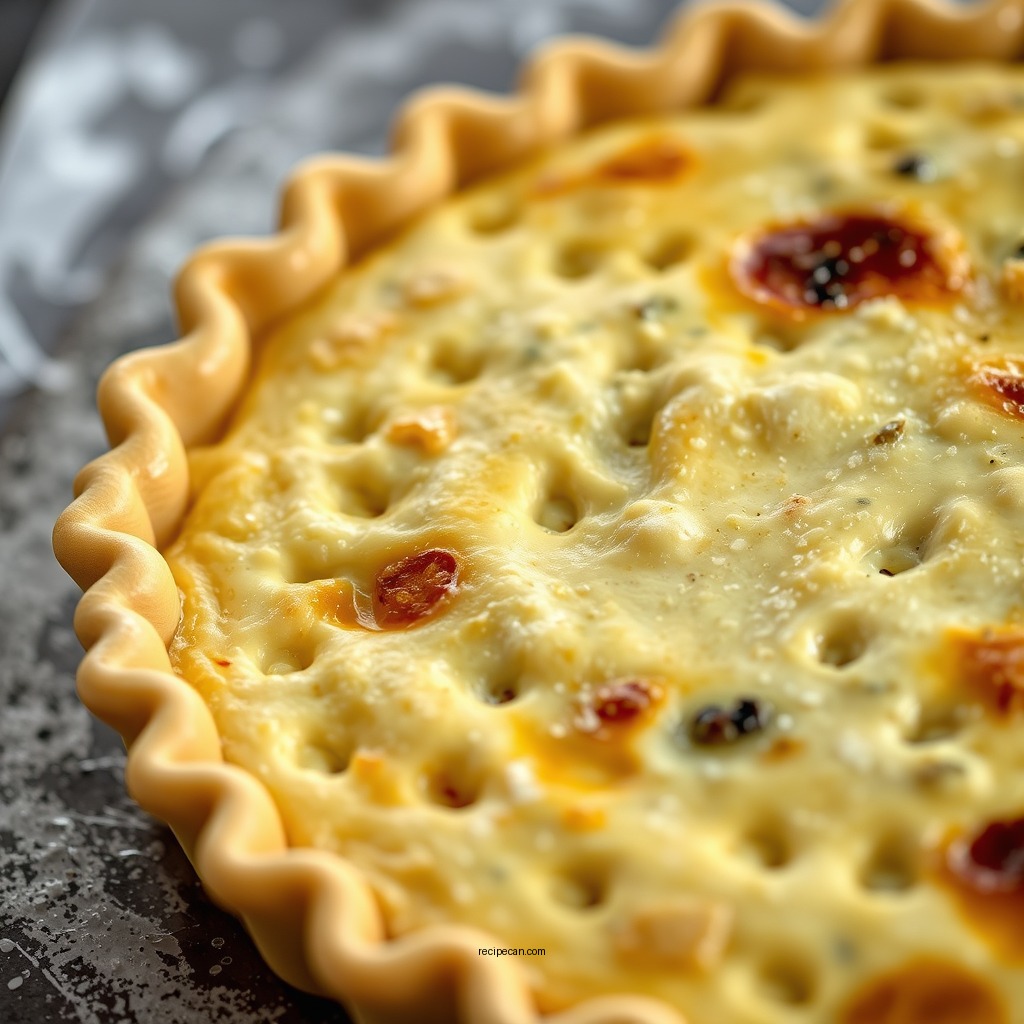
– Poke Holes: Use a fork to poke holes throughout the bottom of the crust. This step allows steam to escape while baking, preventing bubbles from forming.
– Blind Bake: Line the crust with parchment paper and fill it with pie weights or dried beans to keep it from puffing up. Bake in a preheated oven at 375°F (190°C) for about 15-20 minutes, or until the edges are lightly golden. Remove the parchment and weights, and bake for an additional 5-10 minutes until the bottom is firm and lightly browned.
Customizing Your Crust
While this recipe yields a classic pie crust, there are numerous ways to make it your own.
– Herb and Spice Additions: Experiment with flavors by incorporating fresh herbs like rosemary or thyme into the dough. A pinch of nutmeg or paprika can also add a subtle flavor that pairs beautifully with various quiche fillings.
– Alternative Flours: For a healthier twist, consider using whole wheat flour or gluten-free flour blends. Each type of flour brings its own unique texture and flavor, allowing you to tailor the crust to your dietary preferences.
Filling and Baking Your Quiche
Now that you have a beautifully baked pie crust, it’s time to fill it with delicious ingredients.
– Prepare Your Filling: In a mixing bowl, whisk together eggs, cream, and your choice of cheese, vegetables, or meats. Popular combinations include spinach and feta, bacon and cheddar, or mushroom and swiss.
– Assemble and Bake: Pour the filling into your pre-baked crust, ensuring an even distribution. Bake in the oven at 375°F (190°C) for 30-35 minutes, or until the filling is set and lightly golden on top. Let the quiche cool for a few minutes before slicing and serving.
Top 7 Pie Crust Variations for Quiche (2024)
| # | Crust Type | Flakiness Rating | Flavor Profile | Best For |
|---|---|---|---|---|
| 1 | Classic Butter | ★★★★☆ | Rich, Creamy | Vegetable Quiche |
| 2 | Whole Wheat | ★★★☆☆ | Nutty, Earthy | Healthy Options |
| 3 | Herbed | ★★★★☆ | Savory, Aromatic | Savory Quiches |
| 4 | Gluten-Free | ★★☆☆☆ | Mild, Subtle | Allergy-Friendly |
| 5 | Cheese Crust | ★★★★★ | Rich, Savory | Cheese Lovers |
| 6 | Cornmeal Crust | ★★★☆☆ | Sweet, Crunchy | Unique Flavors |
| 7 | Chocolate Crust | ★★★★☆ | Sweet, Decadent | Dessert Quiche |
Popularity of Pie Crust Types Used in Quiche (2024)
Creating a perfect pie crust for quiche is simple and rewarding. By following these steps, you’ll not only impress your guests with a homemade touch but also enhance the flavors of your quiche. Get started today, and enjoy your delicious creation! The satisfaction of serving a freshly baked quiche with a perfectly flaky crust will undoubtedly elevate your culinary repertoire and bring joy to your dining experience.
Frequently Asked Questions
What ingredients do I need for a basic pie crust for quiche?
To make a basic pie crust for quiche, you’ll need all-purpose flour, unsalted butter, salt, and cold water. Typically, a ratio of 1 ½ cups of flour to ½ cup of butter and a pinch of salt is a good starting point. This combination results in a flaky and delicious crust that perfectly complements your quiche filling.
How do I make a flaky pie crust for quiche?
To achieve a flaky pie crust for quiche, start by cutting chilled butter into the flour until the mixture resembles coarse crumbs. Gradually add cold water, mixing just until the dough holds together. Be careful not to overwork the dough, as this can lead to a tough crust instead of a light and flaky texture.
Why is my quiche pie crust soggy?
A soggy quiche pie crust often results from not pre-baking the crust or using a filling that contains too much liquid. To prevent this, consider blind baking your crust for about 10-15 minutes before adding the filling, and ensure that any vegetables are thoroughly cooked and drained to minimize moisture.
What is the best type of flour for quiche pie crust?
The best type of flour for quiche pie crust is all-purpose flour, as it provides the right balance of structure and tenderness. If you prefer a slightly nuttier flavor and more texture, you can also experiment with pastry flour or a combination of all-purpose and whole wheat flour for a healthier option.
Which tools do I need to make a pie crust for quiche?
Essential tools for making a pie crust for quiche include a mixing bowl, a pastry cutter or fork for cutting butter, a rolling pin for rolling out the dough, and a pie dish for baking. A silicone mat or parchment paper can also be helpful for rolling out the dough and transferring it to the pie dish without sticking.
References
- Pie
https://en.wikipedia.org/wiki/Pie - Pie Crust Recipe {+Blind Baking Option} – Cooking Classy
https://www.cookingclassy.com/pie-crust-recipe/ - https://www.seriouseats.com/how-to-make-pie-crust
https://www.seriouseats.com/how-to-make-pie-crust - How to Make Pie Crust: A Step-by-Step Guide : Recipes and Cooking : Food Network | Food Network
https://www.foodnetwork.com/recipes/articles/how-to-make-pie-crust - Google Scholar Google Scholar
https://scholar.google.com/scholar?q=recipe+pie+crust+for+quiche - Google Scholar Google Scholar
https://scholar.google.com/scholar?q=quiche+pie+crust+recipe - Google Scholar Google Scholar
https://scholar.google.com/scholar?q=making+pie+crust+for+quiche - recipe pie crust for quiche – Search results
https://en.wikipedia.org/wiki/Special:Search?search=recipe+pie+crust+for+quiche - https://www.ncbi.nlm.nih.gov/search/research-articles/?term=recipe+pie+crust+for+quiche
https://www.ncbi.nlm.nih.gov/search/research-articles/?term=recipe+pie+crust+for+quiche