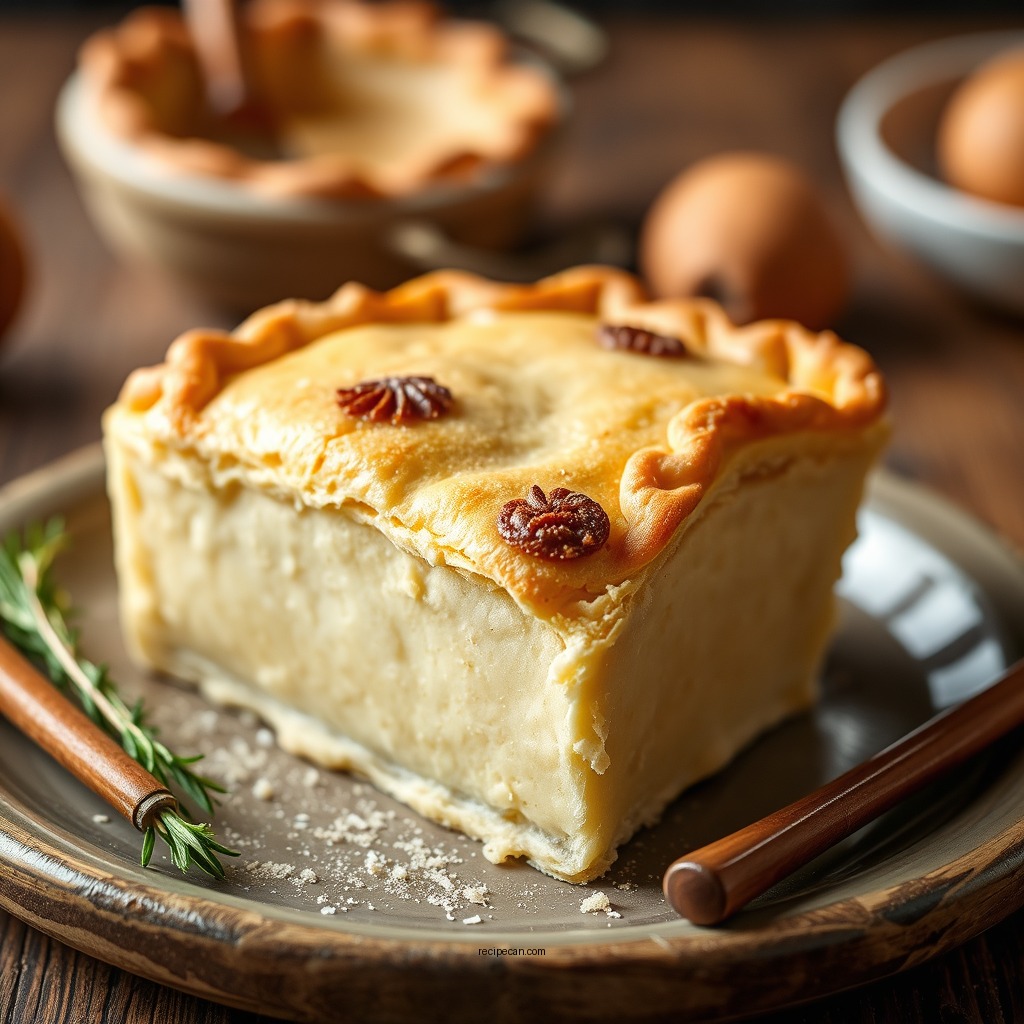
Making a delicious pie crust without shortening is entirely possible and can yield a flaky, flavorful base for your favorite pies. In this recipe, you’ll learn how to use simple ingredients like butter or oil to create a perfect crust that will elevate your baking game. This crust is not only easy to prepare but also versatile enough to complement both sweet and savory fillings.
The Ingredients You’ll Need

Creating a pie crust without shortening requires only a few basic ingredients, each playing a crucial role in the overall quality of the crust.
– All-purpose flour: This is the backbone of your crust, providing structure and stability. The gluten in the flour helps the crust maintain its shape while still allowing it to be tender.
– Butter or oil: These fats add richness and flavor to the crust. Butter, in particular, gives a wonderful taste and helps create a flaky texture when incorporated properly. Alternatively, oils such as vegetable or coconut can be used for a dairy-free option.
– Cold water: This is essential for binding the ingredients together without activating too much gluten, which can make the dough tough. The cold temperature helps maintain the fat’s solid state until baking, contributing to a flaky crust.
Preparing the Dough


The preparation of the pie crust dough is a critical step that can significantly impact the final product.
– Measure ingredients accurately: Precision is key in baking. Use a kitchen scale or measuring cups to ensure that you have the exact amounts of flour, butter, and water.
– Mixing the flour and butter/oil: Start by combining the flour and butter or oil in a mixing bowl. Use a pastry cutter or your fingers to blend them until the mixture resembles coarse crumbs. This step is vital for achieving that signature flaky texture.
– Adding cold water: Gradually add cold water, one tablespoon at a time, mixing gently until the dough begins to come together. Be careful not to overmix, as this can lead to a tough crust. The dough should be slightly sticky but manageable.
Rolling Out the Dough

Once the dough is prepared, rolling it out properly will ensure even baking and a beautiful presentation.
– Lightly flour your surface: Dust your work surface and rolling pin with flour to prevent sticking. This will allow you to roll out the dough smoothly.
– Achieving the right thickness: Roll the dough to about 1/8 inch thick. This thickness is ideal for most pie recipes and allows for even baking without being overly thick or chewy.
– Shaping into your pie dish: Carefully transfer the rolled-out dough to your pie dish. You can either use your rolling pin to lift it or gently fold it into quarters and unfold it over the dish. Press the dough into the edges and trim any excess, leaving about an inch overhang for crimping.
Pre-baking Techniques
Pre-baking, or blind baking, is an important technique, especially for custard or cream pies.
– Chill the rolled-out dough: Before baking, chill the dough in the refrigerator for about 30 minutes. This helps maintain its structure and prevents shrinking during baking.
– Using pie weights: To prevent bubbling and ensure an even surface, place pie weights or dry beans on top of a piece of parchment paper in the crust. This keeps the dough flat as it bakes.
– Baking temperature: Preheat your oven to 375°F (190°C) and bake the crust for about 10-15 minutes, or until it is lightly golden. Keep an eye on it to prevent over-browning.
Flavor Variations
Enhancing your pie crust with additional flavors can elevate your pie to new heights.
– Savory touch: Add a pinch of salt to the dough for a savory pie, such as quiche or chicken pot pie. This can enhance the overall flavor profile.
– Sweet spices: For sweet pies like apple or pumpkin, consider incorporating spices such as cinnamon or nutmeg into the flour mixture. These spices will infuse the crust with warmth and depth.
– Experimenting with fats: Try using different types of fats such as coconut oil for a tropical flavor or margarine for a vegan option. Each fat will impart its unique flavor and texture to the crust.
Tips for Success
To ensure your pie crust turns out perfectly every time, consider the following tips:
– Cold ingredients are key: Use cold butter or oil, and always add cold water. This helps create a flaky texture, as the fat will remain solid until it melts in the oven.
– Don’t overmix: Mix just until the dough comes together. Overmixing can lead to gluten development, resulting in a tough crust.
– Practice makes perfect: Baking is a skill that improves with practice. If your first attempt doesn’t turn out as expected, don’t be discouraged; keep refining your technique.
Top 7 Types of Fats for Pie Crusts
| # | Fat Type | Flavor Profile | Texture | Best For |
|---|---|---|---|---|
| 1 | Butter | Rich | Flaky | Fruit Pies |
| 2 | Coconut Oil | Tropical | Tender | Savory Pies |
| 3 | Vegetable Oil | Neutral | Soft | Cream Pies |
| 4 | Lard | Savory | Flaky | Meat Pies |
| 5 | Margarine | Mild | Tender | Desserts |
| 6 | Ghee | Nutty | Crispy | Unique Pies |
| 7 | Bacon Fat | Savory | Rich | Quiches |
Popularity of Pie Crust Fats
Summarizing the essential steps and key components of a shortening-free pie crust, it’s clear that with the right ingredients and techniques, you can achieve a wonderfully flaky crust. Whether you’re making a fruit pie or a savory quiche, this method will serve you well. Get started on your pie-making journey today and enjoy the satisfaction of homemade goodness!
Frequently Asked Questions
What is a simple pie crust recipe without shortening?
A simple pie crust recipe without shortening can be made using just flour, butter, salt, and cold water. Start by mixing 1 ½ cups of all-purpose flour with ½ teaspoon of salt, then cut in ½ cup of cold, unsalted butter until the mixture resembles coarse crumbs. Gradually add 4-5 tablespoons of ice water until the dough comes together, then refrigerate for at least 30 minutes before rolling it out.
How can I make a flaky pie crust without using shortening?
To achieve a flaky pie crust without shortening, use cold butter and handle the dough minimally. The key is to incorporate the butter into the flour until it resembles pea-sized crumbs, allowing for small pockets of fat that will create layers as the crust bakes. Additionally, chilling the dough before rolling it out helps maintain the butter’s temperature, resulting in a tender and flaky texture.
Why is butter a good substitute for shortening in pie crust?
Butter is a great substitute for shortening in pie crust because it adds rich flavor and a golden color to the crust. Unlike shortening, which can result in a more neutral taste, butter enhances the overall flavor profile of your pie. Furthermore, butter creates a desirable flaky texture due to its high water content, which turns to steam and separates the layers during baking.
What are some tips for rolling out pie crust without shortening?
When rolling out pie crust without shortening, ensure your work surface and rolling pin are lightly floured to prevent sticking. Use cold dough and roll it out quickly to maintain its temperature. If the dough becomes too warm, it can become difficult to handle; simply refrigerate it for a few minutes. Additionally, rolling from the center outwards will help maintain an even thickness.
Which types of pies work best with a crust made without shortening?
Pies such as fruit pies, custard pies, and savory quiches work exceptionally well with a crust made without shortening. The buttery flavor and flaky texture complement the sweet and savory fillings beautifully. Additionally, this type of crust holds up well during baking, making it ideal for both traditional and experimental pie recipes.
References
- Pie
https://en.wikipedia.org/wiki/Pie - https://www.seriouseats.com/pie-crust-without-shortening-5115996
https://www.seriouseats.com/pie-crust-without-shortening-5115996 - How to Make Pie Crust: A Step-by-Step Guide : Recipes and Cooking : Food Network | Food Network
https://www.foodnetwork.com/recipes/articles/how-to-make-pie-crust - https://www.thekitchn.com/how-to-make-pie-crust-without-shortening-226418
https://www.thekitchn.com/how-to-make-pie-crust-without-shortening-226418 - Google Scholar Google Scholar
https://scholar.google.com/scholar?q=pie+crust+recipe+without+shortening - Google Scholar Google Scholar
https://scholar.google.com/scholar?q=homemade+pie+crust+without+shortening - Google Scholar Google Scholar
https://scholar.google.com/scholar?q=pastry+making+without+shortening - https://www.nytimes.com/2018/11/14/dining/pie-crust-without-shortening.html
https://www.nytimes.com/2018/11/14/dining/pie-crust-without-shortening.html - pie crust recipe without shortening – Search results
https://en.wikipedia.org/wiki/Special:Search?search=pie+crust+recipe+without+shortening - https://www.ncbi.nlm.nih.gov/search/research-articles/?term=pie+crust+recipe+without+shortening
https://www.ncbi.nlm.nih.gov/search/research-articles/?term=pie+crust+recipe+without+shortening