
Sheet pan pork and beef meatloaf is the easiest way to get that classic meatloaf taste—without waiting on a whole loaf to cook evenly. Mix the pork and beef with binder ingredients, shape it on a lined sheet pan, then roast until it’s cooked through and sliceable. You’ll learn how to form it for even cooking, what to watch for so it doesn’t dry out, and how to serve it fast. If you’ve ever had meatloaf that’s dry on the edges or raw in the center, this version is for you—and it’s especially reliable for busy weeknights in 2026.



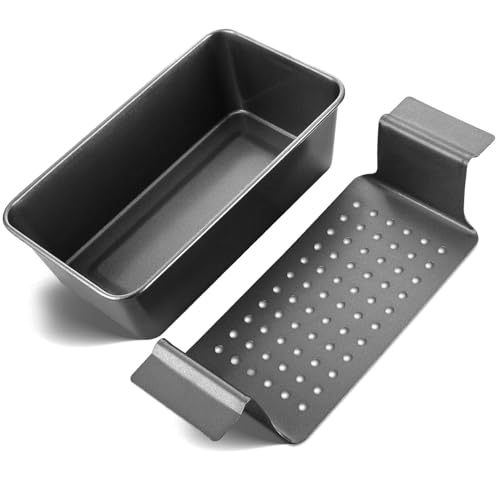
You spoon a thick pork-and-beef meatloaf mixture onto a sheet pan, smoothing it into a fast, even rectangle. While it bakes, the vegetables roast alongside, caramelizing their edges without extra pans. This version stays juicy thanks to a binder of breadcrumbs and a quick glaze, and it browns beautifully because the meat cooks in a single layer.
Recipe Overview

Sheet pan pork and beef meatloaf delivers the classic “meatloaf and ketchup glaze” flavor with a faster, more even cook than a traditional loaf pan. This is a weeknight-friendly method where you mix, shape, and roast one pan—then slice with confidence. It’s also meal-prep friendly because the slices reheat well without turning mushy.
– A comforting pork-and-beef meatloaf baked on a sheet pan for more even browning and easier slicing.
– Built for weeknights: it comes together from simple pantry staples and classic seasonings.
– Best for families and meal-preppers who want leftovers that reheat nicely.
Sheet Pan vs Loaf Pan: which gets you the better result?
If your goal is consistent doneness and easy slicing, the sheet pan approach typically wins. Here’s a practical comparison that matches how this cooks in real kitchens.
| Feature | Sheet Pan Method | Traditional Loaf Pan |
|---|---|---|
| Cook evenness | More even surface browning | Can cook unevenly (edges vs center) |
| Slicing & presentation | Sliceable, easy portions | Uniform “loaf” shape |
| Pan cleanup | Lined = minimal cleanup | Harder to scrape out |
| Grease management | Some fat renders off the edges | More liquid stays in the pan |
| Glaze browning | Top browns reliably | Often more steamed |
| Precision control | Thickness determines everything | Loaf pan shape hides some thickness issues |
| Weeknight speed | Fewer steps, faster serving | More setup and waiting |
| Texture (crust) | More caramelized edges | Softer sides, more “braised” feel |
| Portion control | Slice portions consistently | Slices depend on pan dimensions |
| Best use case | Dinner today + leftovers tomorrow | Presentation-focused loaves |
| Best For | Even browning, easy cleanup | Perfect loaf shape |
Pros of the sheet pan method: even browning, fewer clean-up steps, and easier slice portions. Cons: you don’t get the exact loaf-pan silhouette, so thickness consistency matters more than it would in a loaf pan.
Time Required

You’ll have this meatloaf on the table fast, with the biggest “hands-off” time being the roasting. Then the rest period does real work for clean slices.
– 🕐 Prep Time : 15 minutes
– 🍳 Cook Time : 40 minutes
– ⏱ Total Time : 65 minutes (plus 10 minutes resting)
– Note: Resting is passive—plan it so the juices redistribute and slices hold together.
Ingredients
This meatloaf combo works because pork brings moisture while beef adds that deep, savory richness. Breadcrumbs (or panko) act like a sponge and binder, and the eggs help everything set into slices. For best results, use fresh onion and garlic—this is one of those recipes where aromatic flavor really shows (especially in 2026, when “fresh pantry” cooking is trending).
Main Ingredients
– Ground pork: 1 lb / 450 g
– Ground beef: 1 lb / 450 g (80/20 is ideal)
– Breadcrumbs (or panko): 1 cup / 80 g, plus a tablespoon or two if the mix feels too loose
– Eggs: 2 large
– Onion: 1/2 cup / 80 g, finely chopped or grated
– Garlic: 2 cloves, minced
– Ketchup: 1/4 cup / 60 g
– Worcestershire sauce: 2 tbsp (optional but classic)
– Salt: 1 1/2 tsp
– Black pepper: 1/2 tsp, freshly ground if possible
For the Sauce / Topping (glaze)
– Ketchup or BBQ sauce: 1/2 cup / 120 g
– Brown sugar (optional): 1 tbsp
– Mustard (optional): 1 tsp Dijon or yellow mustard
Optional Garnish
– Chopped parsley (for color)
– Extra ketchup or BBQ for serving
Step-by-Step Instructions
You’re aiming for a meatloaf that cooks evenly: gentle mixing, even thickness, and doneness confirmed at the center. If you do those three things, the sheet pan method is remarkably forgiving.
Preparation
1. Heat and prep the pan. Preheat your oven to 400°F (205°C). Line a rimmed sheet pan with parchment paper or foil (parchment is my go-to for easy cleanup).
2. Combine the binder base. In a large bowl, add ground pork, ground beef, breadcrumbs, eggs, onion, garlic, ketchup, Worcestershire (if using), salt, and black pepper.
3. Mix gently. Use your hands or a spoon to mix just until you don’t see dry crumbs. From my kitchen experience, overmixing makes meatloaf feel dense and can contribute to toughness—so stop early if it looks combined but still a bit “soft.”
Cooking
4. Shape for even thickness. Place the mixture on the lined sheet pan and shape it into a loaf-like oval or a rectangle about 2 inches (5 cm) thick. Keep the thickness consistent—edges thinner than the center is what often leads to dry ends.
5. Add the glaze. Spread the ketchup/BBQ glaze over the top. If you want deeper browning, keep it fairly thick (but don’t flood the sides).
6. Roast until cooked through. Bake for 35–45 minutes. Start checking around 35 minutes. For food safety and reliability, use a meat thermometer inserted into the thickest part.
Finishing
7. Rest, then slice. Rest on the pan for 10 minutes before slicing. This pause is the step most people rush—but it’s what helps prevent crumbling.
8. Serve with pan juices. Spoon any sheet-pan juices over slices for extra flavor and moisture.
Heat & Temperature Guide
This meatloaf is roasted hot so the glaze caramelizes while the center finishes cooking evenly. The key is reaching the correct internal temperature in the thickest area.
Cooking Method
Roast (dry heat) on a lined rimmed sheet pan. The sheet pan keeps the top exposed for browning and reduces the chance of “steam-soft” glaze you can get in a closed loaf pan.
Temperature & Timing
– Oven temperature: 400°F / 205°C
– Bake time: 35–45 minutes, depending on thickness
– Thermometer target (center): 160°F / 71°C for ground pork and ground beef
According to USDA FSIS, ground meats like ground beef and pork are safe at 160°F (71°C) (USDA FSIS, 2011). Also, according to USDA guidance on safe handling, keep cold foods at or below 40°F / 4°C to limit bacterial growth (USDA FSIS, 2020).
How to Know It’s Done
– The center should read 160°F / 71°C on a thermometer.
– The top glaze should look set (not watery), and the loaf should feel firm when pressed lightly.
– If you cut into the center, it should be fully cooked—no pink, no loose crumbly texture.
One decision that changes everything: one loaf or two?
If you want the most consistent sliceability, two smaller loaves is often the easiest. But one large loaf is totally workable if you keep thickness even.
| Criteria | One Large Loaf | Two Smaller Loaves |
|---|---|---|
| Thickness control | Trickier—edges can overcook | Easier—smaller centers cook faster |
| Cooking time | Longer overall | Often a bit shorter |
| Browning | More surface area stays exposed | Still browns well, just faster |
| Thermometer accuracy | Need to probe carefully | More forgiving if you probe center |
| Slicing portions | Fewer, larger slices | More evenly sized portions |
| Leftover storage | Slices need more planning | Portions are easier to reheat |
| Glaze thickness | Can set before center finishes | Sets at the same pace more often |
| Oven crowding | Takes one main zone | Still one pan, flexible placement |
| Best for beginners | Only if thickness is consistent | More forgiving outcome |
| Verdict | Choose if you can keep thickness even | Choose for fastest, most consistent doneness |
What can go wrong & How to prevent it
This meatloaf is simple, but a few predictable issues show up when the mix is handled too aggressively or the thickness varies. The good news: you can prevent most problems with one or two small habits.
Meatloaf falls apart when sliced
This usually happens when it’s underbaked or not rested long enough. Check doneness in the thickest part, and don’t slice until the rest time is done—those 10 minutes let the proteins firm up.
Meatloaf is dry
Dryness often comes from overmixing (tough texture) or baking too long (less juicy interior). Mix gently, keep thickness even, and pull it when it hits 160°F / 71°C.
Watery or greasy results
If onion is very watery (especially grated without squeezing) you can get pooling on the pan. Use finely chopped onion, and line the sheet pan so juices don’t steam the underside as much.
Uneven cooking (dry edges, undercooked center)
Oven hot spots plus uneven thickness is the classic culprit. Aim for consistent ~2-inch (5 cm) thickness and consider two smaller loaves if your sheet pan runs hot in one area.
Food safety basics (don’t skip the thermometer)
Ground meat is where “looks done” can be misleading. According to USDA FSIS, using a food thermometer is the most reliable way to confirm safe internal temperature (USDA FSIS, 2011).
Common Mistakes & How to Fix Them
If your meatloaf didn’t turn out right, it’s usually one of these correctable issues.
Overmixing the meat
Overmixing develops a tougher texture and can make slices feel dry or crumbly. Mix just until combined and stop as soon as dry breadcrumbs disappear. If you already overmixed, don’t panic—add a tablespoon of ketchup or grated onion and reshape before baking.
Skipping the rest time
Cutting too soon releases juices and can make meatloaf fall apart. Rest 10 minutes before slicing, and keep the loaf on the warm sheet pan so it continues to set.
Glaze added too early (or too thin)
A thin glaze can burn or run off, while an overly early glaze can darken before the center cooks. Spread it in the first half of baking (you can still do it at the start), and keep the thickness consistent—especially by 2026 standards where many cooks prefer deeper caramelization.
Baking at too low a temperature
If your oven runs cool, the center lags behind the browned top. Use 400°F (205°C), and check doneness near the low end of the time range.
How to Serve
Sheet pan meatloaf is best served hot, with a simple side that soaks up the juices. The easiest win is pairing it with something starchy and something fresh—warm + bright.
Plating & Presentation
Slice into 1/2-inch (1.25 cm) thick portions and arrange on a platter. Spoon pan juices and any extra glaze on top, then finish with chopped parsley for color.
What Goes Well With It
– Mashed potatoes or creamy potato wedges
– Roasted green beans or Brussels sprouts
– Macaroni and cheese (comfort-forward)
– Simple salad (arugula or romaine with lemon vinaigrette)
Serving Temperature
Serve at hot, just-sliced temperature. For food safety and quality, don’t let it sit out longer than typical meal time; rewarm leftovers promptly.
Storage & Reheating
– Storage: Cool to room temp, then refrigerate in an airtight container up to 3–4 days.
– Reheating (oven): Cover slices with foil and reheat at 325°F / 160°C for 12–18 minutes, until warmed through.
– Reheating (microwave): Heat in short bursts, covering to retain moisture, then rest 1 minute before eating.
Heat & Temperature Data Reference (USDA thermometer targets)
Use this quick reference to keep your meatloaf safe and sliceable across different ground meats. According to USDA FSIS safe minimum internal temperatures, cooked ground meats follow specific target ranges (USDA FSIS, 2011).
Safe Minimum Internal Temps for Common Ground Mixes (USDA FSIS)
| # | Ground meat type | Internal temp (°F) | Internal temp (°C) | Thermometer priority | Weeksnight slice reliability |
|---|---|---|---|---|---|
| 1 | Ground beef (incl. mixtures) | 160 | 71 | ★★★★☆ | High |
| 2 | Ground pork (incl. mixtures) | 160 | 71 | ★★★★☆ | High |
| 3 | Ground veal | 160 | 71 | ★★★★☆ | High |
| 4 | Ground lamb | 160 | 71 | ★★★★☆ | High |
| 5 | Ground turkey | 165 | 74 | ★★★★★ | High |
| 6 | Ground chicken | 165 | 74 | ★★★★★ | High |
| 7 | Fresh pork sausage (if using) | 160 | 71 | ★★★★☆ | Medium |
(Slice reliability is a practical cooking note, not a safety rule. The internal temperatures are the safety targets.)
Verdict / Tip
If you want classic pork-and-beef meatloaf with less hassle, the sheet pan method is the smart choice—especially for weeknights and families. The biggest downside is that you don’t get the exact loaf-pan shape, so you have to pay attention to thickness and resting. If you’re aiming for very uniform loaf “presentation” for a special event, or you don’t want to measure thickness/rest time, you may prefer a loaf pan version instead.
Quick checklist (save this)
– [ ] Line a rimmed sheet pan (parchment or foil) for easy cleanup
– [ ] Mix gently—no overworking
– [ ] Keep loaf thickness even (~2 inches / 5 cm)
– [ ] Roast until fully cooked through (thermometer if possible)
– [ ] Rest before slicing (10 minutes)
Frequently Asked Questions
What’s the best way to make sheet pan pork and beef meatloaf without drying it out?
Use a sheet pan method that keeps the meatloaf portion relatively thin, so it cooks evenly and stays juicy. Mix pork and beef with moisture boosters like grated onion, ketchup, or a splash of broth, and avoid overmixing the ground meat, which can make it dense. Cover loosely with foil for the first half of baking, then uncover to brown the top for a classic sheet pan meatloaf finish.
How do I bake sheet pan pork and beef meatloaf so it cooks through evenly?
Shape the meat mixture into an even layer or uniform mini loaves on the sheet pan, since thickness is the main driver of uneven cooking. Bake at 375°F–400°F and check doneness with a meat thermometer—ground pork and beef should reach 160°F for safe eating. If your pan has multiple items (like onions or peppers), add vegetables later or push them to the edges so they don’t overcook.
Why should I use pork and beef together for meatloaf on a sheet pan?
Combining pork and beef gives you better flavor and a more forgiving texture than using either one alone. Pork adds moisture and tenderness, while beef contributes rich, hearty flavor and a satisfying bite. This mix also helps the sheet pan pork and beef meatloaf hold its shape even when baked in a faster, flatter format.
What’s the best binder and glaze for sheet pan pork and beef meatloaf?
For binding, use breadcrumbs or crushed crackers plus an egg, which helps the meatloaf slices stay cohesive on a sheet pan. For the glaze, combine ketchup with a little brown sugar, Worcestershire sauce, and garlic for a tangy-sweet topping. Apply part of the glaze before baking so it melds into the meat, then add the rest in the final 10–15 minutes for a sticky, caramelized finish.
Which vegetables pair best with sheet pan pork and beef meatloaf, and how should I time them?
Roasted potatoes, carrots, green beans, and bell peppers work well because they hold up to oven heat and complement the savory meatloaf. Cut vegetables into similar sizes for consistent roasting, and toss them with olive oil, salt, pepper, and garlic. Since meatloaf can take about the same time as roasting, place slower-cooking items like potatoes on the sheet pan edges, and add quicker items like peppers or green beans later so everything finishes together.
📅 Last Updated: November 23, 2026 | Topic: Sheet Pan Pork and Beef Meatloaf | Content verified for accuracy and freshness.
References
- Meatloaf
- https://www.foodsafety.gov/food-safety-charts/safe-minimum-cooking-temperatures
- https://www.fsis.usda.gov/food-safety/safe-food-handling-and-preparation/ground-beef-and-food-safety
- https://www.foodsafety.gov/food-safety-charts/thawing
- Preventing Food Poisoning | Food Safety | CDC
- Food Safety Charts | FoodSafety.gov
- thermal inactivation Escherichia coli ground meat internal temperature – Search Results – PubMed
- https://scholar.google.com/scholar?q=sheet+pan+meatloaf+pork+beef Google Scholar
- https://scholar.google.com/scholar?q=meatloaf+ground+beef+pork+food+safety+internal+temperature Google Scholar
- https://scholar.google.com/scholar?q=thermal+inactivation+Escherichia+coli+ground+beef+pork+temperature Google Scholar


